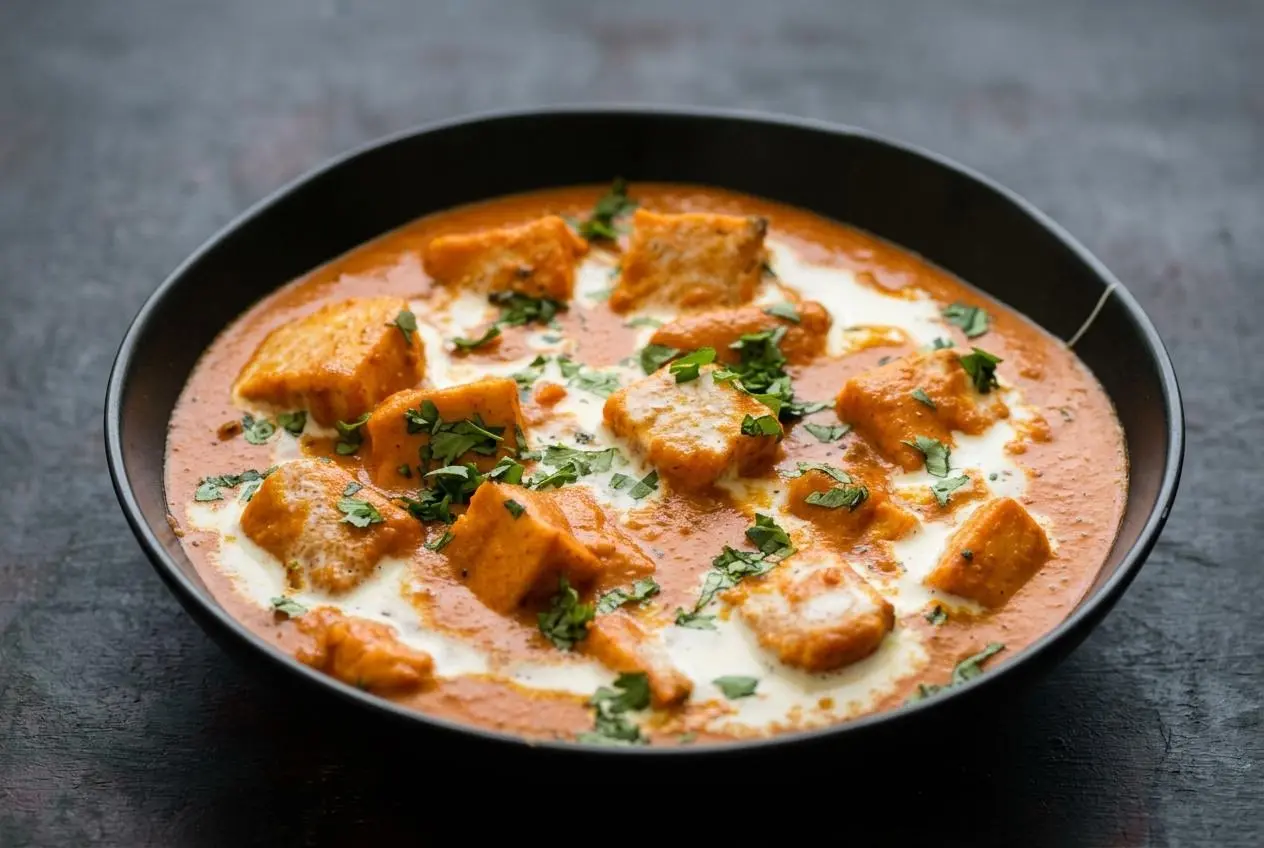
Make paneer butter masala by blending cooked onions, tomatoes, cashews, and spices, then straining the puree into butter. Simmer until glossy, briefly warm the paneer in the gravy, and stir in cream off the heat for a rich North Indian curry.
Butter, cardamom, and crushed kasuri methi give this curry its inviting aroma. The sauce tastes gently spiced and mildly sweet, with enough tomato brightness to balance the richness of the cheese and cream.
The restaurant-style texture comes from thoroughly blending and straining the gravy, rather than adding more cream. A brief paneer finish keeps the cheese tender while the sauce stays velvety. The sieve makes the difference.
Set a fine-mesh strainer beside the stove before you begin, and keep the pan lid within reach for the bubbling gravy.
Key Ingredients and Smart Substitutions
Tomatoes bring brightness, onions add sweetness, and cashews give the gravy body. Butter and cream soften the spice edges, paneer provides tender bites, and cardamom, garam masala, and fenugreek build the curry’s warm aroma.
To saute & blend
- 1 tablespoon (15 ml) oil
- 2 green cardamoms (or ¼ to ⅓ tsp ground cardamom, elaichi)
- 1 cup (130 grams) onions (sliced or diced from 1 medium yellow or 2 small red onions)
- 1 inch (10 grams) ginger (peeled & sliced or use 1½ to 2 teaspoon ginger garlic paste)
- 5 to 6 (12 grams) large garlic cloves (peeled, omit to use gg paste)
- 2 cups (350 grams) tomatoes (sliced, use up to 420 grams from 2 large or 4 medium)
- 15 (30 grams) whole cashew nuts (use up to 18 nuts/ 36 g if using more tomatoes or use almonds)
- 1 teaspoon sea salt (adjust to taste)
- 1 teaspoon jaggery/ sugar (optional)
- ¾ to 1 teaspoon Kashmiri red chilli powder (or paprika) (adjust to heat & color preference)
- ¾ to 1 teaspoon garam masala (adjust to taste)
- 1 teaspoon coriander powder (daniya powder) (optional)
- 1 cup (240 ml) cold water (to blend)
To make Paneer Butter Masala
- 2 tablespoons (30 grams) unsalted butter
- 1 small bay leaf (tej patta, optional)
- 2 inch Ceylon cinnamon piece (or 1 inch dalchini, optional)
- 3 cloves (laung, optional)
- 250 to 300 grams (9 to 10 oz) paneer (I cut mine to ¾ inch)
- ½ tablespoon kasuri methi (dried fenugreek leaves, crushed)
- 3 to 4 tablespoons (45 to 60 ml) heavy cream (sub with fresh cream, cooking cream or thickened cream)
- 1 to 2 tablespoon coriander leaves (cilantro finely chopped, to garnish)
I crush the kasuri methi between my palms just before adding it, so its aroma goes straight into the gravy.
Choosing the Right Tomatoes, Onions, and Cashews
Choose fully ripe tomatoes with a pleasant flavor. Sharply tart tomatoes can dominate this delicate sauce, and extra cream won’t necessarily balance them. Cooking the tomatoes until they collapse also helps avoid a raw-tasting gravy.
Yellow onions or the small red onions listed above support the curry’s sweetness. Strongly pungent large purple onions can overwhelm it. Keep the initial sauté focused on softening the onions until translucent rather than developing a deeply browned onion flavor.
Raw cashews blend into a creamy thickener that helps the sauce hold together. They round out the tomato flavor, but they don’t remove acidity. Use the permitted higher cashew amount only when using more tomatoes, as described in the ingredient line.
Whole Spices, Kashmiri Chili, and Kasuri Methi
Green cardamom supplies a sweet, fragrant top note. The optional bay leaf, cinnamon, and cloves add background warmth; they shouldn’t overpower the tomatoes or fenugreek.
Kashmiri chili contributes an orange-red color with relatively gentle heat, though brands vary. Paprika is the listed alternative. Garam masala adds warmth, while optional coriander powder gives a softer, earthy layer.
You don’t need a commercial paneer butter masala powder. The whole and ground spices here already build that flavor. For larger batches, taste cautiously before increasing garam masala further, and watch the intensity of cardamom and cloves.
Nut-Free and Dairy-Free Swaps
Fresh cream, cooking cream, and thickened cream are permitted alternatives to heavy cream. Their fat content and thickness differ, so the final gravy may feel lighter or richer.
Almonds are an alternative to cashews, not a nut-free option. Cashew cream also contains nuts. Likewise, replacing only the cream doesn’t make this curry dairy-free because paneer and butter remain. The optional adaptations below address these needs separately.
How to Make Paneer Butter Masala Step by Step
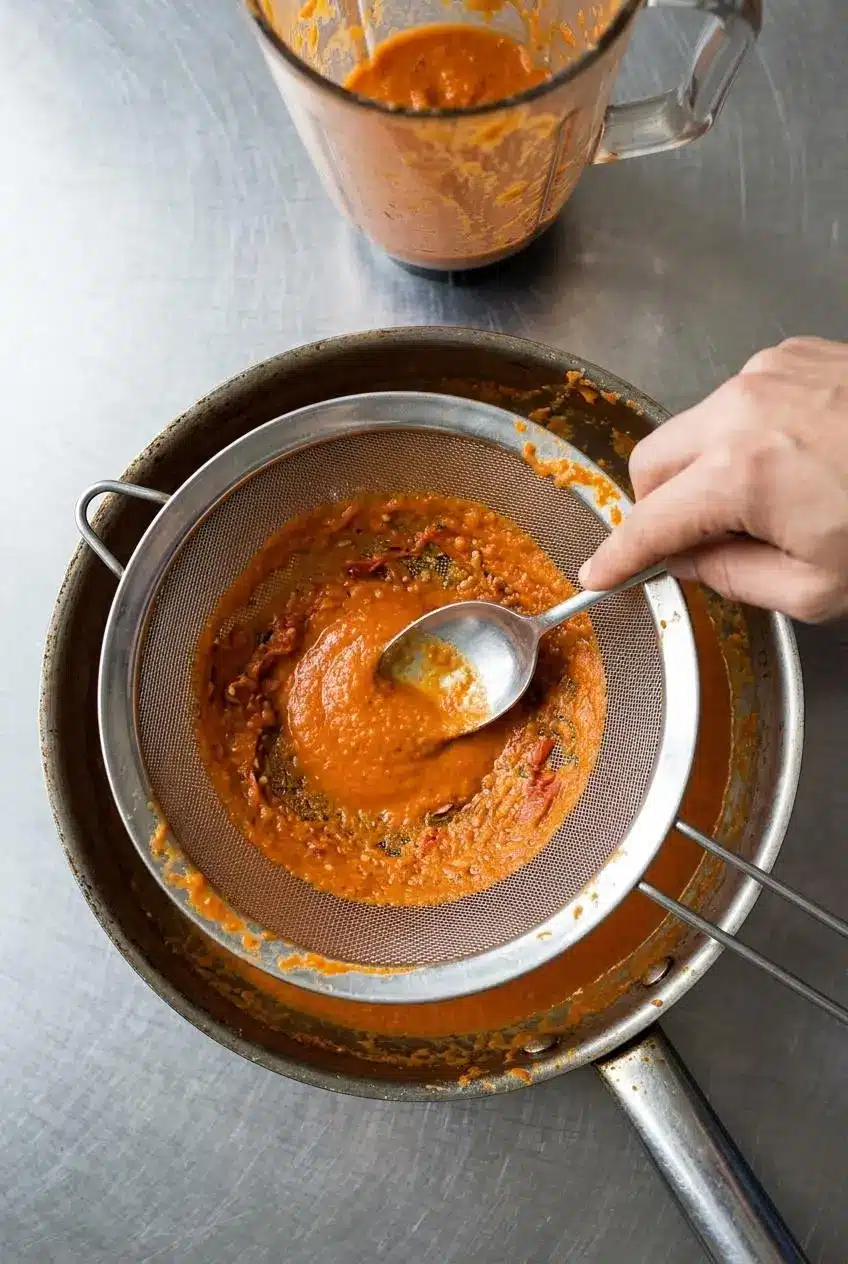
This recipe serves four and uses a pan, blender jar, and fine-mesh strainer. Follow the texture checkpoints as well as the cooking times: soft onions, collapsed tomatoes, smooth puree, and finally a glossy, pourable gravy.
To saute & puree
- Cook the cardamoms, onions, ginger, and garlic in the oil for 4 to 5 minutes.
Look for translucent onions that have softened without becoming deeply browned. - Mix in the tomatoes, salt, and cashews, then cover and cook over medium heat for about 7 minutes, adding a splash of water if the pan becomes dry.
The tomatoes should collapse into a soft, mushy mixture rather than retain firm pieces. - Work in the chili powder, optional coriander powder, and garam masala, cook over medium heat for 3 to 4 minutes, then switch off the heat and let the mixture cool.
The spices should smell fragrant, with no scorched aroma. - Blend the cooled mixture with the 1 cup cold water in a blender jar until completely smooth.
The puree should look uniform and silky, without visible onion pieces or cashew grit.
Cool the cooked mixture before blending, and follow your blender’s restrictions for hot liquids. Cold water alone doesn’t make a piping-hot mixture suitable for a sealed blender.
Make Paneer Butter Masala
- Return the same pan to low heat, melt the butter, and add the bay leaf, cinnamon, and cloves if using.
A gentle sizzle signals that the whole spices are releasing their aroma into the butter. - Stir in the optional chili powder once the spices sizzle, then pass the puree through a strainer held over the pan, using a spoon to help it through.
The sieve should retain tomato seeds, skins, and ginger fibers while the smooth sauce collects below. - Stir in an additional ½ cup water and simmer covered over medium heat for 10 to 12 minutes, stirring every 3 to 4 minutes.
The gravy is ready when it remains flowy but lightly thickened, with a glossy surface and small traces of fat around the edges. - Discard the whole spices, adjust the salt and garam masala to taste, and add the optional jaggery, crushed kasuri methi, and paneer before covering and cooking on low heat for 2 to 3 minutes.
The paneer should warm through while retaining a soft bite. - Switch off the heat and gently fold in the cream, reserving a tablespoon for the garnish.
The sauce should become paler and creamy without returning to a vigorous boil. - Finish the curry with the reserved cream and chopped coriander leaves.
The cream adds a pale swirl against the orange gravy, while the coriander supplies a fresh finish.
The thick tomato-cashew sauce can splatter forcefully as it simmers. Keep it covered between stirs, and scrape gently across the bottom when stirring to discourage sticking. Leave the gravy slightly looser than your ideal serving consistency because it thickens as it cools.
Expert Tips for Soft Paneer and Velvety Gravy
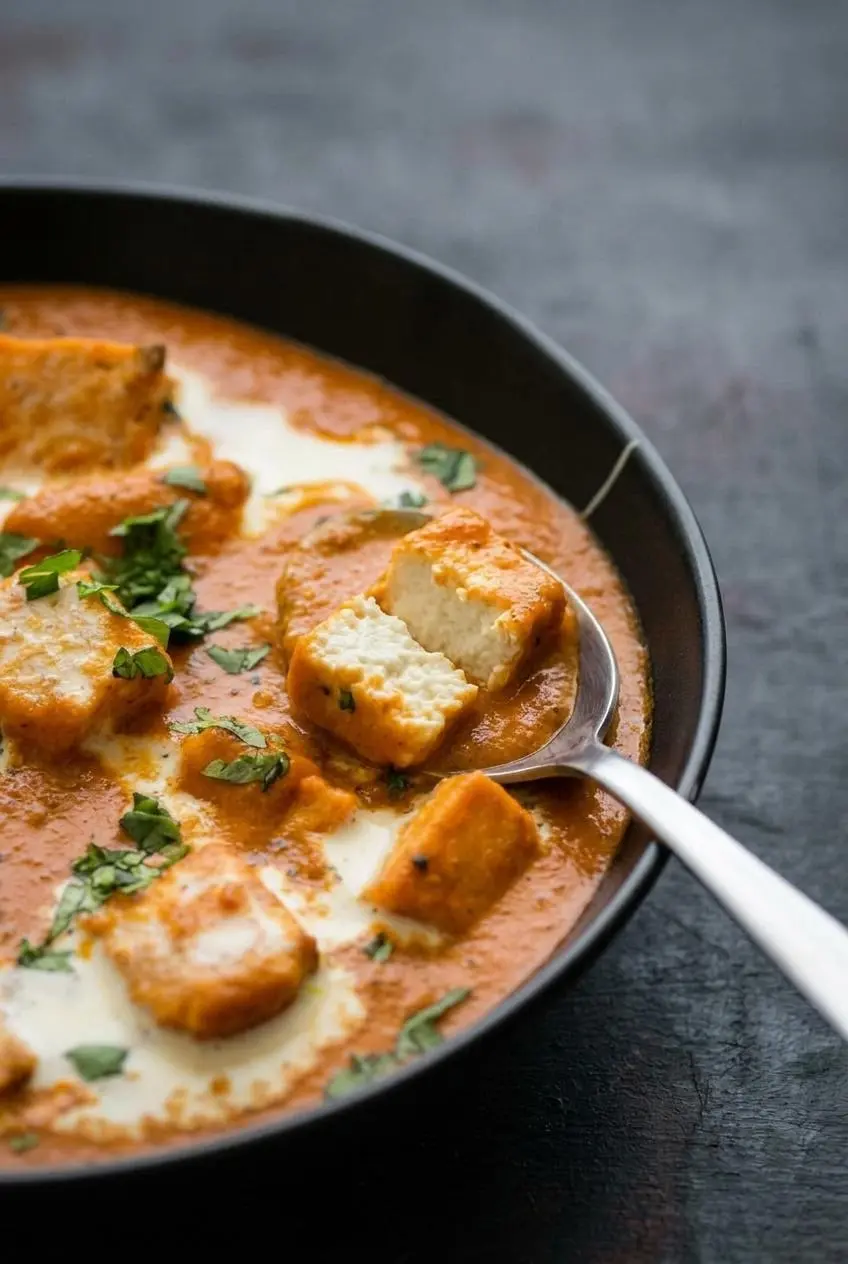
The texture depends on two separate jobs: making the sauce completely smooth and keeping the cheese out of prolonged heat.
How to Keep Store-Bought Paneer Soft
For firm supermarket paneer, an optional warm-water soak for 15 to 20 minutes can soften the cheese before cooking. If starting with a block, soak it before cubing, then drain. Fresh homemade paneer may already be tender enough to use directly.
Keep to the brief, covered low-heat finish in the method. Prolonged boiling makes paneer chewy, and soaking can’t reliably restore badly overcooked cheese.
The same gentle handling matters in other paneer curries, including this palak paneer recipe: finish the sauce first, then give the cheese only the heating it needs.
Brighter Chili Color and Fragrant Fenugreek
The optional chili addition to the melted butter helps distribute its color through the fat. Keep the heat low and move straight into straining the puree once the chili is incorporated. Scorched chili tastes bitter, so don’t chase a darker color.
Crush kasuri methi immediately before using it to release its earthy aroma. If the leaves seem muted, you can optionally warm them briefly in a warm pan before crushing. Keep them from browning or burning.
Troubleshooting Sour, Thick, or Split Gravy
- Too sour: Tart tomatoes are usually the cause. Adjust cautiously with the listed optional jaggery or sugar; sweetness balances acidity rather than removing it.
- Too thick after cooling: Cashews continue to give the sauce body as it cools. Stir in water gradually while reheating instead of adding a large splash all at once.
- Cream has separated: Aggressive heat can break the creamy texture. Stop boiling and stir gently over lower heat, recognizing that a badly split sauce may not fully recover.
- Grainy gravy: Incomplete blending can leave cashew particles, while tomato seeds and ginger fibers add roughness. Blend thoroughly and use the required fine-mesh strainer before the paneer finish.
- Harsh spice flavor: Ground spices need their cooking stage before blending. Don’t compensate with extra cream before checking whether the tomato-spice mixture has cooked properly.
Paneer Butter Masala Adaptations for Dhaba Style, Instant Pot, and Vegan Meals
These optional directions change the texture, ingredients, or cooking approach. Keep them separate from the strained stovetop method above.
Dhaba-Style Paneer Butter Masala
For a rustic direction, leave the onion-tomato mixture slightly coarser and skip straining. That creates a more textured sauce rather than the silky restaurant-style finish.
A more pronounced toasted kasuri methi aroma can push the flavor toward a bolder, smoky-spiced character. This is a style choice, not a reason to scorch the butter or ground spices, and it doesn’t require adding a smoking procedure.
Instant Pot Pressure Cooker Method
An Instant Pot adaptation cooks the onion, tomato, and cashew mixture in the appliance before blending it, then finishes gently with paneer and cream.
That outline isn’t a complete pressure-cooker recipe. Pressure settings, minimum liquid, cooking time, and release method need an appliance-specific tested method. Use the detailed stovetop instructions here rather than guessing those settings or pressure-cooking the finished dairy curry.
Vegan and Nut-Free Adaptations
- Vegan direction: Replace paneer with extra-firm tofu, butter with plant butter, and dairy cream with cashew or coconut cream. All three dairy components need to change; coconut cream also changes the flavor.
- Nut-free direction: Sunflower seeds, hulled sesame seeds, or white poppy seeds can provide an alternative thickening direction. They won’t produce exactly the same taste or texture as cashews, and no equal-quantity substitution is specified here.
- Allergy considerations: Sesame is an allergen, and nut-free doesn’t mean dairy-free. Check the suitability of every replacement and packaged ingredient for the person eating it.
Paneer Butter Masala vs Paneer Makhani vs Paneer Tikka Masala
- Paneer butter masala: Soft, ungrilled paneer sits in a smooth onion-tomato-cashew gravy finished with butter, cream, and fenugreek.
- Paneer makhani: Often more tomato-forward, with a buttery, smooth sauce. Makhani and butter masala names and formulas overlap considerably across kitchens.
- Paneer tikka masala: Marinated, charred paneer brings a roasted character to a commonly more textured sauce. Peppers and stronger heat are common, not universal requirements.
The marinated-and-charred preparation also defines the familiar approach used in chicken tikka masala, rather than simply warming an uncooked protein in finished gravy.
Serving Paneer Butter Masala and Saving the Gravy for Later
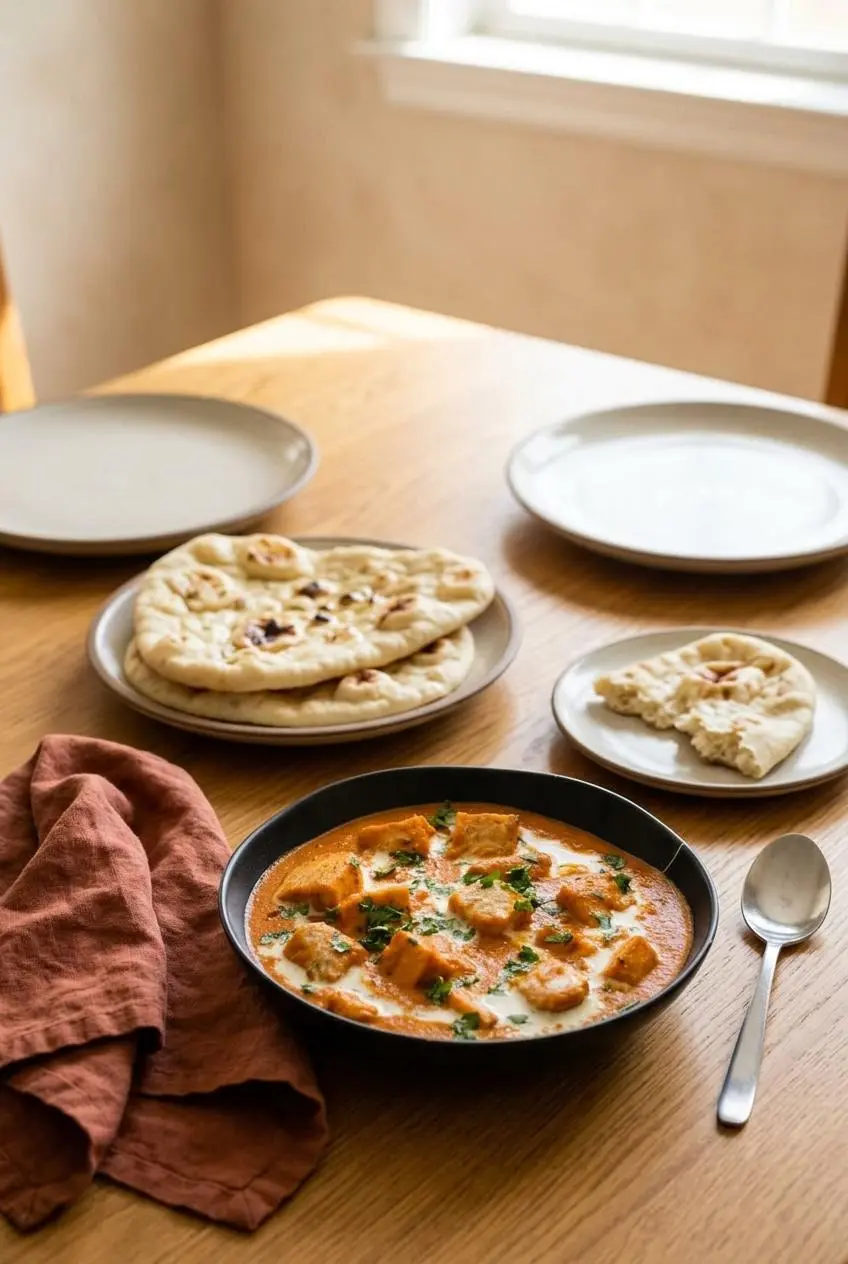
Choose your accompaniment before making the final consistency adjustment. Bread and rice benefit from slightly different gravy textures.
Pairing the Gravy With Naan, Roti, or Jeera Rice
Keep the gravy a little thicker for scooping with butter naan, tandoori roti, or plain parathas. For basmati rice or jeera rice, a slightly flowier sauce spreads through the grains more easily.
Crisp kachumber salad offers a fresh contrast to the buttery curry. Chilled spiced buttermilk is another optional accompaniment, especially when you want something tangy alongside the rich main dish.
Keeping the Masala Gravy Separate
If you need to pause preparation, keep the cooked, strained gravy separate from the paneer and cream. This preserves control over the cheese’s brief cooking stage and the cream’s off-heat addition.
Cool any sauce you’re saving promptly, transfer it to a suitable covered container, and keep it refrigerated. Store finished leftover curry covered and chilled as well. Avoid leaving either sitting out while you finish cleaning the kitchen.
Reheating Leftover Curry Gently
Reheat finished curry on the stovetop, stirring carefully and adding water gradually to loosen the cashew-thickened gravy. Heat it thoroughly while avoiding prolonged, aggressive boiling that can toughen paneer and disturb the cream.
A stored sauce without paneer or cream needs a different finish: reheat the sauce first, then complete the remaining finishing steps. Gentle heat protects texture, but warmth at the surface alone doesn’t establish that the whole portion has reheated thoroughly.
Conclusion
Silky gravy comes from fully softened tomatoes, thorough blending, and a fine-mesh strainer. Cashews give the sauce body, while butter, cardamom, and fenugreek supply its distinctive aroma.
Keep the paneer finish brief and stir in the cream after switching off the heat. Then bring it to the table with bread or rice ready for that glossy gravy.
Frequently Asked Questions
What Is the Difference Between Paneer Butter Masala and Paneer Tikka Masala?
Butter masala uses ungrilled paneer in a smooth, mildly sweet butter-tomato gravy. Tikka masala uses marinated, charred paneer and commonly has a more textured sauce. Heat levels and the inclusion of peppers vary between kitchens.
Why Is My Paneer Rubbery and How Do I Keep It Soft?
Overcooking, especially prolonged boiling, can make paneer tough. For firm store-bought paneer, try the optional warm-water soak described above before cubing. Add paneer near the end and follow the brief low-heat finish; severely overcooked cheese may stay chewy.
What Is the Best Substitute for Heavy Cream and Cashews?
For heavy cream, use the listed fresh cream, cooking cream, or thickened cream alternatives. Cashew or coconut cream offers an optional dairy-free cream direction, but a vegan curry also needs tofu and plant butter. For cashews, seed-based alternatives include sunflower, hulled sesame, or white poppy seeds; sesame is an allergen, and almonds are not nut-free.
How Do I Store and Reheat Paneer Butter Masala?
Cool leftovers promptly and refrigerate them in a covered container. Reheat on the stovetop with a splash of water, stirring to loosen the sauce and heat it throughout. Avoid prolonged boiling, and keep paneer and cream separate from stored gravy when you haven’t yet completed the curry.
Paneer Butter Masala

Equipment
- Pan
- blender jar
- Strainer
Ingredients
To saute & blend
- 1 tablespoon oil (15 ml)
- 2 green cardamoms (or ¼ to ⅓ tsp ground cardamom, elaichi)
- 1 cup onions (130 grams) (sliced or diced from 1 medium yellow or 2 small red onions)
- 1 inch ginger (10 grams) (peeled & sliced or use 1½ to 2 teaspoon ginger garlic paste)
- 5 to 6 large garlic cloves (12 grams) (peeled, omit to use gg paste)
- 2 cups tomatoes (350 grams) (sliced, use up to 420 grams from 2 large or 4 medium)
- 15 whole cashew nuts (30 grams) (use up to 18 nuts/ 36 g if using more tomatoes or use almonds)
- 1 teaspoon sea salt (adjust to taste)
- 1 teaspoon jaggery/ sugar (optional)
- ¾ to 1 teaspoon Kashmiri red chilli powder (or paprika) (adjust to heat & color preference)
- ¾ to 1 teaspoon garam masala (adjust to taste)
- 1 teaspoon coriander powder (daniya powder) (optional)
- 1 cup cold water (240 ml) (to blend)
To make Paneer Butter Masala
- 2 tablespoons unsalted butter (30 grams)
- 1 small bay leaf (tej patta, optional)
- 2 inch Ceylon cinnamon piece (or 1 inch dalchini, optional)
- 3 cloves (laung, optional)
- 250 to 300 grams paneer (9 to 10 oz) (I cut mine to ¾ inch)
- ½ tablespoon kasuri methi (dried fenugreek leaves, crushed)
- 3 to 4 tablespoons heavy cream (45 to 60 ml) (sub with fresh cream, cooking cream or thickened cream)
- 1 to 2 tablespoon coriander leaves (cilantro finely chopped, to garnish)
Instructions
To saute & puree
- Cook the cardamoms, onions, ginger, and garlic in the oil for 4 to 5 minutes. Look for translucent onions that have softened without becoming deeply browned.
- Mix in the tomatoes, salt, and cashews, then cover and cook over medium heat for about 7 minutes, adding a splash of water if the pan becomes dry. The tomatoes should collapse into a soft, mushy mixture rather than retain firm pieces.
- Work in the chili powder, optional coriander powder, and garam masala, cook over medium heat for 3 to 4 minutes, then switch off the heat and let the mixture cool. The spices should smell fragrant, with no scorched aroma.
- Blend the cooled mixture with the 1 cup cold water in a blender jar until completely smooth. The puree should look uniform and silky, without visible onion pieces or cashew grit.
Make Paneer Butter Masala
- Return the same pan to low heat, melt the butter, and add the bay leaf, cinnamon, and cloves if using. A gentle sizzle signals that the whole spices are releasing their aroma into the butter.
- Stir in the optional chili powder once the spices sizzle, then pass the puree through a strainer held over the pan, using a spoon to help it through. The sieve should retain tomato seeds, skins, and ginger fibers while the smooth sauce collects below.
- Stir in an additional ½ cup water and simmer covered over medium heat for 10 to 12 minutes, stirring every 3 to 4 minutes. The gravy is ready when it remains flowy but lightly thickened, with a glossy surface and small traces of fat around the edges.
- Discard the whole spices, adjust the salt and garam masala to taste, and add the optional jaggery, crushed kasuri methi, and paneer before covering and cooking on low heat for 2 to 3 minutes. The paneer should warm through while retaining a soft bite.
- Switch off the heat and gently fold in the cream, reserving a tablespoon for the garnish. The sauce should become paler and creamy without returning to a vigorous boil.
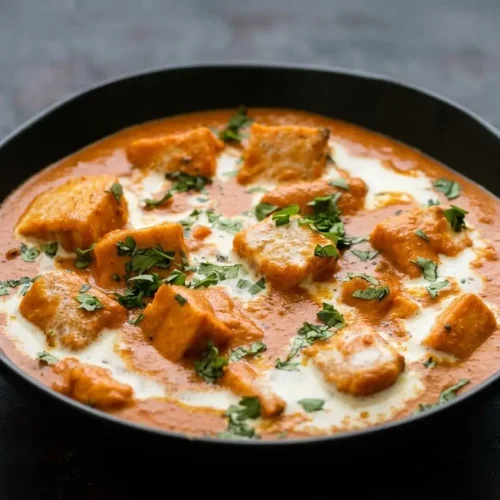
- Finish the curry with the reserved cream and chopped coriander leaves. The cream adds a pale swirl against the orange gravy, while the coriander supplies a fresh finish.