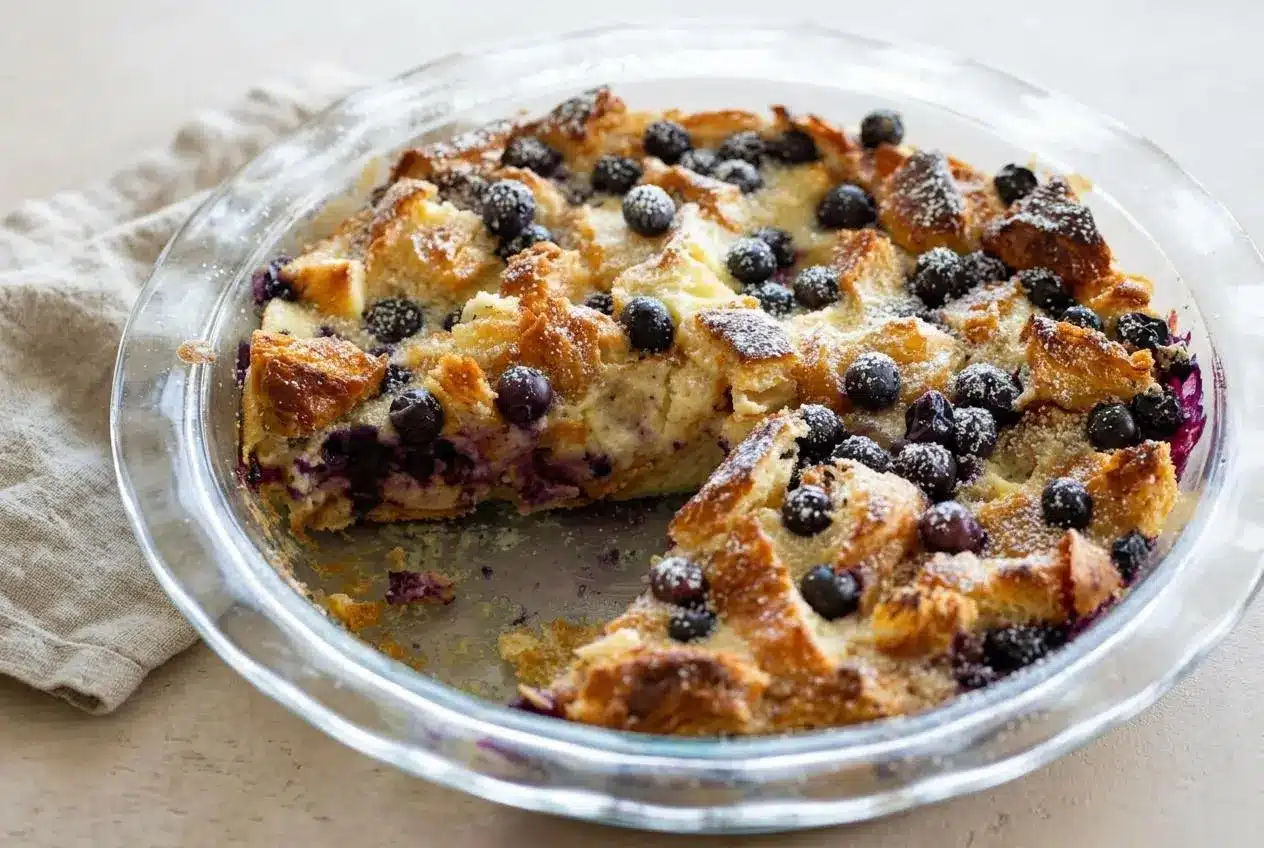
Golden blueberry croissant puff turns baked croissants and blueberries into a breakfast casserole with sweet lemon cream cheese custard. Soak the pastry, then bake at 350°F until the edges turn crisp and the creamy center sets.
This blueberry croissant puff has the comfort of bread pudding with buttery pastry layers and pockets of juicy berries. Lemon juice and zest balance the cream cheese, keeping each bite bright rather than overly rich.
Serve it for a relaxed weekend breakfast, a holiday brunch, or a warm dessert. You can assemble it for a quick soak or refrigerate it overnight, depending on the texture you prefer. The smooth custard starts with one small mixing habit.
Before mixing, check that the cream cheese yields easily when pressed with a spatula.
Ingredients Needed and Why They Matter
Croissants give this bake its flaky structure, eggs help the custard set, and milk adds moisture. Cream cheese brings richness, blueberries provide juicy contrast, and lemon, vanilla, and sugar round out the flavor.
- 3-4 large croissants (cut up (about 5 to 5 1/2 cups, around 10 ounces))
- 1 cup fresh or frozen blueberries
- 1 (8 ounce) package cream cheese, softened
- 2/3 cup sugar
- 2 eggs
- 1 tablespoon lemon juice
- 1 teaspoon lemon zest
- 1 teaspoon vanilla
- 1 cup milk
- optional powdered sugar for sprinkling
Choose fully baked bakery croissants. Day-old croissants hold their shape well while absorbing the custard. Since bakery sizes vary, the volume and weight are useful checks: aim for about 5 to 5 1/2 cups, around 10 ounces, rather than relying on count alone. Keep the pieces loosely piled instead of packing them into the measuring cup.
Soften the cream cheese thoroughly. A soft block blends more evenly with sugar and leaves fewer white flecks in the finished custard. The eggs provide structure as the mixture bakes, while milk loosens the cream cheese enough to reach between the pastry layers.
Keep both forms of lemon. The tablespoon of juice adds acidity, and the teaspoon of zest contributes fragrant citrus flavor without extra liquid. Together, they balance the richness of the 8-ounce package of cream cheese. Finely grate only the yellow peel, avoiding the bitter white layer underneath.
Fresh and frozen blueberries both work. Drain washed fresh berries well so you aren’t adding rinse water to the dish. Frozen berries may release more juice and tint the surrounding custard purple. Scatter them over the pastry rather than stirring them through the cream cheese mixture to limit streaking.
Sugar and vanilla soften the tangy flavors. Save the optional powdered sugar for serving so it stays visible instead of disappearing into the custard.
I’d prioritize fully softened cream cheese over extra mixing time; a firm block is much harder to blend smoothly.
How to Make the Blueberry Croissant Puff Step by Step
Make the cream cheese mixture smooth before adding the milk, then give the pastry time to absorb it. This recipe makes 8 servings in a 9-inch square pan or deep-dish pie plate.
- Set the oven to 350°F before assembling the casserole.
Let it reach the selected temperature before the dish goes in. - Distribute the cut croissants across a 9-inch square pan or deep-dish pie plate, then scatter the blueberries over them.
Keep the fruit spread across the dish rather than clustered in the middle. - Use an electric mixer and a medium bowl to work the softened cream cheese and sugar into a smooth mixture.
The mixture should look creamy, with no firm chunks of cream cheese. - Mix in the eggs, lemon juice, lemon zest, and vanilla, then incorporate the milk gradually while beating after each addition.
The finished custard should be pourable and evenly blended rather than dotted with large white lumps. - Distribute the custard across the pastry and allow a 20-minute rest, or cover the dish and refrigerate it overnight.
The croissant pieces should begin absorbing the liquid while their upper edges remain visible. - Bake for 35 to 40 minutes, checking halfway through and loosely covering with foil during the final 10 minutes if needed.
Look for a set center with only a slight jiggle and deep golden pastry tips, not liquid sloshing beneath a browned surface. - Portion the puff while warm and add the optional powdered sugar if desired.
The center should be creamy and tender, with crisp edges above it.
The custard will look fairly liquid when you pour it. That’s expected. If some croissant pieces sit high above the mixture, gently press them down with a flat spatula to wet their surfaces without crushing the flaky layers.
Add the milk in stages so the thicker cream cheese mixture can loosen evenly. Pouring it all in at once makes stubborn cream cheese flecks harder to blend out. Scrape the bowl as needed so no thick mixture remains around its sides.
Allow 35 to 40 minutes for baking rather than planning around a 30-minute estimate. The center needs time to set after the exposed pastry begins browning. The soaking rest also sits outside the active prep time, so include it when planning breakfast.
Tips for the Best Texture and Troubleshooting
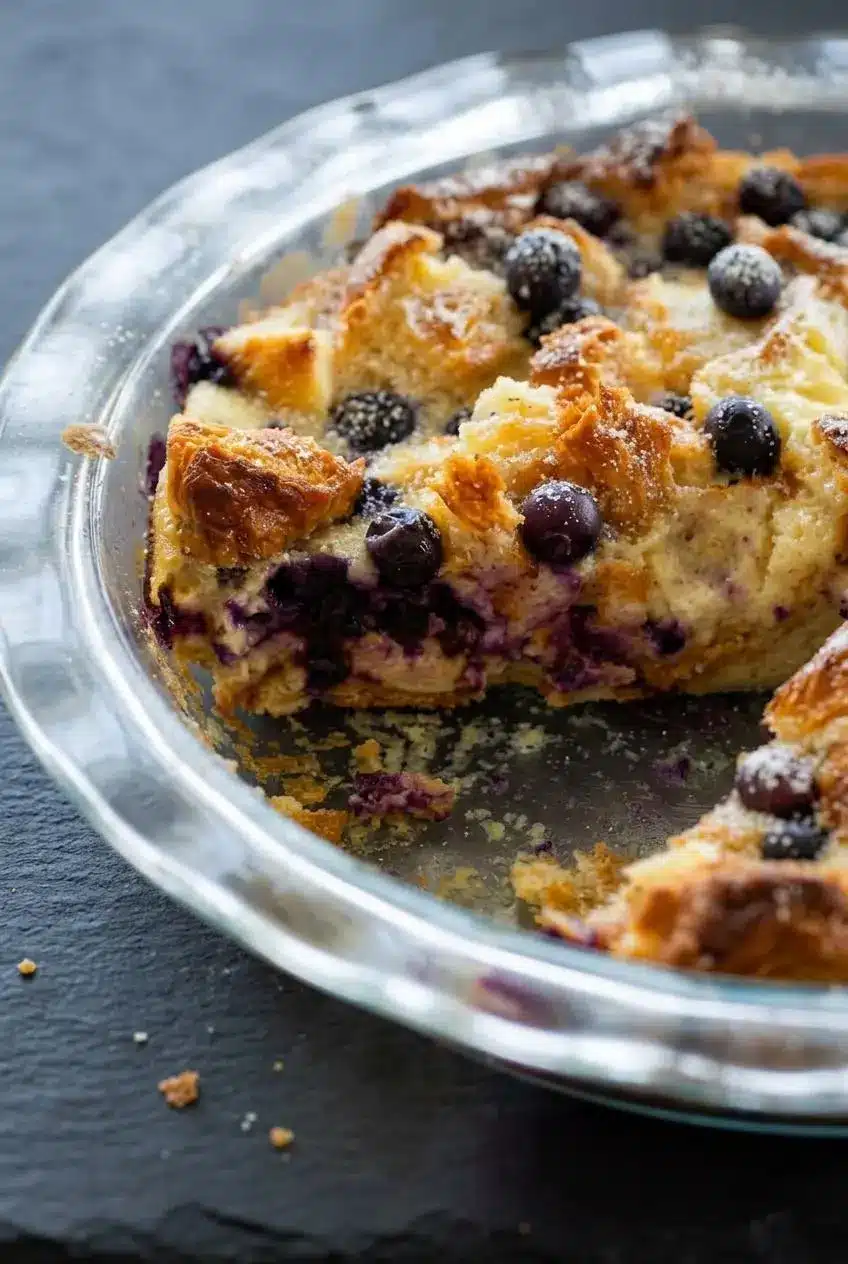
The best texture comes from pastry that can absorb custard without collapsing and a top that browns without burning.
If your croissants are very fresh and soft, cut them up and lightly dry or toast them on a baking sheet before assembling. Let them cool before adding the custard. This optional preparation helps them behave more like day-old pastry.
For extra crunch, you can also add an optional light sprinkling of coarse turbinado sugar just before baking. Keep this separate from the sugar mixed into the custard. If you’re baking the pastry yourself, this homemade croissant recipe offers a from-scratch starting point.
- A wet bottom with dry pieces above: The pastry may not have absorbed the custard evenly; use the full soaking rest and gently wet raised pieces before baking.
- A loose center: Judge the middle, not just the browned edges; continue baking until the center sets, protecting the top with foil as needed.
- Dark pastry tips: Exposed croissant edges brown first; tent the dish loosely instead of pressing foil against the surface.
How to Prevent a Lumpy Cream Cheese Custard
Cold cream cheese resists blending and can leave small pale pieces that resemble curdling. Adding milk too quickly makes those pieces harder to smooth out.
Beat the softened cream cheese with sugar first. Add the eggs and flavorings before gradually working in the milk. If you spot lumps early, pause and scrape the bowl before adding more liquid. A smooth starting mixture is easier to maintain than a lumpy mixture is to repair.
20-Minute Soak vs Overnight Soak Texture
- 20-minute soak: Best when you want more contrast between crisp, flaky upper layers and a tender custard-soaked interior.
- Overnight refrigerator soak: Produces a softer, more uniform, bread-pudding-style texture as the pastry absorbs more liquid.
Choose day-old or lightly dried croissants for the longer soak. Very soft fresh pastry can lose its structure and make the bottom feel heavy.
Pan Size Options and Recipe Variations
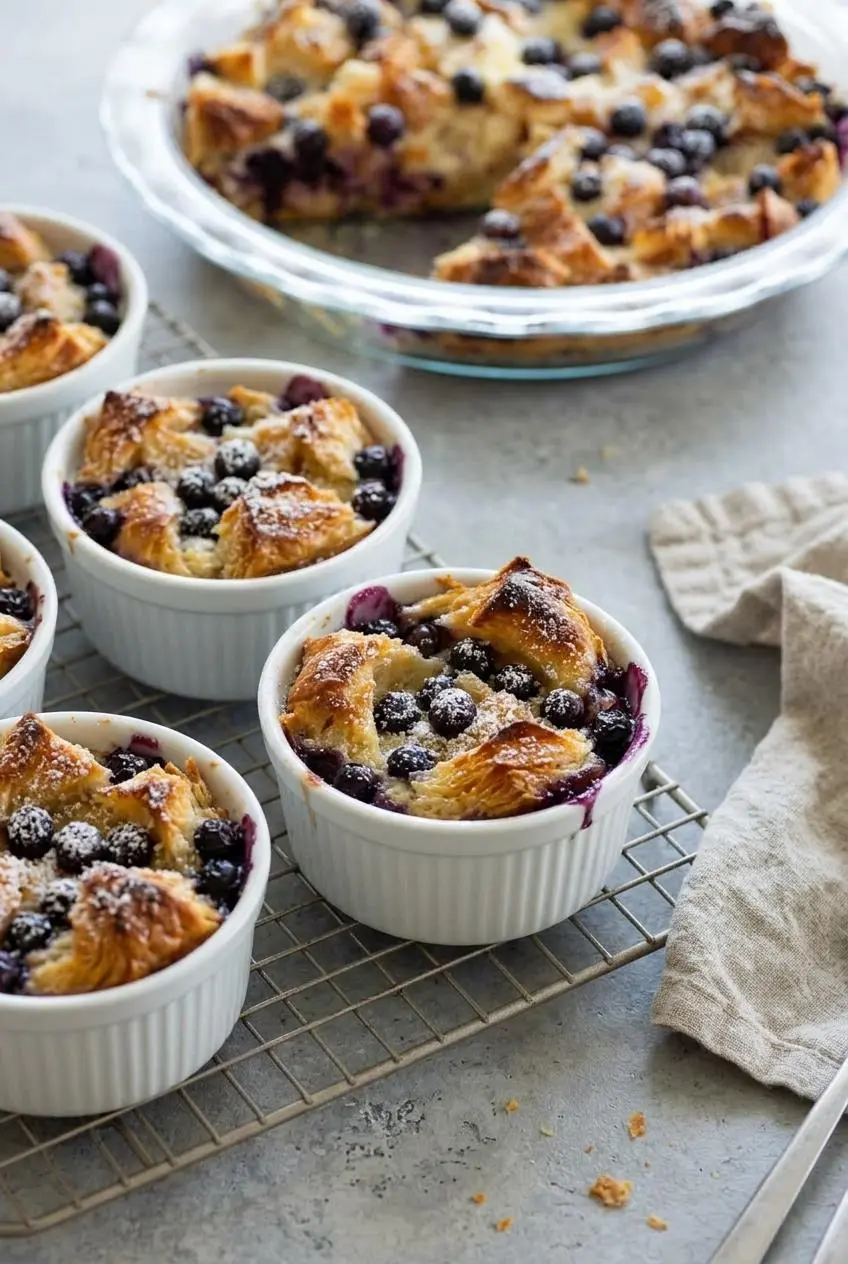
Choose the pan for your occasion, then use its center texture as the final doneness check. These are optional alternatives to the square-pan bake.
- 9-inch square pan or deep-dish pie plate: Soak for 20 minutes or refrigerate overnight; bake at 350°F for 35 to 40 minutes.
- Ten 1/2-cup ramekins: Soak for 20 minutes; bake at 350°F for 20 to 25 minutes.
- Doubled 9×13-inch pan: Double the ingredients, use the same soaking choices, and bake at 350°F for 50 to 55 minutes.
Individual Ramekin Baking Instructions
Divide the croissant pieces among ten 1/2-cup ramekins, then distribute the berries and custard evenly. Leave them for the soaking time listed above before baking until the centers set and the pastry turns golden.
Ramekins make convenient spoonable brunch portions. For a handheld option with a similar flavor combination, try blueberry cream cheese muffins.
Doubling the Recipe for a 9×13 Pan
Double every ingredient and assemble in a greased 9×13-inch baking dish. Spread the fruit and pastry evenly so the corners aren’t mostly bread while the center holds most of the custard.
Use the longer baking range above. If the top browns quickly, loosely tent it with foil during the final 10 minutes while the deeper center finishes setting.
Fruit and Dairy Substitutions
- Strawberries or peaches: Use chopped fresh strawberries or diced peaches for a different fruit flavor, avoiding excess juice.
- Raspberries or blackberries: Scatter these gently over the pastry; delicate raspberries break apart more readily.
- Cinnamon: An optional pinch in the custard adds warm spice alongside the lemon and vanilla.
- Milk choices: Whole milk gives a richer mouthfeel, while lower-fat milk makes a lighter-tasting custard.
Keep the cream cheese for its body and tang; changing the milk doesn’t replace its role.
Make-Ahead and Storage
For an easier morning, assemble the dish, cover it, and refrigerate overnight. This supported soaking option changes the texture as well as the schedule, so choose it when you want a softer breakfast bake.
Use day-old or lightly dried pastry for overnight assembly. If crisp edges matter most, prepare the croissant pieces separately and use the shorter soak when you’re ready to bake. Avoid extending the assembled soak unnecessarily, since the pastry continues to soften.
Keep baked leftovers covered and refrigerated rather than leaving the casserole on the brunch table. A covered container helps protect the exposed pastry from drying out and picking up refrigerator odors.
Warm individual portions gently in the oven if you want to refresh the pastry edges, watching so they don’t become too dark. Cover loosely if the top colors before the center warms through. Chilled portions are another option if you prefer a denser, custard-like texture.
Best Ways to Serve Blueberry Croissant Puff
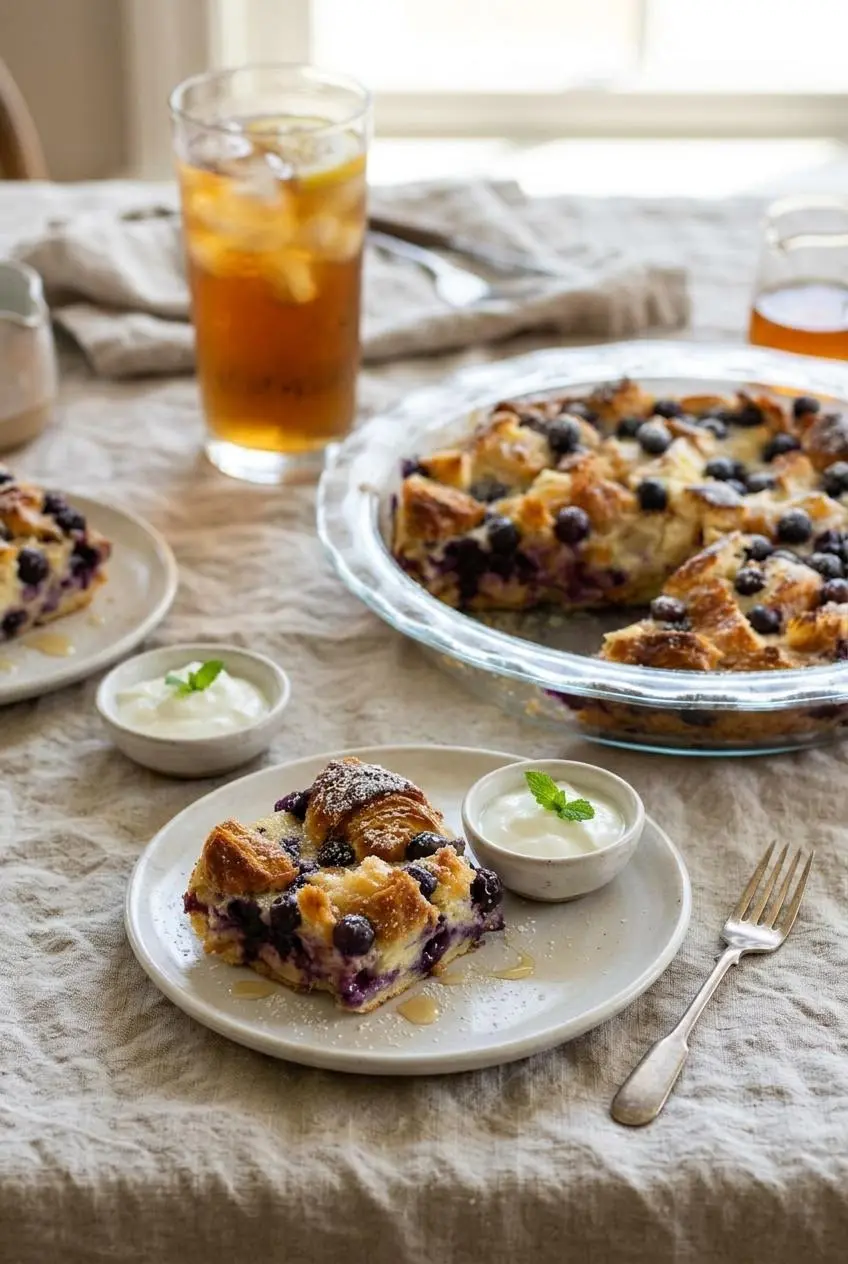
Serve warm for the clearest contrast between the crisp pastry tips and creamy center. Add toppings after portioning so everyone can choose their sweetness level.
- Classic brunch: Dust with powdered sugar or add a drizzle of warm blueberry syrup.
- Breakfast with contrast: Pair with Greek yogurt, fresh mint, and a little honey for tangy, fresh flavors alongside the rich custard.
- Warm dessert: Add vanilla ice cream, whipped cream, or warm custard to turn a square into a spoonable dessert.
For a spring or summer brunch, blueberry lavender iced tea makes a refreshing nonalcoholic pairing. Keep syrup and other liquid toppings light if you want the croissant edges to stay crisp.
Conclusion
Bakery croissants, blueberries, and lemon cream cheese custard make a breakfast bake with golden edges and a tender center. Softened cream cheese and gradually added milk are the most useful habits for a smooth mixture.
Choose the shorter soak for more texture contrast or overnight refrigeration for a softer result. Lightly toasted pastry and optional coarse sugar add extra crunch when that’s what your brunch needs.
Frequently Asked Questions
Can I Make Blueberry Croissant Puff the Night Before?
Yes. Assemble the dish, cover it, and refrigerate overnight. Use day-old or lightly dried croissants to help the pieces hold their shape during the longer soak. Expect a softer, more bread-pudding-like texture than with the shorter soak.
Should I Use Fresh or Frozen Blueberries for This Croissant Bake?
Either works. Drain washed fresh berries well before adding them. Add frozen berries directly to the pastry, keeping any loose ice out of the dish. Expect frozen berries to release more color and juice into the custard.
Can I Double This Recipe for a 9×13 Baking Dish?
Yes. Double all ingredients and use a greased 9×13-inch baking dish. Bake at 350°F for 50 to 55 minutes, checking that the center sets. Tent loosely with foil during the final 10 minutes if the pastry is browning too quickly.
Can I Use Canned Crescent Roll Dough or Puff Pastry Instead of Croissants?
Fully baked croissants are the intended choice because their baked layers absorb the custard. Don’t add raw crescent dough or raw puff pastry sheets directly to this mixture. If trying either alternative, bake and cool the pastry before cutting it up, and expect a different texture from bakery croissants.

Blueberry Croissant Puff

Equipment
- 9 inch square pan or deep dish pie plate
- Medium bowl
- Electric Mixer
- Foil
- 10 (1/2-cup) ramekins
Ingredients
- 3-4 large croissants cut up (about 5 to 5 1/2 cups, around 10 ounces)
- 1 cup fresh or frozen blueberries
- 1 (8 ounce) package cream cheese softened
- 2/3 cup sugar
- 2 eggs
- 1 tablespoon lemon juice
- 1 teaspoon lemon zest
- 1 teaspoon vanilla
- 1 cup milk
- optional powdered sugar for sprinkling
Instructions
- Set the oven to 350°F before assembling the casserole. Let it reach the selected temperature before the dish goes in.
- Distribute the cut croissants across a 9-inch square pan or deep-dish pie plate, then scatter the blueberries over them. Keep the fruit spread across the dish rather than clustered in the middle.
- Use an electric mixer and a medium bowl to work the softened cream cheese and sugar into a smooth mixture. The mixture should look creamy, with no firm chunks of cream cheese.
- Mix in the eggs, lemon juice, lemon zest, and vanilla, then incorporate the milk gradually while beating after each addition. The finished custard should be pourable and evenly blended rather than dotted with large white lumps.
- Distribute the custard across the pastry and allow a 20-minute rest, or cover the dish and refrigerate it overnight. The croissant pieces should begin absorbing the liquid while their upper edges remain visible.
- Bake for 35 to 40 minutes, checking halfway through and loosely covering with foil during the final 10 minutes if needed. Look for a set center with only a slight jiggle and deep golden pastry tips, not liquid sloshing beneath a browned surface.
- Portion the puff while warm and add the optional powdered sugar if desired. The center should be creamy and tender, with crisp edges above it.