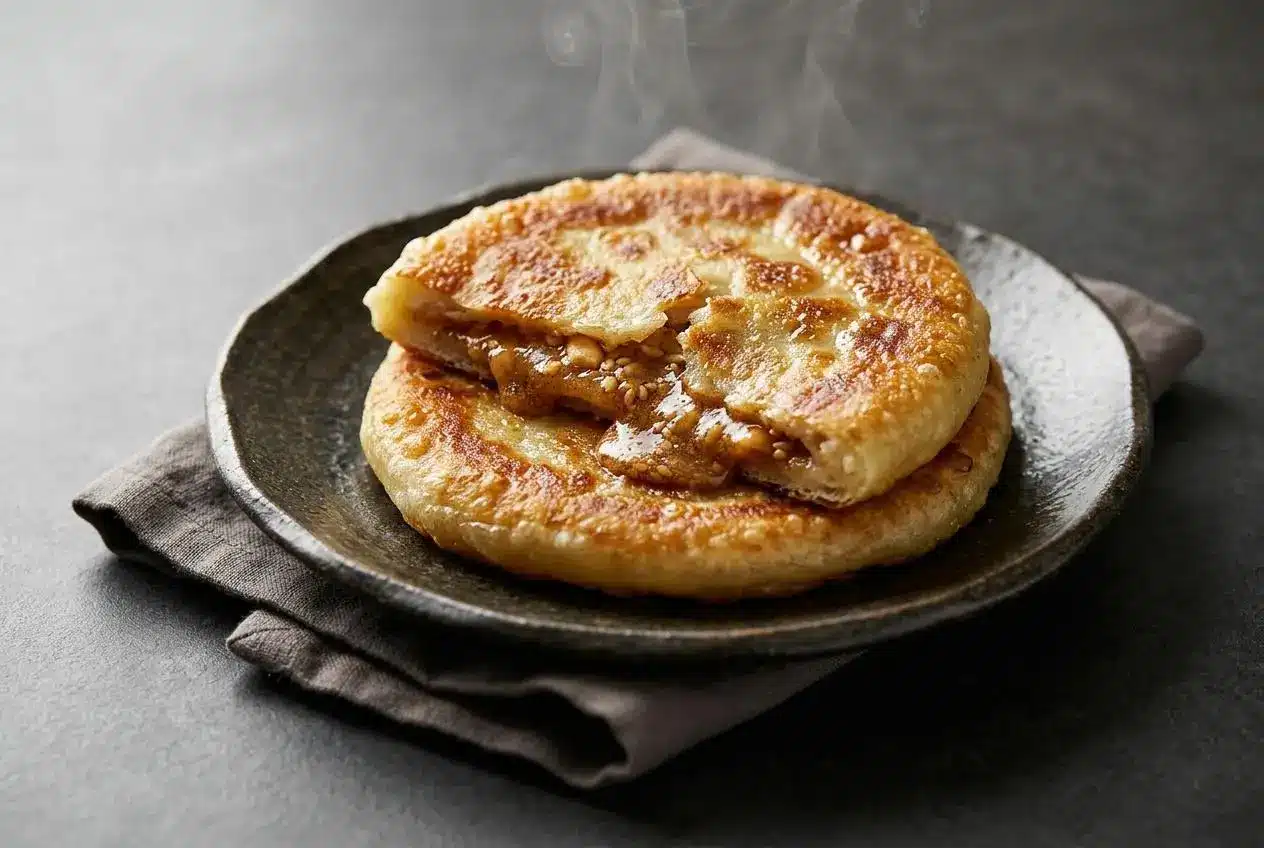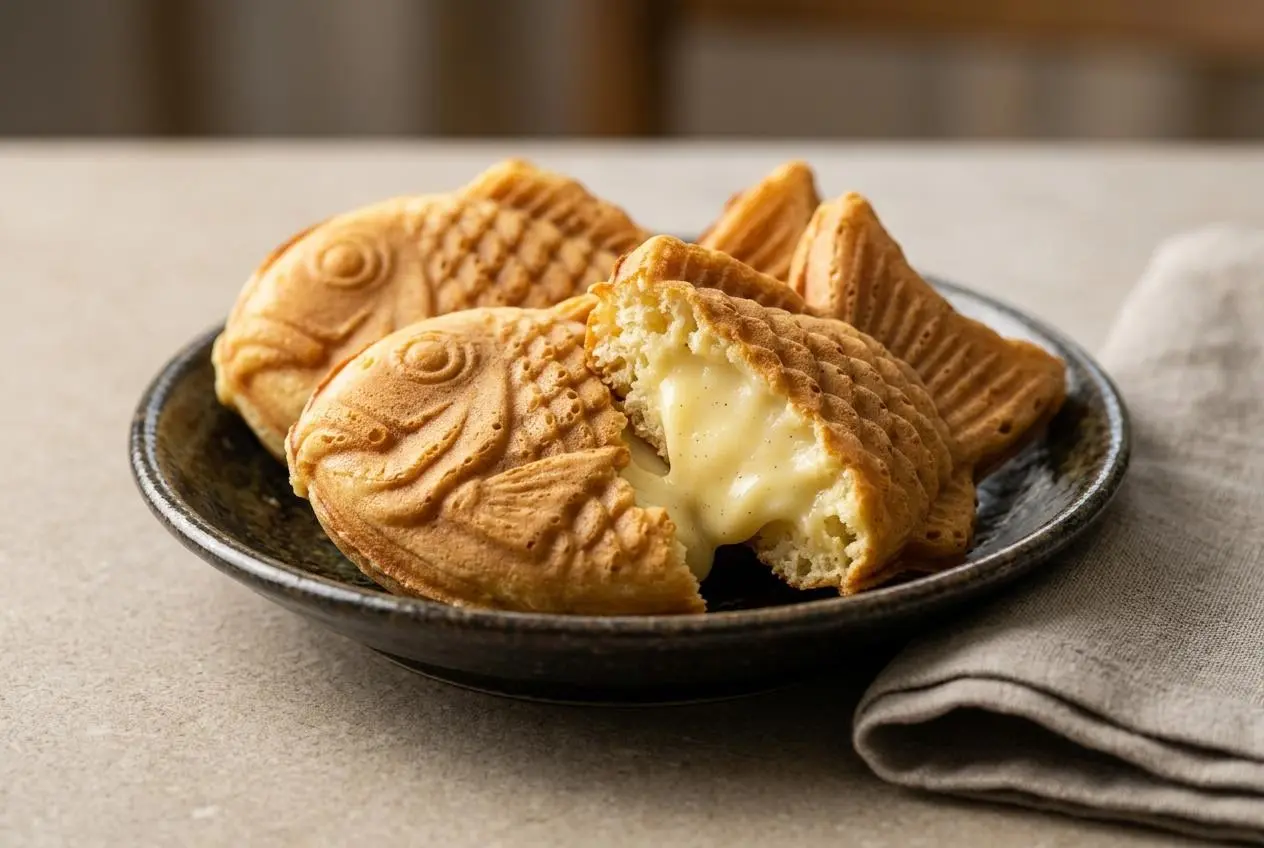
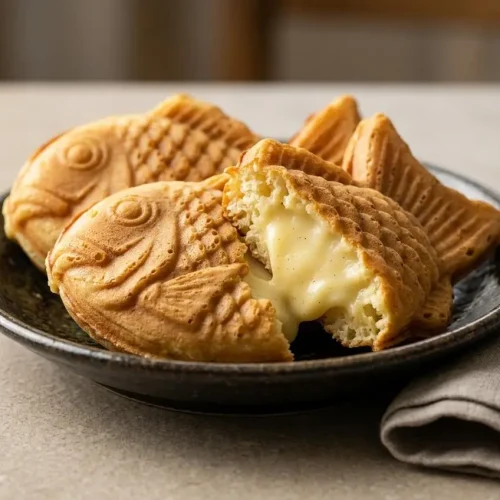
This taiyaki recipe makes golden Japanese fish-shaped cakes with a light waffle-style batter and vanilla custard filling. Cook them in a greased taiyaki mold for 2 to 2.5 minutes per side, then cool on a wire rack to keep the edges crisp.
Opening the mold to find a golden fish with crisp fins and a warm, creamy center is the reward here. The batter combines flour, egg, milk, sugar, and melted butter, while homemade pastry cream gives each cake a rich vanilla middle.
You’ll need a taiyaki pan, but the technique is approachable once you leave room for the filling and control the heat. Prepared sweet red bean paste works as an optional alternative when you don’t want to make custard. The trick is in the flip.
Set a measuring jug, filling spoon, and wire rack beside the stove before heating the mold.
Key Ingredients and Their Roles
Flour and egg give the shell structure, milk keeps it tender, and butter adds richness. Sugar encourages golden edges, while yolks and cornstarch turn the filling into a smooth custard that stays centered inside the batter.
Taiyaki Cake Batter
- 1 cup flour
- 3 tbsp sugar
- 2 tsp baking powder
- ¼ tsp salt
- 1 large egg beaten
- 1 cup milk
- 2 tbsp melted butter
- 1 tbsp neutral-flavored oil vegetable, canola, etc.
Pastry Cream Filling
- 2 cups whole milk
- 6 egg yolks
- 2/3 cup granulated sugar
- 1/4 cup cornstarch
- 1 tbsp unsalted butter
- 1 tbsp vanilla extract
The batter’s baking powder supplies lift, helping the shell stay light rather than dense. Egg binds the mixture, and milk makes it fluid enough to reach the mold’s narrow fins and tail. Sugar adds sweetness and browning; salt keeps the flavor balanced.
Melted butter belongs in the batter for flavor and tenderness. The neutral oil is for brushing the pan, where it helps the cooked shell release from the detailed surface. These fats do different jobs, so don’t pour the pan oil into the batter.
For the pastry cream, whole milk provides moisture and richness. Yolks add body, color, and a rounded flavor, while cornstarch thickens the milk into a scoopable filling. Tempering and constant whisking help limit egg curds, though starch doesn’t make the mixture immune to scorching. Butter smooths the finish, and vanilla supplies the main aroma.
Flour choice changes the shell’s character:
- All-purpose flour: A practical choice for a tender shell with enough structure to enclose custard.
- Cake flour: Produces a more delicate crumb; careful cooking and rack cooling still matter for crisp edges.
- Sweet rice flour: Adds mochi-like chew when used in a partial flour substitution, as explained below.
I press the wrap against the custard itself, not across the bowl’s rim, to keep a leathery skin from forming.
How to Make Taiyaki Step by Step
This makes 6 servings. Prepare the filling before cooking the cakes so it has time to chill; the batter and filling methods are grouped separately below.
To Make the Batter
- Pass the flour, baking powder, sugar, and salt through a sifter into a large mixing bowl.
The dry mixture should look evenly blended, without compacted flour lumps. - Blend the beaten egg with the milk and melted butter in a medium bowl using a whisk.
Look for an evenly colored liquid without streaks of egg. - Whisk the wet mixture into the sifted ingredients until combined.
The batter should pour smoothly rather than fall in heavy clumps. - Transfer the mixture to a measuring jug or spouted measuring cup.
A controlled stream will help you reach the mold’s narrow details. - Warm the taiyaki pan and brush its cooking surfaces with the neutral-flavored oil.
A thin coating should reach the fins, tail, and edges without pooling. - With the pan over medium-low heat, pour batter into each lower cavity until about 60% full.
Leave visible room for both the custard and the covering batter. - Place pastry cream along the center of each fish, then pour enough batter over it to cover.
Keep the filling away from the perimeter so batter can seal around it. - Shut the mold, flip it immediately, cook for 2 to 2.5 minutes, then turn it back and cook the other side for another 2 to 2.5 minutes before transferring the cakes to a wire rack.
Check for a golden shell and cooked batter, with crisp edges that release from the mold.
To Make the Filling
- Set a medium saucepan containing the milk over medium heat to warm.
The milk needs to be hot for gradually warming the yolk mixture. - Beat the yolks and granulated sugar together in a bowl with a whisk.
Continue until the mixture becomes paler and airy. - Work the cornstarch into the sweetened yolks with vigorous whisking.
The mixture should look smooth, with no dry pockets. - Measure 1/4 cup of the hot milk and gradually whisk it into the yolk mixture.
This loosens the thick mixture while gently raising its temperature. - Gradually incorporate the rest of the hot milk while continuing to whisk.
The mixture should become fluid and evenly blended. - Return the mixture to the saucepan through a strainer, then whisk continuously over medium-high heat until thick with slow bubbles breaking through.
The strainer catches cooked egg bits, while the finished cream should leave visible whisk trails. - Take the pan off the burner, blend in the butter and vanilla, and allow the cream to cool slightly.
The butter should disappear into a glossy, smooth custard. - Lay plastic wrap directly against the custard’s surface.
Contact with the cream prevents an exposed surface from drying into a skin. - Refrigerate for at least 2 hours, keeping the custard chilled until 1 hour before use.
The filling should become firm enough to spoon neatly onto the batter.
Chilling the Silky Pastry Cream First
Chilled custard is easier to center than warm, loose cream. Don’t skip the strainer: whisking can smooth lumps, but it won’t remove little pieces of cooked egg. Keep the whisk moving across the saucepan’s bottom and corners as the cream thickens.
Mixing the Cake Batter and Preheating the Mold
Sifting breaks up dry lumps before liquid reaches them. Once mixed, the batter belongs in a jug so you can fill the detailed cavities quickly. Heat the mold before pouring; a cold cooking surface gives the batter less chance to form a clean shell.
The 60 Percent Fill, Stuff, and Immediate Flip Method
Small bubbles may appear near the batter’s edges as you assemble each cake. Don’t wait for the whole surface to set before adding custard and the top layer. Close and flip promptly so the fresh batter flows into the upper mold and encloses the filling.
Expert Tips and Troubleshooting for Perfect Fish Cakes
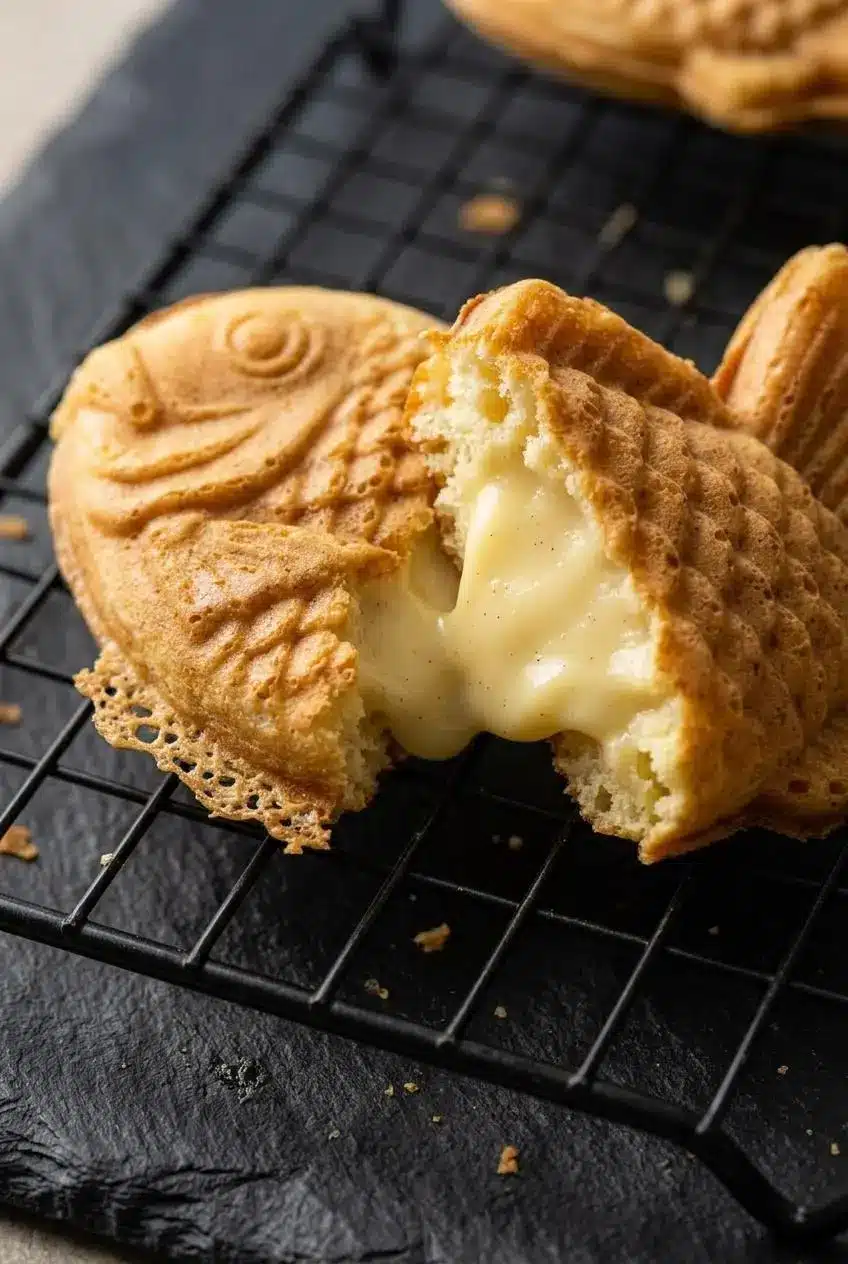
Steady heat matters more than speed. Medium-low heat gives the batter time to cook before its sugar darkens too far. Turning up the burner to hurry a batch usually produces a dark shell around an undercooked middle.
A stovetop cast-iron mold holds heat between batches, so watch for progressively faster browning and adjust the burner when needed. Electric makers regulate heat differently. Follow the appliance instructions, especially if its design doesn’t allow flipping, and use the shell’s color and release as checks rather than assuming identical timing.
- Overflowing seams: Too much batter or filling leaves nowhere for expansion to go. Start at the indicated fill level and keep the custard centered.
- Pale shells: An insufficiently heated mold gives weak browning. Let the pan recover its heat before the next batch.
- Raw batter centers: Excessive heat can brown the surface too quickly. Lower the heat and allow the batter to finish cooking.
- Sticking: Dry details or opening too early can tear the shell. Brush oil into the grooves and give the cake time to set before lifting.
- Soggy shells: Stacking traps steam. Cool the cakes separately on a wire rack instead of piling them onto a plate.
Trim thin, lacy overhangs with kitchen shears once the cakes are manageable. They make crisp little snacks while you finish the batch.
Optional Batter Rest and Sesame Oil for Nutty Flavor
For an optional texture adjustment, rest the mixed batter for 30 minutes before cooking to let the flour hydrate and the gluten relax. You can also mix a tiny touch of toasted sesame oil into the pan oil for a nutty aroma. Neither change is required, and sesame can compete with delicate vanilla.
Delicious Filling Variations and Batter Upgrades
Keep alternative fillings compact and centered, just as you would the pastry cream. Changing both batter and filling at once makes it harder to identify why a cake sticks, leaks, or cooks differently.
Classic Red Bean Paste (Tsubuan vs. Koshian)
Anko, or sweet red bean paste, offers a more traditional filling than vanilla custard. Choose tsubuan if you enjoy visible bean pieces and a textured bite, or koshian for a smooth center.
Prepared anko skips the work of cooking and sweetening beans. Shape firm paste into small ovals before heating the mold so you can place it quickly along each fish’s body. Leave a border for the batter to seal.
Crispy and Chewy Mochi Batter Adjustments
Replacing part of the wheat flour with mochiko sweet rice flour moves the interior toward a chewy, mochi-like texture. It isn’t a direct route to an identical shell, so treat it as an experiment rather than an interchangeable substitution.
Cake flour leans toward a softer, finer crumb. For crispness with either wheat flour, focus first on controlled browning and letting steam escape after cooking. Flour alone won’t rescue a cake that cools in a damp stack.
Quick Chocolate, Cheese, and Pancake Mix Options
- Chocolate chips: Keep them concentrated in the center so melted chocolate stays away from the seam.
- Nutella: Use a compact spoonful rather than spreading it across the cavity.
- Cheese: A melting cheese offers a savory contrast, though the batter will still taste sweet.
- Pancake mix: Japanese pancake mix offers a shortcut; prepare it using its own directions rather than adding it to this batter formula.
A homemade pancake mix is another starting point for experimenting with a shortcut batter, but its texture and cooking behavior may differ.
Make-Ahead, Storage, and Reheating
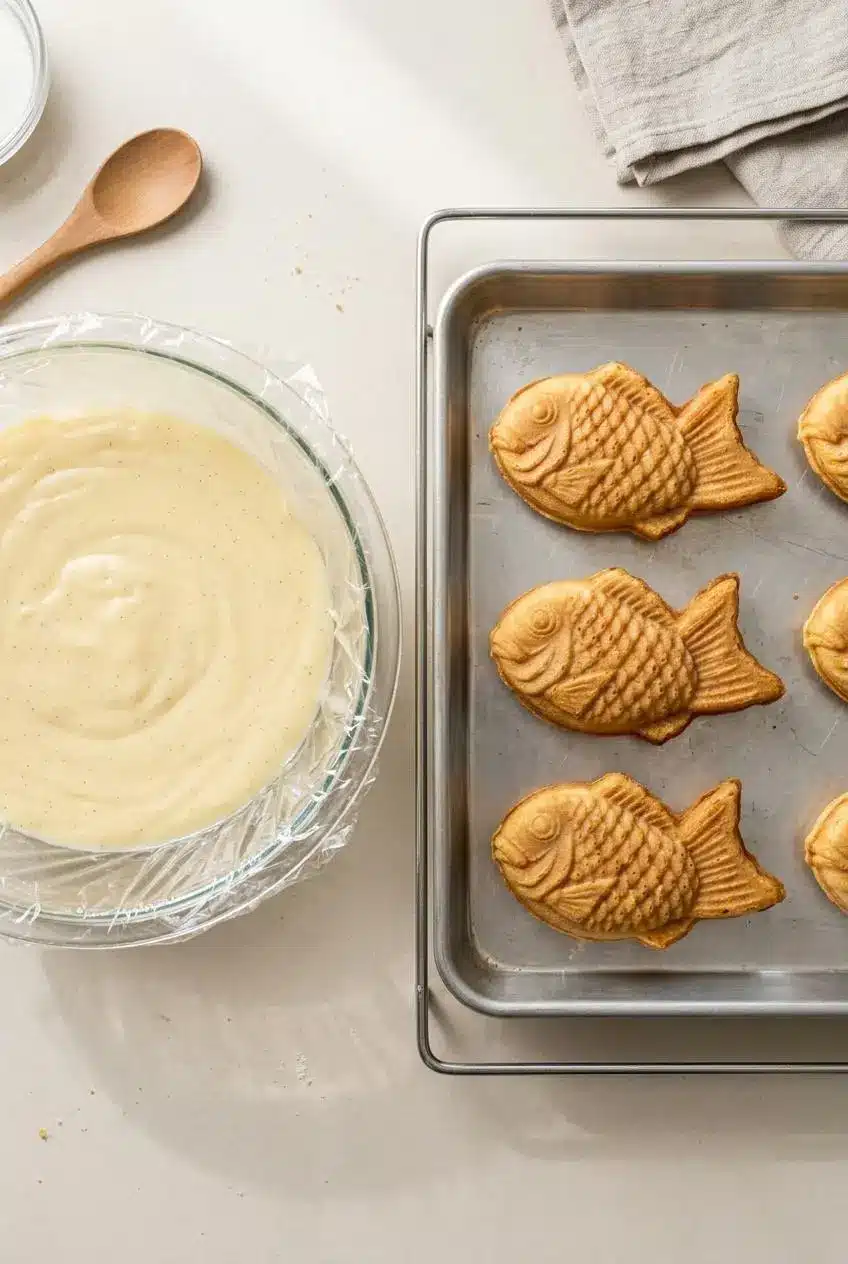
The pastry cream can be made up to 24 hours ahead. Keep it refrigerated with wrap touching its surface, and bring out only what you need for assembly.
Custard-filled cakes need refrigerated storage rather than countertop storage. Keep leftovers covered, and refrigerate egg-containing foods within two hours rather than leaving the finished batch out throughout serving.
Let surface steam escape on the rack before closing cakes in a container, without delaying refrigeration. Packing them while steaming traps moisture against the shell. Keep unused pastry cream separate from cooked cakes so you can reheat only the portions you want.
For a crisper exterior, arrange chilled taiyaki in a toaster oven or air fryer without crowding. Warm until the center is hot and the shell regains some crispness, checking frequently to avoid overbrowning. Skip a microwave-only reheat when crisp edges are the goal; it tends to soften the shell.
What to Serve with Homemade Taiyaki
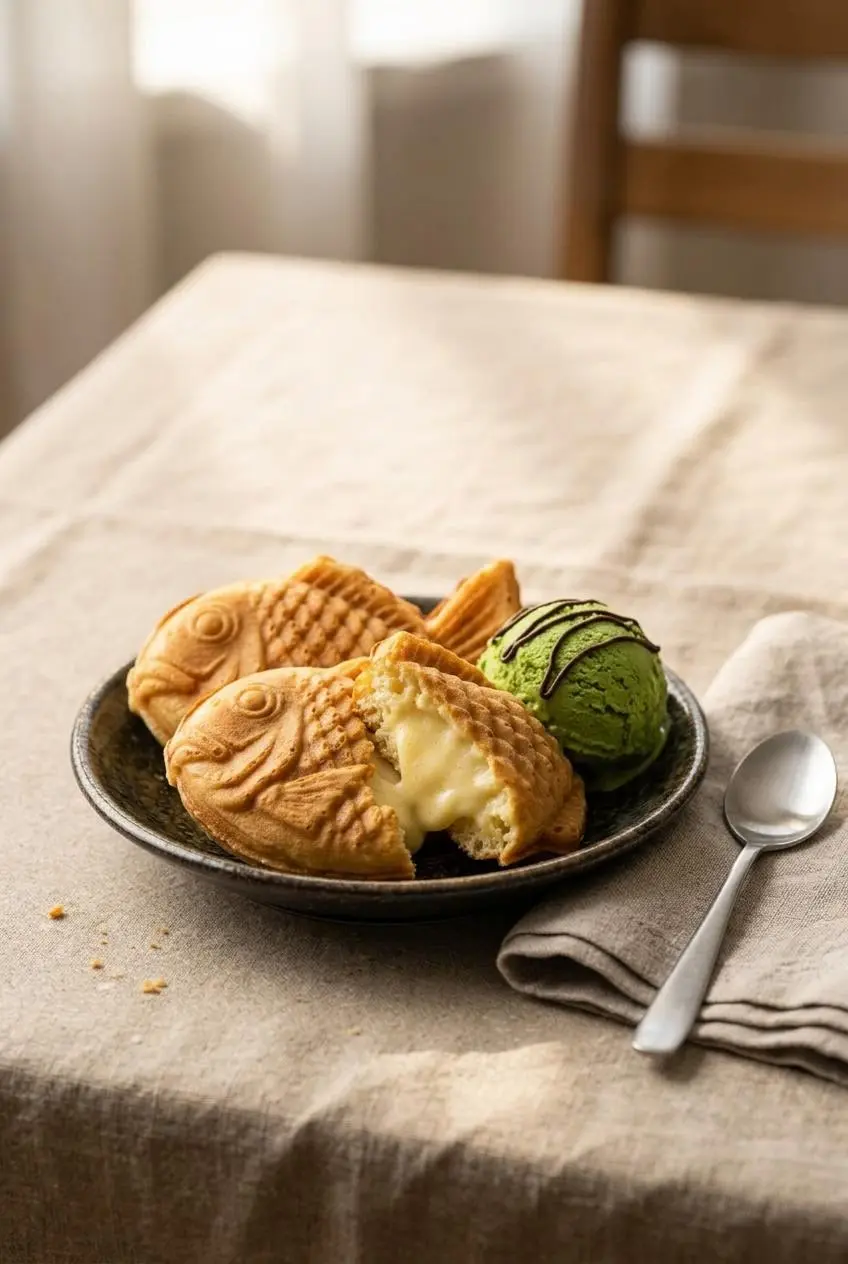
Serve taiyaki warm after a brief rest on the rack, when the edges are crisp but the filling is no longer fiercely hot. They’re satisfying on their own, especially if you want the vanilla custard to stand out.
For a plated dessert, add vanilla, matcha, or black sesame ice cream alongside the fish rather than on top. A chocolate drizzle works well with either custard or red bean filling. Keep it light so the shell doesn’t lose its texture under the toppings.
Conclusion
Golden taiyaki bring together a crisp-edged shell and silky vanilla filling with a little careful pan work. Leave room in the mold, center the custard, and flip promptly after closing.
Give each cake space on the wire rack, then enjoy it warm. Once the technique feels comfortable, try the filling you’re most curious about next.
Frequently Asked Questions
Is Taiyaki Batter the Same as Waffle Batter?
They’re similar, but not necessarily interchangeable. Both commonly contain flour, eggs, milk, sugar, and leavening. Taiyaki batter is generally lighter and less rich than Belgian waffle batter, helping it flow into detailed molds; formulas vary.
Are Taiyaki Korean or Japanese?
Taiyaki are Japanese fish-shaped cakes modeled after red sea bream. Korea has a closely related carp-shaped pastry called bungeoppang. Despite their shape, these sweet cakes don’t contain fish.
Can I Use This Recipe to Make a Taiyaki Ice Cream Cone?
This batter makes a tender, cake-like shell rather than a sturdy upright cone. It isn’t designed to support a heavy serving of soft serve. Plate the taiyaki with ice cream alongside instead.
How Do You Reheat Taiyaki So It Stays Crispy?
Use a toaster oven or air fryer, leave space around each cake, and warm until the center is hot and the shell crisps. Check frequently. A microwave alone softens the exterior instead of restoring crispness.
Can I Use Store-Bought Red Bean Paste Instead of Making Filling from Scratch?
Yes. Prepared tsubuan or koshian can replace the pastry cream as an optional filling. Shape firm paste into small ovals beforehand, then center it in each mold and cover it completely with batter.
Taiyaki Recipe

Equipment
- Taiyaki pan
- Wire rack
- Strainer
- measuring cup or jug
Ingredients
Taiyaki Cake Batter
- 1 cup flour
- 3 tbsp sugar
- 2 tsp baking powder
- ¼ tsp salt
- 1 large egg beaten
- 1 cup milk
- 2 tbsp melted butter
- 1 tbsp neutral-flavored oil vegetable, canola, etc.
Pastry Cream Filling
- 2 cups whole milk
- 6 egg yolks
- 2/3 cup granulated sugar
- 1/4 cup cornstarch
- 1 tbsp unsalted butter
- 1 tbsp vanilla extract
Instructions
To Make the Batter
- Pass the flour, baking powder, sugar, and salt through a sifter into a large mixing bowl. The dry mixture should look evenly blended, without compacted flour lumps.
- Blend the beaten egg with the milk and melted butter in a medium bowl using a whisk. Look for an evenly colored liquid without streaks of egg.
- Whisk the wet mixture into the sifted ingredients until combined. The batter should pour smoothly rather than fall in heavy clumps.
- Transfer the mixture to a measuring jug or spouted measuring cup. A controlled stream will help you reach the mold’s narrow details.
- Warm the taiyaki pan and brush its cooking surfaces with the neutral-flavored oil. A thin coating should reach the fins, tail, and edges without pooling.
- With the pan over medium-low heat, pour batter into each lower cavity until about 60% full. Leave visible room for both the custard and the covering batter.
- Place pastry cream along the center of each fish, then pour enough batter over it to cover. Keep the filling away from the perimeter so batter can seal around it.
- Shut the mold, flip it immediately, cook for 2 to 2.5 minutes, then turn it back and cook the other side for another 2 to 2.5 minutes before transferring the cakes to a wire rack. Check for a golden shell and cooked batter, with crisp edges that release from the mold.
To Make the Filling
- Set a medium saucepan containing the milk over medium heat to warm. The milk needs to be hot for gradually warming the yolk mixture.
- Beat the yolks and granulated sugar together in a bowl with a whisk. Continue until the mixture becomes paler and airy.
- Work the cornstarch into the sweetened yolks with vigorous whisking. The mixture should look smooth, with no dry pockets.
- Measure 1/4 cup of the hot milk and gradually whisk it into the yolk mixture. This loosens the thick mixture while gently raising its temperature.
- Gradually incorporate the rest of the hot milk while continuing to whisk. The mixture should become fluid and evenly blended.
- Return the mixture to the saucepan through a strainer, then whisk continuously over medium-high heat until thick with slow bubbles breaking through. The strainer catches cooked egg bits, while the finished cream should leave visible whisk trails.
- Take the pan off the burner, blend in the butter and vanilla, and allow the cream to cool slightly. The butter should disappear into a glossy, smooth custard.
- Lay plastic wrap directly against the custard’s surface. Contact with the cream prevents an exposed surface from drying into a skin.
- Refrigerate for at least 2 hours, keeping the custard chilled until 1 hour before use. The filling should become firm enough to spoon neatly onto the batter.