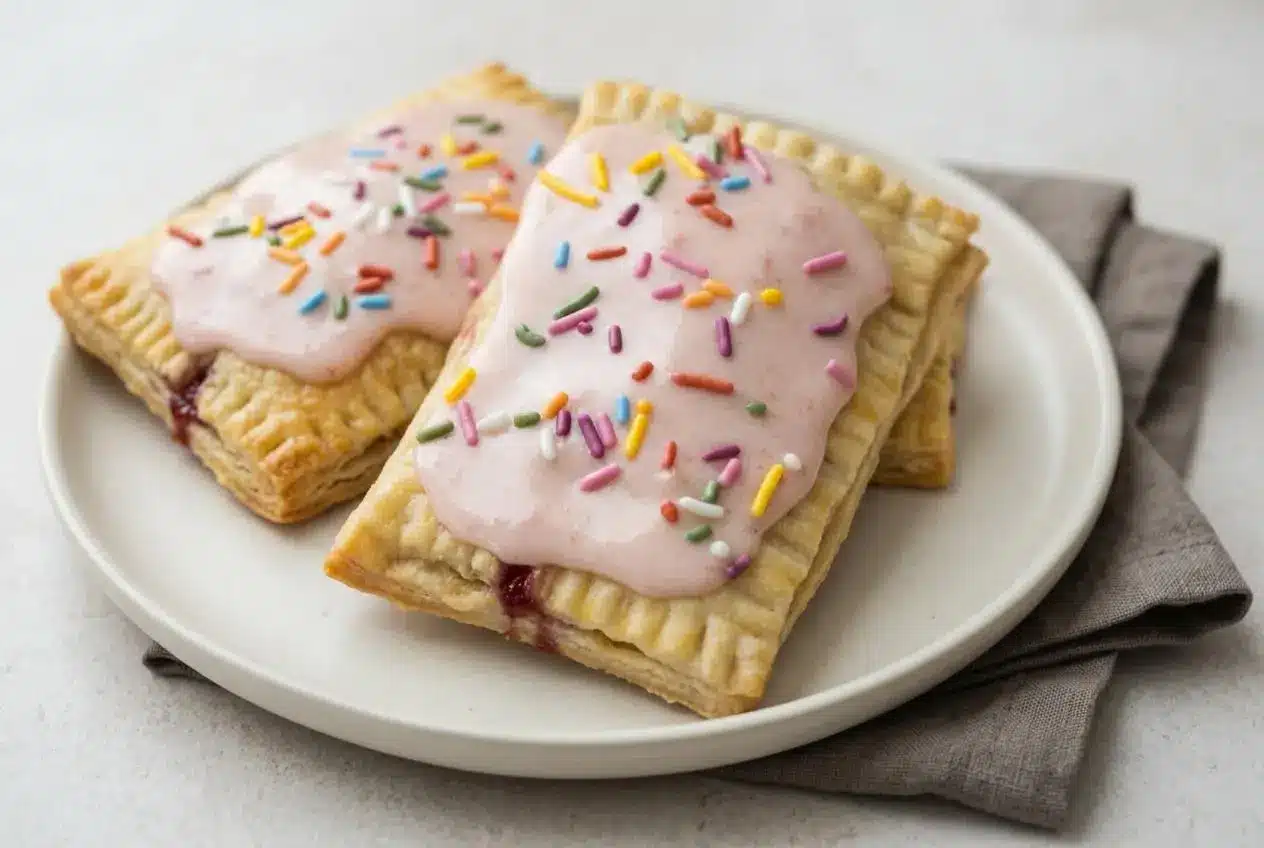
Homemade sourdough pop tarts combine cold grated butter, all-purpose flour, and chilled sourdough discard into a flaky pastry crust. Fill them with thick strawberry jam, chill before baking at 350°F, and finish the cooled pastries with strawberry glaze.
These sourdough pop tarts have buttery, crisp edges and a sweet jam center tucked between two layers of pastry. They’re closer to a tender hand pie than a packaged toaster pastry, with a little tang from the discard and real strawberry flavor in the icing.
A box grater handles the butter, so you don’t need a food processor. The recipe makes eight pastries and includes two chilling stages, so leave room in your schedule for those rests and complete cooling. Careful sealing helps keep the filling where it belongs. The strawberry glaze is worth the wait.
Clear a space in the refrigerator for the baking sheet before you start assembling.
Ingredients You Need and Why They Matter
Flour gives the pastry structure, cold butter creates flaky layers, and sourdough discard adds moisture and tang. Sugar and salt balance the crust, egg wash encourages browning, and strawberry jam flavors both the filling and creamy glaze.
Crust
- 2¼ cups all-purpose flour (270 g)
- 2 tablespoons granulated sugar (25 g)
- ½ teaspoon salt (3 g)
- 16 tablespoons salted butter (very cold and grated (226 g))
- ½ cup sourdough discard (120 g)
- ¼ cup cold water (plus up to an additional ¼ cup if needed (60–120 g))
Egg Wash
- 1 large egg
- 1 tablespoon heavy cream
Strawberry Jam Filling
- 8 tablespoons strawberry jam (1 tablespoon per pop tart)
Strawberry Glaze
- 1 cup powdered sugar (120 g)
- 2 tablespoons strawberry jam (40 g)
- 2 tablespoons heavy cream (30 g)
- sprinkles (optional)
Cold butter makes the difference. Grating distributes it through the flour without prolonged mixing. During baking, moisture in the butter turns to steam, helping separate the pastry into delicate layers. Keep the shreds cold enough to remain distinct rather than smearing into a greasy paste.
Sourdough discard contributes flavor, not a rising schedule. Use it cold so it doesn’t soften the butter. You don’t need to feed it or wait for the dough to double. Chilled active starter also works, although its bubbles aren’t necessary for this pastry.
Water brings everything together. Start with the listed amount and use the permitted extra water only if dry flour remains. Your flour and kitchen conditions affect how much you need. A pinched piece should stay together without feeling wet or sticky.
Choose jam by texture. Thick strawberry jam or preserves should mound on a spoon rather than pour off it. A watery filling is harder to contain, even with careful crimping. For the glaze, stir the jam thoroughly so it disperses through the powdered sugar.
- Unsalted butter: It works as an optional substitution, but the crust will need a little additional salt to replace what salted butter contributes.
- Dairy-free adaptation: Try cold plant-based butter sticks rather than soft tub spread, and replace the cream with coconut milk or a dairy-free cream substitute; flavor and browning may differ.
I’d grate the butter while it’s very firm, stopping to chill it again if the shreds begin sticking together.
How to Make the Sourdough Pop Tarts Step by Step
Plan on 25 minutes of preparation, 1 hour 20 minutes of chilling, and 25 to 30 minutes of baking, plus cooling before glazing. Use a box grater, a large bowl, plastic wrap, and a parchment-lined baking sheet.
- Shred the cold butter with a box grater, then whisk the flour, sugar, and salt in a large bowl before working in the butter and stirring in the discard and cold water.
Look for coarse, sandy crumbs with visible butter pieces before adding the wet ingredients. - Press the mixture together with your hands, incorporating up to an additional ¼ cup cold water only where needed.
The dough should hold its shape when squeezed, without loose flour falling away. - Shape two flat disks, enclose each in plastic wrap, and refrigerate for at least 1 hour or up to 3 days.
Properly chilled dough feels firm, with no soft, greasy patches. - Heat the oven to 350°F, cover a baking sheet with parchment, and roll one disk on a floured surface to about ⅛ inch thick while keeping the second disk refrigerated.
A consistent thickness helps the centers and edges bake evenly. - Cut 3-by-5-inch rectangles, arrange half on the sheet, and place 1 tablespoon jam in each center with a clean ½-inch border before covering with matching rectangles and pressing the edges first with fingers, then a fork.
The finished seam should lie flat, with no jam squeezed between the dough layers. - Refrigerate the assembled pastries for 20 minutes, using the freezer instead if preferred for this brief chill.
The pastry should firm up again so the butter doesn’t immediately soften and spread in the oven. - Beat the egg with the heavy cream and brush the mixture across the chilled pastry tops.
A light, even coating encourages a glossy, golden finish without puddles around the edges. - Bake for 25 to 30 minutes, then leave the pastries to cool completely before icing.
Use a golden-brown crust as the baking cue and a completely cool surface as the glazing cue. - Stir the powdered sugar, strawberry jam, and heavy cream into a glaze, spread it over the cooled pastries, and add sprinkles if desired.
The icing should cover the tops rather than immediately melting into the crust.
Mix and Chill the Sourdough Pastry Dough
Stop handling the dough as soon as it holds together. Kneading it smooth develops more gluten and warms the butter, both of which work against a tender crust. The first chill firms the fat and gives the dough a chance to relax before rolling.
A box grater gives you control over the butter texture. If you prefer a food processor, briefly pulse the butter with the dry ingredients, stopping while the mixture still looks crumbly rather than pasty.
Roll, Fill, and Seal the Rectangles
Keep the waiting dough cold and use only enough flour to prevent sticking. Match similarly sized rectangles so you can press the edges together without stretching the top. Gather scraps gently rather than kneading them repeatedly.
A single 3-by-8-inch rectangle folded over its filling is another assembly style, but it produces a different shape and yield. The paired 3-by-5-inch rectangles give you matching tops and bottoms for this recipe.
Chill, Vent, Bake, and Glaze
The second chill helps the cut pastries keep their shape. For extra protection against pressure building inside, you can poke small steam vents through the top pastry with a toothpick or fork before baking. Avoid piercing the bottom.
Don’t judge doneness by the darkest fork mark alone. Look for golden color across the pastry, including the thicker edges. After baking, wait until the tops feel completely cool; warm pastry makes the strawberry icing thin and translucent instead of opaque.
Tips for Flaky Pastry and Leak-Free Filling
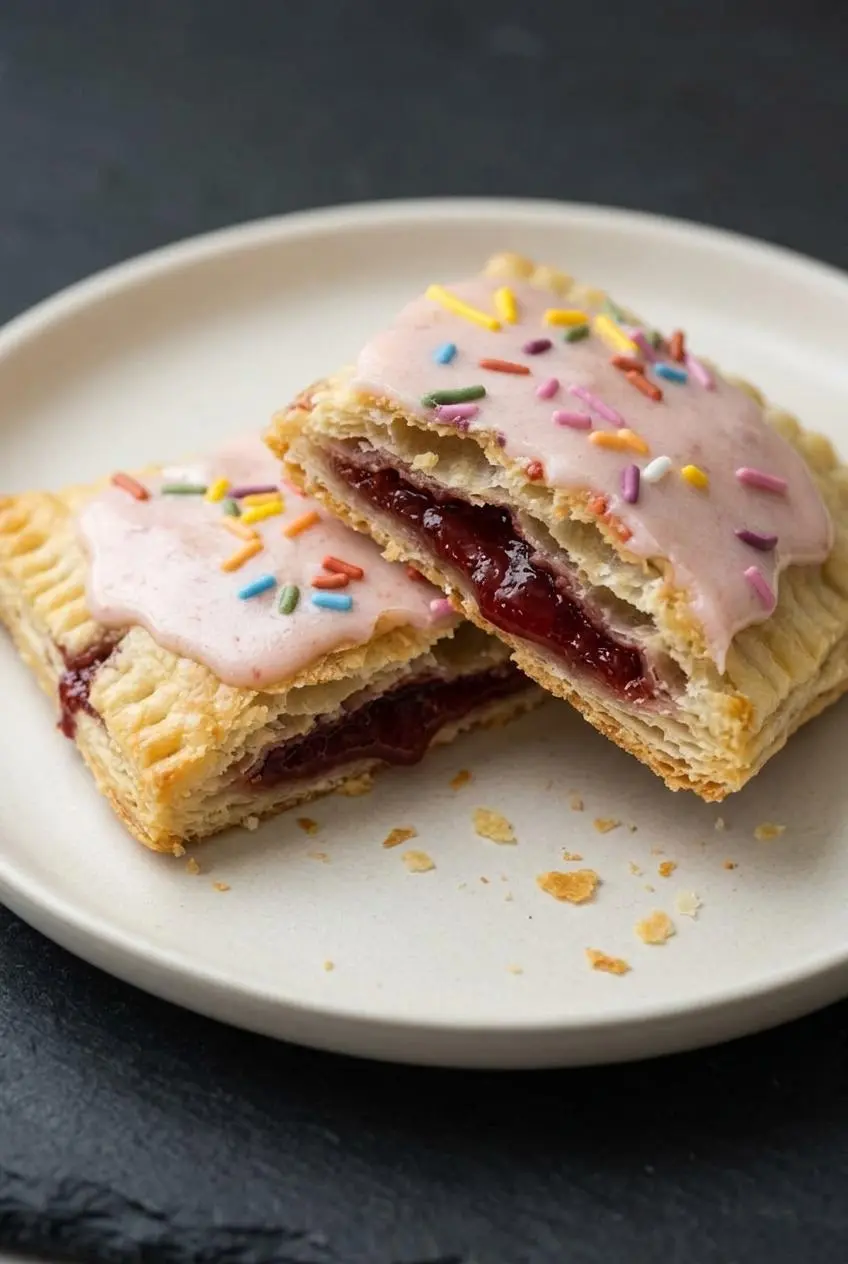
Most pastry problems start with warm dough, excess handling, or filling in the seam. Small adjustments during assembly help more than extra crimping after jam has already escaped.
- Greasy dough: Soft butter has started smearing into the flour. Pause and chill the dough until it feels firm enough to handle cleanly.
- Cracking edges: Dough that breaks apart may need some of the permitted extra water; very cold dough can also resist rolling, so let it become just pliable enough to work.
- Tough crust: Repeated kneading and heavy dustings of flour can make the pastry firm. Press to combine and roll with light, even strokes.
- Jam at the border: Clear it away before adding the top rectangle. Dough seals best against clean dough, not a slippery layer of filling.
- Bulging centers: An overfilled pastry pulls against its seams. Keep to the measured filling rather than adding an extra spoonful.
- Weak seams: Press with your fingers before using the fork. The joined edge should look flat and continuous, with distinct fork impressions.
- Runny jam: Prefer a thicker preserve. As an optional adjustment, a little cornstarch or arrowroot stirred into the jam can help bind excess moisture, but it won’t rescue an overfilled pastry.
You can also brush a little egg wash along the clean bottom border before sealing. Keep it light so it doesn’t make the edges slippery.
If you’re using a homemade sourdough starter, chill the portion for this dough before mixing. Cold discard matters just as much as cold butter.
Flavor Variations Including Brown Sugar Cinnamon
Change the filling without changing the pastry dough. Keep these ideas optional, use fillings that hold their shape, and leave the same clean border around each pastry.
Brown Sugar Cinnamon Filling
Combine brown sugar with ground cinnamon and a pinch of all-purpose flour, then stir in a little melted butter that has cooled. Aim for a damp, spreadable crumb mixture rather than a loose sauce. Add the butter gradually so the filling doesn’t become greasy.
Spread a thin layer inside the border instead of building a tall mound. Brown sugar melts as it heats, so careful sealing still matters even though the filling starts out less fluid than jam.
For the topping, replace the strawberry glaze with an optional vanilla or cinnamon glaze. Keep the icing thick enough to sit on the cooled crust. This filling offers a warmer, spiced flavor rather than the bright fruitiness of strawberry.
Pumpkin Butter, Berry, and Chocolate Ideas
- Pumpkin or apple butter: Choose a thick fruit butter and pair it with a maple-flavored glaze for an autumn variation.
- Berry preserves: Raspberry or mixed berry preserves add a tart edge; avoid watery fruit sauces.
- Peach filling: Try homemade peach jam if it has a thick, spoonable consistency.
- Chocolate hazelnut: Use a thin layer of chocolate hazelnut spread, then finish with vanilla glaze and crushed graham crackers for a s’mores-inspired flavor.
- Holiday shapes: Cut matching tops and bottoms with large cookie cutters, choosing shapes broad enough to leave room for filling and a secure seam.
How to Store and Reheat Sourdough Pop Tarts
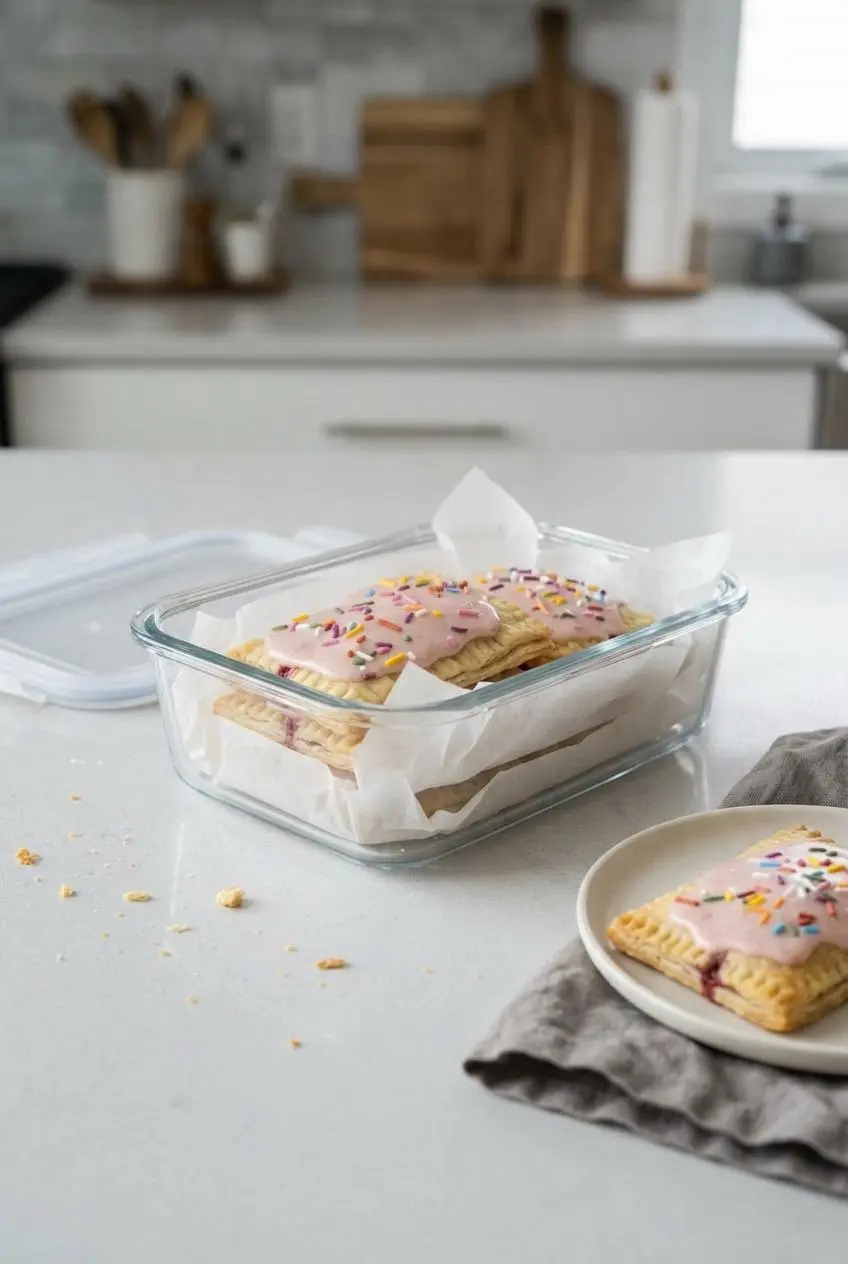
Making the dough ahead is the clearest way to split up the work. Keep the wrapped disks refrigerated until you’re ready to roll them, using the make-ahead window given in the method.
Let baked pastries cool completely before putting them in a covered container. Trapped warmth creates condensation, which softens the crust. Arrange glazed pastries in a single layer, or separate them with parchment once the icing has set to prevent sticking.
Keep leftovers covered and refrigerated, particularly when using the cream-based glaze. For better texture when warming, set aside pastries without glaze and ice them afterward.
Prefer warming pastries flat in a toaster oven or conventional oven, checking them as they warm. An upright slot toaster is a poor choice for these homemade glazed pastries because the topping may drip and the filled pastry can be difficult to retrieve intact. Follow your appliance’s directions rather than using the settings intended for packaged toaster pastries.
Serving Suggestions
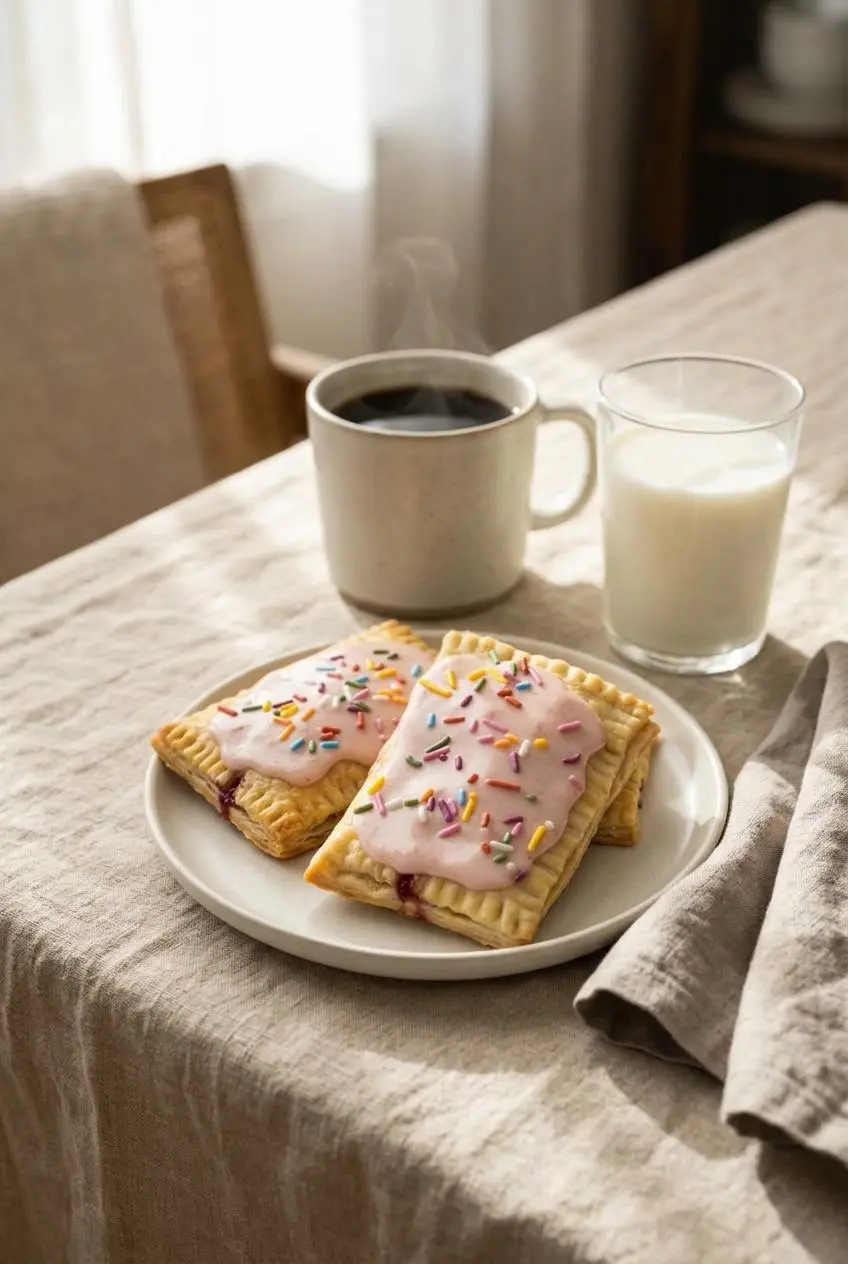
Serve the pastries at room temperature when you want the glaze to stay neat, or warm an unglazed pastry and add icing afterward. Coffee or cold milk makes a natural pairing.
For a weekend breakfast spread, offer smaller portions alongside fruit and sourdough discard pancakes. For a lunchbox treat, let the icing set before packing and use a rigid container so the flaky edges don’t get crushed.
Conclusion
Cold butter, gentle handling, and the second chill give these pastries their flaky structure. A clean border and firm seal help keep the sweet strawberry filling tucked inside.
Start with strawberry, then try the brown sugar cinnamon variation when you want something cozy and spiced. Give the pastries time to cool, and let that strawberry glaze be the finishing touch.
Frequently Asked Questions
Can I Use Active Sourdough Starter Instead of Sourdough Discard?
Yes. This pastry doesn’t depend on fermentation for its rise, so either discard or active starter can work. Chill active starter before mixing so it doesn’t warm the grated butter.
Why Is My Jam Leaking Out of the Pop Tarts While Baking?
Thin filling, jam in the seam, and trapped steam can all cause leaks. Use thick jam, keep the border clean, press firmly before fork-crimping, and consider adding small steam vents through the tops.
How Can I Prepare Homemade Sourdough Pop Tarts Ahead?
Prepare and wrap the dough disks, then refrigerate them using the make-ahead guidance in the method. Roll, fill, and complete the assembled-pastry chill when you’re ready to bake.
Can I Reheat Sourdough Pop Tarts in a Regular Toaster?
A flat reheating method is preferable for these homemade pastries, especially after glazing. Use a toaster oven or conventional oven, and warm unglazed pastries when possible so you can add fresh icing afterward.
How Do I Make a Brown Sugar Cinnamon Filling Instead of Jam?
Mix brown sugar, cinnamon, a pinch of flour, and a little cooled melted butter into a damp, spreadable mixture. Keep it in a thin layer inside the clean border, then seal and bake as directed.
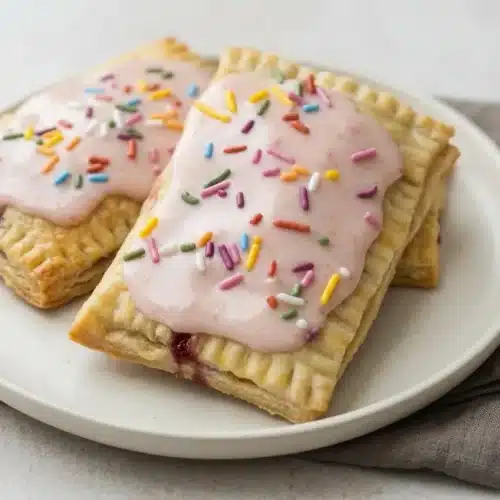
Sourdough Pop Tarts

Equipment
- Cheese grater
- Baking Sheet
- Parchment Paper
- Plastic wrap
Ingredients
Crust
- 2¼ cups all-purpose flour (270 g)
- 2 tablespoons granulated sugar (25 g)
- ½ teaspoon salt (3 g)
- 16 tablespoons salted butter (very cold and grated (226 g))
- ½ cup sourdough discard (120 g)
- ¼ cup cold water (plus up to an additional ¼ cup if needed (60–120 g))
Egg Wash
- 1 large egg
- 1 tablespoon heavy cream
Strawberry Jam Filling
- 8 tablespoons strawberry jam (1 tablespoon per pop tart)
Strawberry Glaze
- 1 cup powdered sugar (120 g)
- 2 tablespoons strawberry jam (40 g)
- 2 tablespoons heavy cream (30 g)
- sprinkles (optional)
Instructions
- Shred the cold butter with a box grater, then whisk the flour, sugar, and salt in a large bowl before working in the butter and stirring in the discard and cold water. Look for coarse, sandy crumbs with visible butter pieces before adding the wet ingredients.
- Press the mixture together with your hands, incorporating up to an additional ¼ cup cold water only where needed. The dough should hold its shape when squeezed, without loose flour falling away.
- Shape two flat disks, enclose each in plastic wrap, and refrigerate for at least 1 hour or up to 3 days. Properly chilled dough feels firm, with no soft, greasy patches.
- Heat the oven to 350°F, cover a baking sheet with parchment, and roll one disk on a floured surface to about ⅛ inch thick while keeping the second disk refrigerated. A consistent thickness helps the centers and edges bake evenly.
- Cut 3-by-5-inch rectangles, arrange half on the sheet, and place 1 tablespoon jam in each center with a clean ½-inch border before covering with matching rectangles and pressing the edges first with fingers, then a fork. The finished seam should lie flat, with no jam squeezed between the dough layers.
- Refrigerate the assembled pastries for 20 minutes, using the freezer instead if preferred for this brief chill. The pastry should firm up again so the butter doesn’t immediately soften and spread in the oven.
- Beat the egg with the heavy cream and brush the mixture across the chilled pastry tops. A light, even coating encourages a glossy, golden finish without puddles around the edges.
- Bake for 25 to 30 minutes, then leave the pastries to cool completely before icing. Use a golden-brown crust as the baking cue and a completely cool surface as the glazing cue.
- Stir the powdered sugar, strawberry jam, and heavy cream into a glaze, spread it over the cooled pastries, and add sprinkles if desired. The icing should cover the tops rather than immediately melting into the crust.