
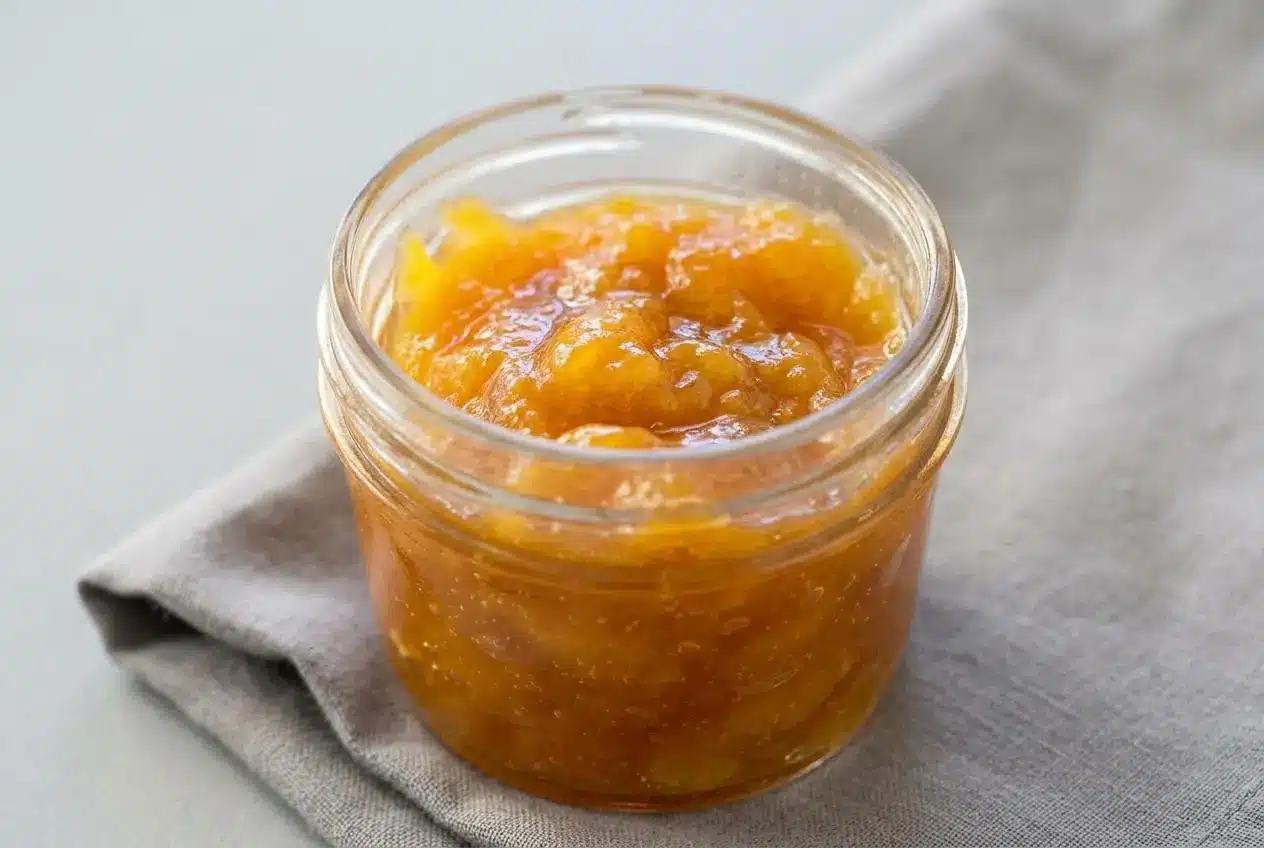
To make homemade peach jam without added pectin, cook chopped yellow peaches with sugar and fresh lemon juice until thickened, then cool and test the set with a chilled plate.
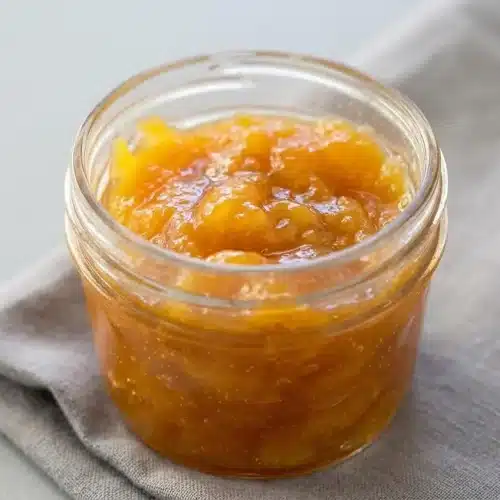
Peach jam is a classic no-pectin preserve with bright fruit flavor, a glossy golden color, and a softer, spoonable set that spreads beautifully.
As it cooks, the kitchen smells like warm summer fruit, and the chilled plate test takes the guesswork out of the finish. That little wrinkle test is the whole trick.
Set a small plate in the freezer before you start cooking so the doneness test is ready when the jam thickens.
Why Choose This No-Pectin Method
This method works because peaches already contain natural pectin, and sugar plus lemon juice help that pectin form a loose gel as the fruit cooks down. You get a jam that tastes more like peaches and less like a firm commercial spread.
Fresh lemon juice matters here. Its acid helps the fruit, sugar, and natural pectin come together into a soft set, and it also keeps the flavor from tasting flat or overly sweet.
Yellow peaches are the best fit for this style of jam because their flavor holds up well during boiling and they bring the right balance of sweetness and acidity when paired with lemon. The final texture is usually gentler than boxed-pectin jam, which is exactly why it spreads so nicely on toast and biscuits.
Heat also deepens the fruit’s flavor as moisture cooks off, much like it does with smoky grilled peaches. The difference is that here you keep that concentrated flavor in a glossy spoonful.
Essential Ingredients for Perfect Peach Jam
Each ingredient has a specific job here, from building fruit flavor and body to creating the right balance of sweetness, brightness, and a smooth spreadable texture.
- 3 1/2 pounds peaches, peeled, pitted, and cut into chunks
- 2 1/2 cups sugar
- Juice from one lemon
Peaches provide the flavor, color, and natural fruit pulp that give the jam body. Sugar sweetens the fruit, helps preserve it, and supports the gel structure, so cutting it too drastically can leave the jam loose. Lemon juice adds the acidity that helps the natural pectin do its job and keeps the flavor lively.
I look for ripe yellow peaches that give slightly near the stem and smell fragrant before they ever hit the cutting board.
Yellow vs White Peaches
If you plan to water-bath can this jam, stick with yellow peaches. White-fleshed peaches can be lower in acid, and white peaches may exceed a pH of 4.6 and are not suitable for standard boiling water canning.
If white peaches are what you have, they can still make a delicious batch, but it is better to keep that jam chilled rather than treating it as shelf-stable canned jam. Yellow peaches are the safer choice for traditional hot water bath canning.
The Crucial Role of Lemon Juice
Lemon juice is not a garnish ingredient here. It supplies the acid that helps natural peach pectin and dissolved sugar form structure as the fruit boils.
Without enough acid, the jam can stay syrupy even after a good cook. Fresh lemon juice also sharpens the flavor, which keeps the finished jam from tasting heavy or one-note.
Step-by-Step Cooking Guide
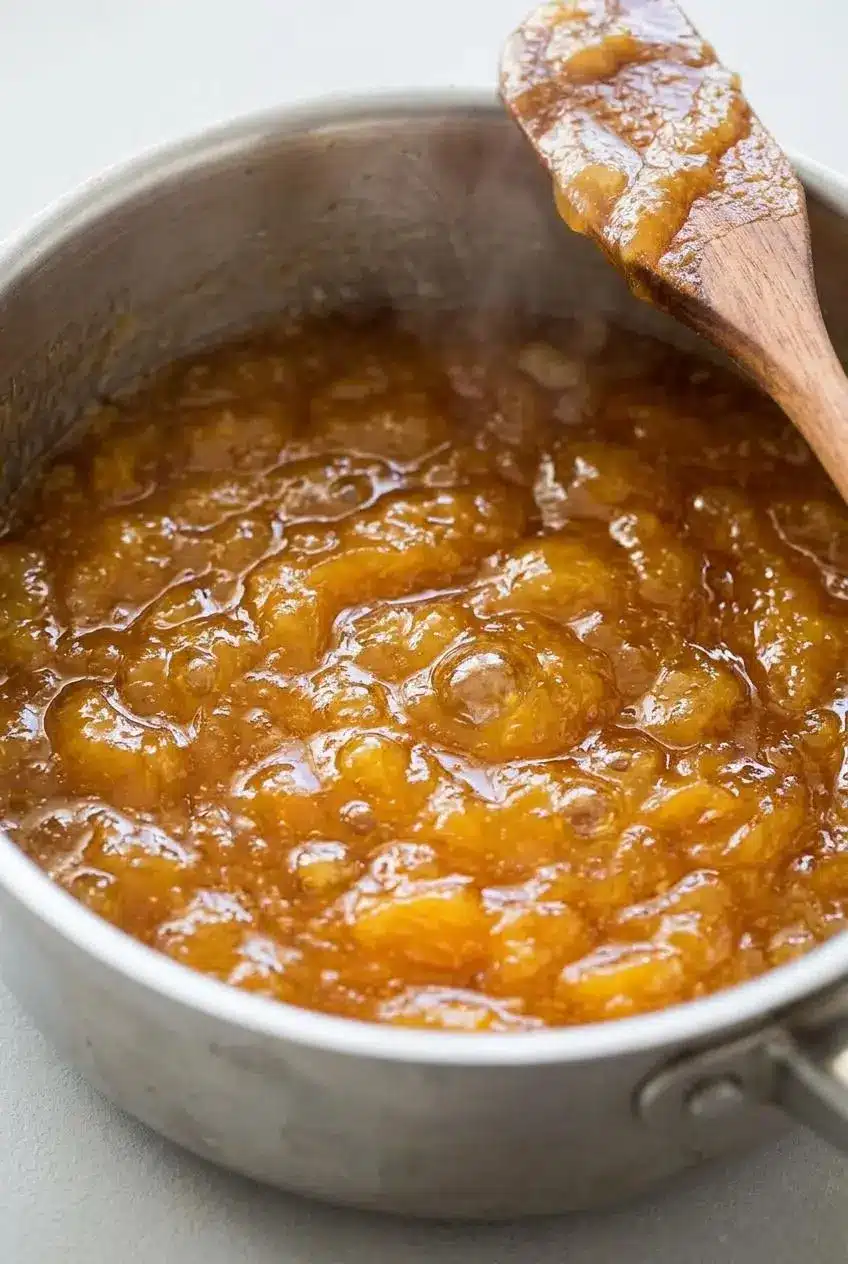
This recipe is straightforward, but the texture cues matter. Watch the bubbles, stir well when the sugar goes in, and use the chilled plate test instead of guessing.
- Put the peaches and lemon juice in a medium saucepan and bring them to a boil over medium-high heat, crushing the fruit with a spatula or potato masher as it softens.
The pieces should loosen, release juice, and start looking pulpy rather than chunky. - Lower the heat to medium, add the sugar, and stir frequently as it dissolves back into the fruit mixture.
Keep the pan moving with steady stirring so the sugar melts evenly and does not catch on the bottom. - Bring the mixture to a full rolling boil and continue cooking, stirring often, until the jam reduces and thickens.
The bubbles will look heavy and slow rather than foamy and quick, and the color will deepen to a richer gold. - Cool the jam and check the texture, then return it to a boil for about 10 minutes if you want it thicker before cooling again.
A finished batch should look glossy and mound softly instead of running like juice.
For the chilled plate test, drop a spoonful of hot jam onto the cold plate and leave it for 1 minute. Push the edge with your finger. If the surface wrinkles and the jam holds its shape, it has reached the gel point. If it slides like syrup, boil it a bit longer and test again.
Early in the cook, the fruit breaks down and the fibers soften. Once the sugar is added and the boil turns strong, you are concentrating flavor and water is cooking off fast. That is why the change from light bubbling to thick, slow bubbling tells you more than the clock.
Reducing Canning Foam Instantly
If the surface gets very foamy, a tiny pat of butter can help break the foam by lowering surface tension. You only need a very small amount, and it can calm the top of the pot surprisingly fast.
Foam is mostly a nuisance, not a disaster, but too much of it can make skimming messy and the jam look cloudy in the jar. A gentle stir after the foam settles usually helps it even out.
Troubleshooting Watery or Cloudy Jam
Most jam problems are fixable, and the cause is usually clear once you know what to look for.
- Jam seems watery after cooling. It may simply need more time to set, since preserves can continue settling in the jar. If it still looks too loose, return it to the saucepan, add a tablespoon of fresh lemon juice, and boil for 5 to 10 more minutes before cooling again.
- Jam never thickened much in the pot. The boil may not have been strong enough, or the sugar may have been reduced too far. A true rolling boil has deep, heavy bubbles that keep rising even while you stir.
- Jam looks cloudy. This often comes from trapped air, too much agitation, or slow filling that leaves foam suspended in the mixture. Stir steadily rather than aggressively, and skim excess foam if needed.
- Fruit tastes dull. The balance usually needs acid, not more sugar. A little extra fresh lemon juice can brighten the batch without turning it tart.
- Bottom of the pan starts catching. The heat is too high or the sugar was not stirred in carefully enough. Lower the burner and keep the spatula moving across the full base of the saucepan.
If you are canning the jam, the texture in the jar can continue improving after processing and cooling. Give it time before deciding a batch failed. Peach jam can be a little dramatic while warm.
Safe Storage and Reheating Guidelines
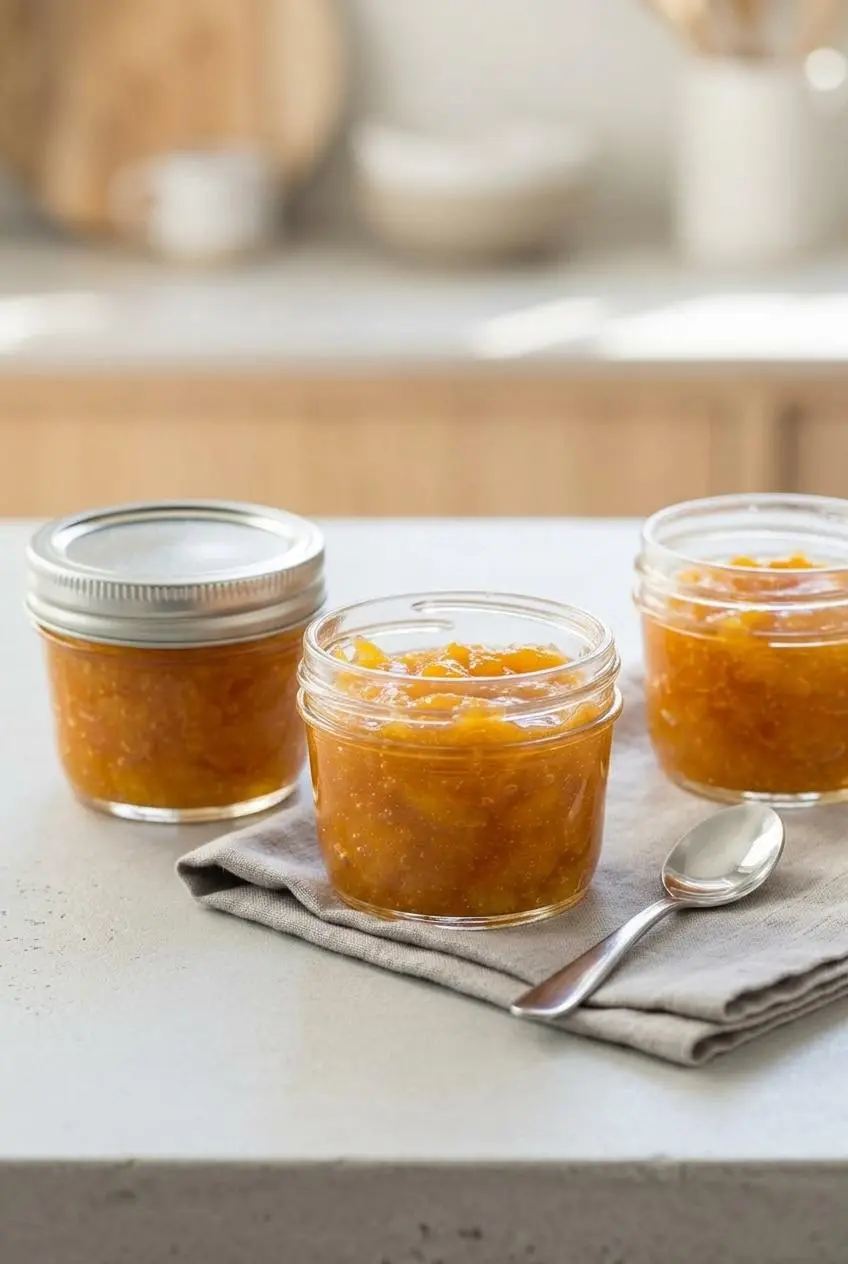
How you store this jam depends on whether you are using it right away or preserving it in jars. Either way, start with very clean jars, clean utensils, and fully cooled jam before sealing for storage.
For canning, wash jars well and keep them hot before filling so they are ready for the jam. Lids and bands should also be clean, and jar rims need to be wiped carefully before sealing. If you are not canning, spoon the cooled jam into a clean container and refrigerate it.
This recipe yields 3 to 4 cups, so it works well as a refrigerator jam if you do not want to process jars. Reheat only the portion you need, gently, so the fruit flavor stays fresh and the sugar does not start cooking again.
For shelf-stable storage, use a tested water-bath canning method that matches your jar size and altitude. If a jar does not seal, or if you notice bulging lids, leakage, mold, or off odors, do not serve that jar.
Creative Serving Suggestions
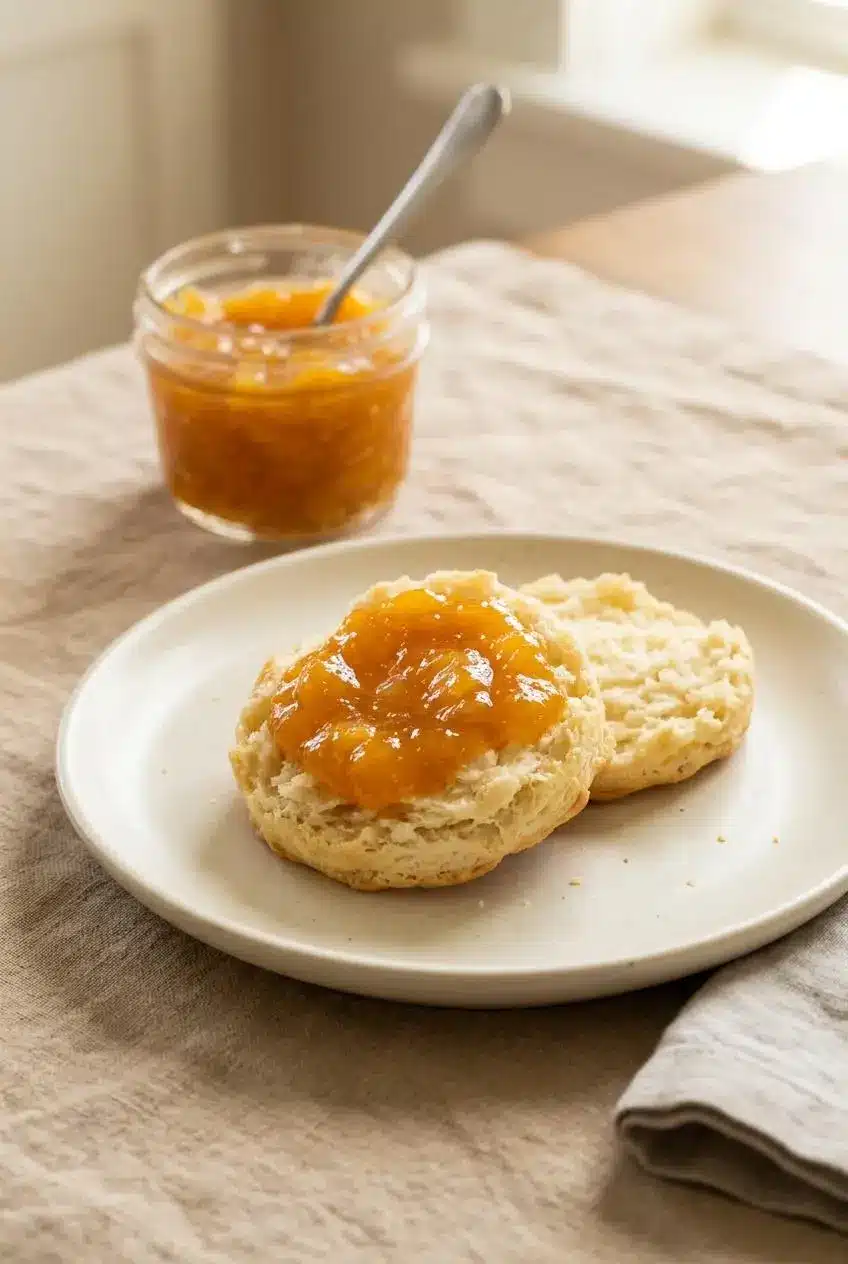
This jam really shines where its soft set can melt slightly into something warm or creamy.
- Spread it over warm buttermilk biscuits for the most classic move.
- Spoon it over vanilla ice cream so the cold cream and warm peach notes meet in the middle.
- Serve it beside sharp cheddar or a tangy goat cheese for a sweet and savory snack.
- Use it as a filling shortcut in crispy peach hand pies when you want a fruit dessert with less prep.
If you have extra peaches to use up, this jam also pairs naturally with the flavors in a classic peach cobbler. It is a nice way to stretch summer fruit across more than one dessert.
Vanilla Infused Peach Jam
For a warmer, rounder flavor, simmer a split vanilla bean with the jam and remove it before storing. Vanilla softens the sharp edge of the lemon and makes the peach aroma feel almost floral.
This version is especially good spooned over ice cream or tucked into breakfast pastries. It tastes a little fancy with very little effort.
Warmly Spiced Peach Jam
A tiny pinch of cinnamon, allspice, or nutmeg can give the jam a cozier flavor without hiding the peaches. Add spice lightly so the fruit still leads.
This variation is especially nice for fall baking or spreading on toast with salted butter. Think gentle warmth, not pumpkin pie.
Conclusion
This peach jam keeps the ingredient list focused and lets the fruit do the work, with sugar and lemon juice building a soft, spreadable set without added pectin.
If you remember one thing, make it the chilled plate test. Once you trust that wrinkle cue, you can turn out a beautiful batch and play with vanilla or spice whenever the mood hits.
Frequently Asked Questions
How can I peel fresh peaches easily?
Cut a small X on the bottom of each peach. Boil them for 30 seconds, then move them straight into ice water. When cool enough to handle, the skins should slip off with your fingers or a small knife.
Can I make peach jam using frozen peaches?
Yes, frozen peaches work well for this jam. Thaw them completely before cooking. Pour all of the juices from thawing into the saucepan too, since that liquid carries peach flavor.
How do I fix runny or watery peach jam?
Pour the jam back into a saucepan. Add a tablespoon of fresh lemon juice. Boil it for 5 to 10 more minutes, then cool and test again on a chilled plate.
Is fresh lemon juice mandatory in no-pectin recipes?
Yes, it is a key part of the recipe. Lemon juice provides the acid that helps the fruit sugars and natural pectins set into jam. It also keeps the flavor bright, which matters in a sweet preserve like this.
Peach Jam

Equipment
- Medium saucepan
- Spatula or potato masher
Ingredients
- 3 1/2 pounds peaches, peeled, pitted, and cut into chunks
- 2 1/2 cups sugar
- 1 lemon Juice from one lemon
Instructions
- Add peaches and lemon juice to a medium saucepan. Bring to boil over medium-high heat, using a spatula or masher to crush peaches to desired consistency.
- Reduce to medium heat. Add the sugar to the peach mixture. Bring peaches back to a full rolling boil, stirring frequently.
- Continue to boil and stir, until peaches reduce and reach desired consistency.
- Let the peach preserves cool. If you find the jam is not at the consistency you desire, bring the peaches back to boiling for about 10 minutes and then let it cool again.


1 thought on “Peach Jam”