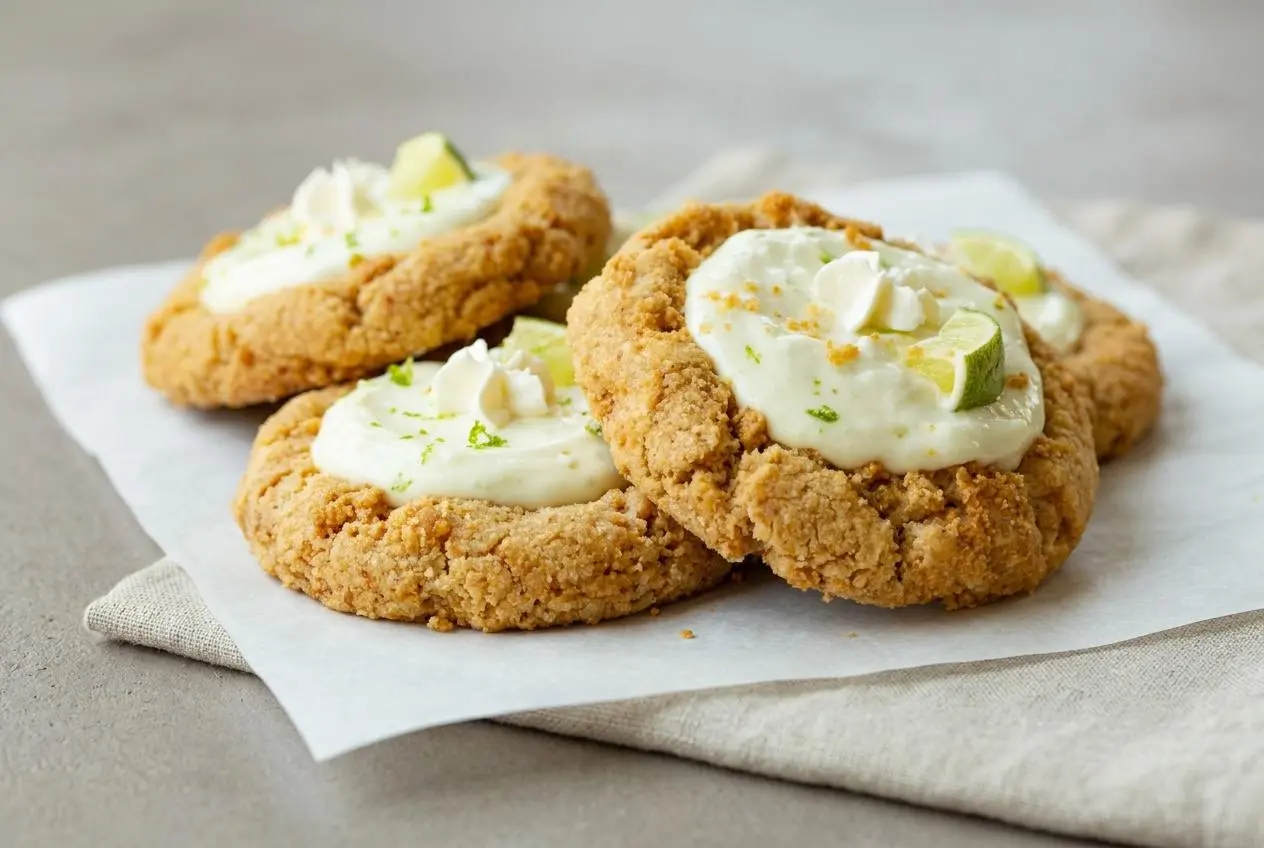
Key lime pie cookies pair soft, buttery graham cracker cookie cups with a tangy, no-bake cream cheese and sweetened condensed milk filling. Press deep wells before and after baking, cool completely, then fill and chill for 2 hours for a thick, creamy finish.
These oversized cookies bring together the buttery crunch of graham crust and silky tart lime in one handheld dessert. Crust chunks tucked into the dough add texture, while a coating of crushed crust gives the outside that familiar pie-crust flavor.
The dough needs gentle mixing, and the filling needs cold cookies and a proper refrigerator chill. Neither part is difficult, but those details make the difference between a neat cookie cup and an overflowing center. The second press is the trick.
Zest the limes before juicing them, taking only the green peel and leaving the bitter white pith behind.
Key Ingredients and Smart Substitutions
Butter and cream cheese give the dough richness and tenderness, flour supports the cookie rims, and graham crust adds crunch. In the filling, condensed milk supplies sweetness and body, while sour cream, lime juice, and zest balance that richness with tang and citrus aroma.
For the Cookies
- 1/2 Cup Unsalted Butter, softened, not warm
- 2 Tablespoons Cream Cheese, softened
- 1/2 Cup Brown Sugar
- 1/3 Cup White Sugar
- 1 Large Egg
- 1 teaspoon Vanilla
- 1 3/4 Cups Flour
- 1 teaspoon Cornstarch
- 1 teaspoon Baking Powder
- 1/4 teaspoon Baking Soda
- 1 teaspoon Salt
- 2/3 Cup Graham Cracker Crust, crushed
- 3/4 Cup Graham Cracker Crust, broken in small chunks
Key Lime Filling
- 6 Ounces Cream Cheese, softened
- 1 Tablespoon Sour Cream
- 1/2 Cup Sweetened Condensed Milk
- 1 Tablespoon Lime Zest
- 1/4 Cup Lime Juice
- Lime Wedges
- Whipped Cream
Softened butter blends evenly with the cream cheese, but warm, greasy butter encourages spreading. The cream cheese adds tenderness; cornstarch helps keep the crumb soft rather than tough. Flour and the egg provide the structure that lets each cookie hold its filling.
For the topping, use sweetened condensed milk, not evaporated milk. Its sweetness and thickness balance the lime juice. Cream cheese supplies the main body, sour cream adds tang, and zest brings citrus fragrance without extra liquid.
I check that the butter and cream cheese yield to gentle pressure but still feel cool, so the dough has a better chance of holding its raised rims.
Graham Cracker Crust Chunks vs Crushed Crumbs
“Graham cracker crust” means prepared pie crust, not plain dry crackers. A ready-made graham pie shell gives you both textures: crush one portion finely for coating, and break another into small pieces for folding into the dough.
The crushed portion clings to the outside of the dough balls. The chunks stay inside, creating distinct buttery graham pockets. Keep the pieces small enough to fit comfortably into the cookie rims, rather than leaving broad slabs that interfere with shaping.
Measure the two portions separately using the listed cups. Plain cracker weights cannot give an exact weight for prepared crust because the butter, sugar, and packing density vary.
Key Limes vs Regular Persian Limes
- Key limes: Choose them for their distinctive floral citrus aroma and bright, tart flavor.
- Persian limes: These larger supermarket limes also make a flavorful filling, though the aroma may be less floral.
- Juice substitution: Use either type in equal amounts, measuring the juice rather than relying on a lime count.
Freshly squeezed juice gives you a lively citrus flavor. Bottled products vary, so avoid treating every bottle as interchangeable with fresh juice, especially if it contains added sweeteners.
UK Digestive Biscuit Substitute and Gram Equivalents
Plain digestive biscuits are an optional substitute for the graham component. To approximate prepared crust, combine crushed biscuits with melted butter and a little sugar until the mixture holds together when pressed, rather than using loose biscuit powder alone.
For shopping reference, a typical sleeve of American graham crackers contains 9 full sheets weighing roughly 140 to 150 grams, although brands vary. About 31 grams of digestive biscuits can stand in for 2 full graham sheets by weight, but that is not a conversion for buttered, prepared crust.
If making a digestive crust, use a separate crust recipe for its proportions. Then measure the finished crust into the crushed and chunk portions called for here.
How to Make the Key Lime Pie Cookies Step by Step
Plan for 15 minutes of prep, a 10-minute bake, complete cooling, and a 2-hour chill after filling. The dough makes 8 to 10 large cookies, depending on your scoop size, with about 8 servings.
Cookies
- Set the oven to 350°F and cover 2 baking sheets with parchment paper.
The parchment creates a lined surface for shaping and baking the cookie cups. - Beat the butter in the mixer until creamy, then blend in the cookie-dough cream cheese.
Continue until the mixture looks uniform, without visible cream cheese pieces. - Beat both sugars into the butter mixture for about 1 minute, then scrape the bowl and incorporate the egg and vanilla.
The mixture should look evenly blended, with no unmixed butter along the bowl walls. - Whisk the flour, cornstarch, baking powder, baking soda, and salt together in another bowl, keeping both graham crust portions separate.
Even distribution helps the cookies rise consistently. - Add the flour mixture to the mixer, stop when about half has blended in, then use a wooden spoon to fold in the crust chunks and finish combining the dough.
Stop once no dry flour remains, leaving recognizable graham pieces throughout. - Portion 8 to 10 cookies with a large scoop, shape each into a ball, coat with crushed graham crust, and arrange 4 on each baking sheet.
The coating should cling to the surface, with open space between the dough balls. - Press a tablespoon into each center, bake for 10 minutes, then immediately deepen the wells with a small glass or measuring cup and leave the cookies to cool completely.
The edges should look matte and set while the warm centers remain pliable enough to reshape.
For the Filling
- Beat the filling cream cheese until smooth, then blend in the sour cream, condensed milk, lime zest, and lime juice, reserving the wedges and whipped cream for topping.
The filling should look creamy and uniform, without cream cheese lumps. - Spoon the filling into the completely cooled cookie wells and refrigerate for 2 hours.
The chilled centers should become thicker and hold their shape better. - Finish each chilled cookie with piped whipped cream and a lime wedge.
The cream should sit neatly on the filling rather than sinking into a warm center.
Mixing and Shaping the Graham Cracker Dough
Blend the butter and cream cheese thoroughly before adding sugar. Sugar can disguise small cream cheese lumps, so check the mixture while it is still pale and easy to inspect.
Switching to a wooden spoon halfway through incorporating the flour gives you more control. Fold gently, lifting dough from the bottom of the bowl, so you finish mixing without pulverizing the crust chunks.
Baking and Double-Indenting the Cookie Wells
The first indentation establishes the cup shape; the second restores space after the dough puffs in the oven. Press straight down with the flat bottom of the glass or measuring cup, keeping a raised rim around the center.
Do the second press immediately after baking, while the cookies still yield. Don’t wait for deeply browned edges. Look for the matte, set appearance at the stated bake time rather than chasing a darker color that can dry the crumb.
Whipping the Key Lime Filling and Chilling
Cool the cups all the way to room temperature before filling. Warm cookies soften the dairy mixture and can turn a clean well into a damp center.
Beat softened cream cheese smooth before introducing the liquid ingredients. Lime juice helps thicken the condensed milk mixture, while chilling firms the creamy filling. Expect a thick, custard-like center, not a baked egg custard.
Expert Tips and Troubleshooting Common Issues
Most filling and shaping problems come down to ingredient temperature, well size, or rushing the chill.
For an optional citrus boost in the dough, rub some additional fresh lime zest into the white sugar with your fingertips before mixing. The sugar becomes fragrant as it picks up citrus oils. Keep the measured tablespoon of filling zest unchanged.
- Lumpy filling: Cold cream cheese does not blend readily with liquid ingredients. Let it soften, then beat it smooth before adding the condensed milk and juice.
- Runny center: Warm cookie cups or an incomplete chill can leave the topping loose. Fill only fully cooled cookies and give them the full refrigerator chill; changing the juice quantity can also change consistency.
- Spreading or fragile rims: Warm butter can weaken the cup shape, while a hard second press can split the edges. Start with softened, cool butter and reshape gently while the cookies are warm.
- Too much filling for the wells: Shallow centers leave less room. Make broad, deep depressions while preserving a substantial bottom and rim, then stop filling before the topping spills over.
- Leftover filling: Don’t force it onto the cookies. Layer it with extra graham crumbs in small dessert cups, or serve it as a dip for fresh berries, keeping it chilled until serving.
Extra plain graham crackers can go into another baking project, such as graham-packed s’mores cookies. Keep leftover filling separate from unused crackers so they retain their crunch.
Crumbl Copycat Style vs Classic Thumbprint Variations
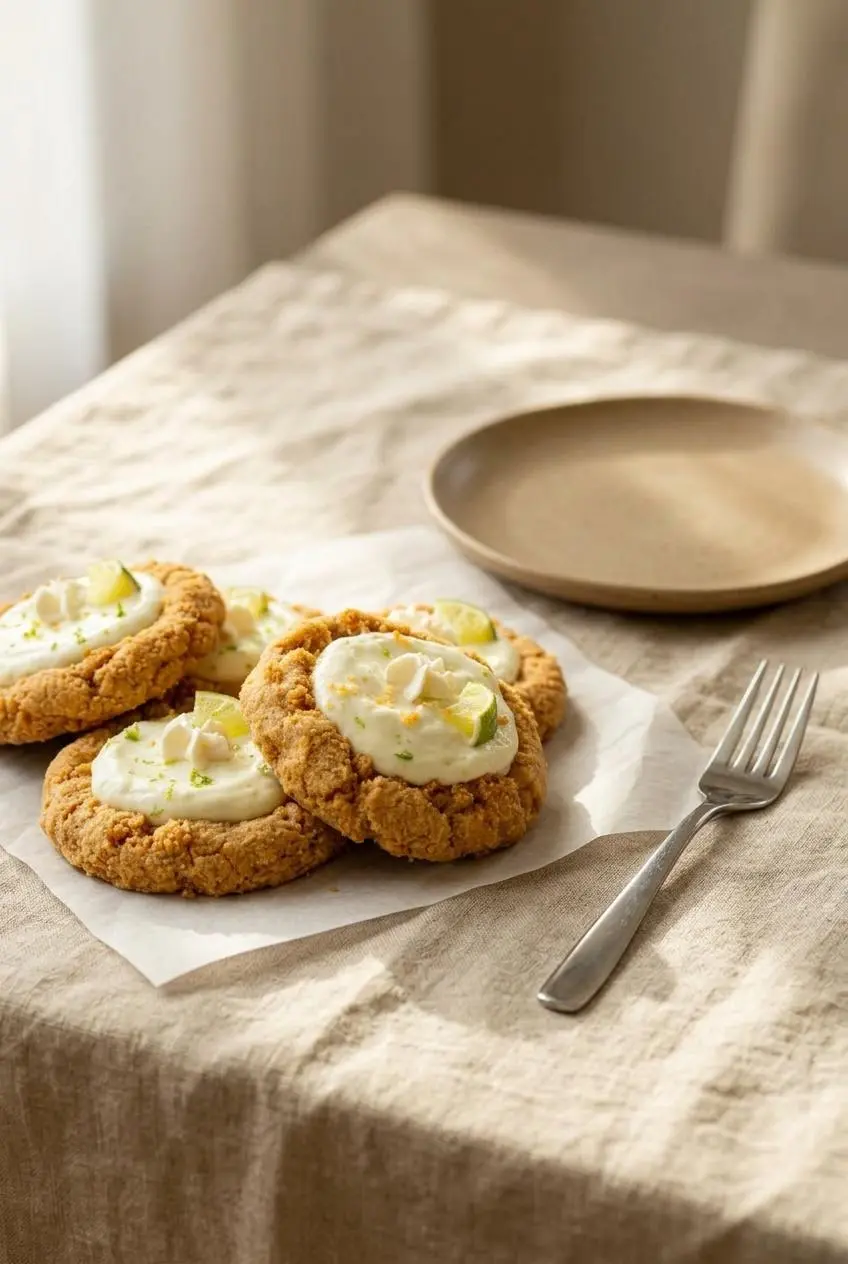
These optional styles share lime-and-graham flavor, but their fillings need different handling. Keep the method above unchanged unless you follow a recipe developed for the alternative.
Chilled Bakery Copycat Presentation
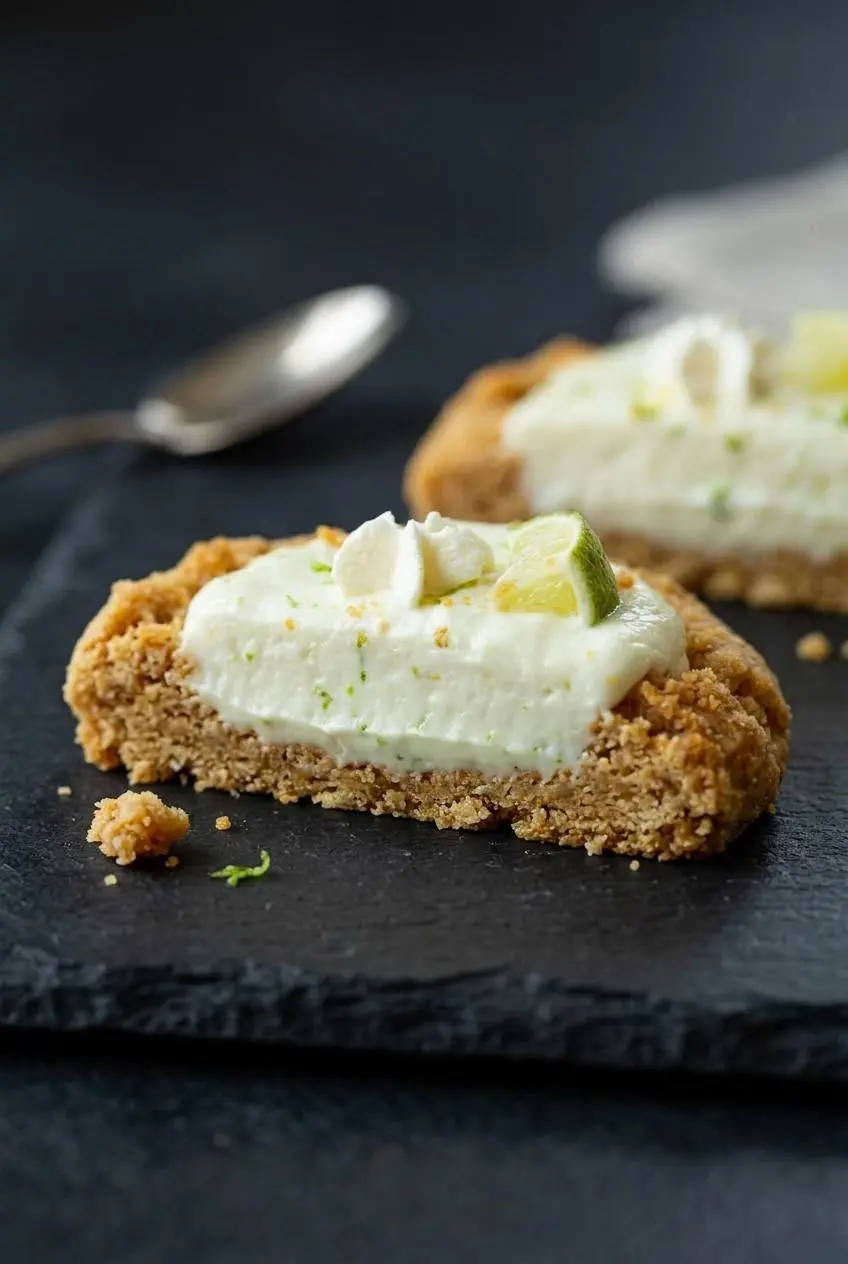
The oversized cookie cup, creamy cold topping, whipped cream, and lime wedge create the Crumbl-style presentation. Here, cream cheese and condensed milk provide a rich filling without baking it inside the cookie.
A broad center gives you a balanced bite of graham cookie and tart filling. Avoid piling the topping into a tall mound that overwhelms the rim.
Tangy Greek Yogurt Filling Option
A Greek yogurt, condensed milk, and lime filling offers a tangier alternative. Yogurt changes both moisture and body, so it is not a guaranteed direct replacement for the cream cheese mixture.
Use a separately developed yogurt filling recipe rather than swapping ingredients by guesswork. Thick yogurt may still produce a softer center than the cream cheese version.
Classic Custard Thumbprint Adaptation
Smaller thumbprint cookies often use an egg-yolk and condensed milk lime custard, closer in style to classic key lime pie. That filling bakes to set, unlike the chilled topping here.
Use a dedicated baked-custard cookie recipe for its filling proportions and baking instructions. Don’t add raw egg yolk to this no-bake filling.
Serving Suggestions and Storage
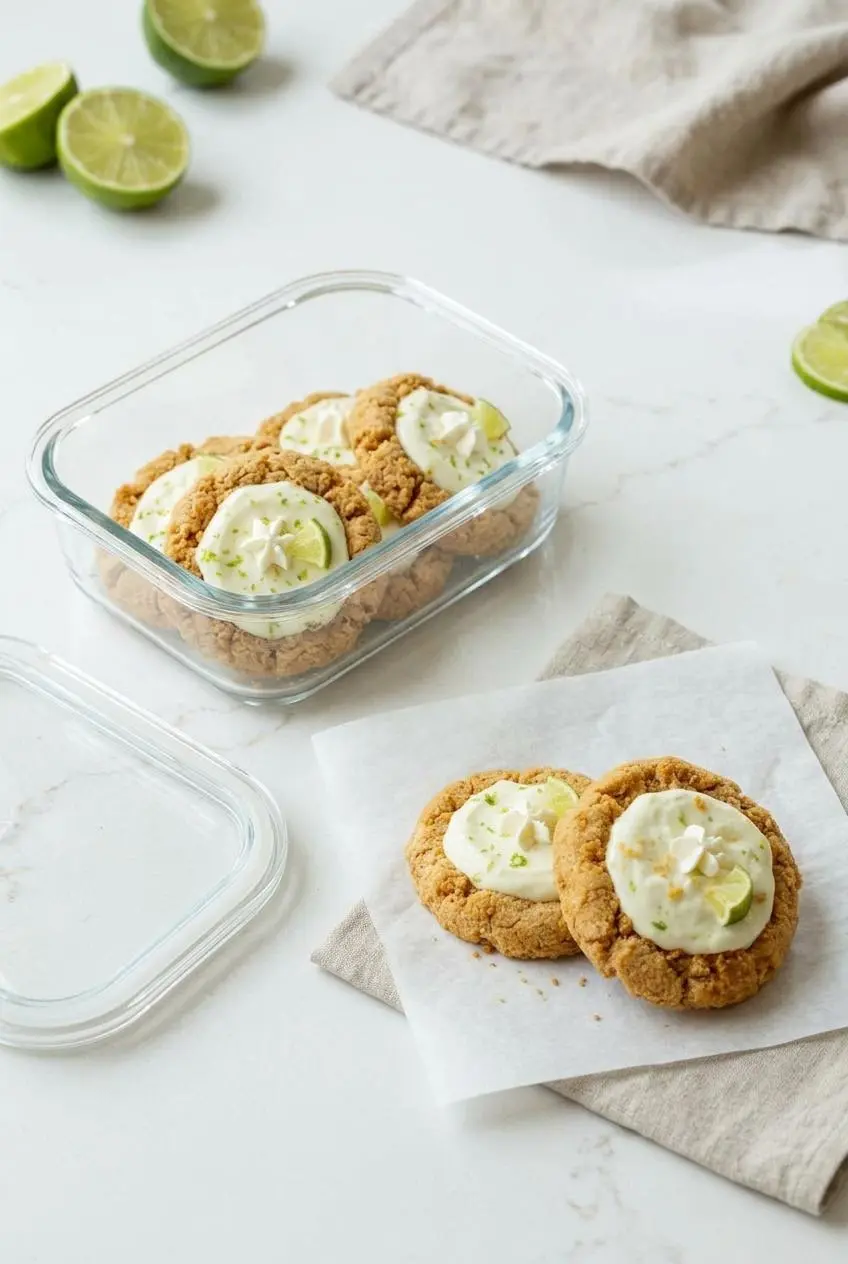
Serve the cookies chilled, adding the whipped cream and lime wedge just before they reach the dessert platter. The cold center contrasts nicely with the buttery graham exterior.
For cookouts or backyard gatherings, bring out portions as needed rather than leaving the whole batch on a warm dessert table. If you prefer a slice-and-serve lime dessert, key lime pie bars offer an alternative to shaping individual cups.
Keep filled cookies covered in an airtight container in the refrigerator, preferably in a single layer so nothing presses into the topping. Store extra filling separately, and add garnishes at serving time. The cookie base gradually softens as it absorbs moisture from the filling.
Take care with the dairy ingredients during preparation and serving: discard perishable dairy exposed to 40°F or above for more than 2 hours. Softening cream cheese for mixing is not a reason to leave it out throughout baking and cooling.
Conclusion
These thick graham cookie cups deliver the buttery crust and creamy tart center of a lime pie without slicing a whole dessert. Press the wells twice and cool the cookies completely before filling.
Try the optional lime-sugar rub when you want more citrus fragrance in the dough. Then let the refrigerator finish the job and garnish when you’re ready to serve.
Frequently Asked Questions
Can I Use Regular Limes Instead of Key Limes?
Yes. Substitute regular Persian lime juice in equal amounts. The filling will still taste bright and creamy, though its citrus aroma may be less floral. Measure the juice because lime size and yield vary.
What Can I Use Instead of Graham Cracker Crust in the UK?
Use an optional prepared crust made with plain digestive biscuits, melted butter, and sugar. Follow a digestive crust recipe for the proportions, then measure the finished crust as directed here. The approximate cracker weights above do not convert directly to prepared crust.
What Is Crumbl Cookies’ Key Lime Pie Cookie?
It is a chilled, oversized graham-style cookie with a center well holding creamy key lime pie filling, finished with whipped cream and a lime wedge. This version recreates that presentation with a no-bake cream cheese topping.
How Do You Store Key Lime Pie Cookies?
Keep filled cookies covered in an airtight container in the refrigerator. Use a single layer to protect the filling, store extra filling separately, and add whipped cream and lime wedges just before serving.
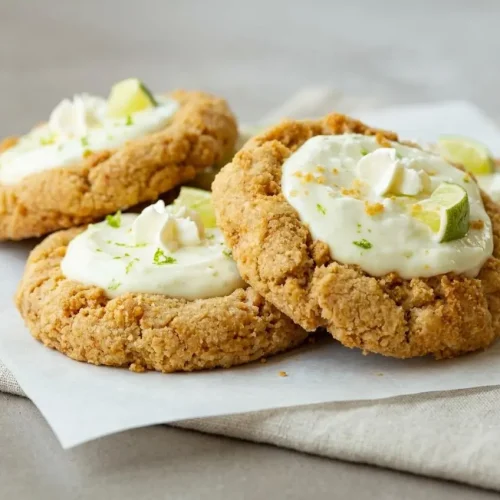
Key Lime Pie Cookies

Equipment
- 2 baking sheets
- Parchment Paper
- Stand mixer
- Wooden Spoon
- Large Cookie Scoop
- Electric hand mixer
Ingredients
For the Cookies
- 1/2 Cup Unsalted Butter softened, not warm
- 2 Tablespoons Cream Cheese softened
- 1/2 Cup Brown Sugar
- 1/3 Cup White Sugar
- 1 Large Egg
- 1 teaspoon Vanilla
- 1 3/4 Cups Flour
- 1 teaspoon Cornstarch
- 1 teaspoon Baking Powder
- 1/4 teaspoon Baking Soda
- 1 teaspoon Salt
- 2/3 Cup Graham Cracker Crust crushed
- 3/4 Cup Graham Cracker Crust broken in small chunks
Key Lime Filling
- 6 Ounces Cream Cheese softened
- 1 Tablespoon Sour Cream
- 1/2 Cup Sweetened Condensed Milk
- 1 Tablespoon Lime Zest
- 1/4 Cup Lime Juice
- Lime Wedges
- Whipped Cream
Instructions
Cookies
- Set the oven to 350°F and cover 2 baking sheets with parchment paper. The parchment creates a lined surface for shaping and baking the cookie cups.
- Beat the butter in the mixer until creamy, then blend in the cookie-dough cream cheese. Continue until the mixture looks uniform, without visible cream cheese pieces.
- Beat both sugars into the butter mixture for about 1 minute, then scrape the bowl and incorporate the egg and vanilla. The mixture should look evenly blended, with no unmixed butter along the bowl walls.
- Whisk the flour, cornstarch, baking powder, baking soda, and salt together in another bowl, keeping both graham crust portions separate. Even distribution helps the cookies rise consistently.
- Add the flour mixture to the mixer, stop when about half has blended in, then use a wooden spoon to fold in the crust chunks and finish combining the dough. Stop once no dry flour remains, leaving recognizable graham pieces throughout.
- Portion 8 to 10 cookies with a large scoop, shape each into a ball, coat with crushed graham crust, and arrange 4 on each baking sheet. The coating should cling to the surface, with open space between the dough balls.
- Press a tablespoon into each center, bake for 10 minutes, then immediately deepen the wells with a small glass or measuring cup and leave the cookies to cool completely. The edges should look matte and set while the warm centers remain pliable enough to reshape.
For the Filling
- Beat the filling cream cheese until smooth, then blend in the sour cream, condensed milk, lime zest, and lime juice, reserving the wedges and whipped cream for topping. The filling should look creamy and uniform, without cream cheese lumps.
- Spoon the filling into the completely cooled cookie wells and refrigerate for 2 hours. The chilled centers should become thicker and hold their shape better.
- Finish each chilled cookie with piped whipped cream and a lime wedge. The cream should sit neatly on the filling rather than sinking into a warm center.