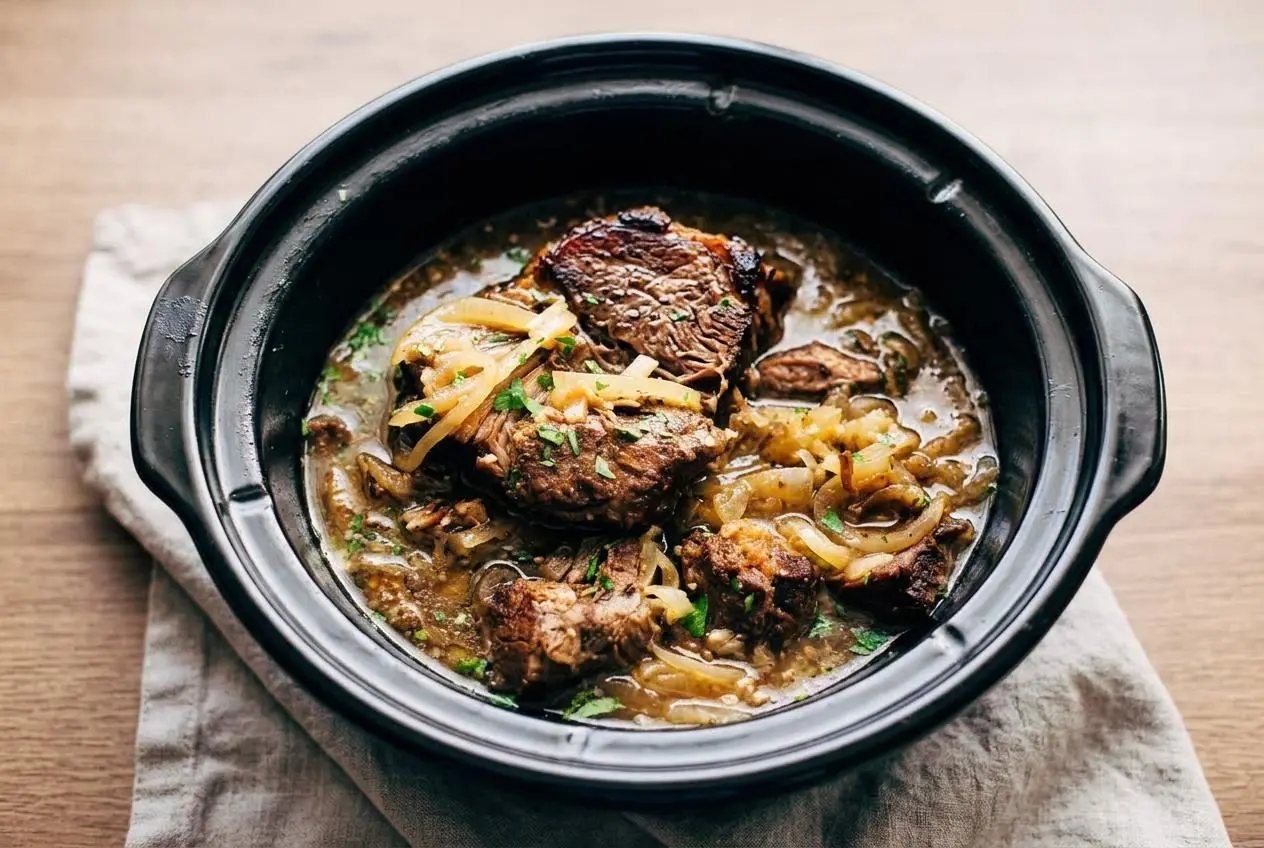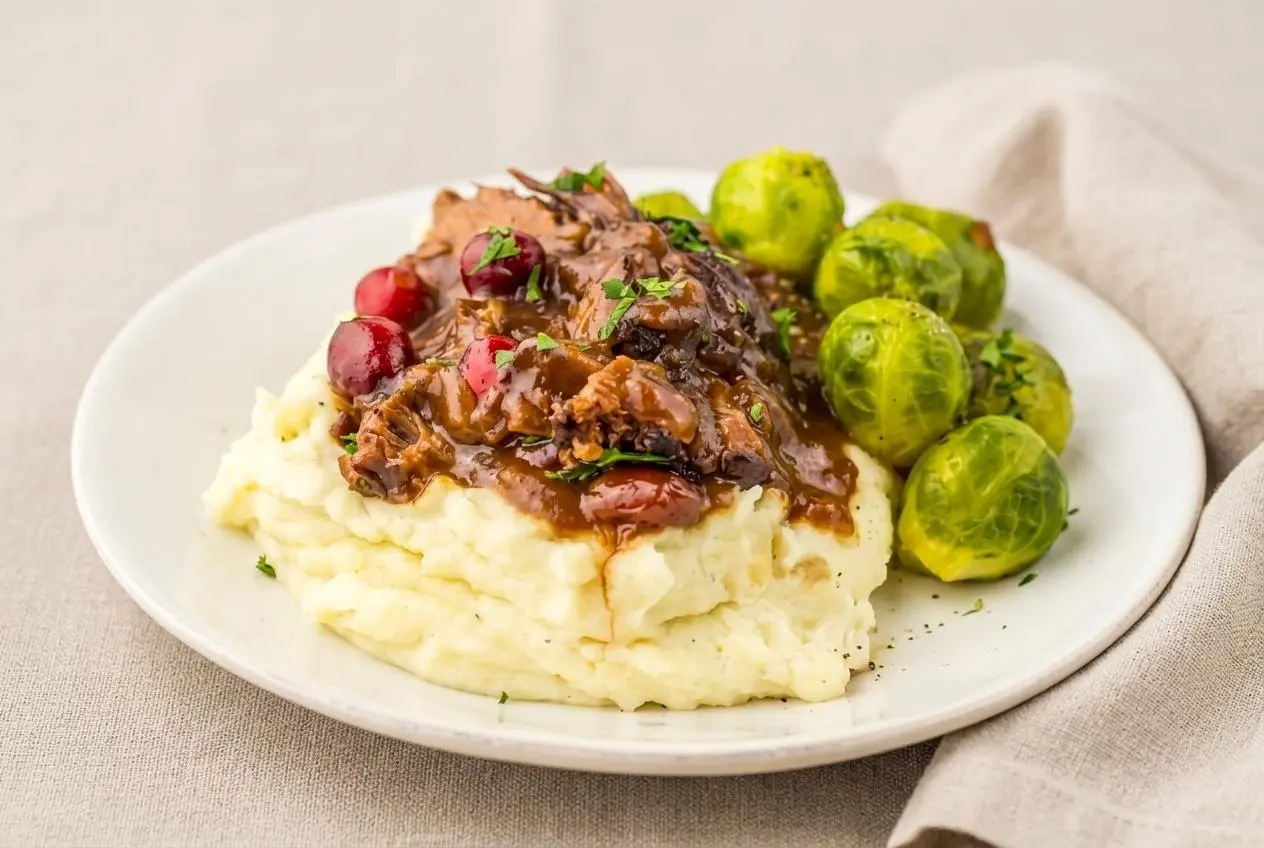
Slow Cooker Cranberry Beef Roast combines marbled beef, cranberry sauce, dry onion soup mix, butter, and tart cranberries. Cook it on low for 6 hours or high for 4 hours, until the beef pulls apart easily, for tender shreds and sweet-savory gravy.
As the onion and cranberries warm together, the kitchen fills with a cozy, savory aroma. This Slow Cooker Cranberry Beef Roast is a hands-off braised dinner with rich beef juices, softened berries, and enough sauce to spoon generously over each serving.
It works for a holiday meal or a comforting dinner without complicated prep. Skip browning when convenience matters, or add a sear for deeper flavor. The real finish line is a gentle fork twist.
Choose a roast that fits comfortably beneath the slow cooker lid, with room around its sides for the cranberries.
Ingredients and Flavor Building Blocks
Beef supplies richness and structure, cranberry sauce brings sweetness and body, and whole cranberries add tartness. Onion soup mix builds savory flavor, butter rounds out the cooking juices, and parsley adds a fresh finish.
- 3 pound beef roast
- 1 14 ounce can cranberry sauce
- 1 envelope dry onion soup mix
- 4 tablespoons salted butter
- 1 cup fresh or frozen cranberries
- Parsley for garnish
The beef: Boneless chuck roast is the best fit for a shredded finish. Its marbling contributes rich drippings, while its connective tissue softens during slow braising. Look for fine streaks of fat within the meat rather than choosing a roast solely for a thick outer fat cap.
The cranberry sauce: Canned sauce provides the sweet foundation and helps give the cooking liquid body. Cranberry pectin contributes to that texture, but the beef releases enough juices that the finished sauce may still need thickening.
The whole cranberries: Fresh or frozen berries bring sharper tartness and soften into the sauce during cooking. They balance the richness of the beef and butter. Cranberry acidity mainly contributes flavor here; prolonged moist cooking does the heavy lifting for tenderness.
The onion soup mix and butter: The soup mix supplies concentrated onion flavor and seasoning throughout the sauce. Salted butter adds richness as it melts over the roast. Since both contribute salt, taste the finished gravy before adding any extra seasoning.
The parsley: A scattering of parsley gives the finished beef a fresh contrast to its rich sauce. The garnish is optional in the finishing step.
I press any dry pockets of soup mix against the side of the bowl while stirring so the seasoning spreads evenly through the cranberry sauce.
Either style of canned cranberry sauce works, with a slightly different result:
- Jellied cranberry sauce: Break it up while mixing; it disperses into a more uniform sauce as it heats.
- Whole berry cranberry sauce: Use it for additional pieces of fruit and a more rustic gravy texture.
For an optional flavor change, keep these additions outside the main ingredient list:
- Cranberry balsamic roast: Add a splash of aged balsamic vinegar to deepen the sweet-tart flavor. Taste cautiously, since balsamic also brings sweetness.
- Cranberry citrus herb roast: Add orange zest and a little fresh rosemary for a brighter, woodsy holiday aroma. Keep the rosemary restrained so it doesn’t overwhelm the berries.
Best Beef Cuts and Preparation
The cut matters more than an elaborate preparation routine. Choose beef suited to braising, and give it enough time to become tender before shredding.
Why Chuck Roast Is the Premier Choice
Boneless beef chuck roast contains both marbling and connective tissue. These play different roles: fat contributes richness, while collagen in the connective tissue gradually converts to gelatin during moist cooking. That combination makes chuck well suited to juicy, pull-apart strands.
Rump roast can work for braising, but it is generally leaner and may produce firmer meat. Eye of round is leaner still, so it is a less forgiving choice when you want soft shreds rather than neat slices. Extra sauce can coat lean beef, but it can’t replace the characteristics of a well-marbled cut.
At the meat counter, look for a reasonably even-shaped chuck roast with visible fat distributed through the muscle. Trim an unusually thick, hard exterior fat layer if necessary, but leave the internal marbling alone.
Chuck is also a useful choice for tender beef stew, where the same patient braising approach turns a firm cut into a comforting dinner.
To Sear or Not to Sear
Browning is optional. You can put the beef directly into the slow cooker and still get tender meat, making the unseared version a practical choice when you want minimal active work.
If you choose to sear, pat the surface dry and use a hot skillet. Let each broad side develop a brown crust before turning it. Browning creates savory depth through the Maillard reaction, but it doesn’t replace the slow cooking that makes the roast tender.
A wet surface tends to steam rather than brown. Give the meat room in the skillet, and resist moving it constantly. Transfer the browned roast to the slow cooker, then follow the same assembly method below.
How to Make the Slow Cooker Cranberry Beef Roast
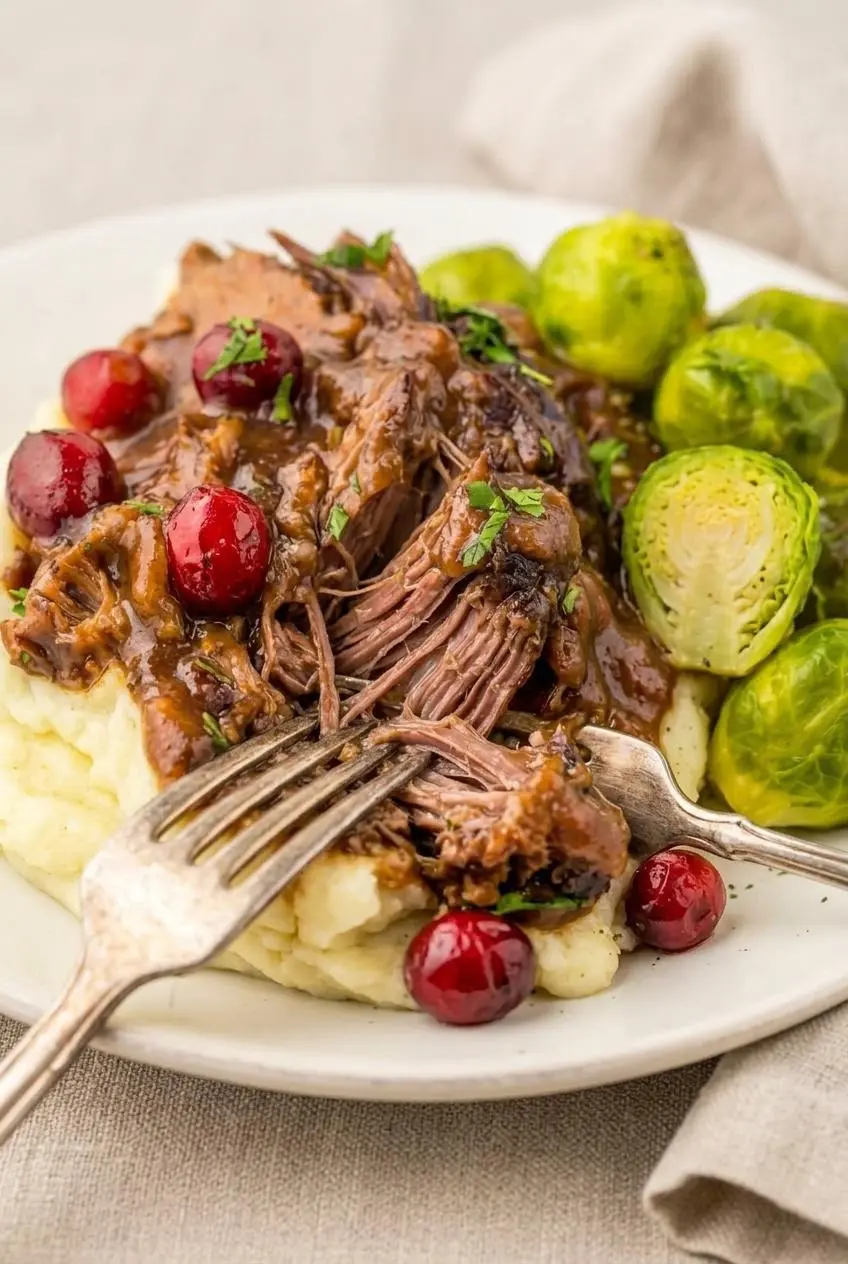
Allow about 5 minutes for assembly if you skip the optional sear. This recipe serves 4; plan on 6 hours on low or 4 hours on high, with tenderness determining when the beef is ready.
- Set the beef in the bottom of the slow cooker.
The roast should sit comfortably inside the insert without pressing against the lid. - Stir the canned cranberry sauce and dry onion soup mix together in a bowl, breaking up the sauce as needed.
The seasoning should run evenly through the mixture without visible dry pockets. - Spread the cranberry mixture across the roast, then set the butter over the coated meat.
The sauce should cover the upper surface, with the butter resting on top. - Scatter the fresh or frozen cranberries into the space around the roast.
The berries should sit along the sides, where they can mingle with the cooking juices. - Close the lid and cook on low for 6 hours or high for 4 hours, continuing as needed until the beef yields easily.
A fork twisted into the thickest part should separate the fibers without firm resistance. - Pull the tender beef into strands with two forks and turn it through the cooking juices before serving.
The shreds should look moist and carry a coating of cranberry-onion sauce. - Add parsley to the finished beef if desired.
The green garnish gives the rich, dark sauce a fresh-looking finish.
Layering the Slow Cooker
Set the roast at the bottom so it cooks in the juices that collect around it. Spread the mixed sauce over the top instead of leaving it in a mound. This helps distribute the onion seasoning as the cranberry sauce loosens.
The butter belongs over the meat, where it melts into the sauce. Scatter the berries around the sides rather than piling them all on top. As cooking progresses, the sharp onion aroma softens into a rounder, savory cranberry scent.
Keep the lid closed during cooking rather than repeatedly checking the sauce. The slow cooker retains moisture, so the mixture should become more fluid as the beef releases its juices.
Low Versus High Cooking Durations
Low for 6 hours is the preferred setting when your schedule allows gentle, steady cooking. High for 4 hours is the alternative when you need a shorter cooking window.
Neither time is a guarantee of tenderness. Roast thickness, cut, and slow cooker performance all affect the result. Test the thickest part rather than judging only by the edges, which may soften first.
If the fork enters but the meat resists twisting apart, replace the lid and continue cooking. Don’t force firm beef into shreds. Tender meat separates readily; firm connective tissue needs more braising time.
Savory Pot Roast with Root Vegetables
For an optional one-pot variation, arrange thick-cut carrots and baby potatoes beneath and around the roast. The vegetables absorb the cranberry-onion juices and make the meal more substantial without changing the official preparation above.
Keep the carrot pieces substantial rather than slicing them thinly. Check the vegetables separately at the end: a fork should enter their centers easily. Adding vegetables also fills the cooker, so avoid crowding the insert or preventing the lid from closing properly.
If you prefer a more traditional vegetable-forward dinner without the cranberry flavor, try this slow cooker pot roast.
Thickening the Pan Gravy
The cooking liquid can be thinner than expected because the covered cooker holds moisture. Thickening it is an optional finishing step, not a requirement for tender beef.
Remove the beef and transfer the juices to a small saucepan. Let the liquid settle briefly, then skim excess fat from the surface with a spoon. Leave enough richness for flavor rather than trying to remove every trace.
For a more concentrated sauce, simmer the liquid uncovered and stir as it reduces. Taste along the way: reduction strengthens salt and sweetness as well as beef flavor.
For a glossy gravy without as much reduction, mix cornstarch with an equal amount of cold water until smooth. Stir the slurry, then whisk it gradually into the simmering juices. Continue simmering and stirring until the gravy thickens and coats the back of a spoon.
Add the slurry gradually because the amount of cooking liquid varies. Stop when the gravy clings lightly to the spoon rather than becoming paste-like. Fold the beef back into the sauce, or spoon the gravy over it when serving.
Troubleshooting and Success Tips
Check texture and taste before making adjustments. Thin sauce, tough meat, and excess sweetness each need a different fix.
- The roast is still tough: The connective tissue may not have softened enough. Replace the lid and continue braising until the center passes the fork-twist test rather than trying to hurry it with a higher setting.
- The beef is dry and stringy: A very lean cut is less forgiving. Fold the strands through the reserved juices and avoid aggressive simmering after shredding; choose marbled chuck for a more succulent result next time.
- The gravy tastes too sweet: Canned sauces vary. Stir in a little apple cider vinegar for tartness, or a splash of Worcestershire sauce for savory depth, then taste again before adding more.
- The sauce tastes too salty: Soup mix and salted butter both contribute seasoning. Avoid further reduction, which concentrates salt, and serve a restrained amount of gravy over an unsalted starch.
- The surface looks greasy: Melted beef fat and butter can collect on top. Transfer the juices to a saucepan, let the fat rise, and skim the excess before thickening.
- The gravy has lumps: Dry cornstarch can clump in hot liquid. Mix it with cold water first, and stir the slurry again immediately before adding it.
- The gravy becomes too thick: Excess thickener can make it heavy. Loosen it gradually with reserved cooking juices, stirring until it pours easily.
Storage and Reheating Guide
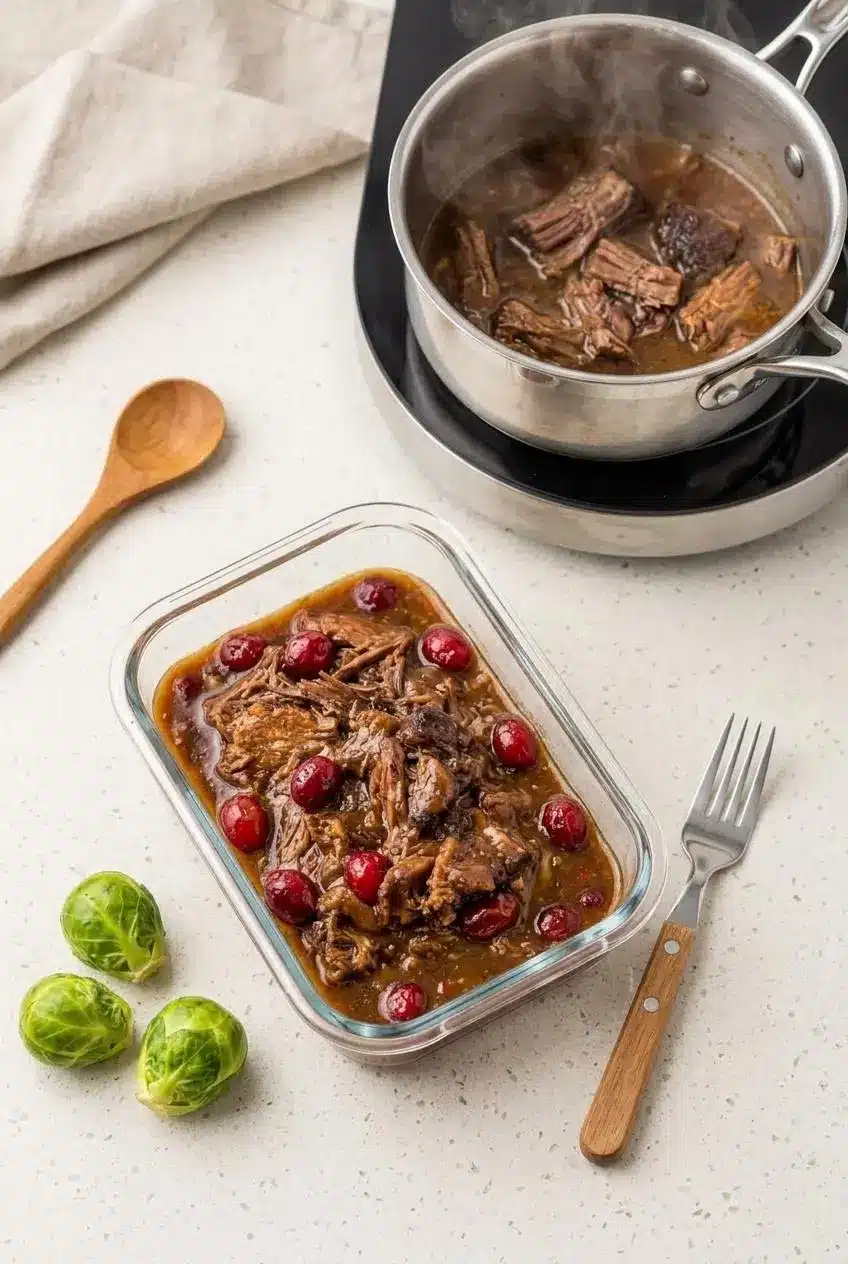
Reserve cooking juices with the beef so the shredded meat has moisture available when reheated. Store leftover portions in covered containers in the refrigerator, and keep parsley separate for a fresher finish.
Divide a large amount into shallow containers rather than leaving it in the deep slow cooker insert to cool. Refrigerate leftovers promptly and avoid leaving the roast sitting out while clearing the table.
For a softer reheated texture, put a portion of beef and its juices in a saucepan over gentle heat. Cover and stir occasionally so the strands warm evenly without the sauce boiling hard. If the gravy has become thick, loosen it with a little water as needed.
Reheat the portion you plan to serve rather than repeatedly warming the entire batch. Add parsley after reheating, and assemble sandwiches just before eating so the rolls don’t soak up all the gravy.
Serving Suggestions and Plating Ideas
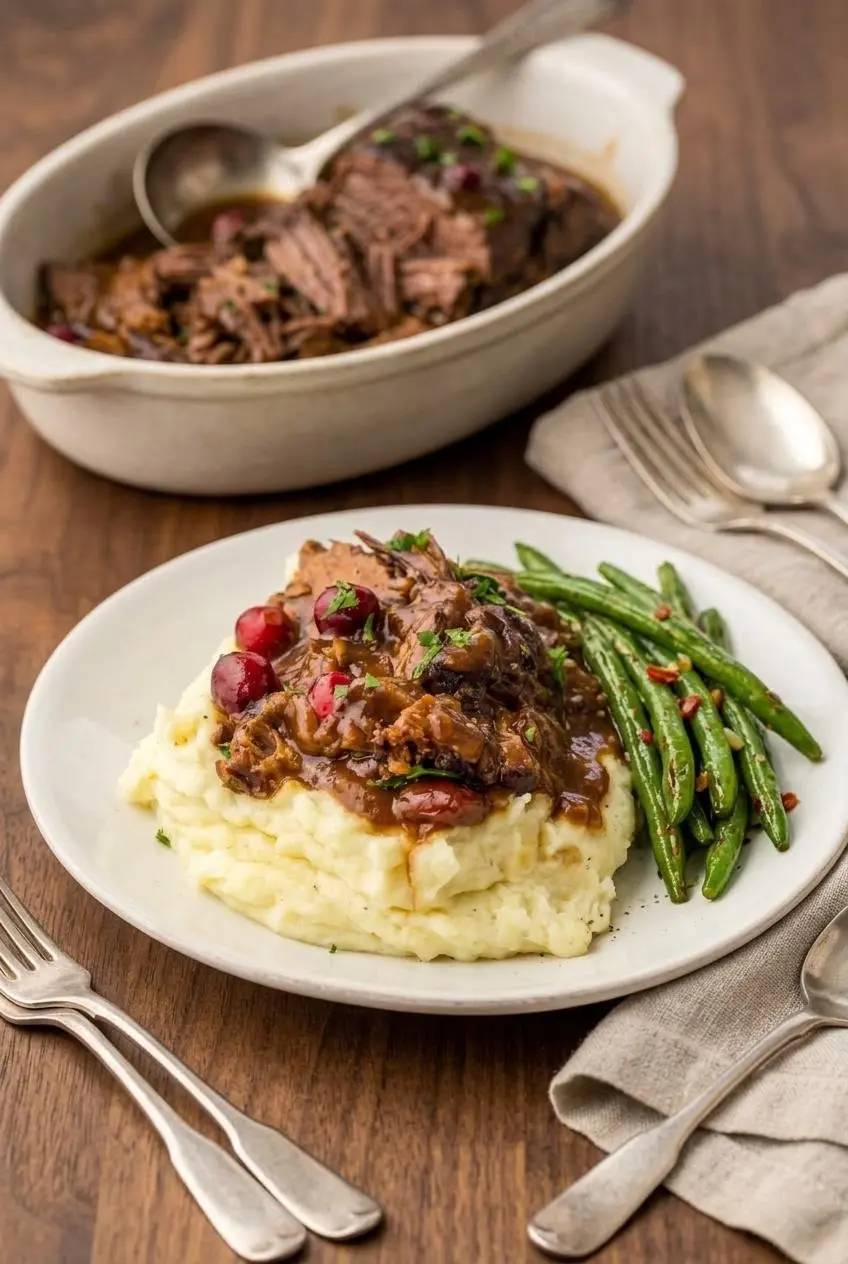
Choose a side that catches the sauce and a vegetable that contrasts with the rich beef. Keep the accompaniments lightly seasoned until you’ve tasted the gravy.
- Garlic mashed potatoes: Spoon the shredded roast over a generous mound, then add gravy around the edges so the potatoes remain creamy rather than soupy.
- Buttered egg noodles: Toss the noodles lightly with butter and top with beef. Their broad surfaces catch the cranberry-onion sauce.
- Brioche sliders: Pile drained, warm beef onto toasted rolls and add melted provolone. Serve extra gravy alongside instead of saturating the bread.
- Roasted green beans: Their firmer texture and savory flavor offer a useful contrast to the soft meat and sweet-tart sauce.
For a holiday spread, slow cooker cheddar corn adds a creamy side. Use a separate cooker if the roast is still cooking, and balance the plate with green vegetables.
Conclusion
This roast brings together rich beef, savory onion seasoning, and tart cranberries in a dinner that asks for little active preparation. Serve it with potatoes or noodles, and let the sauce tie the plate together.
Give the meat time to soften, trust the fork-twist cue, and adjust the gravy only after tasting it. A little patience makes the serving part easy.
Frequently Asked Questions
What Is the Best Cut of Beef for Slow Cooker Cranberry Roast?
Boneless beef chuck roast is the best choice for tender shredded beef because it contains marbling and connective tissue suited to braising. During slow cooking, collagen softens into gelatin; leaner cuts such as eye of round are less forgiving.
Do I Have to Brown the Beef Before Putting It in the Slow Cooker?
No. Browning is optional, and skipping it keeps assembly quick. A skillet sear adds a browned crust and deeper savory flavor, but the slow cooking produces tenderness.
Can I Use Jellied Cranberry Sauce Instead of Whole Berry?
Yes. Use the same can size listed in the ingredients. Jellied sauce disperses into a more uniform gravy, while whole berry sauce leaves additional fruit texture.
How Do I Thicken the Slow Cooker Cranberry Cooking Liquid into Gravy?
Transfer the juices to a saucepan and skim excess surface fat. Mix cornstarch with an equal amount of cold water, then whisk the smooth slurry gradually into the simmering liquid. Simmer while stirring until the gravy looks glossy and coats the back of a spoon.
Can You Safely Cook a Beef Roast from Frozen in the Slow Cooker?
For this recipe, start with a fully thawed roast rather than a frozen one. The listed cooking schedule does not account for a frozen center, so don’t use it to judge the readiness of frozen beef.
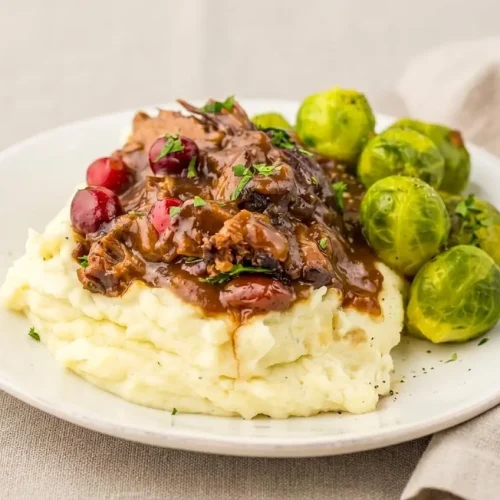
Slow Cooker Cranberry Beef Roast

Equipment
- Slow cooker
Ingredients
- 3 pound beef roast
- 1 14 ounce can cranberry sauce
- 1 envelope dry onion soup mix
- 4 tablespoons salted butter
- 1 cup fresh or frozen cranberries
- Parsley for garnish
Instructions
- Set the beef in the bottom of the slow cooker. The roast should sit comfortably inside the insert without pressing against the lid.
- Stir the canned cranberry sauce and dry onion soup mix together in a bowl, breaking up the sauce as needed. The seasoning should run evenly through the mixture without visible dry pockets.
- Spread the cranberry mixture across the roast, then set the butter over the coated meat. The sauce should cover the upper surface, with the butter resting on top.
- Scatter the fresh or frozen cranberries into the space around the roast. The berries should sit along the sides, where they can mingle with the cooking juices.
- Close the lid and cook on low for 6 hours or high for 4 hours, continuing as needed until the beef yields easily. A fork twisted into the thickest part should separate the fibers without firm resistance.
- Pull the tender beef into strands with two forks and turn it through the cooking juices before serving. The shreds should look moist and carry a coating of cranberry-onion sauce.
- Add parsley to the finished beef if desired. The green garnish gives the rich, dark sauce a fresh-looking finish.