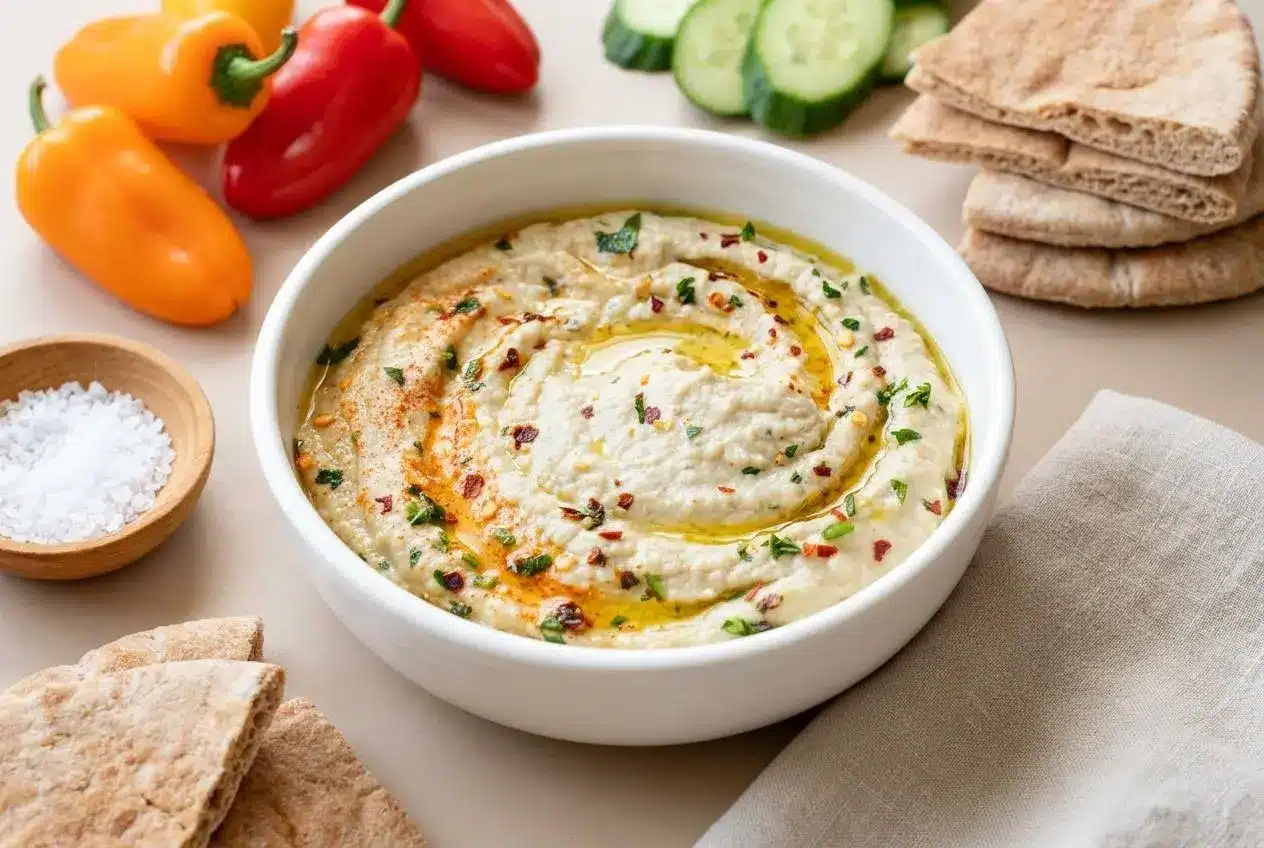
Authentic baba ganoush is a Levantine eggplant dip made with smoky roasted eggplant, tahini, fresh lemon juice, garlic, olive oil, and salt.
This baba ganoush recipe turns deeply soft eggplant into a velvety, nutty dip with bright lemon and a gentle garlic finish. It is excellent with warm pita, crunchy vegetables, or a shared mezze spread.
The scent of charred eggplant skin is the first sign you are headed somewhere good. The key is letting the roasted flesh drain before blending.
Pierce the eggplants well before they go near heat so steam can escape as the flesh softens.
Essential Ingredients for Authentic Baba Ganoush
Each ingredient shapes the finished dip: eggplant brings smoky body, tahini creates richness, lemon adds lift, olive oil rounds the texture, and garnishes add color and warmth.
- 2 medium eggplants (pierced with a knife or fork)
- ¼ cup tahini
- 3 tablespoons fresh lemon juice
- 2 tablespoons extra-virgin olive oil (plus more for serving)
- 2 garlic cloves
- ½ teaspoon sea salt
- Finely chopped fresh parsley
- Smoked paprika
- Red pepper flakes (optional)
- Pita bread (for serving)
- Veggies (for serving)
Choose firm, medium globe eggplants with glossy skin and no soft spots. Larger eggplants can have more developed seed clusters, so scrape out any dark, dense centers after roasting if they taste bitter.
Tahini is the creamy backbone here. A smooth sesame paste blends with lemon juice into a paler, thicker mixture that keeps the eggplant from tasting flat or oily. Use freshly squeezed lemon juice rather than bottled juice, which can taste dull and overly sharp.
Extra-virgin olive oil softens the tahini’s nuttiness and gives the finished dip a supple finish. Garlic adds bite, while parsley, smoked paprika, and optional red pepper flakes bring color and a little spark. Lemon zest, sumac, and toasted sesame seeds are lovely optional finishing touches.
I look for tahini that pours smoothly after a thorough stir, because dry, separated paste can make the dip taste heavy instead of creamy.
How to Make Baba Ganoush
Roasting until the eggplants fully collapse, draining the flesh, and pulsing briefly are the three moves that create a thick, silky dip instead of a watery puree.
- Heat the oven to 400°F, wrap the pierced eggplants in foil, and place them on a baking sheet for 50 to 60 minutes.
The skins should look deflated and wrinkled, and the eggplants should yield completely when pressed with a fork. - Let the eggplants cool until comfortable to handle, then peel away the skins and remove any large seed clusters.
Set the flesh in a strainer over a bowl for 20 minutes so excess liquid can drain away without rinsing the eggplant. - Add the drained eggplant, tahini, lemon juice, olive oil, garlic, and salt to a food processor and pulse until smooth.
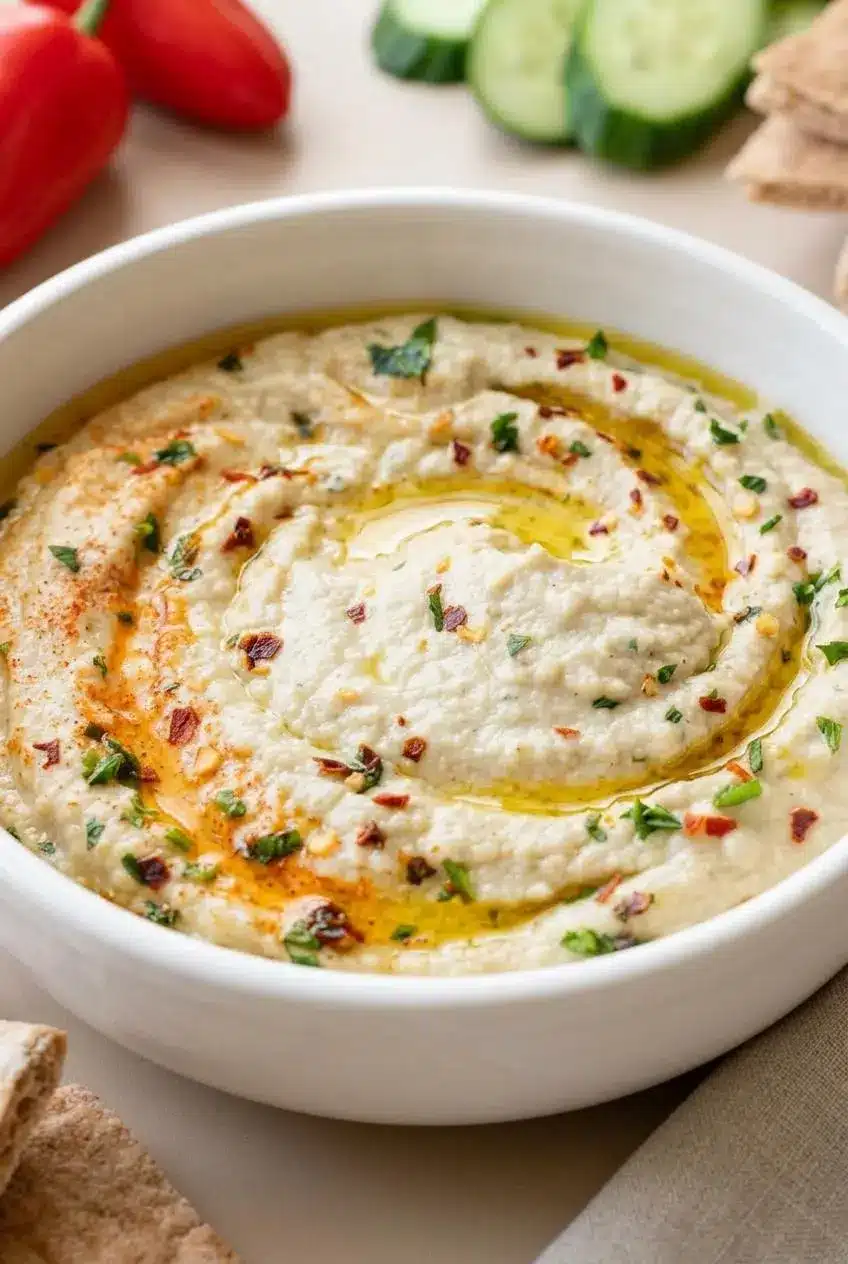
Stop once the dip looks creamy with a little texture, since continuous processing can make eggplant gluey. - Spoon the baba ganoush into a serving dish and finish with parsley, smoked paprika, and red pepper flakes, if using.
Make shallow swirls in the surface and add a drizzle of olive oil before serving with pita and veggies.
If you whisk the tahini, lemon juice, and garlic together briefly before adding the eggplant, the mixture thickens almost immediately. That early emulsification helps the final dip feel lush rather than loose.
How to Achieve Irresistible Smoky Flavor at Home
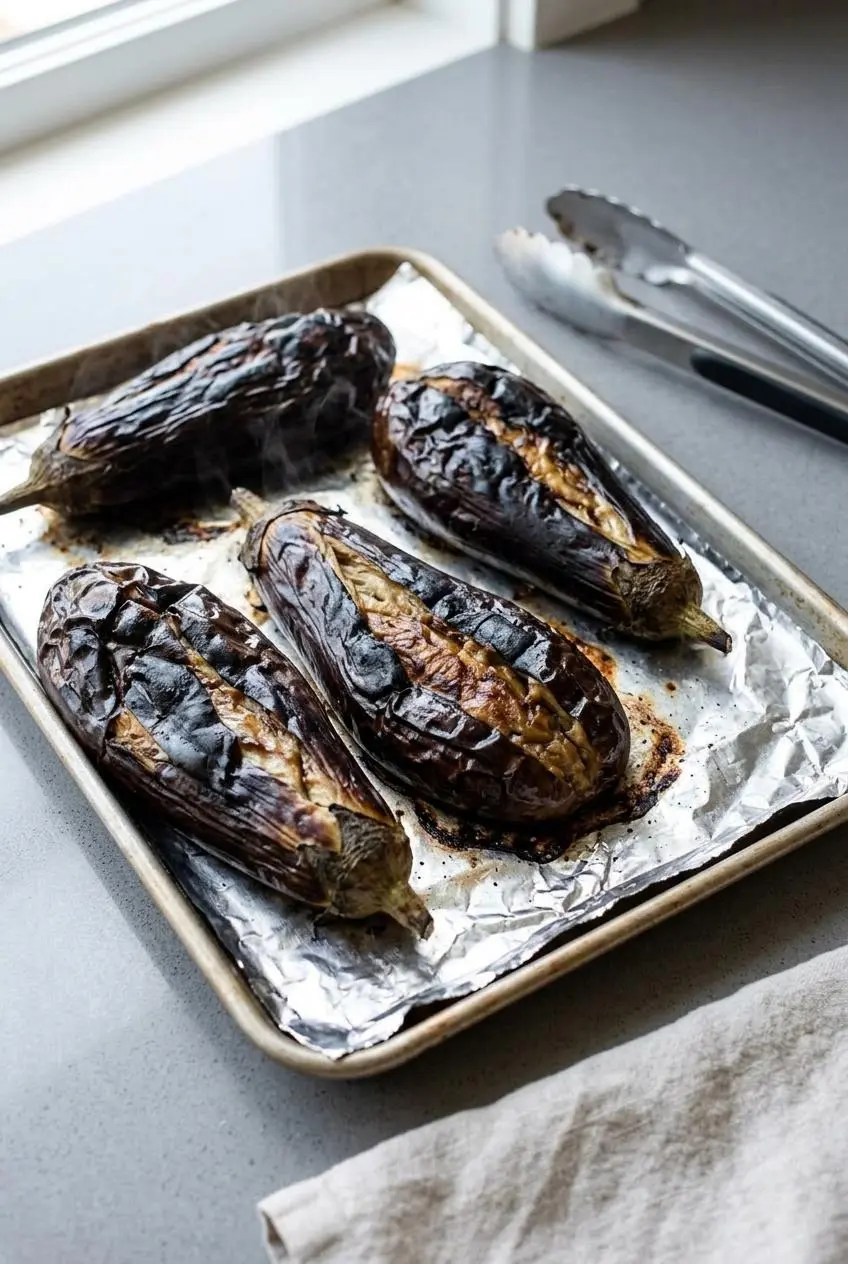
Eggplant needs strong heat and complete softness to develop its characteristic smoky sweetness. The oven method above is dependable, while direct flame and broiling add more char when your kitchen setup allows it.
Gas Stovetop Open-Flame Method
For the deepest smoke, place pierced whole eggplants directly over a medium-high gas flame. Line the surrounding stovetop with foil for easier cleanup, turn the eggplants with metal tongs as the skin blackens, and keep going until the stem end feels soft and the entire eggplant has collapsed.
Stay at the stove while cooking over an open flame, keep towels and loose paper away from the burner, and let the eggplants cool in a covered bowl before peeling. An outdoor grill works in much the same way and adds an especially pronounced charred aroma.
Oven Roasting With Foil Wrap
Foil-wrapped roasting at 400°F is the most hands-off route. The foil holds in steam, allowing the flesh to become spoon-soft and making the skin easier to remove.
For a slightly more concentrated flavor, loosen the foil near the end of roasting so some moisture can evaporate. Do not pull the eggplants early: firm flesh will stay stringy and lack the mellow sweetness that balances tahini.
High-Heat Broiler Technique
A broiler offers a useful middle ground when there is no gas burner. Put pierced whole eggplants, or halved eggplants with the cut side facing up, on a heavy baking sheet close to the heat source.
Turn whole eggplants once the exposed skin is deeply blistered. Watch closely, because the goal is blackened skin and collapsed flesh, not a kitchen full of smoke.
Troubleshooting Texture, Wateriness, and Bitterness
Most baba ganoush problems come down to moisture, seeds, garlic, or overblending. These fixes keep the flavor clean and the texture pleasantly substantial.
Eliminating Excess Vegetable Moisture
Drain the peeled eggplant pulp in a fine-mesh strainer over a bowl for the full 20 minutes in the method. Roasted eggplant releases plenty of liquid, and leaving it behind is what keeps the tahini mixture thick rather than separated.
- Watery dip: The eggplant likely needed more draining. Return the pulp to the strainer and press gently with the back of a spoon before blending again.
- Still very wet pulp: Gather it in clean cheesecloth and squeeze gently. Press only enough to remove liquid, not enough to force fibrous flesh through the cloth.
- Thin flavor: Under-roasted eggplant often tastes watery as well. Roast future batches until the eggplants are fully collapsed, not merely tender around the edges.
Managing Raw Garlic Intensity
Raw garlic grows more assertive as the dip sits. For a gentler result, finely mince the cloves and let them rest in the fresh lemon juice for 5 minutes before blending; the lemon takes the sharp edge off without hiding the garlic.
If the finished dip tastes too garlicky, give it a little time in the refrigerator so the flavors settle, then balance it with a touch more tahini or lemon juice rather than adding more salt.
Food Processor Versus Fork Mashing
Use short food-processor pulses for a silky dip with some eggplant character left intact. Long, uninterrupted blending can turn the flesh pasty.
- For a rustic texture: Mash the drained eggplant with a fork or mortar and pestle, then stir in the remaining ingredients by hand.
- For a smoother texture: Pulse just until the mixture comes together, scraping down the bowl only as needed.
- For bitterness: Remove dark central seed veins from mature eggplants, then balance the dip with extra tahini or fresh lemon juice if needed.
Serving and Keeping Baba Ganoush Fresh
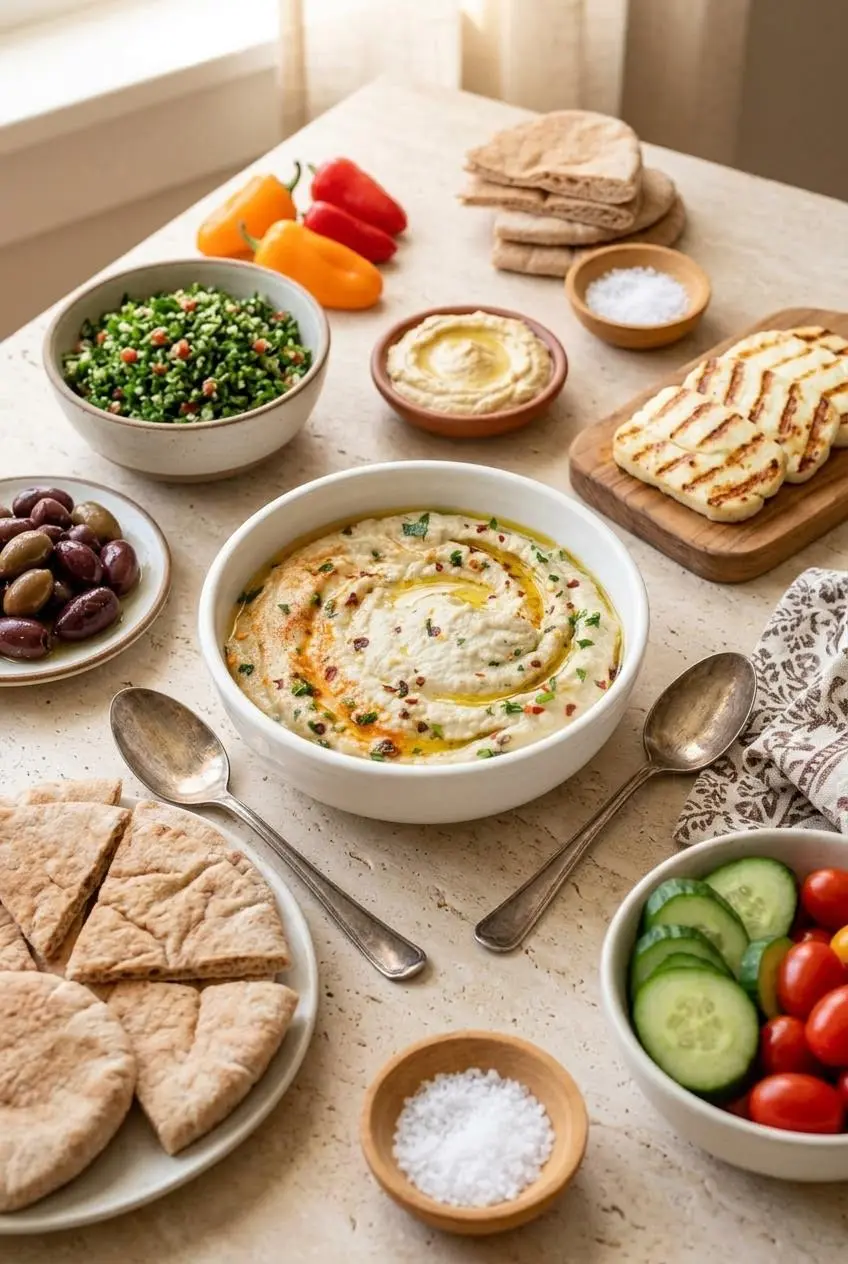
Transfer cooled baba ganoush to an airtight container and keep it chilled until serving. A thin olive oil drizzle over the surface helps limit drying, while parsley and paprika are best added just before it reaches the table.
For a mezze platter, serve it with warm pita triangles, pita chips, Persian cucumbers, carrot sticks, olives, and falafel. A crisp Greek salad adds a fresh, tangy contrast to the smoky eggplant.
For a casual lunch, spread baba ganoush onto flatbread or spoon it beside roasted vegetables and grains. Finish the serving dish with a pool of olive oil, chopped parsley, smoked paprika, and optional toasted pine nuts or sumac.
Popular Flavor Variations and Adaptations
Keep the core dip intact, then adjust the finish when you want a different mood. These additions are optional and belong outside the main method.
Tangy Greek Yogurt Swirl
Fold in 2 to 3 tablespoons of thick whole-milk Greek yogurt for a paler, lighter dip with a mellow dairy tang. This version is especially good when the eggplant has a strong char, though it is no longer dairy-free.
Levantine mutabbal is closely related but often leans more heavily on tahini and may include yogurt, while baba ganoush usually puts smoky eggplant front and center. Neither is hummus, which relies on chickpeas.
Warming Mediterranean Spices
Add toasted ground cumin for earthy warmth, a pinch of cayenne for heat, or ground coriander for a citrusy spice note. Smoked paprika reinforces the charred flavor, while sumac brings a tart finish without making the dip taste lemony.
Conclusion
Silky homemade baba ganoush comes from eggplant roasted until completely collapsed, then drained with patience before it meets the tahini and lemon. Those two steps make the biggest difference in both flavor and texture.
Serve it with a generous olive oil drizzle and add lemon zest or sumac if you want extra brightness. A bowl of smoky eggplant dip makes even an ordinary snack feel like a proper spread.
Frequently Asked Questions
What Is the Difference Between Baba Ganoush and Hummus?
Hummus uses cooked chickpeas as its base, usually blended with tahini, lemon, garlic, and olive oil. Baba ganoush uses roasted eggplant flesh instead, so it has a softer texture and a distinct smoky flavor.
Why Is My Baba Ganoush Bitter and How Can I Fix It?
Bitterness usually comes from mature seed clusters or heavily scorched flesh mixed into the dip. Remove dark seed veins, avoid scraping in burned skin, and rebalance the flavor with fresh lemon juice or tahini.
Can I Make Baba Ganoush Without a Food Processor?
Yes. Mash the drained eggplant with a fork or mortar and pestle, then stir in the tahini, lemon juice, olive oil, garlic, and salt. The result will be coarser and more fibrous, with plenty of traditional character.
Can You Freeze Homemade Baba Ganoush?
Freezing is not recommended for this dip because the tahini and olive oil mixture can separate as it thaws, leaving the eggplant watery and grainy. Keep it chilled in an airtight container instead and enjoy it while the texture is at its best.
Baba Ganoush Recipe

Equipment
- Food processor
- Fine mesh strainer
- Baking Sheet
- Aluminum Foil
Ingredients
- 2 medium eggplants (pierced with a knife or fork)
- ¼ cup tahini
- 3 tablespoons fresh lemon juice
- 2 tablespoons extra-virgin olive oil (plus more for serving)
- 2 garlic cloves
- ½ teaspoon sea salt
- Finely chopped fresh parsley
- Smoked paprika
- Red pepper flakes (optional)
- Pita bread (for serving)
- Veggies (for serving)
Instructions
- Heat the oven to 400°F, wrap the pierced eggplants in foil, and place them on a baking sheet for 50 to 60 minutes. The skins should look deflated and wrinkled, and the eggplants should yield completely when pressed with a fork.
- Let the eggplants cool until comfortable to handle, then peel away the skins and remove any large seed clusters. Set the flesh in a strainer over a bowl for 20 minutes so excess liquid can drain away without rinsing the eggplant.
- Add the drained eggplant, tahini, lemon juice, olive oil, garlic, and salt to a food processor and pulse until smooth. Stop once the dip looks creamy with a little texture, since continuous processing can make eggplant gluey.
- Spoon the baba ganoush into a serving dish and finish with parsley, smoked paprika, and red pepper flakes, if using. Make shallow swirls in the surface and add a drizzle of olive oil before serving with pita and veggies.