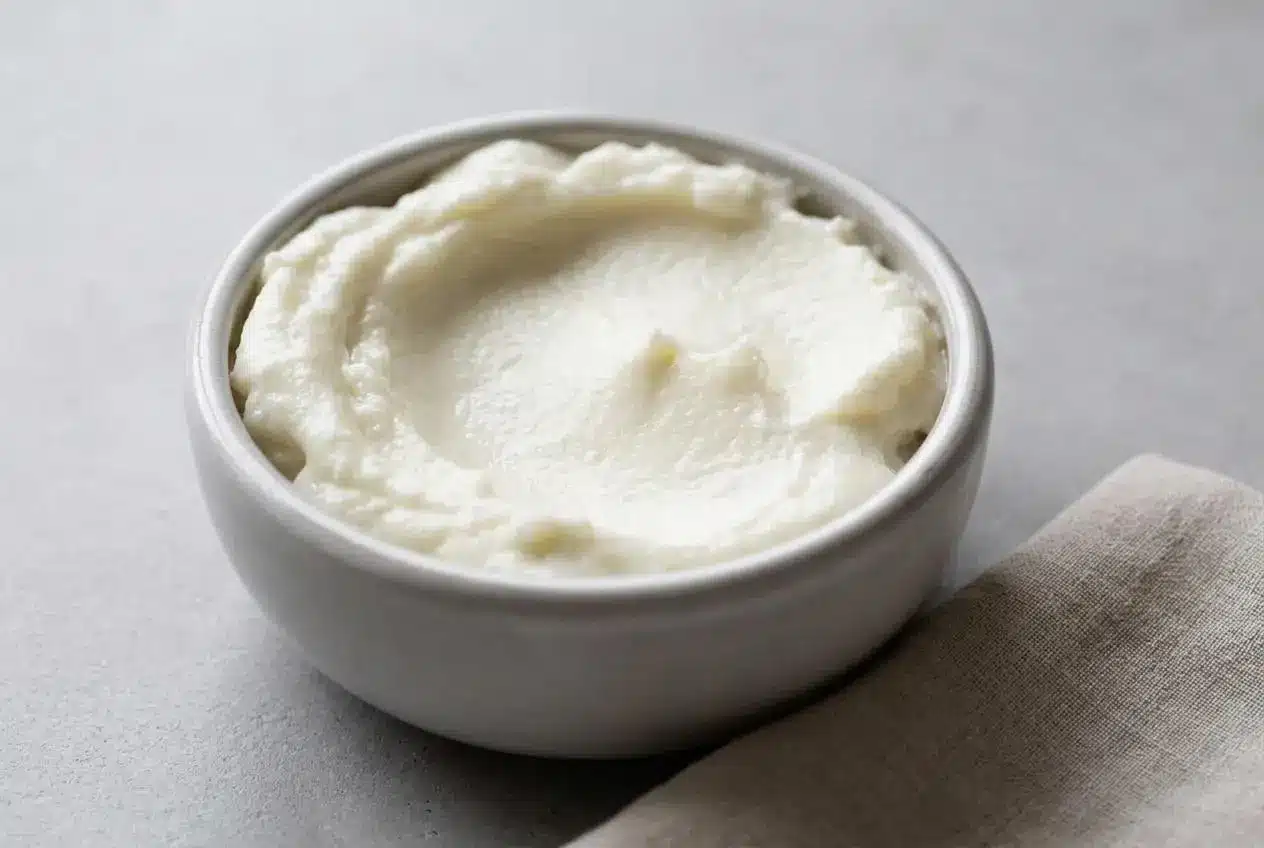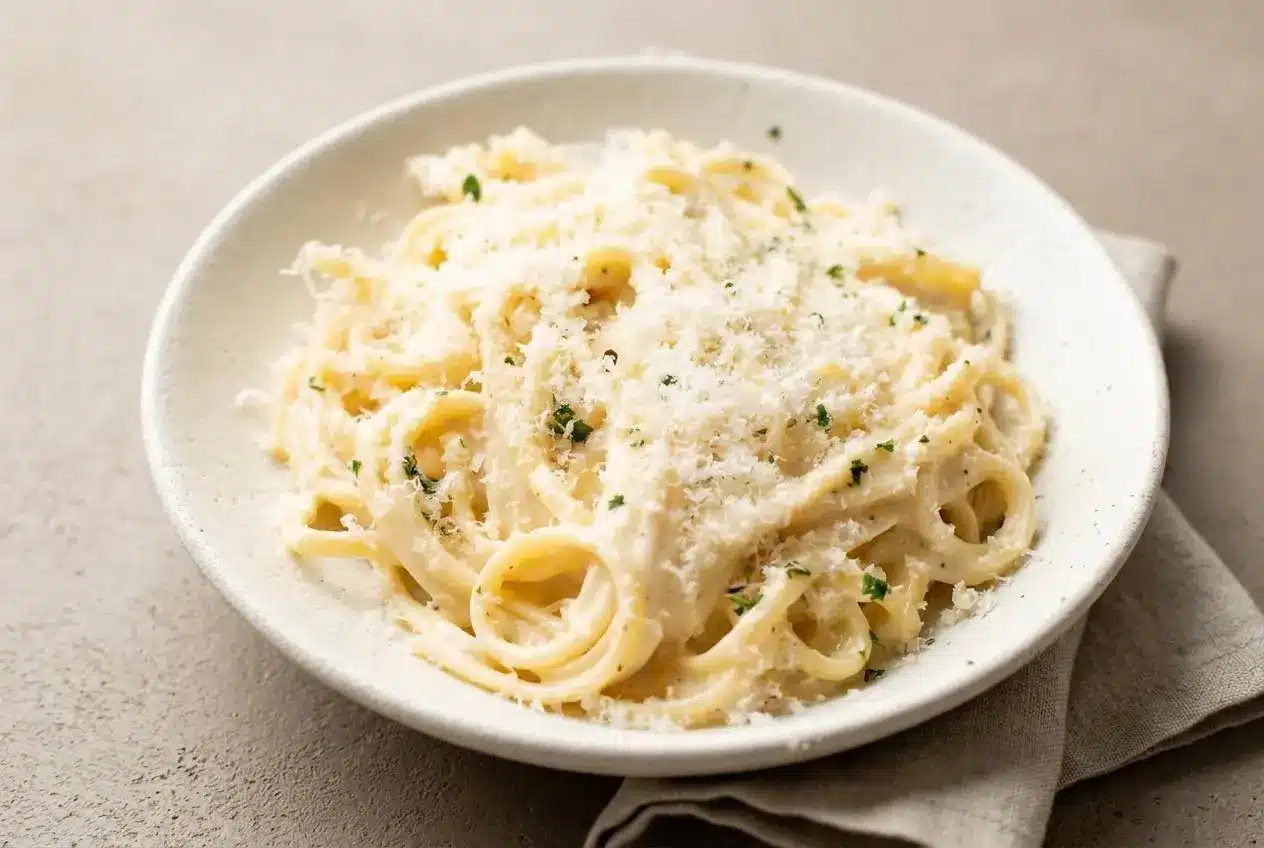
Cook pasta until al dente, make a quick butter and flour roux, then simmer it with garlic, broth, cream, and fresh parmesan for a silky sauce that coats every strand.
Creamy Garlic Pasta is a fast skillet dinner with rich heavy cream, fragrant garlic, and parmesan melted into a smooth, comforting sauce. It’s ready in about 15 minutes and works beautifully with linguine.
The garlic should smell nutty and warm, never browned or sharp. The payoff is a glossy sauce that hugs the pasta instead of pooling underneath it.
Before draining, scoop out some pasta water. Its starch is the quickest way to loosen and re-gloss a sauce that thickens while tossing.
Why This 15-Minute Creamy Garlic Pasta Works
This pasta works because the butter and flour form a light roux before the cream goes in. That tiny bit of flour gives the sauce structure, while heavy cream brings enough fat for a rich, stable texture that clings to noodles.
Chicken broth keeps the sauce from tasting flat and helps it loosen into a pourable consistency. Once the parmesan melts in, the result is savory, silky, and deeply garlicky without requiring a long simmer.
The pasta cooks separately while the sauce comes together in a skillet, giving you more control over both. Compared with classic garlic butter pasta, this version has a fuller, creamier coating that feels substantial enough for dinner.
Keep the finished sauce at a gentle simmer, not a rolling boil. When it coats the back of a spoon in a thin, even layer, it is ready for the pasta.
Essential Ingredients for Silky Garlic Cream Sauce
Each ingredient supports the sauce in a different way: pasta provides structure, butter and cream bring richness, flour stabilizes, garlic adds aroma, broth balances, and parmesan creates savory depth.
- 8 ounces uncooked pasta (I used linguine)
- 1 tablespoon butter
- 1 teaspoon flour
- 2-3 cloves garlic (minced)
- 1/4 cup chicken broth
- 1 cup heavy/whipping cream
- 1/3 cup freshly grated parmesan cheese
- Salt & pepper (to taste)
- Chopped fresh parsley (optional, to taste)
Butter carries the garlic flavor, and flour gives the cream a little support so it thickens smoothly. Heavy cream delivers the lush texture this sauce needs, while broth keeps it balanced rather than overly heavy. Parsley adds fresh color at the end.
I grate parmesan from a wedge just before cooking because the fine, fluffy shreds melt far more smoothly than packaged shreds.
The Case for Freshly Grated Parmesan
Freshly grated parmesan melts into warm cream with a clean, savory finish. Bagged pre-shredded parmesan is often coated with anti-caking agents, which can keep the cheese from melting evenly and leave the sauce grainy or clumpy.
Use a Microplane or the small holes of a box grater for fine shreds. Add the cheese after the sauce has thickened, then stir over low heat or with the skillet briefly off the heat. High heat can make the cheese tighten and turn the sauce greasy.
Selecting the Best Pasta Shape
Linguine is an excellent match because its broad, flat strands catch plenty of sauce. Fettuccine also works well when you want a more substantial bite.
Short pasta is fine too. Penne holds sauce in its tubes and ridges, while small shells catch creamy pockets in their curves. Whatever shape you choose, cook it only to al dente so it stays firm enough for tossing.
How to Make Creamy Garlic Pasta Step by Step
Start the pasta water first, then build the sauce while the noodles finish cooking. Moving from roux to broth to cream keeps the sauce smooth and lets the parmesan melt gently at the end.
- Bring a pot of salted water to a boil and cook the pasta according to the package directions until al dente.
The noodles should be tender with a slight firm bite in the center, so they can finish in the sauce without going soft. - As the pasta nears doneness, melt the butter in a skillet over medium-high heat and whisk in the flour for about 2 minutes.
The roux should bubble softly and look pale, with no raw floury smell. - Lower the heat to medium-low, then stir in the minced garlic and chicken broth and let it simmer for about 1 minute.
The garlic should smell fragrant and turn pale golden, never brown or bitter. - Whisk in the heavy/whipping cream and cook for a few minutes, stirring occasionally, until the sauce reaches your preferred thickness.
It is ready when it lightly coats the back of a spoon and leaves a clear trail when stirred. - Stir in the freshly grated parmesan cheese and season with salt & pepper as needed.
The cheese should disappear into the cream and leave the sauce smooth rather than stringy or oily. - Drain the pasta, toss it thoroughly with the sauce, and add a little pasta water if you wish to thin the sauce a bit.
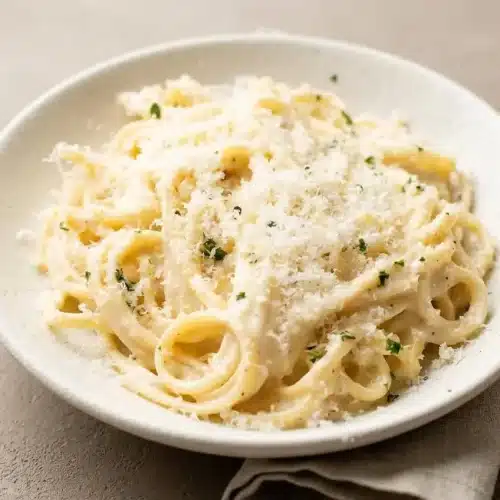
The finished noodles should look glossy and evenly coated; serve immediately with parsley and extra parm if desired.
Recipe Success Tips and Troubleshooting
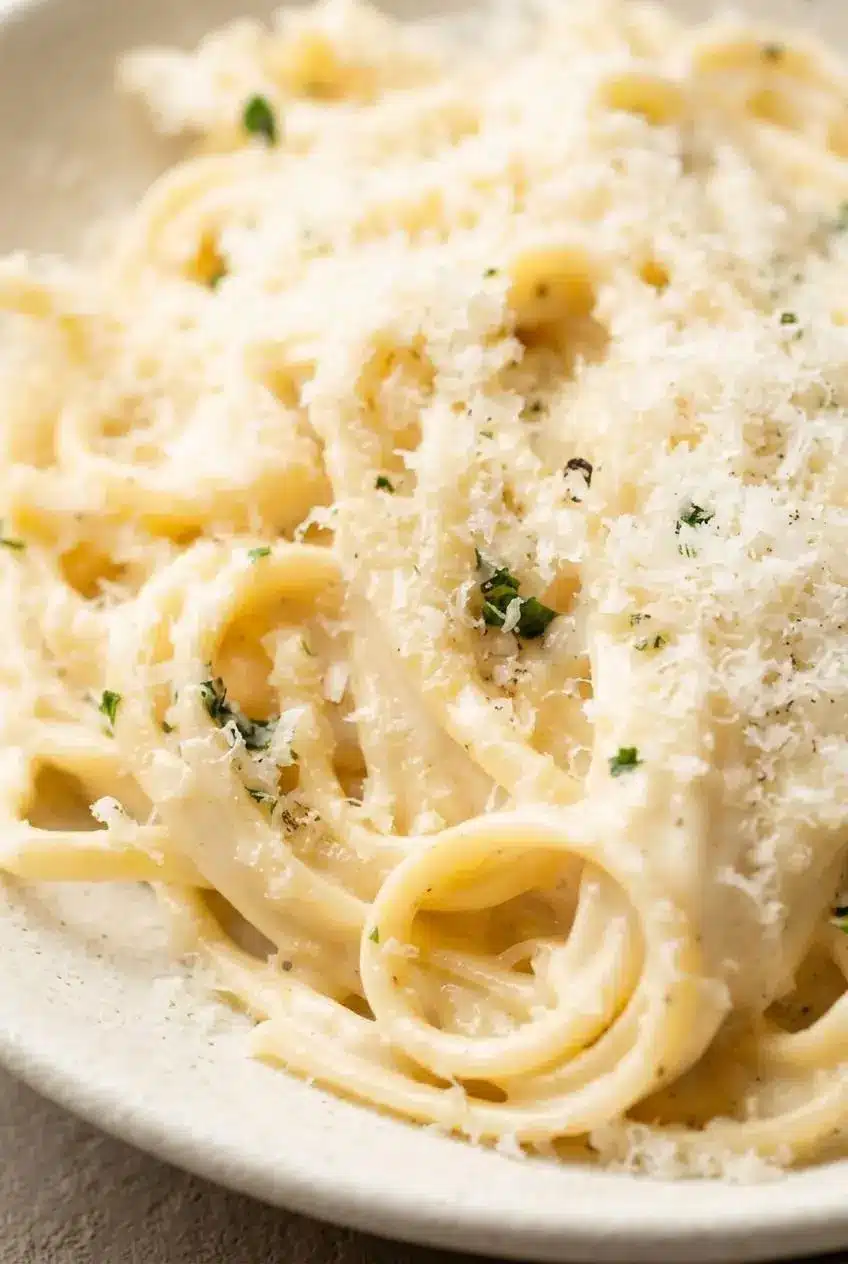
A creamy sauce is forgiving when you know what each texture is telling you. Keep the heat steady, reserve pasta water, and make adjustments before the sauce sits too long in the skillet.
- Greasy or separated sauce: The heat was likely too high after the cream or cheese went in. Remove the skillet from the heat, whisk vigorously, and add a splash of hot starchy pasta water until the sauce comes back together.
- Grainy sauce: Parmesan was likely added to an overly hot sauce, or it was pre-shredded. Lower the heat, stir patiently, and use finely grated cheese from a wedge next time.
- Overly thick sauce: Pasta keeps absorbing moisture after draining. Toss in a little reserved pasta water until the cream returns to a loose, glossy coating.
- Watery sauce: Let the cream simmer gently a bit longer before adding the parmesan. The sauce should thicken first, then loosen slightly again when the pasta is tossed through it.
- Bland noodles: Salt the pasta water well enough that the pasta itself tastes seasoned. Sauce can season the surface, but properly seasoned pasta brings flavor to every bite.
- Bitter garlic: Minced garlic can go from fragrant to burnt quickly. Keep it at medium-low heat for about 60 seconds, and stop as soon as the aroma blooms.
One-Pot Broth Method vs Traditional Skillet Method
Cooking pasta directly in chicken broth can add flavor, but it also releases all of its starch into the same pan. That approach needs frequent stirring and close attention because the pasta can stick or turn gummy as the liquid reduces.
The traditional pot-and-skillet method used here is more reliable for a fast dinner. You can cook the noodles to the exact texture you want, reduce the cream sauce separately, and use only the amount of starchy pasta water needed to help everything cling together.
Storage and Reheating Guidelines
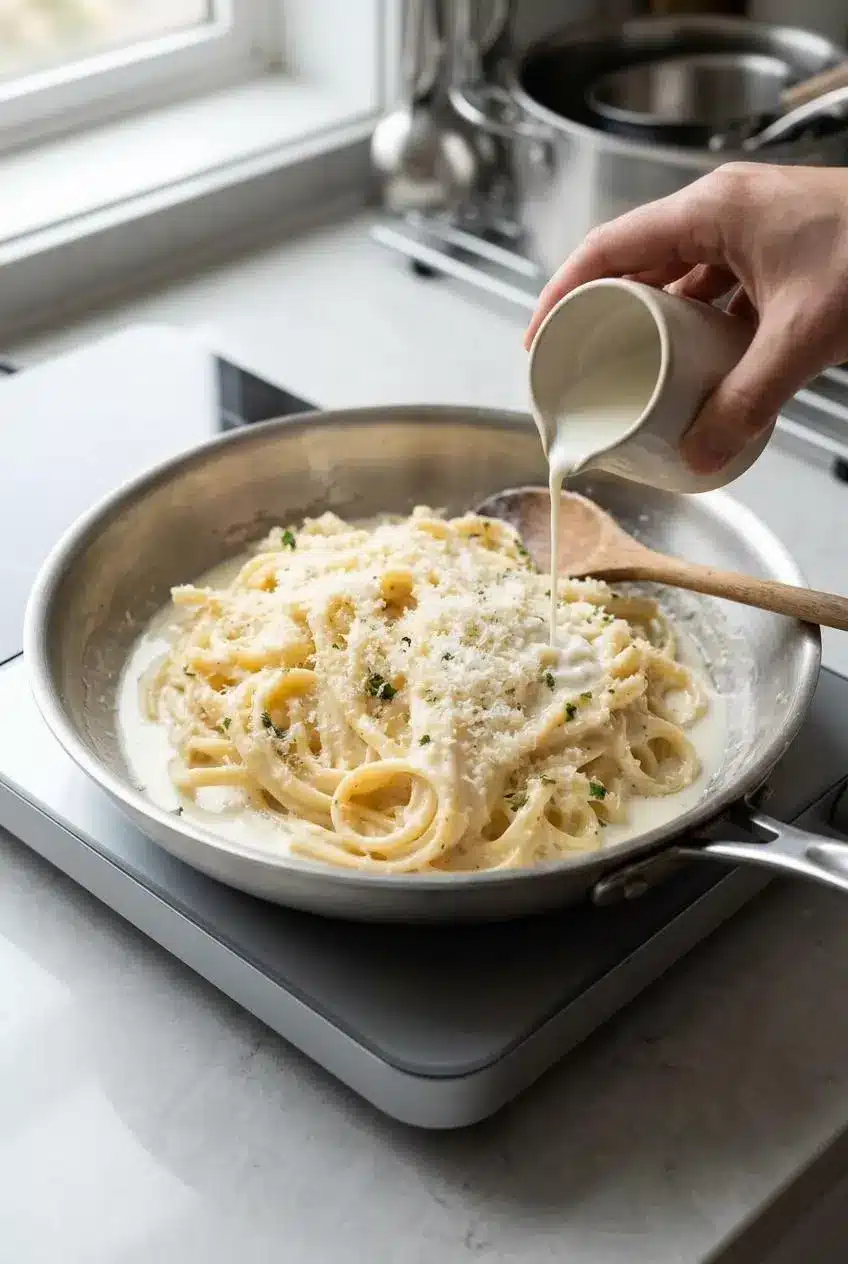
Cool leftovers promptly, transfer them to an airtight container, and refrigerate them. Cooked leftovers can be kept refrigerated for 3 to 4 days when handled properly, following leftover storage and reheating practices.
For the best texture, reheat a portion in a skillet over low heat with a splash of milk, cream, or broth. Stir often and stop before the sauce reaches a hard simmer, which can make the dairy separate. A microwave can work in short bursts at lower power, with stirring between each burst.
This pasta is best made close to serving time because creamy sauces thicken as they rest. If you need to get ahead, grate the parmesan and mince the garlic in advance, then cook the pasta and finish the sauce when you are ready to eat.
Delicious Variations and Serving Suggestions
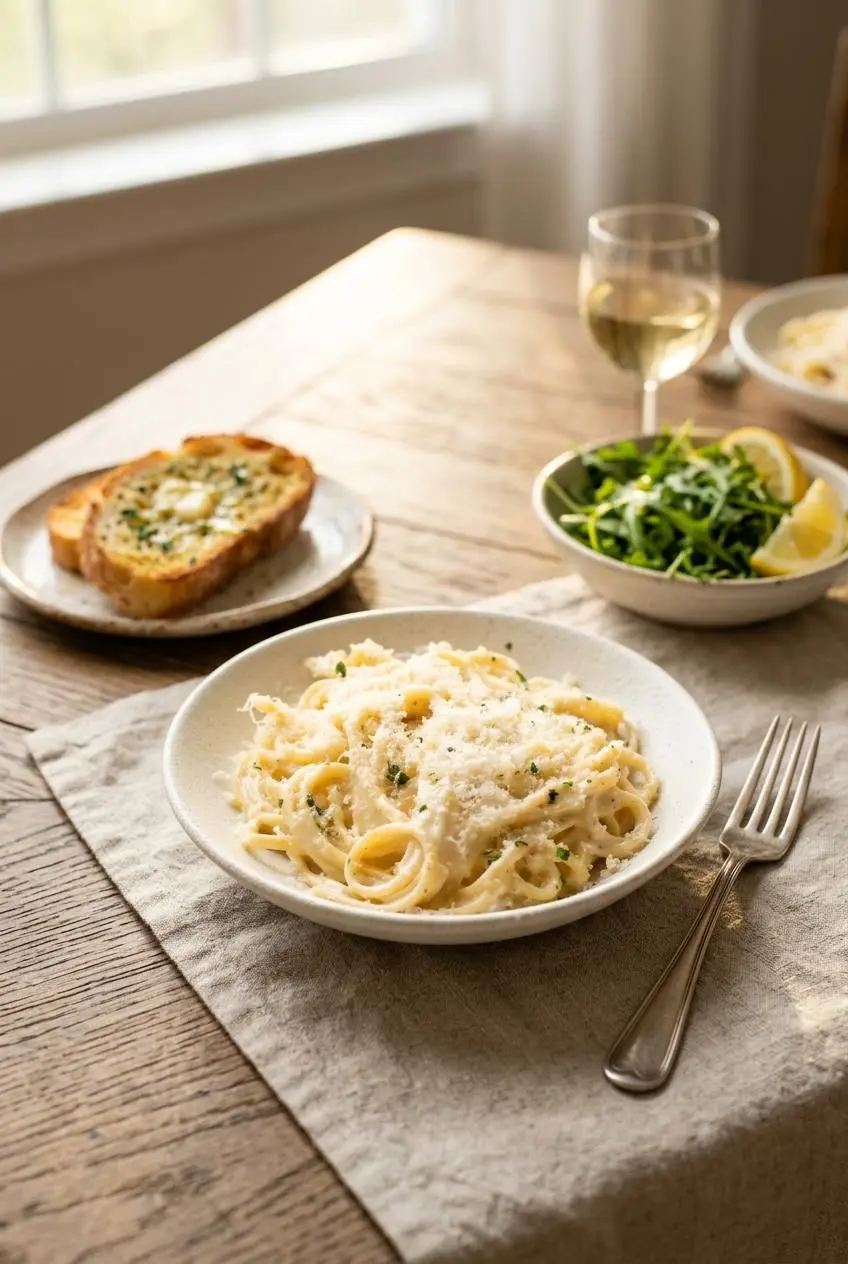
Keep the main dish as written, then use optional additions to make it fit the meal in front of you. A crisp arugula salad dressed with lemon brings welcome acidity, while warm crusty garlic bread is perfect for catching extra sauce.
- Lemon and nutmeg: Add a little fresh lemon zest and a pinch of ground nutmeg as the parmesan melts for a brighter, gently warm finish.
- Red pepper flakes: Stir a pinch into the butter for mild heat that plays well with the rich cream.
- Spinach and tomato garlic pasta: Fold in baby spinach and halved tomatoes near the end. The spinach softens quickly, while tomatoes add freshness and a little acidity.
- Peas or mushrooms: Add peas during the final minute of tossing, or fold in sautéed mushrooms for deeper savory flavor.
For another citrus-forward pasta dinner, try lemon parmesan pasta when you want parmesan richness with a brighter finish.
Adding Protein: Chicken and Shrimp Options
For creamy garlic pasta with grilled chicken, cook sliced chicken breast separately and fold it into the warm finished sauce. Adding it at the end keeps the chicken tender and prevents the sauce from reducing too far while the protein cooks.
For a garlic butter shrimp pasta variation, sear peeled shrimp separately until just cooked, then toss them through the finished noodles. If seafood is on the menu, this creamy seafood pasta offers another satisfying direction for a quick weeknight meal.
Vegetable Boosts: Spinach, Mushrooms, and Peas
Baby spinach needs only the final minute in the skillet to wilt into the sauce. Sweet green peas add pops of color and mild sweetness, while sautéed sliced mushrooms bring an earthy flavor that works especially well with parmesan.
Keep vegetable additions modest enough that the sauce can still coat the pasta. If you add juicy tomatoes or spinach, toss gently and serve soon so the sauce stays creamy rather than watery.
Conclusion
This creamy pasta earns its place in the dinner rotation with a fast sauce, warm garlic aroma, and a silky parmesan finish. Freshly grated cheese and reserved pasta water make the biggest difference.
Serve it straight from the skillet while the sauce is glossy, then add lemon zest or your favorite optional add-ins when you want a different mood for dinner.
Frequently Asked Questions
How Do I Prevent My Creamy Garlic Pasta Sauce From Curdling or Separating?
Keep the heat at medium-low once the cream is in the skillet. Do not let the sauce boil hard after adding parmesan, and stir the cheese in after the sauce has already thickened. Heavy cream is also more forgiving than lower-fat dairy.
Can I Use Milk or Half-and-Half Instead of Heavy Cream?
Half-and-half can work, but the sauce will be lighter and less stable. Whole milk is much thinner and may not give the same creamy coating without an additional thickener, so heavy cream remains the most dependable choice for this method.
Why Is My Garlic Sauce Grainy Instead of Smooth?
Graininess usually comes from pre-shredded parmesan or cheese added over high heat. Use finely grated parmesan from a wedge, lower the heat, and stir it into the warm sauce gradually until it melts.
How Do You Reheat Leftover Creamy Garlic Pasta Without It Getting Oily?
Warm it gently in a skillet over low heat with a splash of milk, cream, or broth. Stir frequently and stop heating once the sauce looks glossy again. Avoid a hard boil, which can cause the dairy to separate.
Creamy Garlic Pasta

Equipment
- Skillet
- Microplane
- Garlic Press
Ingredients
- 8 ounces uncooked pasta (I used linguine)
- 1 tablespoon butter
- 1 teaspoon flour
- 2-3 cloves garlic minced
- 1/4 cup chicken broth
- 1 cup heavy/whipping cream
- 1/3 cup freshly grated parmesan cheese
- Salt & pepper to taste
- Chopped fresh parsley optional, to taste
Instructions
- Bring a pot of salted water to a boil and cook the pasta according to the package directions until al dente. The noodles should be tender with a slight firm bite in the center, so they can finish in the sauce without going soft.
- As the pasta nears doneness, melt the butter in a skillet over medium-high heat and whisk in the flour for about 2 minutes. The roux should bubble softly and look pale, with no raw floury smell.
- Lower the heat to medium-low, then stir in the minced garlic and chicken broth and let it simmer for about 1 minute. The garlic should smell fragrant and turn pale golden, never brown or bitter.
- Whisk in the heavy/whipping cream and cook for a few minutes, stirring occasionally, until the sauce reaches your preferred thickness. It is ready when it lightly coats the back of a spoon and leaves a clear trail when stirred.
- Stir in the freshly grated parmesan cheese and season with salt & pepper as needed. The cheese should disappear into the cream and leave the sauce smooth rather than stringy or oily.
- Drain the pasta, toss it thoroughly with the sauce, and add a little pasta water if you wish to thin the sauce a bit. The finished noodles should look glossy and evenly coated; serve immediately with parsley and extra parm if desired.