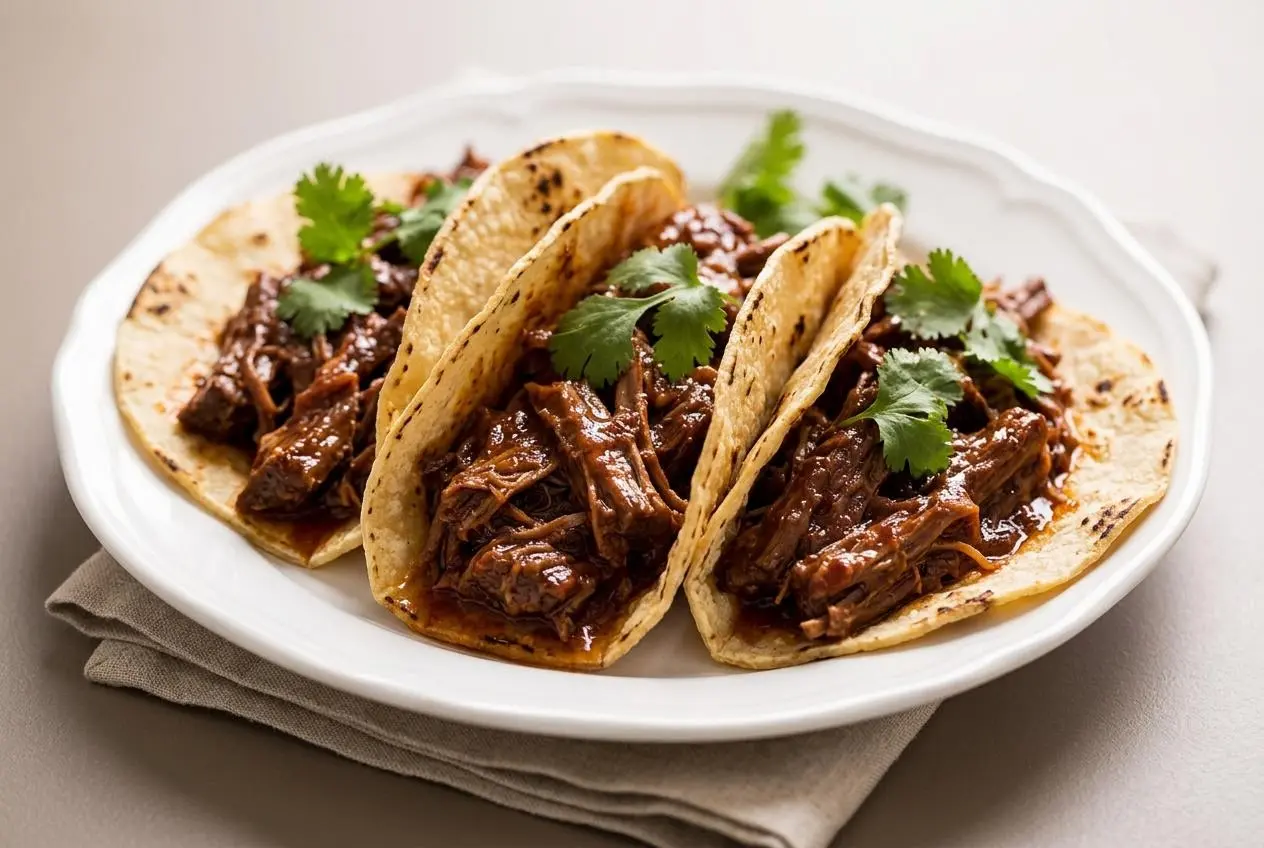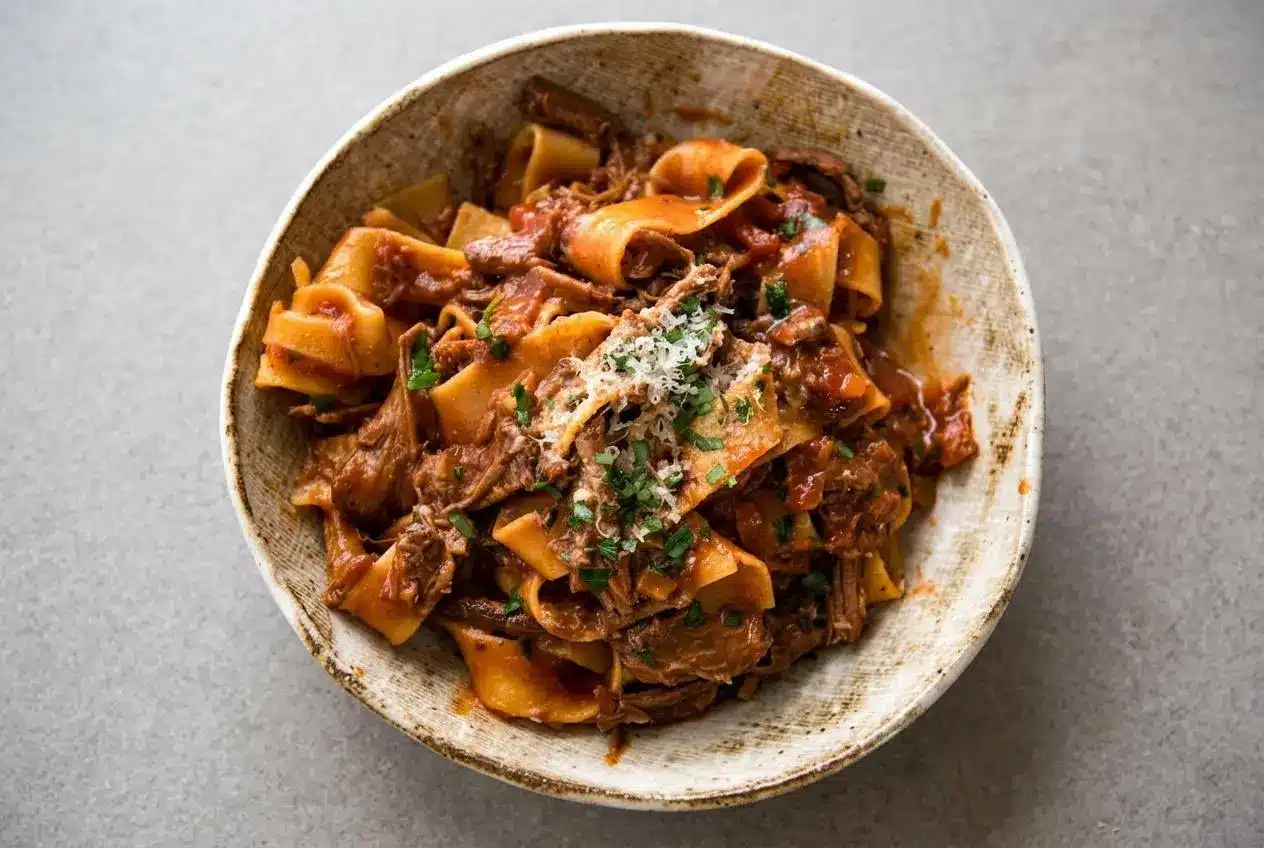
Beef ragu is a slow-simmered Italian-style meat sauce made with browned chuck roast, soffritto, tomatoes, and broth until the beef pulls into tender, savory shreds.
This beef ragu turns a sturdy chuck roast into a deep, mahogany-colored sauce with soft vegetables and rich tomato flavor. The key is patient, gentle heat that gives the connective tissue time to soften.
Serve it with wide pasta and plenty of grated cheese for a dinner that feels special without being fussy. The glossy pasta finish is worth the extra minute.
Pat the beef very dry before it hits the pot so it browns instead of steaming.
Key Ingredients for a Rich Beef Ragu
Each ingredient builds a different layer: chuck supplies body and tenderness, soffritto adds sweetness, tomatoes bring acidity, and herbs round out the slow-cooked aroma.
Ragu
- 1.25kg / 2.5 lb chuck beef or other slow cooking beef cut, cut into equal 4 pieces
- 2 tsp cooking salt / kosher salt (1 1/2 tsp table salt, 3 tsp flakes)
- 1/2 tsp black pepper
- 3 tbsp olive oil, separated
- 3 cloves garlic, minced
- 1 onion, diced
- 1 cup carrots, diced
- 1 cup celery, diced
- 800g / 28oz crushed canned tomatoes
- 3 tbsp tomato paste
- 2 beef bouillon cubes, crumbled
- 1 cup red wine, full bodied (like merlot, cabernet sauvignon), or sub with beef broth/stock
- 1 1/2 cups water
- 3/4 tsp dried thyme or 2 sprigs fresh thyme
- 3 bay leaves, dried or fresh
To Serve (Not all Sauce is used)
- 1 lb /500g dried pappardelle, or other pasta of choice
- Freshly grated parmesan cheese or parmigiano reggiano
- Fresh parsley, finely chopped (optional)
Chuck, tomatoes, and the vegetable base do the heavy lifting here. The marbling in the beef melts into the sauce, while tomato paste gives the braising liquid deeper color and a fuller savory edge. The bouillon cubes reinforce the beef flavor without making the finished sauce taste brothy.
I look for chuck with thin seams of fat throughout the meat, rather than one large exterior fat cap, because those seams give the shredded beef a softer texture.
Choosing the Best Beef Cut for Braising
Boneless chuck roast is the strongest choice for this style of ragu. It contains enough intramuscular fat and connective tissue to become tender during a long, gentle braise. As the collagen softens, the beef separates into silky strands that enrich the sauce instead of leaving dry, firm chunks.
Lean round can work, but it has less marbling and is more likely to stay dry unless cooked with extra care. Short ribs offer luxurious richness, though they can make the sauce noticeably fattier. For another collagen-rich option, braised beef cheeks develop an especially velvety texture after slow cooking.
Building Flavor With Soffritto and Aromatics
Onion, carrot, and celery form a classic soffritto. Cooked gently in olive oil, they lose their raw edge and become sweet, fragrant, and soft enough to disappear into the sauce. Garlic, thyme, and bay leaves bring a savory herbal background without taking over.
A full-bodied red wine such as Merlot or Cabernet Sauvignon adds dark fruit, acidity, and depth. Wine is optional in practice because the ingredient list already allows beef broth or stock as a substitute. For a wine-free version with more brightness, use the broth substitution and add a small splash of balsamic vinegar to taste after the sauce has simmered. An optional Parmesan rind can also simmer with the sauce for extra umami, then be removed before serving.
Ground Beef Alternative for Quick Dinners
For a faster, optional variation, use coarse ground beef or ground chuck in place of braising beef. Brown it thoroughly, then build the sauce as described, but cook only until the tomatoes and aromatics meld into a thick meat sauce. It will be hearty and satisfying, though it will not have the long, shredded texture of chuck ragu.
How to Make Beef Ragu Step by Step
The method is straightforward, but the heat level matters. Build deep browning first, then keep the sauce at the quietest possible simmer until the beef yields easily to two forks.
FULL RECIPE
- Dry the beef well, then season all sides with the salt and black pepper.
Dry meat takes on color quickly, while damp meat tends to turn pale and release moisture. - Heat 1 tbsp olive oil over high heat in a heavy-based pot, then brown the beef pieces on every side for 3 to 5 minutes total before transferring them to a plate.
A deep mahogany crust and browned bits on the pot signal that the flavor foundation is ready. - Lower the heat to medium-low and add the remaining 2 tbsp olive oil, garlic, and onion; cook for 2 minutes, then add the carrots and celery and cook slowly for 5 minutes.
The vegetables should smell sweet and aromatic and soften without developing dark color. - Add the crushed tomatoes, tomato paste, crumbled bouillon cubes, wine or broth, water, thyme, and bay leaves, then return the beef and any collected juices to the pot.
Bring the liquid up to a simmer before lowering the heat until the surface barely moves. - Cover the pot and cook on low for 2 to 2 1/2 hours, checking the beef at the 2-hour mark.
The meat is ready when a fork can pull apart the fibers with little resistance; well-marbled pieces may soften sooner. - Lift out the beef, shred it coarsely with two forks, and stir it back into the sauce before simmering uncovered on low for 30 minutes.
The sauce should reduce to a thick consistency that lightly coats the back of a spoon. - Taste the ragu and adjust with salt and pepper, adding 1/2 tsp sugar if the tomatoes taste too sharp, then cover the pot until serving.
The finished sauce should taste balanced, deeply savory, and rich without a harsh acidic edge.
To Serve
- Bring a very large pot of water with 1 tbsp salt to a boil, then cook the pappardelle for 1 minute less than the package directs.
The pasta should be flexible but still firm in the center because it finishes in the sauce. - While the pasta cooks, heat 5 cups of warm ragu in a very large frying pan or pot over medium-high heat, or use the pasta pot for the final toss.
The sauce should be hot and gently simmering when the noodles are ready. - Scoop out a mugful of pasta cooking water, drain the pasta, and toss it into the ragu with about 1/2 cup of the reserved water for 1 to 2 minutes over medium-high heat.
The starchy water should reduce into a thick, glossy coating; add more reserved water if the sauce tightens too much. - Serve the pasta immediately with freshly grated parmesan or Parmigiano Reggiano.
The cheese should melt into the hot ragu while the noodles are still shiny and saucy.
Searing the Meat and Deglazing Fond
Give the beef room in the pot and let it brown hard. The goal is not a light tan exterior but a dark mahogany crust, which creates the concentrated roasted flavor that makes a braise taste layered rather than flat.
Once the beef comes out, the browned film left on the bottom of the Dutch oven is fond. The tomatoes, wine or broth, and pooled beef juices loosen those bits as the pot comes back to a simmer. Scrape the bottom well with a spoon so that flavor ends up in the sauce instead of stuck to the pot.
The Low and Slow Simmer
A proper braise should show a small bubble breaking the surface every few seconds, not a hard boil. On an electric range, move the pot to the smallest burner if the lowest setting still bubbles aggressively.
Boiling can tighten the muscle fibers before the connective tissue has time to soften. Keep the lid on and the heat low. The sauce will quietly do its work while the chuck becomes shreddable.
Shredding and Final Sauce Reduction
Do not shred the beef just because the clock says it is time. Test a piece with two forks. If the fibers resist or snap back, return it to the pot and continue the gentle braise until it loosens easily.
The uncovered final simmer matters because it concentrates the tomato and beef juices around the shredded meat. Stir now and then, especially near the end, until the sauce looks velvety rather than watery.
How to Properly Marry Ragu With Pasta
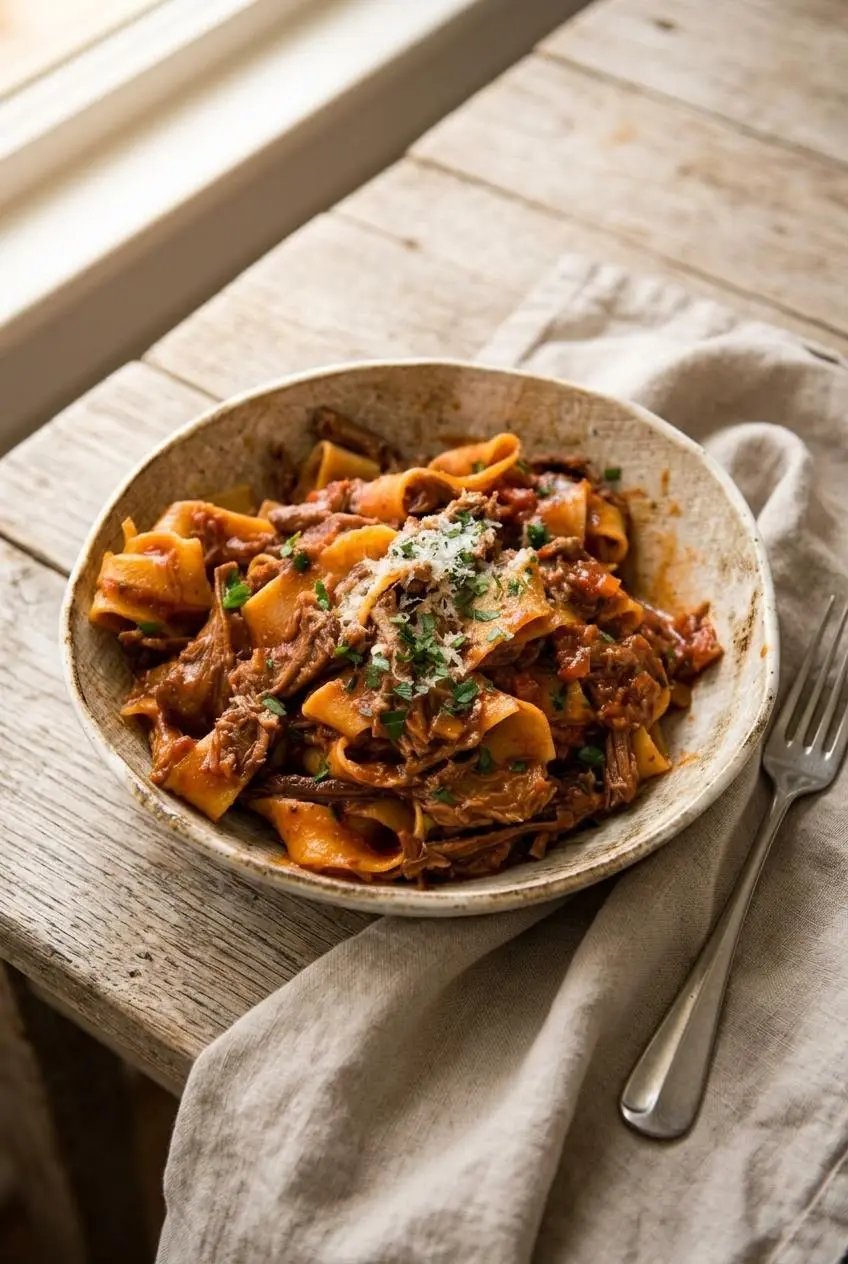
For the best texture, toss the pasta directly in hot ragu instead of spooning sauce over dry noodles. This final step distributes the shredded beef and helps every strand pick up the rich tomato coating.
Why Wide Ribbons Like Pappardelle Work Best
Pappardelle is ideal because its broad ribbons can carry tender beef strands without getting lost beneath the sauce. Tagliatelle works similarly, with enough surface area to hold the glossy ragu in every fold.
Rigatoni is another good option when you want a sturdier shape. Its tubes trap small pieces of beef and sauce, though wide egg noodles create the most classic forkful. For a baked pasta dinner, this style of sauce can also inspire a classic beef lasagna.
The Power of Starchy Pasta Water
Before draining the pasta, save some of the cloudy cooking water. That starch combines with the olive oil, rendered beef richness, and tomato sauce to form a smoother emulsion. No cream is needed.
Keep the pan over medium-high heat while tossing for the full 1 to 2 minutes. The pasta absorbs flavor as excess water evaporates, leaving a sauce that clings instead of pooling at the bottom of the bowl. Never rinse the noodles, since rinsing removes the starch that helps this finish work.
Slow Cooker and Instant Pot Adjustments
Sealed appliances lose far less moisture than a Dutch oven, so the sauce needs a little different handling to reach the same thick, spoon-coating finish.
Slow Cooker Timing and Liquid Reductions
For an optional slow cooker version, reduce the added water by one-third because steam remains trapped under the lid. Cook on low for 6 to 8 hours, until the beef pulls apart easily, then shred it and reduce the sauce uncovered if your appliance allows it, or transfer it to a pot for a gentle stovetop simmer.
Browning the beef and soffritto first will give the slow cooker version more depth, though a no-sear approach can still produce a comforting hands-off dinner. If you enjoy this style of cooking, slow cooker beef stew uses the same patient approach to tender beef.
Pressure Cooker Method and Safe Pressure Release
For a pressure cooker variation, cook the ragu at high pressure for 45 minutes, then allow the pressure to release naturally before opening the lid. The beef should shred easily after the pressure cycle.
Because pressure cooking keeps nearly all moisture inside, finish the shredded ragu with an uncovered sauté simmer until it thickens. Stir often during this stage so the concentrated tomatoes do not catch on the bottom.
Troubleshooting Common Ragu Issues
Small adjustments can rescue a ragu that looks thin, tastes sharp, or has beef that has not softened enough.
- Tough or chewy beef: The collagen has not fully softened yet. Put the lid back on and continue cooking at a very gentle simmer for another 30 to 45 minutes, rather than turning up the heat.
- Thin sauce: Simmer uncovered after shredding until the liquid reduces and the sauce coats a spoon. Keep the heat low enough to avoid scorching.
- Greasy surface: Let the sauce settle briefly, then skim the rendered fat with a chilled metal ladle or spoon before tossing with pasta.
- Tomatoes taste too acidic: Stir in the supported 1/2 tsp sugar from the cooking method, or use a little butter as an optional finishing touch to soften the sharp edge.
- Dry-looking pasta: Toss it over heat with another splash of reserved pasta water until the sauce becomes glossy again.
Fixing Tough or Chewy Beef
Chuck can seem disappointingly firm partway through cooking, especially if the pieces are leaner. That does not mean the braise has failed. It usually means the connective tissue needs more time to relax into the sauce.
Keep the heat low and the lid on. A vigorous boil will not speed up tenderness and can make the meat feel tighter. Once the beef is ready, two forks should separate it cleanly with gentle pressure.
Balancing Acidity and Removing Excess Surface Fat
Crushed tomatoes vary a lot in sweetness and acidity. Taste only after the final reduction, since the flavor concentrates as water evaporates. Use the 1/2 tsp sugar listed in the method when the sauce tastes overly sour, or add a little butter for a rounder finish.
If the chuck was especially fatty, skim the top before adding pasta. A cold metal ladle firms the surface fat slightly, making it easier to lift away without taking too much sauce with it.
Storage, Freezing, and Reheating Guide
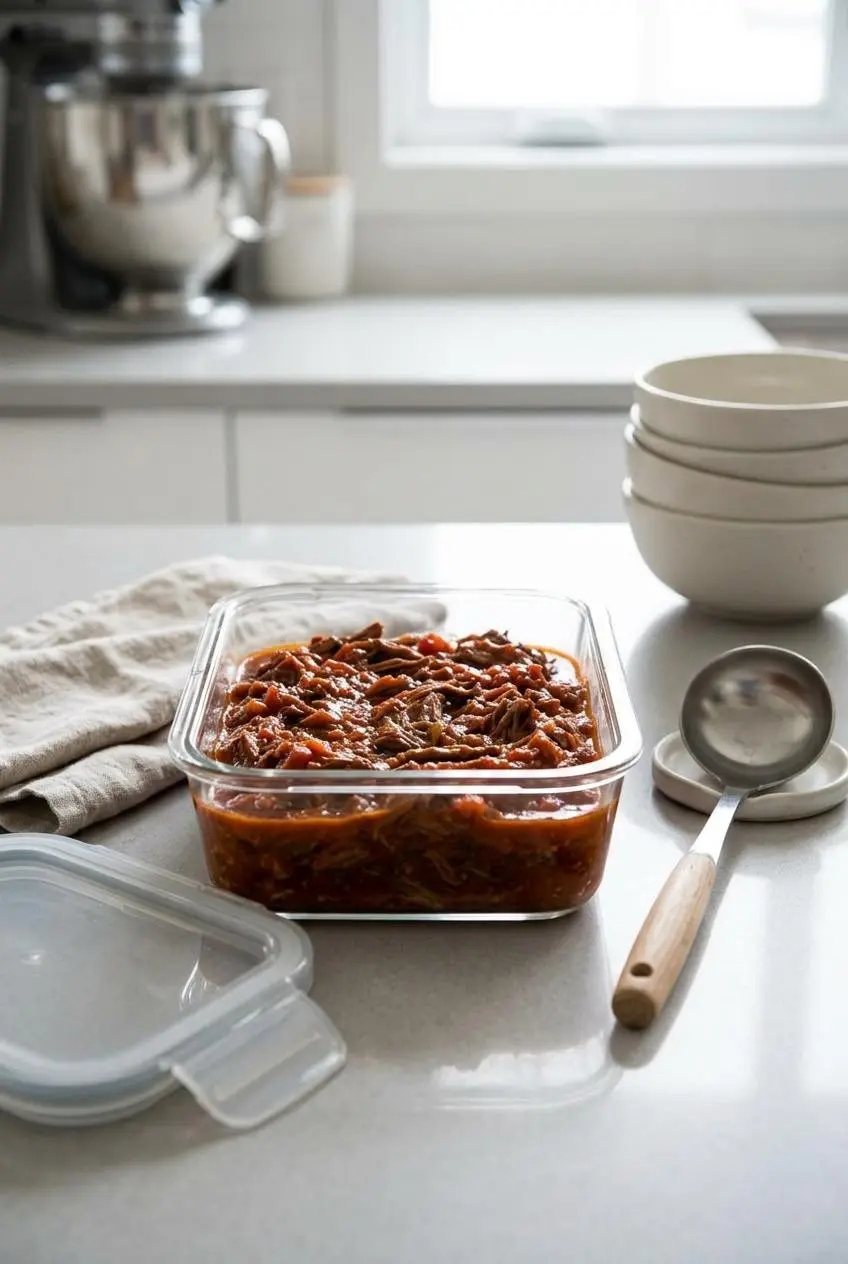
Keep leftover sauce and pasta separate whenever possible. The ragu holds its texture better, and freshly cooked pasta stays far less likely to become soft and swollen.
Chilling and Refrigerator Storage
Cool the sauce promptly, transfer it to airtight containers, and keep it chilled. Divide it into smaller portions if that helps it cool more evenly. Reheat only the amount you plan to serve, leaving the remaining sauce undisturbed.
Store cooked pappardelle separately from the ragu. When it is time to eat, warm the sauce gently and toss it with freshly cooked pasta or pasta that has been briefly refreshed with warm water.
Freezing and Stovetop Reheating
The sauce can be frozen after it has cooled in portioned, freezer-safe containers. Leave the pasta out of the containers, since wide noodles lose their best texture after freezing in sauce.
Warm thawed ragu gently on the stovetop and add a splash of water if it looks too thick. Stir until the sauce returns to a silky consistency, then toss with hot pasta and finish with grated Parmesan.
Conclusion
This slow-braised sauce rewards patience with tender shredded beef, sweet soffritto, and a richly reduced tomato base. Keep the simmer quiet, let the chuck become fork-tender, and give the sauce time to thicken after shredding.
Make extra sauce when you can, then pair it with fresh pappardelle for an easy future dinner that still tastes deeply cooked and comforting.
Frequently Asked Questions
What Is the Best Cut of Beef for Beef Ragu?
Boneless chuck roast is the best all-around choice. Its marbling and connective tissue soften during slow braising. The meat becomes tender enough to shred into rich, juicy strands.
Can I Make Beef Ragu Without Red Wine?
Yes. Use the beef broth or stock substitution listed with the wine. Add a small splash of balsamic vinegar at the end if you want a little extra acidity. The sauce will still have plenty of savory depth from the beef, tomatoes, soffritto, and bouillon.
Why Is My Beef Still Tough After Two Hours?
The connective tissue has not softened fully yet. Keep the pot covered at a very gentle simmer for another 30 to 45 minutes. Check again with two forks and shred only when the meat separates easily.
Can Beef Ragu Be Frozen Ahead of Time?
Yes, freeze the cooled sauce in airtight portions without the pasta. Keep pappardelle separate so it retains a better texture when served. Warm the thawed sauce gently and loosen it with a splash of water if needed.
Beef Ragu

Equipment
- heavy based pot
Ingredients
Ragu
- 1.25 kg chuck beef or other slow cooking beef cut cut into equal 4 pieces (or 2.5 lb)
- 2 tsp cooking salt / kosher salt 1 1/2 tsp table salt, 3 tsp flakes
- 1/2 tsp black pepper
- 3 tbsp olive oil separated
- 3 cloves garlic minced
- 1 onion diced
- 1 cup carrots diced
- 1 cup celery diced
- 800 g crushed canned tomatoes or 28oz
- 3 tbsp tomato paste
- 2 beef bouillon cubes crumbled
- 1 cup red wine full bodied (like merlot, cabernet sauvignon), or sub with beef broth/stock
- 1 1/2 cups water
- 3/4 tsp dried thyme or 2 sprigs fresh thyme
- 3 bay leaves dried or fresh
To Serve (Not all Sauce is used)
- 1 lb dried pappardelle or 500g, or other pasta of choice
- Freshly grated parmesan cheese or parmigiano reggiano
- Fresh parsley finely chopped (optional)
Instructions
FULL RECIPE
- Dry the beef well, then season all sides with the salt and black pepper. Dry meat takes on color quickly, while damp meat tends to turn pale and release moisture.
- Heat 1 tbsp olive oil over high heat in a heavy-based pot, then brown the beef pieces on every side for 3 to 5 minutes total before transferring them to a plate. A deep mahogany crust and browned bits on the pot signal that the flavor foundation is ready.
- Lower the heat to medium-low and add the remaining 2 tbsp olive oil, garlic, and onion; cook for 2 minutes, then add the carrots and celery and cook slowly for 5 minutes. The vegetables should smell sweet and aromatic and soften without developing dark color.
- Add the crushed tomatoes, tomato paste, crumbled bouillon cubes, wine or broth, water, thyme, and bay leaves, then return the beef and any collected juices to the pot. Bring the liquid up to a simmer before lowering the heat until the surface barely moves.
- Cover the pot and cook on low for 2 to 2 1/2 hours, checking the beef at the 2-hour mark. The meat is ready when a fork can pull apart the fibers with little resistance; well-marbled pieces may soften sooner.
- Lift out the beef, shred it coarsely with two forks, and stir it back into the sauce before simmering uncovered on low for 30 minutes. The sauce should reduce to a thick consistency that lightly coats the back of a spoon.
- Taste the ragu and adjust with salt and pepper, adding 1/2 tsp sugar if the tomatoes taste too sharp, then cover the pot until serving. The finished sauce should taste balanced, deeply savory, and rich without a harsh acidic edge.
To Serve
- Bring a very large pot of water with 1 tbsp salt to a boil, then cook the pappardelle for 1 minute less than the package directs. The pasta should be flexible but still firm in the center because it finishes in the sauce.
- While the pasta cooks, heat 5 cups of warm ragu in a very large frying pan or pot over medium-high heat, or use the pasta pot for the final toss. The sauce should be hot and gently simmering when the noodles are ready.
- Scoop out a mugful of pasta cooking water, drain the pasta, and toss it into the ragu with about 1/2 cup of the reserved water for 1 to 2 minutes over medium-high heat. The starchy water should reduce into a thick, glossy coating; add more reserved water if the sauce tightens too much.
- Serve the pasta immediately with freshly grated parmesan or Parmigiano Reggiano. The cheese should melt into the hot ragu while the noodles are still shiny and saucy.