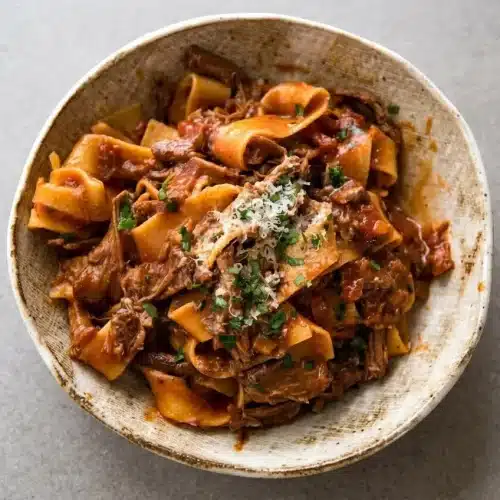
Beef Ragu

Tender shredded chuck roast simmers slowly with aromatic vegetables, red wine, and crushed tomatoes to create a rich, glossy Italian meat sauce that coats pasta effortlessly.
Equipment
- heavy based pot
Ingredients
Ragu
- 1.25 kg chuck beef or other slow cooking beef cut cut into equal 4 pieces (or 2.5 lb)
- 2 tsp cooking salt / kosher salt 1 1/2 tsp table salt, 3 tsp flakes
- 1/2 tsp black pepper
- 3 tbsp olive oil separated
- 3 cloves garlic minced
- 1 onion diced
- 1 cup carrots diced
- 1 cup celery diced
- 800 g crushed canned tomatoes or 28oz
- 3 tbsp tomato paste
- 2 beef bouillon cubes crumbled
- 1 cup red wine full bodied (like merlot, cabernet sauvignon), or sub with beef broth/stock
- 1 1/2 cups water
- 3/4 tsp dried thyme or 2 sprigs fresh thyme
- 3 bay leaves dried or fresh
To Serve (Not all Sauce is used)
- 1 lb dried pappardelle or 500g, or other pasta of choice
- Freshly grated parmesan cheese or parmigiano reggiano
- Fresh parsley finely chopped (optional)
Instructions
FULL RECIPE
- Dry the beef well, then season all sides with the salt and black pepper. Dry meat takes on color quickly, while damp meat tends to turn pale and release moisture.
- Heat 1 tbsp olive oil over high heat in a heavy-based pot, then brown the beef pieces on every side for 3 to 5 minutes total before transferring them to a plate. A deep mahogany crust and browned bits on the pot signal that the flavor foundation is ready.
- Lower the heat to medium-low and add the remaining 2 tbsp olive oil, garlic, and onion; cook for 2 minutes, then add the carrots and celery and cook slowly for 5 minutes. The vegetables should smell sweet and aromatic and soften without developing dark color.
- Add the crushed tomatoes, tomato paste, crumbled bouillon cubes, wine or broth, water, thyme, and bay leaves, then return the beef and any collected juices to the pot. Bring the liquid up to a simmer before lowering the heat until the surface barely moves.
- Cover the pot and cook on low for 2 to 2 1/2 hours, checking the beef at the 2-hour mark. The meat is ready when a fork can pull apart the fibers with little resistance; well-marbled pieces may soften sooner.
- Lift out the beef, shred it coarsely with two forks, and stir it back into the sauce before simmering uncovered on low for 30 minutes. The sauce should reduce to a thick consistency that lightly coats the back of a spoon.
- Taste the ragu and adjust with salt and pepper, adding 1/2 tsp sugar if the tomatoes taste too sharp, then cover the pot until serving. The finished sauce should taste balanced, deeply savory, and rich without a harsh acidic edge.
To Serve
- Bring a very large pot of water with 1 tbsp salt to a boil, then cook the pappardelle for 1 minute less than the package directs. The pasta should be flexible but still firm in the center because it finishes in the sauce.
- While the pasta cooks, heat 5 cups of warm ragu in a very large frying pan or pot over medium-high heat, or use the pasta pot for the final toss. The sauce should be hot and gently simmering when the noodles are ready.
- Scoop out a mugful of pasta cooking water, drain the pasta, and toss it into the ragu with about 1/2 cup of the reserved water for 1 to 2 minutes over medium-high heat. The starchy water should reduce into a thick, glossy coating; add more reserved water if the sauce tightens too much.
- Serve the pasta immediately with freshly grated parmesan or Parmigiano Reggiano. The cheese should melt into the hot ragu while the noodles are still shiny and saucy.
Notes
Tenderness tip: If the beef feels firm after two hours, keep the lid on and simmer gently for an extra 30 to 45 minutes until the connective tissue softens completely.
Degreasing tip: If the sauce shows excess rendered fat on the surface, rest it briefly and skim the top using a chilled metal ladle before tossing with noodles.
Pasta tossing: Toss the pasta directly in hot ragu with reserved starchy cooking water for 1 to 2 minutes to create a glossy emulsion that clings to every ribbon.
Storage: Store leftover sauce in airtight containers in the refrigerator, keeping pasta separate so it does not turn soft. Sauce can also be frozen without pasta.
Nutrition information is an estimate based on common ingredients and serving sizes. Values may vary depending on brands, portions, and substitutions.