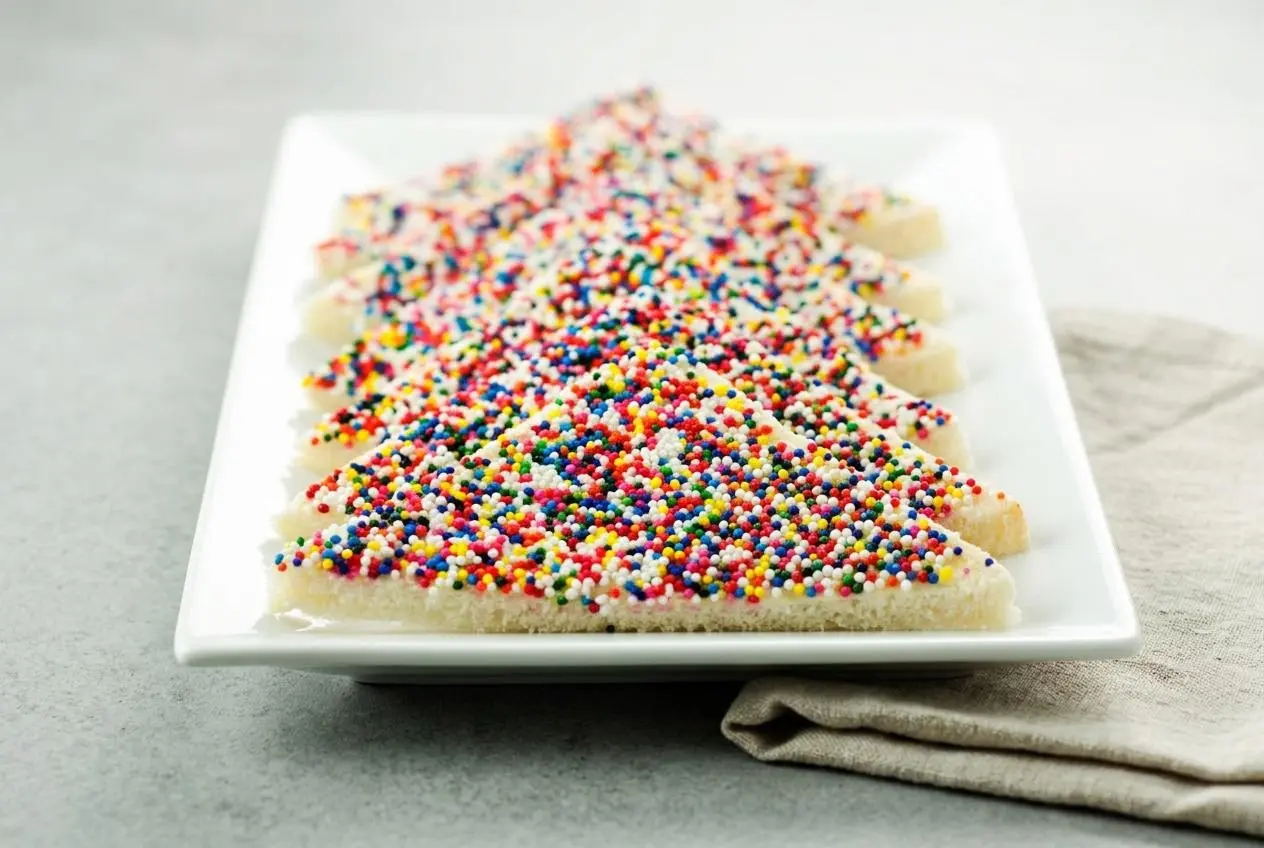
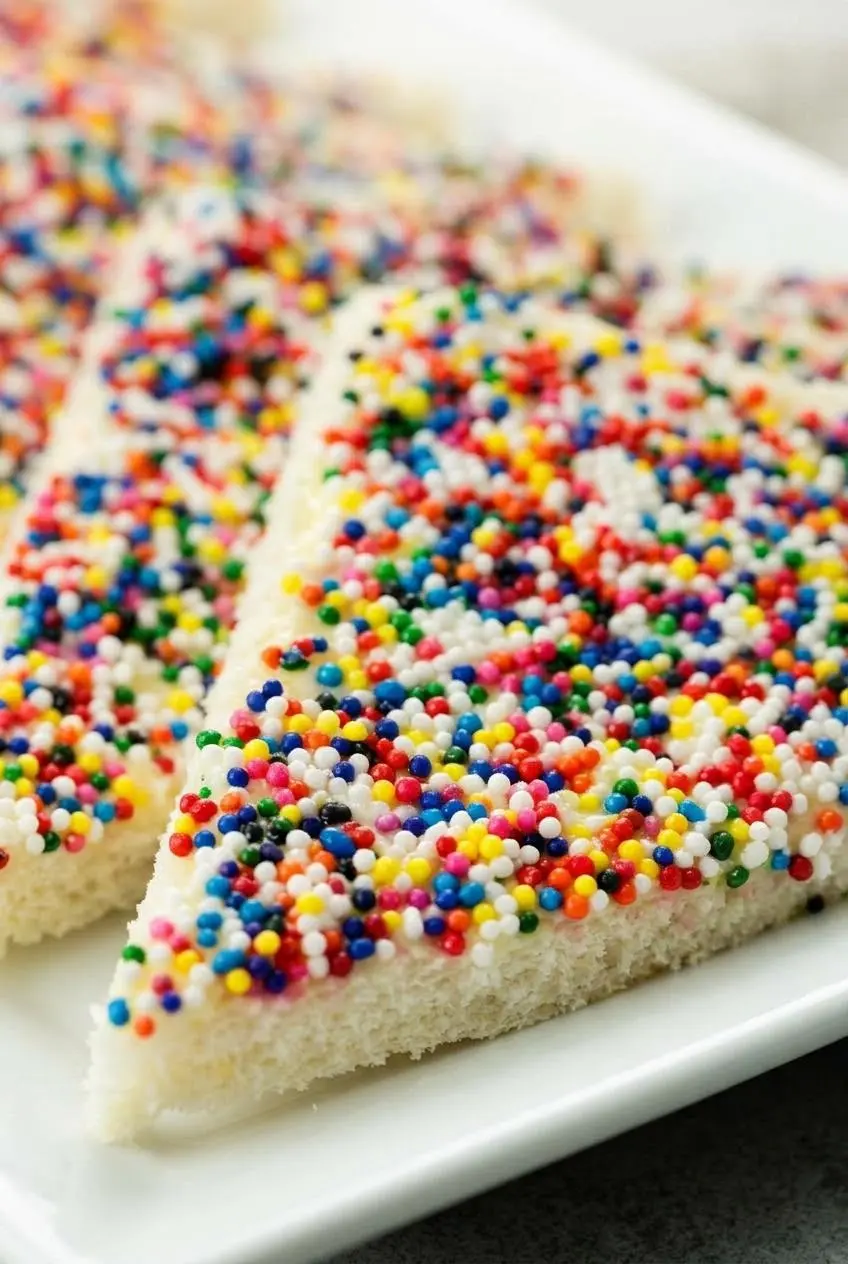
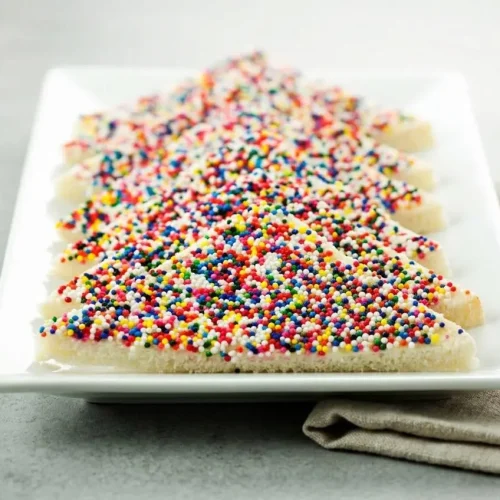
Fairy bread is a classic Australian party snack of soft, untoasted white bread spread with butter, covered in round nonpareils, and cut into triangles.
Fairy bread brings together squishy bread, smooth butter, and a bright crunch of sugar pearls in every bite. It is a cheerful birthday party snack that takes only a few minutes to assemble.
The small details make the texture. Softened butter, round sprinkles, and a gentle press keep every triangle crisp and colorful.
Set the bread inside a rimmed baking sheet before opening the sprinkles so runaway nonpareils stay contained.
What Is Authentic Fairy Bread?
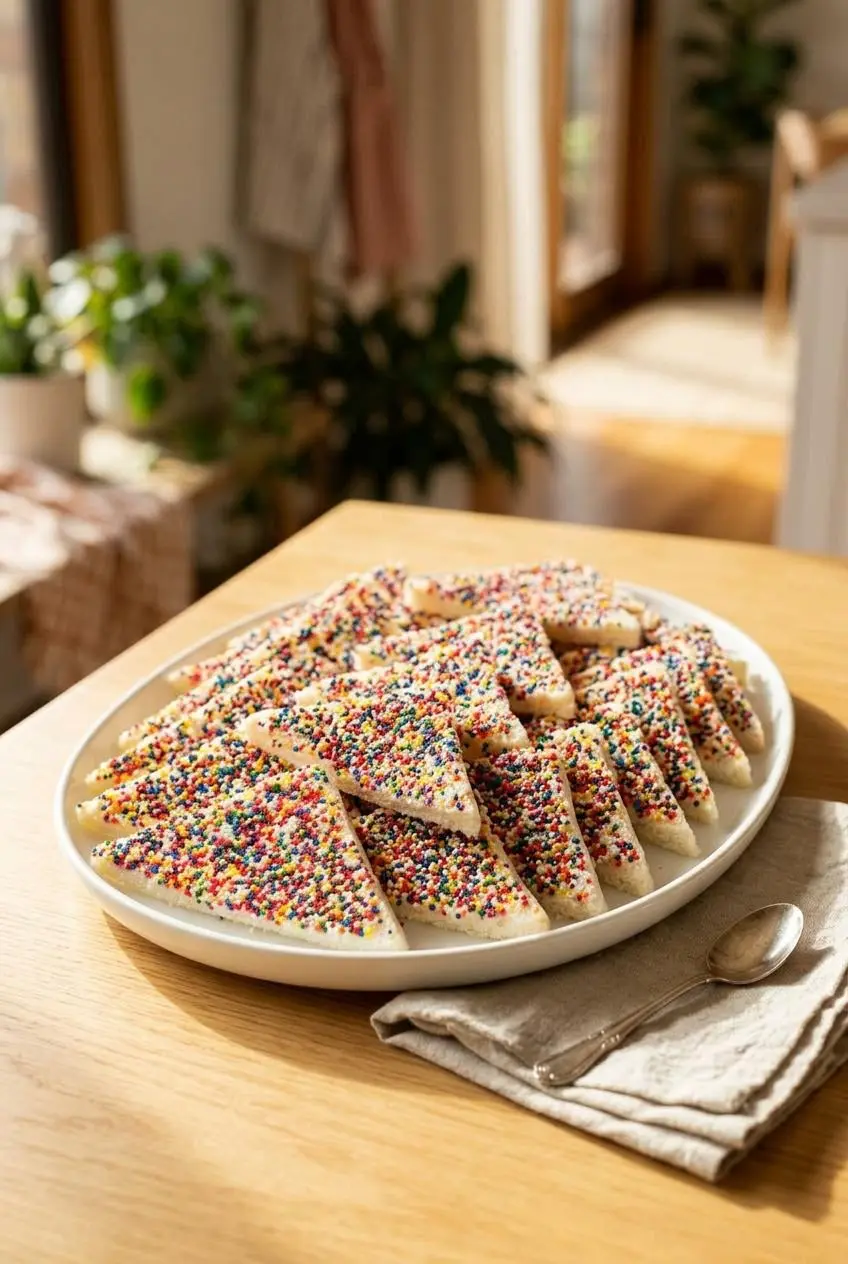
Authentic fairy bread is a beloved Australian and New Zealand party food, especially popular at children’s birthday celebrations. It has also become familiar to American families through Australian shows such as Bluey, where this colorful snack is part of the fun.
The traditional version is deliberately straightforward: fresh, untoasted white bread, butter, and tiny round rainbow sprinkles called hundreds and thousands. The bread should stay soft and pliable rather than crisp or toasted, so it folds gently around the butter and gives the sprinkles a tender base.
Round nonpareils matter. They create the recognizable little sugar crunch and cling well to butter when pressed lightly. Rod-shaped American jimmies can work in a pinch, but they look and feel different from the classic hundreds and thousands.
If you bake your own soft sandwich bread, choose a tender loaf with a fine crumb. Dense, crusty artisan bread makes the snack harder to cut neatly and shifts the familiar soft-and-crunchy contrast.
Essential Ingredients and Their Roles
Each ingredient contributes something important: bread provides a soft base, butter adds richness and grip, and sprinkles bring color, sweetness, and a delicate crunch.
- 4 Slices White Bread
- 3 Tbsp Butter at room temperature
- 1/2 C Sprinkles
Choosing the Right Bread and Butter
Choose fresh white sandwich bread with a soft, even crumb. It should feel cushiony, not dry or firm. This type of bread trims cleanly, spreads without cracking, and stays tender when cut into party-size triangles. Skip toasted bread and hearty bakery loaves, which can crumble or overpower the delicate topping.
Room-temperature butter is equally important. It should yield easily under a knife or small offset spatula, leaving a smooth coating instead of dragging at the bread. Salted butter is traditional because its gentle saltiness keeps the sweet sprinkles from tasting one-dimensional.
Unsalted butter also works if that is what you have, though the flavor will be milder. Margarine can spread easily, but butter gives a fuller flavor and a more satisfying finish.
I look for butter that spreads in one calm stroke without leaving ridges or pulling the bread into little tears.
Hundreds and Thousands vs American Sprinkles
Hundreds and thousands are the tiny round nonpareils used for classic fairy bread. Their compact shape gives each bite a light audible crunch, and their small size lets them cover the butter evenly.
American jimmies are longer, rod-shaped sprinkles. They tend to sit less evenly on the bread and can bring a waxier mouthfeel. For the closest traditional result, look for rainbow nonpareils or a container specifically labeled hundreds and thousands.
- Rainbow nonpareils: the classic choice for bright color and crisp sugar texture.
- Single-color nonpareils: useful for themed parties while keeping the same crunch.
- Rod-shaped jimmies: an optional backup, though they will not give the same fine, even coating.
How to Make Fairy Bread
- Trim the crusts from the white bread, then spread the room-temperature butter across each slice all the way to the edges.
The bread should stay flat and soft, with a thin, even buttery surface and no torn spots. - Cover the buttered bread with sprinkles, press them on with a light touch, then cut each slice into triangles and serve.
The nonpareils should look evenly attached while the bread remains fluffy rather than compressed.
Work gently from the center outward when spreading the butter. Reaching the edges creates a full sprinkle coating and helps prevent bare, dry corners. Use a sharp knife for the final diagonal cuts, wiping the blade if sprinkles gather along it.
Step-by-Step Mess-Free Preparation
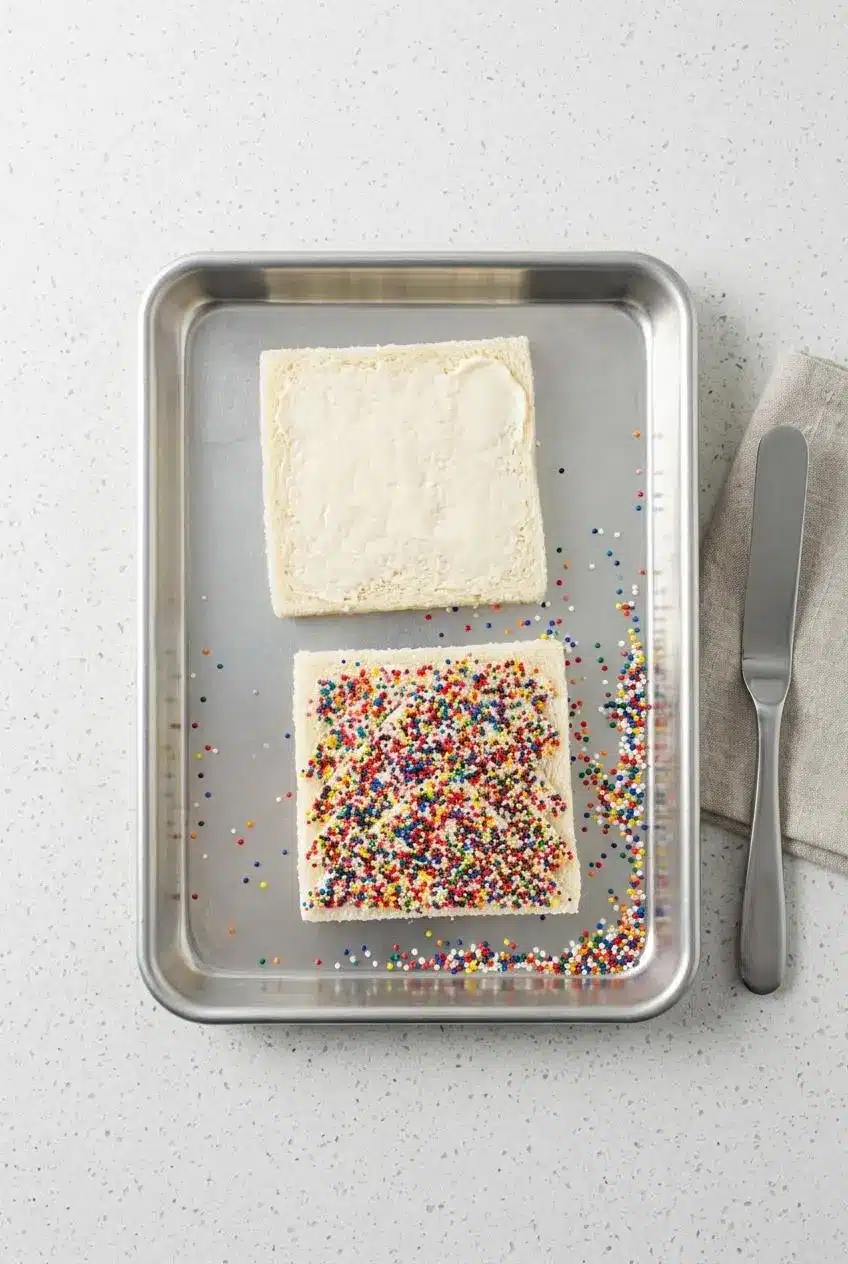
A rimmed baking sheet, shallow casserole dish, or wide tray makes assembly much calmer. The raised edges catch rolling nonpareils before they scatter across the counter and floor.
For a party batch, trim all the bread first and keep the slices in the tray. Butter each slice, add sprinkles one at a time, then move finished pieces to a serving platter. This keeps the work orderly and prevents buttered bread from sitting uncovered while you prepare the rest.
Pour sprinkles over the bread while it rests inside the tray, then tip the loose extras into one corner and return them to their container. A light pat with an open palm is enough to set the topping. Heavy pressure flattens the bread and can make the finished triangles feel dense.
If you are trimming many slices, save the crusts for homemade breadcrumbs rather than tossing them. Keep the crumbs separate from the sprinkle tray, of course.
Troubleshooting Common Texture Mistakes
- The bread tears while spreading: The butter is likely too firm, or the bread is being pressed too hard. Let the butter soften fully, then use a flat knife or offset spatula with light, sweeping strokes.
- There are bare patches of sprinkles: The butter did not reach the edges, or the topping was barely pressed in. Add a smooth, thin butter layer across the whole surface and pat the nonpareils gently.
- The bread feels soggy: Buttered bread gradually loses its fresh texture as it sits. Assemble close to serving time and keep the pieces uncovered until they go onto the platter.
- The sprinkles keep falling off: The butter layer may be patchy or too cold to hold them. Smooth it evenly, add the sprinkles while the butter is soft, and use a gentle palm press.
- The cuts look ragged: A dull blade can drag soft bread and pull the sprinkles. Use a sharp knife and make confident, clean slices instead of sawing back and forth.
The ideal bite starts soft and buttery, then gives way to a fine sugar crunch. That contrast disappears when the bread is stale, the butter is cold, or the topping is pressed too aggressively.
Popular Variations for Parties
The classic version needs no extra decoration, but optional variations can suit a theme or a different kind of celebration. Keep the traditional batch separate so everyone can enjoy the familiar rainbow version.
- Honeyed salted butter: Lightly brush bread with honeyed salted butter before adding nonpareils for a sweeter, more savory edge. The salt keeps the sugar flavor from becoming cloying.
- Single-color party bread: Use nonpareils in school colors, holiday shades, or a favorite color for an easy themed platter.
- Chocolate sprinkles: Swap rainbow nonpareils for chocolate sprinkles when you want a deeper cocoa flavor and a less colorful finish.
The Dutch Hagelslag Alternative
Dutch hagelslag uses buttered bread topped with chocolate sprinkles, often made with milk or dark chocolate. It is commonly enjoyed as a breakfast or tea-time snack rather than a birthday party treat.
The texture is softer and more chocolate-forward than fairy bread, especially when the sprinkles begin to melt slightly against the butter. It is a fun optional change, but round rainbow nonpareils remain the hallmark of the Australian version.
Creative Shapes for Themed Celebrations
Metal cookie cutters turn buttered bread into hearts, stars, animals, or other party shapes. Cut the bread before adding sprinkles for cleaner edges, or sprinkle first and cut afterward if you want every shape fully coated.
Use firm downward pressure with the cutter rather than twisting it through the soft bread. Smaller shapes are especially handy for little hands, though triangles remain the traditional party presentation.
Conclusion
Fairy bread earns its place on a party table with soft untoasted bread, smooth butter, and a bright crackle of hundreds and thousands. Serve it soon after assembling to keep that contrast at its best.
Keep the process gentle, contain the sprinkles with a tray, and cut clean triangles for a cheerful treat that disappears quickly.
Frequently Asked Questions
What Kind of Sprinkles Are Best for Fairy Bread?
Round nonpareils, called hundreds and thousands in Australia, are the traditional choice. They create the fine, crisp sugar crunch associated with fairy bread. They adhere evenly to the butter with a gentle press. Rod-shaped jimmies work differently and give a less traditional texture.
Can Fairy Bread Be Made in Advance?
It is best assembled close to serving time. Soft bread can lose its fresh texture as it sits with butter. The sugar beads gradually lose their crisp crunch. For a party, trim the bread and set out the sprinkles ahead, then assemble when the platter is needed.
Should the Bread Be Toasted for Fairy Bread?
No. Traditional fairy bread uses fresh, untoasted white sandwich bread. Soft bread lets the butter spread smoothly without cracking. Its tender texture balances the crisp sugar coating. Toast changes the snack into something crunchier and less traditional.
Should I Use Salted or Unsalted Butter?
Salted butter is the classic choice and works especially well with sweet sprinkles. A light saltiness balances the sugary nonpareils. Use room-temperature butter so it spreads without tearing the bread. Unsalted butter is fine if you prefer a milder flavor.
What Is the Difference Between Fairy Bread and Dutch Hagelslag?
Fairy bread and hagelslag both start with buttered bread, but the toppings and occasions differ. Fairy bread uses rainbow nonpareils and is strongly associated with Australian and New Zealand birthday parties. Dutch hagelslag uses chocolate sprinkles and is often enjoyed at breakfast or tea time. Fairy bread is brighter and crunchier, while hagelslag tastes richer and more chocolatey.
Fairy Bread

Equipment
- Rimmed baking sheet
- Offset spatula
- Sharp knife
Ingredients
- 4 Slices White Bread
- 3 Tbsp Butter at room temperature
- 1/2 C Sprinkles
Instructions
- Trim the crusts from the white bread, then spread the room-temperature butter across each slice all the way to the edges. The bread should stay flat and soft, with a thin, even buttery surface and no torn spots.
- Cover the buttered bread with sprinkles, press them on with a light touch, then cut each slice into triangles and serve. The nonpareils should look evenly attached while the bread remains fluffy rather than compressed.