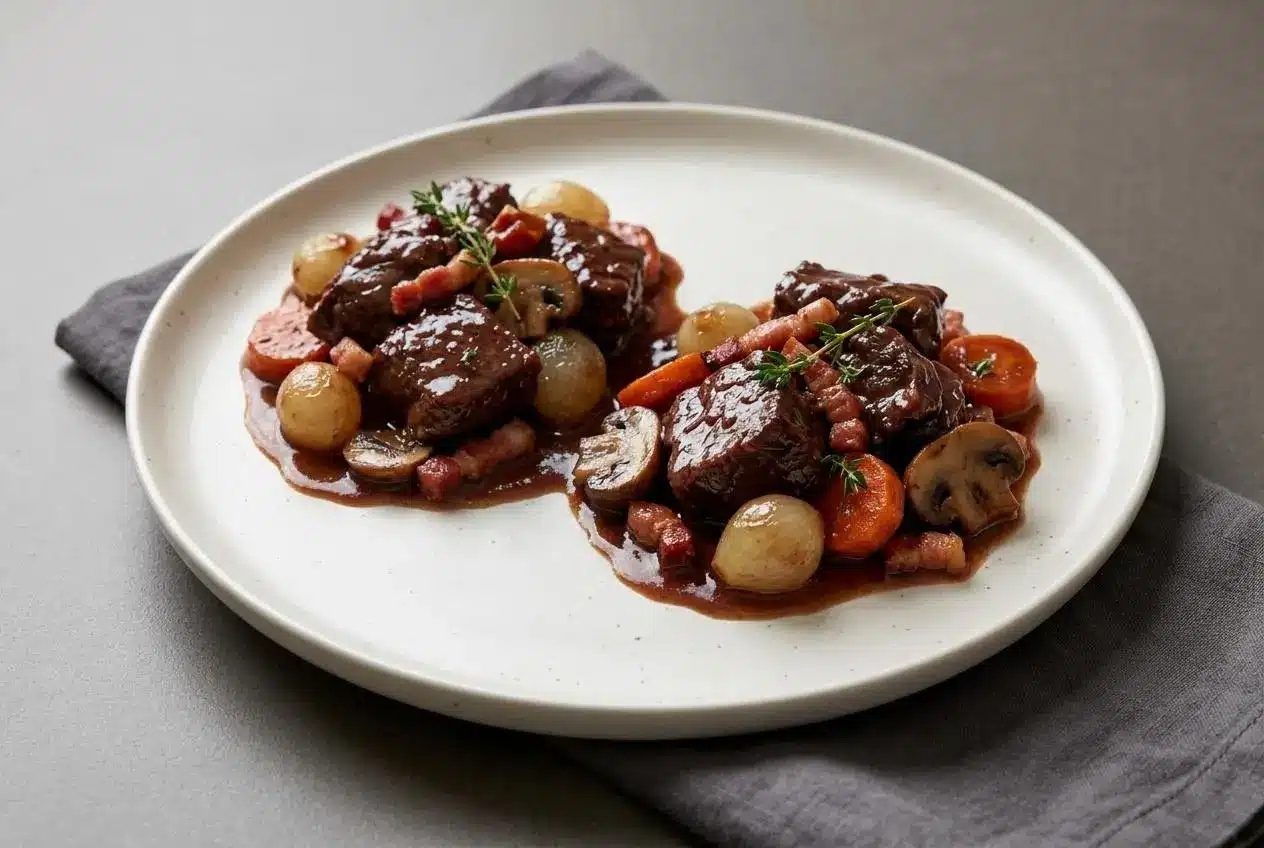
The secret to a great beef bourguignon is slow braising beef chuck roast in dry red wine, then finishing it with separately cooked pearl onions, bacon, and mushrooms so every bite stays distinct, rich, and deeply savory.
This beef bourguignon recipe is a classic French braise with beef chuck, red wine, bacon, carrots, pearl onions, and mushrooms cooked until the sauce turns velvety and full of flavor.
It smells like the kind of dinner that makes the whole kitchen feel warmer, and the method is easier than it sounds once you break it into stages. The sauce is the part worth lingering over.
Dry the beef very well before it hits the pot or it will steam instead of forming that deep brown crust.
Understanding the Key Ingredients of Beef Bourguignon
Beef bourguignon earns its identity from the way a few key ingredients work together. Unlike classic beef stew, this dish leans hard into red wine, bacon, pearl onions, and mushrooms for a darker, more layered braise.
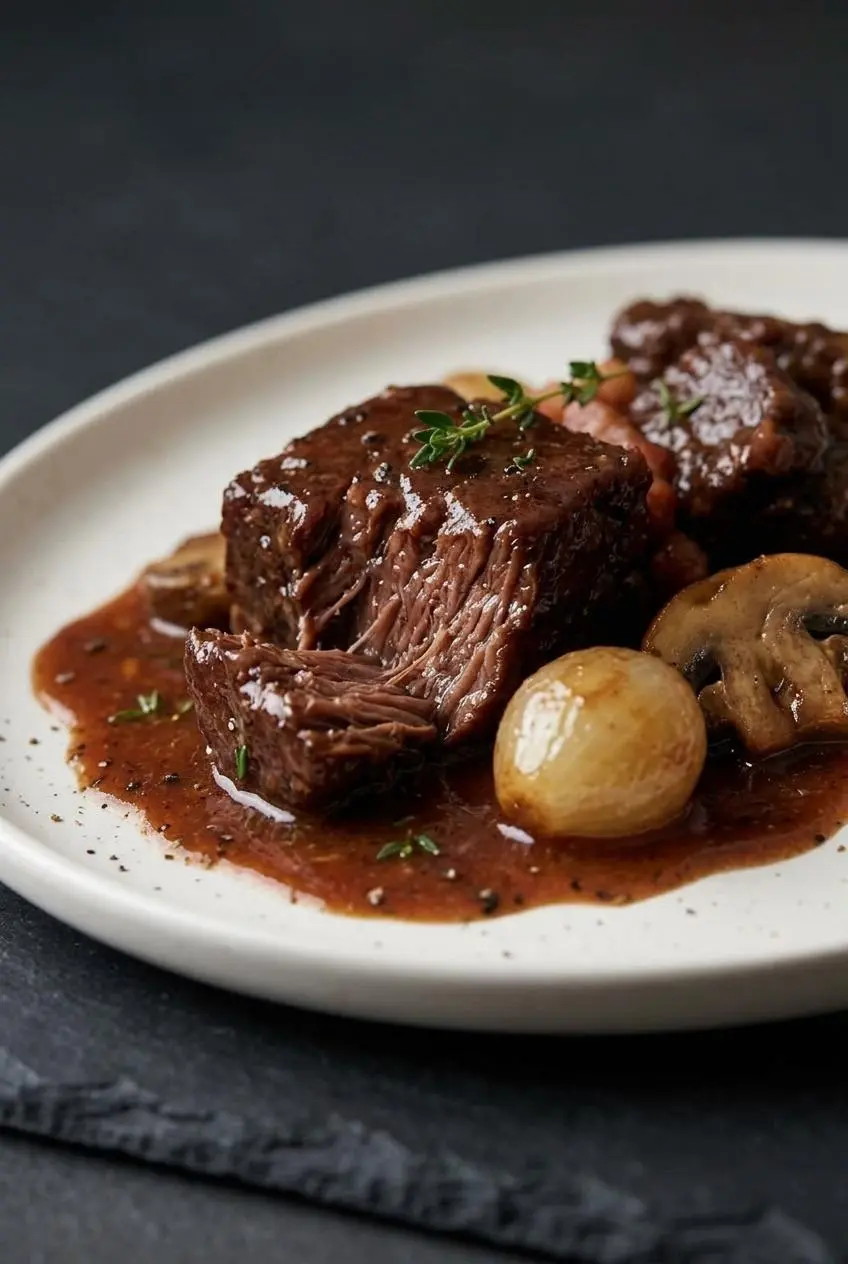
Beef chuck roast is the backbone here. It comes from a hard-working part of the animal, so it starts out tough, but that toughness is exactly why it shines in a long braise. As it cooks slowly, the connective tissue softens and gives the sauce body while the meat turns spoon-tender instead of dry.
Bacon does more than add smoky bites. As the fat renders, it coats the bottom of the Dutch oven and creates a savory foundation for the carrots, tomato paste, and flour. That base flavor runs through the whole pot.
Red wine is the signature liquid. At first, the aroma is sharp and a little raw, but as it reduces and cooks with the beef, it turns deeper, sweeter, and more savory. That shift is one of the reasons beef bourguignon tastes more complex than standard stew.
Pearl onions and cremini mushrooms are best cooked separately and stirred in at the end. If they braise the whole time, they lose their shape and can fade into the sauce. Finishing them separately keeps the onions sweet and glossy and the mushrooms golden instead of mushy.
Selecting the Best Cut of Beef
If you want tender beef, chuck roast is the best choice for this dish. It has enough fat and connective tissue to stay moist through hours of gentle cooking, which is exactly what a braise demands.
Leaner cuts like sirloin or round usually go in the wrong direction here. They tighten up, dry out, and can turn stringy before the sauce is fully developed. Chuck has the structure to handle time and heat without giving up.
If you like exploring other collagen-rich cuts for slow braises, beef cheek meat is another excellent option, though this recipe is built specifically around chuck roast.
One more practical point matters. Cut size should stay fairly even so the meat cooks at the same pace. That helps you avoid a pot with a few buttery pieces and a few stubborn ones still hanging on.
Choosing the Perfect Red Wine
The best wine for beef bourguignon is a dry red with enough acidity to keep the sauce balanced. A French Pinot Noir or Burgundy is the most classic choice, but you do not need an expensive bottle to get great results.
Pinot Noir gives you the most traditional profile. It is lighter, earthy, and elegant, which lets the beef, herbs, and bacon stay in focus. Merlot makes the sauce rounder and softer. Cabernet Sauvignon gives a bolder, darker result with more structure.
- Choose Pinot Noir if you want the most classic Burgundy-style flavor.
- Choose Merlot if you prefer a smoother, fruitier sauce.
- Choose Cabernet Sauvignon if you want a deeper, sturdier wine note.
Avoid supermarket cooking wine. It often contains added salt and other extras that can make the finished sauce taste flat, harsh, or oddly seasoned.
If you would drink the wine with dinner, it will usually cook well too. It does not need to be fancy. It just needs to taste good in the glass.
Ingredients for This Beef Bourguignon Recipe
Each ingredient here has a job, from building a dark savory base to thickening the gravy, balancing acidity, and keeping the final stew aromatic, silky, and hearty.
For the Beef
- 3 pound boneless beef chuck roast (cut into 1-inch cubes)
- 2 onions (peeled, diced)
- 2 cloves garlic (peeled, smashed)
- 1 tablespoons fresh thyme (leaves)
- 1 tablespoon cracked black pepper
- 2 bay leaves
- 2 tablespoons olive oil
- 3 cups red wine
For the Stew
- 2 tablespoons olive oil
- 6 tablespoons butter (divided)
- 1/2 pound thick cut bacon (cut into 1/4-inch slices)
- 3 cups carrots (peeled and sliced into rounds)
- 2 tablespoons tomato paste
- 4 tablespoons flour
- 1 cup organic beef broth
- 1 pound frozen pearl onions (thawed, peeled)
- 3/4 pound cremini mushrooms (sliced)
- Kosher salt and freshly ground pepper (to taste)
- 2 cloves garlic (peeled, minced)
- crusty bread
The tomato paste deepens the color and adds umami, while the flour thickens the braising liquid into gravy instead of broth. Carrots soften the wine’s edges, and the broth rounds out the sauce without diluting its character.
I always pat the marinated beef very dry with paper towels before browning because wet meat turns gray fast, and this dish really benefits from a true mahogany crust.
How to Make Classic Beef Bourguignon
For the Beef
- Combine the beef, onion, garlic, thyme, black pepper, bay leaves, olive oil and red wine in a large ziptop bag, seal it, and refrigerate overnight.
The wine and aromatics should fully surround the beef so it can take on flavor before cooking.
For the Stew
- Heat the oven to 300ºF.
This low oven temperature sets you up for a gentle braise instead of a harsh boil. - Lift the beef from the marinade, pat it dry with paper towels, season generously with salt and pepper, and keep the marinade for later.
The drier surface helps the meat brown deeply rather than steam. - Warm the olive oil and 2 tablespoons of the butter in a large Dutch oven over medium-high heat, then brown the beef on all sides for about 4 to 6 minutes per side and transfer it to a plate.
The beef should look richly browned with a mahogany crust, not pale or gray. - Add the bacon to the same pot and cook until browned and the fat has rendered without turning crisp, then stir in the carrots and cook until lightly caramelized.
You should see a glossy base forming in the pot with browned bits building on the bottom. - Stir in the tomato paste and cook for 1 minute while scraping the bottom so it does not burn, then return the beef to the pot and sprinkle the flour over the meat and vegetables.
The tomato paste should darken slightly, and the flour should coat everything without leaving dry pockets. - Cook until the flour is absorbed and lightly browned, about 2 minutes, then pour in the reserved marinade and beef broth and bring the mixture to a simmer.
Do not rush this step or the sauce can carry a raw flour taste instead of a smooth, toasted depth. - Cover the Dutch oven and bake for 2 to 2 1/2 hours, stirring occasionally.
As it cooks, the aroma will move from sharp wine to a deep, sweet, savory braise. - While the stew cooks, melt 2 tablespoons of butter in a medium pan over medium-low heat, add the pearl onions, season with salt and pepper, and cook until lightly browned on all sides for about 8 to 10 minutes.
The onions should stay intact and turn glossy with light caramelized spots. - Add the remaining 2 tablespoons of butter, mushrooms and garlic to the pan, cook for 6 to 8 minutes until golden brown, and season with salt and pepper.
The mushrooms should release moisture, then take on color instead of going limp and watery. - Take the stew from the oven, stir in the onions and mushrooms, season to taste, and let it rest for 20 minutes before serving with crusty bread.
The sauce will settle and lightly thicken as it sits, and the beef will absorb more of the gravy.
This stovetop-to-oven method is what sets the dish apart from a quicker weeknight stew. Browning creates the deep savory flavor, the braise softens the chuck, and the separate pan for the vegetables keeps the final texture from turning muddy.
Adapting the Recipe for Alternative Cooking Methods
If you want the same flavor with a different appliance, keep the core technique the same. You still need browning, rendered bacon, and a good deglazed base before the hands-off cooking starts.
Slow Cooker Beef Bourguignon
For the best slow cooker version, follow the marinade as written, then brown the beef, cook the bacon, carrots, and tomato paste, and toast the flour on the stovetop first. Transfer the braising mixture to the slow cooker, add the marinade and broth, and cook on low for 6 to 8 hours. Cook the pearl onions and mushrooms separately near the end, then stir them in before serving.
If slow-cooked beef dinners are your thing, slow cooker beef stew is another good route for the same cozy, all-day style of meal.
Instant Pot Pressure Cooker Method
For an Instant Pot version, marinate the beef the same way, then use the sauté function to brown the beef and render the bacon. Cook the carrots and tomato paste, toast the flour briefly, and deglaze very thoroughly before adding the marinade and broth so you reduce the chance of a burn warning.
Pressure cook the main braise on high pressure for 35 minutes, then manually release the pressure. Cook the pearl onions and mushrooms separately on the stovetop and stir them in at the end so they keep their color and texture.
Mastering the Art of Braising: Tips and Troubleshooting
This is where small choices make a big difference. Beef bourguignon is forgiving, but a few common mistakes can leave you with tough beef, thin sauce, or a wine flavor that feels harsher than it should.
- If the beef will not brown, it is probably too wet or the pot is crowded. Pat it dry and sear in batches if needed so the surface caramelizes instead of steaming.
- If the bottom of the pot looks like it may scorch, lower the heat for a moment and scrape up the fond before it burns. Those browned bits are flavor, but black bits taste bitter fast.
- If the sauce tastes floury, the flour likely did not toast long enough. Give it the full brief cook in the fat until it loses that raw smell.
- If the sauce is too thin, simmer it uncovered for a bit after braising. You can also whisk in a small cornstarch slurry if you want a faster fix.
- If the gravy gets too thick or pasty, loosen it with a splash of beef broth. Add a little at a time so it stays silky instead of soupy.
- If the wine flavor tastes too sharp or acidic, stir in a small pat of butter or a tiny pinch of sugar. Either one can soften the edges without making the dish sweet.
- If the beef is still tough after the cooking time, it usually needs more gentle cooking, not more heat. Chuck softens when given enough time, and boiling it harder only makes it grumpier.
A final optional flourish is a small splash of good Cognac and a little fresh orange zest stirred in just before serving. It is not traditional in every kitchen, but it can brighten the sauce and cut through the richness nicely.
Make-Ahead, Storage, and Reheating Guide
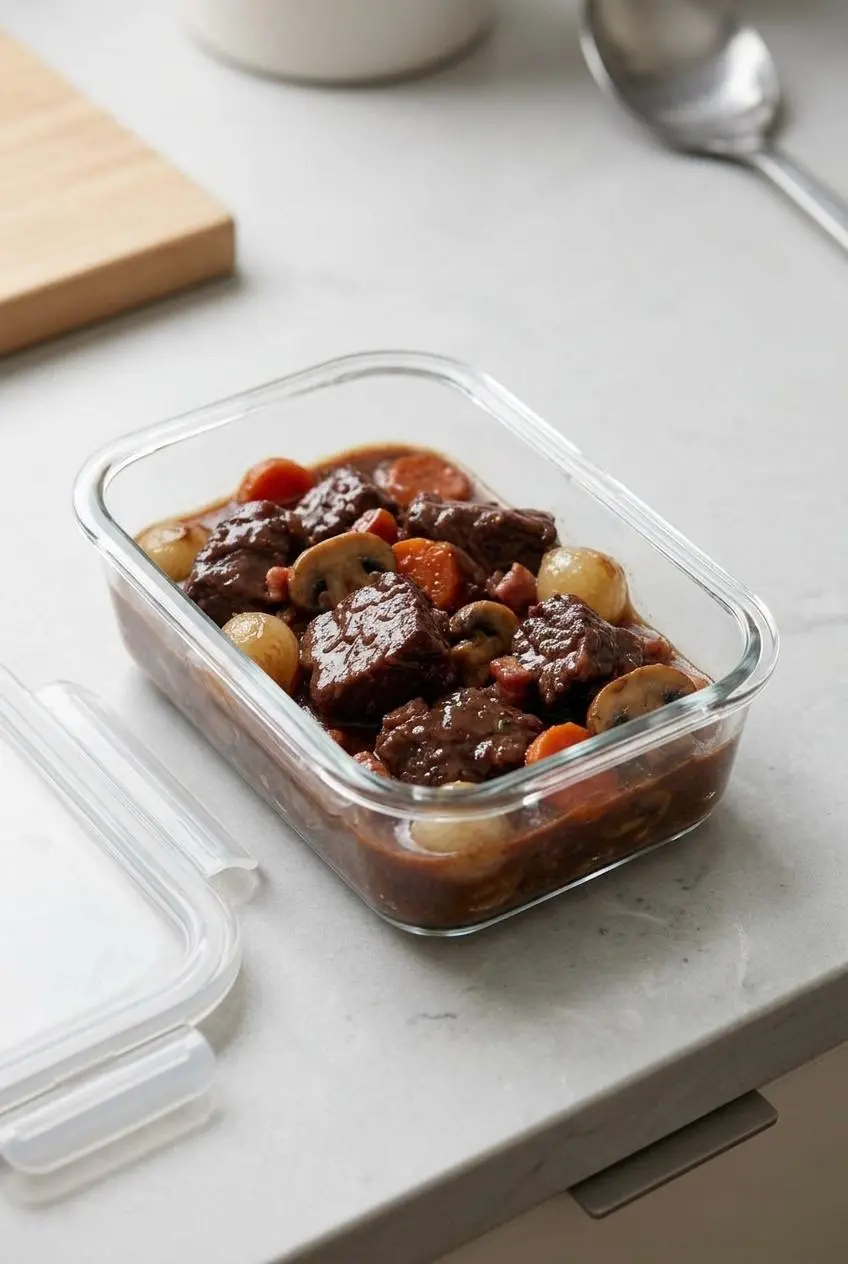
Beef bourguignon often tastes even better after it rests because the sauce settles and the beef continues to take on the flavor of the braising liquid. That makes it a strong choice for planning ahead, especially if you want dinner to feel calmer the next day.
For leftovers, cool the stew before transferring it to shallow airtight containers and keep it chilled. The USDA provides safe handling and storage guidance for beef dishes, which is a helpful reference when you are dealing with a large pot of braised meat.
Reheat it gently on the stovetop over low heat so the beef stays tender and the sauce loosens gradually. If the gravy has tightened in the fridge, add a small splash of broth and stir slowly until it is smooth again. Keep the heat moderate so the mushrooms and pearl onions do not overcook on round two.
Traditional Serving Suggestions
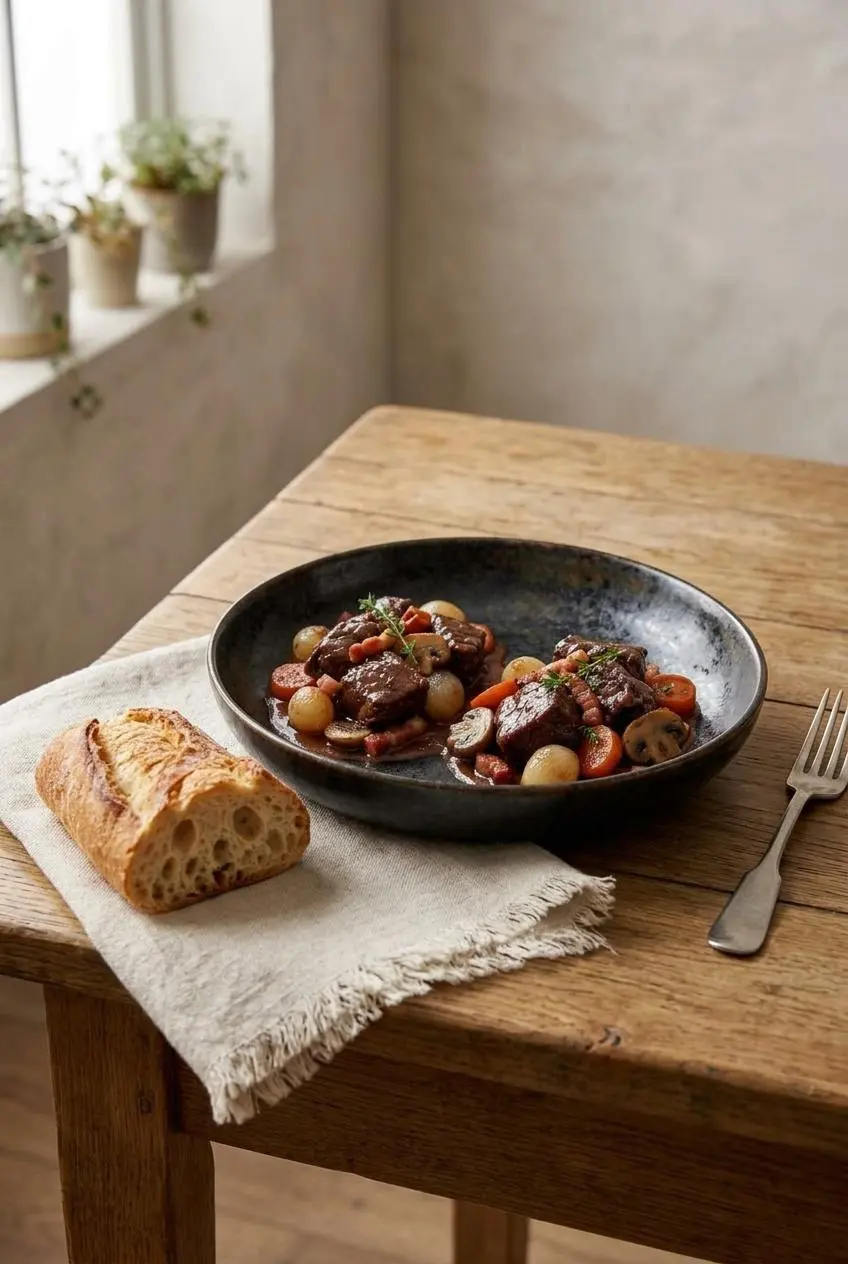
This stew likes something underneath it to catch the sauce. The gravy is too good to leave behind.
- Buttered egg noodles are classic and especially good when you want something soft and quick.
- Boiled potatoes keep the meal traditional and let the wine sauce stay center stage.
- Garlic mashed potatoes make the whole thing feel extra cozy and a little luxurious.
- Warm crusty bread or a rustic baguette is perfect for swiping through the last bit of gravy.
- A crisp green salad with a sharp French vinaigrette cuts the richness and freshens the plate.
Conclusion
This is the kind of dinner that rewards patience. Slow braising turns chuck roast, wine, bacon, and aromatics into something deep, velvety, and seriously comforting.
Take your time with the browning, keep the heat gentle, and let the stew rest before serving. The sauce will tell you you got it right.
Frequently Asked Questions
What Is the Best Red Wine to Use for Beef Bourguignon?
A dry French Pinot Noir or Burgundy is the most traditional choice. Affordable bottles of Pinot Noir, Cabernet Sauvignon, or Merlot all work well. Avoid cooking wine because added salt and preservatives can throw off the sauce.
How Do You Make Beef Bourguignon Sauce Thicker?
Simmer the sauce uncovered if it needs to reduce naturally. For a quicker fix, whisk in a small cornstarch slurry. You can also work in a little beurre manié, which is equal parts softened butter and flour mashed together.
Can I Make This Recipe Without Alcohol?
Yes. Replace the red wine with beef broth plus a splash of unsweetened pomegranate juice or red wine vinegar. You will lose some of the exact classic wine depth, but the stew can still taste rich and balanced. Keep the mushrooms, pearl onions, bacon, and long braise the same so the dish still feels true to style.
Why Is My Beef Still Tough After Cooking?
Chuck roast needs sustained gentle heat to soften its connective tissue. If it is still tough, it usually needs more cooking time rather than higher heat. Make sure the pot stays at a gentle braise, because a hard boil can dry the meat before it turns tender.
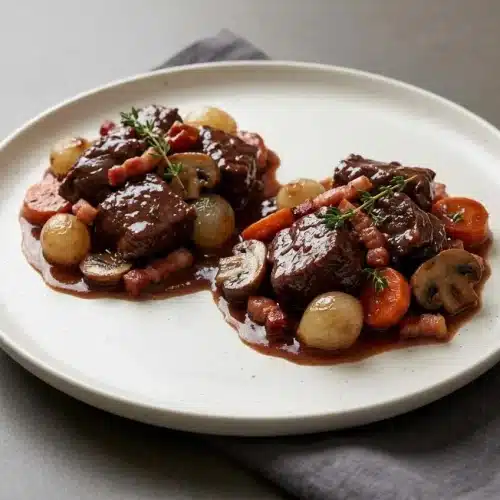
Beef Bourguignon Recipe

Equipment
- Large ziptop bag
- Large Dutch oven
- Medium pan
- Paper towels
Ingredients
For the Beef
- 3 pound boneless beef chuck roast (cut into 1-inch cubes)
- 2 onions (peeled, diced)
- 2 cloves garlic (peeled, smashed)
- 1 tablespoons fresh thyme (leaves)
- 1 tablespoon cracked black pepper
- 2 bay leaves
- 2 tablespoons olive oil
- 3 cups red wine
For the Stew
- 2 tablespoons olive oil
- 6 tablespoons butter (divided)
- 1/2 pound thick cut bacon (cut into 1/4-inch slices)
- 3 cups carrots (peeled and sliced into rounds)
- 2 tablespoons tomato paste
- 4 tablespoons flour
- 1 cup organic beef broth
- 1 pound frozen pearl onions (thawed, peeled)
- 3/4 pound cremini mushrooms (sliced)
- Kosher salt and freshly ground pepper (to taste)
- 2 cloves garlic (peeled, minced)
- crusty bread
Instructions
For the Beef
- In large ziptop bag, combine the beef, onion, garlic, thyme, black pepper, bay leaves, olive oil and red wine. Seal the bag and refrigerate overnight.
For the Stew
- Preheat oven to 300ºF.
- Remove the beef from the marinade and dry with paper towels. Season the beef generously with salt and pepper. Reserve the marinade.
- In a large Dutch oven over medium-high heat on the top of the stove, add the olive oil and 2 tablespoons of the butter. Add the beef to the Dutch oven, and brown on all sides, about 4-6 minutes per side. Remove the browned bits of meat to a plate. Add the bacon and cook until browned and fat has rendered but not crisp. Add the carrots, and continue to cook until lightly caramelized, then add the tomato paste and cook for an additional minute, while stirring and scraping the bottom of the pot to prevent the tomato paste from burning. Return meat to the pot and sprinkle the flour over the beef and the vegetables. Stir to coat. Cook until the flour is absorbed and lightly browned, about 2 minutes. Add the remaining marinade and beef stock and bring to a simmer. Cover with a lid and bake in the oven for 2-2 1/2 hours, stirring occasionally.
- In a medium pan over medium-low heat, add 2 tablespoons of butter and the pearl onions. Season the onions with salt and pepper and continue to cook until lightly brown on all sides, about 8-10 minutes. Then, add the remaining 2 tablespoons of butter, mushrooms and garlic to the pan. Cook until golden brown, about 6-8 minutes. Season with salt and pepper. Remove from heat and set aside until the beef is finished cooking.
- Remove the stew from the oven and add the onions and mushrooms to the pot and stir to combine. Season to taste, and allow to sit for 20 minutes before serving. Serve with crusty bread.