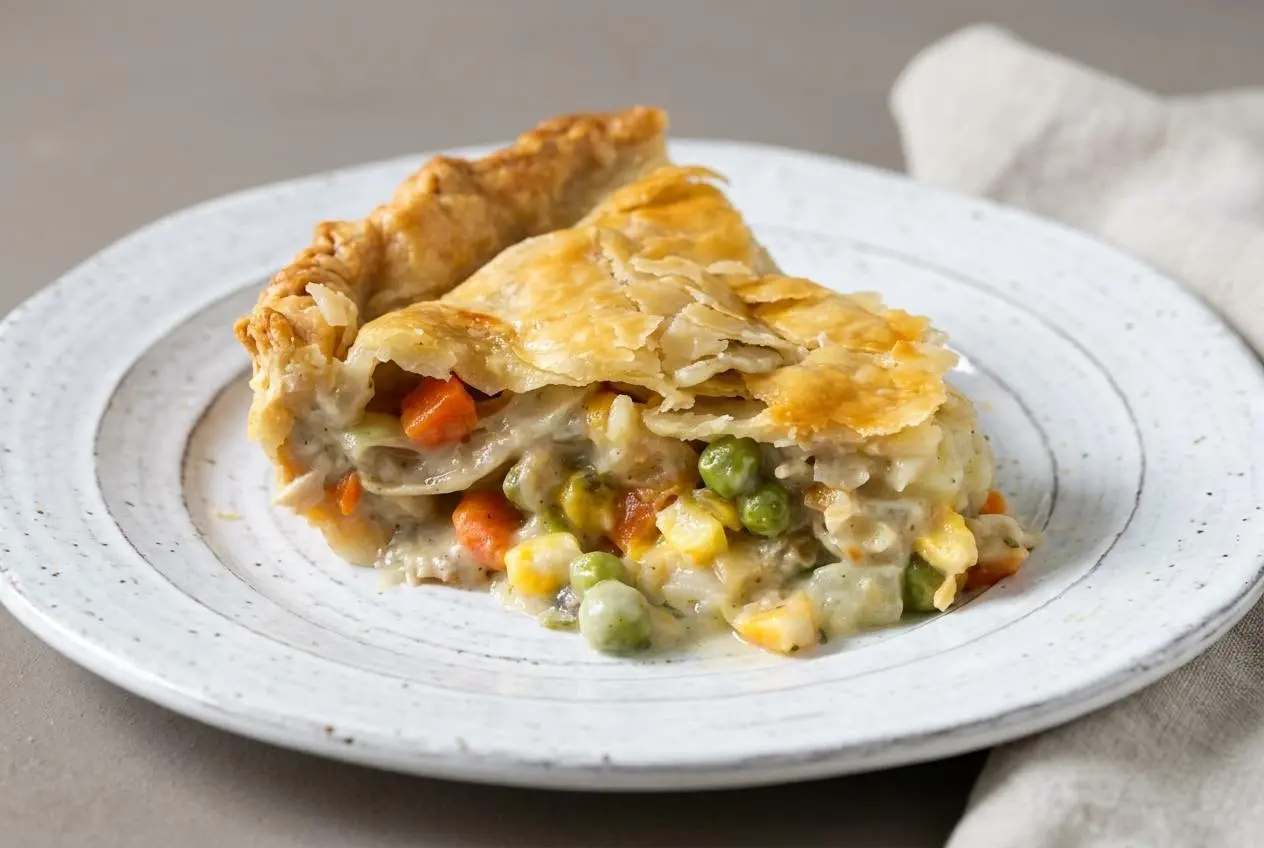
A classic turkey pot pie recipe layers cooked turkey and vegetables in creamy herbed gravy beneath a golden double pie crust, baked at 400°F until bubbling.
Buttery pastry, thyme, and savory gravy make leftover turkey feel like a proper comfort-food dinner instead of an afterthought.
The filling is rich but balanced, with tender potatoes and vegetables in every slice. The key is keeping the pastry cool and the filling thick.
Set the pie plate on a rimmed baking sheet before filling it to catch any bubbling gravy and make moving the hot pie easier.
Essential Ingredients for Flavorful Turkey Pot Pie
Each ingredient supports the pie’s cozy texture and savory flavor, from the buttery roux that gives the gravy structure to the egg wash that turns the crust golden.
- 1 egg beaten
- ⅓ cup butter
- 1 onion diced
- ⅓ cup all-purpose flour
- ½ teaspoon poultry seasoning
- ¼ teaspoon dried thyme leaves
- 1 cup chicken broth
- ⅔ cup milk or cream
- 1 potato diced and cooked
- 1 ½ cups frozen vegetables thawed
- 2 cups cooked chopped turkey
- 1 double pie crust
The Poultry and Vegetable Base
Use cooked turkey that is moist and easy to chop. A blend of light and dark meat gives the filling a pleasant balance: breast meat stays mild, while darker meat brings more richness. Cut larger pieces into bite-size chunks so every slice is easy to serve.
The potato needs to be diced and cooked before it goes into the filling. This prevents firm, underdone pieces after baking. Thaw frozen vegetables and drain away excess moisture before adding them, since extra water can loosen the gravy.
If your turkey is already heavily seasoned or salty, taste the finished gravy before adding extra salt. Poultry seasoning and thyme should lead the flavor, while the turkey and broth bring the savory depth.
Building the Herbed Cream Roux
Butter and flour form a roux, the thickening foundation that keeps the filling from running across the plate. The equal ⅓-cup amounts create a sturdy gravy once the chicken broth and milk or cream are whisked in gradually.
Let the flour cook in the butter for the full 2 minutes. It should look bubbly and pale golden, with a light nutty aroma rather than a raw flour smell. Adding the liquids slowly gives the flour time to absorb them evenly, so the sauce becomes smooth instead of lumpy.
Room-temperature or lightly warmed broth and dairy blend more easily into the hot roux. For a shortcut, prepared homemade turkey gravy can replace the roux-and-broth approach when it is loosened gently with broth or cream until it coats the turkey and vegetables.
An optional flavor boost is whisking ½ teaspoon Dijon mustard and a pinch of ground nutmeg into the roux. Both add quiet savory depth without making the filling taste like mustard or spice.
I prefer a mix of milk and cream when possible because it keeps the gravy silky while still letting the poultry seasoning come through.
Step-by-Step Instructions for the Perfect Turkey Pot Pie
Build the filling first, then give it a brief chance to cool before it meets the pastry. That pause protects the butter layers in the crust and helps the pie bake up flaky rather than soggy.
- Heat the oven to 400°F, then whisk the beaten egg with 1 tablespoon water and set the wash aside.
The mixture should be loose enough to brush over the crust in a thin, even layer. - Melt the butter in a medium saucepan over medium-low heat and cook the diced onion for about 5 minutes until tender.
The onion should soften and smell sweet without taking on much color. - Stir in the flour, poultry seasoning, thyme, salt, and pepper, then keep stirring for 2 minutes.
The roux will look bubbly and pale golden and will smell lightly nutty. - Whisk in the chicken broth and milk or cream in gradual additions, stirring smooth after each one, then bring the sauce to a boil over medium heat and simmer for 1 minute.
The finished gravy should thicken enough to coat the back of a wooden spoon without visible floury lumps. - Take the saucepan off the heat and fold in the cooked turkey, thawed vegetables, and cooked potato.
Let the filling cool slightly so it is warm rather than steaming hot before it goes into the crust. - Fit one crust into a 9-inch pie plate, add the turkey filling, brush the rim with egg wash, and place the second crust over the top.
Press and crimp the edges firmly so the filling stays contained as it bubbles. - Cut several slits in the top crust and brush it with the remaining egg wash.
The vents give steam a path out, which helps prevent split edges and keeps the top pastry crisp. - Bake for 35 to 40 minutes.
The crust should be lightly browned, with active bubbling visible through the center vents. - Rest the pie for 10 to 15 minutes before slicing.
The gravy will settle and hold each slice together more cleanly.
Pro Tips for Flaky Crust and Thick Filling
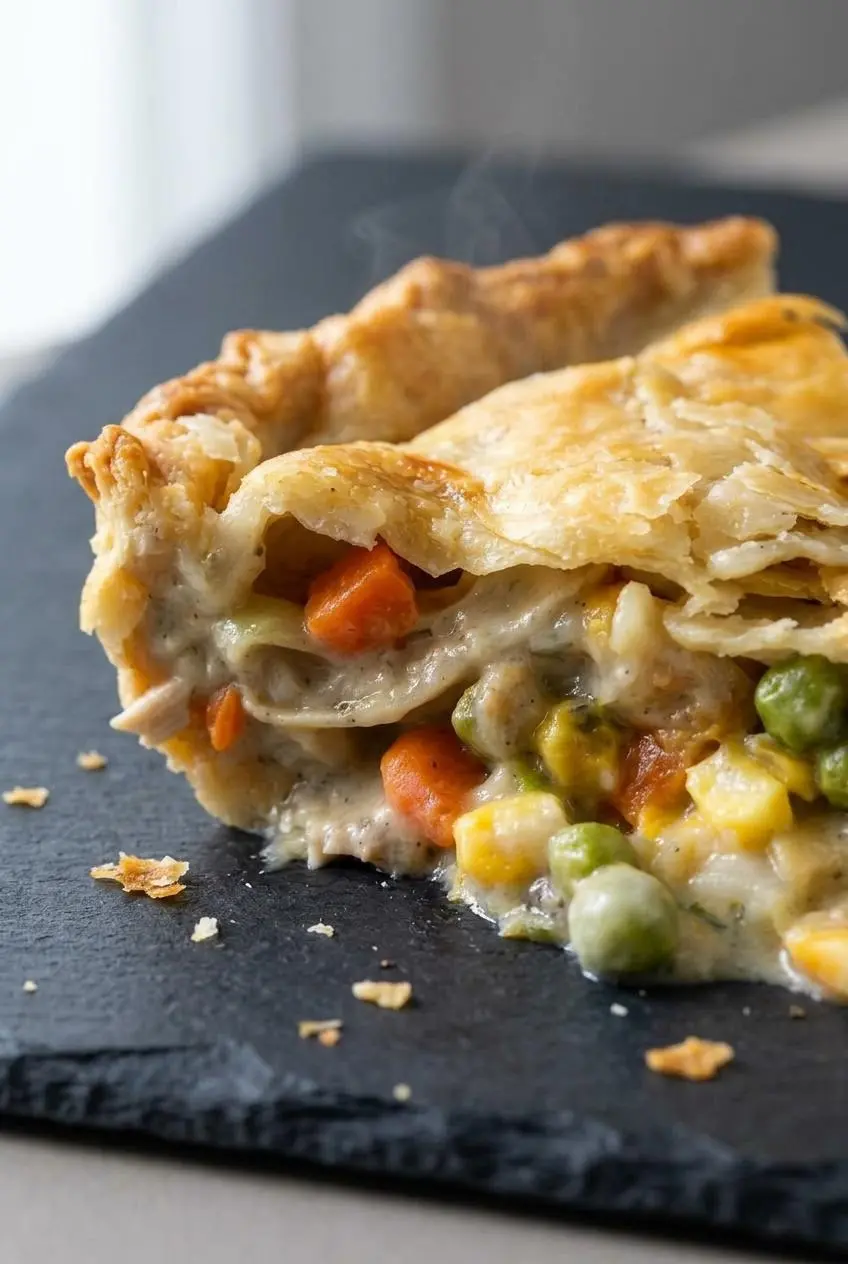
A good pot pie depends on managing heat and moisture. These small adjustments solve the most common problems without changing the core filling or crust.
- Soggy bottom crust: Let the filling cool slightly before assembling the pie. Hot gravy can melt the crust’s butter before baking, which weakens the layers. Bake the pie on a preheated sheet pan positioned on a lower rack for stronger bottom heat.
- Runny filling: Cook the roux fully, then bring the gravy to a proper boil before its 1-minute simmer. If a finished sauce seems loose before assembly, make a separate slurry with starch and cool liquid, whisk it in gradually, and heat until the gravy thickens.
- Dark crust edges: Add a pie shield or a loose foil rim halfway through baking when the edge has browned but the center needs more time. Keep the foil off the center so steam can still escape.
- Crust that tears or shrinks: Work with cold dough and avoid stretching it over the pie plate. Lift and ease it into place instead, then trim and crimp the edges.
- Messy slices: Give the baked pie the full resting time. Fifteen minutes lets the starch-thickened gravy settle so it stays with the turkey instead of spilling out.
Skip blind baking for this particular double-crust method. The cooler filling, hot sheet pan, and steady 400°F oven give the bottom crust its best chance to cook through while the top turns deeply golden.
Crust Options and Variations
The double pie crust is the classic choice for this filling, but the turkey and gravy also work with other toppings when you want a different texture or less rolling.
- Classic double crust: Use the stated double pie crust for a sturdy bottom and a flaky, sealed top. This is the best choice when you want clean slices and traditional pot pie structure.
- Single top crust: Spoon the filling into a baking dish and cover only the top with pastry. It is a lighter option that avoids a bottom crust, though it will not have the same sliceable base.
- Mushrooms or roasted vegetables: Fold in sautéed mushrooms or leftover roasted vegetables for extra earthiness. Add them only after cooking off any excess moisture.
- Bacon: Crisp cooked bacon can add smoky saltiness. Use it sparingly and taste the filling before seasoning further.
Puff Pastry and Biscuit Alternatives
For a puff pastry turkey pot pie, use a thawed sheet over a skillet or baking dish rather than lining the bottom. Cut vents in the pastry and bake until the top is deeply browned and the filling bubbles vigorously in the center.
Drop biscuits create a softer, more rustic topping. Arrange them over the filling with space between each portion so hot steam can rise around them. Check early because biscuits and puff pastry can brown before the gravy reaches a full simmer.
A biscuit-topped skillet version is especially useful when you want to skip rolling dough. Keep the filling in an oven-safe skillet, add the topping, and watch for vigorous bubbling at the center before serving.
Individual Ramekin Pot Pies
Divide the filling among individual ramekins and top each one with a small pastry round for single-serving pot pies. Leave a little room at the top because the gravy will bubble as it bakes.
Smaller pies bake faster than a full pie, usually within 20 to 25 minutes at 400°F. Start checking once the pastry is golden and look for bubbling around the edges before removing them from the oven.
Make-Ahead, Storage, and Reheating Instructions
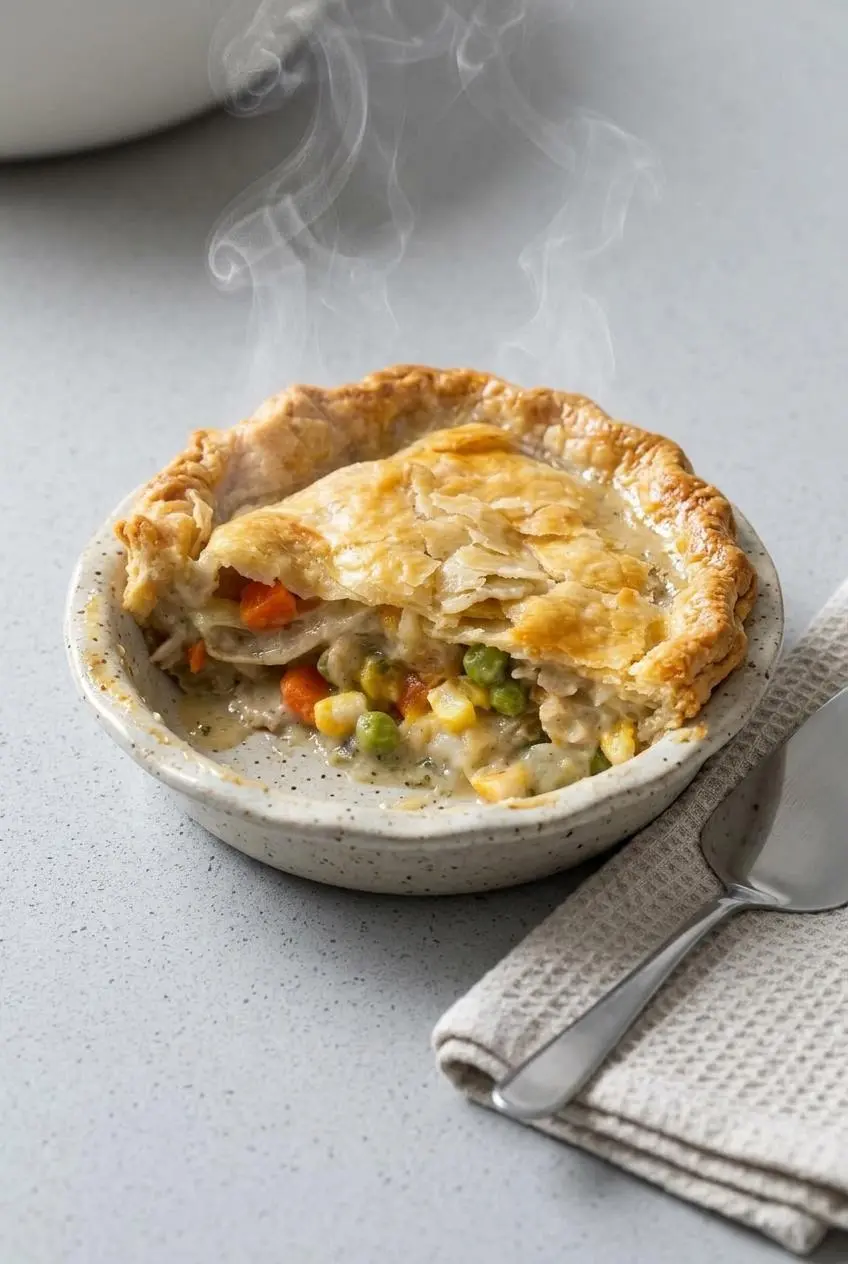
You can prepare the filling, cool it, and assemble the pie close to baking time to protect the crust texture. Keep cooked turkey and finished leftovers chilled promptly in covered containers rather than leaving them out while the pie cools.
Planning Ahead and Baked Pie Storage
For the best pastry, keep the filling and unbaked crust separate until you are ready to assemble. A completely cooled filling is much gentler on pie dough and gives the bottom crust a better chance to bake crisp.
This method does not provide a validated freezer timetable or a bake-from-frozen schedule, so avoid relying on a specific freezer plan for this pie. If storing baked leftovers, cool them promptly, cover them well, and refrigerate them until reheating.
Reheating Leftovers to Retain Crispness
Reheat individual slices in the oven rather than the microwave when you want the crust to regain some of its flakiness. Cover loosely at first if the pastry is already dark, then uncover near the end so the surface can crisp.
Use a thermometer and heat leftover turkey pot pie to 165°F before serving, following poultry and leftover reheating temperatures. This is especially helpful when reheating a thick center slice.
Serving Suggestions
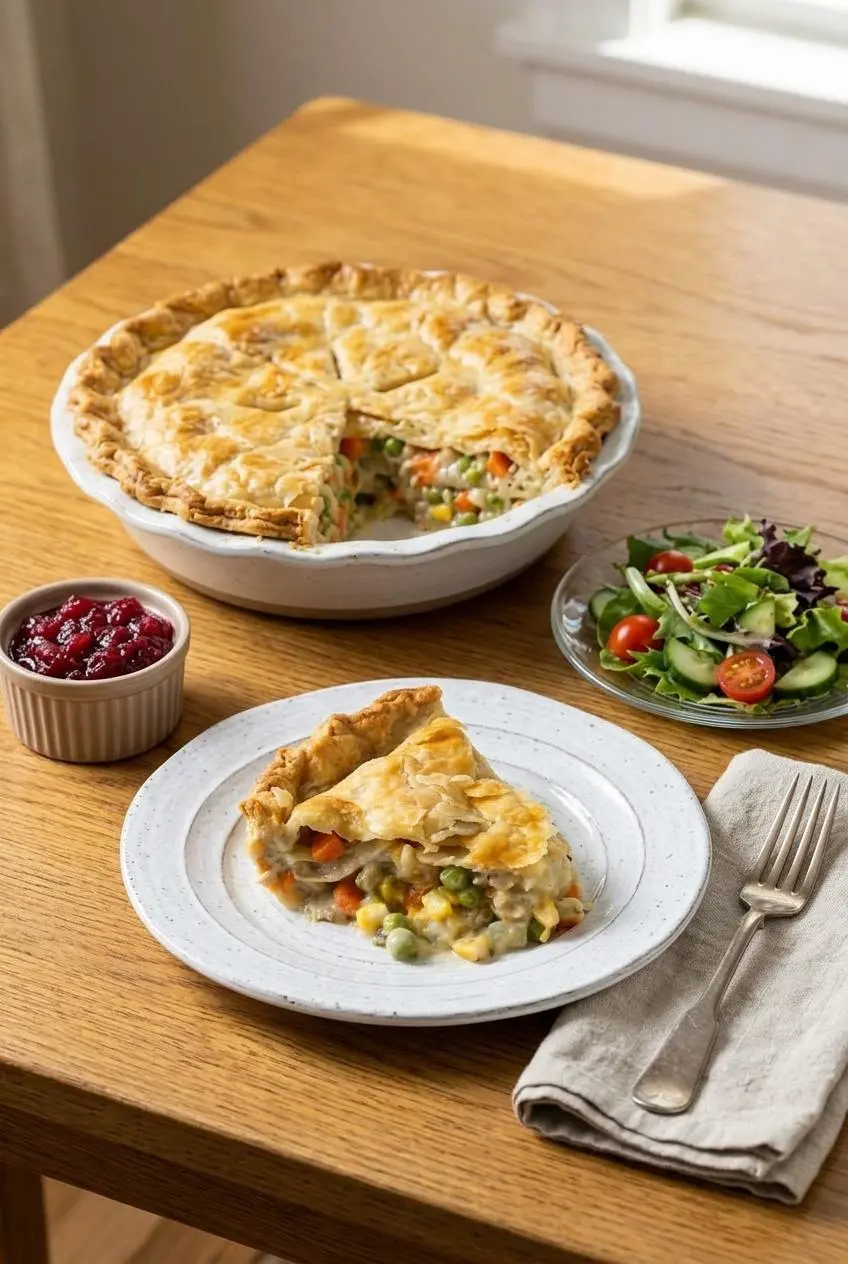
Turkey pot pie is rich enough to be dinner on its own, but something crisp or tart alongside it keeps the plate from feeling too heavy.
- A crisp wedge salad with apple cider vinaigrette adds crunch and bright acidity against the creamy gravy.
- Roasted green beans bring a fresh, lightly charred vegetable side that fits the savory herbs in the filling.
- Tart cranberry sauce or cranberry relish adds a sweet-sharp contrast and makes this especially fitting for holiday turkey leftovers.
Conclusion
Turning cooked turkey into a golden pot pie is one of the most satisfying ways to stretch a roast into another comforting meal. The buttery crust and thick herbed gravy make every slice feel intentional.
Par-cook the potatoes, cool the filling before assembling, and let the pie rest before cutting. Those three habits make the difference between a loose filling and a pot pie that serves beautifully.
Frequently Asked Questions
What Is the Secret to a Flavorful Turkey Pot Pie?
Build flavor in layers. Cook the onion in butter until tender, toast the seasoned flour roux for its full 2 minutes, and use a broth with good savory character. Thyme and poultry seasoning give the filling its familiar pot pie flavor. Dark turkey meat can add extra richness, while a little cream rounds out the gravy.
How Do I Prevent the Bottom Crust From Getting Soggy?
Cool the filling slightly before pouring it into the unbaked crust. Steaming-hot filling softens the dough and melts its butter layers before the pie reaches the oven. Bake the pie on a preheated sheet pan on a lower oven rack at 400°F. The extra bottom heat helps the lower crust set while the filling bubbles.
Can I Freeze Turkey Pot Pie Before or After Baking?
This method does not establish a tested freezer timeline or bake-from-frozen schedule. For that reason, it is better not to assume a specific freezing method or baking time will work for every pie pan and crust. For a make-ahead meal, prepare and cool the filling, then keep the pastry separate until closer to baking. That approach protects the flaky texture without relying on an unverified freezer schedule.
Can I Use Leftover Thanksgiving Turkey Gravy for the Filling?
Yes. Use 2 cups of leftover gravy in place of the roux, broth, and dairy mixture, then loosen it gently with a splash of broth or cream if it is too thick. Warm the gravy before folding in the turkey, potatoes, and vegetables so the filling combines evenly. Taste before adding salt because leftover gravy is often already well seasoned.
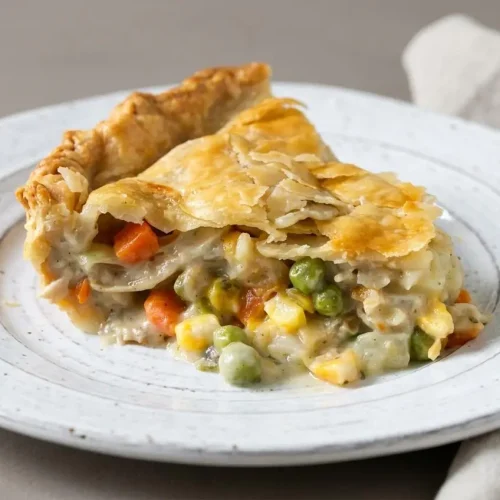
Turkey Pot Pie Recipe

Equipment
- Medium saucepan
- 9″ pie plate
- pie shield
Ingredients
- 1 egg beaten
- ⅓ cup butter
- 1 onion diced
- ⅓ cup all-purpose flour
- ½ teaspoon poultry seasoning
- ¼ teaspoon dried thyme leaves
- 1 cup chicken broth
- ⅔ cup milk or cream
- 1 potato diced and cooked
- 1 ½ cups frozen vegetables thawed
- 2 cups cooked chopped turkey
- 1 double pie crust
Instructions
- Heat the oven to 400°F, then whisk the beaten egg with 1 tablespoon water and set the wash aside. The mixture should be loose enough to brush over the crust in a thin, even layer.
- Melt the butter in a medium saucepan over medium-low heat and cook the diced onion for about 5 minutes until tender. The onion should soften and smell sweet without taking on much color.
- Stir in the flour, poultry seasoning, thyme, salt, and pepper, then keep stirring for 2 minutes. The roux will look bubbly and pale golden and will smell lightly nutty.
- Whisk in the chicken broth and milk or cream in gradual additions, stirring smooth after each one, then bring the sauce to a boil over medium heat and simmer for 1 minute. The finished gravy should thicken enough to coat the back of a wooden spoon without visible floury lumps.
- Take the saucepan off the heat and fold in the cooked turkey, thawed vegetables, and cooked potato. Let the filling cool slightly so it is warm rather than steaming hot before it goes into the crust.
- Fit one crust into a 9-inch pie plate, add the turkey filling, brush the rim with egg wash, and place the second crust over the top. Press and crimp the edges firmly so the filling stays contained as it bubbles.
- Cut several slits in the top crust and brush it with the remaining egg wash. The vents give steam a path out, which helps prevent split edges and keeps the top pastry crisp.
- Bake for 35 to 40 minutes. The crust should be lightly browned, with active bubbling visible through the center vents.
- Rest the pie for 10 to 15 minutes before slicing. The gravy will settle and hold each slice together more cleanly.