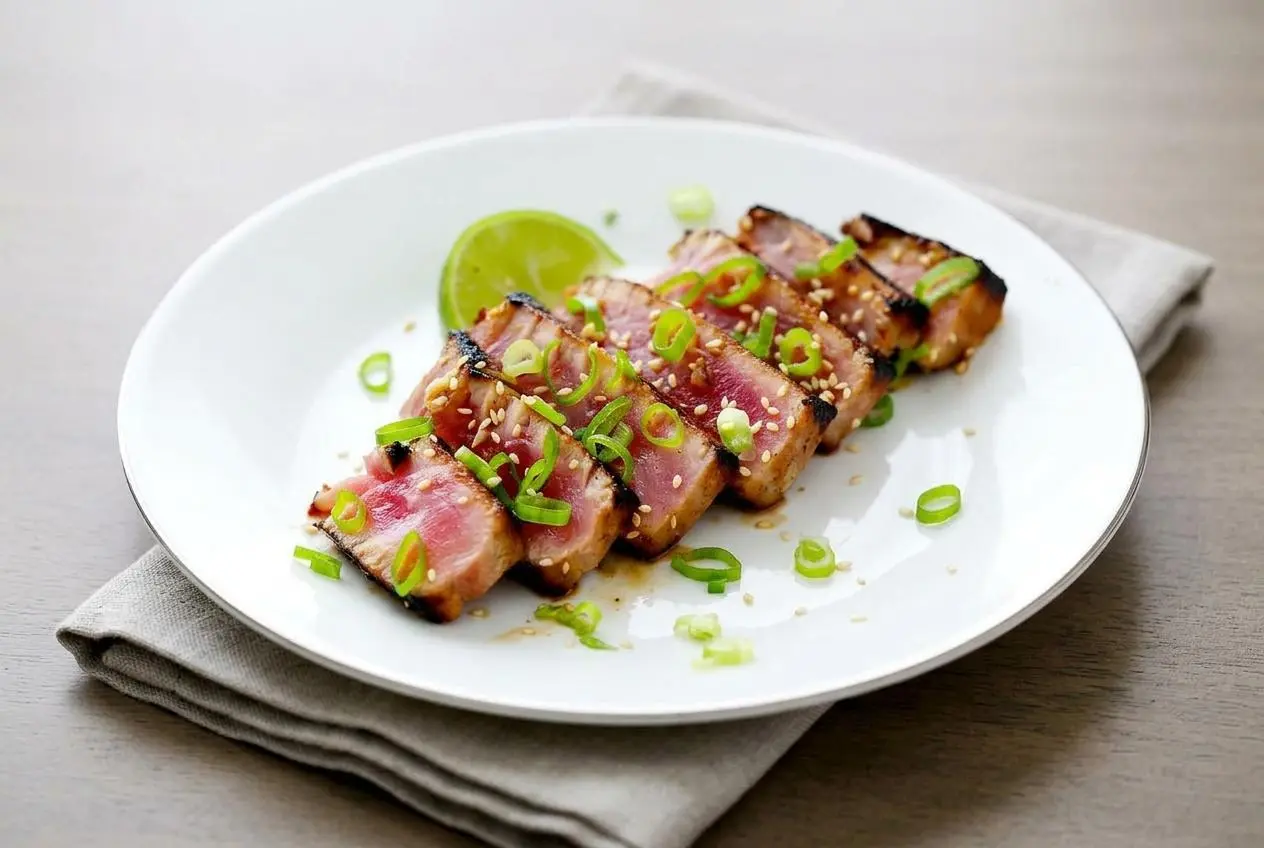
Sear tuna in a smoking-hot skillet with high-heat oil for 60 to 90 seconds per side to create a caramelized exterior and tender ruby center.
This tuna steak recipe uses a soy, sesame, and honey coating that browns fast without hiding the fish’s clean flavor. It makes a dependable skillet dinner in well under 10 minutes.
Listen for that sharp sizzle when the fish meets the pan, then leave it alone long enough to build a crisp crust. The sesame aroma is your first delicious clue.
Set out a cutting board before heating the skillet so you can slice and serve the tuna without lingering carryover heat.
Choosing and Prepping the Best Tuna Steaks
Look for firm, evenly cut steaks with a fresh color and no strong odor. Ahi is a market term commonly used for yellowfin and bigeye tuna, two species often sold for quick searing. Yellowfin has a mild, clean flavor, while bigeye is richer and more deeply colored. Albacore is paler and milder, and it is usually better cooked a little more gently.
The phrase “sushi-grade” is a market description rather than a universal standard. Buy from a seafood counter you trust, ask how the fish has been handled, and keep it chilled until cooking. Because this recipe leaves the center pink, people at higher risk from foodborne illness may want to choose fully cooked fish or follow safer food choices for undercooked seafood.
For frozen portions, thaw the tuna in the refrigerator while keeping it cold and protected from drips. Follow the package directions, and avoid thawing fish in warm standing water. Once thawed, remove it from the packaging and blot every surface dry with paper towels.
Dry fish is the difference between a golden sear and a damp, pale exterior. Surface moisture cools the skillet and creates steam, so take an extra moment with the paper towels before adding the marinade.
Essential Tuna Steak Ingredients
Each ingredient supports the finished fish: tuna brings a meaty center, soy adds savory depth, honey encourages browning, sesame oil brings aroma, and the cooking oil helps the crust form cleanly in the skillet.
- 2 ahi tuna (yellowfin tuna) steaks (about 4 oz. each, 1″ thick)
- 2 tablespoons soy sauce preferably low sodium
- 1 tablespoon toasted sesame oil
- 1 tablespoon honey
- ½ teaspoon kosher salt optional
- 1/4 teaspoon black pepper to taste
- 1/4 teaspoon cayenne pepper (optional)
- 1 tablespoon oil canola, olive, or other high-heat cooking oil of preference
- green onions, toasted sesame seeds, and lime wedges for serving (optional)
Low-sodium soy sauce keeps the glaze savory without overwhelming the tuna, while honey rounds out the saltiness and gives the surface a quick bronze color. Toasted sesame oil is intense and fragrant, so it carries a lot of flavor in a small amount. Canola oil or another high-heat oil helps the skillet sear rather than leave bitter, scorched residue.
I always let the steaks sit on paper towels for a minute right before marinating so the marinade clings directly to the fish flesh instead of sliding off surface moisture.
How to Cook Tuna Steak Perfectly
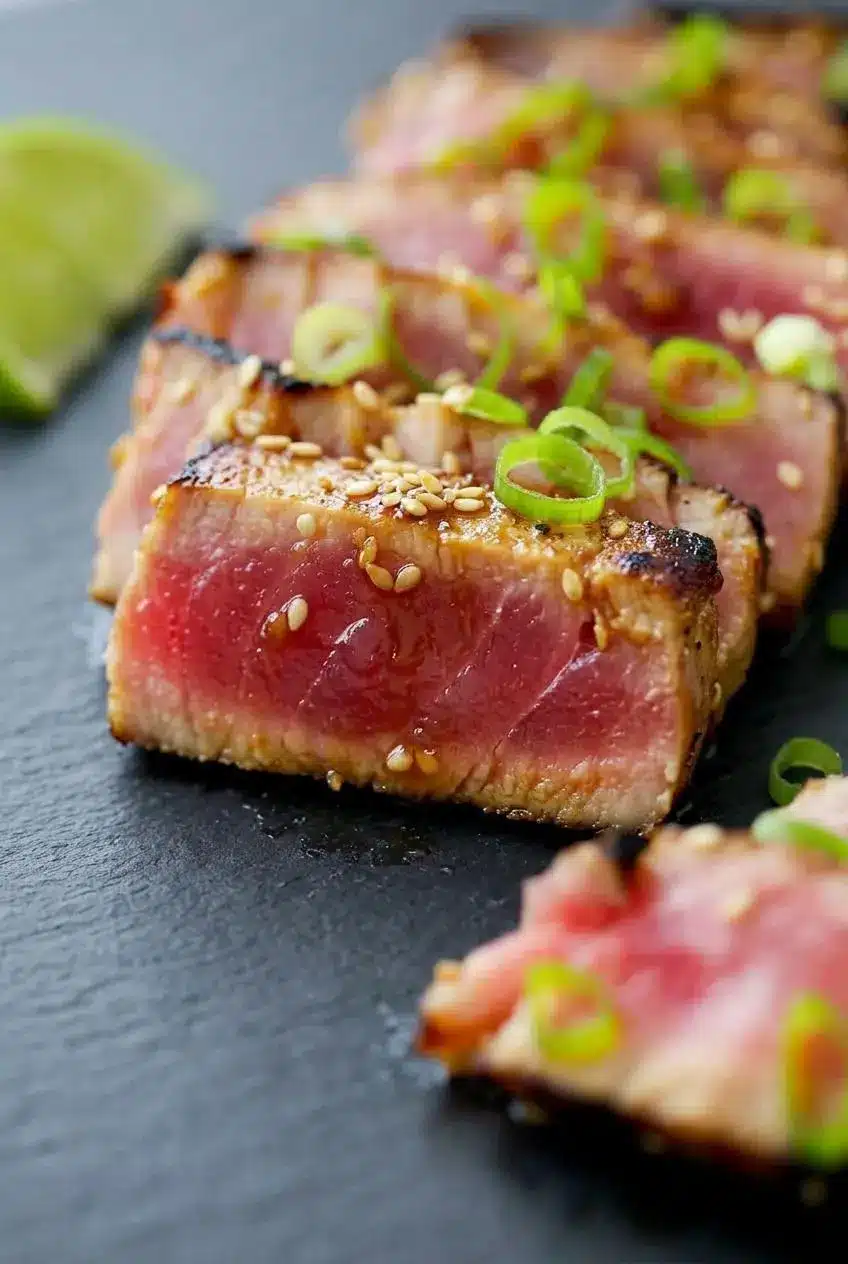
A heavy skillet gives the most reliable crust because it holds heat when the cold fish lands in the pan. Cast iron needs several minutes to preheat, while a nonstick skillet heats more quickly and should stay around medium to medium-high so the honey does not scorch.
- Blot the 2 ahi tuna (yellowfin tuna) steaks dry and place them on a plate or in a resealable bag.
The surface should feel dry to the touch so it can brown quickly instead of steaming. - Whisk the soy sauce, toasted sesame oil, honey, kosher salt if using, black pepper, and cayenne pepper until the honey disappears into the mixture, then coat both steaks well.
For more flavor, marinate for at least 10 minutes or up to overnight in the refrigerator; reserve a little marinade before adding the fish if you want some for serving. - Heat a medium nonstick or well-seasoned cast iron skillet until very hot, using medium-high to high heat for cast iron and medium to medium-high heat for nonstick.
Cast iron generally needs 3 to 5 minutes, while a nonstick skillet may need about 1 minute; a faint curl of smoke signals that the pan is ready. - Add the 1 tablespoon oil, then gently lay in the tuna and sear for 1 to 1½ minutes per side for medium-rare.
For very rare tuna, cook about 30 seconds per side; for medium-well to well-done tuna, cook 2 to 2½ minutes per side, adjusting the heat if the glaze darkens too quickly. - Move the tuna to a cutting board and cut it into 1/2 inch slices, then finish with green onions, toasted sesame seeds, and lime wedges if desired.
Serve right away while the center is warm and ruby colored; add flaky sea salt at the table if it needs more seasoning.
Skillet Searing Step-by-Step
Once the skillet is hot, pour in the oil and tilt the pan so it forms a thin glossy layer. Lower the tuna away from you to reduce splatter, then resist the urge to move it. The steak needs steady contact with the pan to develop its browned crust.
A cast iron skillet delivers stronger heat retention and a more assertive sear. A well-heated stainless skillet can work, but the tuna may stick if the pan is not hot enough before the oil goes in. Nonstick is the easiest option for delicate fish, though gentler heat helps protect its coating.
An outdoor grill also works when the grate is clean, oiled, and heated for direct high heat. Keep the same brief searing approach, turn carefully, and expect a slightly smokier finish than the skillet version.
Visual Doneness and Timing Cues
For medium-rare tuna, watch the bottom edge as it cooks. A pale opaque band should creep roughly 2 millimeters up the side before you flip the steak. After turning, the second side should develop the same narrow cooked border while the middle stays red.
A thermometer can help if you prefer a checkpoint: around 115 °F gives a rare to medium-rare center. The steak should feel gently firm but still yield slightly when pressed. Thickness matters, so a thinner steak cooks faster and a thicker one may need the upper end of the searing range.
Slice across the grain as soon as the fish reaches the cutting board. Waiting too long lets residual heat keep traveling inward, which can turn a pink center gray and dry.
Pro Tips and Troubleshooting
- The tuna sticks to the pan: The skillet likely was not hot enough, or the fish was still damp. Preheat fully, add oil only when the pan is hot, and pat the tuna dry before marinating.
- The glaze burns before the fish sears: Honey darkens quickly over aggressive heat. Lower the burner slightly, especially with a thin nonstick skillet, while keeping enough heat for a lively sizzle.
- The center turns gray and chalky: Tuna cooks rapidly. Use the narrow opaque edge as your cue, remove it promptly, and slice immediately rather than letting it sit in the hot pan.
- The fish tastes too salty: Choose low-sodium soy sauce and leave the optional kosher salt out until serving. A squeeze of lime brightens the flavor without adding more salt.
- The texture becomes mushy: Acidic marinades with lemon juice or vinegar can soften tuna if left too long. Keep citrus-based marinades brief and sear the fish soon after coating it.
Flavorful Marinades and Variations
The soy-sesame-honey coating gives the tuna a savory, lightly sweet crust, but it also makes a good starting point for optional flavor changes. Keep any alternative marinade separate from the main method, and use the same fast searing technique.
For a ginger-sesame finish, brush the fish with a drop of toasted sesame oil and finely grated fresh ginger before it goes into the skillet. The ginger perfumes the crust and pairs naturally with the honey’s caramelized edge.
For another quick skillet dinner built around tuna, try pan-fried tuna patties when you want a fully cooked option with a different texture.
Garlic Herb Marinade
For a Mediterranean direction, use olive oil, minced garlic, lemon juice, cracked black pepper, and chopped fresh parsley instead of the soy-sesame mixture. The result is brighter and herbier, with garlic bringing warmth and parsley adding freshness.
Keep the lemon-based soak under 20 minutes so the tuna stays firm. Pat away excess marinade before cooking, since wet garlic and herbs can burn before the steak has time to sear.
Sesame Seed Crusted Variation
For a nutty, textured crust, press the marinated tuna into white sesame seeds, black sesame seeds, or everything bagel seasoning immediately before searing. Coat the broad surfaces evenly, then set the steak into the oiled pan without sliding it around.
Use controlled high heat for this variation. The seeds should turn golden and aromatic, not dark brown. If the pan starts smoking heavily or the seeds color too fast, lower the heat slightly for the second side.
What to Serve with Tuna Steak
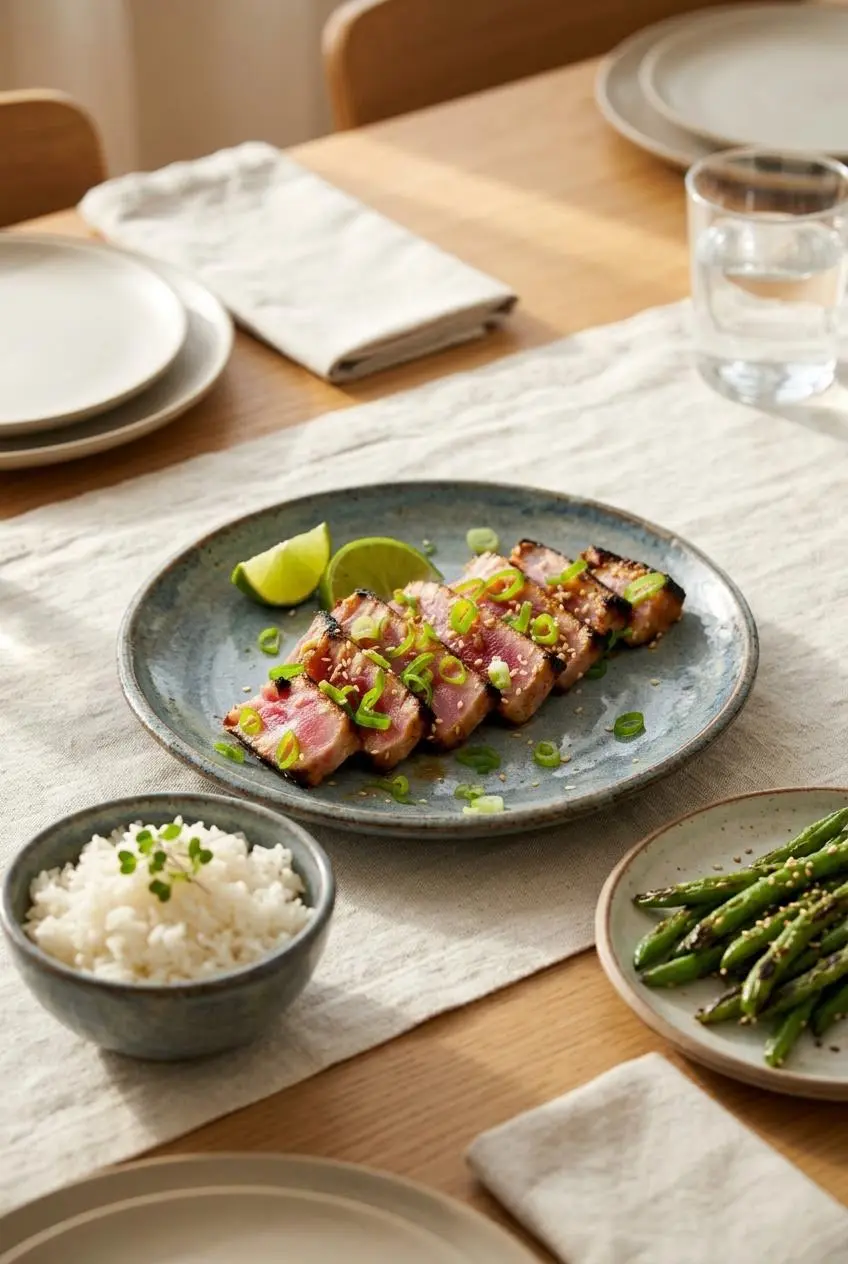
Serve seared tuna with sides that complement its rich center without burying the sesame glaze. A warm grain, crisp vegetables, and something bright or tangy make a balanced plate.
- Steamed jasmine rice catches the soy-sesame juices, while garlic butter noodles make a heartier dinner.
- Warm quinoa offers a nutty base that works especially well with lime and green onion.
- Sesame garlic green beans or quickly cooked snap peas add color and crunch.
- Cucumber salad or shredded cabbage slaw with a light ginger vinaigrette brings cool contrast to the warm fish.
- For a caramelized vegetable side, serve roasted cabbage steaks alongside the sliced tuna and lime wedges.
Storage and Reheating Guidelines
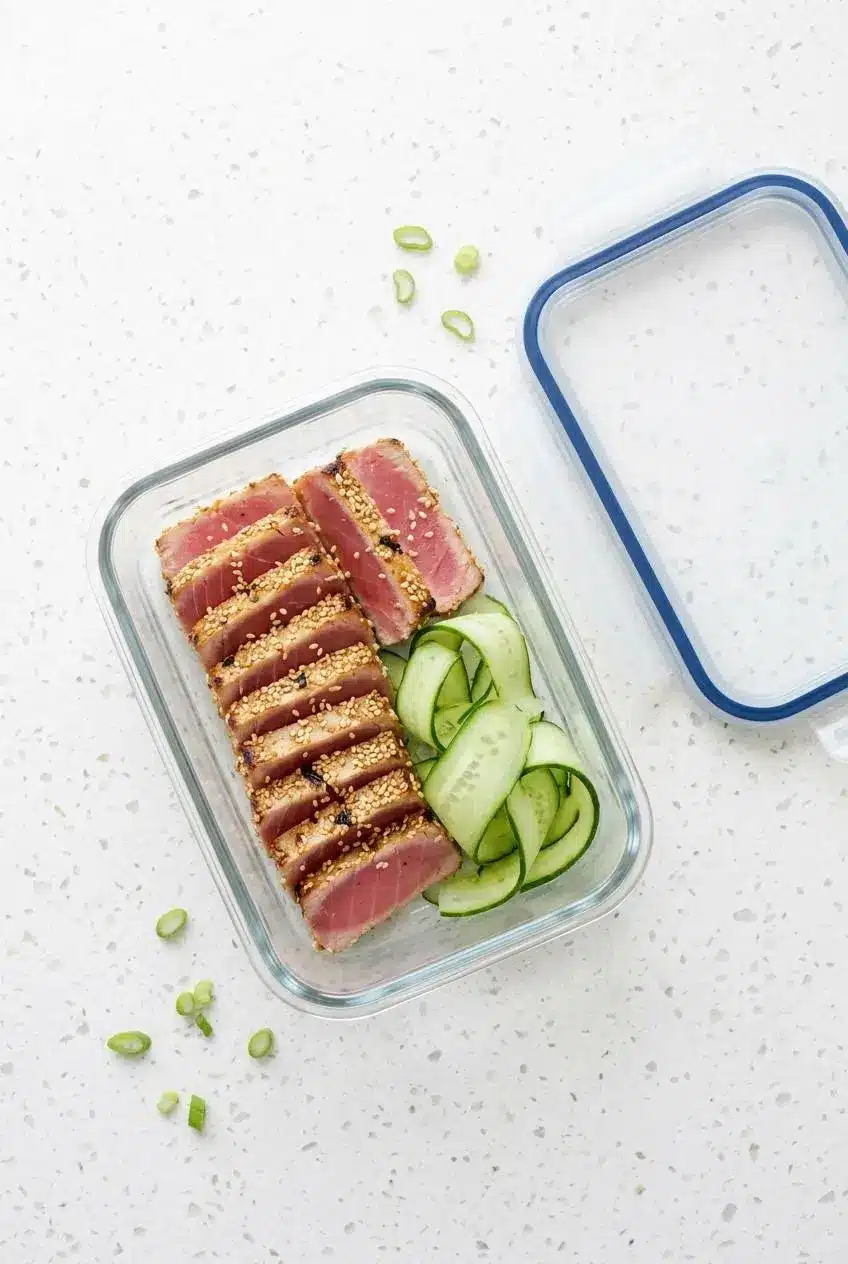
Cool any leftover tuna promptly, transfer it to an airtight container, and keep it chilled. The pink center is delicate, so cold slices are usually more enjoyable than reheated fish. Add them to a grain bowl, tuck them over dressed greens, or serve them with cucumber salad.
If you prefer warm leftovers, heat them briefly and gently just until warmed through. Strong microwave heat or a long return to the skillet can quickly dry the tuna and erase its tender center.
Conclusion
A very hot pan, dry tuna, and a brief sear are the keys to a crisp savory exterior with a warm ruby middle. The soy-sesame-honey coating adds enough flavor to make the fish feel special without slowing dinner down.
Slice it right away, finish with lime and toasted seeds if you like, and bring it to the table while the crust is still crackly. That first bite is worth the hot skillet.
Frequently Asked Questions
How Long Should You Cook a Tuna Steak on Each Side?
For a 1-inch thick steak, cook tuna for 60 to 90 seconds per side over high heat for medium-rare. Cook it about 30 seconds per side for very rare, or 2 to 2½ minutes per side for medium-well to well-done.
Can You Eat Tuna Steak Pink in the Middle?
High-quality tuna is traditionally served seared outside with a pink or ruby-red center. This keeps the flesh moist and tender rather than dry and flaky. Choose fish handled for this style of preparation and keep it properly chilled.
How Long Can You Marinate Tuna Steaks Before Cooking?
A 10 to 15 minute soak gives the soy-sesame mixture time to coat and flavor the fish. Keep citrus or vinegar marinades under 30 minutes because prolonged acid exposure can soften the tuna’s texture.
How Do You Know When Tuna Steak Is Done?
Look for a narrow opaque band rising from the bottom edge while the center remains red. The steak should feel firm with a slight spring when pressed. Around 115 to 120 °F produces a warm medium-rare center.
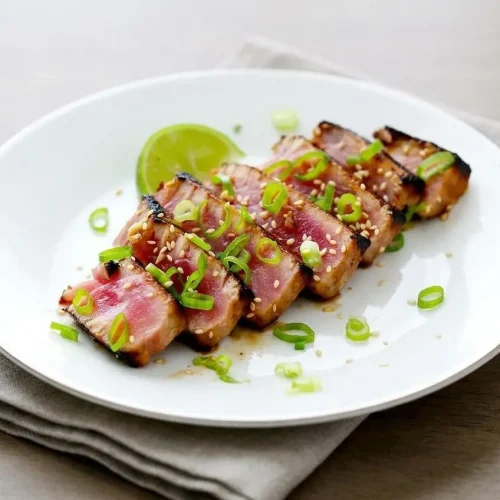
Tuna Steak

Equipment
- Nonstick skillet
Ingredients
- 2 ahi tuna (yellowfin tuna) steaks about 4 oz. each, 1″ thick
- 2 tablespoons soy sauce preferably low sodium
- 1 tablespoon toasted sesame oil
- 1 tablespoon honey
- ½ teaspoon kosher salt optional
- 1/4 teaspoon black pepper to taste
- 1/4 teaspoon cayenne pepper (optional)
- 1 tablespoon oil canola, olive, or other high-heat cooking oil of preference
- green onions, toasted sesame seeds, and lime wedges for serving (optional)
Instructions
- Blot the 2 ahi tuna (yellowfin tuna) steaks dry and place them on a plate or in a resealable bag. The surface should feel dry to the touch so it can brown quickly instead of steaming.
- Whisk the soy sauce, toasted sesame oil, honey, kosher salt if using, black pepper, and cayenne pepper until the honey disappears into the mixture, then coat both steaks well. For more flavor, marinate for at least 10 minutes or up to overnight in the refrigerator; reserve a little marinade before adding the fish if you want some for serving.
- Heat a medium nonstick or well-seasoned cast iron skillet until very hot, using medium-high to high heat for cast iron and medium to medium-high heat for nonstick. Cast iron generally needs 3 to 5 minutes, while a nonstick skillet may need about 1 minute; a faint curl of smoke signals that the pan is ready.
- Add the 1 tablespoon oil, then gently lay in the tuna and sear for 1 to 1½ minutes per side for medium-rare. For very rare tuna, cook about 30 seconds per side; for medium-well to well-done tuna, cook 2 to 2½ minutes per side, adjusting the heat if the glaze darkens too quickly.
- Move the tuna to a cutting board and cut it into 1/2 inch slices, then finish with green onions, toasted sesame seeds, and lime wedges if desired. Serve right away while the center is warm and ruby colored; add flaky sea salt at the table if it needs more seasoning.