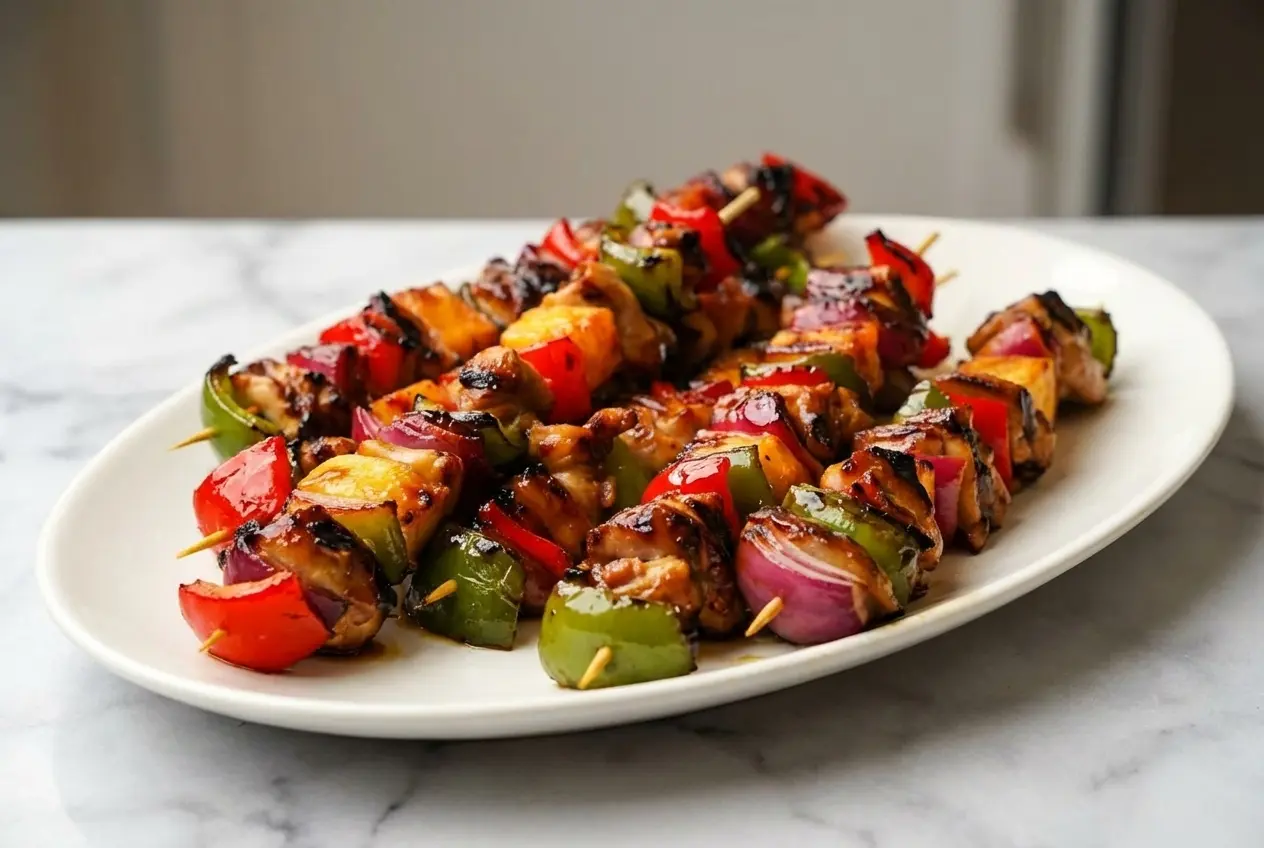
Some nights call for the smoky comfort of a backyard cookout, and other nights feel like they deserve the sizzle and shine of a Japanese street stall. That is exactly where these Teriyaki Chicken Skewers land, sweet, savory, juicy, and kissed with just enough char to make everyone hover by the grill.
What makes this version special is the way pineapple juice and soy sauce play off each other, then get a chef-style boost from a glossy miso-butter finish. If you have ever made skewers that tasted flat or burned before the chicken was done, this guide walks you through every important detail, from prep to that final lacquered glaze.
Why You’ll Love This Recipe
The Umami Finish: In my kitchen, the little trick that changes everything is whisking white miso and cold butter into the reserved glaze. It gives the sauce a silky body and a restaurant-style shine that plain teriyaki rarely has.
Juicier Chicken: Chicken thighs are my first pick here because they stay tender and forgiving over live heat. Even if the grill runs a touch hot, they are far less likely to dry out than lean breast meat.
Balanced Flavor: The blend of soy sauce, pineapple juice, brown sugar, ginger, and garlic hits all the right notes. You get sweetness, acidity, savory depth, and just enough warmth from the pepper flakes to keep every bite lively.
Made to Impress: These skewers come off the grill looking like summer on a stick, with bright peppers, red onion, and golden pineapple. If you enjoy bold Japanese-inspired flavors, dishes like chicken katsu musubi bring that same fun, crowd-pleasing energy to the table.
Ingredients and Substitutions
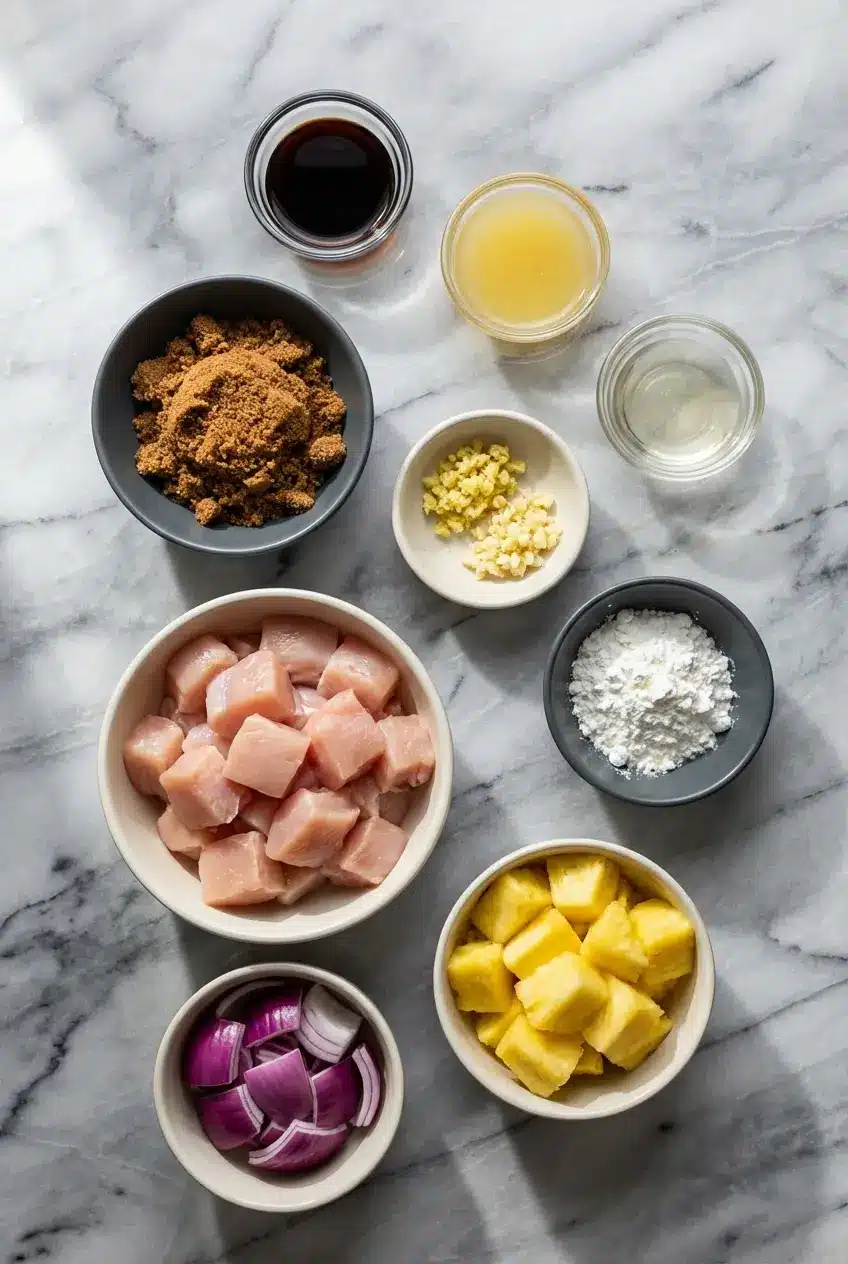
These ingredients build a teriyaki glaze with real depth, plus colorful skewers that grill beautifully and stay juicy.
Ingredients
Teriyaki marinade/sauce:
- 1/2 cup of low-sodium soy sauce
- 1/2 cup of pineapple juice
- 2 tablespoons of brown sugar
- 1 tablespoon of rice vinegar
- 1 teaspoon of sesame oil
- 2 teaspoons of fresh ginger, minced
- 2 garlic cloves, minced
- 1/4 teaspoon of red pepper flakes
- 2 tablespoons of cold water
- 1 tablespoon of cornstarch
Skewers:
- 2 pounds of boneless skinless chicken breasts or thighs, cut into 1-inch cubes
- 1 red bell pepper, cut into 1-inch pieces
- 1 green bell pepper, cut into 1-inch pieces
- 1 red onion, cut into 1-inch pieces
- 1 cup of fresh pineapple chunks
Ingredient Notes & Substitutions
Chicken thighs: If you want the juiciest result, go with thighs. They have a little more fat, which means more flavor and a much gentler landing on the grill, especially for anyone still learning how to manage hot spots.
Chicken breasts: Breast meat works if you prefer a leaner skewer, but cut the cubes evenly and watch the internal temperature closely. I like to pull them the moment they hit 165°F so they stay moist instead of turning firm and stringy.
Soy sauce: Low-sodium soy sauce gives you better control over seasoning, especially once the glaze reduces. If you need a gluten-free option, tamari is the easiest swap and still delivers that same deep, savory backbone.
Brown sugar: This brings the classic teriyaki sweetness and helps with caramelization. For a lower-carb approach, monk fruit sweetener can stand in nicely, though the glaze may brown a little differently and taste slightly less rounded.
Pineapple juice: This is more than a sweet note. It adds bright acidity and that familiar tropical teriyaki character, which plays beautifully with the fermented depth of miso and the richness of butter.
Ginger and garlic: Fresh is worth it here. Bottled shortcuts can taste dull, while freshly minced ginger and garlic perfume the sauce and give the skewers that lively, just-cooked aroma.
How to Make Teriyaki Chicken Skewers
Prep the Skewers and Build the Sauce
- Set 6 bamboo skewers in water for at least 30 minutes so they do not scorch over the grill. That soak gives you a little insurance when the heat is high and the sugars in the glaze start caramelizing. For general grill safety and ways to prevent them from catching fire, it helps to keep a close eye on the grill and never leave it unattended.
- While the skewers soak, combine the soy sauce, pineapple juice, brown sugar, rice vinegar, sesame oil, ginger, garlic, and red pepper flakes in a small saucepan. Bring everything up to a boil over medium-high heat, then lower the heat to medium-low and let it simmer for 5 minutes, until the kitchen smells sweet, savory, and a little gingery.
- In a small bowl, whisk the cold water and cornstarch until completely smooth, then stir that slurry into the simmering sauce. Keep cooking just until the glaze thickens enough to lightly coat the back of a spoon, then take it off the heat and let it cool fully before it ever touches the raw chicken.
Marinate and Assemble
- Once the sauce is fully cooled, place the chicken cubes in a large resealable bag or a covered shallow dish. Pour in half of the sauce, save the rest for basting, and turn the chicken until every piece is coated, then refrigerate for at least 1 hour, or overnight if you want deeper flavor.
- Thread the marinated chicken onto the soaked skewers with the red bell pepper, green bell pepper, red onion, and pineapple chunks, alternating as you go. I like to leave tiny gaps between pieces so the heat can circulate, which helps the edges char instead of steam.
Grill and Baste at the Right Time
- Heat your grill to medium, 350 to 400°F, and oil the grates well so the chicken can release cleanly. Lay the skewers on the grill, cover, and cook for 15 to 20 minutes, turning them every 3 to 4 minutes so the color develops evenly on all sides.
- Wait until after the first two turns before brushing on any of the reserved sauce. That timing matters because the sugars from the pineapple juice and brown sugar can darken too fast, so basting later gives you a glossy finish without burning, and the chicken should be cooked until it reaches an internal temperature of 165°F.
Secrets for the Perfect Char and Texture
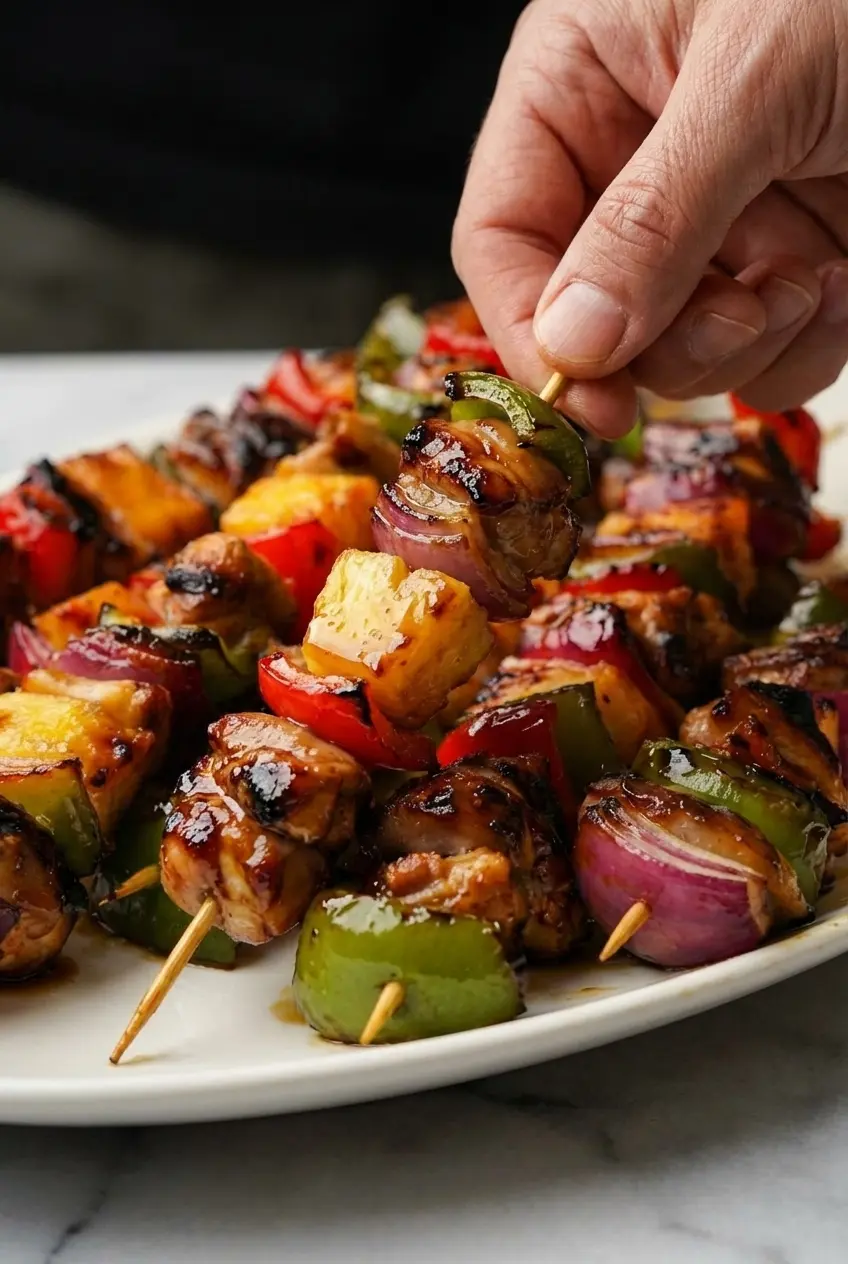
Double-skewering really works. If you run two parallel skewers through one line of ingredients instead of one, the chicken and vegetables stay put when you flip them, which means neater turning and more even browning on every side.
A clean grate is half the battle. Chicken sticks most often when old residue is left behind or the grill was not oiled well enough, so I always scrub the grate hot, oil it thoroughly, and let the meat cook undisturbed until it naturally releases.
Trust temperature, not guesswork. The difference between juicy and rubbery chicken is often just a few degrees, so an internal thermometer is your best friend here. Pull the skewers when the thickest piece hits 165°F, and the carryover heat will finish the job without drying them out.
The Science of Caramelization and Glaze Timing
Teriyaki-style sauces are famous for that glossy, sticky finish, but they can burn in a hurry because they carry sugars from both brown sugar and pineapple juice. The real sweet spot is what I call the sugar burn window, that moment when the outside is hot enough for caramelization, but the chicken still needs a little more time to cook through.
That is why late basting matters so much. If you brush the glaze on too early, the sugars darken before the protein is ready, but if you wait until the first two turns are done, the surface already has a head start and can handle the extra coating.
The deeper flavor on these skewers comes from two kinds of browning happening together. Sugars are responsible for caramelization, while proteins create the Maillard reaction, and together they build that irresistible mix of savory crust, subtle sweetness, and roasted aroma that makes grilled chicken so satisfying.
The miso-butter finish helps here too. Butter softens the edges of the glaze and helps it cling, while white miso adds fermented complexity that keeps the sauce from tasting one-note, much like the glossy balance I look for in a teriyaki burger glaze when handling high-heat grilling.
Meal Prep and Freezing Guide for Chicken Skewers
These skewers are excellent for make-ahead cooking, especially if you prep the chicken before a busy week or a weekend cookout. I like to cube the chicken, cool the sauce completely, and combine the raw chicken with half the sauce in a freezer-safe bag.
You can freeze the marinated raw chicken for up to 3 months. Press out as much air as possible, lay the bag flat so it freezes evenly, and label it clearly so you remember it already contains marinade.
For the best texture, thaw the chicken slowly in the refrigerator before skewering and grilling. Gentle thawing helps the protein hold onto more moisture, so the pieces stay plump instead of shedding liquid and turning watery on the grill.
If you want to get even farther ahead, chop the peppers, onion, and pineapple a day in advance and keep them chilled in separate containers. Then all you need to do is thread, grill, and baste during that last stretch when everyone is hungry and circling the kitchen.
Pro Tips & Troubleshooting
Expert Tips for Success
- Grill one small piece of chicken first if you want to check the seasoning. It is the easiest way to see whether the soy sauce, ginger, and sweetness are balanced before the full batch hits the grate.
- Leave a little breathing room between each piece on the skewer. Tight packing traps steam, and you lose the charred edges that make grilled teriyaki chicken so good.
- If you are cooking indoors, place the skewers on a wire rack set over a foil-lined sheet pan under the broiler. That airflow mimics the grill better than a flat pan and helps the glaze set instead of pooling.
- Balancing salty and savory flavors becomes easier with practice, especially in chicken dishes built around rich sauces. I use the same mindset when tasting a brothy, deeply seasoned chicken ramen recipe, adjusting for richness, salt, and aroma before the dish reaches the table.
Common Mistakes to Avoid
- Do not pour hot sauce over raw chicken. Warm marinade starts to tighten the surface of the meat, which can lead to uneven texture and a slightly rubbery bite.
- Do not skip soaking the bamboo skewers for at least 30 minutes. Dry skewers are much more likely to blacken, splinter, or burn before the food is finished.
- Do not overcrowd the skewers. When pieces are jammed together, the chicken turns pale and steamy instead of developing a proper grilled edge.
- Do not start basting too early. Sugary sauce needs to go on later in the cook so it can gloss and caramelize instead of scorching.
Serving and Storage
Serving Ideas
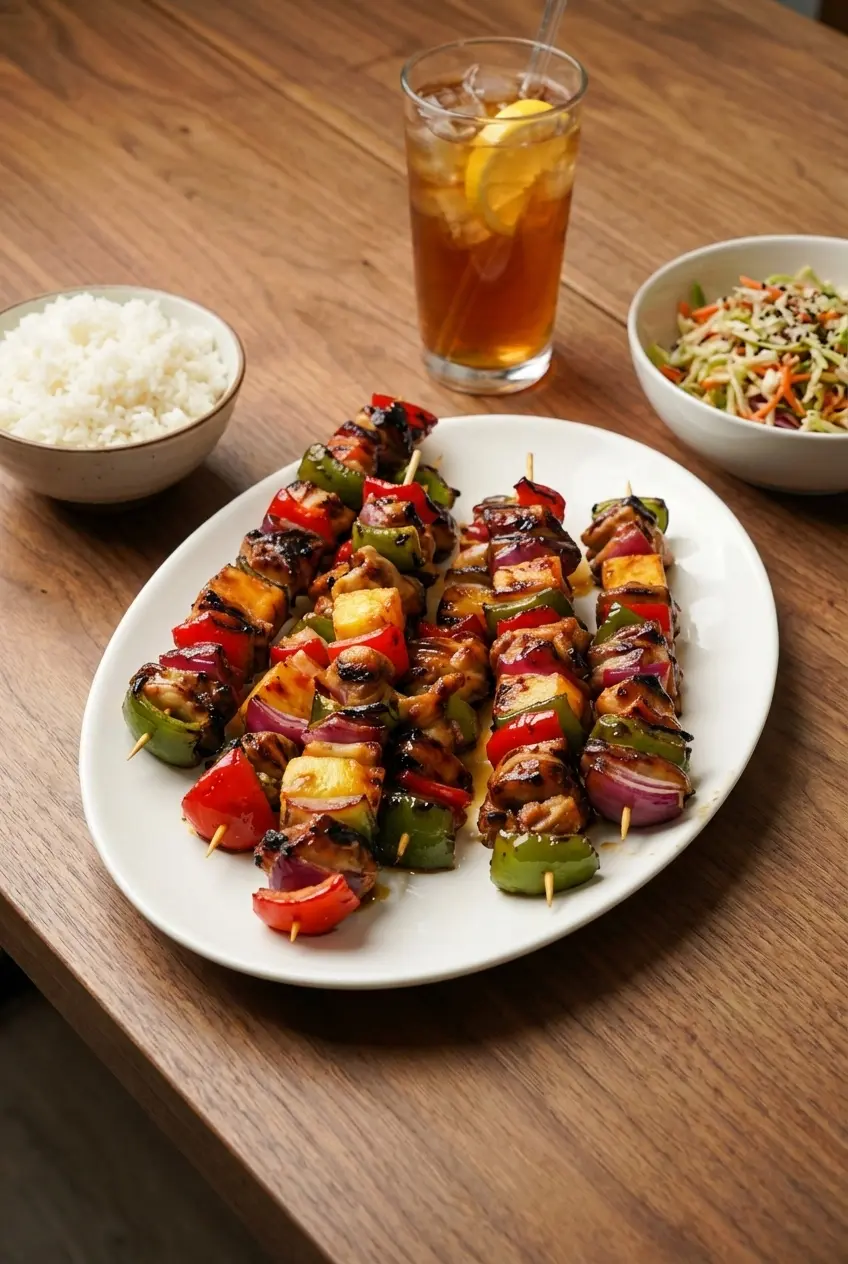
These skewers love a soft, fragrant side, especially coconut jasmine rice or fluffy white rice that can catch every drop of glaze. For a sharper contrast, a sesame ginger slaw or shaved carrot salad brings crunch and brightness that cut through the richness of the miso butter.
If you want to round the plate out with something playful, a side of crispy fried rice adds great texture and makes the meal feel takeout-night special in the best possible way. A shower of toasted sesame seeds and sliced green onions on top gives the skewers that polished finish you usually see at a good grill counter.
Storage and Reheating
Leftovers keep well in an airtight container in the refrigerator for up to 3 days. I usually remove the chicken and vegetables from the skewers before storing, which makes reheating easier and keeps the container from getting awkwardly crowded.
To warm them back up, place the pieces in a 350°F oven and cover loosely with foil so the surface does not dry out before the center heats through. A splash of reserved sauce or even a spoonful of water in the pan helps keep the chicken glossy and tender.
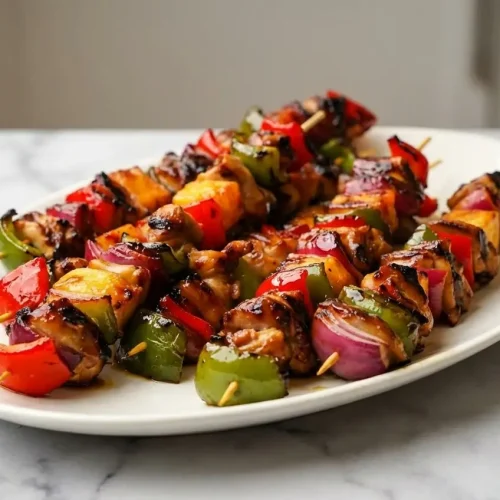
Teriyaki Chicken Skewers

Equipment
- Bamboo skewers
- Small saucepan
- Grill
- Meat Thermometer
Ingredients
Teriyaki marinade/sauce:
- 1/2 cup of low-sodium soy sauce
- 1/2 cup of pineapple juice
- 2 tablespoons of brown sugar
- 1 tablespoon of rice vinegar
- 1 teaspoon of sesame oil
- 2 teaspoons of fresh ginger, minced
- 2 garlic cloves, minced
- 1/4 teaspoon of red pepper flakes
- 2 tablespoons of cold water
- 1 tablespoon of cornstarch
Skewers:
- 2 pounds of boneless skinless chicken breasts or thighs, cut into 1-inch cubes
- 1 red bell pepper, cut into 1-inch pieces
- 1 green bell pepper, cut into 1-inch pieces
- 1 red onion, cut into 1-inch pieces
- 1 cup of fresh pineapple chunks
Instructions
Prep the Skewers and Build the Sauce
- Soak at least 6 bamboo skewers in water for 30 minutes. This prevents them from scorching or catching fire over the high heat of the grill.
- In a small saucepan, combine the soy sauce, pineapple juice, brown sugar, rice vinegar, sesame oil, ginger, garlic, and red pepper flakes. Bring to a boil over medium-high heat, then reduce to a simmer for 5 minutes.
- Whisk the cold water and cornstarch into a smooth slurry and stir it into the simmering sauce. Cook until the glaze is thick enough to coat a spoon, then remove from heat and let it cool completely.
Marinate and Assemble
- Place the cubed chicken in a resealable bag. Pour in half of the cooled sauce, reserving the rest for basting. Toss to coat and refrigerate for at least 1 hour, or overnight for the best flavor.
- Thread the marinated chicken onto the soaked skewers, alternating with red and green peppers, red onion, and pineapple chunks. Leave small gaps between pieces to allow heat to circulate for better charring.
Grill and Baste at the Right Time
- Preheat your grill to medium (350 to 400°F) and oil the grates. Place the skewers on the grill, cover, and cook for 15 to 20 minutes, turning every 3 to 4 minutes.
- Brush the reserved sauce onto the skewers only after the first two turns. This prevents the sugars from burning too early. Continue cooking and basting until the chicken reaches an internal temperature of 165°F.
Notes
Nutrition
Conclusion
These skewers prove that a simple grill recipe can taste a whole lot more special with the right details. The miso-butter finish adds shine, body, and deep savory character, while smart timing keeps the glaze from burning before the chicken reaches that juicy 165°F sweet spot.
Give the double-skewering trick a try at your next cookout, and do not be afraid to make it your own with different vegetables or a spicier finish. Once you smell that sweet-savory glaze hitting the heat, this one tends to earn a regular spot in the rotation.
Frequently Asked Questions
How long should I soak the wooden skewers?
Is it better to use chicken breast or chicken thighs for skewers?
Can I make these teriyaki chicken skewers in the oven?
How do I keep the chicken from drying out on the grill?
Can I freeze the chicken in the teriyaki marinade?