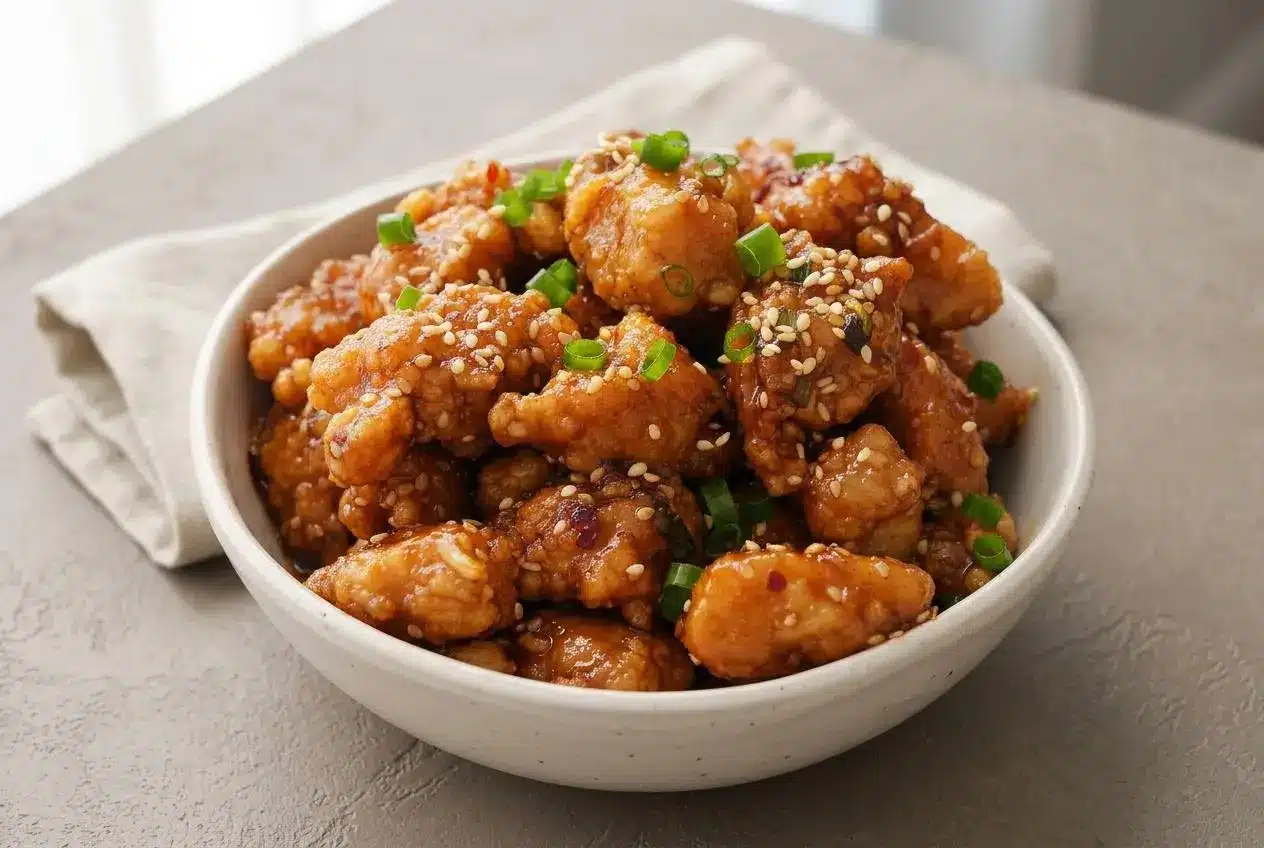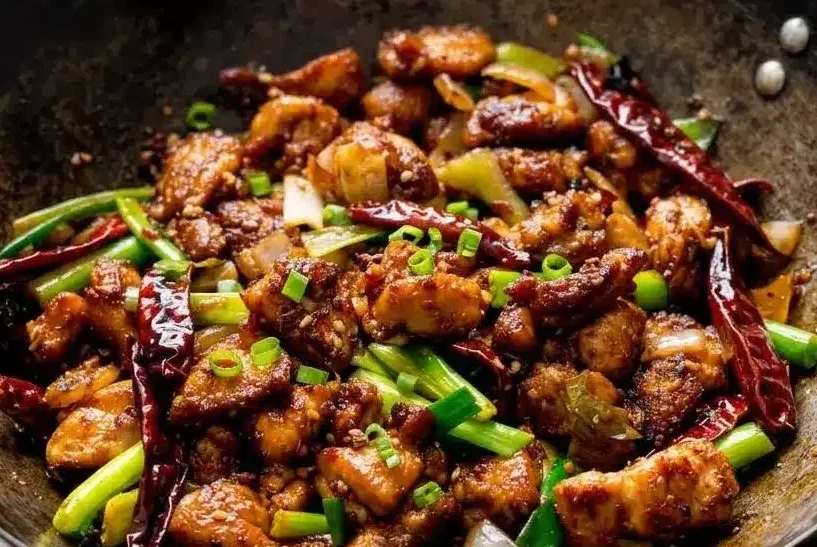
Szechuan chicken is a bold Chinese stir-fry of crispy chicken bites, dried red chilies, garlic, ginger, and Sichuan peppercorns with a savory, tongue-tingling mala finish.
This szechuan chicken starts with chicken sizzling in hot oil, then builds flavor quickly with fragrant aromatics and a glossy chili bean paste glaze. The contrast between crisp edges and savory sauce makes every bite lively.
Keep most chilies whole for smoky flavor and slice only a few for stronger heat. The peppercorn aroma is the real showstopper.
Have the aromatics and sauce ingredients measured before heating the wok, because the final stir-fry moves fast.
What Is Szechuan Chicken and What Does It Taste Like?
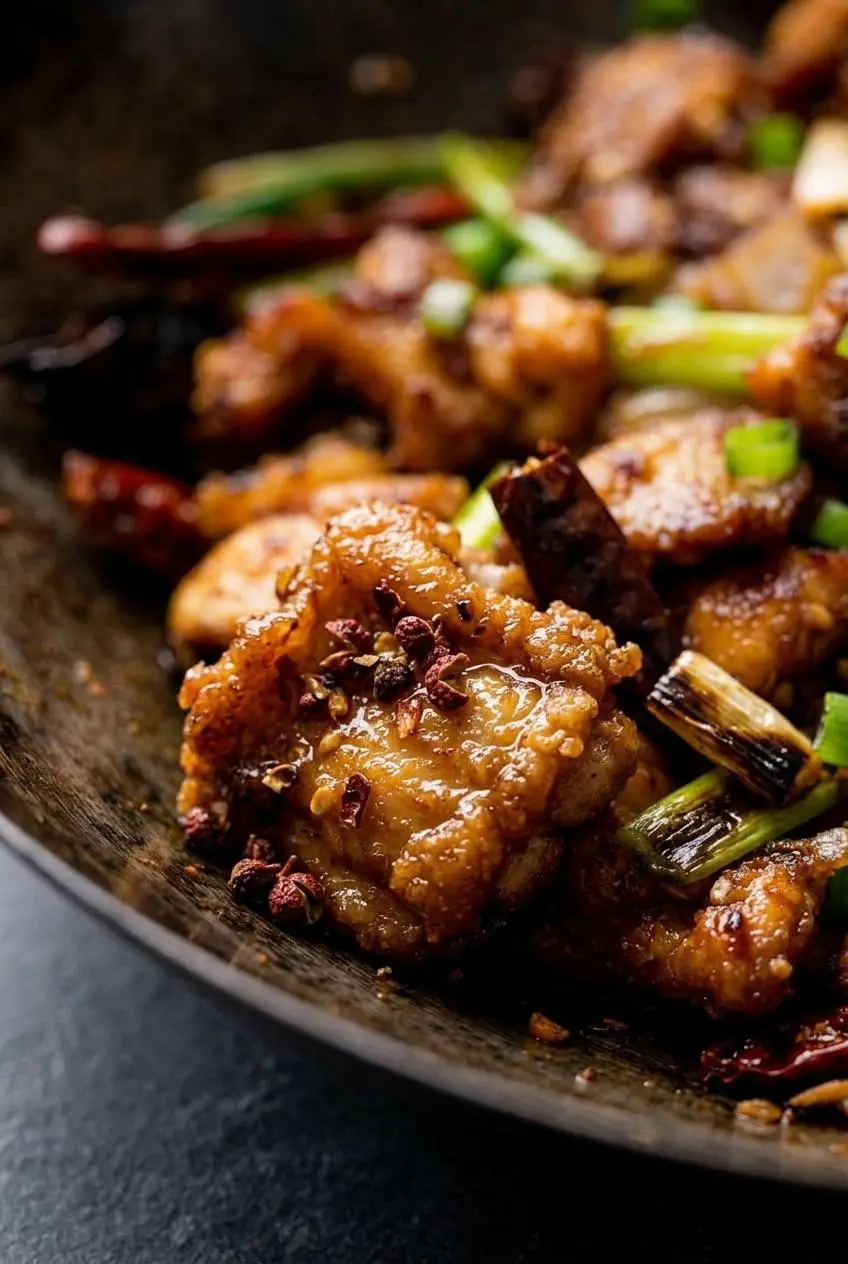
Szechuan chicken is defined by mala, the combination of chile heat and the gentle tingling sensation from Sichuan peppercorns. It tastes savory, garlicky, lightly sweet, smoky from dried chilies, and citrusy from the peppercorns.
The peppercorn’s distinctive buzz comes from a naturally occurring compound called hydroxy-alpha-sanshool. Instead of tasting like a hotter black pepper, it creates a floral, prickly sensation that lingers around the lips and tongue. Garlic, ginger, scallions, soy sauce, and chili bean paste round out that bright heat with deep savory flavor.
It is a hot, dry-style stir-fry rather than a heavily sauced dish. If you enjoy Sichuan flavors in a cooler shredded chicken dish, bang bang chicken offers a very different texture with a similar love of chile and peppercorn flavor.
Essential Ingredients for Authentic Szechuan Chicken
Each ingredient contributes to the final balance: chicken provides richness, cornstarch creates crispness, soy sauces bring depth, and chilies, peppercorns, ginger, and garlic build the signature aromatic heat.
Chicken and marinade
- 8 boneless chicken thighs (chopped into bitesize chunks)
- 1 tbsp dark soy sauce
- 1 tbsp light soy sauce
- 1 tbsp Chinese rice wine
- ¼ tsp white pepper
- 2 tbsp cornflour (cornstarch)
For Frying
- 240 ml (1 cup) neutral oil ((such as avocado oil))
- 1 tbsp sesame oil
- 1 onion (peeled and chopped into chunks)
- 25 dried red chillies (chop 5 of them into small pieces and leave the rest whole)
- 1 1/2 tsp Sichuan peppercorns (ground using a pestle and mortar (the 1 1/2 tsp is measured BEFORE grinding))
- 3 cloves garlic (minced)
- 2 tsp minced ginger
- 5 spring onions (scallions roughly chopped)
- 2 tbsp light soy sauce
- 1 tbsp Chinese rice wine
- 1 tbsp chilli bean paste
- 1 tbsp sugar
The Magic of Sichuan Peppercorns and Doubanjiang
Red Sichuan peppercorns bring the classic citrusy, tongue-tingling mala effect. Green peppercorns are fresher and more intensely floral, while red ones are warmer, woodier, and especially good with dried red chilies.
Grind the peppercorns with a pestle and mortar shortly before cooking. Pick out any hard black inner seeds if you spot them, since they can taste gritty. Doubanjiang, also called fermented chili bean paste, adds chile heat, salt, and a deep fermented savoriness that soy sauce alone cannot provide.
If doubanjiang is unavailable, use another savory fermented chili paste as an optional flavor direction, knowing the result will taste different. Cayenne can add heat, but it cannot replace Sichuan peppercorns because it lacks their citrusy numbing quality.
Best Chicken Cuts: Thighs vs Breasts
Boneless chicken thighs stay juicy through shallow frying and stand up well to the intense wok finish. Their higher fat content also gives the finished dish a richer bite.
Chicken breast works if that is what you prefer. Cut it into evenly sized pieces and remove it from the oil as soon as it turns golden and is cooked through, since lean breast meat dries out faster than thighs.
I lightly toast whole Sichuan peppercorns in a dry pan before grinding them, then stop as soon as their citrusy fragrance rises so they do not turn bitter.
How to Make Szechuan Chicken Step-by-Step
The key is to build crispness first, then return the chicken to the wok only long enough to pick up the hot, glossy sauce.
- Combine the chicken with the dark soy sauce, light soy sauce, Chinese rice wine, white pepper, and cornflour in a bowl, then cover and marinate for 30 minutes.
The chicken should look evenly coated with a thin, tacky cornstarch layer before frying. - Pour the neutral oil into a large frying pan, reserving 1 tbsp, and heat it over medium-high heat.
The oil should shimmer and give a steady sizzle when the first piece of chicken touches it. - Fry the chicken in batches for 4 to 5 minutes, turning the pieces a couple of times as they cook.
Keep the oil around 325°F to 350°F and look for a golden perimeter with crisp-looking edges. - Transfer the fried chicken to a plate once each batch is golden.
Leaving space between pieces in the pan prevents steam from softening the cornstarch coating. - Heat the reserved 1 tbsp of oil with the sesame oil in a wok over medium-high heat.
The sesame oil should smell nutty and fragrant without smoking heavily. - Add the onion and dried red chillies and stir-fry for 2 to 3 minutes.
The onion should begin to soften at the edges while the whole chilies darken slightly and smell smoky. - Stir in the ground Sichuan peppercorns and cook for 1 minute.
A strong citrusy aroma should bloom quickly, so keep the peppercorns moving to prevent scorching. - Add the garlic, ginger, and spring onions and stir-fry for 30 seconds.
The wok should smell sharp, warm, and fragrant before the garlic takes on any color. - Pour in the light soy sauce, Chinese rice wine, chilli bean paste, and sugar, then stir-fry for 1 minute.
The mixture should bubble and become a savory, lightly glossy coating rather than a thin pool. - Return the chicken to the wok and toss for 1 to 2 minutes until heated through.
Every piece should look lacquered with sauce while the crisp coating remains visible around the edges. - Serve the chicken with boiled rice.
The rice catches the spicy oils and savory glaze without competing with the peppercorn flavor.
Step 1: Marinating and Velveting the Chicken
The soy sauces season the chicken from the start, while Chinese rice wine and white pepper add gentle depth. Cornstarch creates a light velvet coating that helps the chicken retain moisture while forming a crisp shell in the hot oil.
Mix until every piece is coated. Dry patches of cornstarch can fry into pale, floury spots instead of a delicate crust.
Step 2: Shallow Frying for a Crispy Exterior
Keep the oil in the 325°F to 350°F range and work in separate batches. If the pan is crowded, the chicken releases moisture faster than the oil can crisp it, and the pieces steam instead of browning.
Listen for a lively, even sizzle. A weak sizzle means the oil has cooled, while smoking oil can overbrown the cornstarch before the chicken is ready.
Step 3: Blooming Aromatics and Wok Tossing
Give the onion and dried chilies time to bloom before adding the peppercorns. Whole chilies perfume the oil with smokiness, while the sliced pieces release more direct heat.
Add ground peppercorns before the garlic and ginger, but do not linger. Once garlic hits very hot oil, it can go bitter quickly. The finished sauce should cling in a thin layer, leaving the chicken glossy rather than drowned.
Expert Tips for Maximum Crispness and Wok Flavor
- Soggy chicken: The pan was likely crowded or the oil cooled too much. Fry in batches and allow the oil to return to a lively sizzle before adding more chicken.
- Bitter aromatics: Ground peppercorns and garlic burn quickly. Keep the heat at medium-high, stir constantly, and add the sauces as soon as the garlic becomes fragrant.
- Muted peppercorn flavor: Grind peppercorns shortly before cooking. A brief dry toast can wake up their floral oils, but stop before they darken too much.
- Weak wok flavor: A wok gives the ingredients more concentrated heat, but a wide skillet also works well. Let the pan heat fully before adding the chicken and cook in smaller batches.
- Extra citrus aroma: For a brighter finish, briefly warm freshly crushed peppercorns in sesame oil off the heat, then fold that oil into the finished chicken.
Szechuan vs Hunan vs General Tso Chicken
These dishes all bring bold flavor, but their heat, sauce, and texture are very different.
- Szechuan chicken: Savory, aromatic, and spicy with dried chilies, fermented chili bean paste, and the tingly mala effect of Sichuan peppercorns. The sauce is usually a light glaze or dry stir-fry coating.
- Hunan chicken: Focuses on direct chile heat with pungent, sour, and savory notes. It typically lacks the tongue-numbing peppercorn quality that defines Szechuan flavor.
- General Tso chicken: Uses heavily battered fried chicken in a thick, sweet, tangy sauce with gentler heat. It is an American Chinese favorite with a much sweeter profile.
If you want a mild, glossy chicken dinner instead of chile heat, teriyaki chicken moves in a sweeter, soy-forward direction.
Variations and Add-Ins
These optional changes shift the texture and style of the dish without changing the core stir-fry.
Saucy Takeout Style with Bell Peppers
Add bell peppers and onions for a colorful, takeout-style meal. Cook the vegetables until crisp-tender, then use a splash of chicken broth and a cornstarch slurry to create a fuller sauce that coats jasmine rice more generously. Keep the vegetables bright and avoid overcooking them, or their moisture can dilute the spicy glaze.
Crispy Air-Fryer Szechuan Chicken
For an air-fryer version, cook the marinated, cornstarch-coated chicken in a single layer until browned and crisp, shaking the basket partway through. Toss it with the wok aromatics at the end so the crust stays as crisp as possible.
Extra Fiery Chongqing Laziji Style
For a more intense dry-fried Chongqing-inspired direction, increase the proportion of dried facing-heaven chilies and crushed peppercorns. Keep more chilies whole if you want fragrance first, or slice more of them when you want the heat to hit harder.
A cool, crunchy side helps balance the spice. An Asian chicken salad is a refreshing option when you want more vegetables alongside the hot stir-fry.
Storage and Reheating Tips
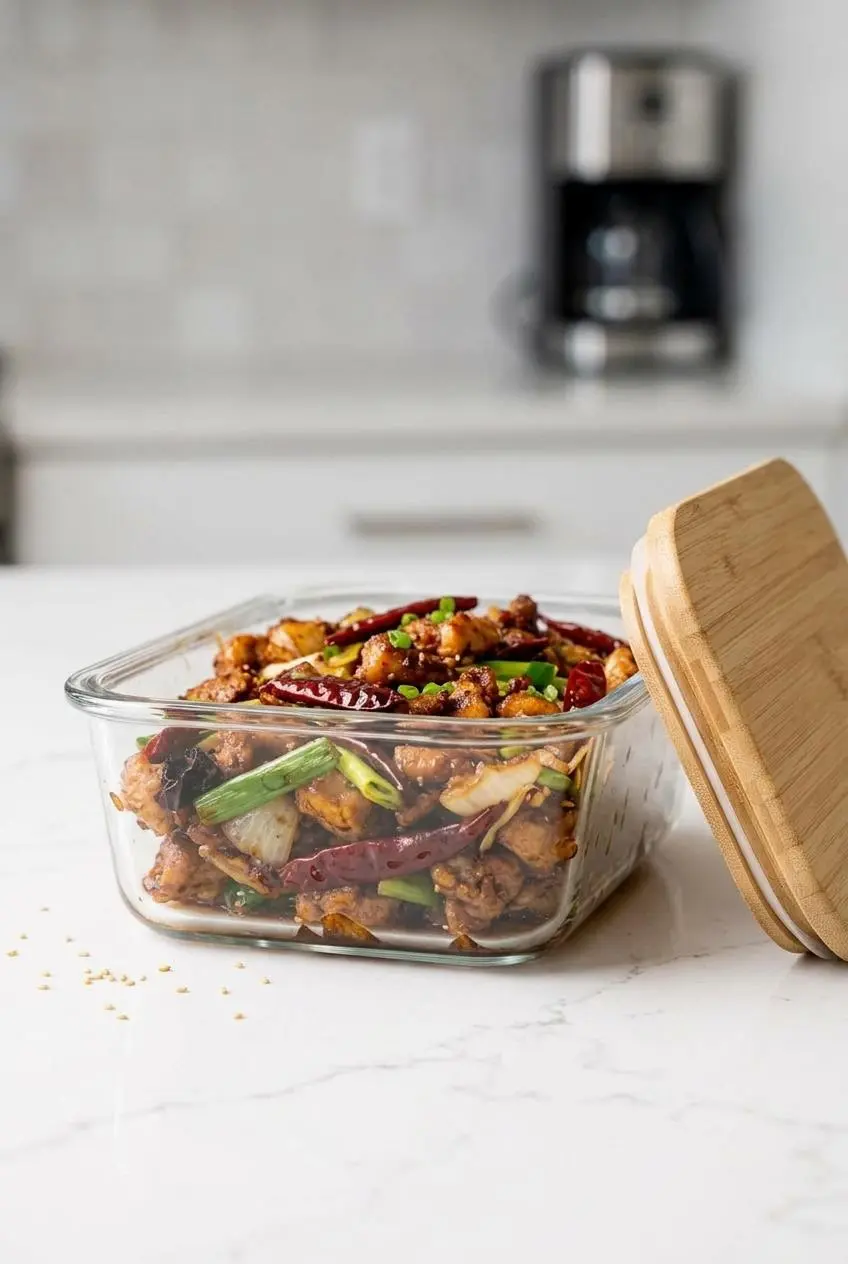
Cool leftovers promptly, transfer them to an airtight container, and keep them chilled. Reheat only the portion you plan to eat so the coating has a better chance of staying crisp.
A hot dry skillet is the best choice for restoring browned edges. An air fryer can also revive the crust, while microwave reheating tends to soften the cornstarch coating. For prep, mix the chicken with its marinade shortly before cooking and keep it chilled until it goes into the pan.
Conclusion
This stir-fry delivers the balance that makes Szechuan cooking so exciting: crisp chicken, fragrant dried chilies, savory doubanjiang, and peppercorns that bring a bright, tingly finish.
Serve it with warm jasmine rice and cool smashed cucumber salad, then adjust the whole and sliced chilies next time to find your ideal level of heat. Enjoy the sizzle.
Frequently Asked Questions
What Is Typically in Szechuan Chicken?
It usually contains bite-sized marinated chicken, dried red chilies, Sichuan peppercorns, garlic, ginger, and scallions. Soy sauce, Chinese rice wine, sugar, and chili bean paste create the savory glaze. This version uses chicken thighs and a cornstarch coating for juicy centers and crisp edges.
Is Szechuan Chicken Very Spicy?
It ranges from moderately spicy to quite hot, with a separate tingling sensation from the peppercorns. Leave more dried chilies whole for aroma with less direct heat. Slice fewer chilies and reduce the chilli bean paste if you prefer a gentler dish.
What Can I Substitute for Sichuan Peppercorns If I Cannot Find Them?
No substitute fully recreates their numbing, citrusy sensation. Freshly ground black pepper mixed with crushed coriander seeds can provide peppery warmth with a light citrus suggestion. The dish will still be tasty, but it will not have the classic mala finish.
Can I Use Chicken Breast Instead of Chicken Thighs?
Yes. Cut boneless chicken breast into evenly sized bite-sized cubes. Shallow-fry it just until cooked through and golden, then toss it briefly with the wok sauce. Breast meat is leaner, so careful timing matters more for keeping it tender.
How Do I Control the Heat Level in This Recipe?
Use more whole chilies and fewer sliced chilies for milder heat with plenty of smoky aroma. Remove seeds from the chilies before slicing them to reduce their sharpness. Moderate the chilli bean paste and add more only when you want a deeper chile punch.
Szechuan Chicken

Equipment
- Large frying pan
- wok
- Pestle and mortar
Ingredients
Chicken and marinade
- 8 boneless chicken thighs chopped into bitesize chunks
- 1 tbsp dark soy sauce
- 1 tbsp light soy sauce
- 1 tbsp Chinese rice wine
- 1/4 tsp white pepper
- 2 tbsp cornflour cornstarch
For Frying
- 240 ml neutral oil (1 cup) ((such as avocado oil))
- 1 tbsp sesame oil
- 1 onion peeled and chopped into chunks
- 25 dried red chillies chop 5 of them into small pieces and leave the rest whole
- 1 1/2 tsp Sichuan peppercorns ground using a pestle and mortar (the 1 1/2 tsp is measured BEFORE grinding)
- 3 cloves garlic minced
- 2 tsp minced ginger
- 5 spring onions scallions roughly chopped
- 2 tbsp light soy sauce
- 1 tbsp Chinese rice wine
- 1 tbsp chilli bean paste
- 1 tbsp sugar
Instructions
- Combine the chicken with the dark soy sauce, light soy sauce, Chinese rice wine, white pepper, and cornflour in a bowl, then cover and marinate for 30 minutes. The chicken should look evenly coated with a thin, tacky cornstarch layer before frying.
- Pour the neutral oil into a large frying pan, reserving 1 tbsp, and heat it over medium-high heat. The oil should shimmer and give a steady sizzle when the first piece of chicken touches it.
- Fry the chicken in batches for 4 to 5 minutes, turning the pieces a couple of times as they cook. Keep the oil around 325°F to 350°F and look for a golden perimeter with crisp-looking edges.
- Transfer the fried chicken to a plate once each batch is golden. Leaving space between pieces in the pan prevents steam from softening the cornstarch coating.
- Heat the reserved 1 tbsp of oil with the sesame oil in a wok over medium-high heat. The sesame oil should smell nutty and fragrant without smoking heavily.
- Add the onion and dried red chillies and stir-fry for 2 to 3 minutes. The onion should begin to soften at the edges while the whole chilies darken slightly and smell smoky.
- Stir in the ground Sichuan peppercorns and cook for 1 minute. A strong citrusy aroma should bloom quickly, so keep the peppercorns moving to prevent scorching.
- Add the garlic, ginger, and spring onions and stir-fry for 30 seconds. The wok should smell sharp, warm, and fragrant before the garlic takes on any color.
- Pour in the light soy sauce, Chinese rice wine, chilli bean paste, and sugar, then stir-fry for 1 minute. The mixture should bubble and become a savory, lightly glossy coating rather than a thin pool.
- Return the chicken to the wok and toss for 1 to 2 minutes until heated through. Every piece should look lacquered with sauce while the crisp coating remains visible around the edges.
- Serve the chicken with boiled rice. The rice catches the spicy oils and savory glaze without competing with the peppercorn flavor.