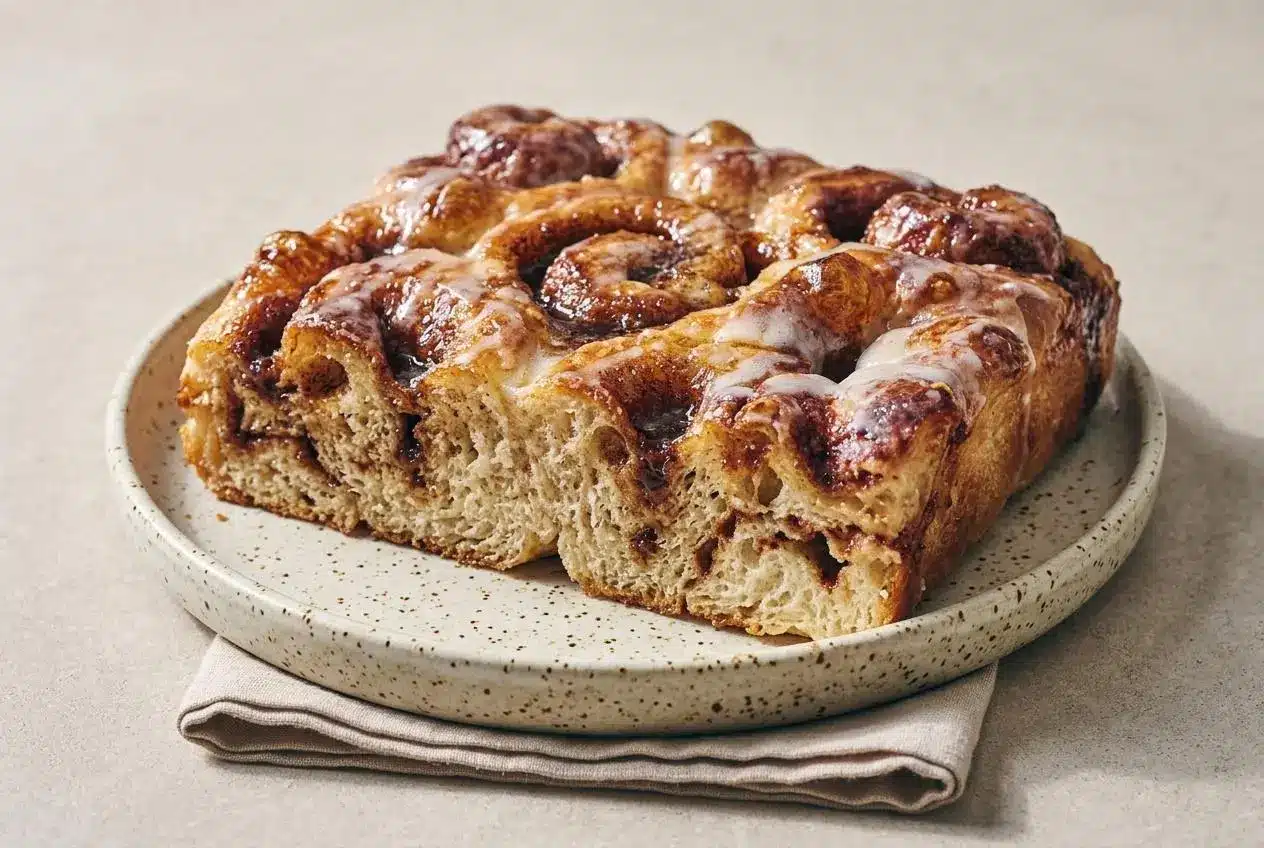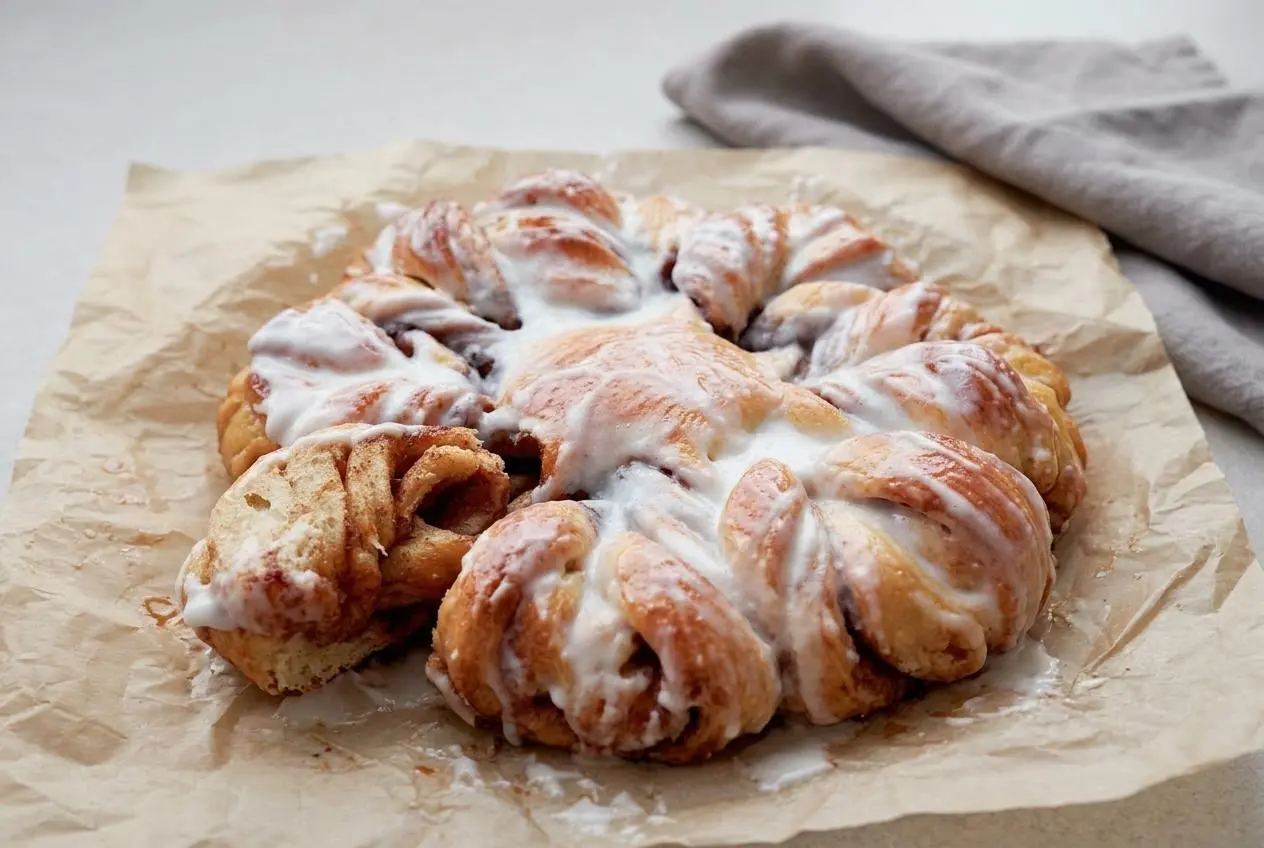
Sourdough Cinnamon Star is a festive pull-apart bread made with soft enriched sourdough dough, cinnamon sugar layers, and an easy twisted star shape that bakes up tender and golden.
Sourdough Cinnamon Star bakes like a holiday centerpiece but works like a very practical dough project. The layers stay soft, the filling turns warm and fragrant, and the finished bread pulls apart in buttery strands.
It’s especially good if you want a sweet sourdough bake that feels impressive without needing fancy shaping skills. The shot-glass center and outward twists do most of the hard work.
Use parchment or a silicone mat under the stacked dough so you can move the shaped star into the pan without stretching the points.
Ingredients and Sourdough Science
Each ingredient helps build the star’s soft crumb, defined layers, rich aroma, and sturdy shape, so the bread rises well and holds its points instead of spreading flat.
Sourdough Star Dough
- 300 grams milk, warm (1 1/4 cup)
- 55 grams butter, melted (1/4 cup)
- 1 large egg (50 grams)
- 50 grams granulated sugar (1/4 cup)
- 6 grams salt (1 teaspoon)
- 100 grams active sourdough starter (scant 1/2 cup)
- 600 grams all-purpose flour (4 1/4 cups)
Cinnamon Filling
- 84 grams butter, softened (6 Tablespoons)
- 220 grams brown sugar (1 cup)
- 12 grams cinnamon (1 1/2 Tablespoons)
Cream Cheese Icing
- 30 grams cream cheese (2 Tablespoons)
- 60 grams powdered sugar (1/2 cup)
- 2 grams vanilla extract (1/2 teaspoon)
- 30 grams milk (2 Tablespoons)
Egg Wash
- 1 large egg (50 grams)
- 5 grams water (1 teaspoon)
Warm milk wakes up the starter and helps the dough feel supple, but it should feel pleasantly warm rather than hot. If the milk is too hot, it can weaken or kill the wild yeast and slow the rise instead of helping it.
Melted butter, egg, and sugar make this an enriched dough, which is why the crumb turns soft and pillowy. They also slow fermentation, so patience matters here more than brute force kneading.
The all-purpose flour brings enough strength to support the twisted shape while still keeping the bread tender. Bread flour can give you more structure, but all-purpose flour makes the final pull-apart texture especially soft.
Brown sugar and cinnamon make the filling cozy and caramel-like as it bakes. The sugar melts into the butter, and that’s what creates those glossy, fragrant layers between the rounds of dough.
I like the filling butter very soft, not melted, because it spreads in a thin even layer and stays put much better during shaping and baking.
The Role of Stiff Sweet Levain
If you build your active starter as a stiffer, sweeter levain before mixing the dough, the finished bread usually tastes milder and less tangy. Lower hydration and the presence of sugar tend to steer fermentation away from sharp acetic notes, which suits a sweet holiday bread much better than a bold sour profile.
That does not mean you need a separate advanced formula to make this work. It simply explains why a well-fed, active starter gives this dough a balanced flavor and why an underfed starter can make the bread both slower to rise and more sour than you want.
Flour Selection and Dough Strength
This dough needs enough gluten strength to survive rolling, stacking, cutting, twisting, and a final rise without tearing apart. That is why the flour choice matters more here than it would in a plain loaf.
All-purpose flour is a smart fit because it gives you structure without making the crumb chewy. If your dough feels sticky at first, resist dumping in lots of extra flour. A slightly tacky dough can still bake beautifully, while an overly floured dough can make the finished star dry and harder to twist cleanly.
How to Make the Sourdough Cinnamon Star
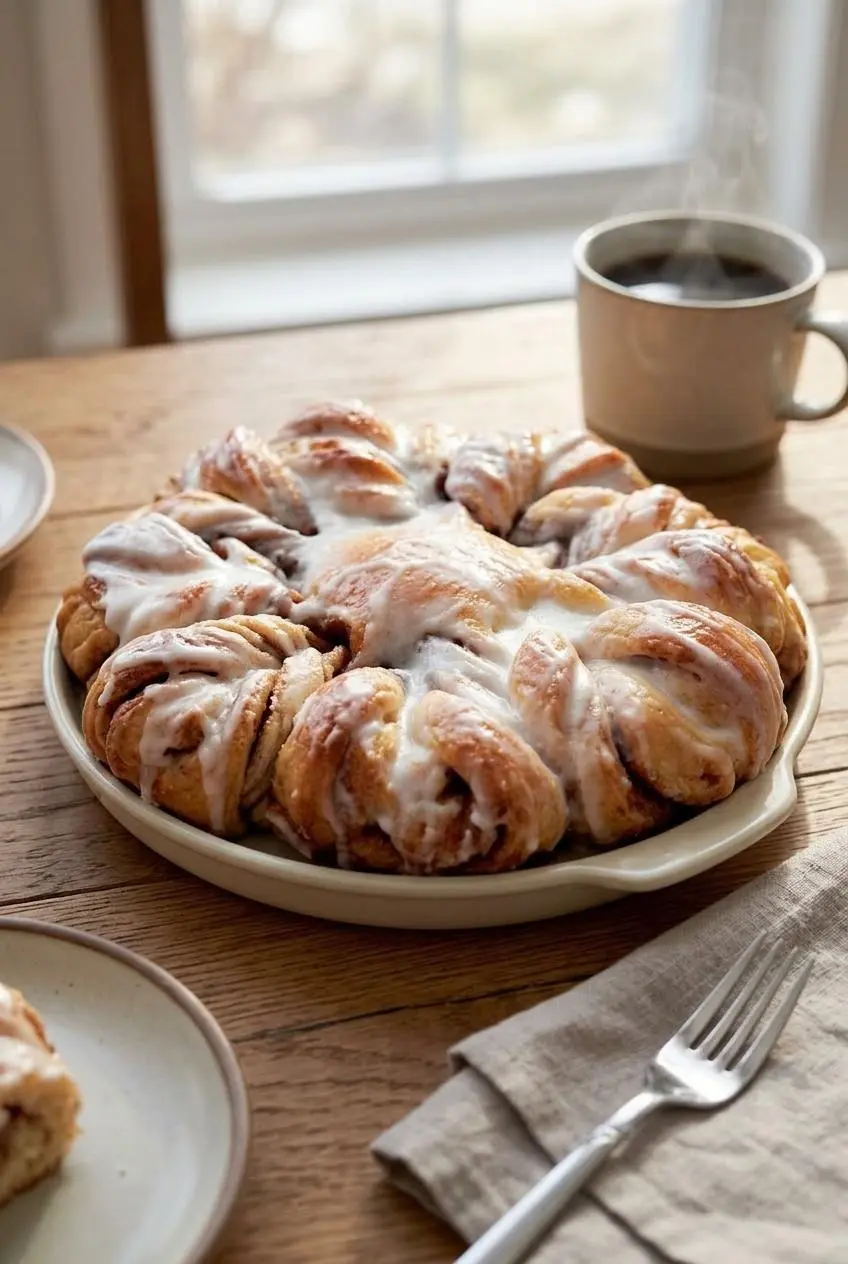
This method stays very manageable when you follow the order closely and watch the dough more than the clock. A sharp pizza cutter also helps keep the layers neat instead of dragging through them.
Dough and Assembly
- Combine the milk, melted butter, egg, granulated sugar, salt, active sourdough starter, and all-purpose flour until a shaggy dough forms, then knead it on a lightly floured surface for a couple of minutes until smooth and soft, adding a little extra flour only if it is excessively sticky.
The dough should come together into a supple ball that feels elastic and looks smoother on the outside. - Cover the dough and leave it in a warm spot to rise overnight until doubled in size, which took about 10 hours in a 76 °F kitchen.
It should look fuller, feel lighter, and show some airy softness when gently pressed. - Let the filling butter soften and stir the brown sugar with the cinnamon until evenly blended.
The filling should look evenly spiced with no dark cinnamon pockets or dry sugar clumps. - Divide the dough into 4 equal pieces and roll each one into an 8.5-inch circle, then place the first round on a silicone mat or parchment and spread it with 1/3 of the softened butter followed by 1/3 of the cinnamon sugar mixture.
Keep the butter thin and even so the layers stay defined without squeezing filling out the sides. - Stack the second and third rounds the same way, finish with the fourth round on top, set a shot glass in the center, and cut from the outer edge toward the glass into 4 equal sections, then into 16 total strips.
The center should stay intact under the glass, and the cuts should look clean rather than torn. - Take each pair of neighboring strips and twist them away from each other 2 or 3 times, then pinch the ends together firmly to make a point, repeating until you have 8 points.
The shaped star should look even and defined, with sealed tips that hold their shape instead of springing open.
Second Rise and Bake
- Transfer the shaped star to an 11-12 inch pan, dutch oven, or skillet, cover it with a lid or foil, and let it rise in a warm spot for 1-2 hours.
It is ready when it looks puffy, feels aerated, and jiggles slightly rather than feeling dense. - Heat the oven to 350 degrees F, whisk the egg with the water, brush the top of the star, and bake it for 40 minutes uncovered, then cover it with foil and bake 10 minutes more, placing a cookie sheet on the rack below to catch drips.
The top should turn deeply golden with a glossy egg-washed sheen and a rich cinnamon aroma as it finishes baking. - Beat the cream cheese, powdered sugar, vanilla extract, and milk until smooth, then drizzle or brush the icing over the warm bread.
The icing should loosen enough to flow over the ridges while still clinging to the warm surface.
Step-by-Step Shaping Guide
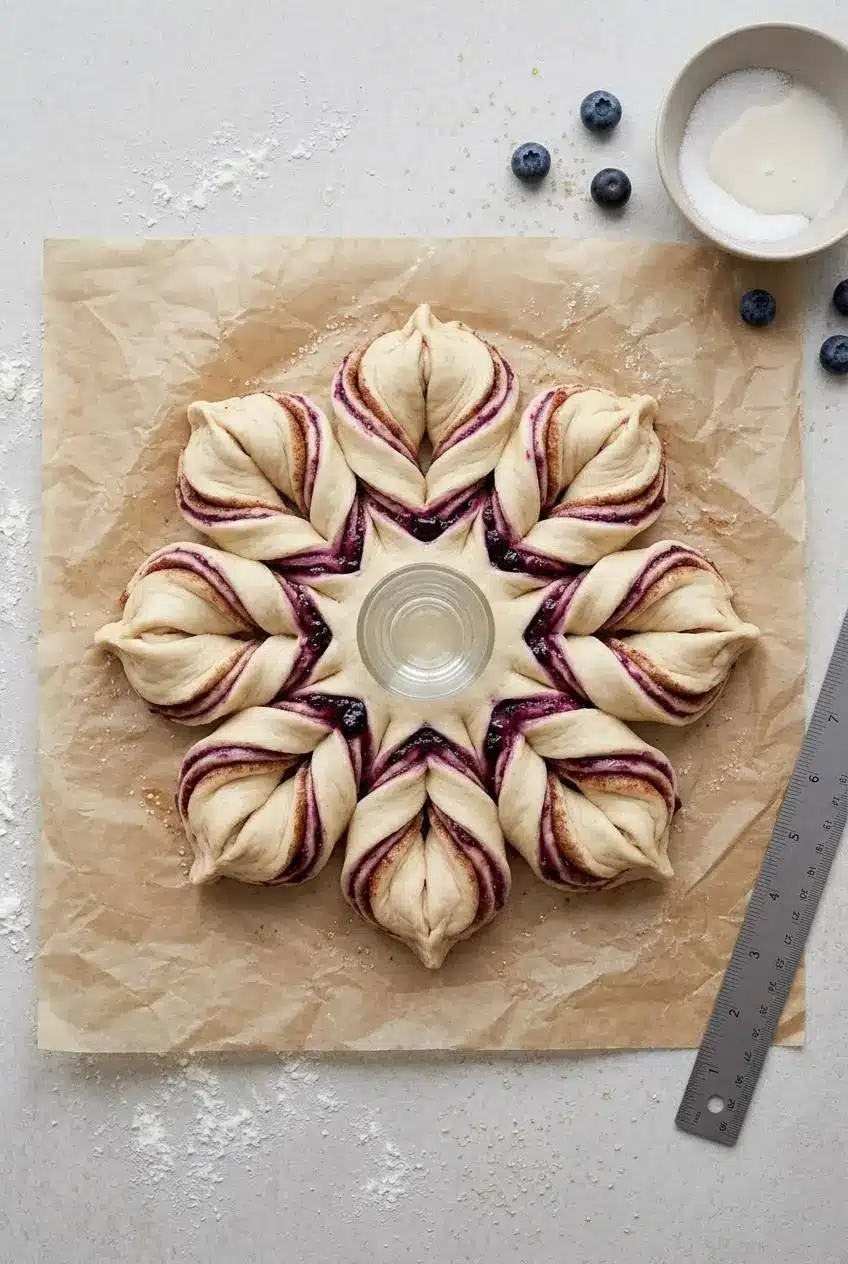
This is the part most people overthink, but the shaping becomes simple once you break it into small moves. The goal is a clear center, even strips, and tight seals at the tips.
- Start with four evenly rolled 8.5-inch circles so the layers line up. Uneven circles make the strips different widths, which throws off the final star.
- Stack three layers with filling and leave the fourth plain on top. That clean top layer makes cutting easier and keeps the pattern sharp.
- Set a shot glass in the middle before cutting. It protects the center so the star does not split apart during twisting.
- First cut the circle into quarters. Then cut each quarter in half to make eighths, and each eighth in half again to make 16 strips.
- Use a sharp pizza cutter rather than a dull knife. Clean cuts keep the strips from dragging, sticking, or ripping through the layers.
- Work with two adjacent strips at a time. Twist one strip outward to the left and the other outward to the right, then repeat for a second full turn.
- Pinch the ends together firmly after twisting. If the ends are loose, the points can separate in the oven and lose that star shape.
- If the dough starts feeling warm and slippery, pause briefly before finishing the last few points. Overworked warm dough is harder to shape neatly.
The outward twist matters. Twisting the strips toward each other tends to bunch the middle and can make the outer tips thicker and more likely to brown too quickly.
If you enjoy this kind of layered shaping, cinnamon sugar cruffins are another fun way to practice neat cuts and clean spirals.
Mastering the Enriched Dough Rise
Enriched dough rises more slowly than lean bread dough because butter, milk, egg, and sugar all weigh it down a bit. That slower pace is normal, so the best fix is usually warmth, not extra flour or extra kneading.
A kitchen around 76 to 80 °F helps this dough move along comfortably. In a chilly room, the dough may sit there looking stubborn for quite a while, which can make it seem like something went wrong when it really just needs a better proofing spot.
- If the dough seems sluggish during the first rise, move it to a draft-free warm spot like a turned-off oven with the light on.
- If the dough feels heavy before baking, give the second rise more time. You want it puffy and airy, not tight and springy.
- If the surface looks dry, keep it covered well. A dried top can limit expansion and make shaping seams split.
- If you used cold milk, cold egg, or a cool starter, expect the rise to stretch out. Cold ingredients can shock wild yeast and slow everything down.
The touch test is more useful than staring at the clock. Gently press the dough after proofing. It should feel cushioned and light, with some bounce still left in it.
For another sweet enriched dough with a similar fermentation rhythm, sourdough cinnamon rolls are a helpful comparison.
Sourdough Baking and Doneness Cues
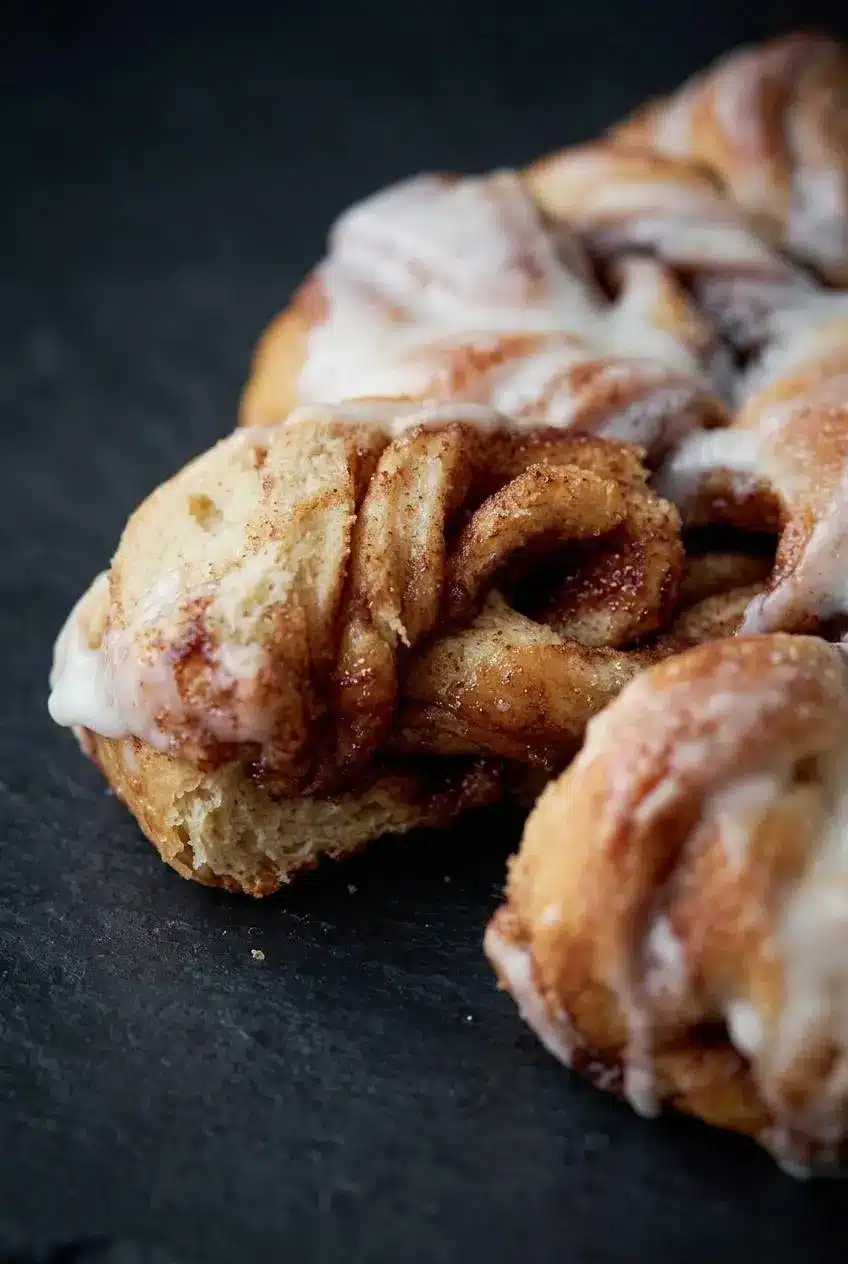
Once the star is shaped well, baking is mostly about protecting the sugary layers while giving the center enough time to finish. Pan material matters too, so cast iron or heavier stoneware can bake a little differently than a lighter pan.
Brush the egg wash over the whole surface, including the pinched tips. That coating helps the bread brown evenly and gives the finished star its golden sheen.
- Bake only after the oven is fully preheated. Starting in a cool oven can flatten the rise and melt the filling before the structure sets.
- Slide a cookie sheet onto the rack below the pan. If a little butter and sugar escape, the tray catches the drips before they smoke on the oven floor.
- Use foil for the final 10 minutes. This protects the top from getting too dark while the center finishes baking.
- Watch the color and aroma. The scent usually shifts from gently yeasty to richer and more caramelized as the filling heats through.
The bread should look deeply golden and feel set when lightly pressed. If you like checking with a thermometer, many bakers aim for the center of enriched breads to reach about 190 to 195 °F, which is a useful kitchen target rather than a strict safety claim.
Make-Ahead Baking Timelines
This bread fits holiday mornings well because you can split the work into stages. Since the recipe itself already uses a long first rise, planning ahead is mostly about choosing whether you want to shape and bake the same day or pause the dough in the refrigerator.
For the smoothest texture, cool the finished bread before covering leftovers, and refrigerate anything with cream cheese icing. Because dairy-based icing is perishable, keeping milk, cream cheese, and iced leftovers chilled follows U.S. refrigeration guidance for perishable dairy foods.
The Overnight Fridge Rise
If you want fresh-baked star bread in the morning, you can let the dough rise, shape the star, and then refrigerate it covered instead of leaving it at room temperature. Cold dough is often easier to handle, and the chilled rest slows fermentation so the shape holds well.
The next day, let the shaped bread lose some of its chill and become puffy before baking. You are looking for the same light, aerated feel as a room-temperature second rise, just from a colder starting point.
This approach is very similar in spirit to overnight cinnamon rolls, where the refrigerator helps spread out the work without sacrificing a warm breakfast bake.
Storage and Reheating Guidelines
If the bread is unglazed, keep it well wrapped or in an airtight container so the crumb stays soft. If it is already iced with cream cheese glaze, chill it rather than leaving it out.
To reheat, cover individual portions or the loaf loosely with foil and warm it in the oven until soft and fragrant again. The foil helps trap moisture so the pull-apart layers stay tender instead of drying at the edges.
Avoid reheating the entire loaf in the microwave. It can make the center gummy and the outer points tough in a hurry.
Creative Filling Variations
The cinnamon version is the classic, but the same shape can carry a few other fillings nicely as long as you keep them restrained. Too much filling, whatever the flavor, is the fastest route to leaks and messy points.
Sourdough Discard Quick-Rise Method
Yes, you can make a discard version, but it needs extra lift because unfed discard does not have enough strength to raise a rich dough on its own. Adding 1 teaspoon of instant yeast or baking powder helps the dough rise more reliably.
Use this as an optional shortcut rather than a direct swap for the classic method. The texture will be a bit different, and the flavor will lean more toward a quick enriched bread than a slow-fermented sourdough bake.
If you enjoy sweet sourdough projects beyond this star, sourdough coffee cake is another cozy brunch option.
Delicious Savory Star Bread Ideas
A savory version works especially well for a brunch spread or holiday appetizer. Swap the cinnamon filling for a thin layer of garlic butter, chopped fresh herbs, and shredded parmesan cheese, using the same dough and the same shaping method.
- Garlic and herb keeps the bread aromatic and soft while making it feel more dinner-friendly.
- Parmesan adds a salty edge, so avoid piling it on too heavily or the points can separate.
- A pinch of citrus zest or a little clove can also shift the sweet filling in a warmer holiday direction without changing the dough itself.
- Chocolate hazelnut filling is another optional route, but spread it thinly so the layers still twist cleanly.
Cream Cheese Icing vs. Powdered Sugar Dusting
The cream cheese icing gives you a richer finish and a soft tang that balances the sweet filling. It also settles into the grooves of the warm bread, which makes every pull-apart section feel a little more dessert-like.
Powdered sugar dusting is lighter and keeps the star looking crisp and snowy. If you want something between the two, a light orange zest glaze adds brightness without overpowering the cinnamon.
Conclusion
This star bread earns its wow factor with very ordinary moves done carefully: a warm rise, even rolling, clean cuts, and firm pinched tips. Once you know the shaping logic, the whole bake feels much less intimidating.
Keep the dough warm, don’t overfill the layers, and tent with foil when the top has enough color. That is usually all it takes to get a soft, beautifully defined holiday star.
Frequently Asked Questions
Can I use sourdough discard instead of active starter?
Yes, but it works best as an adaptation rather than a straight swap. Active starter is what gives the traditional version its slow rise and airy crumb. If you use discard, add 1 teaspoon of instant yeast or baking powder to help lift the enriched dough. Expect a slightly different flavor and a less classic sourdough fermentation profile.
Why is my star bread dough not rising?
Enriched dough is naturally slower because butter, milk, egg, and sugar all weigh it down. Keep it in a warm, draft-free spot such as a turned-off oven with the light on. Make sure your starter was active before mixing the dough. Wait for the dough to feel light and puffy rather than relying only on the clock.
How do I stop the cinnamon filling from leaking out?
The main fix is using a thin, even layer of filling. Do not overfill the layers with butter or sugar. Use softened butter rather than melted butter so it stays in place better. Cut the strips cleanly and pinch the tips firmly so the filling stays tucked inside as the bread bakes.
How do I keep my baked sourdough star bread soft?
Protecting moisture is the key after baking. Keep leftovers covered or in an airtight container once the bread has cooled. If the bread has cream cheese icing, refrigerate it rather than leaving it on the counter. Reheat portions wrapped loosely in foil so the crumb warms through without drying out.
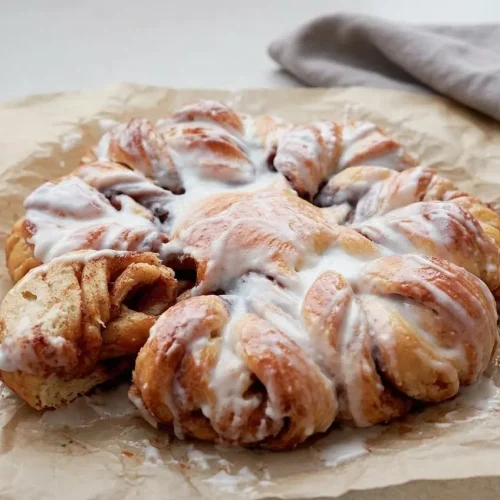
Sourdough Cinnamon Star

Equipment
- Silicone Baking Mat
- Bread Oven
- Rolling Pin
- Stand mixer
- Shot Glass
Ingredients
Sourdough Star Dough
- 300 grams milk warm (1 1/4 cup)
- 55 grams butter melted (1/4 cup)
- 1 large egg (50 grams)
- 50 grams granulated sugar (1/4 cup)
- 6 grams salt (1 teaspoon)
- 100 grams active sourdough starter (scant 1/2 cup)
- 600 grams all-purpose flour (4 1/4 cups)
Cinnamon Filling
- 84 grams butter softened (6 Tablespoons)
- 220 grams brown sugar (1 cup)
- 12 grams cinnamon (1 1/2 Tablespoons)
Cream Cheese Icing
- 30 grams cream cheese (2 Tablespoons)
- 60 grams powdered sugar (1/2 cup)
- 2 grams vanilla extract (1/2 teaspoon)
- 30 grams milk (2 Tablespoons)
Egg Wash
- 1 large egg (50 grams)
- 5 grams water (1 teaspoon)
Instructions
Dough and Assembly
- Combine the milk, melted butter, egg, granulated sugar, salt, active sourdough starter, and all-purpose flour until a shaggy dough forms, then knead it on a lightly floured surface for a couple of minutes until smooth and soft, adding a little extra flour only if it is excessively sticky. The dough should come together into a supple ball that feels elastic and looks smoother on the outside.
- Cover the dough and leave it in a warm spot to rise overnight until doubled in size, which took about 10 hours in a 76 °F kitchen. It should look fuller, feel lighter, and show some airy softness when gently pressed.
- Let the filling butter soften and stir the brown sugar with the cinnamon until evenly blended. The filling should look evenly spiced with no dark cinnamon pockets or dry sugar clumps.
- Divide the dough into 4 equal pieces and roll each one into an 8.5-inch circle, then place the first round on a silicone mat or parchment and spread it with 1/3 of the softened butter followed by 1/3 of the cinnamon sugar mixture. Keep the butter thin and even so the layers stay defined without squeezing filling out the sides.
- Stack the second and third rounds the same way, finish with the fourth round on top, set a shot glass in the center, and cut from the outer edge toward the glass into 4 equal sections, then into 16 total strips. The center should stay intact under the glass, and the cuts should look clean rather than torn.
- Take each pair of neighboring strips and twist them away from each other 2 or 3 times, then pinch the ends together firmly to make a point, repeating until you have 8 points. The shaped star should look even and defined, with sealed tips that hold their shape instead of springing open.
Second Rise and Bake
- Transfer the shaped star to an 11-12 inch pan, dutch oven, or skillet, cover it with a lid or foil, and let it rise in a warm spot for 1-2 hours. It is ready when it looks puffy, feels aerated, and jiggles slightly rather than feeling dense.
- Heat the oven to 350 degrees F, whisk the egg with the water, brush the top of the star, and bake it for 40 minutes uncovered, then cover it with foil and bake 10 minutes more, placing a cookie sheet on the rack below to catch drips. The top should turn deeply golden with a glossy egg-washed sheen and a rich cinnamon aroma as it finishes baking.
- Beat the cream cheese, powdered sugar, vanilla extract, and milk until smooth, then drizzle or brush the icing over the warm bread. The icing should loosen enough to flow over the ridges while still clinging to the warm surface.