Sausage Rolls are flaky puff pastry wrapped around a juicy pork filling with bacon, fennel, and panko, then baked until deeply golden. This version shows you how to keep the filling moist, the pastry crisp, and the shaping neat.
These Sausage Rolls are the kind of savory bake that feels a little special but still works for a regular kitchen. The filling is made from ground pork rather than pre-seasoned sausage, so you get better flavor, better texture, and much more control.
You get crisp pastry, a well-seasoned center, and plenty of practical help for the spots that usually go wrong. The chilling step is what makes them look sharp.
Keep the pastry cold while you work, and the layers bake up much flakier.
Why This Recipe Is the Best
The big difference here is the filling. Using ground pork, bacon, toasted fennel, and sautéed aromatics gives you a savory center that tastes fresher and more balanced than most pre-seasoned sausage meat.
You also get better texture control. The meat mixture should be tacky and hold its shape, not crumbly or overly wet, which helps it bake up juicy without turning dense. Wrap that in cold puff pastry, brush it with egg wash, and bake until the outside is a deep, confident golden brown. That contrast between flaky shell and rich interior is the whole point.
Ingredients for the Best Sausage Rolls
Each ingredient pulls its weight here, building savory depth, moisture, structure, aroma, and that glossy golden finish that makes sausage rolls so good.
Filling
- 1/2 tbsp olive oil
- 2 cloves garlic, minced
- 1 brown onion, small, finely chopped
- 1 celery stalk, finely chopped
- 5 oz / 150g bacon, finely minced (streaky and fatty, not the lean stuff!)
- 2 tsp fennel seeds, toasted
- 1 lb / 500g pork mince (ground pork) (not lean)
- 3/4 cup / 40g panko breadcrumbs
- 1 egg
- 1/2 tsp salt
- Black pepper
Baking & Serving
- 2 1/2 sheets puff pastry, thawed then each cut into half
- 1 egg, lightly whisked
- Ketchup / tomato sauce
Ground pork that is not lean gives the filling the right richness, while fatty bacon adds savory depth and keeps the center moist. Panko breadcrumbs help bind the mixture without making it heavy, and the egg gives it a softer, cohesive texture.
Fennel seeds are a classic choice with pork. They bring a subtle sweetness and a warm sausage-shop aroma that makes the filling taste fuller. The sautéed onion, celery, and garlic matter too. Cooking them briefly softens their bite and adds sweetness without making the mixture watery.
For the pastry, all-butter puff pastry gives the best flavor and the cleanest flaky layers, but standard store-bought puff pastry still works well. The real rule is temperature. It should be thawed enough to unfold, but still cold.
I always choose fatty bacon and pork mince here, because that little bit of extra richness is what keeps the filling juicy instead of chalky.
Ground Pork vs. Store-Bought Sausage
If you are deciding between making the filling from scratch or taking the shortcut, this quick comparison helps.
| Option | Flavor | Texture | Cost | Effort |
|---|---|---|---|---|
| Ground pork | Cleaner pork flavor with room to control salt, fennel, pepper, and aromatics | More tender and juicy when mixed gently with bacon, egg, and panko | Usually better value | A bit more prep |
| Store-bought sausage meat | Convenient but can taste overly salty or one-note depending on the brand | Can be firmer or denser | Often slightly higher for what you get | Fastest option |
Store-bought sausage meat is handy, especially for parties, but the homemade filling gives you more control over seasoning, moisture, and overall texture. If you want the best result, ground pork wins.
How to Make Sausage Rolls
Yes, raw sausage-style filling goes straight into the puff pastry. It cooks through in the oven as the pastry puffs and browns.
- Heat the olive oil in a non-stick fry pan over medium-high heat, then cook the garlic, onion, and celery for 2 minutes.
The vegetables should soften slightly and smell sweet and savory, not browned. - Add the bacon and cook for 2 minutes more, then transfer everything to a bowl and let it cool for 10 minutes.
The bacon should lose its raw look but stay pale rather than crisp or golden. - Add the fennel seeds, pork mince, panko breadcrumbs, egg, salt, and black pepper to the cooled mixture, then mix with your hands until evenly combined.
Stop as soon as the filling feels tacky and holds together well, because overworking it can make it dense. - Lay one pastry rectangle with a long side facing you and brush egg along one long edge.
The pastry should feel cold and flexible, not warm or sticky. - Shape 1/5 of the filling into a firm log down the middle of the pastry.
Keep it compact and even so the finished rolls bake neatly without gaps inside. - Roll the pastry over the filling and finish with the seam underneath, using the egg-washed edge to seal it closed.
A snug roll helps the pastry stay wrapped instead of splitting as it bakes. - Repeat with the remaining pastry and filling, then chill the logs for 1 hour if you can.
Cold logs slice much more cleanly and hold their shape better in the oven.
To Cook
- Preheat the oven to 350 °F / 180 °C.
Starting in a properly heated oven helps the puff pastry rise before too much fat leaks out. - Cut each log into four equal pieces, or into two pieces for larger rolls, then brush the tops with the whisked egg.
Use a sharp knife so you slice cleanly rather than pressing the pastry flat. - Arrange the rolls on 2 baking trays lined with baking paper or lightly oiled, then bake for 30 to 35 minutes, switching the tray positions after 20 minutes.
They are ready when the pastry is a deep golden brown all over, not pale at the seams or base. - Let the rolls cool slightly on the trays, then serve hot or warm with ketchup or tomato sauce.
If you want extra reassurance, the pork filling should reach 160°F / 71°C for ground pork and sausage.
The key stages are simple: build flavor in the pan, mix the filling gently, shape tight logs, and chill before cutting. That last step is easy to skip, but it is what gives you cleaner edges and more polished rolls.
Tips for Perfect, No-Fail Sausage Rolls

This is where the little details matter. A few smart choices make the difference between bakery-style sausage rolls and ones with split pastry or a damp bottom.
How to Get a Juicy, Flavorful Filling
Start with pork mince that is not lean. Lean pork tends to bake up firmer and drier, especially inside pastry where you want the filling to stay soft and succulent. The fatty bacon helps even more, adding moisture and a deeper savory note without changing the basic character of the roll.
Sautéing the onion, celery, and garlic first is worth the few minutes it takes. Raw vegetables can taste harsh, and if they release too much moisture later, they can throw off the filling. A quick cook softens them, makes them sweeter, and helps the mixture stay balanced.
Mix with a light hand. You want everything combined, but you do not want to knead it like bread dough. Once the filling feels cohesive and slightly sticky, stop.
If you like a subtle sweet edge against the richness, a little finely grated Granny Smith apple can work nicely as an optional add-in. Keep it modest so the filling still feels savory.
The Secret to a Crispy, Flaky Pastry
The biggest cause of a soggy bottom is too much moisture. Finely chopped celery and onion are helpful here because they soften quickly and do not dump as much water into the filling as grated vegetables can.
Keep the filling fairly firm, not loose. If the mixture feels wet or sloppy, the pastry underneath has a much harder job. Seal the seam well, place the seam side down, and bake on a hot tray in a fully heated oven so the bottom starts crisping right away.
Do not overfill the pastry. It is tempting, but that is one of the fastest ways to get burst seams and underbaked centers. For even more crispness, move the baked rolls onto a wire rack for the final stretch of baking so hot air can circulate under them.
Troubleshooting Common Sausage Roll Problems
| Problem | Likely Cause | How to Fix It |
|---|---|---|
| Soggy bottoms | Filling too wet, tray not hot enough, or pastry warmed up too much before baking | Use finely chopped vegetables, keep the filling firm, chill the logs, and bake on a preheated tray |
| Dry filling | Lean pork, not enough fat, or overmixed meat | Use pork mince that is not lean, keep the fatty bacon, and mix only until combined |
| Burst seams | Too much filling or weak sealing | Use a compact log, avoid overfilling, brush the edge with egg, and keep the seam underneath |
| Misshapen rolls | Cutting warm pastry or using a dull knife | Chill the logs before slicing and cut with a sharp knife in one clean motion |
| Pale pastry | Not enough bake time or weak egg wash coverage | Brush the tops evenly and bake until the pastry is deeply golden, especially at the edges and base |
Variations on the Classic
The pork and fennel version is the classic for good reason, but it adapts well if you want a different flavor or a faster prep path.
Scottish-Style Beef Sausage Rolls
For a Scottish-style twist, swap the ground pork for ground beef and season the filling with coriander and nutmeg instead of fennel. The result is a little heartier and more robust, with a deeper beefy flavor.
Because beef can feel firmer than pork, keep an eye on the texture of the mixture. You still want it cohesive and moist, not tight. If you want another lighter meat option for the same style of handheld bake, homemade turkey sausage can also work as an optional variation outside the main recipe.
Quick Version: Using Store-Bought Sausage
If convenience matters most, use about 1 lb of good-quality store-bought sausage meat with the casings removed. This saves prep time and still gives you a very solid batch of rolls for a party platter or game-day snack.
Taste and adjust the seasoning carefully only if appropriate for the sausage you bought, since many are already well salted and spiced. Expect a slightly denser filling and a more fixed flavor profile than the homemade pork version.
Storing, Freezing, and Reheating
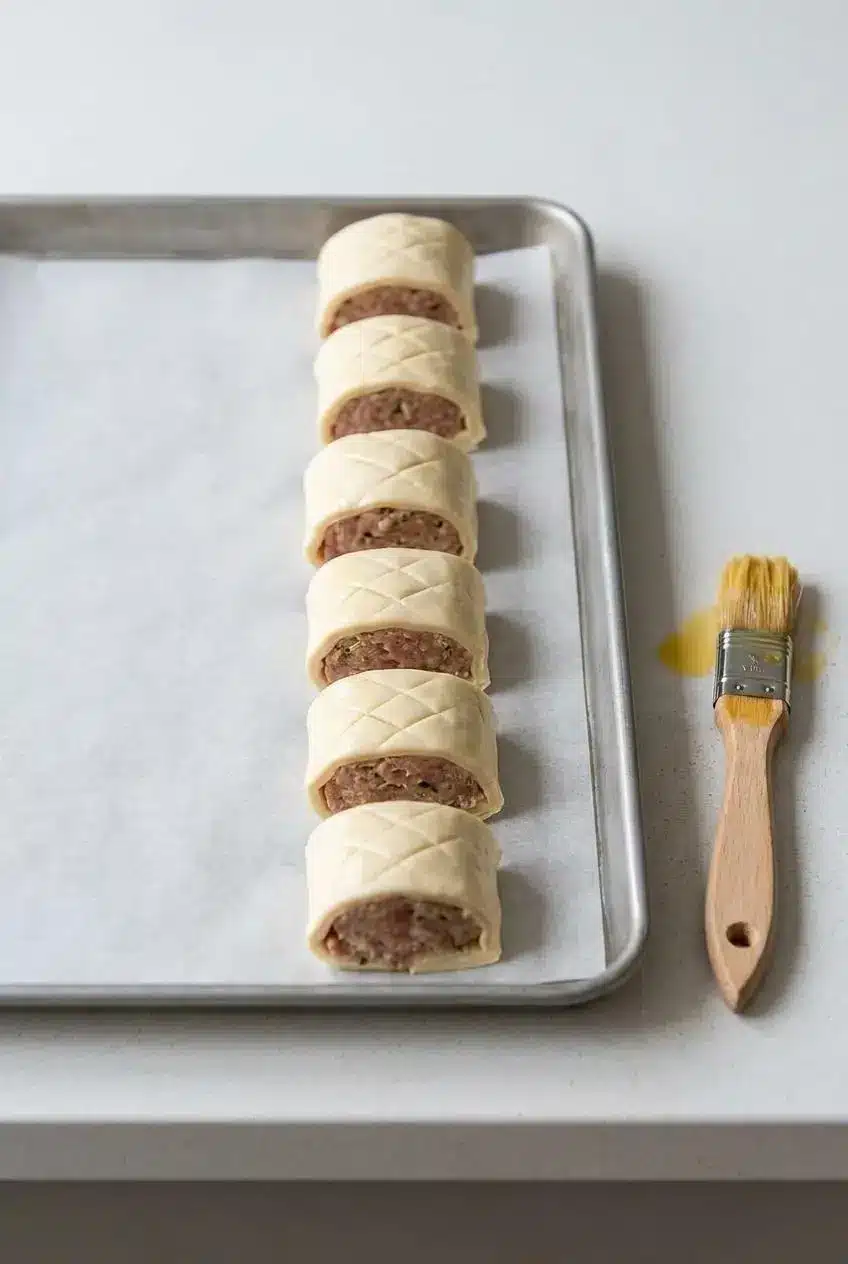
These are excellent for making ahead, especially if you want to bake them fresh for guests. The neatest option is to assemble the rolls, cut them, and keep them chilled until you are ready to bake.
You can also freeze them either before or after baking. Freezing unbaked rolls usually gives the best texture because the pastry bakes up fresher and crisper straight from cold. Bake-from-frozen rolls simply need more time in the oven than freshly assembled ones.
If you are storing already baked rolls, let them cool first so steam does not soften the pastry in the container. Reheat them in the oven rather than the microwave if you want the outside to crisp back up. For longer holding, freeze them well wrapped and bake or reheat until the pastry is hot and crisp and the center is piping hot.
For make-ahead planning, you can assemble them and refrigerate for up to 24 hours before baking, or freeze them unbaked for up to 3 months. If baking from frozen, add extra oven time and wait for deep golden pastry and a fully cooked center before serving.
Serving Suggestions and Dipping Sauces
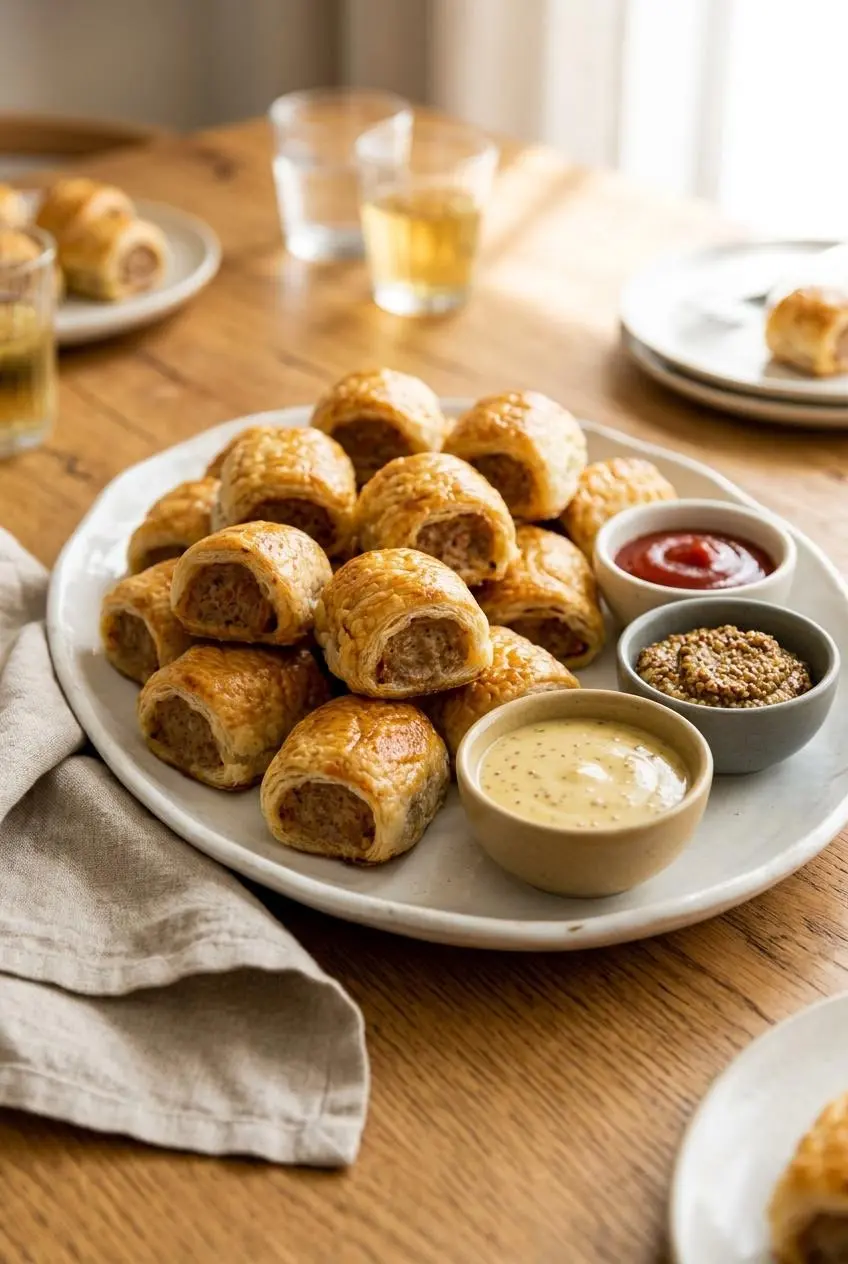
Sausage rolls are happiest on a platter with something tangy on the side. Ketchup is classic, but it is far from the only good option.
- Whole-grain mustard for bite and texture
- Honey mustard for a sweet sharp contrast
- HP sauce or brown sauce for a classic savory pairing
- Spicy aioli for a richer, punchier dip
- Tomato chutney if you want something sweeter and more jammy
They work well as a warm appetizer, part of a game-day spread, or a lunchbox treat once cooled. If you are building a full party table, serve them alongside Cream Cheese Sausage Balls for another savory classic.
For a more substantial meal, pair them with mashed potatoes and peas. If you are leaning into handheld party food, Philly Cheesesteak Egg Rolls also fit nicely on the same kind of spread.
Conclusion
Homemade sausage rolls are absolutely worth the bit of prep. You get flaky pastry, a juicier filling, and a much better balance of flavor than most shortcut versions can manage.
If you remember one thing, chill the logs before cutting and bake until the pastry is deeply golden. That one habit makes the whole batch look and taste better.
Frequently Asked Questions
Can I make sausage rolls ahead of time?
Yes. They are a great make-ahead option for parties or holiday trays. You can assemble them and refrigerate for up to 24 hours before baking. You can also freeze them unbaked for up to 3 months, which usually gives the best texture once baked.
How do you stop sausage rolls from having a soggy bottom?
Keep the filling from getting too wet and avoid watery vegetables. Finely chopped vegetables work better than grated ones here. Bake on a hot tray in a fully heated oven, and keep the pastry cold before it goes in. If you want extra crispness, finish the last part of baking on a wire rack.
What’s the best puff pastry to use for sausage rolls?
All-butter puff pastry gives the richest flavor and the flakiest result. It is the best choice if you can get it. Standard store-bought puff pastry still works well. The important part is using it when it is thawed enough to handle but still cold.
Can I use an air fryer to cook sausage rolls?
Yes, you can. Air frying works especially well for smaller sausage rolls. Cook them at around 350 to 375 °F until the pastry is golden and the filling is cooked through. As with oven baking, check that the center is fully done before serving.

Sausage Rolls

Equipment
- Baking trays
- Parchment Paper
- Non-stick fry pan
Ingredients
Filling
- 1/2 tbsp olive oil
- 2 cloves garlic, minced
- 1 brown onion, small, finely chopped
- 1 stalk celery, finely chopped
- 5 oz / 150g bacon, finely minced streaky and fatty, not the lean stuff!
- 2 tsp fennel seeds, toasted
- 1 lb / 500g pork mince (ground pork) (not lean)
- 3/4 cup / 40g panko breadcrumbs
- 1 egg
- 1/2 tsp salt
- Black pepper
Baking & Serving
- 2 1/2 sheets puff pastry, thawed then each cut into half
- 1 egg, lightly whisked
- Ketchup / tomato sauce
Instructions
- Heat the olive oil in a non-stick fry pan over medium-high heat, then cook the garlic, onion, and celery for 2 minutes. The vegetables should soften slightly and smell sweet and savory, not browned.
- Add the bacon and cook for 2 minutes more, then transfer everything to a bowl and let it cool for 10 minutes. The bacon should lose its raw look but stay pale rather than crisp or golden.
- Add the fennel seeds, pork mince, panko breadcrumbs, egg, salt, and black pepper to the cooled mixture, then mix with your hands until evenly combined. Stop as soon as the filling feels tacky and holds together well, because overworking it can make it dense.
- Lay one pastry rectangle with a long side facing you and brush egg along one long edge. The pastry should feel cold and flexible, not warm or sticky.
- Shape 1/5 of the filling into a firm log down the middle of the pastry. Keep it compact and even so the finished rolls bake neatly without gaps inside.
- Roll the pastry over the filling and finish with the seam underneath, using the egg-washed edge to seal it closed. A snug roll helps the pastry stay wrapped instead of splitting as it bakes.
- Repeat with the remaining pastry and filling, then chill the logs for 1 hour if you can. Cold logs slice much more cleanly and hold their shape better in the oven.
To Cook
- Preheat the oven to 350 °F / 180 °C. Starting in a properly heated oven helps the puff pastry rise before too much fat leaks out.
- Cut each log into four equal pieces, or into two pieces for larger rolls, then brush the tops with the whisked egg. Use a sharp knife so you slice cleanly rather than pressing the pastry flat.
- Arrange the rolls on 2 baking trays lined with baking paper or lightly oiled, then bake for 30 to 35 minutes, switching the tray positions after 20 minutes. They are ready when the pastry is a deep golden brown all over, not pale at the seams or base.
- Let the rolls cool slightly on the trays, then serve hot or warm with ketchup or tomato sauce. If you want extra reassurance, the pork filling should reach 160°F / 71°C for ground pork and sausage.