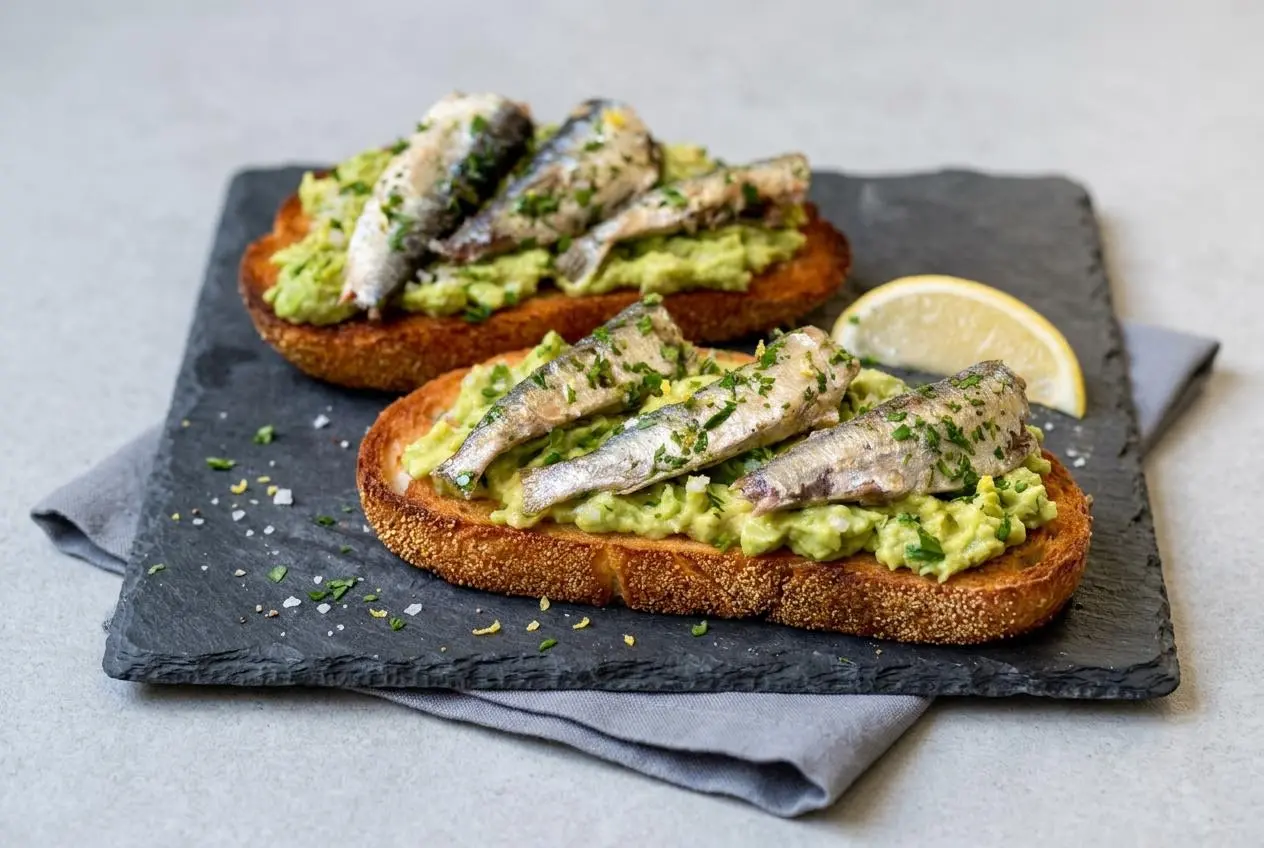
Sardine toast is a quick, flavorful meal made with crisp garlic-rubbed bread, smashed avocado, and canned sardines marinated with sherry vinegar, lemon zest, and parsley.
Sardine Toast hits that sweet spot between pantry dinner and something you’d gladly order at a cafe. You get warm, crackly toast underneath, cool creamy avocado in the middle, and briny fish on top with just enough acid to keep every bite lively.
It feels rich without tasting heavy, and it comes together with smart little moves instead of extra cooking. The garlic rub is the part that changes everything.
Keep the toast and toppings separate until the last minute so the crust stays crisp and audible when you bite in.
Why Sardine Toast Is the Ultimate Pantry Meal
This works because canned sardines already bring deep savory flavor, so you can build a satisfying meal without turning on the stove for a full production. A couple of tins, good bread, and a ripe avocado go a long way.
It also fits the way many people cook now: faster lunches, lighter dinners, and better use of shelf-stable ingredients that still taste special. If you like the idea of keeping seafood on hand for quick meals, crispy tuna patties make another smart option.
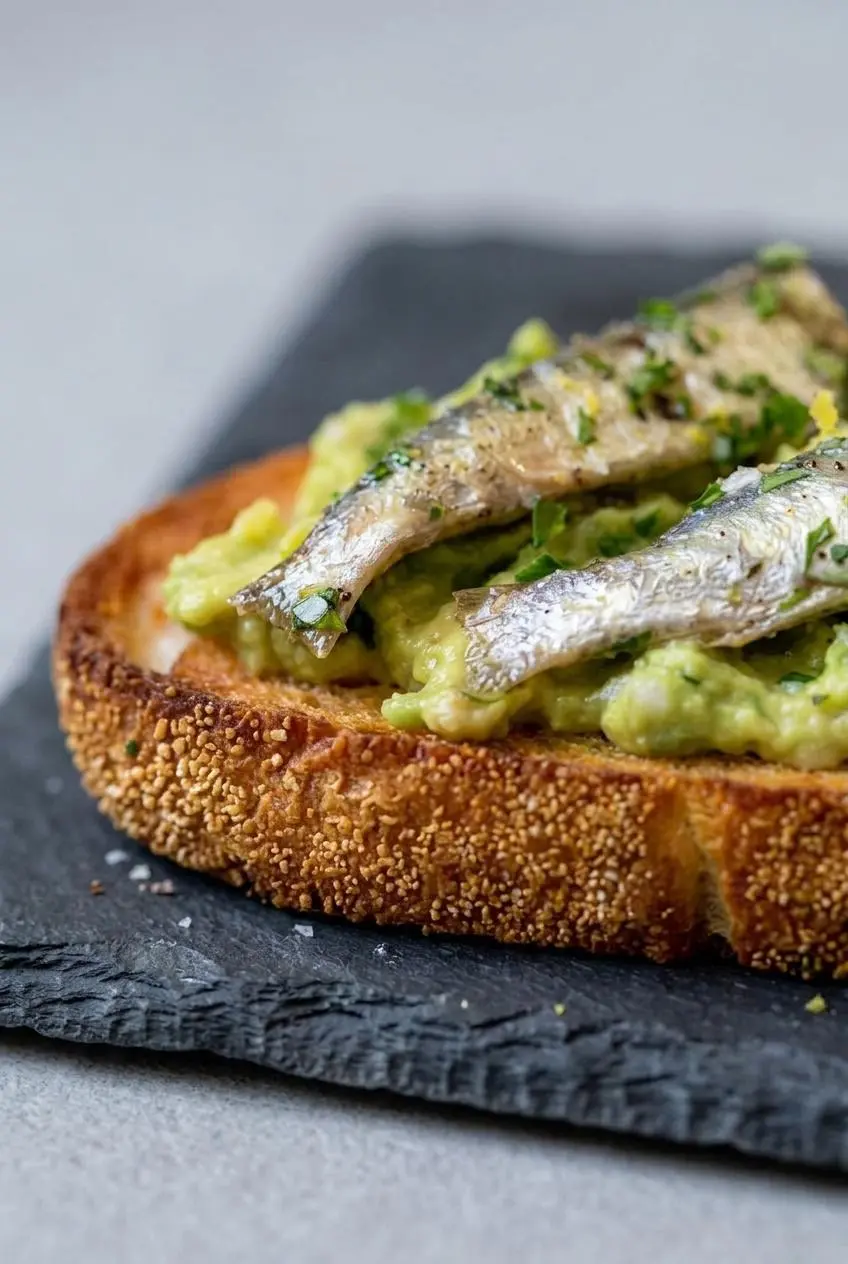
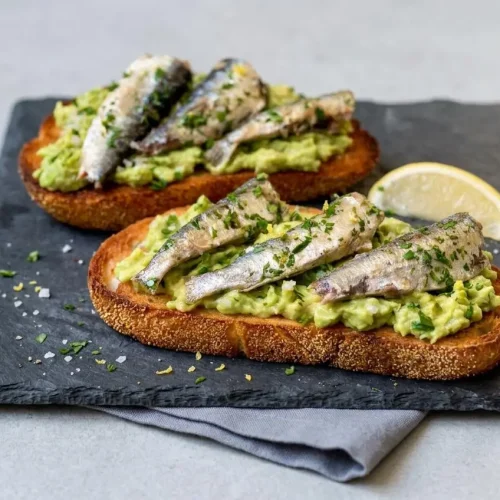
When sardine toast is assembled well, the contrast is the whole point. The crust should crack a little when you cut it, the avocado should spread in soft chunky swirls, and the marinated sardines should flake gently instead of sitting in a heavy oily layer. That bright hit of vinegar and lemon keeps the richness awake.
Essential Ingredients for Sardine Toast
Each ingredient pulls real weight here, from structure and crunch to richness, acidity, and fresh herbal lift.
- 2 (3.75-ounce) tins 2-layer brisling sardines in olive oil
- 2 tablespoons finely chopped parsley, divided
- 1 tablespoon sherry vinegar
- 1/4 teaspoon lemon zest, reserve the lemon and cut into 4 wedges
- 4 (1/2-inch-thick) slices crusty bread, such as sourdough, country loaf, or rye
- 1 ripe Hass avocado
- coarse sea salt, to taste
- freshly ground black pepper, to taste
The sardines bring salt, umami, and richness, while parsley keeps the topping from tasting flat. Sherry vinegar and lemon zest matter more than they look on paper because they cut through the natural oiliness of the fish and sharpen the whole toast.
That ripe Hass avocado is more than a trendy base. It acts like a creamy cushion between the bread and the fish, which helps with both texture and balance. Bread matters just as much. Thick, crusty slices are necessary here because they can hold the weight of the toppings without bending or turning damp right away.
I like to use the roughest side of the toast for the avocado because the nooks catch the mash and keep it from sliding.
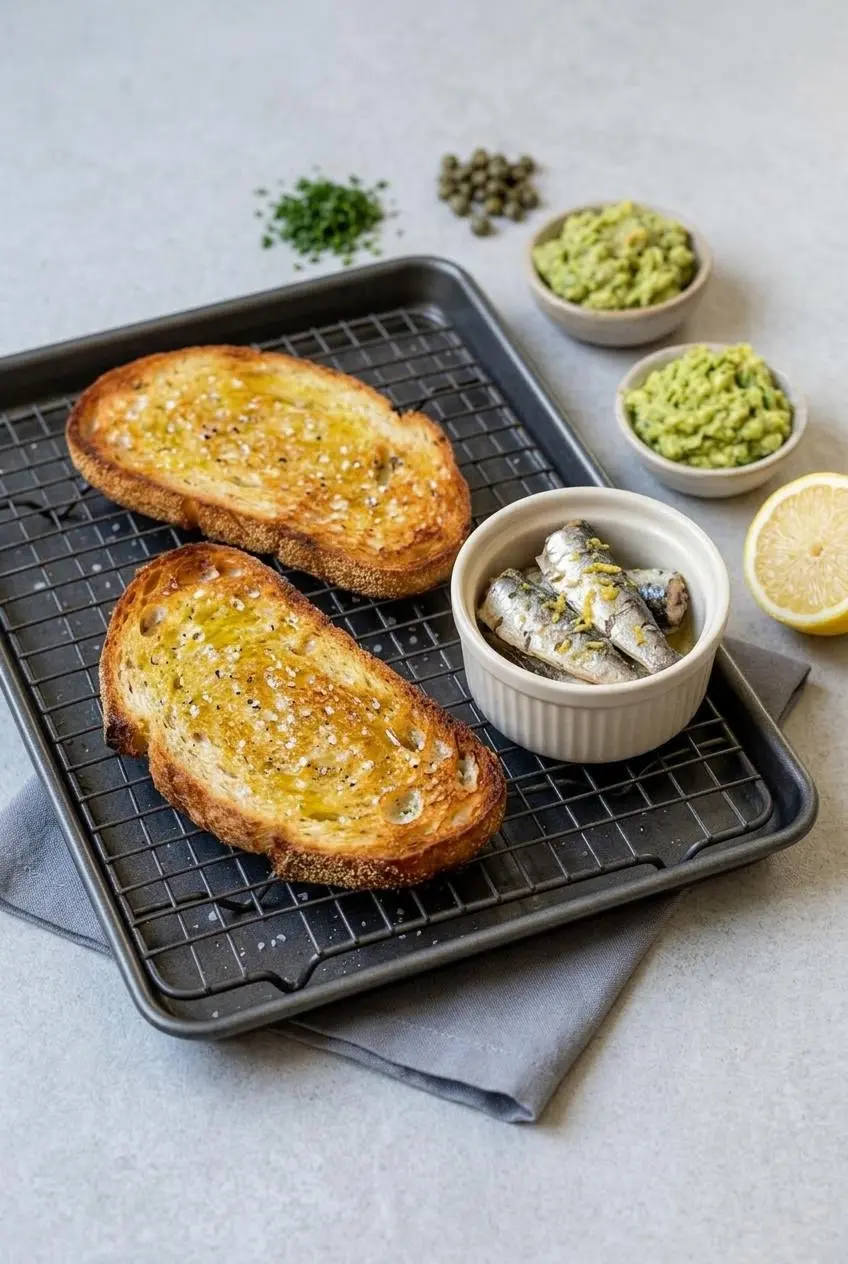
One more smart move: rub a cut raw garlic clove over the hot toast right after broiling. The rough crust grates the garlic slightly, the surface turns glossy in spots, and the aroma settles into the bread fast.
Choosing the Best Canned Sardines
If you are new to canned sardines, start with brisling sardines packed in olive oil. Brislings, also called sprats, are smaller than pilchards, so they taste milder and feel more delicate on toast. They are especially nice for beginners because the flesh breaks into tender flakes instead of large dense chunks.
Larger pilchard-style sardines can still work, but they eat a little meatier and stronger. That can be great if you already love tinned fish, though they may need a firmer hand with acid and fresh herbs to stay balanced on the toast.
Oil-packed fish is the best choice for this recipe. The oil protects texture, carries flavor, and gives you something valuable to brush on the bread before broiling. Water-packed sardines can taste drier and won’t give you that same savory boost. If you prefer boneless, skinless sardines, they are easy to use, but whole sardines usually deliver better flavor and a softer, less chalky texture.
Selecting the Right Bread
Use a loaf with a sturdy crust and enough body to support moist toppings. Sourdough, country loaf, and rye all work because they stay crisp at the edges while keeping a little chew in the center.
Soft pre-sliced sandwich bread is the wrong tool for this job. It absorbs the sardine dressing and avocado too quickly, so the slice bends, compresses, and loses that clean crunch. A 1/2-inch-thick slice of rustic bread gives you a stronger base and a better bite from top to bottom.
Open crumb helps too. Those little pockets catch avocado and dressing instead of letting everything slide off the surface.
Step-by-Step Sardine Toast Assembly Guide
- Pour the oil from one tin of sardines into a small bowl and save it for the bread, then drain the second tin into another bowl and whisk in 1 tablespoon of parsley, the sherry vinegar, lemon zest, and black pepper before folding in the sardines and letting them marinate for up to 1 hour.
The fish should look lightly glossy and begin to flake a bit at the edges as it sits in the bright dressing. - After 45 minutes, set an oven rack 3 inches from the broiler and heat the broiler to high, then brush one side of each bread slice with the reserved sardine oil and place them oil-side up on a cooling rack set inside a half sheet pan.
Broil for 2 to 3 minutes until the tops turn golden brown and crisp, watching closely because the bread can go from perfect to too dark fast. - Split the avocado, remove the pit, and mash the flesh in each half with a fork.
A slightly chunky smash is ideal because it spreads easily but still has enough texture to stay in place on the toast. - Spread the avocado over the toasted bread, add the marinated sardines evenly, spoon over any dressing left in the bowl, and finish with the remaining parsley, a light sprinkle of coarse sea salt, and lemon wedges on the side.
The finished toast should look layered rather than weighed down, with creamy avocado underneath and sardines sitting in loose tender flakes on top.
The order matters. Toast first, then avocado, then fish. That creamy layer protects the bread, while the dressed sardines stay on top where their flavor stays bright instead of soaking straight into the crust.
If you want the full garlic effect, rub a cut clove firmly across the hot toast right after it comes out from under the broiler and before the avocado goes on. The heat wakes up the garlic oils, and the crust grabs them beautifully.
Flavor Variations to Try
Once you know the basic build, it is easy to shift the flavor without changing the core method. The trick is always the same: keep the rich parts balanced with acid, freshness, or crunch.
Spanish Tomato-Rubbed Sardine Toast
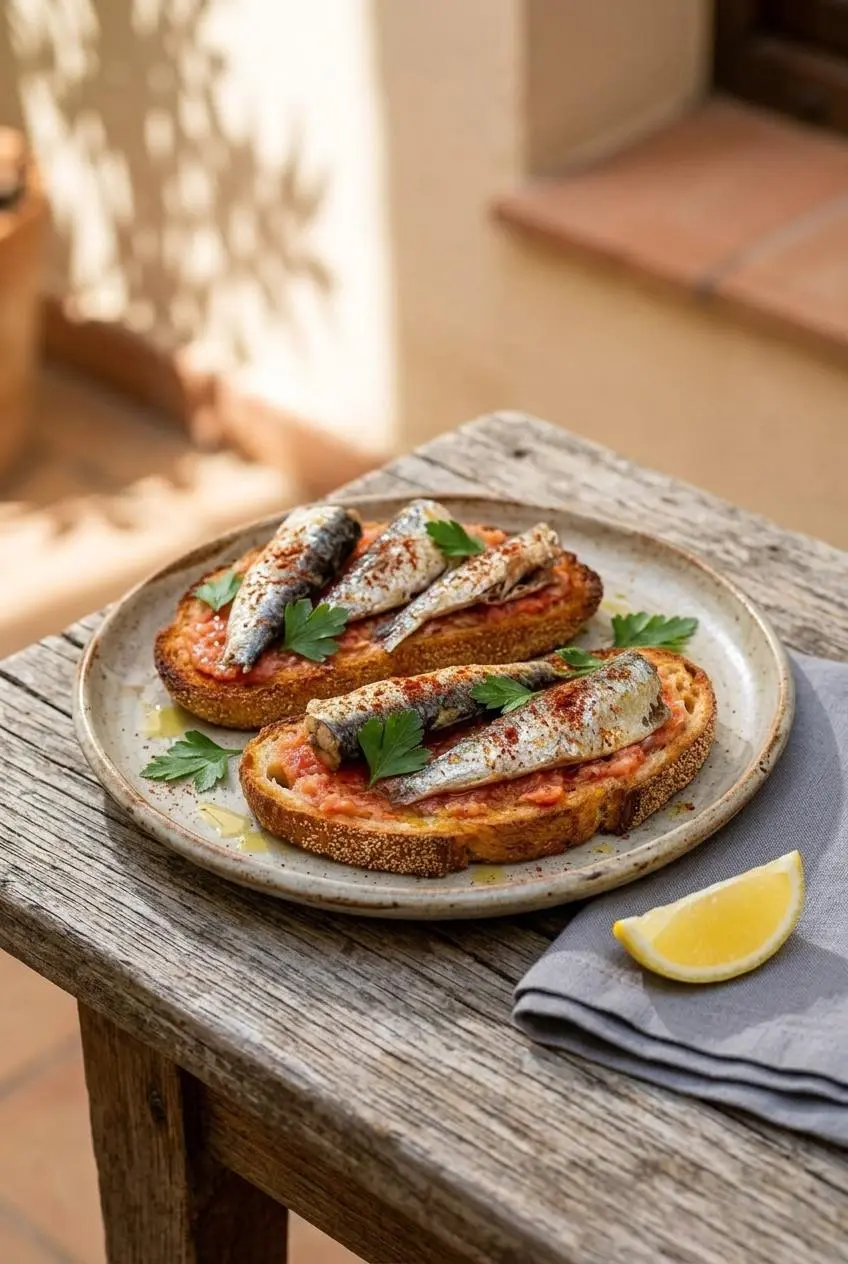
For a pan con tomate style version, skip the avocado and use ripe tomato instead. Grate the tomato flesh until only the skin remains, discard the skin, then rub or spoon the juicy pulp onto the crisp garlic-rubbed toast before adding the sardines.
Finish with a pinch of smoked paprika and a little sea salt. This version tastes brighter, lighter, and a bit sweeter than the avocado one, and it is a great choice when you want the fish to stay front and center.
Spicy Pickled Onion Sardine Toast
Add pickled red onions, thin fresh chilies, or a pinch of red pepper flakes if you want more bite. A squeeze of lime wakes everything up and cuts through the rich oil nicely.
The pickled onion especially helps if you find sardines a little intense. Its sharpness pulls the toast in a more Mediterranean direction and keeps each bite from feeling too fatty.
White Miso Smashed Avocado Variation
Stir a little white miso into the smashed avocado for extra savory depth. It gives the avocado a gentle salty earthiness that connects beautifully with the briny fish.
Keep the amount modest so the avocado still tastes fresh. This is a good variation when you want more umami without adding another topping layer.
Crispy Garlic Chips and Relish Toppings
If you want more texture, fry thin garlic slices in a small amount of olive oil until pale golden and crisp, then scatter them over the finished toast. They add crunch without making the topping feel bulky.
A quick tomato relish can work here too, especially if you want a little sweetness and acidity in the same bite. For a fresh side that balances the richness, serve the toast with a crisp Greek salad.
Crucial Cooking Tips and Troubleshooting
Most sardine toast problems come down to moisture, balance, or texture. A few small adjustments fix nearly all of them.
- Soggy toast: Drain the sardines well and assemble right before serving. If you need a head start, keep the marinated fish, avocado, and toast separate until the final minute.
- Bread that burns too fast: Broilers move quickly. Use thick slices, keep the rack 3 inches from the heat as directed, and stay close while the bread colors.
- Fish that tastes too strong: Increase the bright elements, not the salt. More lemon at the table, the sherry vinegar in the marinade, and sharp aromatics like garlic or pickled onion help mellow the fishy edge.
- Avocado that turns pasty: Mash it just enough to spread. A rustic smash with soft chunks holds better on toast than a perfectly smooth puree.
- Flavor going to waste: Do not throw out the tin oil from the first can. Brushing it on the bread builds savory depth and helps the toast brown beautifully.
- Serving a little later: Toast the bread until fully crisp, not merely warm. A properly dried and browned crust holds up better for those extra few minutes on the counter.
If you are sensitive to tinned fish aromas, acid is your best friend. Vinegar and lemon zest brighten the fish and make it taste cleaner, while parsley and raw garlic keep the finish fresh rather than heavy.
Health and Nutritional Benefits
Sardine toast brings together protein, satisfying fats, and plenty of flavor in one compact meal. Sardines are often valued for omega-3 fats, and they also provide a hearty, filling quality that makes this more substantial than plain avocado toast.
If you eat the soft bones and skin, you get extra nutritional value there too. Many home cooks are surprised by how tender they are in canned sardines, so they blend right into the toast rather than feeling bony or tough.
Avocado adds monounsaturated fat and a creamy texture that makes the dish feel complete without needing mayo or cheese. Paired with crusty bread and fresh herbs, the whole meal lands in a satisfying middle ground: rich enough to feel like lunch, fresh enough to keep eating.
It is still worth remembering that the overall nutrition depends on the bread, salt level, and the sardines you buy. Think of this as a balanced, flavorful option rather than a magic food.
Conclusion
Sardine toast is one of those rare quick meals that actually tastes layered and thoughtful. Crisp bread, bright marinated fish, creamy avocado, and a proper garlic rub do most of the work.
Use good oil-packed sardines, toast the bread until it really crunches, and keep the acid lively. That is the path to a toast you will want to make again.
Frequently Asked Questions
Do You Eat the Bones and Skin in Canned Sardines?
Yes, both are fully edible in canned sardines and usually very soft. The bones break down during processing, so they do not feel sharp on the toast. If you prefer, you can remove them with a fork, but leaving them in usually gives the best texture and more nutritional value.
Can I Make Sardine Toast Ahead of Time?
It is best eaten right after assembly. You can marinate the sardines and prep the toppings ahead, but toast the bread and build the toasts just before serving. That keeps the crust crisp and prevents the avocado and dressing from soaking in too early.
How Do I Make My Sardine Toast Less Fishy?
Use acid first. Sherry vinegar, lemon zest, and a squeeze of lemon at the end all help the fish taste brighter and less heavy. Sharp fresh flavors help too, especially parsley, raw garlic, and pickled onions in a variation. Starting with smaller brisling sardines also makes a big difference because they tend to taste milder than larger pilchards.
What Is the Best Bread to Use?
Choose thick-cut sourdough, country loaf, or rye. You want a sturdy slice with a good crust so it can hold avocado and sardines without collapsing. Soft sandwich bread absorbs moisture too quickly and loses the crunch that makes this toast so good.
Sardine Toast

Equipment
- Small bowl
- Whisk
- Cooling Rack
- Half sheet pan
- Broiler
Ingredients
- 2 (3.75-ounce) tins 2-layer brisling sardines in olive oil
- 2 tablespoons finely chopped parsley, divided
- 1 tablespoon sherry vinegar
- 1/4 teaspoon lemon zest, reserve the lemon and cut into 4 wedges
- 4 (1/2-inch-thick) slices crusty bread, such as sourdough, country loaf, or rye
- 1 ripe Hass avocado
- coarse sea salt, to taste
- freshly ground black pepper, to taste
Instructions
- Pour the oil from one tin of sardines into a small bowl and save it for the bread, then drain the second tin into another bowl and whisk in 1 tablespoon of parsley, the sherry vinegar, lemon zest, and black pepper before folding in the sardines and letting them marinate for up to 1 hour.
- After 45 minutes, set an oven rack 3 inches from the broiler and heat the broiler to high, then brush one side of each bread slice with the reserved sardine oil and place them oil-side up on a cooling rack set inside a half sheet pan. Broil for 2 to 3 minutes until the tops turn golden brown and crisp, watching closely because the bread can go from perfect to too dark fast.
- Split the avocado, remove the pit, and mash the flesh in each half with a fork.
- Spread the avocado over the toasted bread, add the marinated sardines evenly, spoon over any dressing left in the bowl, and finish with the remaining parsley, a light sprinkle of coarse sea salt, and lemon wedges on the side.