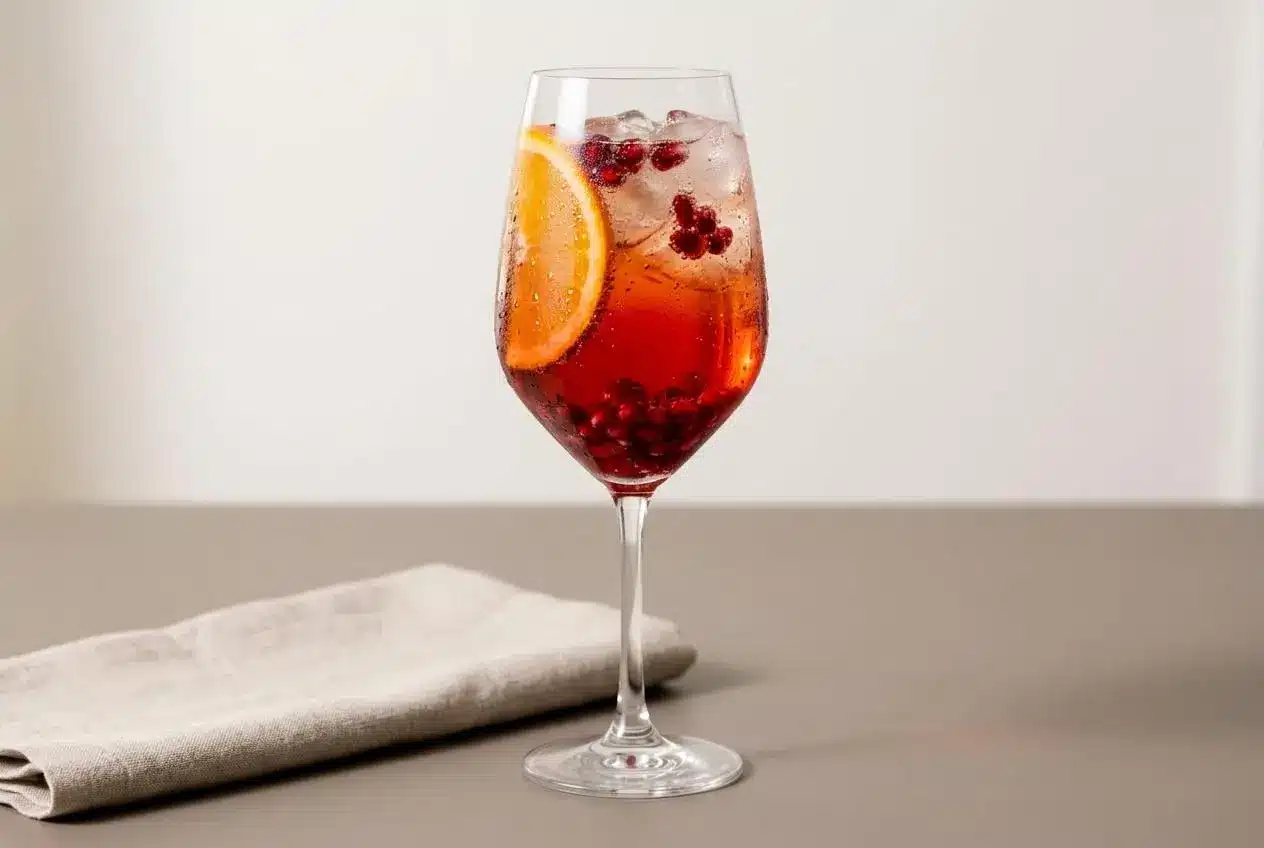
A pomegranate spritz is a sparkling cocktail made with pomegranate juice, prosecco, Aperol, and club soda over ice. This version combines equal measures of juice and wine with a smaller measure of Aperol for a tart, gently bitter drink.
The Pomegranate Spritz brings a bright ruby pour, lively bubbles, and fresh orange aroma to your glass. It’s a fruitier take on an aperitivo spritz, with pomegranate’s tang keeping the sweetness in check.
You can build one serving directly in a wine glass in five minutes, without a shaker or syrup preparation. It works equally well for a relaxed appetizer hour or a festive gathering. The finishing touch is fragrant orange.
Put the juice, wine, and soda in the refrigerator before you start so the ice chills the drink rather than rescuing warm liquids.
Essential Ingredients for a Balanced Pomegranate Spritz
Pomegranate juice supplies tartness and ruby color, prosecco brings sparkling lift, and Aperol adds bittersweet citrus. Club soda lightens the finish, while orange and pomegranate arils contribute fresh aroma and juicy texture.
- 3 oz. POM Wonderful 100% Pomegranate Juice
- 3 oz. prosecco
- 1 oz. Aperol
- Club soda
- 1 orange slice for garnish
- POM Wonderful Pomegranate Arils for garnish
Pomegranate juice: Choose pure pomegranate juice without added sugar for the intended tart balance. “100% juice” blends can include sweeter fruit juices, so check the ingredient label rather than relying on the front of the bottle. Unsweetened doesn’t mean sugar-free; the fruit still contributes natural sweetness.
Prosecco: Brut is a good choice when you want a crisp finish. Despite its name, extra dry prosecco is sweeter than brut, so it produces a softer, sweeter drink. Either can work, but brut gives the juice and Aperol more room to stand out. Dry Cava is an optional alternative with a different wine character.
Aperol: Its orange flavor and gentle bitterness connect the tart juice to the sparkling wine. Campari would make an optional variation more assertively bitter, while elderflower liqueur takes it in a floral, sweeter direction. They aren’t identical substitutes, so choose by the finish you enjoy.
Club soda and garnishes: Soda loosens the fruit-forward body without adding sweetness. The orange slice brings citrus fragrance close to your nose as you sip, and the arils add little bursts of pomegranate flavor. Don’t expect every aril to float; some will settle among the ice.
I prefer pouring well-chilled pomegranate juice over the ice so the first splash doesn’t start diluting the drink before the bubbles arrive.
How to Build a Pomegranate Spritz Step-by-Step
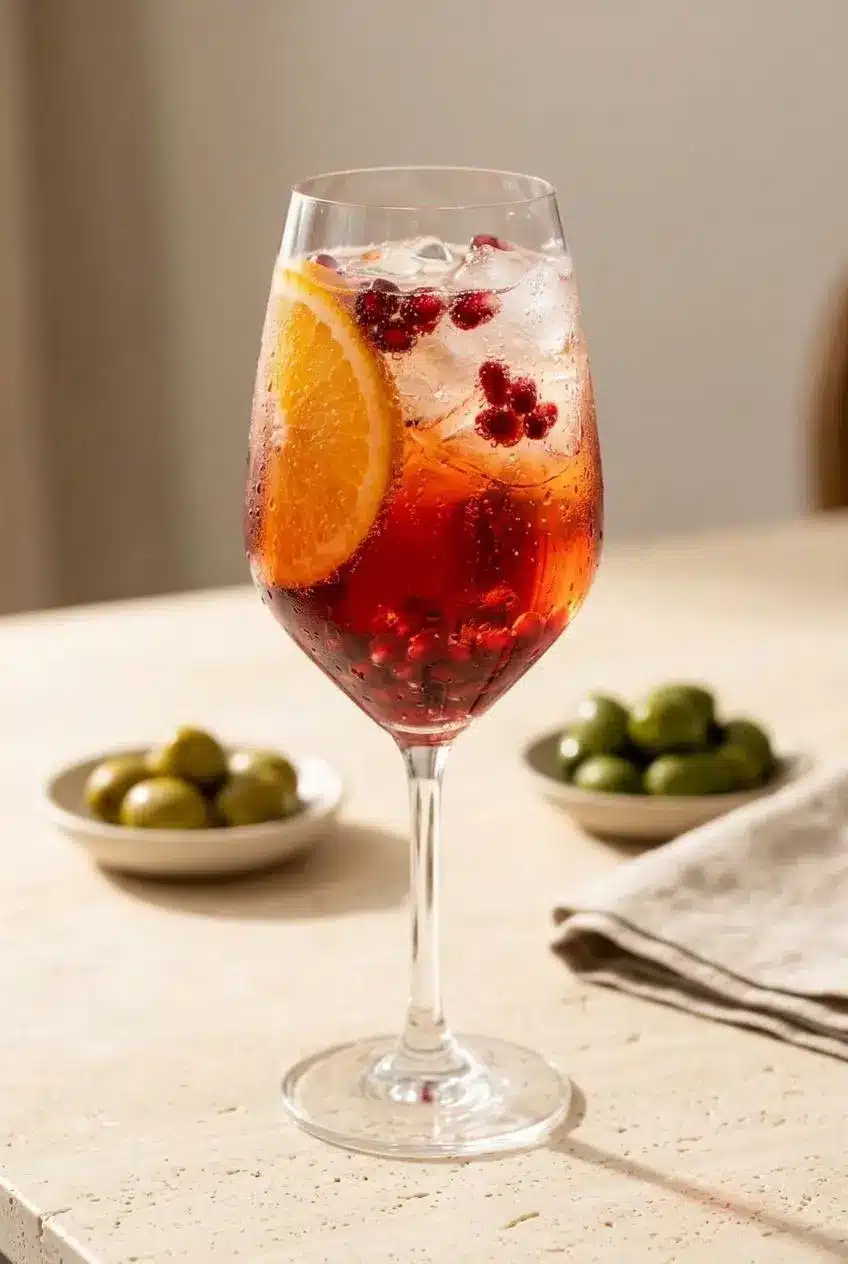
Build this cocktail directly in the glass, keeping the pours slow and leaving room for the soda. A large stemmed wine glass holds the ice comfortably and gives the orange garnish space without crowding the rim.
Prep time: 5 minutes. Total time: 5 minutes. Servings: 1. Equipment: wine glass.
- Pack a wine glass with ice, then measure the pomegranate juice into the spaces between the cubes.
The juice should collect around the ice in a deep ruby pool. - Pour the prosecco slowly against the inside of the glass, follow with the Aperol, and finish with club soda.
A rising stream of bubbles and a lighter crimson color signal that the sparkling liquids have joined the juice. - Set the orange slice at the rim or among the ice and scatter the pomegranate arils into the glass.
The garnish should bring fresh citrus aroma and ruby accents to the finished drink.
Chilled glassware and large, solid ice cubes are useful choices, though ordinary ice works too. Leave enough space above the liquid to lift the glass without spilling. If the prosecco foams toward the rim, pause the pour and let the foam settle before continuing.
For an optional mixing approach, you can combine the juice and Aperol over ice before adding the sparkling liquids. Either way, avoid churning the finished drink. If you notice a darker layer at the bottom, slide a spoon down the inside of the glass and give it one gentle upward lift.
A temporary crimson gradient is normal, but perfectly separated layers aren’t the goal. You want the first sip and the last sip to taste reasonably alike without sacrificing the lively fizz.
Pro Tips for Flavor and Carbonation
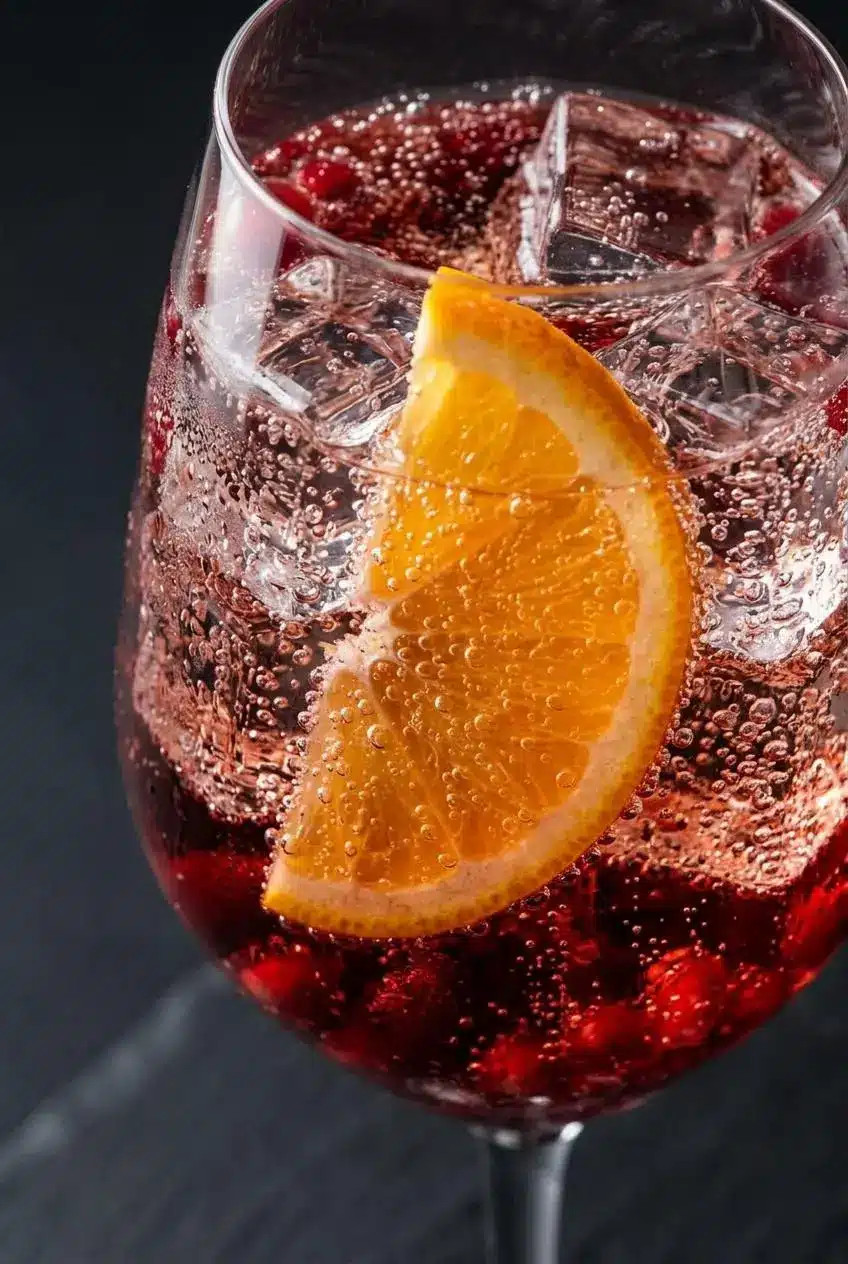
A spritz tastes best when the tartness, bitterness, and bubbles stay distinct. Most disappointing glasses come from warm ingredients, tired carbonation, or too much mixing.
- Watery flavor: Warm juice melts ice quickly. Chill the liquids and glassware, then use large, solid cubes rather than crushed ice when available.
- Flat texture: An already-flat mixer can’t restore bubbles. Keep sparkling bottles closed until you’re ready to pour, and avoid vigorous stirring or shaking.
- Excessive foaming: A forceful pour agitates the drink. Aim the wine along the inside wall and slow down instead of pouring straight onto the ice.
- Too much sweetness: Sweetened juice blends and sweeter wine can stack sweetness. Choose pure unsweetened pomegranate juice and brut prosecco for the next glass.
- Too much bitterness: Guessing the Aperol measure can overwhelm the fruit. Measure it accurately before deciding whether a different aperitif would suit your taste better.
Club soda lightens the drink, but a heavy pour also thins the pomegranate flavor. Add it with control and taste before topping further. More bubbles aren’t always worth a washed-out finish.
For an optional aromatic finish, express a strip of orange peel over the surface by bending it gently, peel side toward the glass. The released oils bring orange fragrance to the first sip. Avoid squeezing the orange slice if you want to keep the measured drink’s balance unchanged.
A lightly tapped rosemary sprig is another optional garnish. Tap it gently between your palms to release its scent, then tuck it beside the ice. Keep the herb intact rather than crushing it into the drink, where loose needles can become a nuisance.
Spirit Pairings and Flavor Variations
Choose an optional variation by the flavor you want to emphasize: floral sweetness, dry botanicals, or a sparkling alcohol-free finish. Keep these changes separate from the measured Aperol version above.
The Elderflower Hugo Variation
Replace the bitter aperitivo with elderflower liqueur for a Hugo-inspired spritz. Elderflower’s floral sweetness softens pomegranate’s tart edge, while fresh mint adds a cool herbal aroma.
Lightly bruise the mint between your palms rather than grinding it into the glass. Use dry sparkling wine to keep the floral version from becoming overly sweet. Because elderflower liqueur tastes different from Aperol, treat this as a flavor variation rather than expecting the same bitter finish.
Botanical Gin Spritz Option
A botanical or London dry gin adds juniper, pine, and herbal notes alongside the fruit. It’s an optional addition, not a required ingredient, and it changes the character of the lighter wine-based drink.
Combine the gin with the still ingredients before pouring the sparkling components, then finish gently. Fresh thyme makes an optional aromatic partner without requiring a homemade syrup. Keep the garnish restrained so the pomegranate remains recognizable.
Refreshing Non-Alcoholic Mocktail Version
For a zero-proof spritz, replace both the prosecco and Aperol, not just the wine. Keep the pomegranate juice as the tart foundation, then choose an alcohol-free sparkling component and a contrasting bitter or spicy element.
- Closest aperitivo character: Use an alcohol-free bitter aperitif with sparkling water for a drier, citrus-bitter finish.
- Fruitier version: Pair sparkling white grape juice with non-alcoholic bitter Italian soda, using club soda to soften excess sweetness.
- Spicy version: Use alcohol-free ginger beer or ginger ale with sparkling water for a ginger-led drink rather than an Italian bitter profile.
Check labels to confirm the products meet your alcohol-free needs. Their sweetness and bitterness vary, so taste the still ingredients together and adjust the sparkling finish gradually. Keep the ice-first assembly and orange garnish for the same refreshing presentation.
Batching and Make-Ahead Hosting Guide
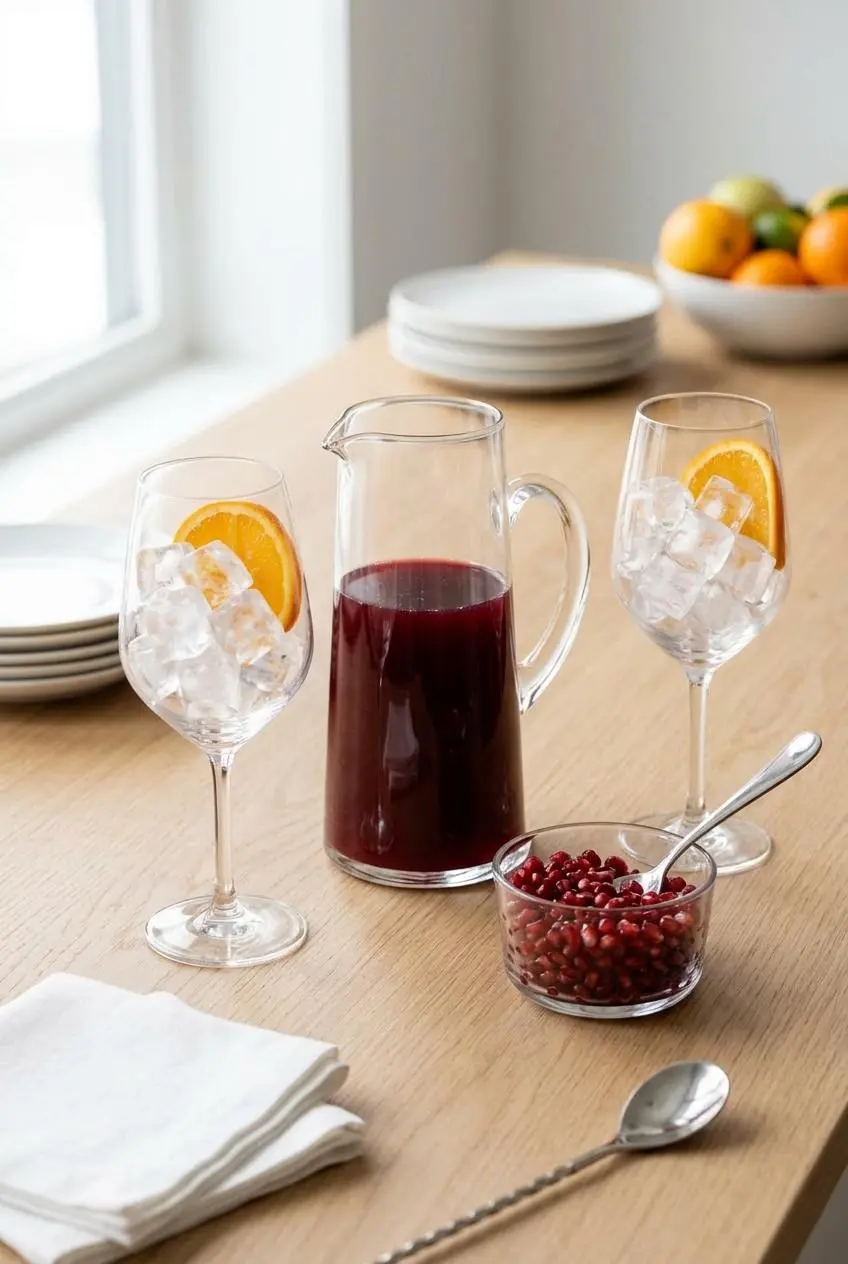
For a crowd, organize the still ingredients separately from the sparkling bottles. This makes serving easier without leaving a finished pitcher to lose its fizz.
Combine the pomegranate juice and Aperol in a covered pitcher and keep it chilled while you prepare the serving station. Scale those ingredients by the number of glasses you plan to serve, using the same measured proportions as the single drink. Follow the juice label’s refrigeration instructions rather than assigning a homemade storage window.
- Keep bubbles separate: Reserve prosecco and club soda for pouring directly into each glass at serving time.
- Keep ice out of the pitcher: Put ice in the individual glasses so the shared mixture doesn’t steadily dilute.
- Prepare garnishes separately: Keep orange slices and arils covered and chilled, with a spoon or tongs nearby for assembly.
- Measure each pour: Use a jigger or marked measure so the final glasses stay consistent instead of becoming progressively stronger or weaker.
Set out roomy glasses and keep chilled bottles close at hand. Pour the juice-and-Aperol mixture over ice, add the wine slowly, and finish with soda and garnishes. Open sparkling bottles as needed rather than opening every bottle at once.
For appetizers, savory crostini, baked brie, or salty olives complement the tart fruit and bitter citrus. Serve food alongside the drinks rather than balancing crowded garnishes across every rim.
Conclusion
This ruby spritz pairs pomegranate’s tang with bittersweet orange and a crisp sparkling finish. Its appeal comes from balance, not elaborate preparation.
Keep the ingredients chilled and handle the finished drink gently. Add the orange, pour while the bubbles are lively, and enjoy it fresh from the glass.
Frequently Asked Questions
What Is the Classic Ratio for a Pomegranate Spritz?
One pomegranate variation uses 3 parts prosecco, 2 parts juice, and 1 part bitter aperitivo, plus club soda. There isn’t one universal pomegranate ratio. The measured recipe above uses 3 parts prosecco, 3 parts pomegranate juice, and 1 part Aperol for a more fruit-forward balance.
Can I Make a Non-Alcoholic Pomegranate Spritz?
Yes. Replace both alcoholic components with alcohol-free alternatives, such as a bitter aperitif and sparkling water, or bitter Italian soda and sparkling white grape juice. Check product labels and adjust for sweetness before adding the final sparkling pour.
Which Sparkling Wine Works Best in a Spritz?
Brut prosecco is a good starting point for a crisp drink. Dry Cava or another dry sparkling wine also works. Extra dry prosecco is sweeter than brut, so choose it when you prefer a softer finish.
How Do I Make a Pomegranate Spritz for a Party Crowd?
Combine the juice and Aperol in a covered, chilled pitcher. Keep ice, prosecco, and club soda separate, then assemble each glass when serving. This preserves fizz and prevents the entire batch from diluting over ice.
How Do I Prevent the Drink From Becoming Watery?
Chill every liquid before assembly and use large, solid ice cubes when possible. Avoid room-temperature juice, crushed ice, and excessive soda. Build each glass when you’re ready to serve it.
Pomegranate Spritz

Equipment
- Wine glass
Ingredients
- 3 oz. POM Wonderful 100% Pomegranate Juice
- 3 oz. prosecco
- 1 oz. Aperol
- Club soda
- 1 orange slice for garnish
- POM Wonderful Pomegranate Arils for garnish
Instructions
- Pack a wine glass with ice, then measure the pomegranate juice into the spaces between the cubes. The juice should collect around the ice in a deep ruby pool.
- Pour the prosecco slowly against the inside of the glass, follow with the Aperol, and finish with club soda. A rising stream of bubbles and a lighter crimson color signal that the sparkling liquids have joined the juice.
- Set the orange slice at the rim or among the ice and scatter the pomegranate arils into the glass. The garnish should bring fresh citrus aroma and ruby accents to the finished drink.