
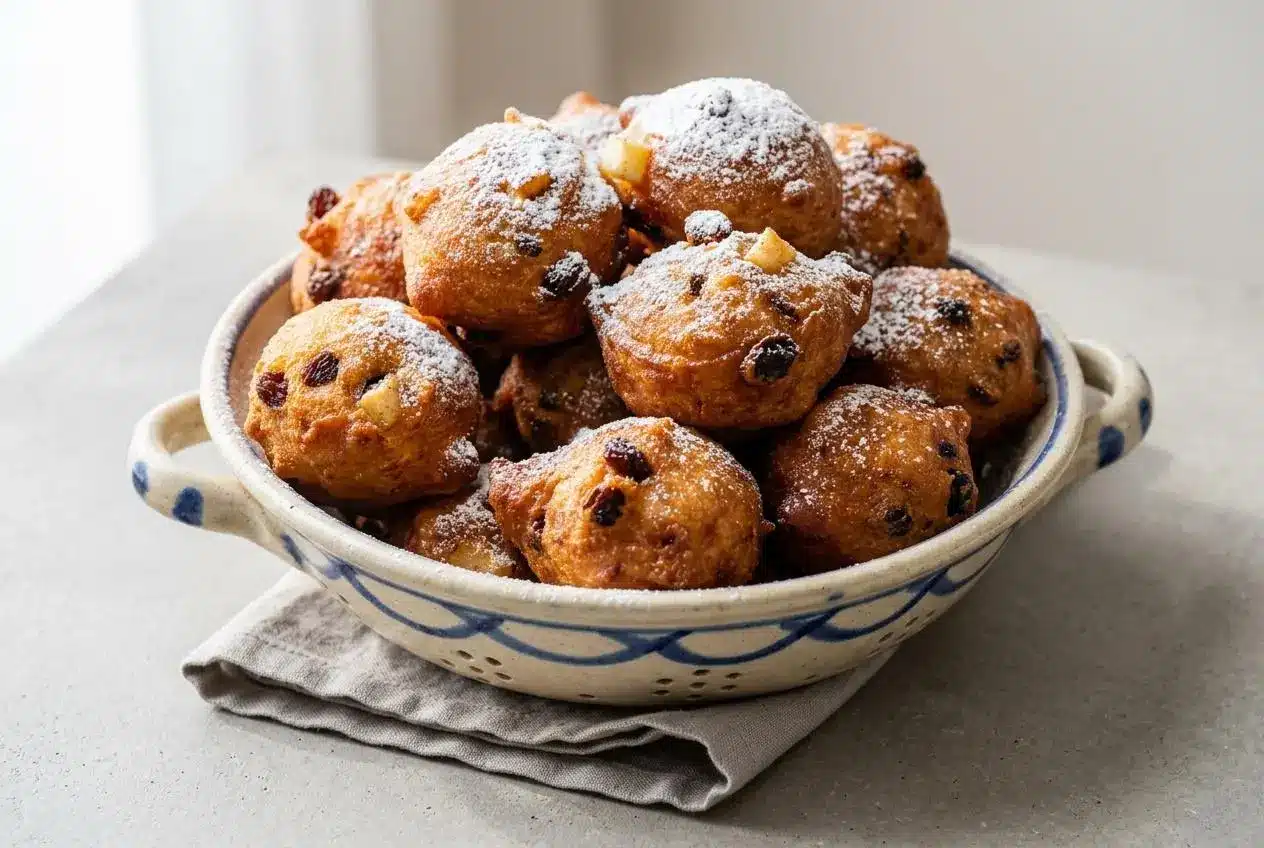
Oliebollen are Dutch yeast fritters with crisp, golden shells and soft, airy centers. This version includes raisins and diced apple, fries at 340°F, and finishes with powdered sugar. The key is a sticky batter, a full rise, and steady oil temperature.
Warm Oliebollen bring the appeal of a Dutch holiday street stall into your kitchen: a delicate crust, sweet fruit tucked into the crumb, and powdered sugar that dusts your fingertips. Think round Dutch doughnuts, shaped with spoons rather than rolled and cut.
The batter does most of its work while it rises, leaving you to manage the frying in small batches. You don’t need perfectly round shapes to get a lovely result. Those little golden edges are worth keeping.
Set out your thermometer, slotted spoon, colander, and paper towel-lined tray before heating the oil so each batch has a clear landing place.
What Are Oliebollen? The Dutch New Year Tradition
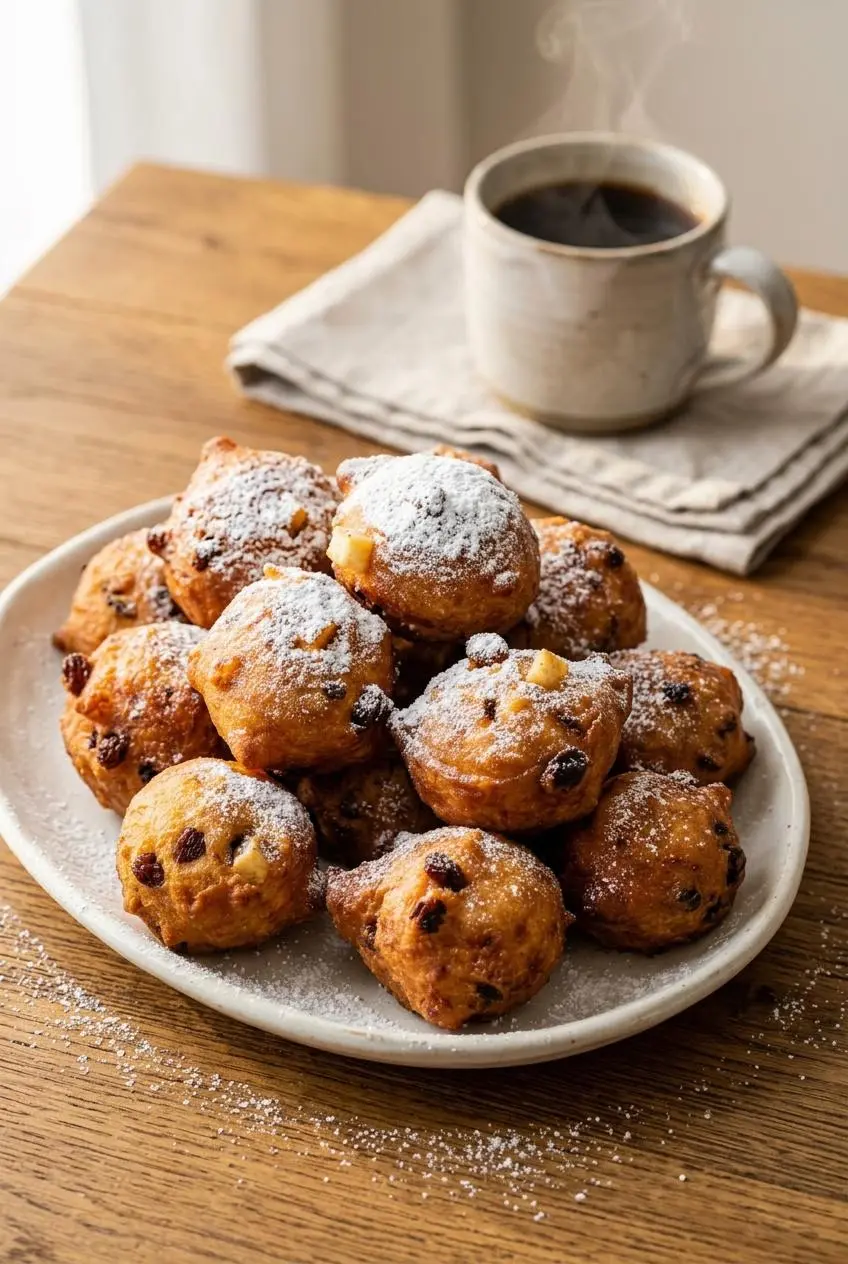
The name translates literally as “oil balls,” but the finished treats are much more inviting than that blunt description suggests. Yeast gives the batter lift, while deep-frying creates the contrast between a crisp exterior and a pillowy crumb.
In the Netherlands, oliebollen are closely associated with New Year’s Eve. Seasonal street stalls sell them warm in paper bags, and home cooks prepare batches to share during the celebrations. A generous powdered sugar coating is part of their familiar holiday character.
Some versions contain raisins or currants; others leave the fruit out. This recipe combines raisins with apple for chewy sweetness and moist fruit pockets. Unlike the familiar square, rolled-and-cut New Orleans-style beignet, these fritters start as sticky spoonfuls of batter, so their shapes remain pleasantly irregular.
Serve them warm with hot coffee or spiced tea. Add the sugar near serving time rather than coating the entire batch far ahead, especially if you want the white dusting to remain distinct.
Ingredients
Flour and eggs build the crumb, milk supplies moisture and richness, and yeast creates lift. Salt balances the sweetness, raisins and apple add fruit flavor, and frying oil forms the golden shell. Icing sugar provides the finishing sweetness.
- 3.25 cups (760 ml) all-purpose flour
- 2 tsp salt
- 0.7 oz (20 g) fresh yeast
- 1.25 cups (300 ml) lukewarm milk
- 1 tbsp sugar
- 2 large eggs
- 1 cup (200 g) raisins
- 1 large apple
- Oil or fat for deep-frying
- Icing sugar
All-purpose flour provides both starch and the structure needed to hold the yeast’s bubbles. Measure it without packing it firmly into the cup; excess flour makes this batter harder to scoop and the cooked crumb heavier. The milliliter measurement shown for flour is a volume measurement, not a weight in grams.
Milk softens the crumb, while the eggs help the batter hold together around the fruit. The sugar in the batter adds gentle sweetness, leaving the final dusting to provide the more noticeable sweet finish. In US stores, icing sugar is usually labeled powdered sugar or confectioners’ sugar.
Prepare the raisins by soaking them in water until plump, then draining and patting them dry. Dice the apple so it distributes through the batter rather than forming large pockets.
I pat soaked raisins dry before adding them so they bring plumpness to the crumb without carrying puddles of water into the batter.
How to Make Oliebollen Step by Step
This recipe makes 12 oliebollen. Allow for the yeast activation, mixing, and about an hour of rising before frying; the batter’s appearance matters more than trying to hurry it along.
- Stir the fresh yeast into the lukewarm milk in a small bowl, then leave it for 5 to 10 minutes.
A frothy surface signals yeast activity before you begin mixing the batter. - Whisk the flour, salt, and sugar together in a large bowl.
An evenly blended dry mixture helps distribute seasoning throughout the finished crumb. - Add the eggs and yeast milk to a hollow in the dry mixture, then work everything together for about 8 to 10 minutes with a sturdy wooden spoon, dough hooks, or a stand mixer fitted with a dough hook.
Stop when the batter looks smooth and feels slightly elastic while remaining wet and sticky. - Distribute the soaked, drained raisins and diced apple through the batter with gentle folding motions.
The fruit should appear throughout the mixture rather than collecting in one area. - Drape a clean kitchen towel over the bowl and leave it in a warm spot for about 1 hour, allowing the batter to double.
A noticeably expanded mixture with visible bubbles shows that the rise has developed its airy structure. - Bring the frying oil to 340°F (170°C) in a deep fryer or heavy-bottomed pot, checking it with a thermometer.
The oil should reach the measured target before any batter goes in. - Coat two spoons or an ice cream scoop with frying oil, then use them to release rounded portions of batter carefully into the pot.
The oiled surface helps the sticky batter slide off rather than stretch into long strands. - Cook manageable batches for 4 to 6 minutes, rotating the fritters occasionally for even browning.
Look for a golden surface all around, without pale patches where the pieces have rested against one another. - Lift each cooked fritter out with a slotted spoon, let it drain briefly in a colander, then move it to a second colander or tray lined with paper towels.
The first draining releases loose oil, while the paper absorbs what remains on the surface. - Let the fritters cool slightly, then coat them generously with icing sugar.
The sugar should remain visible on the crust rather than immediately melting into it.
Mixing the Wet Batter
A heavy, sticky paste is the right goal. Lift the wooden spoon and the batter should pull with it, then fall slowly in a thick mass. It should not behave like a firm bread dough that you can knead on the counter.
Resist the urge to add flour simply because the mixture sticks to the spoon. That stickiness is expected. Mixing develops enough elasticity to hold bubbles, but the batter still needs moisture to expand into a soft crumb.
The Warm Rise
Use a comfortably warm place, away from a cold draft or direct, intense heat. Watch the bowl’s contents rather than relying entirely on the clock: the batter should roughly double, look aerated, and show bubbles at the surface.
If the batter remains compact, it isn’t ready for the fryer. Giving it the chance to expand is more useful than trying to compensate later with hotter oil. Heat can brown a fritter, but it cannot replace the rise.
Frying and Draining
With two spoons, use one to gather batter and the other to push it gently into the oil. Recoat the spoons as needed so the next portion releases cleanly. Keep the release close to the oil’s surface rather than dropping batter from a height.
Leave room between the fritters. Some may begin to turn on their own as they cook, but rotate them when needed rather than assuming every side will brown evenly without help.
Drain in two stages and avoid piling the hot fritters tightly together. The colander allows loose oil to drip away; the paper towel-lined surface handles the remaining film. A crowded heap traps steam and softens the crust you just worked to create.
Key Ingredients and Essential Substitutions
Yeast and fruit offer useful flexibility, but keep the batter’s structure and moisture in mind when making changes. Treat the following as optional adaptations rather than additions to the ingredient list.
All-purpose flour suits this wet batter. Don’t switch to a flour blend merely to make it feel firmer. Whole milk is an option for a richer crumb, though the recipe does not require a particular milk fat percentage.
Fresh Yeast vs Instant Yeast
You can replace the 20 g fresh yeast with 7 g, about 2 1/4 teaspoons, of instant or active dry yeast. Use one yeast type, not a combination.
Fresh yeast dissolves into the lukewarm milk. Active dry yeast can hydrate there before mixing; instant yeast can usually mix directly with the dry ingredients, with the milk added during batter mixing. Follow the yeast package’s handling directions when they differ.
Instant yeast does not always produce a dramatic foam when stirred into milk. Judge the finished batter by its expansion and bubbles during the rise rather than expecting every yeast type to look identical at the start.
Raisins, Currants, and Apple Fillings
Soaking dried fruit helps soften it before it enters the batter and limits how much moisture it draws from the surrounding crumb. Drain thoroughly afterward. Wet fruit and pooled soaking water are different things, and the latter can make the batter harder to handle.
For optional flavor changes:
- Currants: Use them in place of raisins for smaller, more evenly scattered bites of dried fruit.
- Orange zest: Let it perfume the lukewarm milk for a bright citrus aroma.
- Ground cardamom: Add it as an optional accent in the milk for a warm, fragrant finish.
Keep aromatic additions restrained enough that the apple and fried yeast crumb still come through. There’s no need to change the mixing or frying method for a light flavor accent.
Apple Snowballs (Raisin-Free Fritters)
For an apple-only version sometimes called apple snowballs, omit the raisins and keep the diced apple. This creates a different fruit balance without requiring you to replace the missing raisins with extra apple.
These remain spoon-shaped yeast fritters. They differ from apple-ring fritters, often called appelbeignets, which use slices of apple coated in batter.
- Spiced cinnamon sugar finish: Replace the icing sugar dusting with cinnamon sugar for a warmer aroma and a lightly granular coating.
Troubleshooting Common Frying Mistakes
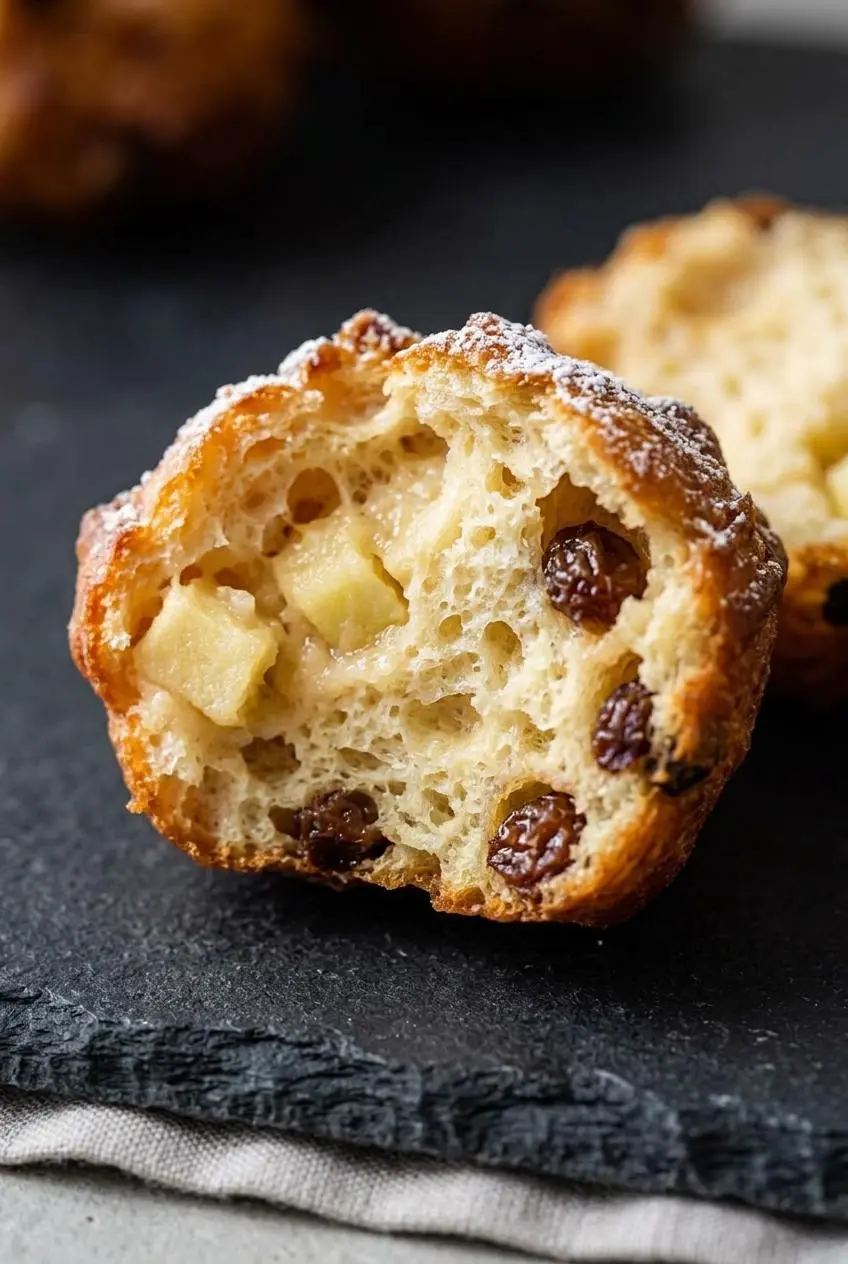
When the first batch looks wrong, check the batter and thermometer before changing the recipe. A dark shell, greasy surface, and dense crumb point to different problems.
- Dark outside, wet center: The oil may be too hot, or the portions may be too large. Keep the frying oil between 340°F and 350°F, shape more consistent portions, and check a slightly cooled fritter before repeating the batch.
- Greasy crust: Cool oil and overcrowding are common causes. Reduce the batch size and let the oil recover to the frying range before adding more batter.
- Heavy, dense crumb: Excess flour or an incomplete rise can limit expansion. Before frying, allow under-risen batter to reach the visual cues described above; if you added extra flour, avoid adding more and measure carefully next time.
- Batter clings to the spoons: A dry spoon surface catches the sticky mixture. Recoat the spoons with oil rather than trying to stiffen the batter.
- Uneven color: Fritters may be touching or staying on one side. Leave space and rotate them occasionally so the exposed surfaces brown evenly.
- Crust softens after draining: Stacking hot fritters traps steam. Keep them loosely arranged on the draining surface instead of building a mound.
Apple can leave moist pockets inside an otherwise cooked fritter. Look at the surrounding crumb: it should appear set and airy, not glossy and paste-like. Color alone cannot tell you whether the center has finished cooking.
How to Store and Reheat Leftovers
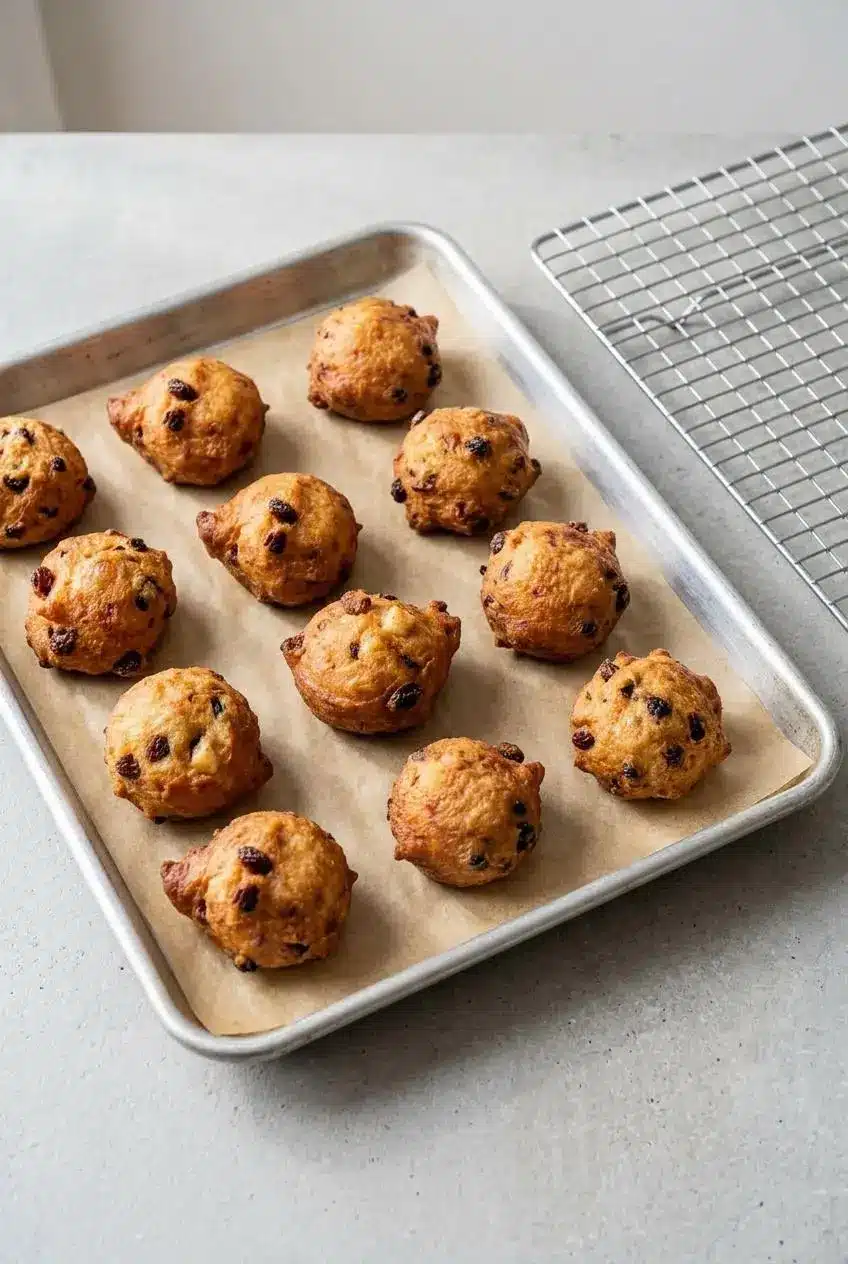
Freshly fried oliebollen have the strongest contrast between crisp shell and soft center. For leftovers, let them cool completely before placing them in a covered container; closing the lid while they’re warm traps condensation.
Keep the container away from moisture, and leave any additional sugar dusting until after reheating. Storage softens the crust, so don’t expect a covered fritter to retain its just-fried texture.
To revive the exterior, arrange leftovers in a single layer on a baking sheet and warm them in a preheated oven. Check them frequently and remove them when the centers are warm and the shells feel firmer. Avoid covering the sheet, which traps steam.
The microwave can warm the crumb, but it won’t restore the crisp shell in the same way. Reheat only what you plan to serve, then add a fresh dusting of sugar.
Conclusion
Warm homemade oliebollen reward a little patience with golden edges, tender centers, and sweet bites of apple and raisins. Keep the batter sticky, let it rise fully, and give each frying batch enough room.
Steady oil temperature matters more than perfect roundness. Stay with the classic powdered sugar finish or try the optional citrus and cardamom accents, then serve while the crust still has its lovely crunch.
Frequently Asked Questions
Can I Use Instant Yeast Instead of Fresh Yeast?
Yes. Replace 20 g fresh yeast with 7 g, about 2 1/4 teaspoons, of instant or active dry yeast. Follow the package’s mixing directions and look for doubled, bubbly batter during the rise; instant yeast may not foam noticeably in milk.
Why Are My Oliebollen Dense Instead of Fluffy?
Too much flour or an incomplete rise can produce a heavy crumb. Keep the batter wet and sticky, and wait until it doubles and looks aerated before frying.
Why Is the Center of My Oliebollen Still Raw?
Oil that is too hot can brown the shell before the center cooks; oversized portions can cause the same problem. Use the steady frying range described above, keep portions consistent, and inspect the crumb of a slightly cooled fritter before continuing.
How Do You Reheat Leftover Oliebollen So They Stay Crisp?
Warm them uncovered in a preheated oven, arranged in a single layer on a baking sheet. Remove them once warmed through and firmer outside, then add fresh powdered sugar; microwaving won’t revive the crust as well.
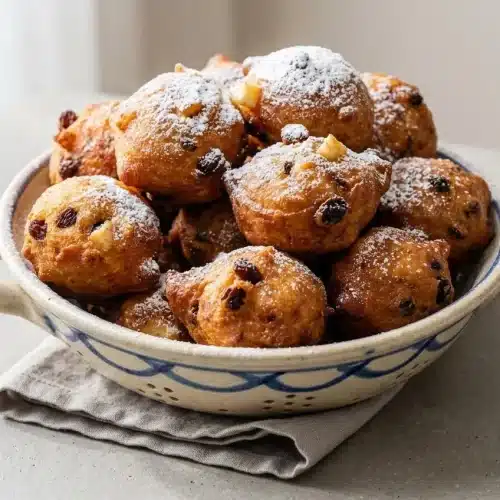
Oliebollen

Equipment
- Deep fryer or heavy-bottomed pot
- Two spoons or ice cream scoop
- Slotted spoon
- Colander
- Thermometer
Ingredients
- 3.25 cups all-purpose flour (760 ml)
- 2 tsp salt
- 0.7 oz fresh yeast (20 g)
- 1.25 cups lukewarm milk (300 ml)
- 1 tbsp sugar
- 2 large eggs
- 1 cup raisins (200 g)
- 1 large apple
- Oil or fat for deep-frying
- Icing sugar
Instructions
- Stir the fresh yeast into the lukewarm milk in a small bowl, then leave it for 5 to 10 minutes. A frothy surface signals yeast activity before you begin mixing the batter.
- Whisk the flour, salt, and sugar together in a large bowl. An evenly blended dry mixture helps distribute seasoning throughout the finished crumb.
- Add the eggs and yeast milk to a hollow in the dry mixture, then work everything together for about 8 to 10 minutes with a sturdy wooden spoon, dough hooks, or a stand mixer fitted with a dough hook. Stop when the batter looks smooth and feels slightly elastic while remaining wet and sticky.
- Distribute the soaked, drained raisins and diced apple through the batter with gentle folding motions. The fruit should appear throughout the mixture rather than collecting in one area.
- Drape a clean kitchen towel over the bowl and leave it in a warm spot for about 1 hour, allowing the batter to double. A noticeably expanded mixture with visible bubbles shows that the rise has developed its airy structure.
- Bring the frying oil to 340°F (170°C) in a deep fryer or heavy-bottomed pot, checking it with a thermometer. The oil should reach the measured target before any batter goes in.
- Coat two spoons or an ice cream scoop with frying oil, then use them to release rounded portions of batter carefully into the pot. The oiled surface helps the sticky batter slide off rather than stretch into long strands.
- Cook manageable batches for 4 to 6 minutes, rotating the fritters occasionally for even browning. Look for a golden surface all around, without pale patches where the pieces have rested against one another.
- Lift each cooked fritter out with a slotted spoon, let it drain briefly in a colander, then move it to a second colander or tray lined with paper towels. The first draining releases loose oil, while the paper absorbs what remains on the surface.
- Let the fritters cool slightly, then coat them generously with icing sugar. The sugar should remain visible on the crust rather than immediately melting into it.


1 thought on “Oliebollen”