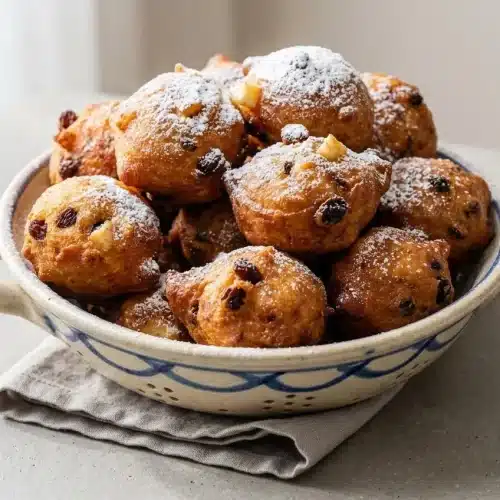
Oliebollen

Traditional Dutch yeast fritters packed with plump raisins and tender apple pieces, deep-fried to a crisp golden brown and finished with a generous dusting of powdered sugar.
Equipment
- Deep fryer or heavy-bottomed pot
- Two spoons or ice cream scoop
- Slotted spoon
- Colander
- Thermometer
Ingredients
- 3.25 cups all-purpose flour (760 ml)
- 2 tsp salt
- 0.7 oz fresh yeast (20 g)
- 1.25 cups lukewarm milk (300 ml)
- 1 tbsp sugar
- 2 large eggs
- 1 cup raisins (200 g)
- 1 large apple
- Oil or fat for deep-frying
- Icing sugar
Instructions
- Stir the fresh yeast into the lukewarm milk in a small bowl, then leave it for 5 to 10 minutes. A frothy surface signals yeast activity before you begin mixing the batter.
- Whisk the flour, salt, and sugar together in a large bowl. An evenly blended dry mixture helps distribute seasoning throughout the finished crumb.
- Add the eggs and yeast milk to a hollow in the dry mixture, then work everything together for about 8 to 10 minutes with a sturdy wooden spoon, dough hooks, or a stand mixer fitted with a dough hook. Stop when the batter looks smooth and feels slightly elastic while remaining wet and sticky.
- Distribute the soaked, drained raisins and diced apple through the batter with gentle folding motions. The fruit should appear throughout the mixture rather than collecting in one area.
- Drape a clean kitchen towel over the bowl and leave it in a warm spot for about 1 hour, allowing the batter to double. A noticeably expanded mixture with visible bubbles shows that the rise has developed its airy structure.
- Bring the frying oil to 340°F (170°C) in a deep fryer or heavy-bottomed pot, checking it with a thermometer. The oil should reach the measured target before any batter goes in.
- Coat two spoons or an ice cream scoop with frying oil, then use them to release rounded portions of batter carefully into the pot. The oiled surface helps the sticky batter slide off rather than stretch into long strands.
- Cook manageable batches for 4 to 6 minutes, rotating the fritters occasionally for even browning. Look for a golden surface all around, without pale patches where the pieces have rested against one another.
- Lift each cooked fritter out with a slotted spoon, let it drain briefly in a colander, then move it to a second colander or tray lined with paper towels. The first draining releases loose oil, while the paper absorbs what remains on the surface.
- Let the fritters cool slightly, then coat them generously with icing sugar. The sugar should remain visible on the crust rather than immediately melting into it.
Notes
Ingredient handling: Pat soaked raisins dry thoroughly before stirring them into the batter so excess water does not thin the mixture.
Shaping tip: Dip your spoons or ice cream scoop in warm frying oil between scoops to allow the sticky batter to slide effortlessly into the oil.
Reheating: Warm leftover fritters uncovered in a single layer on a baking sheet in a preheated oven until the outside crisps and the centers are hot, then finish with fresh powdered sugar.
Nutrition information is an estimate based on common ingredients and serving sizes. Values may vary depending on brands, portions, and substitutions.
Nutrition
Calories: 250kcalCarbohydrates: 30gProtein: 4gFat: 15gSaturated Fat: 8gCholesterol: 50mgSodium: 100mgPotassium: 120mgFiber: 2gSugar: 15gVitamin A: 45IUVitamin C: 2mgCalcium: 35mgIron: 1mg
Tried this recipe?Let us know how it was!