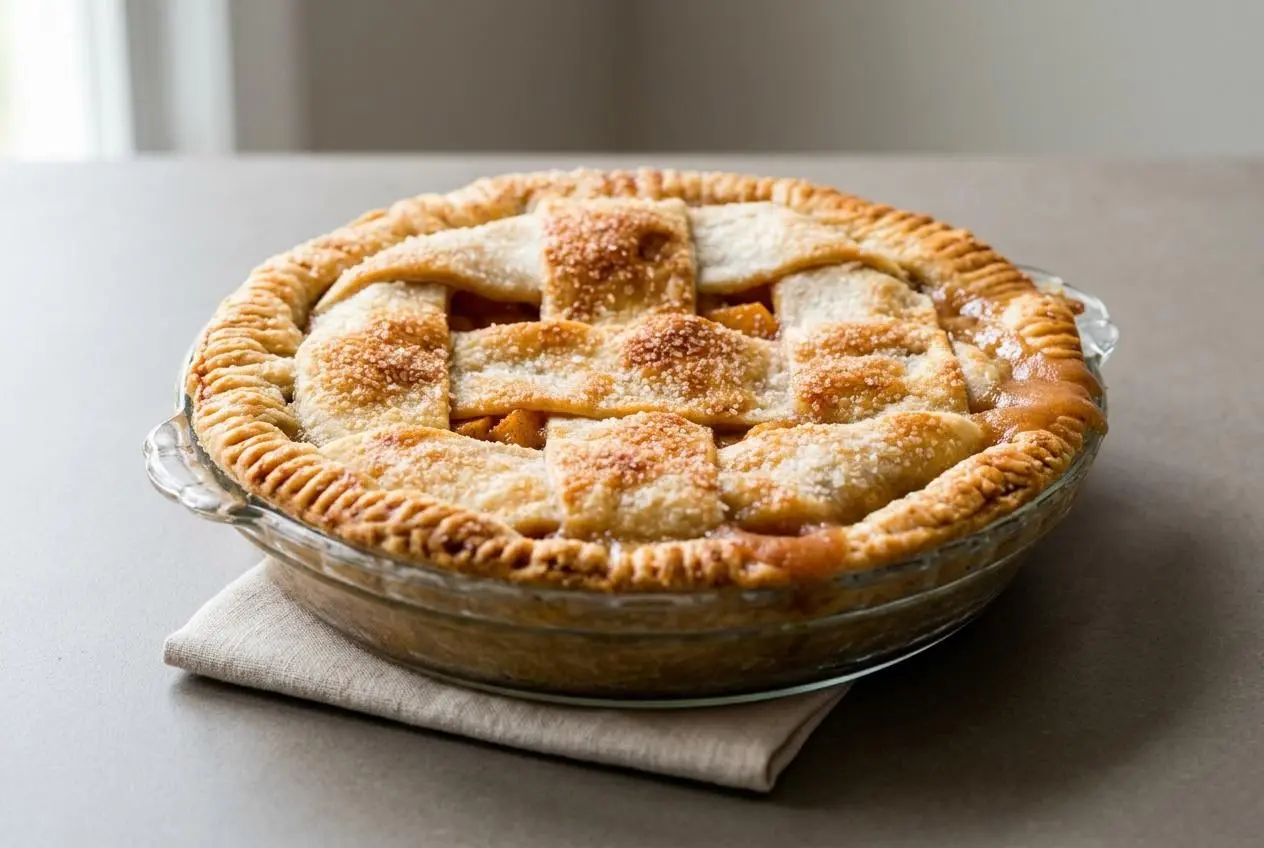
A great peach pie needs firm-ripe peaches cut into chunks, enough flour or tapioca to thicken their juices, and a full bake until the center bubbles vigorously near 200°F. Cool it for 4 hours before slicing so the filling can set.
This peach pie recipe pairs buttery lattice pastry with cinnamon-spiced peaches that stay tender rather than collapsing into jam. It is a classic summer dessert with a crisp crust and glossy fruit filling.
As the pie bakes, the scent of caramelized sugar, cinnamon, and peaches will drift from the oven. The center bubbles are the sign to watch.
Set the pie dish on a rimmed baking sheet before filling it to catch any stray peach juices.
Essential Ingredients for Fresh Peach Pie
Each ingredient supports the finished pie: peaches bring juicy fruit flavor, flour or tapioca gives the filling structure, lemon sharpens sweetness, and cold butter adds richness without weighing down the crust.
- Homemade Pie Crust or All Butter Pie Crust (both recipes make 2 crusts, 1 for bottom and 1 for top)
- 8 cups (about 1.4kg) peeled chopped peaches, cut into 1-inch chunks
- 2/3 cup (135g) granulated sugar
- 1/2 cup (63g) all-purpose flour OR 1/4 cup instant tapioca
- 1 Tablespoon (15ml) fresh lemon juice
- 1–2 teaspoons peeled minced fresh ginger, optional
- 1 teaspoon ground cinnamon
- 2 Tablespoons (28g) cold unsalted butter, cut into small cubes
- egg wash: 1 large egg beaten with 1 Tablespoon (15ml) milk
- optional: coarse sugar for sprinkling on crust
Peaches release plenty of juice as they bake, so the thickener matters as much as the fruit. Sugar draws out that juice, lemon keeps the flavor bright, and butter melts into the filling for a silky finish. The egg wash browns the lattice, while coarse sugar adds a delicate crunch.
I look for peaches that yield slightly near the stem but still feel firm through the middle, since overly soft fruit can make the filling loose.
Choosing the Best Peaches
Choose yellow freestone peaches when possible. Their pits pull away cleanly, making prep much easier than with clingstone peaches, whose flesh clings tightly to the pit. Firm-ripe peaches have balanced sweetness and enough structure to hold their shape through the long bake.
Cut the peeled fruit into 1-inch chunks instead of thin slices. Chunks soften at the edges while keeping a satisfying bite, and they leave room for the thickened juices to settle around them.
Selecting the Right Thickener: Flour, Cornstarch, or Tapioca
This pie uses either all-purpose flour or instant tapioca. Flour gives the filling a soft, traditional bakery-style set and a slightly opaque look. Instant tapioca creates a clearer, glossier gel that works especially well when peaches are very juicy.
Cornstarch can thicken fruit fillings, but it is not the listed choice here. If using the recipe as written, stick with flour or instant tapioca so the filling has the intended texture and balance.
The Magic of Lemon Juice and Spices
Fresh lemon juice prevents the filling from tasting flat by balancing ripe peach sweetness. Cinnamon adds familiar warmth, while optional fresh ginger gives the fruit a lightly peppery lift. Together, the spices should support the peaches rather than cover them.
How to Prepare Fresh Peaches for Baking
Wash peaches well before peeling and cutting them. Clean handling helps reduce microbial hazards on fresh produce, especially when fruit will be handled repeatedly during prep.
Peel and chop the peaches close to assembly time so they stay firm and attractive. If several peaches are too soft for pie, turn them into homemade peach jam instead of mixing them into the filling.
How to Blanch and Peel Fresh Peaches Easily
Bring a pot of water to a boil and prepare a bowl of ice water. Score a shallow X in the bottom of each peach, lower it into the boiling water for 60 seconds, then transfer it straight to the ice water.
Once cool enough to handle, start at the scored end and pull away the loosened skin. The peel should slip off with little effort. Halve the peach, remove the pit, and cut the flesh into thick chunks.
Step-by-Step Guide to Making Peach Pie
Keep the pastry cold, work gently with the peaches, and bake until the center is actively bubbling. Those three habits make the difference between a crisp, sliceable pie and a wet, pale one.
Preparing and Chilling the Pastry
Cold dough rolls more cleanly and bakes into flaky layers because the butter remains in distinct pieces. If the pastry starts to feel sticky or stretchy, return it to the refrigerator until it feels firm again.
Tossing the Peach Filling
Coat the peach chunks gently so each piece gets sugar, thickener, lemon juice, cinnamon, and optional ginger without being crushed. Chilling the filling while you roll the dough helps the fruit stay firm and keeps the pastry from warming up.
Assembling and Weaving the Lattice Crust
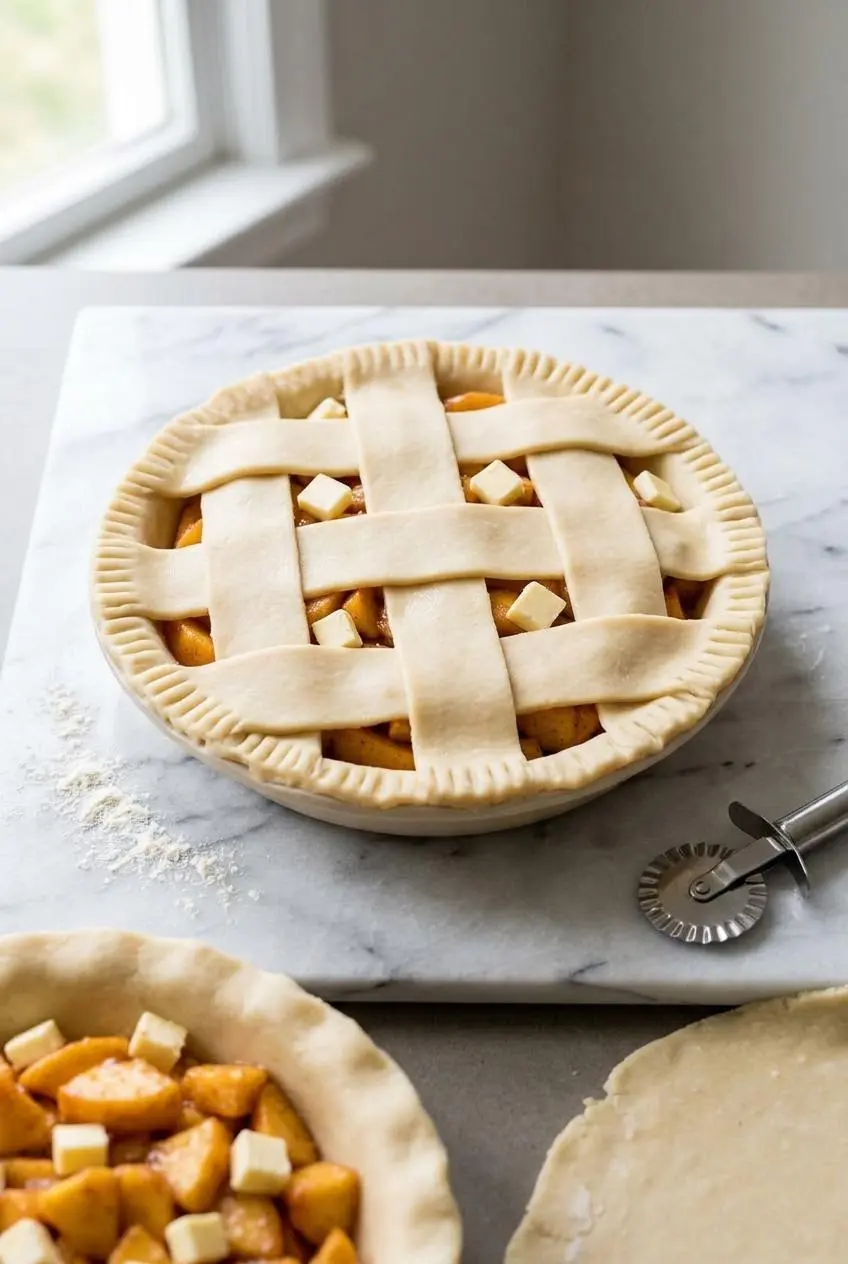
A lattice lets steam escape while giving the pie its classic look. Cut even strips, then fold back alternating strips as you weave. Keep the dough relaxed rather than stretched, especially around the rim, so it does not shrink during baking.
Two-Stage Baking Temperature Schedule
The hot start helps set the bottom crust quickly. Lowering the oven temperature afterward gives the filling time to thicken while the lattice turns deeply golden.
- Prepare the Homemade Pie Crust or All Butter Pie Crust through step 5.
Divide the chilled dough into two workable discs, one for the bottom crust and one for the top. - Combine the chopped peaches, granulated sugar, flour or instant tapioca, lemon juice, optional ginger, and cinnamon in a large bowl.
Place the filling in the refrigerator while you work with the dough so the peaches remain firm. - Position an oven rack in the lower third and heat the oven to 425°F (218°C).
Set a baking sheet on the bottom rack to catch any juices that bubble over. - Roll one chilled dough disc on a floured surface into a 12-inch circle, turning it as you roll, then fit it into a 9-inch round pie dish.
Press the dough smoothly into the dish, spread in the filling, and scatter the cold butter cubes over the peaches. - Roll the second chilled dough disc into a 12-inch circle and cut it into strips with a pastry wheel, sharp knife, or pizza cutter.
Weave the strips over the filling, trim excess dough, fold and seal the edges, then crimp the rim with a fork. - Brush the lattice lightly with the egg wash and add the coarse sugar, if using.
The wash should leave the dough lightly coated rather than dripping into the filling. - Bake at 425°F for 20 minutes, then reduce the oven temperature to 375°F (190°C) without removing the pie.
Cover the edges with a pie crust shield and continue baking for 45–50 minutes, until thick juices bubble through the center and the filling reaches about 200°F (93°C). - Move the baked pie to a cooling rack and leave it undisturbed for at least 4 hours before cutting.
The filling will firm as it cools, giving each slice cleaner edges and a glossy peach center. - Cover leftovers tightly and store in the refrigerator for up to 5 days.
Keep the pie chilled once cooled to preserve the pastry and fruit filling.
Critical Secrets for a Sliceable, Non-Soggy Pie
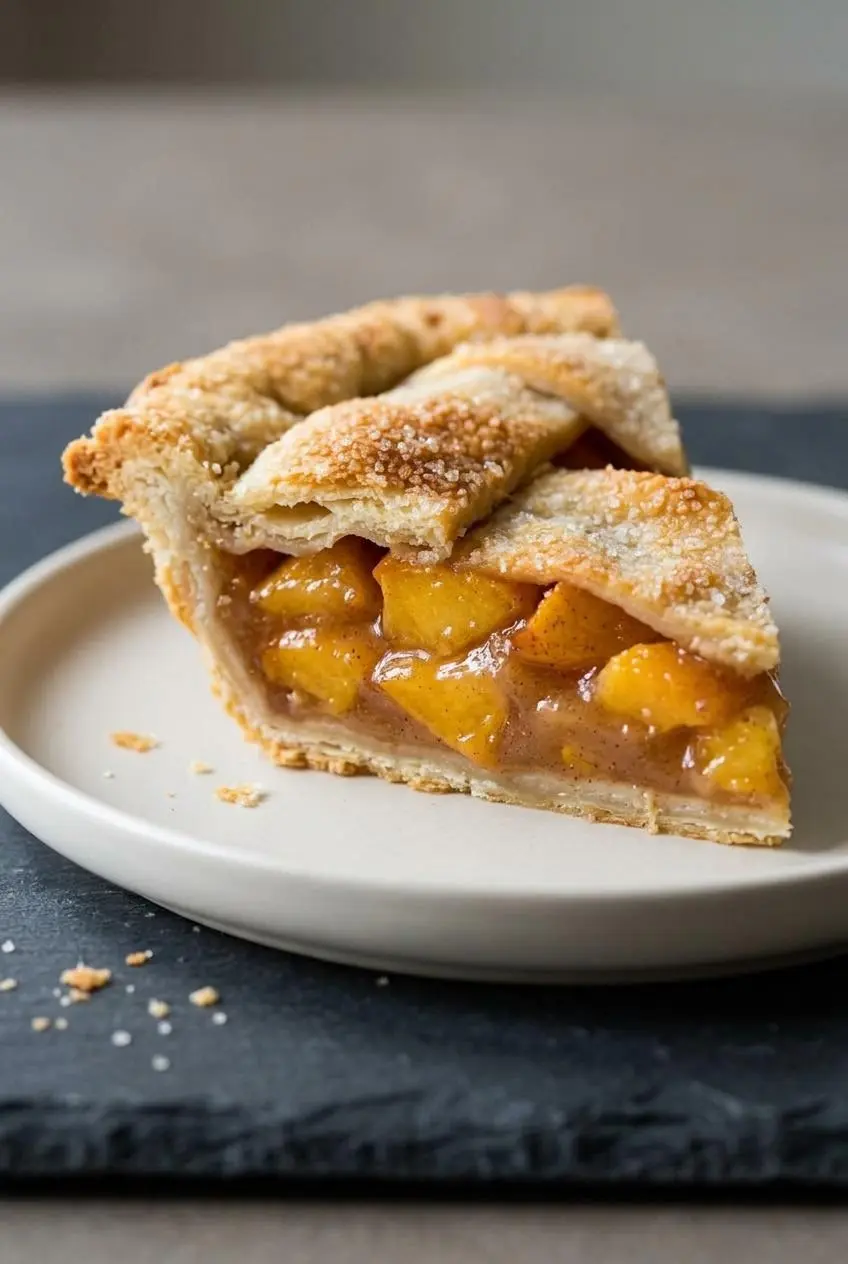
A pie can look done long before the filling has actually thickened. Wait for thick, glossy bubbles to break through the center of the lattice, not just around the edges. The juices should resemble slow-moving lava rather than a thin simmer.
- Runny filling: The peaches may have been too soft, the thickener may not have fully activated, or the pie was sliced warm. Use firm-ripe fruit, bake until the center bubbles, and cool the pie for the full 4 hours.
- Soggy bottom crust: Bake on the lower-third rack and keep the initial 425°F bake. That stronger bottom heat sets the pastry before peach juices can soak in.
- Dark edges: Add the pie crust shield after lowering the oven temperature. If the lattice browns too quickly near the end, tent the whole pie loosely with foil.
- Pale top crust: Brush the lattice evenly with egg wash before baking. It gives the pastry a richer golden finish and helps coarse sugar cling.
A sliceable pie needs a firmer set than a spoonable dessert such as classic peach cobbler. Give the starch, bubbling juices, and cooling time room to do their jobs.
Make-Ahead, Storage, and Reheating Instructions
Prepare the pastry and keep it chilled until you are ready to roll it. Avoid mixing the peach filling far ahead, since sugar quickly pulls moisture from the fruit and can make assembly messier.
After the pie has cooled, cover it tightly and refrigerate leftovers for up to 5 days. For a crisper slice, warm individual portions in a 350°F oven until heated through rather than using a microwave, which can soften the crust.
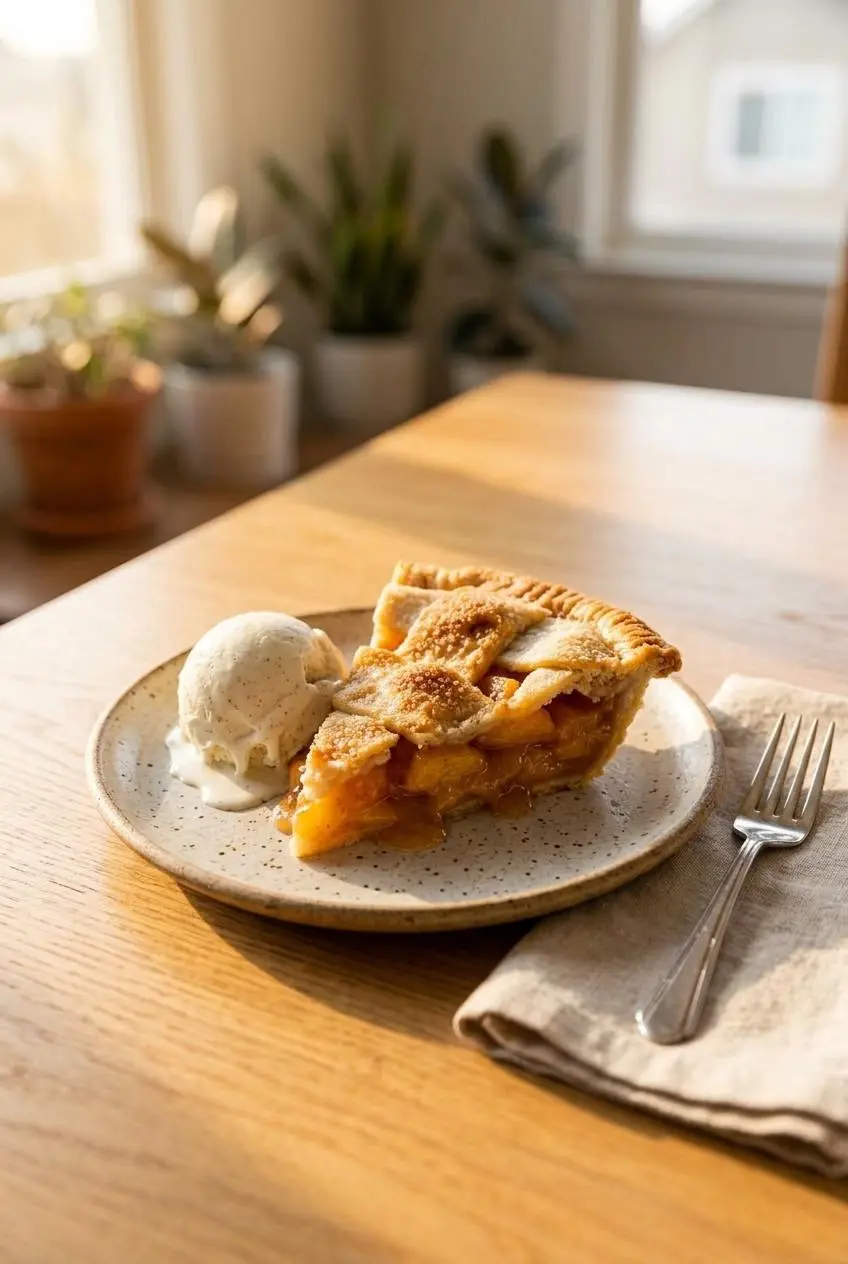
If serving the pie warm, let it finish its full cooling period first, then reheat only the portions you plan to serve. A scoop of vanilla bean ice cream or softly whipped cream with cinnamon is especially good alongside the warm fruit.
Delicious Peach Pie Variations
Keep the main pie exactly as written, then use one of these optional directions when you want a different topping or flavor profile.
Dutch Peach Crumble Pie
Replace the lattice with a buttery brown sugar and oat streusel for a crunchy Dutch-style top. The crumble gives a more rustic finish and is a good choice when you prefer not to weave pastry strips. For another streusel-topped peach dessert, try this fresh peach crisp.
Spiced Ginger and Cardamom Peach Pie
Use the optional fresh ginger and add a subtle pinch of freshly ground cardamom with the cinnamon. Cardamom brings a floral, citrusy aroma that works beautifully with ripe yellow peaches. Keep it restrained so the fruit remains the main flavor.
Baking with Frozen Peaches
Frozen peaches can work when fresh fruit is out of season. Thaw them, drain off excess liquid, and pat the fruit dry before mixing the filling. Add one additional tablespoon of starch to help account for the extra moisture.
Conclusion
This pie delivers what a summer fruit pie should: a golden, flaky crust wrapped around juicy peaches with warm cinnamon and optional ginger.
The biggest favor you can do for every slice is to wait the full 4 hours before cutting. That patience brings a clean wedge of pie instead of a puddle on the plate.
Frequently Asked Questions
What Is the Secret to a Perfect Non-Runny Peach Pie?
Choose firm-ripe peaches and cut them into sturdy chunks. Use the listed flour or instant tapioca so the fruit juices can thicken. Bake until the filling bubbles vigorously through the center and reaches about 200°F. Cool the pie for at least 4 hours before slicing.
How Do You Keep the Bottom Crust From Getting Soggy?
Place the pie on the lower-third oven rack for stronger heat beneath the dish. Start baking at 425°F for 20 minutes before lowering the temperature. Use the baking sheet on the bottom rack to catch drips without blocking heat from the pie dish. Do not remove the pie before the center filling is actively bubbling.
Can I Use Frozen or Canned Peaches for Peach Pie?
Frozen peaches are a workable option when thawed, drained, and patted dry before mixing. Add one additional tablespoon of starch for the extra moisture. Canned peaches are less suitable because their soft texture can turn mushy during the long bake.
Do I Have to Peel Peaches Before Putting Them in Pie?
Peeling gives the filling the most tender texture. For easy peeling, score each peach, blanch it in boiling water for 60 seconds, then transfer it to ice water. The skins should loosen enough to slip away easily.
Peach Pie Recipe

Equipment
- 9-inch round pie dish
- pastry wheel, sharp knife, or pizza cutter
- Baking Sheet
- pie crust shield
- Cooling Rack
- Instant-read thermometer
Ingredients
- Homemade Pie Crust or All Butter Pie Crust (both recipes make 2 crusts, 1 for bottom and 1 for top)
- 8 cups peeled chopped peaches, cut into 1-inch chunks about 1.4kg
- 2/3 cup granulated sugar 135g
- 1/2 cup all-purpose flour OR 1/4 cup instant tapioca 63g flour
- 1 Tablespoon fresh lemon juice 15ml
- 1-2 teaspoons peeled minced fresh ginger, optional
- 1 teaspoon ground cinnamon
- 2 Tablespoons cold unsalted butter, cut into small cubes 28g
- egg wash: 1 large egg beaten with 1 Tablespoon (15ml) milk
- optional: coarse sugar for sprinkling on crust
Instructions
- Prepare the Homemade Pie Crust or All Butter Pie Crust through step 5. Divide the chilled dough into two workable discs, one for the bottom crust and one for the top.
- Combine the chopped peaches, granulated sugar, flour or instant tapioca, lemon juice, optional ginger, and cinnamon in a large bowl. Place the filling in the refrigerator while you work with the dough so the peaches remain firm.
- Position an oven rack in the lower third and heat the oven to 425°F (218°C). Set a baking sheet on the bottom rack to catch any juices that bubble over.
- Roll one chilled dough disc on a floured surface into a 12-inch circle, turning it as you roll, then fit it into a 9-inch round pie dish. Press the dough smoothly into the dish, spread in the filling, and scatter the cold butter cubes over the peaches.
- Roll the second chilled dough disc into a 12-inch circle and cut it into strips with a pastry wheel, sharp knife, or pizza cutter. Weave the strips over the filling, trim excess dough, fold and seal the edges, then crimp the rim with a fork.
- Brush the lattice lightly with the egg wash and add the coarse sugar, if using. The wash should leave the dough lightly coated rather than dripping into the filling.
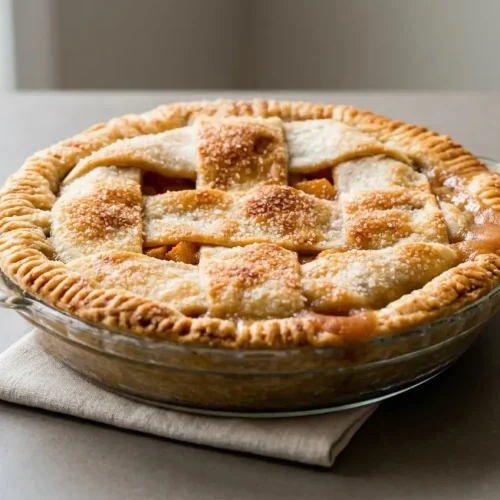
- Bake at 425°F for 20 minutes, then reduce the oven temperature to 375°F (190°C) without removing the pie. Cover the edges with a pie crust shield and continue baking for 45–50 minutes, until thick juices bubble through the center and the filling reaches about 200°F (93°C).
- Move the baked pie to a cooling rack and leave it undisturbed for at least 4 hours before cutting. The filling will firm as it cools, giving each slice cleaner edges and a glossy peach center.
- Cover leftovers tightly and store in the refrigerator for up to 5 days. Keep the pie chilled once cooled to preserve the pastry and fruit filling.