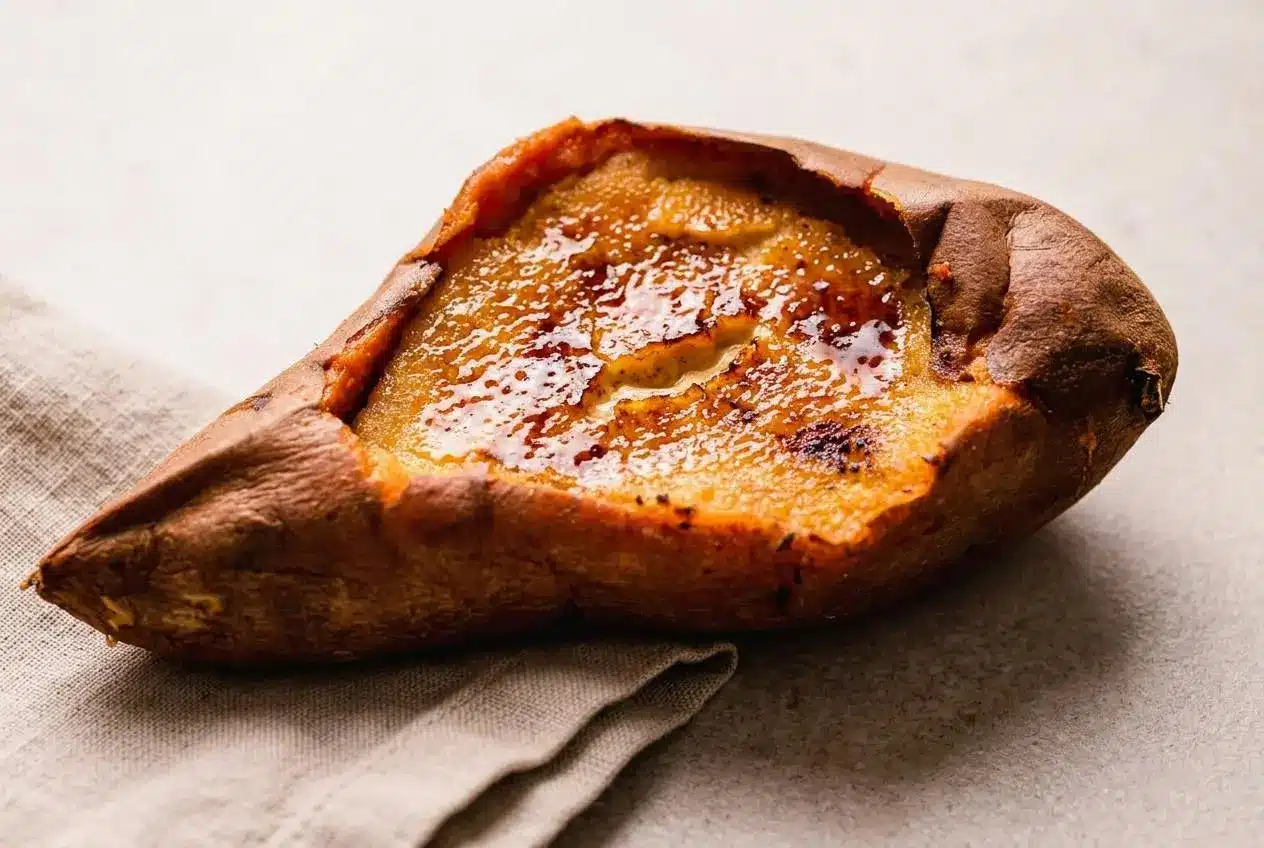
Bake sweet potatoes until tender, hollow them into bowls, and stir ½ cup puree with yolks, sugar, dairy, and spices. Bake the filling at 340°F until its center gently jiggles, chill until set, then torch the sugar topping just before serving.
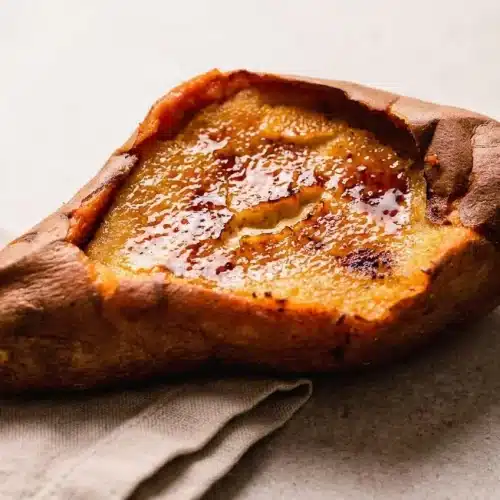
This sweet potato creme brulee recipe brings warm caramelized sugar and chilled, cinnamon-scented custard together in one spoonful. Choose edible potato shells for a rustic presentation or classic ramekins for neat individual portions. Both methods use the same rich filling.
The mixing needs no heated cream or egg tempering. The important work happens when you check the wobble, give the custard its refrigerator rest, and caramelize the top at serving time. That first glassy crack is worth the wait.
Choose sweet potatoes that rest steadily on their sides so the filled shells won’t tip.
Ingredients Needed and Why Each Matters
Sweet potato gives the filling body and earthy sweetness, yolks provide structure, and cream adds richness. Milk keeps the texture lighter, salt balances the sugar, and cinnamon and vanilla bring warmth beneath the crisp caramel topping.
- 6 large sweet potatoes washed and not peeled
- 6 large egg yolks
- ⅓ cup granulated sugar
- ½ cup sweet potato puree
- ⅛ teaspoon sea salt
- 1 teaspoon cinnamon
- 1 tablespoon pure vanilla extract
- 1 cup heavy whipping cream
- 1 cup milk
- 4-6 teaspoons granulated sugar
The whole potatoes serve as edible baking vessels, while the measured puree goes into the custard. That ½ cup comes from the flesh you scoop out, so you don’t need a separate batch. For the ramekin method, bake just one potato to provide the puree rather than preparing all six shells.
Potato variety affects the filling’s color and body:
- Orange sweet potatoes: Their moist flesh mashes readily and gives the custard a warm orange color.
- Japanese sweet potatoes, or Satsumaimo: These commonly have purple skin and pale flesh, with a drier, starchier texture and chestnut-like flavor. Expect a thicker puree and potentially denser filling.
Egg yolks help the filling set without making it cake-like. Heavy whipping cream supplies a rich mouthfeel, while milk keeps the potato-enriched custard from feeling too heavy. Measure the puree carefully rather than adding extra scooped flesh.
Use white granulated sugar for the topping. It spreads evenly and makes its amber color easy to judge. Brown sugar’s moisture and molasses make a thin, evenly caramelized crust harder to control, so save it for the optional filling variation.
I’d mash the scooped potato while it’s still warm, then let the measured puree cool before mixing it with the yolks.
How to Make Sweet Potato Crème Brûlée
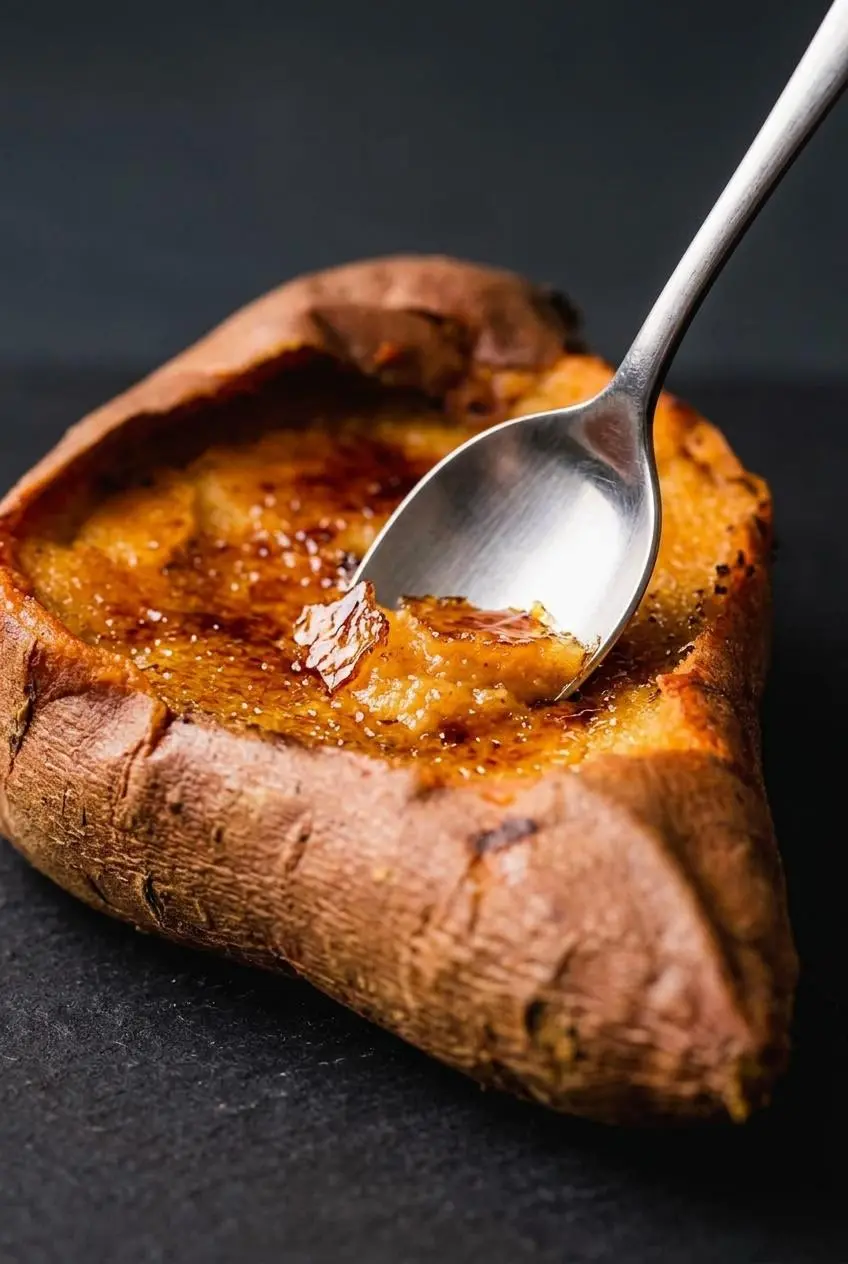
Choose one baking method, then finish with the assembly steps. The filling makes six shell portions or four to six ramekin portions, depending on vessel size.
Method 1: Baking Inside Sweet Potato Shells
The remaining potato flesh buffers the custard from direct oven heat, so these bowls don’t need a water bath. Keep their walls intact and check the filling rather than relying on the clock alone.
Instructions to bake in sweet potatoes (if baking in ramekins skip to next section)
- Heat the oven to 375°F (190°C), arrange the potatoes on a parchment-lined large baking pan, pierce their tops with a fork, and roast for 45–55 minutes before cooling enough to handle.
A fork should enter the flesh easily, with no hard center. - Gently press each warm potato from above to flatten its base, remove a slice of skin from the top, and spoon out the interior while retaining a ½-inch wall.
The hollowed potato should sit level and hold its bowl shape. - Mash or blend ½ cup of the removed flesh, using additional mashed flesh to press closed any accidental holes in the shells.
The measured puree should have no firm lumps, and each patch should close the opening. - Use a large pitcher or measuring cup to stir the yolks, custard sugar, and measured puree into a uniform mixture.
Look for an even color without streaks of yolk or pockets of potato. - Stir in the salt, cinnamon, vanilla, whipping cream, and milk without beating air into the mixture.
The filling should pour smoothly rather than carry a thick cap of foam. - Distribute the filling among the potato bowls, reserving any excess for a ramekin baked by the water-bath method below.
Check that the shells remain level and that no filling leaks onto the pan. - Reduce the oven to 340°F (170°C), bake for 20–25 minutes with adjustments for potato size, then cool completely and refrigerate for 2–4 hours or overnight until set.
At the end of baking, the perimeter should hold still while the center trembles like soft gelatin rather than sloshing like liquid.
Method 2: Baking in Ramekins with a Water Bath
A boiling water bath, also called a bain-marie, moderates the heat around the ramekins and helps prevent overcooked edges. This cold-mixed filling needs no tempering because you aren’t pouring hot cream into raw yolks.
Instructions to bake in ramekins
- Roast one sweet potato at 375°F (190°C) for 45–55 minutes, then let it cool and mash or blend the flesh for the measured puree.
The cooked interior should yield readily to a fork and mash without hard pieces. - Stir the egg yolks and custard sugar together in a large pitcher or measuring cup.
A smooth, evenly colored mixture is the goal, not a pale, whipped foam. - Incorporate the salt, cinnamon, vanilla, measured sweet potato puree, whipping cream, and milk with gentle stirring.
No visible ribbons of puree or cream should remain. - Divide the custard among 4–6 oven-safe ramekins, nestle them in a tall-sided baking pan, and carefully pour boiling water around them without splashing the filling.
The water should surround the vessels while staying outside the custard. - Bake at 340°F (170°C) for 18–22 minutes, then cool completely and refrigerate for 2–4 hours or overnight until set.
Remove the custards while their edges look stable and their centers still move with a gentle, cohesive wobble.
Torching the Sugar Crust Safely
Never put sweet potato shells under the broiler. Their dry skins can catch fire. For ramekins, use the broiler only if the manufacturer specifically rates them for broiler use; oven-safe does not automatically mean broiler-safe.
Assembly
- Scatter 1–2 teaspoons of granulated sugar over each chilled custard and spread it across the exposed surface.
A level coating melts more evenly than scattered piles or thick patches. - Immediately before serving, sweep a kitchen torch across the sugar, keeping the flame moving and about an inch clear of dry potato-skin edges, or use the broiler for broiler-rated ramekins while watching continuously.
Once the topping becomes a glossy amber sheet and hardens, serve promptly for a crisp crack.
Expert Tips and Troubleshooting Common Mistakes
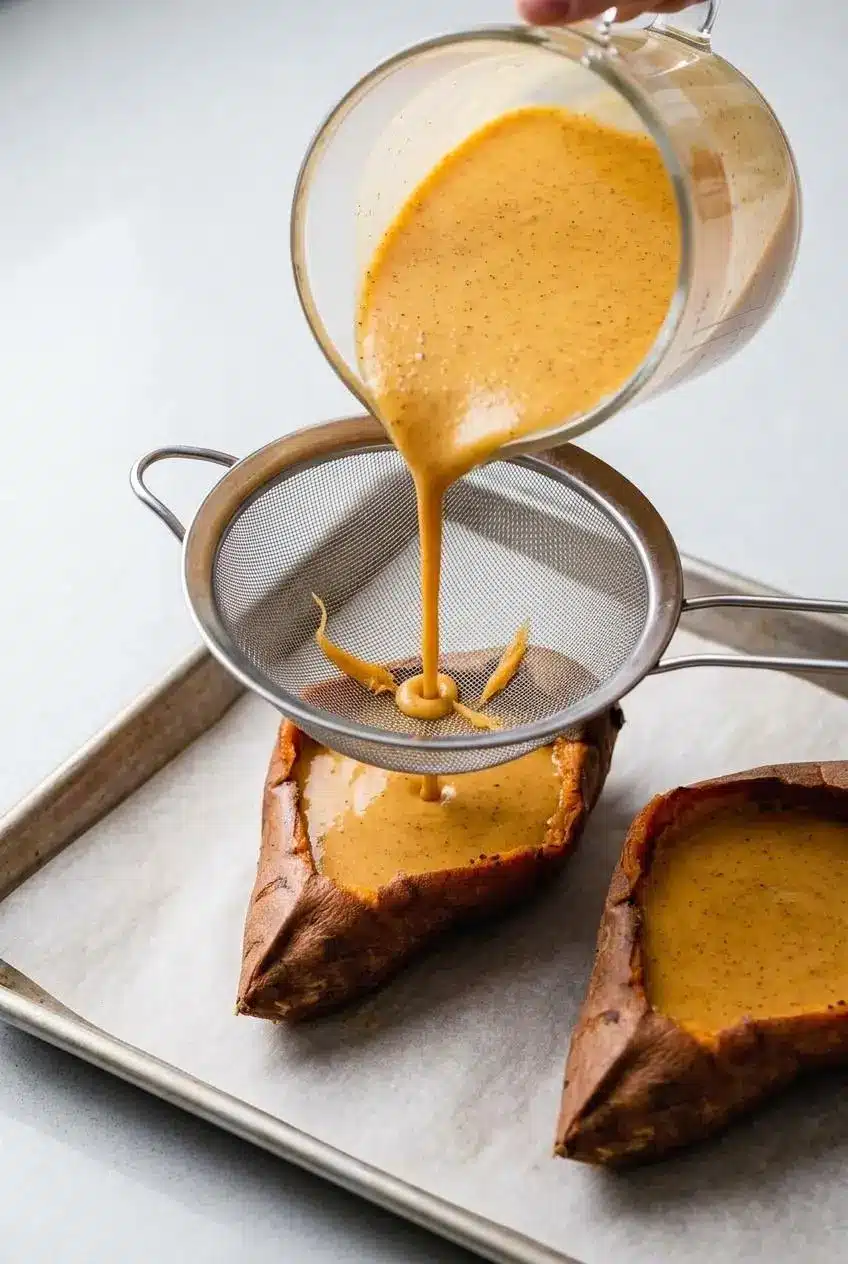
For extra silkiness, optionally strain the mixed custard through a fine-mesh sieve before filling the vessels. This catches sweet potato fibers that mashing can leave behind. A little freshly grated nutmeg is another optional addition, especially if you want a warmer holiday flavor.
Potato custard has more body than a classic Tahitian vanilla creme brulee, but it should still feel smooth rather than stringy. Straining improves texture; it cannot fix curdled eggs.
Stir the yolks and sugar gently instead of whisking vigorously. You’re combining ingredients, not building volume. Air bubbles can collect on the surface and interfere with an even sugar topping.
- Sweet potato shells: No water bath; bake for 20–25 minutes, adjusting for size; use a torch, never the broiler.
- Ramekins: Use a boiling water bath; bake for 18–22 minutes; broiling is an option only for appropriately rated vessels.
Use these cues to catch problems early:
- Foamy tops: Vigorous mixing traps air; stir gently and skim visible foam before pouring.
- Liquid centers: A sloshing center needs more baking, while a cohesive wobble is expected; don’t mistake warm custard for its final chilled texture.
- Grainy filling or watery separation: Excess baking can curdle the custard; stop at the gentle wobble rather than waiting for a rigid center, since chilling won’t reverse curdling.
- Scorched skin edges: A stationary or poorly directed torch can char the shell; keep the flame moving over the sugar and away from exposed skin.
- Syrupy topping: Moisture softens caramelized sugar; leave the topping off until serving and use the rescue approach below if needed.
Popular Variations and Dietary Swaps
Keep these adaptations separate from the main method, since different potatoes, dairy substitutes, and vessel depths can change how the custard sets.
Japanese Sweet Potato and Half-Shell Boats
For half-shell boats, cut a baked potato lengthwise once it’s cool enough to handle. Scoop a shallow well in each half, leaving supportive flesh around the skin, then add the custard. Bake until the edges set and the center gently wobbles, chill thoroughly, and torch sugar across the wide surface.
Satsumaimo works well for this presentation because its pale, chestnut-like flesh offers a different flavor from orange sweet potatoes. Its drier texture can make the filling thicker, so puree it thoroughly and keep the measured potato amount unchanged. The shallower boats may bake differently from whole bowls; follow the wobble cue rather than assuming identical timing.
Dairy-Free No-Cream Option and Holiday Spices
- Coconut milk: For an optional dairy-free version, use full-fat canned coconut milk in place of the cream and milk, maintaining the total liquid volume. Expect coconut flavor and a different richness; this is not vegan because it still contains egg yolks, and its texture may differ.
- Holiday spices: Add freshly grated nutmeg and replace half the filling’s granulated sugar with light brown sugar for a deeper flavor. Keep white granulated sugar for the caramelized topping.
- Layered family-style bake: Spread seasoned mashed sweet potatoes in a shallow baking dish, add custard above, and bake in a water bath. This changes the depth and yield, so the individual-portion bake times don’t transfer directly.
Serving Suggestions, Make-Ahead, and Storage
Plan the chilling before you plan the topping. The custard develops its final texture as it cools; the refrigerator rest firms the filling after the oven has set the egg mixture. Torching a warm, loose custard won’t make it ready to serve.
For make-ahead preparation, bake and chill the untopped custards overnight as directed in the method. Keep them covered in the refrigerator, protecting the surfaces from contact with the covering. Add sugar only when you’re ready to caramelize and serve. Keep leftovers covered and chilled as well, recognizing that an already-torched crust will soften.
If the crust has dissolved into syrup, gently blot surface moisture without pressing into the custard. Keep the filling chilled, then try a fresh, thin sugar coating and torch it at serving time. This may restore some crunch, though it won’t always match a freshly finished topping.
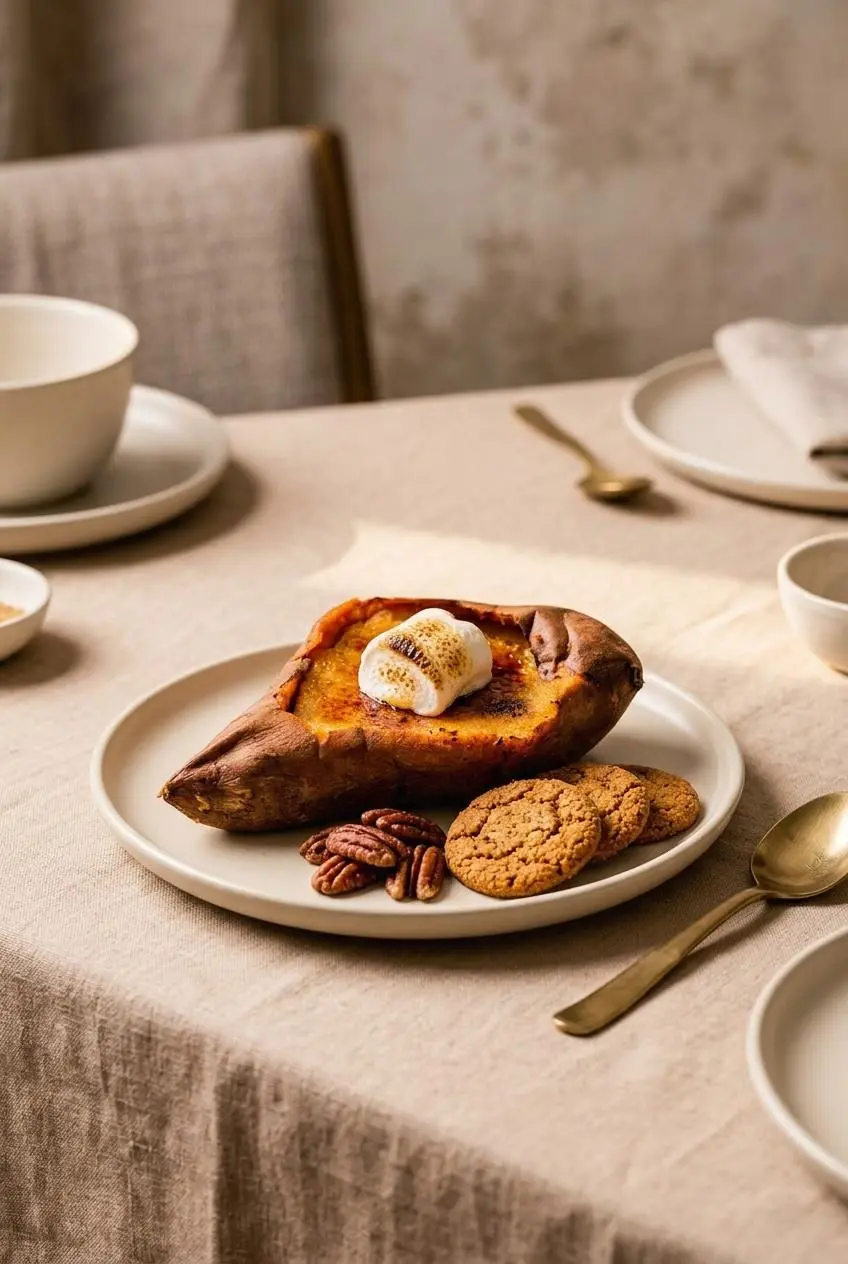
Serve promptly after the sugar hardens so the warm caramel contrasts with the cold filling. An optional toasted marshmallow echoes the flavors of marshmallow sweet potato casserole. Crisp ginger snaps or toasted pecans also provide a pleasant contrast alongside ramekin portions.
Conclusion
Sweet potato crème brûlée pairs velvety, warmly spiced filling with a thin caramel shell, whether you serve it in rustic potato bowls or classic ramekins.
Watch for the gentle center wobble, let the custard chill fully, and save the sugar topping for the final moment. Then bring out the spoons while the crust still cracks.
Frequently Asked Questions
How Do You Make Crème Brûlée in a Sweet Potato?
Bake the potatoes at 375°F until tender, remove the top skin, and hollow each one while leaving a ½-inch wall. Add the sweet potato custard and bake at 340°F until the edges set around a gently wobbly center. Cool, chill until set, and torch the sugar just before serving.
How Do You Make Half-Shell Sweet Potato Crème Brûlée?
Slice a baked potato lengthwise and scoop a shallow well into each half. Fill with custard, bake until gently set, and chill thoroughly. Spread sugar over the exposed filling and caramelize with a torch.
Can You Make Sweet Potato Crème Brûlée Without a Torch?
Yes, use the broiler if your ramekins are specifically broiler-rated, watching continuously as the sugar melts. Do not broil potato shells because their dry skins can catch fire.
Can I Torch the Top of Crème Brûlée Ahead of Time?
Wait until just before serving for the crispest crust. Caramelized sugar absorbs moisture during refrigeration and can dissolve into syrup; prepare the custards ahead, but leave them untopped.
Sweet Potato Creme Brulee Recipe

Equipment
- 4-6 oven safe ramekins or use 6 sweet potatoes instead of ramekins
Ingredients
- 6 large sweet potatoes washed and not peeled
- 6 large egg yolks
- ⅓ cup granulated sugar
- ½ cup sweet potato puree
- ⅛ teaspoon sea salt
- 1 teaspoon cinnamon
- 1 tablespoon pure vanilla extract
- 1 cup heavy whipping cream
- 1 cup milk
- 4-6 teaspoons granulated sugar
Instructions
Instructions to bake in sweet potatoes (if baking in ramekins skip to next section)
- Heat the oven to 375°F (190°C), arrange the potatoes on a parchment-lined large baking pan, pierce their tops with a fork, and roast for 45–55 minutes before cooling enough to handle. A fork should enter the flesh easily, with no hard center.
- Gently press each warm potato from above to flatten its base, remove a slice of skin from the top, and spoon out the interior while retaining a ½-inch wall. The hollowed potato should sit level and hold its bowl shape.
- Mash or blend ½ cup of the removed flesh, using additional mashed flesh to press closed any accidental holes in the shells. The measured puree should have no firm lumps, and each patch should close the opening.
- Use a large pitcher or measuring cup to stir the yolks, custard sugar, and measured puree into a uniform mixture. Look for an even color without streaks of yolk or pockets of potato.
- Stir in the salt, cinnamon, vanilla, whipping cream, and milk without beating air into the mixture. The filling should pour smoothly rather than carry a thick cap of foam.
- Distribute the filling among the potato bowls, reserving any excess for a ramekin baked by the water-bath method below. Check that the shells remain level and that no filling leaks onto the pan.
- Reduce the oven to 340°F (170°C), bake for 20–25 minutes with adjustments for potato size, then cool completely and refrigerate for 2–4 hours or overnight until set. At the end of baking, the perimeter should hold still while the center trembles like soft gelatin rather than sloshing like liquid.
Instructions to bake in ramekins
- Roast one sweet potato at 375°F (190°C) for 45–55 minutes, then let it cool and mash or blend the flesh for the measured puree. The cooked interior should yield readily to a fork and mash without hard pieces.
- Stir the egg yolks and custard sugar together in a large pitcher or measuring cup. A smooth, evenly colored mixture is the goal, not a pale, whipped foam.
- Incorporate the salt, cinnamon, vanilla, measured sweet potato puree, whipping cream, and milk with gentle stirring. No visible ribbons of puree or cream should remain.
- Divide the custard among 4–6 oven-safe ramekins, nestle them in a tall-sided baking pan, and carefully pour boiling water around them without splashing the filling. The water should surround the vessels while staying outside the custard.
- Bake at 340°F (170°C) for 18–22 minutes, then cool completely and refrigerate for 2–4 hours or overnight until set. Remove the custards while their edges look stable and their centers still move with a gentle, cohesive wobble.
Assembly
- Scatter 1–2 teaspoons of granulated sugar over each chilled custard and spread it across the exposed surface. A level coating melts more evenly than scattered piles or thick patches.
- Immediately before serving, sweep a kitchen torch across the sugar, keeping the flame moving and about an inch clear of dry potato-skin edges, or use the broiler for broiler-rated ramekins while watching continuously. Once the topping becomes a glossy amber sheet and hardens, serve promptly for a crisp crack.