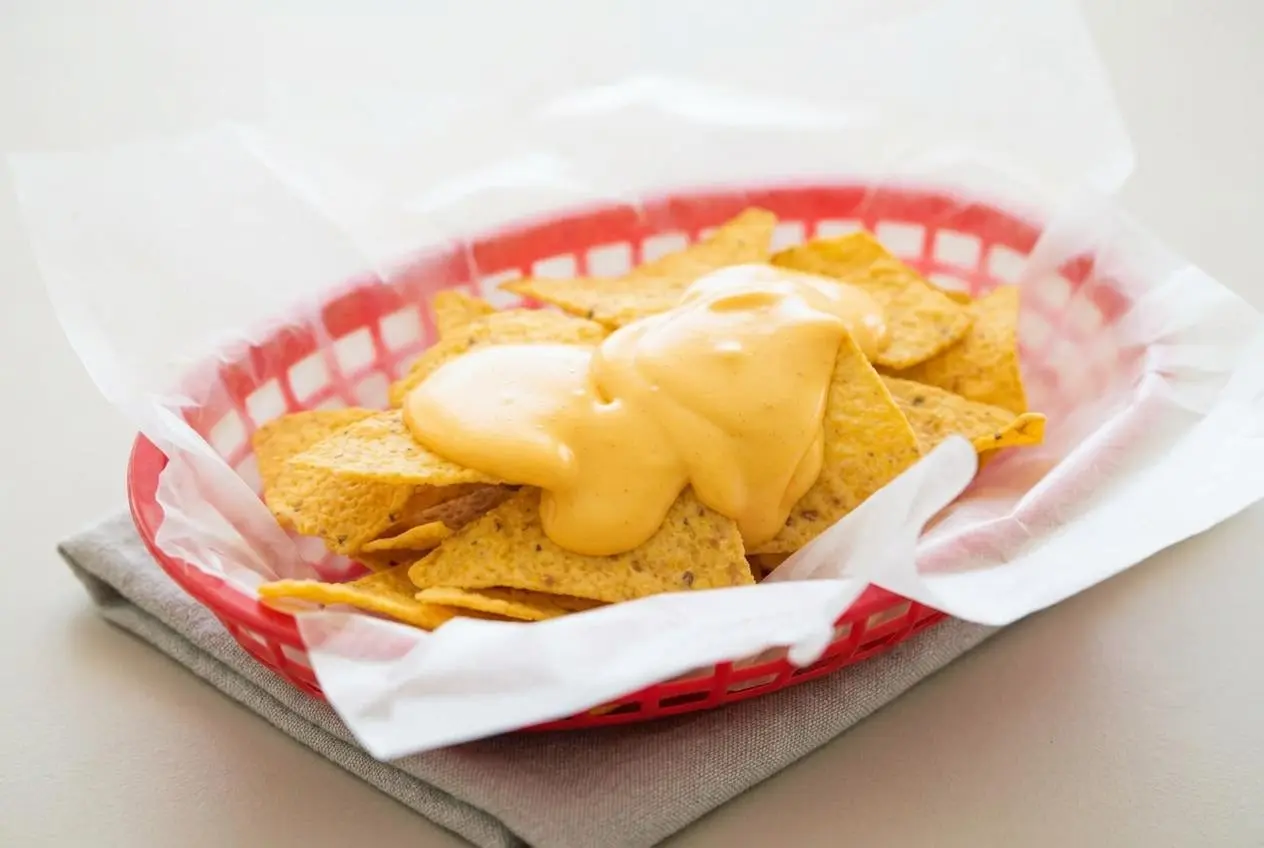
Make smooth cheese sauce in 10 minutes by whisking butter and flour into a roux, adding whole milk until thickened, then melting freshly grated sharp cheddar off the heat.
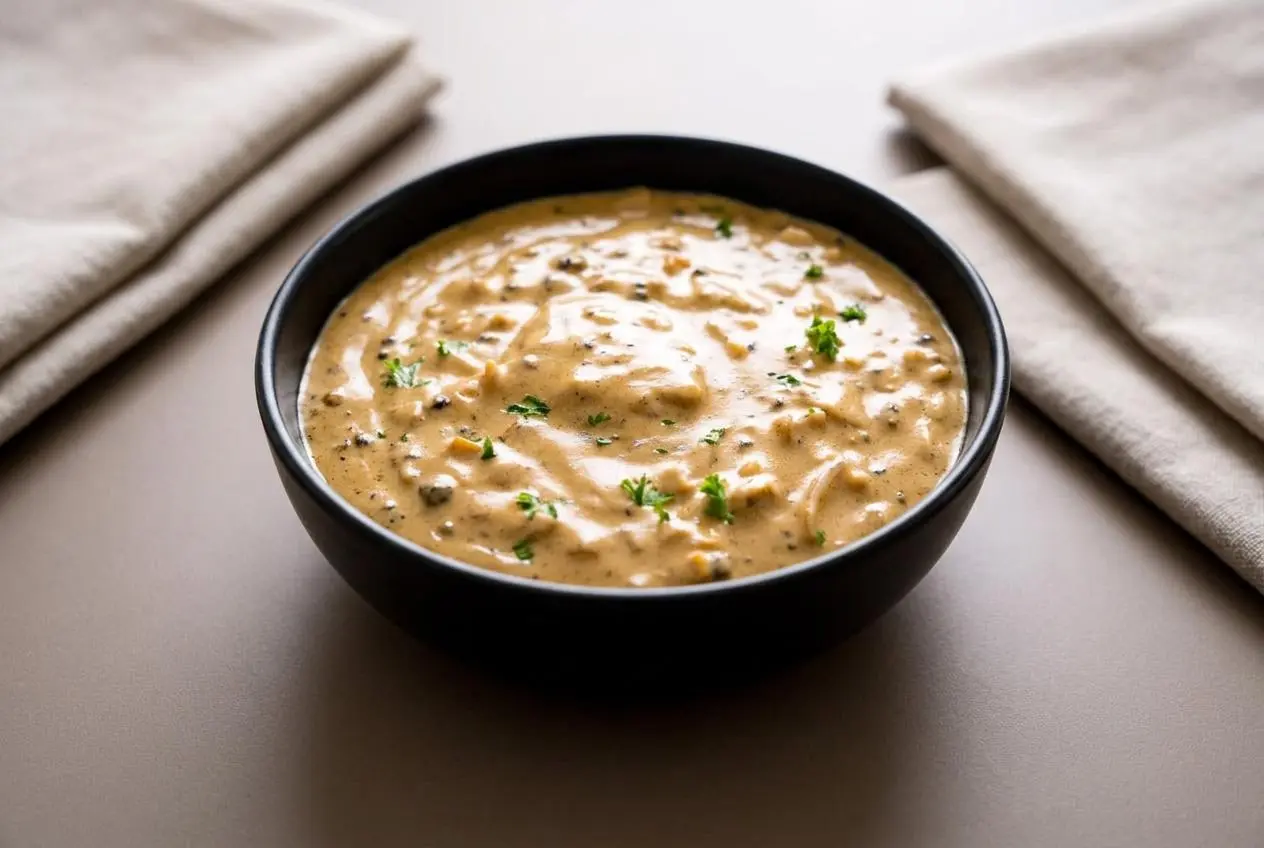
This homemade nacho cheese sauce delivers warm, sharp cheddar flavor with a velvety texture that clings beautifully to chips, fries, and burgers. It uses real cheese and a quick stovetop method rather than processed cheese blocks.
The key is controlling the heat. A brief simmer builds body, while the pan’s residual warmth melts the cheddar into a glossy dip. That final stir makes all the difference.
Grate the cheddar before starting so it is ready to melt the moment the pan comes off the burner.
Essential Ingredients for Silky Nacho Cheese
Each ingredient has a distinct job: butter and flour create structure, whole milk brings creamy body, cheddar provides sharp flavor, and salt with cayenne keeps the richness balanced.
- 2 tbsp butter (salted or unsalted)
- 2 tbsp all-purpose flour
- 1 cup whole milk
- 1/4 tsp salt
- 1/8 tsp cayenne pepper (or to taste)
- 8 oz block sharp cheddar cheese grated
Butter and flour form a blond roux, which thickens the milk and gives the melted cheese a stable, spoon-coating body. Whole milk has enough richness to make the sauce taste round and creamy without muting the cheddar. Salt sharpens the cheese flavor, while cayenne adds a gentle warmth that keeps the sauce from tasting flat.
I grate cheddar on the smaller holes of a box grater so it melts quickly and evenly once it hits the warm sauce.
Why Freshly Grated Block Cheddar Is Non-Negotiable
Buy cheddar in a block and grate it yourself. Bagged shredded cheese is often coated with cellulose or starches to keep the shreds separate, and those coatings can leave a sauce powdery, grainy, or reluctant to come together.
Sharp cheddar gives the sauce a bold, familiar nacho flavor. Medium cheddar melts well too, but its milder taste can get lost under salty chips or hearty toppings. Freshly grated cheese drops into the warm milk mixture in loose shreds and melts into a smooth ribbon instead of clumping.
- Sharp cheddar: bold flavor and a classic homemade nacho character.
- Medium cheddar: gentler flavor with a softer cheese profile.
- Pre-shredded cheddar: convenient, but more likely to create a less silky finish.
The Role of the Butter and Flour Roux
The roux is the quiet workhorse here. When butter and flour cook together, the flour loses its raw taste and thickens the milk into a light béchamel-style foundation. If you enjoy understanding that technique in more detail, this classic bechamel sauce is a helpful next step.
Use equal parts butter and flour, then whisk until the paste looks pale blond and foamy around the edges. That texture tells you the flour has absorbed the butter and is ready for milk. Keep it blond rather than browned, since a darker roux would bring a toastier flavor that distracts from the cheddar.
How to Make Homemade Nacho Cheese Sauce
Work steadily once the roux starts bubbling. The sauce moves quickly, but each stage has a clear cue that helps keep the cheese smooth.
- Warm the butter in a medium skillet over medium heat until fully melted.
It should look fluid and lightly foamy, with no browning. - Whisk the flour into the melted butter to form a smooth paste.
Keep whisking until the roux turns pale blond and bubbles around the perimeter. - Cook the foaming roux for 60 seconds over medium heat.
The floury smell should soften before the milk goes in. - Pour in the whole milk gradually while whisking continuously.
The mixture will loosen at first, then become smooth with no dry pockets of roux. - Raise the heat to high and whisk until the milk mixture reaches a boil.
Watch closely as bubbles rise across the surface and the sauce begins to thicken. - Immediately lower the heat to a simmer and cook for about 30 seconds.
The sauce is ready when it lightly coats the back of a spoon and falls in a smooth ribbon. - Whisk in the salt and cayenne pepper.
The sauce should remain glossy and evenly seasoned without visible spice clumps. - Turn off the heat and move the skillet completely off the burner before adding the grated cheddar.
The bubbling should settle, which means the pan is no longer too hot for the cheese. - Stir gently until all of the cheddar has melted into the sauce.
Serve when the dip looks silky, uniform, and warm, as it will firm slightly while it sits.
Removing the skillet from direct heat matters because cheddar proteins tighten when they get too hot. Residual warmth melts the cheese gradually, keeping the fat and dairy solids blended instead of allowing the sauce to turn oily or gritty. If the sauce makes a hard bubbling sound after the cheese goes in, the pan is too hot.
Troubleshooting Grainy or Split Cheese Sauce
A grainy cheese sauce usually comes from too much heat or cheese that contains added anti-caking agents. Most texture problems are recoverable if you stop heating before the sauce gets worse.
- The sauce looks grainy: The cheese likely overheated and the proteins tightened. Take the skillet off the burner immediately, then whisk firmly until the sauce begins to smooth out.
- Grease is pooling on top: The emulsion has started to separate. Remove the pan from heat, add a small splash of warm milk or warm water, and whisk vigorously to bring the sauce back together.
- The sauce is too thick: Cheese sauce naturally tightens as it cools. Set it over the lowest heat and whisk in warm milk, water, or pickled jalapeño brine a little at a time until it pours in a ribbon.
- The sauce tastes bland: Add salt carefully, then reassess. A small pinch of cayenne can make sharp cheddar taste more lively without making the dip aggressively spicy.
- The sauce has lumps before the cheese goes in: The milk may have been added too quickly. Whisk continuously while the milk heats, scraping around the skillet edges where thickened roux tends to hide.
Do not boil the sauce after adding cheddar. A gentle melt is enough. High heat can force the fats out of the cheese, leaving a broken sauce that looks oily and feels sandy on the tongue.
Storing, Reheating, and Keeping It Warm for a Party
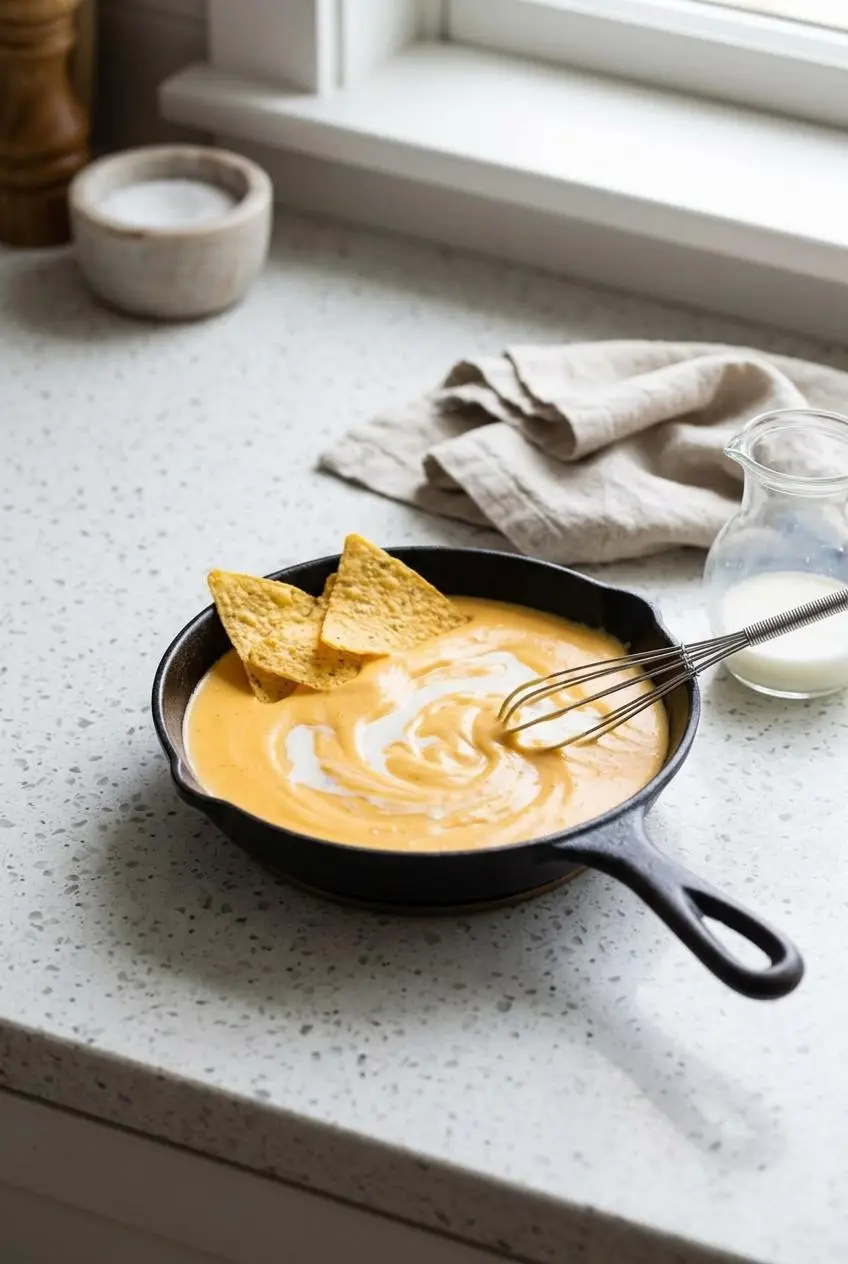
If you have leftovers, let the sauce cool slightly before transferring it to an airtight container and chilling it promptly. Keep the refrigerator at 40 °F or below to slow bacterial growth in perishable foods, as outlined in refrigerator temperature guidance for perishable foods.
Reheat the sauce in a small skillet over medium-low heat, stirring often and adding a splash of milk as needed. Start gently because chilled cheese sauce firms up, and slow warming helps it return to a velvety consistency. Avoid intense microwave heat, which can create hot spots and cause separation.
For game day, transfer freshly made warm sauce to a small slow cooker or fondue pot set to warm. Stir occasionally, especially around the edges and bottom, and loosen it with a spoonful of warm milk if it starts to thicken. Keep the lid slightly ajar only if condensation is dripping back into the sauce and making it thin.
For the best texture, make the sauce close to serving time. The stovetop method is quick enough that you can refresh it shortly before guests arrive without turning party prep into a second job.
Flavor Variations and Serving Ideas
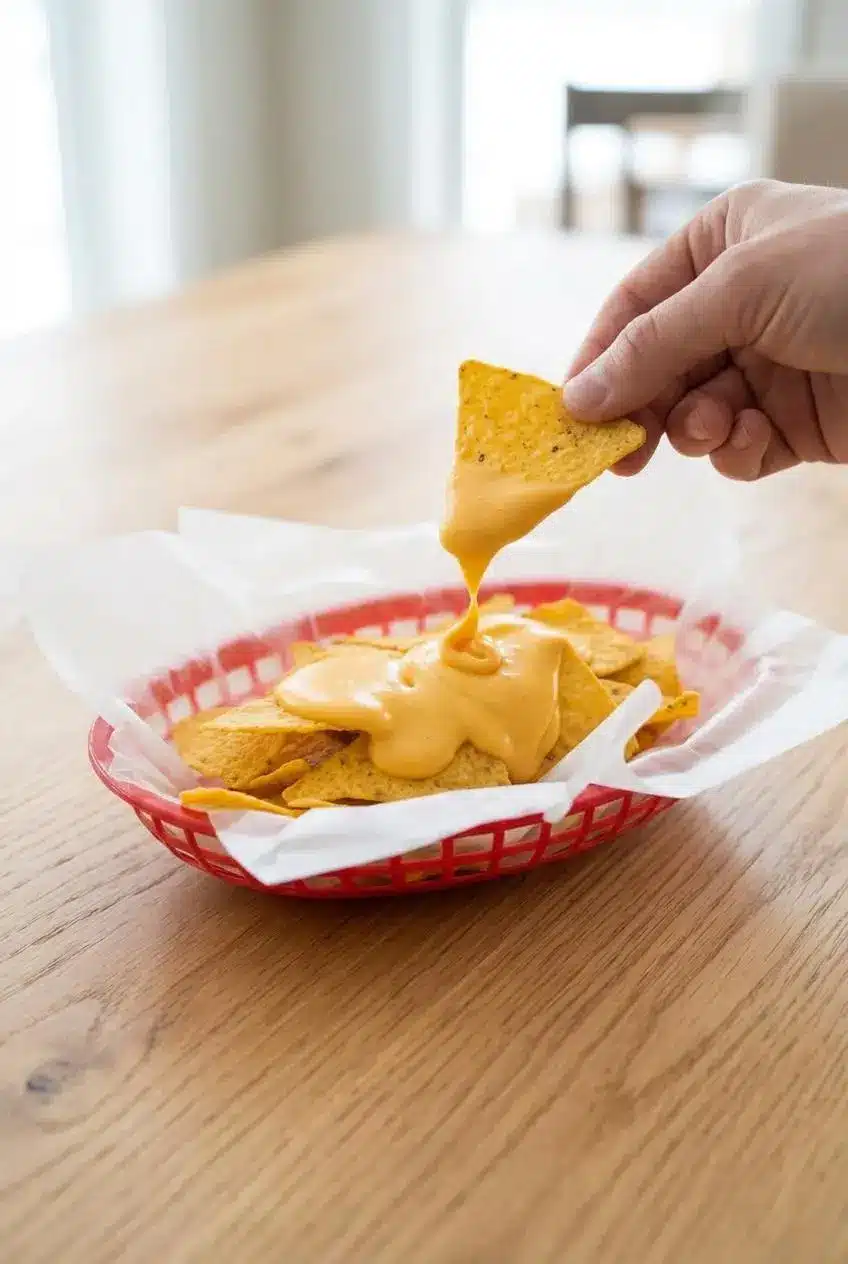
Keep the cheddar version as written when you want a straightforward, sharp cheese dip. Once you know the heat control, optional add-ins can take the flavor toward stadium nachos, spicy queso, or a smoky Southwest-style sauce.
Concession-Style Pickled Jalapeño Flavor
For that nostalgic movie-theater and ballpark tang, stir pickled jalapeño brine into the finished sauce off the heat. The brine adds mild heat, salt, and acidity that cuts through rich cheddar. Add smoked paprika if you want a deeper, slightly smoky finish.
Use the brine gradually and taste as you go. It is an especially good choice when serving heavily salted tortilla chips, because its acidity keeps the overall flavor from becoming too heavy.
Spicy Pepper Jack and Green Chile Blend
For more heat, replace part of the sharp cheddar with freshly grated pepper jack. It keeps the sauce creamy while adding a direct chile kick. For a mellow Southwest queso profile, fold in drained diced mild green chiles with a pinch of ground cumin after the cheese has melted.
- Pepper jack: adds spicy, creamy chile flavor without needing hot sauce.
- Colby: softens the sharpness of cheddar for a milder, more buttery dip.
- Green chiles and cumin: create a smoky, savory queso direction with gentle heat.
Put the sauce to work beyond a bowl of chips:
- Dip warm salted soft pretzels into it for an easy snack-board centerpiece.
- Drizzle it over loaded chili cheese fries for a messy, satisfying game-day plate.
- Spoon it over baked tater tots with scallions, jalapeños, or crumbled bacon.
- Use it as a warm topping for smash burgers, hot dogs, or cheeseburger sliders.
- Serve it beside roasted broccoli or cauliflower when you want a vegetable side with extra appeal.
For a broader party spread, pair the chips and toppings with a bowl of warm chili cheese dip. The two dips offer different textures and make it easy to build a more substantial snack table.
Conclusion
This sauce gives you warm, rich cheddar flavor in 10 minutes with butter, flour, whole milk, and real cheese. The result is smooth enough to pour and thick enough to cling to every chip.
Grate the cheddar from a block, cook the roux until foamy, and melt the cheese off the heat. Those small choices make a silky bowl of nachos much easier to pull off.
Frequently Asked Questions
Why Is My Homemade Nacho Cheese Grainy?
Graininess usually means the cheese got too hot or the cheese contained anti-caking starches. Grate cheddar from a block rather than using bagged shreds. Take the skillet off the burner before stirring in the cheese. If it starts looking sandy, remove it from heat and whisk firmly with a small splash of warm milk.
How Do I Thin Out Nacho Cheese Sauce That Became Too Thick?
Warm the sauce over low heat and whisk in warm whole milk, water, or pickled jalapeño brine gradually. Stop when the sauce flows from a spoon in a smooth, pourable ribbon. Use warm liquid rather than cold liquid, which helps the sauce loosen without dropping the pan temperature too sharply.
How Do You Keep Nacho Cheese Warm for a Party?
Move the finished sauce to a mini slow cooker or fondue pot set to warm. Stir it regularly, paying attention to the bottom where cheese can thicken first. If it becomes too thick, stir in a splash of warm milk. Avoid turning the setting up high, since excessive heat can cause the cheese to separate.
Can I Make This Nacho Cheese Sauce Ahead of Time and Reheat It?
Yes. Chill the cooled sauce in an airtight container, then reheat it slowly in a skillet over medium-low heat. Whisk in a splash of milk as it warms to restore the creamy texture. Gentle stovetop heat works better than blasting it with intense microwave heat.
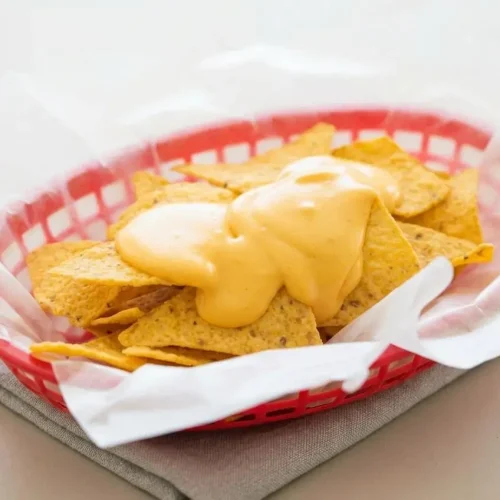
Nacho Cheese Sauce

Equipment
- medium size skillet
- Whisk
- Box grater
Ingredients
- 2 tbsp butter (salted or unsalted)
- 2 tbsp all-purpose flour
- 1 cup whole milk
- 1/4 tsp salt
- 1/8 tsp cayenne pepper (or to taste)
- 8 oz block sharp cheddar cheese grated
Instructions
- Warm the butter in a medium skillet over medium heat until fully melted. It should look fluid and lightly foamy, with no browning.
- Whisk the flour into the melted butter to form a smooth paste. Keep whisking until the roux turns pale blond and bubbles around the perimeter.
- Cook the foaming roux for 60 seconds over medium heat. The floury smell should soften before the milk goes in.
- Pour in the whole milk gradually while whisking continuously. The mixture will loosen at first, then become smooth with no dry pockets of roux.
- Raise the heat to high and whisk until the milk mixture reaches a boil. Watch closely as bubbles rise across the surface and the sauce begins to thicken.
- Immediately lower the heat to a simmer and cook for about 30 seconds. The sauce is ready when it lightly coats the back of a spoon and falls in a smooth ribbon.
- Whisk in the salt and cayenne pepper. The sauce should remain glossy and evenly seasoned without visible spice clumps.
- Turn off the heat and move the skillet completely off the burner before adding the grated cheddar. The bubbling should settle, which means the pan is no longer too hot for the cheese.
- Stir gently until all of the cheddar has melted into the sauce. Serve when the dip looks silky, uniform, and warm, as it will firm slightly while it sits.