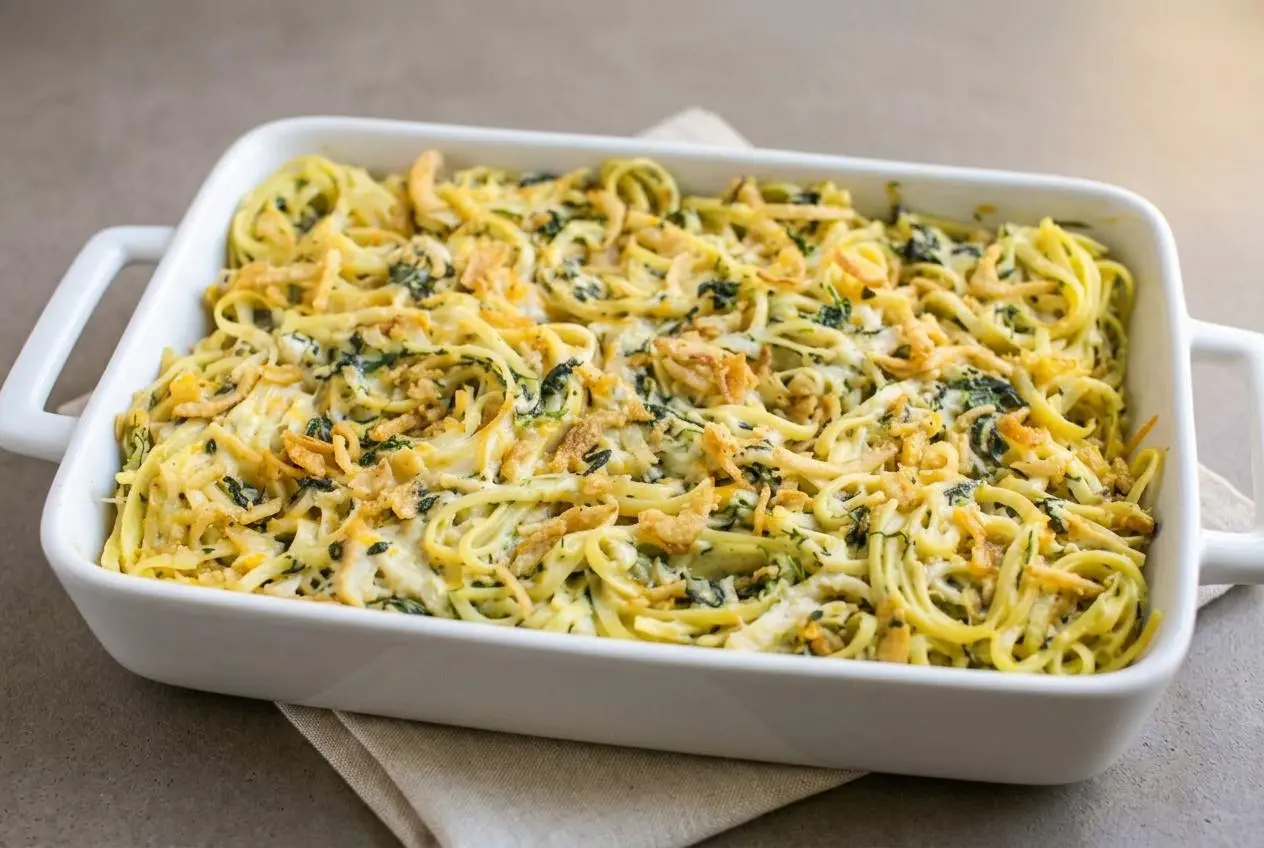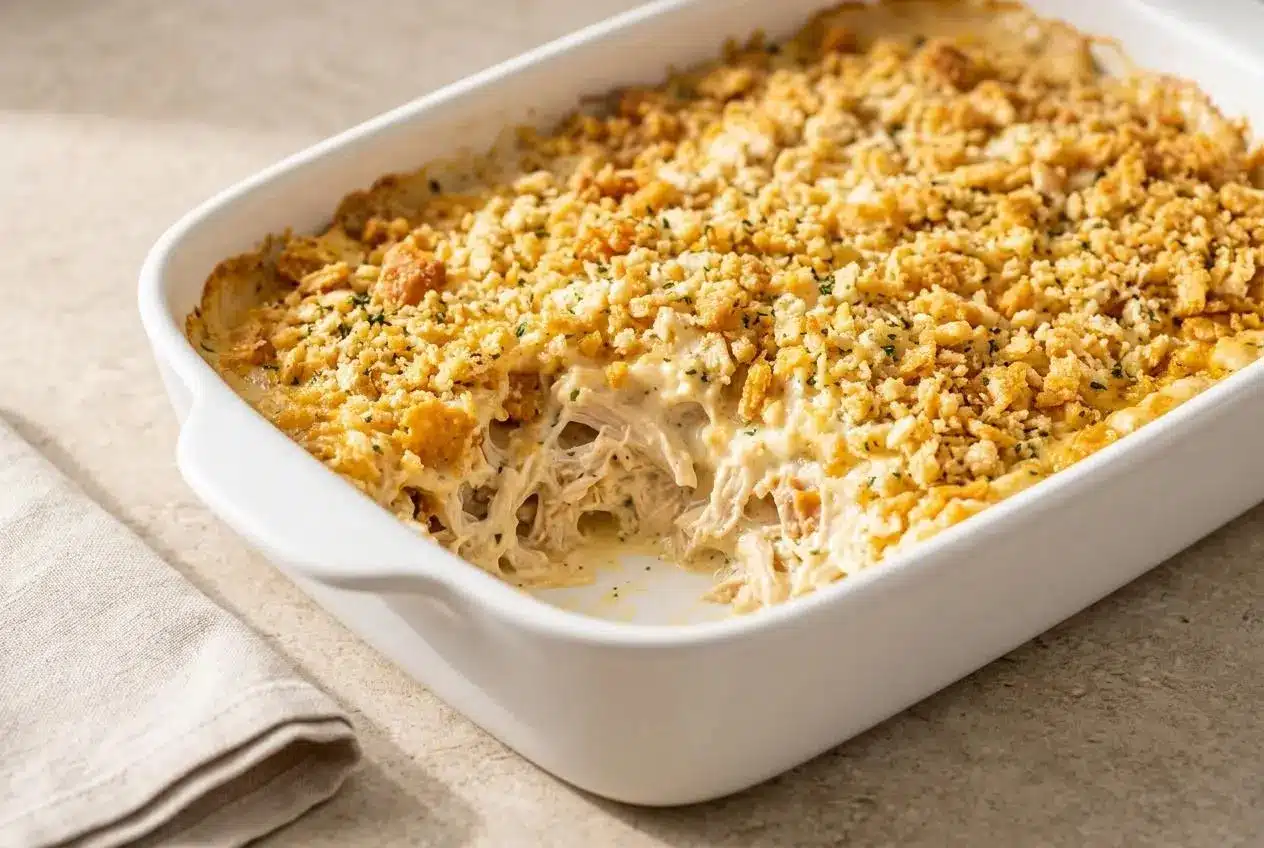
Million Dollar Chicken Casserole is a creamy chicken casserole recipe made with cooked chicken, cream cheese, cottage cheese, sour cream, cream of chicken soup, and a buttery Ritz cracker topping. It bakes in a 9×9 dish until hot and bubbly, then rests briefly so it scoops cleanly.
If you want an easy weeknight dinner that tastes rich and comforting without a long prep session, this one earns its name. The filling is soft and creamy, the top gets crisp and buttery, and the whole thing comes together with simple ingredients you may already have around.
It’s also flexible in the ways that matter. You can use rotisserie chicken, make it ahead, freeze it for later, or serve it over rice or noodles when you want to stretch it into an even heartier meal.
Ingredients
The ingredient list is short, but each part pulls its weight. Together they make that rich, cozy filling people expect from a cream cheese chicken bake, while the cracker topping gives you the crunchy finish that keeps each bite from feeling too heavy.
- 4½ cups chopped cooked chicken
- 4-oz cream cheese, room temperature
- 1 cup cottage cheese
- ½ cup sour cream
- 1 (10.5-oz) can Unsalted Cream of Chicken Soup
- ¼ tsp garlic powder
- ¼ tsp dried onion powder
- 1 sleeve Ritz crackers, crushed
- 5 Tbsp butter, melted
If you’re starting with plain chicken, rotisserie chicken is the fastest option and works beautifully here. You can also poach or bake chicken breasts, let them cool a bit, then chop them. Stick with the measured 4½ cups so the filling stays creamy instead of turning dry and overpacked.
Key Ingredient Notes
Cream cheese gives the casserole its rich, velvety base. This is the ingredient that makes the filling taste extra indulgent, so room temperature matters. Cold cream cheese is the tiny villain here because it leaves little lumps behind.
Cottage cheese adds moisture and protein, and it helps keep the filling soft instead of heavy. Full-fat cottage cheese gives the best texture. If your brand looks very loose in the container, pour off any extra liquid first.
Sour cream adds a gentle tang that balances the richer dairy ingredients. Without it, the casserole can taste flat and overly heavy.
Cooked chicken is the backbone of the dish. Chopped chicken works better than large shreds because it mixes more evenly and gives you cleaner scoops. This is a great leftover chicken recipe, especially after a roast chicken night.
Unsalted cream of chicken soup helps bind everything into one smooth filling and keeps the salt level more controlled. Since the crackers and butter already bring plenty of flavor, the unsalted soup is a smart choice.
Ritz crackers and melted butter make the signature topping. You want the crumbs to look evenly moistened and sandy before they go on the casserole so they bake up crisp instead of patchy.
How to Make Million Dollar Chicken Casserole
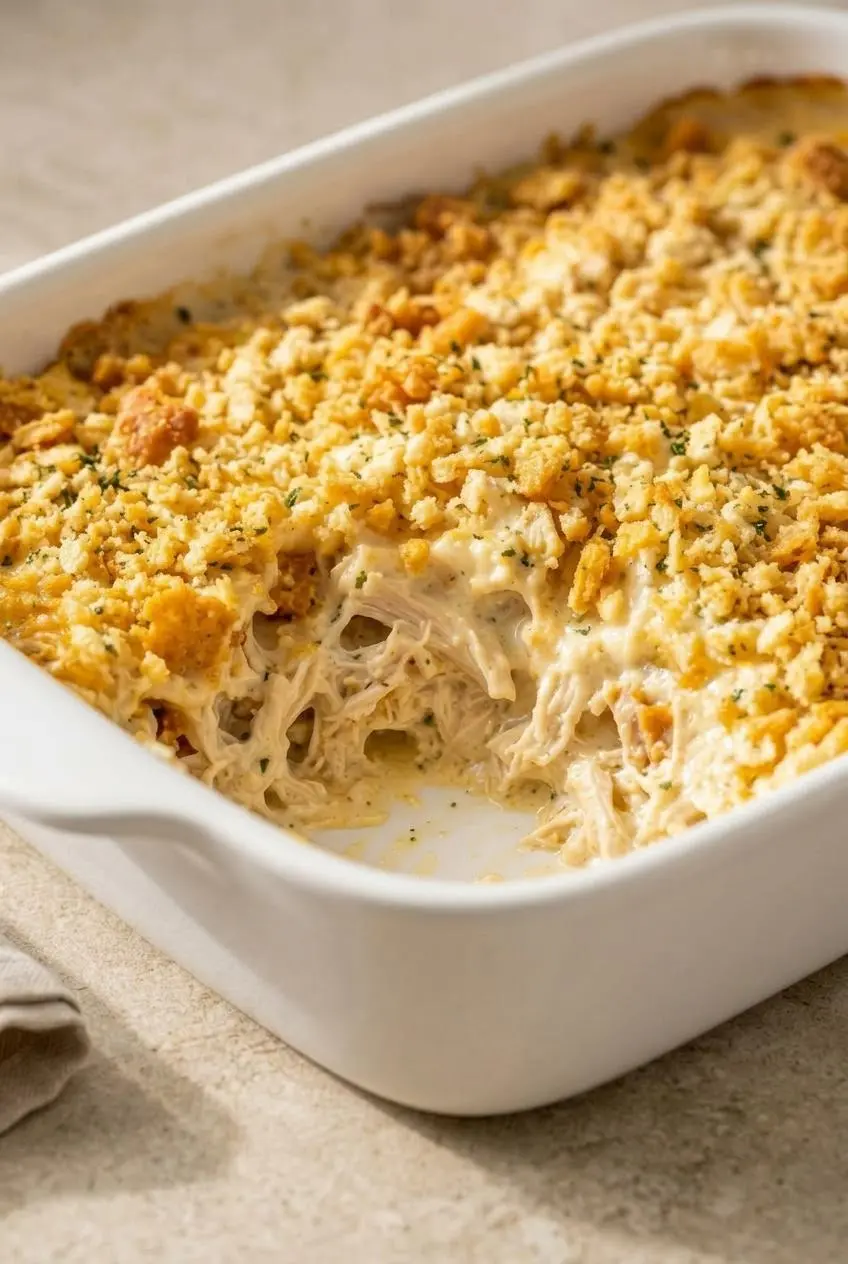
This casserole is simple to assemble, but a couple of small choices make a big difference. Start by preheating your oven so the dish goes into steady heat right away, and make sure the cream cheese is soft before you mix the filling.
- Prep the oven and dish. Heat the oven to 350ºF. Lightly coat a 9×9-inch baking dish with cooking spray and set it aside.
- Make the filling. In a mixing bowl, combine the chopped cooked chicken, cream cheese, cottage cheese, sour cream, garlic powder, dried onion powder, and cream of chicken soup. Stir until the mixture looks creamy and evenly blended, then spread it into the prepared dish.
- Make the topping. In a separate bowl, mix the crushed Ritz crackers with the melted butter until all the crumbs are coated. Sprinkle the buttery crumbs evenly over the chicken mixture.
- Bake. Bake uncovered for 30 to 40 minutes, until the casserole is hot, bubbling around the edges, and golden on top.
For the smoothest filling, beat the cream cheese, cottage cheese, and sour cream together first with a hand mixer, then fold in the chicken, seasonings, and soup. It’s a quick extra step, and it gives you a much silkier casserole.
When it comes out of the oven, let it rest for 10 to 15 minutes before serving. That short pause helps the filling set so your spoon behaves better and your servings look like actual portions instead of a creamy landslide.
Optional flavor note: If you want a slightly sharper edge to cut the richness, you can stir in 1 teaspoon of Dijon mustard and a pinch of cayenne pepper with the filling. The base recipe is still rich and complete without it.
Troubleshooting Common Casserole Issues
This is a forgiving casserole, but a few common problems pop up again and again. The good news is that each one has a pretty simple fix.
Fixing a Watery Casserole
The two biggest causes of a watery casserole are extra liquid in the cottage cheese and wet chicken. Some cottage cheese brands are much looser than others, so if you see liquid pooling in the container, drain it off before mixing.
Freshly cooked chicken can also carry extra broth or water into the filling. If you poach or bake your own chicken, let it cool slightly and make sure it’s well drained before chopping and measuring. Warm, wet chicken can thin the sauce fast.
If your casserole still seems loose after baking, give it the full 10 to 15 minute rest. The filling thickens as it sits, and that resting time matters more than people think.
Getting a Smooth, Lump-Free Filling
Use room temperature cream cheese and sour cream. Cold dairy doesn’t blend well, and you’ll spend extra time chasing lumps around the bowl.
If you want a guaranteed smooth base, beat the cream cheese, cottage cheese, and sour cream together with a hand mixer before adding the chicken and soup. Once the creamy part is smooth, fold in the chicken gently so it stays evenly coated.
If you already mixed everything and still see a few small cream cheese bits, don’t panic. Tiny soft lumps usually melt into the filling as it bakes. Large firm chunks mean the cream cheese started too cold.
Soggy topping: Add the cracker topping right before baking, especially if you’re making this ahead. If the crumbs sit on the filling in the fridge for hours, they absorb moisture and lose their crunch.
Too salty: This recipe already helps by using unsalted cream of chicken soup. If your chicken was heavily seasoned or your butter is salted, the final dish can lean salty. Plain cooked chicken and unsalted butter keep the balance better.
Dry texture: Dry casserole usually comes from too much chicken packed into the dish or baking it too long. Measure the 4½ cups of chicken and pull the casserole once the edges are bubbly and the top is golden. It doesn’t need extra oven time just because the center looks creamy.
Recipe Variations and Customizations
The base recipe is rich, creamy, and complete as written. If you want to tweak it, these are the safest ways to do it without losing the character of the dish.
Making it Without Cottage Cheese
The best substitute for cottage cheese is an equal amount of small-curd ricotta cheese. It gives you a similar creamy texture and bakes up smoothly.
You can also replace the cottage cheese with another 4 ounces of cream cheese if that’s what you have. The casserole will be thicker and much richer, so expect a heavier result.
Greek yogurt sounds tempting, but it isn’t the best swap here. It can separate in the oven and make the filling less smooth.
Popular Add-Ins
If you want more texture or a little color, fold about 1 cup of steamed frozen peas, sautéed mushrooms, or diced onions into the chicken mixture. Keep the vegetables cooked and fairly dry so they don’t water down the casserole.
Crispy crumbled bacon is another easy add-in. About 4 to 6 slices gives the filling a smoky, salty bite that works well with the creamy base.
You can also swap the topping. Crushed pretzels, saltines, or panko breadcrumbs all work. Ritz gives the classic buttery finish, but these are good backup options if your pantry is being difficult.
If you’re wondering about adding grains, this casserole is usually best served over white rice, egg noodles, or mashed potatoes rather than stirred directly into the filling. If you want a version built more around rice, this Chicken and Rice Casserole is a helpful place to start.
If creamy chicken casseroles are your comfort-food lane, you might also like Classic Chicken Divan, which leans into broccoli and cheddar flavors.
And if you want another cozy baked chicken dinner for your rotation, Chicken Pot Pie Casserole scratches that same warm, creamy itch in a different way.
For a larger batch, you can double the recipe and bake it in a 9×13-inch dish. Keep the same ingredient ratios, spread the filling evenly, and bake until the edges are hot and bubbly and the topping is golden. A larger casserole may need a bit more time in the oven, so start checking after the original bake window.
Make-Ahead, Storage, and Reheating
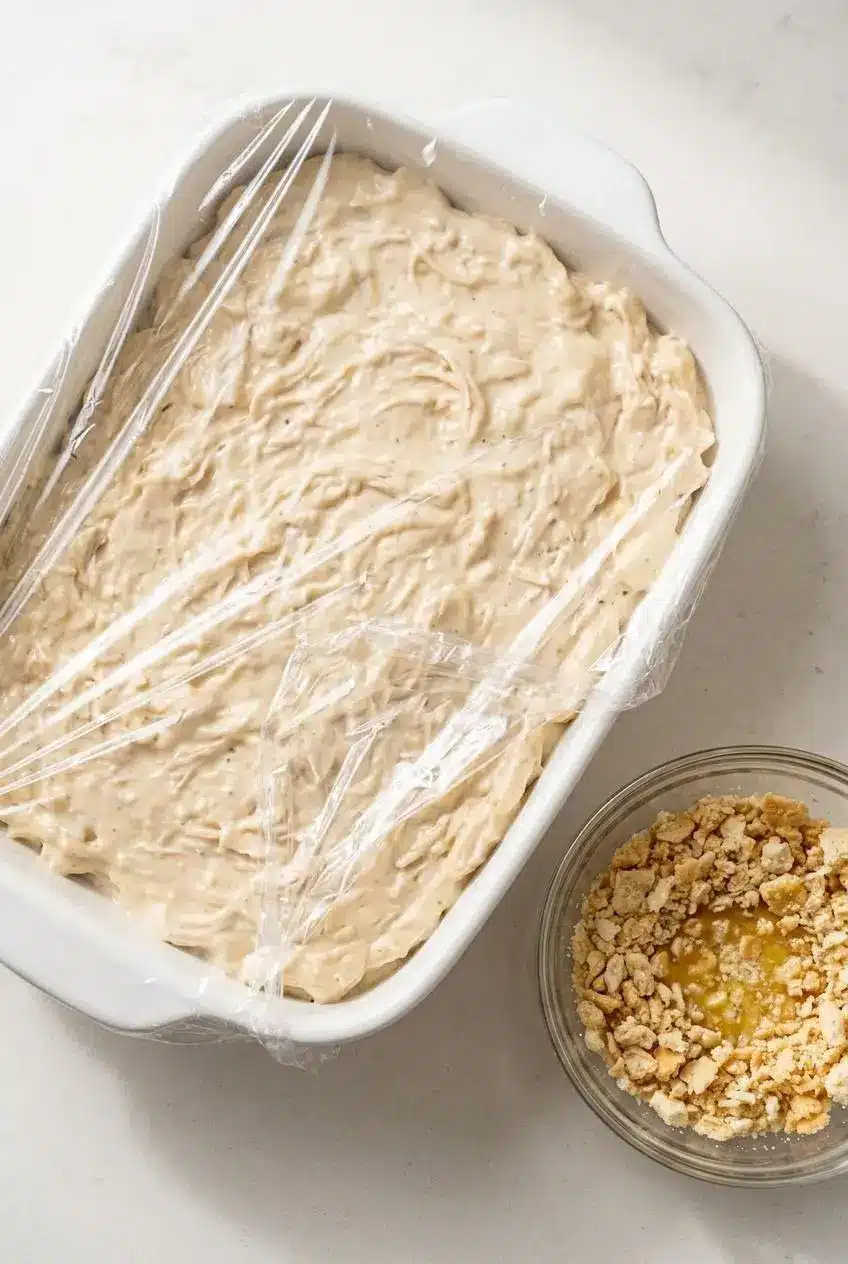
This is a strong make-ahead casserole because the filling holds well and the topping can be added at the last minute. A little planning keeps the texture much better.
Make-Ahead Instructions
To make it ahead, assemble the chicken filling in the baking dish, cover it tightly, and refrigerate for up to 2 days. Wait to add the cracker topping until just before baking so it stays crisp.
If the dish has been in the fridge, let it sit at room temperature for 20 to 30 minutes before baking. This helps it heat more evenly and is especially important with glass bakeware. Then add the topping and plan on 10 to 15 extra minutes of baking time.
Freezing and Reheating
To freeze an unbaked casserole, assemble the filling in a freezer-safe dish without the topping. Cover it tightly and freeze for up to 3 months. Adding the topping later keeps the texture much better and lines up with good freezer meal safety practices for casseroles.
Thaw the casserole overnight in the refrigerator before baking. For extra peace of mind on timing and handling frozen leftovers, follow reliable safe thawing guidance. Once thawed, let the dish sit out for about 30 minutes, add a fresh cracker topping, and bake as directed.
Leftovers keep well in an airtight container in the refrigerator for 3 to 4 days. Reheat individual portions in the microwave, or warm a larger portion in a 350°F oven until heated through. For food safety around storage and safe leftover reheating, keep leftovers chilled promptly and reheat only what you plan to eat.
You can freeze leftovers too. Portion them into airtight containers, freeze, then thaw in the fridge before reheating. The topping softens a bit after freezing, but the flavor still holds up very well.
What to Serve with This Casserole
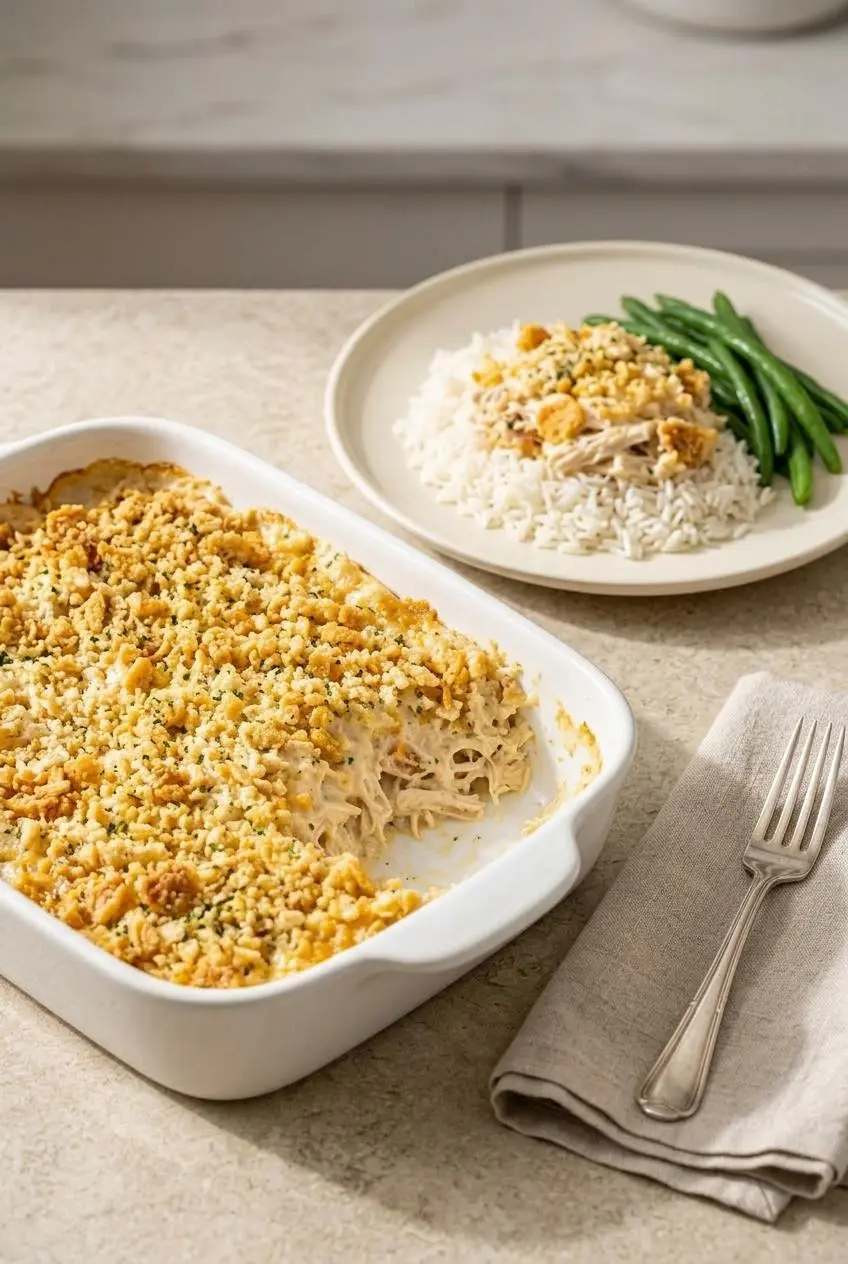
Because the casserole is rich and creamy, it pairs best with simple sides that keep the plate balanced.
For starches, spoon it over white rice, buttered egg noodles, or mashed potatoes. Rice is especially good if you want to catch every bit of the creamy sauce without making the meal feel too heavy.
For vegetables, go with something green and straightforward. Steamed green beans, roasted broccoli, or asparagus all work well. A little lemon on the vegetables helps wake up the whole plate.
A crisp green salad with a light vinaigrette is probably the best partner of all. The acidity cuts through the richness and keeps dinner from feeling sleepy halfway through.

Million Dollar Chicken Casserole

Equipment
- 9-inch square baking dish
- Mixing Bowls
Ingredients
- 4½ cups chopped cooked chicken
- 4 oz cream cheese, room temperature
- 1 cup cottage cheese
- ½ cup sour cream
- 1 (10.5-oz) can Unsalted Cream of Chicken Soup
- ¼ tsp garlic powder
- ¼ tsp dried onion powder
- 1 sleeve Ritz crackers, crushed
- 5 Tbsp butter, melted
Instructions
- Preheat the oven to 350ºF. Lightly coat a 9×9-inch baking dish with cooking spray and set it aside.
- In a mixing bowl, stir together the chicken, cream cheese, cottage cheese, sour cream, garlic powder, onion powder, and cream of chicken soup until well combined. Spread the mixture evenly in the prepared baking dish.
- In a separate bowl, mix the crushed crackers with the melted butter. Sprinkle the topping evenly over the chicken mixture.
- Bake uncovered for 30 to 40 minutes, until the casserole is hot and bubbly.
Notes
Nutrition
Conclusion
This casserole stays popular for a reason. It’s creamy, comforting, easy to assemble, and reliable when you need dinner to just work. For the best texture, use room temperature cream cheese and let the casserole rest before serving. Those two small moves make a big difference.
Frequently Asked Questions
What can I substitute for cottage cheese in this recipe?
The best substitute is an equal amount of small-curd ricotta cheese. It gives you a similar creamy texture and bakes smoothly into the filling. You can also use more cream cheese if needed, but the casserole will turn out richer and heavier. Greek yogurt isn’t a great choice here because it can separate during baking and make the filling less smooth.
How can I prevent my Million Dollar Chicken Casserole from being watery?
Drain any extra liquid from the cottage cheese and make sure your cooked chicken is well drained before mixing. Those are the two most common causes of a loose filling. It also helps to let the casserole rest for 10 to 15 minutes after baking. The filling firms up as it sits, so it will look thicker and scoop more neatly.
Can I prepare this casserole ahead of time?
Yes. Assemble the filling up to 2 days ahead, cover the dish, and refrigerate it. Wait to add the cracker topping until just before baking so it stays crisp. If you’re baking straight from the fridge, let the dish sit out for 20 to 30 minutes first and add 10 to 15 minutes to the baking time.
What is the best way to freeze and reheat this casserole?
Freeze it unbaked and without the topping for the best texture. Cover it tightly and freeze for up to 3 months. Thaw it overnight in the refrigerator, let it sit at room temperature for about 30 minutes, then add a fresh cracker topping and bake. For leftovers, reheat in the microwave or in a 350°F oven until warmed through.
Can I use raw chicken in this recipe?
No. This recipe needs cooked chicken. The 30 to 40 minute bake time is meant to heat the casserole through and brown the topping, not safely cook raw poultry. If you need a quick option, use rotisserie chicken or quickly poach chicken breasts, then chop them. If you ever cook raw chicken for a casserole recipe, poultry should reach an internal temperature of 165°F.
What makes this casserole “Million Dollar”?
It gets the name from the rich, decadent flavor. The mix of cream cheese, sour cream, and cottage cheese makes the filling taste extra indulgent, like it costs way more effort than it actually does. Then the buttery Ritz cracker topping comes in and seals the deal. Creamy underneath, crisp on top, very little fuss in between.