
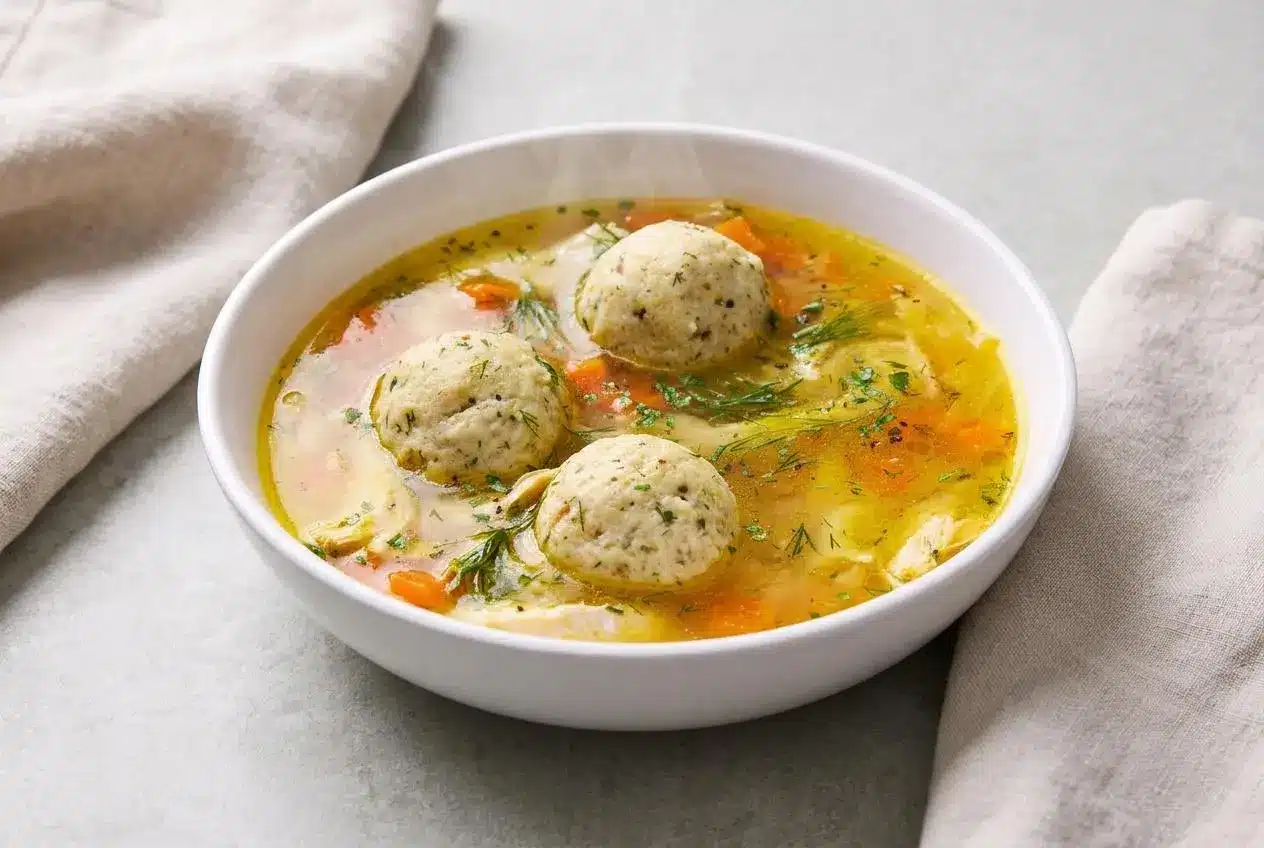
Matzo ball soup is a classic Jewish dumpling soup made with matzo meal, eggs, fat, and broth, then simmered until the dumplings are light and tender. For the best texture, chill the mixture well, shape with wet hands, and keep the lid on while the matzo balls simmer.
Matzo ball soup is all about rich broth, soft dumplings, and that cozy mix of ginger, nutmeg, and fresh herbs rising up with the steam. It’s a traditional Ashkenazi favorite, and it still feels completely at home on a regular chilly night.
What makes this version work is the balance between structure and tenderness. You get dumplings that stay together, swell as they cook, and land somewhere between delicate and satisfying. The lid trick matters.
Wet your hands before shaping so the mixture stays smooth instead of sticking and tearing.
Essential Ingredients and Their Roles
Each ingredient here does a real job, from building dumpling structure to adding warmth, richness, moisture, and bright herbal lift.
Matzo Balls
- 4 large eggs
- 1/4 cup schmaltz (rendered chicken fat), coconut oil or vegetable oil (kosher for Passover)
- 1/4 cup chicken stock or vegetable stock
- 1 cup matzo meal
- 1/4 teaspoon ground nutmeg
- 1 to 2 tablespoons freshly grated ginger
- 2 tablespoons finely chopped parsley, dill or cilantro
- 1 teaspoon salt, more for cooking
- Black pepper
Matzo meal is the backbone of the dumplings. It absorbs liquid, swells during the chill, and gives the balls enough structure to hold together without turning bready. Eggs bind everything and help the centers stay tender instead of crumbly.
Schmaltz brings the deepest flavor by far. It gives the dumplings that unmistakable savory richness that oil cannot fully match. Coconut oil or vegetable oil still work, especially if you need a kosher for Passover option or want a neutral flavor, but the result tastes a little less rounded.
The stock adds moisture and savory depth, while ginger and nutmeg give the mixture a warm, aromatic edge. Fresh herbs brighten the richness and keep the dumplings from feeling heavy. Black pepper sharpens the finish just enough.
Many cooks wonder about seltzer water here because it is often used for extra-light floaters. This version uses stock, which makes the flavor fuller, but if you want a lighter optional variation, seltzer can create tiny air pockets in the dough and help puff the dumplings more as they cook.
For Passover cooking, the easiest way to stay in line with tradition is to use matzo meal rather than matzo ball mix, and to choose the fat that matches your table and preferences.
I like the ginger on the higher end here because once the dumplings simmer, that fresh bite settles into a gentle warmth instead of shouting.
How to Make Perfect Matzo Ball Soup
The key is gentle handling from start to finish. A light hand keeps the mixture tender, and a covered simmer helps the dumplings expand evenly without breaking apart.
Preparation
- Whisk the eggs, schmaltz, stock, matzo meal, nutmeg, ginger, and parsley together in a large bowl, then season with 1 teaspoon salt and a few grinds of pepper.
The mixture should look loose at first, but it will thicken as the matzo meal starts absorbing the liquid. - Cover the bowl and refrigerate the mixture until fully chilled, about 3 hours or overnight.
When it is ready, it should feel like wet clay and hold a shape when scooped instead of running across the bowl. - Fill a wide, deep pan with lightly salted water and bring it to a boil while you shape the dumplings with wet hands into Ping-Pong ball size rounds.
Wet hands help the surface stay smooth so the balls slide into the water without sticking or fraying. - Drop the shaped balls gently into the boiling water, cover the pan, lower the heat to a lively simmer, and cook for 30 to 40 minutes for al dente matzo balls or longer for a lighter texture.
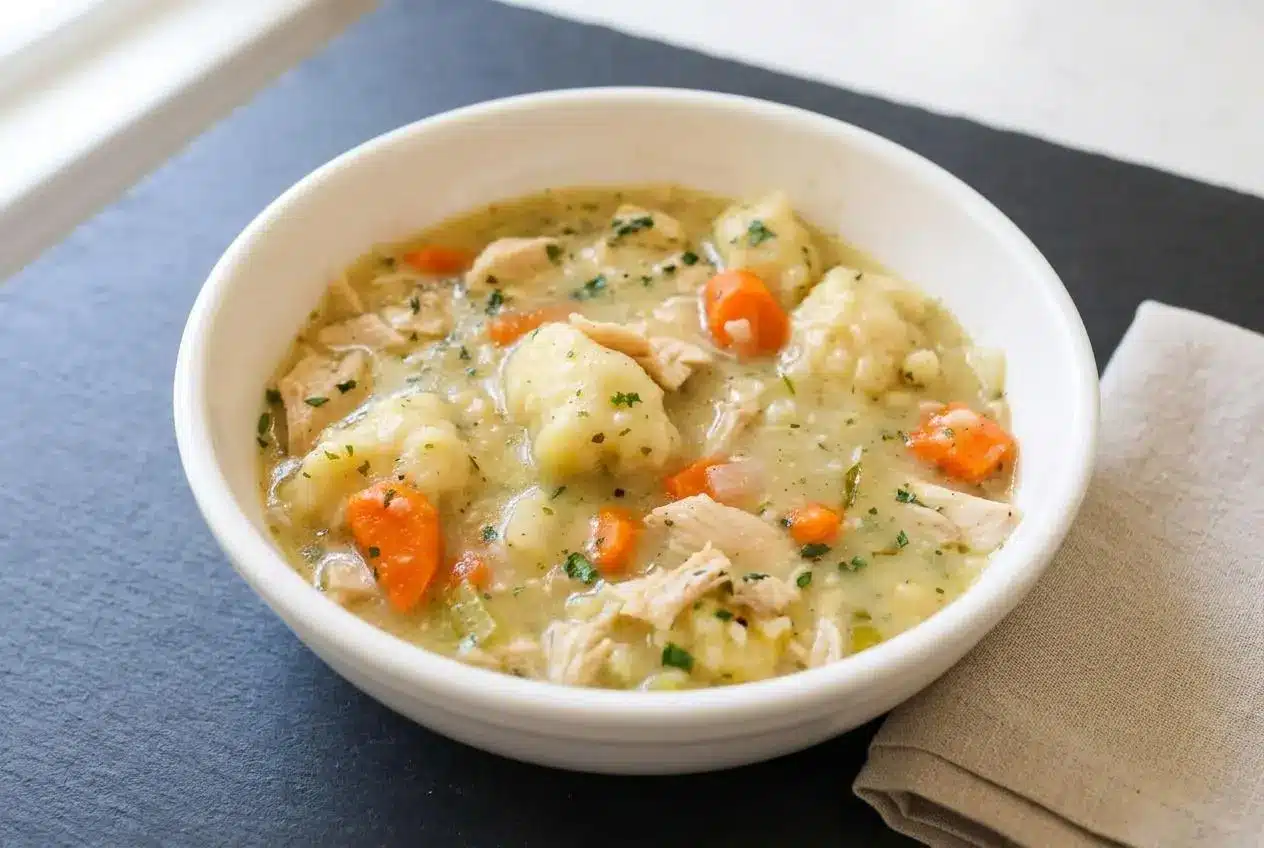
The dumplings will swell noticeably as they cook, and the trapped steam under the lid helps them cook through evenly. - Transfer the cooked matzo balls to chicken or vegetable soup and serve right away, or set them on a baking sheet for freezing before moving them to a freezer bag and reheating later in broth or soup.
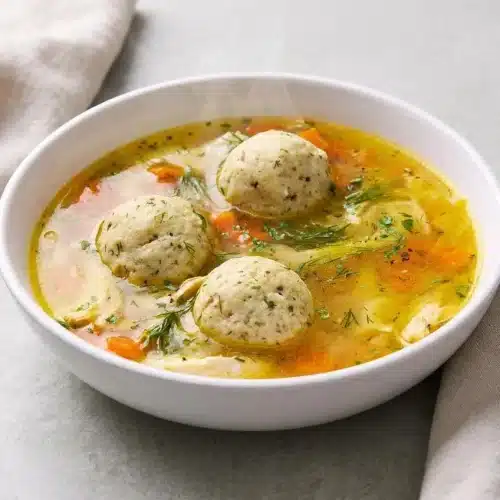
They should look puffed, intact, and moist inside rather than dense or ragged.
Sautéing the Aromatic Base
If you are serving these in homemade broth rather than a plain store-bought one, start by softening onion, carrot, and celery in a soup pot before adding your liquid. That quick mirepoix stage builds sweetness and savory depth, and you will know it is working when the vegetables smell sweet and the onion turns glossy rather than browned.
For a faster dinner, store-bought broth works fine too. A little extra dill, a few sliced carrots, and gentle simmering can make it taste much more settled and homemade. If you like comforting broth-based bowls with shaped dumplings or meatballs, chicken meatball soup has a similar cozy appeal.
Mixing and Chilling the Batter
Do not beat the mixture aggressively. Stir just until everything comes together, because overworking can make the finished balls tighter than you want.
The chill is not optional. Even though this recipe chills much longer, the real structural change starts after the first 30 minutes as the matzo meal hydrates. By the time the full chill is done, the dough should feel scoopable, thick, and slightly tacky, almost like soft clay.
If the mixture seems loose before chilling, leave it alone. That is normal. If it still looks too loose after chilling, shape gently and avoid pressing hard. If it feels very stiff, a looser shaping hand usually keeps the final texture from going heavy.
Shaping and Simmering Rules
Shape the dumplings gently rather than packing them tight unless you specifically want a denser sinker style. A loose roll gives steam room to expand the inside. A hard squeeze creates a tighter crumb.
Once the balls go into the water, keep the pot covered. That trapped steam is what helps the centers cook evenly and the exteriors stay intact. Peek later, not early. This is one of those recipes where the lid really earns its keep.
It is best to cook the matzo balls in salted water or a separate pot of broth instead of directly in your main soup. Otherwise the dumplings can absorb too much liquid and leave the broth level disappointingly low.
Floaters vs Sinkers: Texture Secrets
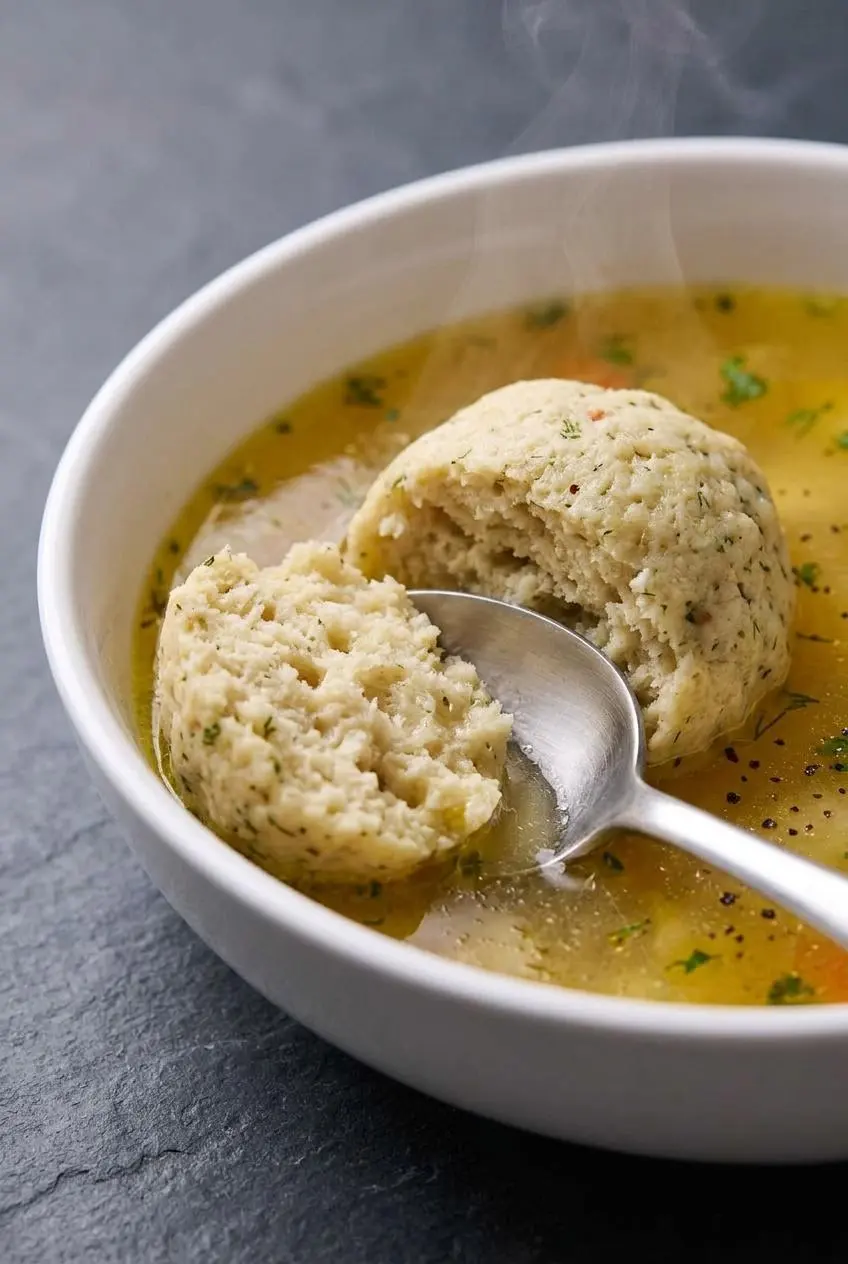
This is where matzo ball preferences get personal. Neither style is better. It just depends on whether you want a light, airy dumpling or a denser, chewier one with more bite.
- Floaters are lighter, softer, and usually a little larger after cooking because more air and steam expand inside them.
- Sinkers are compact, chewy, and more traditional for some families, with a firmer center and less puff.
- Loose shaping encourages a more delicate interior because the dough has room to swell.
- Firm compression creates a tighter dumpling that cooks up denser and sits lower in the broth.
- Visual check matters too. A lighter ball looks more swollen and slightly fluffy inside, while a sinker keeps a closer, more uniform crumb.
If you want true sinker style dumplings, skip fluffy add-ins like baking powder, shape the mixture more firmly, and aim for a compact round. If you want classic floaters, use a gentler hand and favor extra lift from steam and aeration.
The Baking Powder Factor
Baking powder and seltzer both push the texture toward fluffier floaters. They release or hold carbon dioxide in the dough, which creates tiny pockets that expand as the dumplings simmer.
This recipe does not include baking powder or seltzer in the official ingredients, so treat them as optional style adjustments rather than part of the main formula. If you do try that route, use only a pinch of baking powder and swap the stock for seltzer instead of adding more liquid. Too much lift can weaken the structure and make the balls more fragile.
Advanced Whipped Egg White Technique
If you love very airy matzo balls, you can separate the eggs, whip the whites to stiff peaks, and fold them into the mixture at the end as an optional variation. That extra air gives the dumplings a lighter, more delicate interior.
This method takes a softer touch because deflating the whites defeats the purpose. Fold gently, chill the mixture well, and shape with minimal pressure so the batter keeps that built-in lift.
Aromatic Spice Additions for Gourmet Broth
A rich broth does not need much to taste special. A single star anise pod and a pinch of ground coriander can add quiet depth to chicken or vegetable broth without pushing it away from the classic character of the soup.
The trick is restraint. One pod of star anise is enough to add warmth without making the broth taste overtly licorice-like, and a little coriander rounds out the ginger and nutmeg already in the dumplings. You want a broth that smells fuller, not perfumed.
If you are starting with a clear chicken broth, these spice additions pair especially well with fresh dill and sliced carrots. For another soothing soup built around a comforting chicken broth base, chicken pastina soup is a lovely next stop.
Herb Infused Matzo Balls
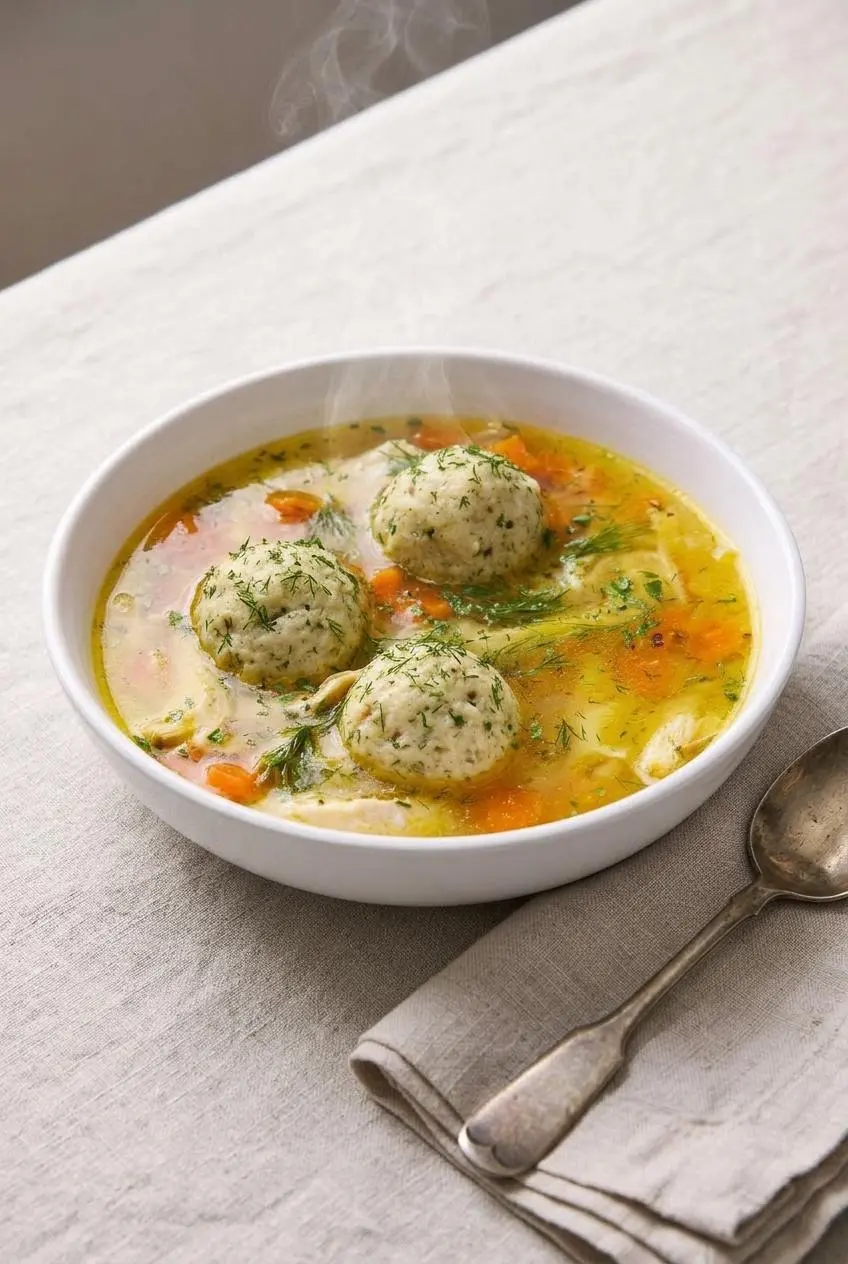
Fresh herbs change the whole feel of the dumplings. They cut through the richness of schmaltz, add color, and make each bite taste brighter.
This recipe already includes parsley, dill, or cilantro, but you can nudge the herb profile further with optional chopped chives, extra dill, or a parsley-heavy blend. Keep the herbs finely chopped so they distribute evenly and do not create weak spots in the dough.
Dill makes the dumplings taste especially classic and pairs beautifully with chicken broth. Parsley keeps things fresh and grassy. Chives bring a soft onion note that works well if your broth is mild. If you catch the aroma of dill and warm nutmeg when the pot is opened at the end, you are in very good shape.
Make-Ahead, Storage, and Freezing Guide
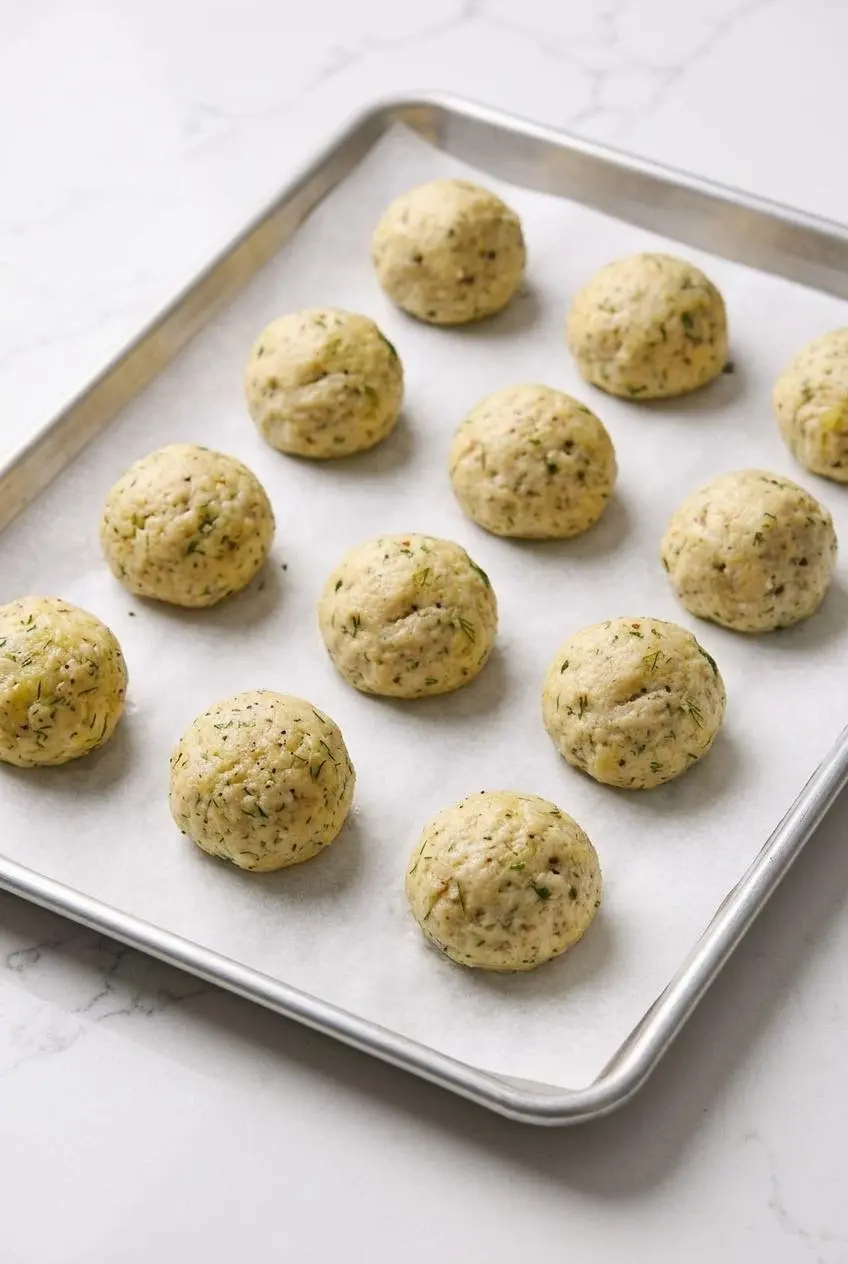
Matzo balls are very make-ahead friendly, but texture matters. The main rule is to keep the dumplings separate from the broth until serving so they do not sit there soaking up all the liquid and turning heavy.
You can make the batter ahead and keep it tightly covered in the refrigerator for up to 24 hours before shaping and cooking. That timing is supported by the recipe’s overnight chill option and works especially well when holiday prep starts early.
If you want to freeze them, use the method built into the recipe. Place the cooked matzo balls on a baking sheet first so they firm up separately, then transfer them to a freezer bag. Reheat them gently in broth or soup rather than blasting them with high microwave heat, which can make the outside rubbery before the center warms through.
For leftover soup with chicken or broth, cool it promptly and store it in shallow containers. For a US kitchen, leftover poultry and soup safety includes cooling quickly and refrigerating within 3 to 4 days.
If you are reheating a big batch of soup, warm it gently on the stovetop until it is steaming and the dumplings are heated through. Portion-by-portion reheating helps preserve texture better than repeated full-pot reheats.
Conclusion
This soup earns its reputation. The dumplings are tender and aromatic, the broth feels deeply comforting, and the method is more approachable once you know where the texture turning points are.
Chill the mixture well, shape with wet hands, and keep that lid closed while the dumplings simmer. A pot of warm broth and puffed matzo balls is hard to beat.
Frequently Asked Questions
Why Did My Matzo Balls Fall Apart While Boiling?
The mixture probably needed more chill time so the matzo meal could fully hydrate. Water that boils too hard can knock the dumplings apart, so keep it at a lively simmer after they go in. Rough shaping can create cracks, so form them gently with wet hands.
Should I Cook the Matzo Balls Directly in the Soup?
It is better to cook them in salted water or a separate pot of broth. Cooking them in the main soup can make the dumplings absorb too much liquid. That keeps more flavorful broth in the bowl where you want it.
Can I Make the Matzo Ball Mixture Ahead of Time?
Yes, you can make it ahead and keep it tightly covered in the refrigerator for up to 24 hours. That extra rest can actually help the matzo meal hydrate more evenly. Give it a gentle stir only if needed before shaping.
How Do I Make My Matzo Balls Fluffier?
Use seltzer water instead of still water if you want a lighter optional variation. Add a small pinch of baking powder if you are aiming for floater-style dumplings. Shape loosely and keep the lid firmly on during simmering so the steam can do its job.
Matzo Ball Soup

Equipment
- large bowl
- Whisk or spoon
- Wide deep pan
- Baking Sheet
- Freezer bag
Ingredients
Matzo Balls
- 4 large eggs
- 1/4 cup schmaltz rendered chicken fat, coconut oil or vegetable oil (kosher for Passover)
- 1/4 cup chicken stock or vegetable stock
- 1 cup matzo meal
- 1/4 teaspoon ground nutmeg
- 1 to 2 tablespoons freshly grated ginger
- 2 tablespoons finely chopped parsley, dill or cilantro
- 1 teaspoon salt more for cooking
- Black pepper
Instructions
Preparation
- Whisk the eggs, schmaltz, stock, matzo meal, nutmeg, ginger, and parsley together in a large bowl, then season with 1 teaspoon salt and a few grinds of pepper. The mixture should look loose at first, but it will thicken as the matzo meal starts absorbing the liquid.
- Cover the bowl and refrigerate the mixture until fully chilled, about 3 hours or overnight. When it is ready, it should feel like wet clay and hold a shape when scooped instead of running across the bowl.
- Fill a wide, deep pan with lightly salted water and bring it to a boil while you shape the dumplings with wet hands into Ping-Pong ball size rounds. Wet hands help the surface stay smooth so the balls slide into the water without sticking or fraying.
- Drop the shaped balls gently into the boiling water, cover the pan, lower the heat to a lively simmer, and cook for 30 to 40 minutes for al dente matzo balls or longer for a lighter texture. The dumplings will swell noticeably as they cook, and the trapped steam under the lid helps them cook through evenly.
- Transfer the cooked matzo balls to chicken or vegetable soup and serve right away, or set them on a baking sheet for freezing before moving them to a freezer bag and reheating later in broth or soup. They should look puffed, intact, and moist inside rather than dense or ragged.



1 thought on “Matzo Ball Soup”