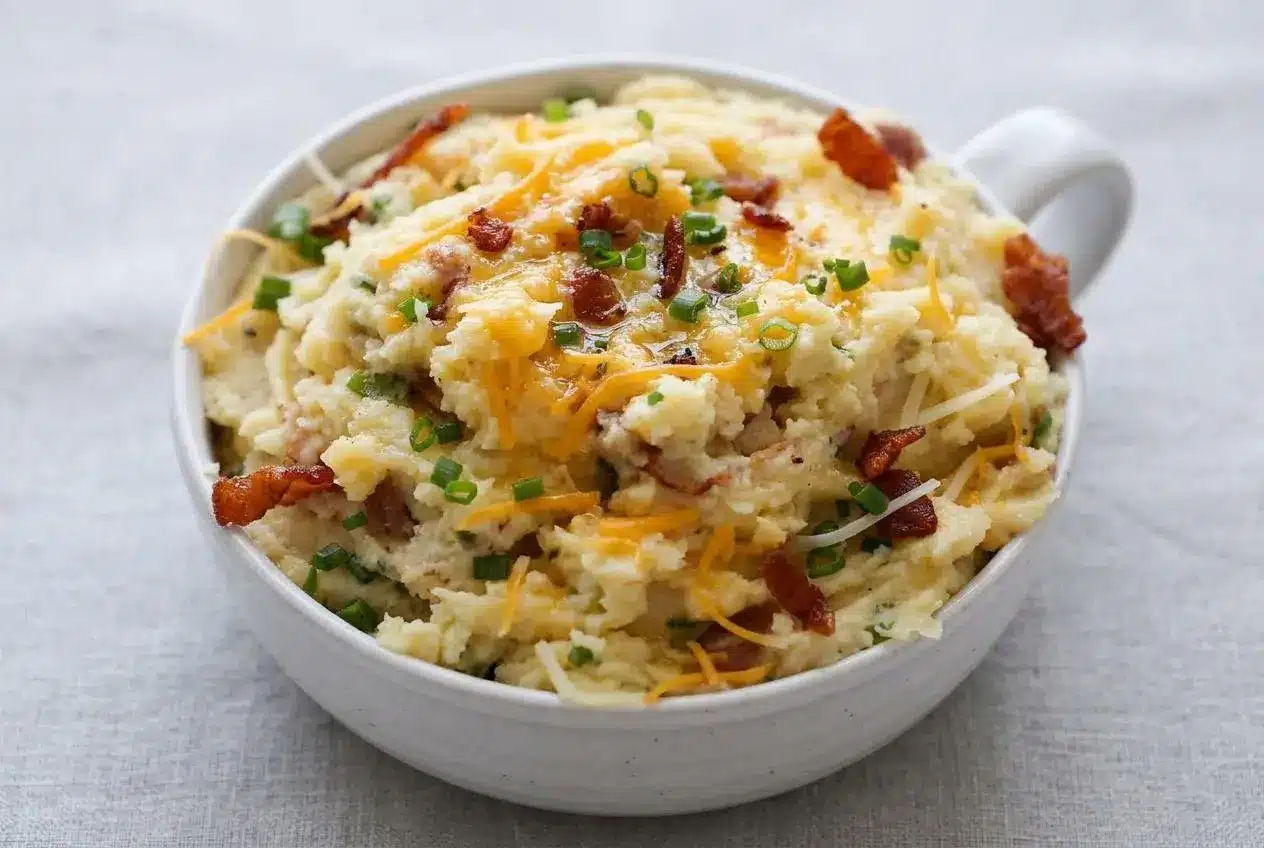
Loaded Mashed Potatoes are creamy, cheesy mashed potatoes finished with bacon, sour cream, chives, and cheddar. The best texture comes from the right potato, hot butter, and gentle mixing so the mash stays fluffy instead of gluey.
These mashed potatoes hit every comfort-food note at once: buttery, savory, tangy, and packed with crisp bacon. They work for a holiday table, a steak dinner, or a bowl-and-spoon kind of night.
You’ll like this version because it explains the little things that make a big difference, from potato choice to fixing watery mash. The bacon and cheddar on top do not hurt either.
Start the potatoes in cold salted water so they cook evenly from the center out.
Why You’ll Love This Recipe
- It gives you a creamy, fluffy texture without overworking the potatoes.
- The flavor is big and familiar with butter, cheddar, sour cream, chives, and bacon.
- You get clear fixes for common issues like gluey, watery, bland, or lumpy mashed potatoes.
- It easily turns into a baked casserole when you want a more crowd-friendly version.
Ingredients for Loaded Mashed Potatoes
Each ingredient has a real job here, from creamy texture and rich melt to sharp flavor, fresh bite, and savory crunch.
- 2.5 lbs Yukon gold potatoes (or red potatoes)
- 13 ½ tablespoons Butter (a little less than 2 sticks)
- ½ cup Sour cream
- 2 tablespoons Chives (chopped)
- 16 oz Bacon
- 1 cup Cheddar Cheese
- Kosher salt (to taste)
- Black pepper (to taste)
Yukon Gold potatoes are a great fit when you want naturally buttery flavor and a creamy mash without needing much fuss. Sour cream adds tang and richness, which keeps all that butter and bacon from tasting heavy. Cheddar brings the classic loaded potato flavor, but it melts best when you shred it fresh instead of using pre-shredded cheese.
I always shred cheddar from a block for mashed potatoes because it melts smoother and keeps the texture silkier.
Choosing the Best Potatoes for Mashing
The potato you choose changes the whole texture. Starchier potatoes break down more easily into a soft mash, while lower-starch potatoes stay firmer and can turn dense if you push them too hard.
| Potato Type | Starch Level | Best For |
|---|---|---|
| Yukon Gold | Medium | Creamy mash |
| Russet | High | Fluffy mash |
| Red | Low | Holds shape |
For this recipe, Yukon Gold gives the most balanced result. They mash up smooth and rich, with enough structure to hold bacon, chives, and melted cheese without turning pasty. If you like extra-fluffy mashed potatoes, Russets work too, but they tend to feel lighter and a little less buttery. Red potatoes can be used because they are in the recipe, but expect a firmer mash with a slightly denser finish.
Why does starch matter so much? When potatoes are mixed aggressively, their starches release and turn gummy. That is why high-speed mixing, blenders, and food processors are risky here. A masher, ricer, or stand mixer paddle on low speed gives you control and keeps the texture where you want it.
How to Make Loaded Mashed Potatoes
- Put the potatoes in a large pot, cover them with cold water just to the top, and season the water generously with kosher salt.
The cold start helps the potatoes cook evenly, and salted water seasons them from the inside. - Bring the pot to a boil uncovered and cook until the potatoes are fully tender.
They are ready when a fork, paring knife, or cake tester slides in with no resistance. - Drain the potatoes well in a colander or large sieve.
Well-drained potatoes make a creamier mash and keep extra water from thinning the mixture. - While the potatoes cook, prepare the bacon in a sauté pan or on a wire rack set inside a rimmed baking sheet in the oven until browned and crisp.
When most of the fat has rendered, move the bacon to paper towels, let it cool, then crumble it. - Transfer the hot drained potatoes to the bowl of a stand mixer fitted with the paddle attachment and mix on low until smooth.
If you do not have a stand mixer, mash by hand with a wooden spoon or potato masher until the texture is even. - Add all the butter to the hot potatoes and mix until it is fully melted and absorbed.
At this stage the potatoes may look a little dry and fluffy, which is exactly what you want before adding the rest. - Take the bowl off the mixer, stir in the cheddar until melted, then mix in the sour cream, chives, and crumbled bacon.
The heat from the potatoes should melt the cheese smoothly and bring everything together into a creamy, savory mash. - If the potatoes become too loose, stir in a small amount of potato flakes to thicken them.
The texture changes slightly, but it can bring the mash back together in a pinch. - Finish with kosher salt and black pepper to taste.
The final mash should taste rich, cheesy, and well-seasoned with little pops of bacon and fresh chive.
Tips for the Creamiest Mashed Potatoes
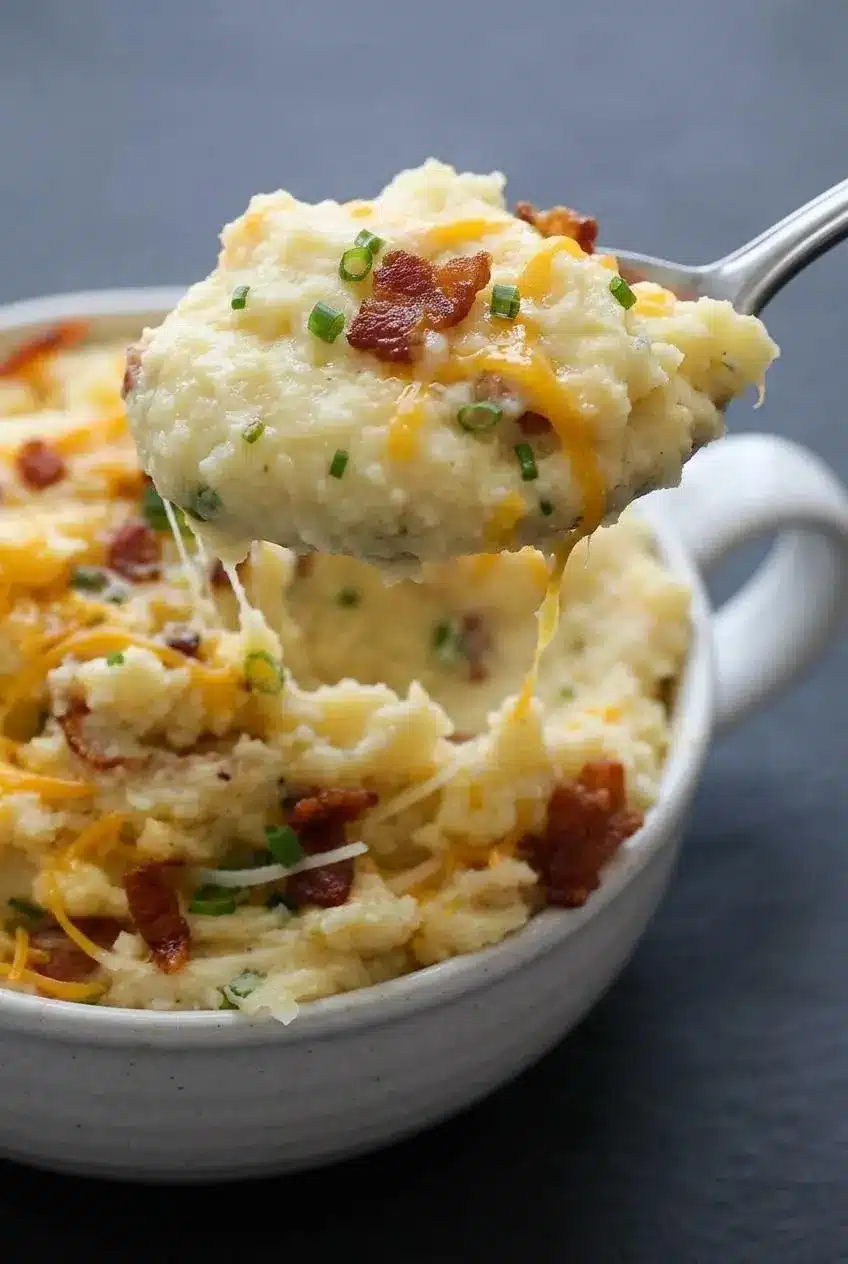
Small technique choices matter more than fancy ingredients here. These tips keep the texture smooth and help you avoid the classic mashed potato problems.
- Use Yukon Gold potatoes when you want a naturally creamy texture and buttery flavor.
- Do not overfill the pot with water. Once it reaches a boil, starchy water can bubble up fast.
- Mash the potatoes while they are still hot. Hot potatoes absorb butter more evenly and mash more smoothly.
- After draining, return the potatoes to the hot pot for a minute if they seem wet. That quick steam-dry helps prevent watery mashed potatoes.
- Keep the mixer on low speed, or use a potato masher or ricer. Over-mixing is the fastest route to gummy potatoes.
- Use softened or room-temperature dairy when possible. Cold butter or sour cream can make the mash feel stiff or uneven.
- Shred your own cheese so it melts cleanly into the hot potatoes. If you want to compare the base technique, these classic mashed potatoes are a helpful reference.
- For extra savory depth, stir in a spoonful of reserved bacon fat if you like a stronger bacon flavor.
Variations and Topping Ideas
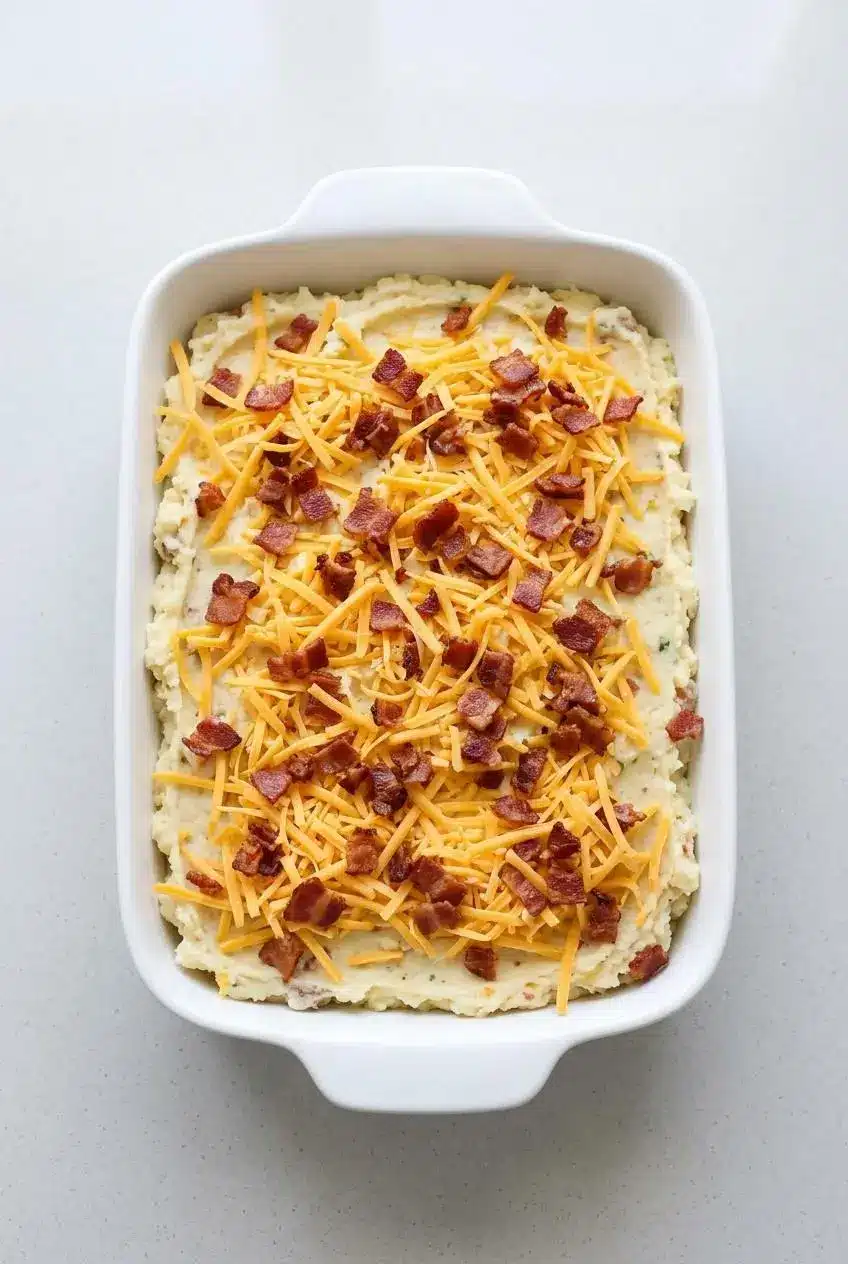
The main recipe is excellent as written, but it is also very easy to customize. Keep these ideas optional so the original texture and balance stay intact.
Turn It Into a Casserole
To make a casserole, spread the finished mashed potatoes into a baking dish, top with extra cheddar and some of the crumbled bacon, then bake at 350°F until hot and bubbly. This version is especially good for holidays because it holds heat well on the table and gives you those golden cheesy edges.
If you want a fully baked version built around that style, this Creamy Mashed Potato Casserole is a useful next stop.
For Extra Creaminess: Add Cream Cheese
If you like your mashed potatoes extra rich and slightly tangier, add 8 oz of softened cream cheese with the butter and sour cream. Softened cream cheese blends in more smoothly than cold cream cheese and gives the mash a thicker, more luxurious finish.
This works especially well if you plan to bake the potatoes as a casserole, since it helps the texture stay plush after reheating.
Try Different Cheeses and Toppings
Cheddar is the classic choice, but other melty cheeses work nicely too. You can also change up the topping style depending on the meal.
| Option | What It Adds | Best Use |
|---|---|---|
| Smoked Gouda | Smoky, richer flavor | Great with steak or pork |
| Monterey Jack | Mild, extra melt | Good for very creamy mash |
| Colby | Soft cheddar-like flavor | Easy swap for classic taste |
| Green onions | Sharper fresh bite | Use instead of or with chives |
| Greek yogurt | Tangy, lighter finish | Use in place of sour cream |
| Smoked paprika | Warm smoky note | Sprinkle on top before serving |
If you love the same loaded flavors in a different format, Twice-Baked Potatoes are a fun option too.
Troubleshooting Common Mashed Potato Problems
When mashed potatoes go wrong, the cause is usually easy to spot. This table helps you fix the issue quickly and avoid repeating it next time.
| Problem | Likely Cause | How to Fix It |
|---|---|---|
| Gluey or gummy potatoes | Over-mixing released too much starch, or the potatoes were blended too aggressively | Stop mixing as soon as smooth. Next time use a masher, ricer, or paddle on low speed and avoid high-speed blending. |
| Watery potatoes | The potatoes absorbed too much water during boiling or were not drained well | Return them to the hot pot briefly after draining so excess moisture can steam off, then mix in the butter while hot. |
| Bland potatoes | The cooking water was under-seasoned or the final mash needs more salt and pepper | Salt the boiling water generously and taste again after adding bacon, cheese, and sour cream, since all three can change the balance. |
| Lumpy potatoes | The potatoes were not fully tender, or cold dairy slowed down blending | Cook until a fork slips in easily and add butter and dairy while the potatoes are still hot. |
Make-Ahead, Storage, and Reheating Guide
This dish is very make-ahead friendly, but texture matters. The best results come from cooling it promptly, covering it well, and reheating gently so the potatoes stay creamy instead of stiff.
How to Make Ahead
You can make loaded mashed potatoes ahead if you need to free up stove space for a holiday meal. Prepare the potatoes, let them cool a bit, then transfer them to a tightly covered container and refrigerate until you are ready to reheat.
If you are planning the casserole version, spread the potatoes in the baking dish, cover, and chill. Before baking, let the dish lose some of its chill on the counter so it warms more evenly.
How to Store Leftovers
Store leftovers in an airtight container in the refrigerator once they have cooled. Because this recipe includes dairy and bacon, keeping it properly chilled matters for both texture and food handling, and refrigerating perishable foods promptly and keeping the refrigerator at or below 40°F helps protect quality.
If you want to turn extra mashed potatoes into something new instead of simply reheating them, cheesy potato puffs are a smart leftover idea.
How to Freeze
If you want to freeze them, cool the mashed potatoes completely first and pack them in a freezer-safe airtight container with as little empty space as possible. Thaw them in the refrigerator before reheating, and expect to stir in a little extra dairy after warming to bring back the creamy texture.
The casserole version freezes better when it is well wrapped and fully cooled before going into the freezer. Once reheated, stir gently if needed so the texture comes back together.
The Best Way to Reheat
For the stovetop, warm the potatoes over low heat and stir often, adding a splash of milk or cream if they look tight. This is the best method when you want the mash to stay especially soft.
For the oven, cover the potatoes or casserole dish and heat until warmed through, then uncover near the end if you want a little color on top. For the microwave, reheat in short bursts and stir between each one so the center warms evenly.
What to Serve With Loaded Mashed Potatoes

These mashed potatoes are rich, so they pair best with simple mains that bring contrast. Think roasted chicken, steak, pork chops, meatloaf, or holiday turkey.
- Roasted chicken for an easy comfort-food dinner
- Steak, especially with garlic butter steak bites, for a steakhouse-style plate at home
- Pork chops when you want something savory and straightforward
- Holiday meals like Thanksgiving or Christmas, where a rich side dish earns its place fast
Conclusion
Loaded mashed potatoes are one of those side dishes that feel generous without being complicated. Once you get the potato choice, gentle mixing, and hot butter timing right, the rest is easy.
Keep the potatoes hot, do not over-mix, and let the bacon, cheddar, and chives do their thing. That is how you get a bowl worth going back for.
Frequently Asked Questions (FAQ)
Can I make loaded mashed potatoes ahead of time?
Yes. Prepare them, cover well, and refrigerate until you are ready to reheat. If you are baking them as a casserole, let the dish sit out briefly first so it heats more evenly.
What’s the best way to freeze loaded mashed potatoes?
Let them cool completely, pack them in a freezer-safe airtight container, and thaw them in the refrigerator before reheating. A little milk, cream, or butter usually helps restore the texture after warming.
Why did my mashed potatoes turn out gluey?
That usually happens because the potatoes were overworked and released too much starch. A food processor or high-speed mixer can do it fast, so stick with a masher, ricer, or low mixer speed.
Can I use something other than cheddar cheese?
Yes. Smoked Gouda, Monterey Jack, and Colby all melt well and taste great here. Choose one based on whether you want a smokier, milder, or more classic flavor.
Why are my loaded mashed potatoes watery?
This usually means the potatoes took on too much water while boiling or were not dried enough after draining. Cut them into larger pieces, drain them well, and let them steam dry in the hot pot for a minute if needed.
What can I use instead of sour cream in loaded mashed potatoes?
Full-fat Greek yogurt works well as a one-to-one swap if you want a similar tang. Softened cream cheese is also a good option when you want a richer texture and a milder tang.

Loaded Mashed Potatoes

Equipment
- Pot
- Colander
- Stand mixer
- Sauté pan or Baking sheet
Ingredients
- 2.5 lbs Yukon gold potatoes (or red potatoes)
- 13 ½ tablespoons Butter (a little less than 2 sticks)
- ½ cup Sour cream
- 2 tablespoons Chives (chopped)
- 16 oz Bacon
- 1 cup Cheddar Cheese
- Kosher salt (to taste)
- Black pepper (to taste)
Instructions
- Put the potatoes in a large pot, cover them with cold water just to the top, and season the water generously with kosher salt. The cold start helps the potatoes cook evenly, and salted water seasons them from the inside.
- Bring the pot to a boil uncovered and cook until the potatoes are fully tender. They are ready when a fork, paring knife, or cake tester slides in with no resistance.
- Drain the potatoes well in a colander or large sieve. Well-drained potatoes make a creamier mash and keep extra water from thinning the mixture.
- While the potatoes cook, prepare the bacon in a sauté pan or on a wire rack set inside a rimmed baking sheet in the oven until browned and crisp. When most of the fat has rendered, move the bacon to paper towels, let it cool, then crumble it.
- Transfer the hot drained potatoes to the bowl of a stand mixer fitted with the paddle attachment and mix on low until smooth. If you do not have a stand mixer, mash by hand with a wooden spoon or potato masher until the texture is even.
- Add all the butter to the hot potatoes and mix until it is fully melted and absorbed. At this stage the potatoes may look a little dry and fluffy, which is exactly what you want before adding the rest.
- Take the bowl off the mixer, stir in the cheddar until melted, then mix in the sour cream, chives, and crumbled bacon. The heat from the potatoes should melt the cheese smoothly and bring everything together into a creamy, savory mash.
- If the potatoes become too loose, stir in a small amount of potato flakes to thicken them. The texture changes slightly, but it can bring the mash back together in a pinch.
- Finish with kosher salt and black pepper to taste. The final mash should taste rich, cheesy, and well-seasoned with little pops of bacon and fresh chive.