The best lamb chop marinade combines oil, garlic, rosemary, salt, and a small amount of lemon for savory flavor, aromatic freshness, and a well-browned exterior without turning the meat soft.
This lamb chop marinade comes together in minutes and coats the meat with fragrant garlic and herbs that bloom when they hit a hot pan or grill.
Lemon zest brings brightness while the restrained lemon juice keeps the flavor lively rather than sharply sour. The garlic crust is the part worth protecting.
Pat the chops very dry before coating them so the seasoned oil clings to the lamb instead of sliding over surface moisture.
Essential Marinade Ingredients and Flavor Roles
Each ingredient contributes something useful: oil carries aroma, rosemary adds piney depth, lemon lifts the richness, and salt and pepper sharpen the lamb’s savory character.
- 4 tablespoons avocado oil, (sub olive oil)
- 3 tablespoons garlic, minced
- 2 tablespoons fresh rosemary, minced
- 1 teaspoon lemon zest, freshly grated
- 1 teaspoon lemon juice
- ½ teaspoon dried oregano leaves
- ½ teaspoon kosher salt
- ⅛ teaspoon ground black pepper
- 1 ½ – 2 pounds lamb chops
Avocado oil has a neutral flavor and handles high heat well, while olive oil makes a fine substitution when its grassy flavor suits the meal. The oil also carries the fat-soluble aromas from rosemary and garlic across the surface of the chops.
Fresh rosemary is especially good with rich lamb because its resinous, woodsy flavor stands up to the meat without masking it. Minced garlic brings pungency that mellows during cooking, while oregano adds a gentle earthy background note.
Lemon zest does much of the brightening work here. It perfumes the marinade with citrus oils, while the small amount of lemon juice adds light acidity without overwhelming the delicate exterior of the meat. Salt starts seasoning the surface right away and gradually moves inward as the chops rest.
I prefer freshly grated zest over extra lemon juice here because it gives the lamb a clean citrus aroma while keeping the texture pleasantly meaty.
How to Make the Marinade and Prep Lamb Chops
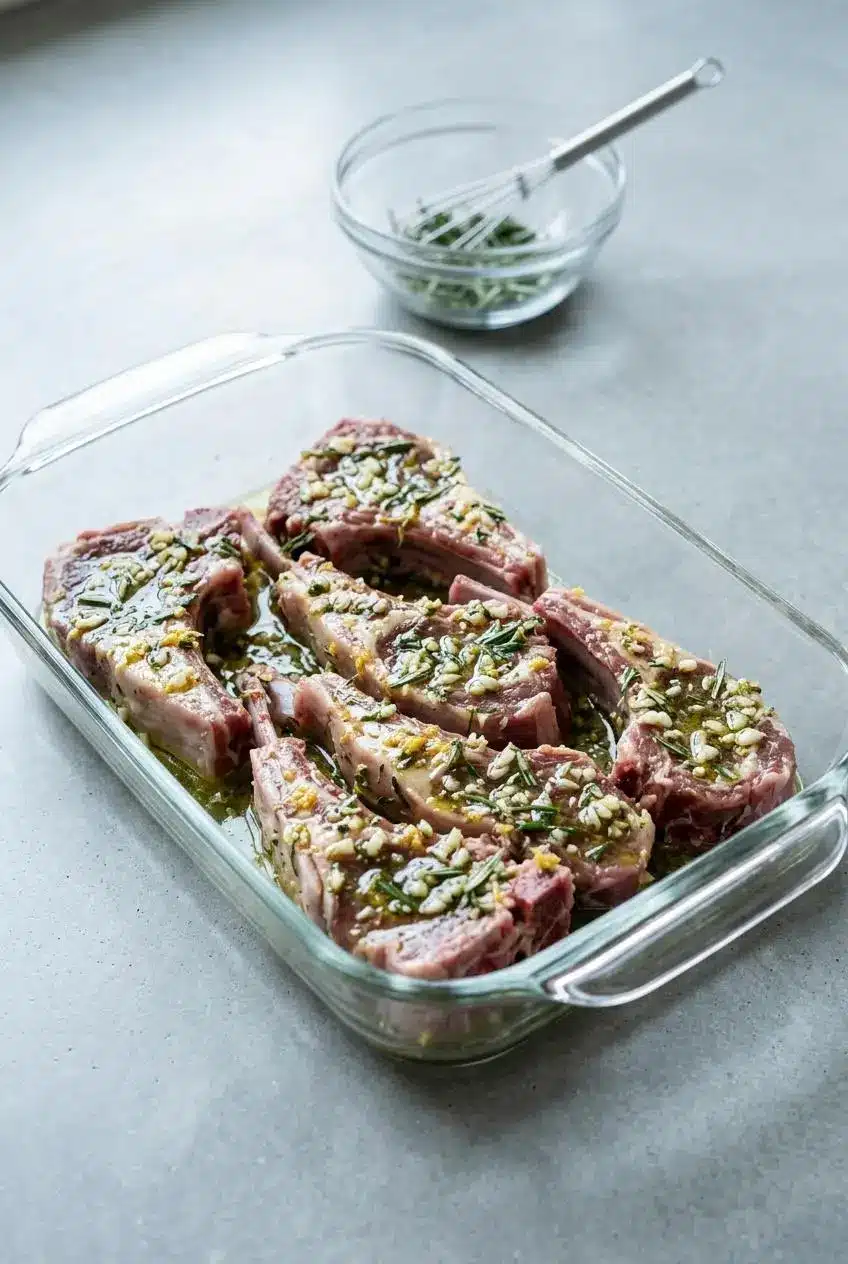
A cohesive marinade coats the chops evenly, so every bite gets rosemary, garlic, and lemon rather than a random patch of seasoning.
- Whisk the avocado oil, garlic, rosemary, lemon zest, lemon juice, oregano, kosher salt, and black pepper in a small bowl until the seasonings are evenly suspended in the oil.
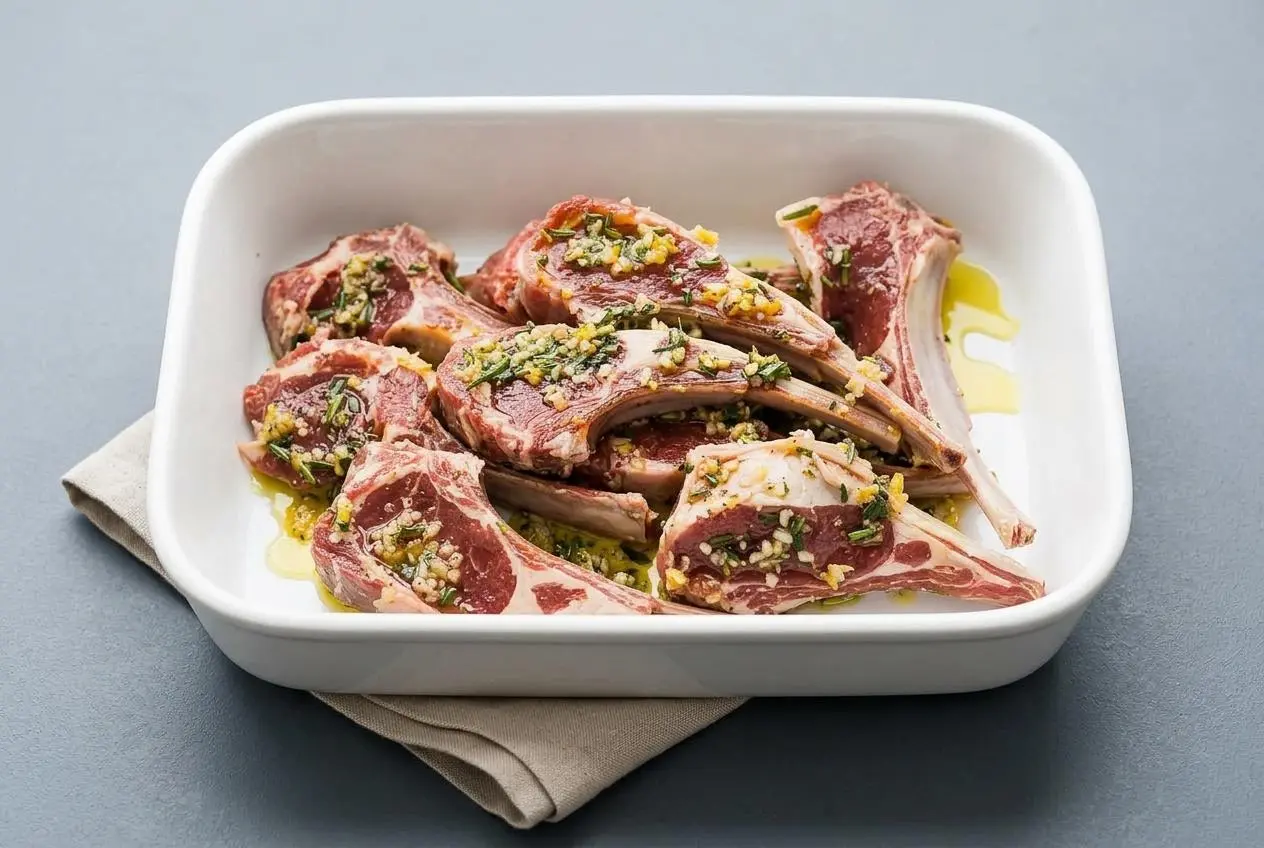
The mixture should look glossy and flecked with herbs, with no dry clumps of seasoning at the bottom. - Blot the lamb chops thoroughly with clean paper towels, then arrange them in a glass container or reusable silicone bag.
A dry surface helps the herb oil adhere closely to the meat instead of becoming watery. - Pour the marinade over the chops and turn them until all sides are coated, including the edges near the bone.
The lamb should have an even sheen of oil, garlic, and rosemary rather than a pool of marinade sitting underneath. - Let the chops marinate for at least 30 minutes, then cook them by grilling, pan-searing, or smoking as desired.
The herbs should smell fragrant and the lamb should look evenly seasoned before it goes over the heat.
Use a shallow glass dish or a reusable silicone bag so the lamb stays in close contact with the marinade. Avoid reactive metal containers when lemon juice is involved, since the acid can pick up a metallic flavor.
Marinating Time and Texture Control
Thirty minutes gives thin rib chops a flavorful surface seasoning and takes the chill off before cooking. Keep the chops refrigerated for a longer soak, including an overnight marination, rather than leaving raw lamb on the counter.
The oil, salt, and aromatics can sit with lamb for a longer period without dramatically changing the texture, but citrus deserves restraint. Too much lemon juice held against the meat for too long can alter the exterior proteins until they feel spongy or mealy instead of tender.
For this blend, think zest first and juice second. The zest supplies most of the citrus personality, so there is no need to increase the lemon juice for a stronger flavor. Add more rosemary or garlic only if you want a bolder herb profile, not a sharper acidic one.
Discard marinade that has touched raw lamb. Do not brush it onto cooked chops or use it as a serving sauce. If you want a fresh finishing flavor, reserve a separate portion of the herb mixture before it contacts the meat.
Mastering the Sear: Grill and Stovetop Methods
High heat gives marinated lamb chops their deeply savory crust while keeping the center juicy. The goal is a steady sear, not constant flipping or a crowded cooking surface.
Outdoor Grilling Technique
Set up a two-zone grill with a medium-high direct-heat area and a cooler indirect area. Place the chops over direct heat and sear them for 3 to 4 minutes per side, leaving them undisturbed until they release easily from the grates.
Move the chops to indirect heat if oil drippings trigger flare-ups. Gas grills offer easy heat control, while charcoal brings more smoky character, but both work best when the grates are clean and thoroughly heated before the lamb goes on.
Flip only after the first side develops a deep golden-brown surface. Repeated flipping interrupts browning and can leave the chops gray around the edges rather than nicely crusted.
Cast Iron Skillet Pan-Sear
Heat a heavy cast iron skillet over medium-high heat until it is very hot and just beginning to smoke lightly. Add the chops with space between them, working in batches if needed.
You should hear an immediate, confident sizzle when the lamb meets the pan. That sound means moisture is evaporating quickly enough to build browning instead of trapping steam around the chops.
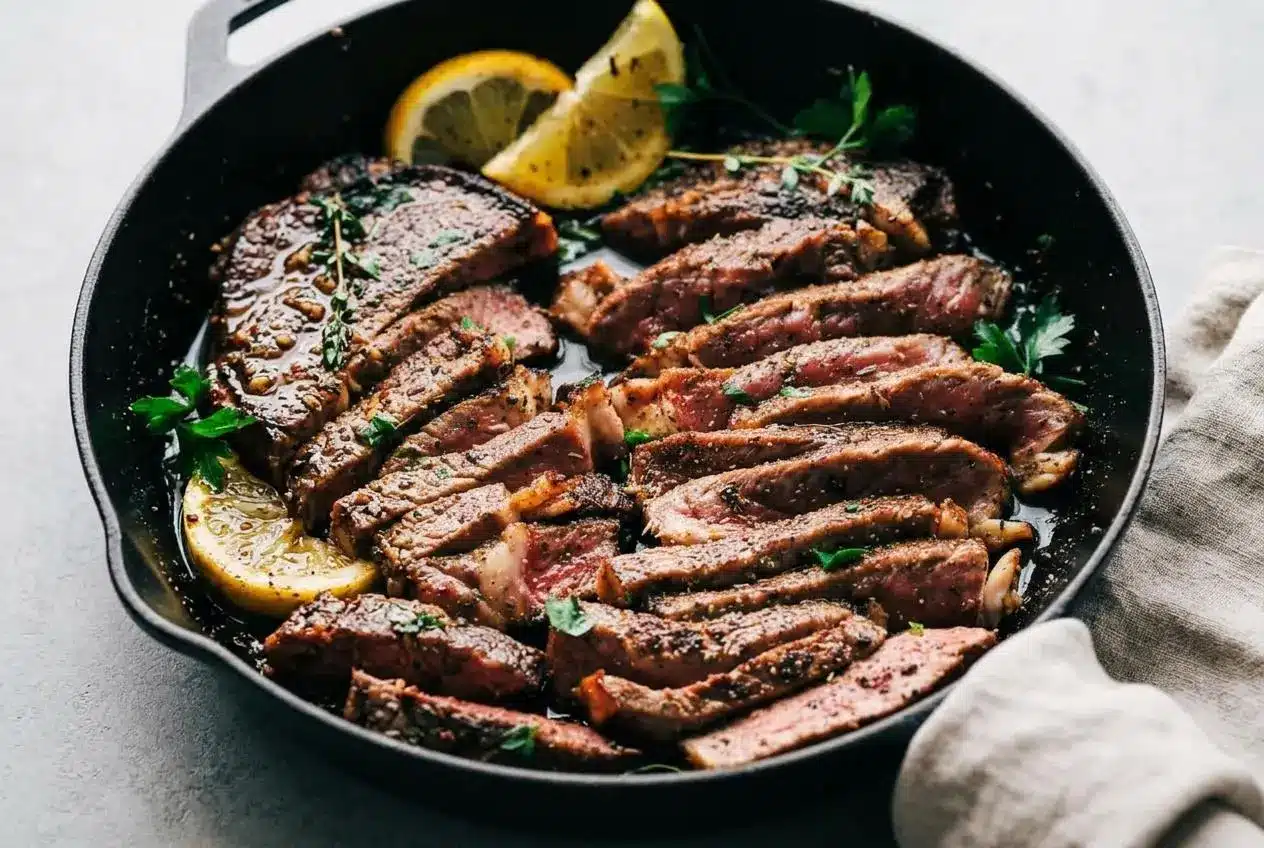
Keep the skillet uncovered and avoid nudging the meat during the first sear. Once the first side has a rich brown crust, turn the chops and sear the second side. The rendered lamb fat and rosemary will smell intensely savory as the pan heats up.
Preventing Bitter Charred Garlic
Before grilling or pan-searing, gently scrape or wipe away thick clusters of minced garlic and large rosemary pieces from the outside of the chops. Leave behind the flavorful oil and smaller herb flecks.
Garlic burns faster than lamb browns over high heat. If it turns black before the chop develops a crust, it can taste acrid and bitter. Removing the loose pieces gives the meat a cleaner sear while preserving the garlicky flavor that has already infused the surface.
Internal Temperature Targets and Resting Cues
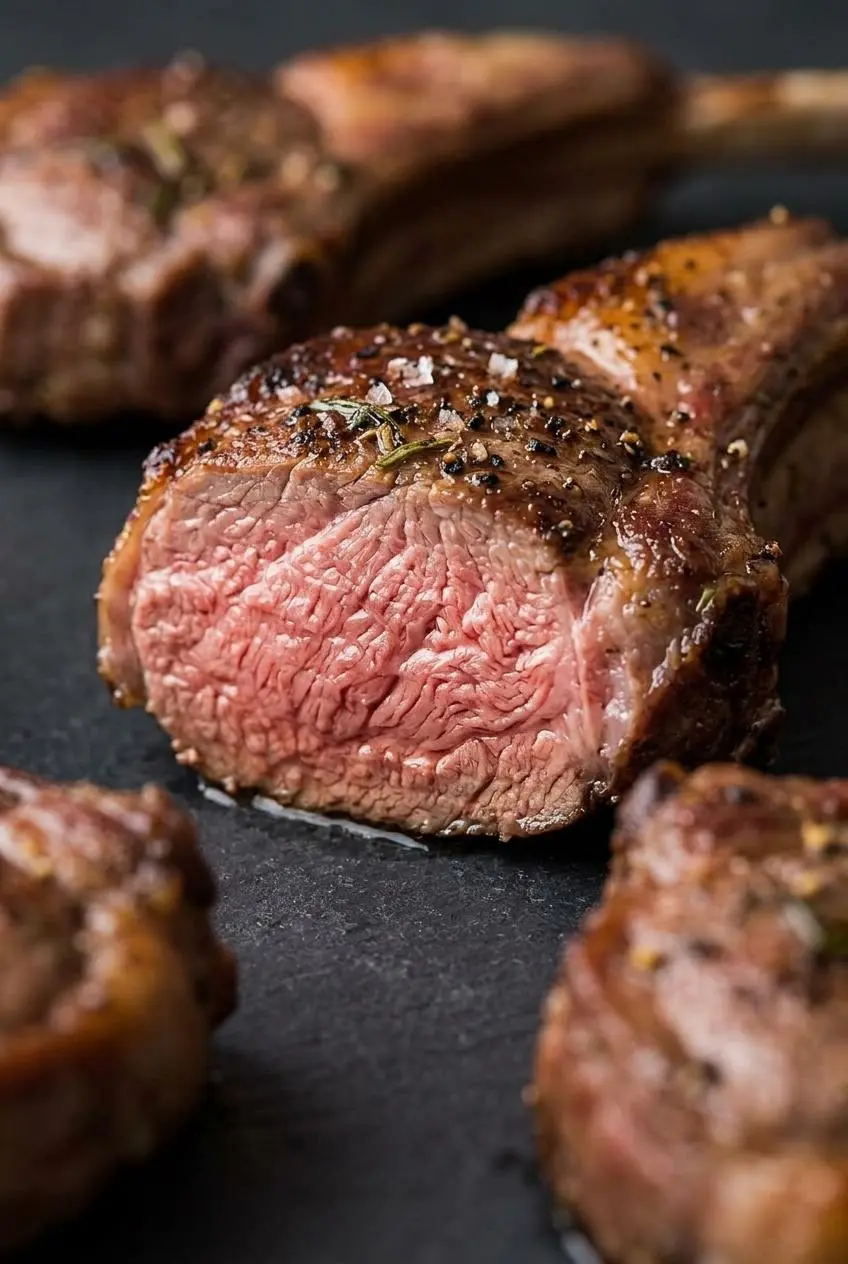
Use a digital thermometer rather than cutting into a chop to check doneness. Slide the probe horizontally into the thickest section of meat and keep it away from the bone, which can give a misleading reading.
For a pink medium-rare center, many cooks pull lamb at 130 to 135°F; for medium, pull it around 140°F. Let the chops rest loosely covered with foil for 5 minutes so carryover heat finishes the center and the juices settle back into the meat.
For food safety, lamb chops should reach 145°F and rest for at least 3 minutes before serving, as outlined in the minimum internal temperature chart for lamb chops. If cooking beyond medium-rare, use the thermometer as the deciding cue rather than relying on color alone.
Texture can help as a secondary check. A medium-rare chop feels springy when gently pressed, while an overcooked chop becomes firmer and less yielding. The thermometer remains the more dependable guide.
Flavor Variations and Marinade Substitutions
These optional directions change the flavor profile without altering the garlic-rosemary marinade above. Keep the same approach of using enough oil to coat the lamb and enough acidity to brighten, not soak, the meat.
A small pinch of crushed toasted coriander seeds is another optional addition for a floral, citrusy warmth that brings out lamb’s natural sweetness.
Greek Lemon Oregano Marinade
For a Greek-inspired direction, use extra virgin olive oil, more dried Greek oregano, minced garlic, fresh lemon juice, and freshly cracked black pepper. This variation tastes brighter and more herb-forward, especially with grilled chops.
Keep the lemon balanced rather than aggressive. A cooling cucumber sauce, charred lemon, or briny olives can round out the plate without competing with the lamb.
Spiced Greek Yogurt Tenderizer
For a creamier, warmly spiced option, coat the chops with plain Greek yogurt, cumin, turmeric, garlic, and salt. Yogurt’s gentle tang softens the exterior while cumin adds earthy depth and turmeric gives a warm golden hue.
Wipe away excess yogurt before cooking so it does not scorch in the pan. Cook this version over controlled heat, since dairy solids brown quickly and can darken before the lamb is ready.
Balsamic Garlic Glaze Marinade
Swap the lemon juice for balsamic vinegar when you want a darker, slightly sweet crust. Balsamic’s natural sugars brown readily, so use medium heat after the initial sear to keep the exterior glossy rather than burnt.
Rosemary and garlic still work beautifully in this version, but watch the chops closely. The glaze can shift from caramelized to too dark quickly on a hot grill.
Handling Extra Marinade
Make only the amount you need for the lamb, or set aside a clean portion before marinating if you want extra herb oil for finishing. Once it has touched raw meat, discard the remaining mixture rather than saving it for another meal.
The same garlic, rosemary, and oil profile also suits larger cuts, though their cooking approach changes with size. For a roast-style dinner, try this roast lamb leg for a related herb-forward meal.
Serving Suggestions and Side Pairings
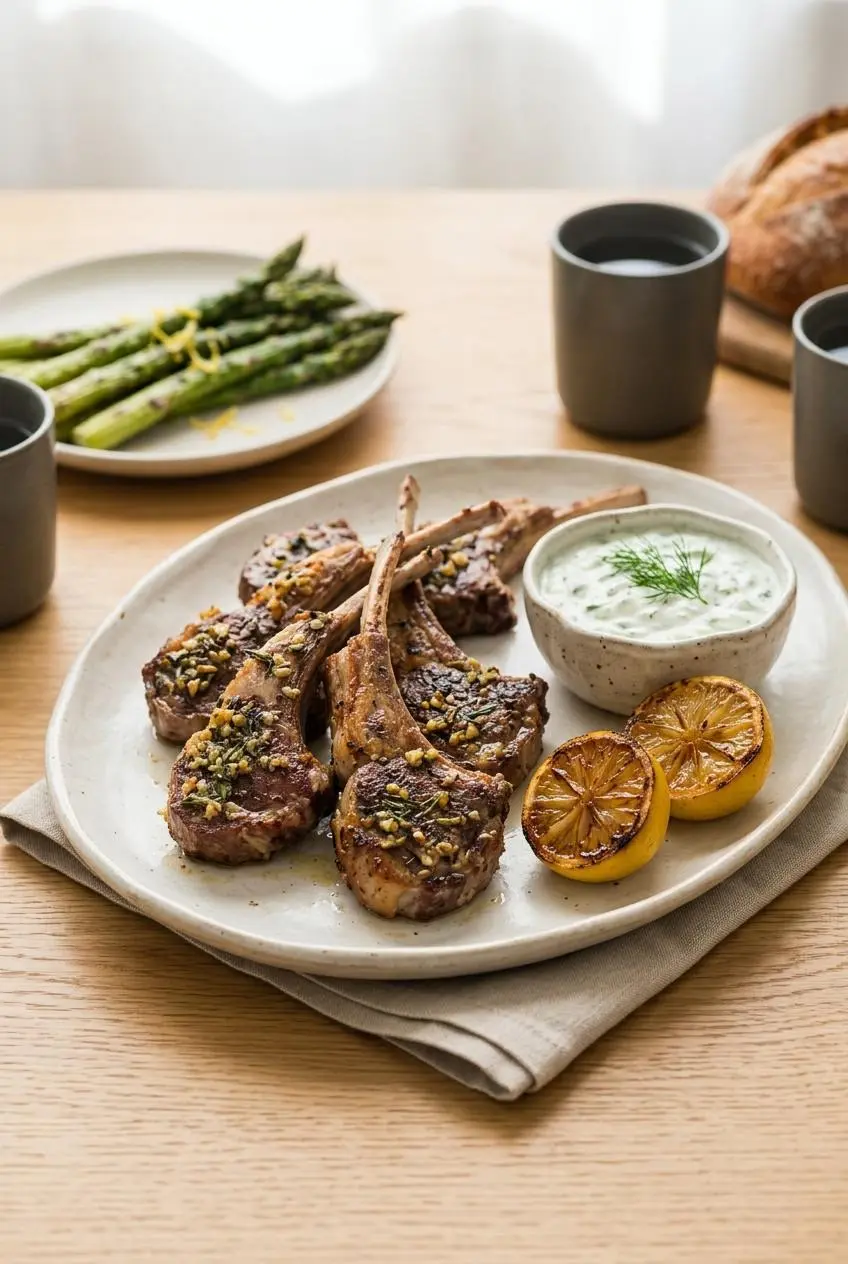
Rich, seared lamb benefits from sides that bring crunch, acidity, or a cool creamy contrast. Build the meal around one fresh element and one hearty element for a balanced plate.
- Serve the chops with minted cucumber tzatziki or chimichurri for a cool, herbaceous contrast to the garlicky crust.
- Add charred lemon halves so everyone can squeeze a little brightness over the meat at the table.
- Pair lamb with lemon herb orzo or roasted fingerling potatoes when you want a satisfying starch.
- Choose a crisp Greek salad for cucumbers, tomatoes, and briny flavors that cut through the richness of the chops.
- Grilled asparagus works especially well when the lamb is cooked outdoors, since both benefit from a little char.
Conclusion
This garlic and rosemary marinade gives lamb chops fragrant herb flavor, gentle lemon brightness, and the foundation for a deeply browned crust in as little as 30 minutes.
Dry the chops before coating them, clear away excess garlic before searing, and use a thermometer for the finish you want. A little attention at the pan makes the lamb shine.
Frequently Asked Questions
Should You Marinate Lamb Chops Before Cooking?
Yes. Marinating seasons the surface of the lamb with garlic, rosemary, salt, and lemon while the oil helps the herbs cling to the meat. It also supports better browning because the seasoned oil creates an even coating. Patting the chops dry before marinating is the key first step.
How Long Should Lamb Chops Sit in Marinade?
Let the chops sit for at least 30 minutes when you need a quick dinner. That gives the herbs and salt time to season the exterior. For a longer soak, keep the lamb chilled in the refrigerator. An overnight rest gives the rosemary and garlic a more pronounced flavor.
Can You Marinate Lamb Chops Overnight in Lemon Juice?
An overnight rest works well with this herb-and-oil mixture because it uses only a small amount of lemon juice and relies heavily on lemon zest for aroma. A marinade heavy in lemon juice can make the outside of lamb feel soft or mushy if it sits too long. For a brighter flavor, use zest rather than increasing the juice.
Do You Wipe Marinade Off Lamb Chops Before Cooking?
Wipe or scrape off thick pieces of garlic and large herb leaves before high-heat cooking. Those bits can burn before the lamb has time to form a proper crust. Leave the thin coating of seasoned oil on the chops. It carries plenty of flavor and helps the surface brown.
Can You Use This Marinade for Other Cuts of Lamb?
Yes. This garlic-herb blend works well with lamb rib chops, loin chops, shoulder steaks, and boneless leg of lamb. Adjust the cooking method to the cut’s thickness and size. Thicker cuts need more time and benefit from checking the center with a thermometer.
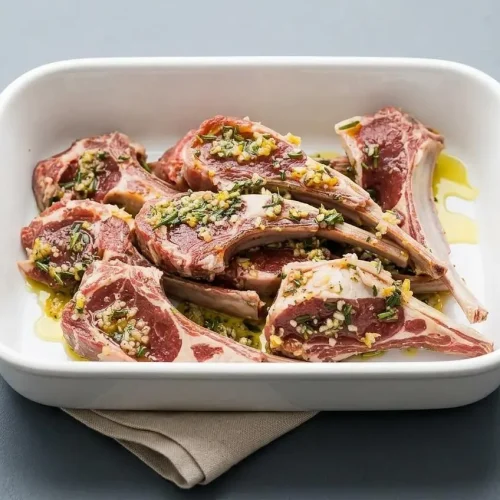
Lamb Chop Marinade

Equipment
- Small bowl
- Whisk
- glass container or reusable silicone bag
- Paper towels
Ingredients
- 4 tablespoons avocado oil (sub olive oil)
- 3 tablespoons garlic minced
- 2 tablespoons fresh rosemary minced
- 1 teaspoon lemon zest freshly grated
- 1 teaspoon lemon juice
- ½ teaspoon dried oregano leaves
- ½ teaspoon kosher salt
- ⅛ teaspoon ground black pepper
- 1 ½ – 2 pounds lamb chops
Instructions
- Whisk the avocado oil, garlic, rosemary, lemon zest, lemon juice, oregano, kosher salt, and black pepper in a small bowl until the seasonings are evenly suspended in the oil. The mixture should look glossy and flecked with herbs, with no dry clumps of seasoning at the bottom.
- Blot the lamb chops thoroughly with clean paper towels, then arrange them in a glass container or reusable silicone bag. A dry surface helps the herb oil adhere closely to the meat instead of becoming watery.
- Pour the marinade over the chops and turn them until all sides are coated, including the edges near the bone. The lamb should have an even sheen of oil, garlic, and rosemary rather than a pool of marinade sitting underneath.
- Let the chops marinate for at least 30 minutes, then cook them by grilling, pan-searing, or smoking as desired. The herbs should smell fragrant and the lamb should look evenly seasoned before it goes over the heat.