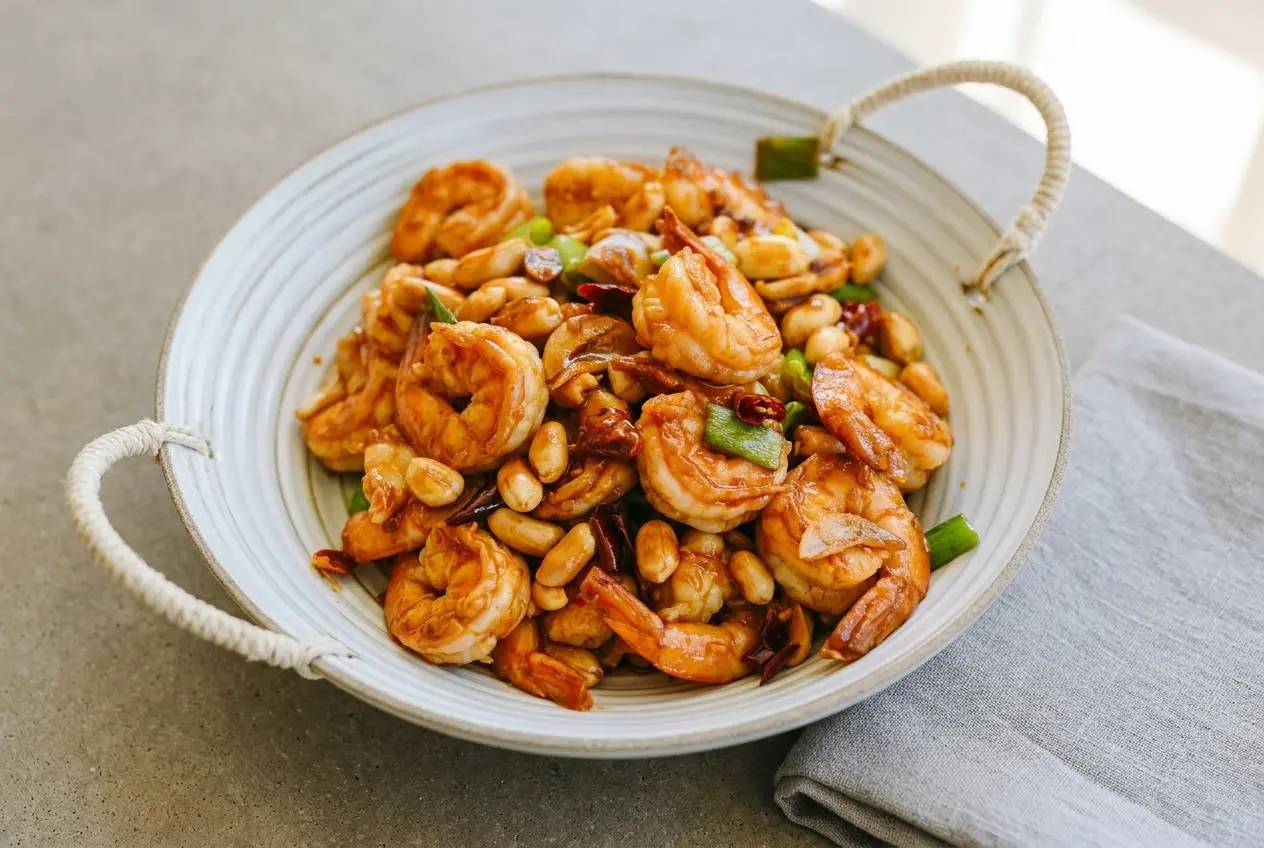
Kung pao shrimp is a fast Sichuan-style stir-fry with tender shrimp, peanuts, aromatics, and a savory, tangy, spicy sauce with that signature málà tingle.
Kung pao shrimp should taste lively and balanced, not heavy or overly sweet. This version keeps the sauce glossy instead of gloopy and gives you the kind of juicy shrimp that usually seems reserved for restaurant woks.
It cooks quickly once you start, so the real trick is smart prep. Get everything lined up first, and the whole dish snaps together fast.
Mix the sauce and prep every ingredient before the wok goes on the heat, because the stir-fry itself moves in minutes.
What Is Kung Pao Shrimp?
Kung Pao shrimp is a classic Sichuan-style stir-fry built around shrimp, dried chilies, peanuts, scallions, garlic, ginger, and a punchy sauce. The flavor should hit savory first, then tangy, then spicy, with a gentle numbing buzz from Sichuan peppercorns.
That numbing-spicy combo is called málà. It is not just heat. Sichuan peppercorns bring a bright, citrusy tingle that makes the chilies feel layered instead of flat.
If your usual takeout version leans sticky and sweet, this one will taste sharper, toastier, and more balanced. The sauce lightly coats the shrimp rather than drowning it, which is exactly what makes the dish feel fresh and craveable.
Key Ingredients for Authentic Kung Pao Flavor
This is where the dish earns its character. A few ingredients do a lot of heavy lifting, and knowing what each one brings makes shopping and substituting much easier.
Sichuan Peppercorns (The “Málà” Tingle)
Sichuan peppercorns are the soul of the dish. They are floral, citrusy, and gently numbing, which creates that unmistakable málà sensation. It feels more like a pleasant buzz on your lips than straight heat.
For the best flavor, toast whole peppercorns briefly in a dry pan until fragrant, then grind them. Pre-ground peppercorn powder works, but freshly ground has a brighter aroma and a cleaner tingle. Asian markets usually carry them, and they are easy to find online too.
A lot of home cooks ask if they can skip them. You can, but the dish becomes a simpler spicy shrimp stir-fry rather than true Kung Pao. There is no exact substitute for the numbing effect, though a tiny bit of lemon zest can echo their citrus edge.
Dried Red Chilies (Controlling the Heat)
Dried red chilies bring the smoky, toasty heat. Facing heaven chilies are a classic choice, but other small dried Chinese red chilies work too. The key is how you handle them.
Leave them whole or just split them slightly if you want more fragrance than fire. Chop or break them open for a hotter dish, because the seeds and inner membranes hit the oil harder. Since this recipe already calls for de-seeded chopped chilies, you can simply use fewer for a milder pan.
If you want almost no heat, omit them and add diced red bell pepper as an optional variation for color and sweetness. You can also reduce the Sichuan peppercorns if the tingle is part of the issue.
Shaoxing & Chinkiang Vinegar (The Savory Depth)
Shaoxing wine gives the shrimp a subtle savory aroma and helps round out the sauce. Chinkiang vinegar, also called black vinegar, adds malty tang and depth that plain rice vinegar cannot quite match.
This recipe uses Shaoxing wine in the shrimp marinade and rice wine vinegar in the sauce, which keeps the dish bright and clean. If you like exploring the broader Kung Pao flavor family, that deeper black-vinegar note is what many cooks reach for when they want a darker, moodier finish.
| Ingredient | Best substitute | What changes |
|---|---|---|
| Shaoxing wine | Dry sherry | Very close savory aroma, slightly less earthy |
| Chinkiang vinegar | Rice vinegar with a tiny splash of balsamic | Gets you tang plus some dark, malty depth |
| Light soy sauce | Tamari | Similar saltiness, slightly different finish |
| Dark soy sauce | Extra light soy sauce | You lose some color and a little richness |
The Secret to Perfectly Tender Shrimp (Velveting)
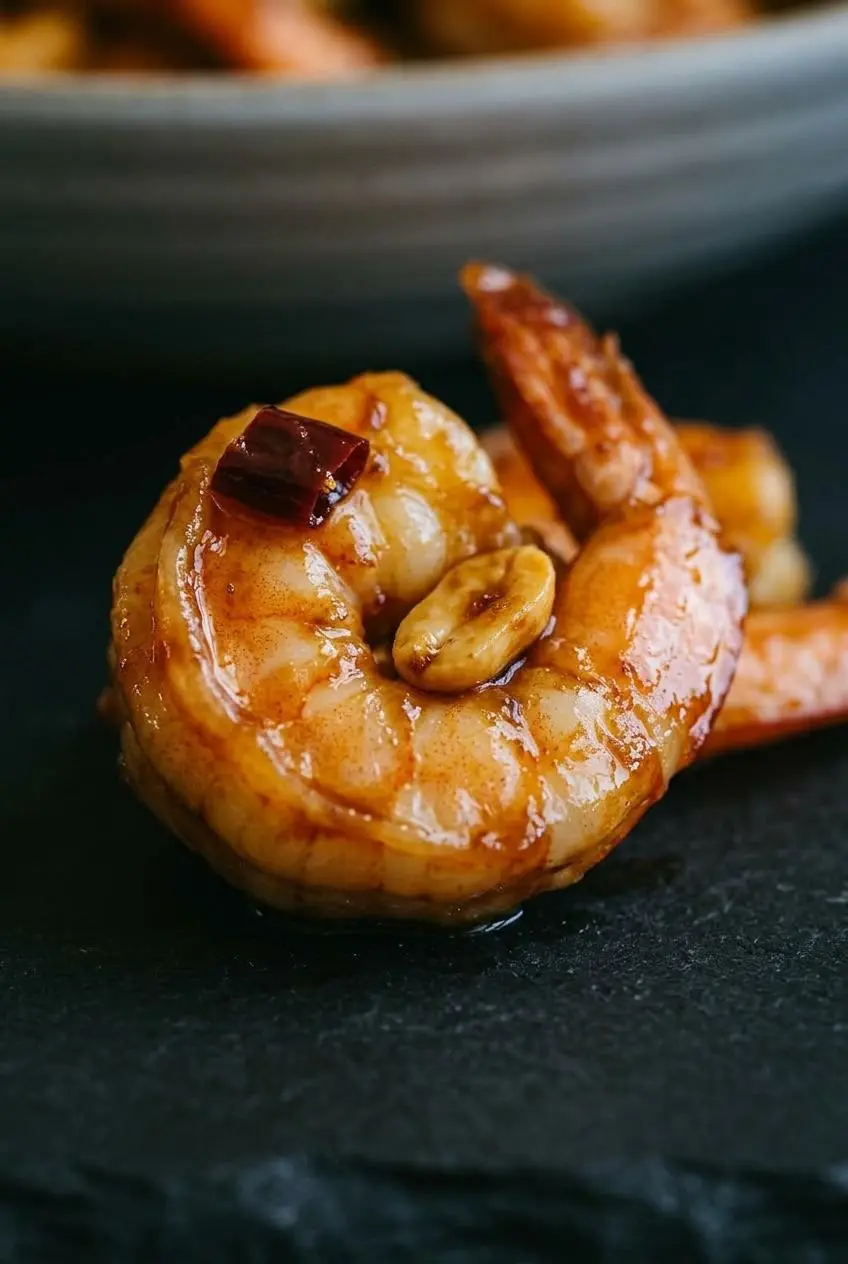
If you want that restaurant-style texture, velveting is the move. It sounds fancy, but it is really just a light coating that protects the shrimp during high-heat cooking so they stay juicy instead of turning bouncy and tough.
In this recipe, the shrimp first sit with oil, Shaoxing wine, salt, and white pepper. Right before cooking, cornstarch gets mixed in. That final cornstarch coating is the key part. It forms a thin barrier on the outside of the shrimp, helping lock in moisture while the surface sears quickly.
The result is easy to spot in the pan. Properly cooked shrimp turn opaque and light pink and curl into a loose C-shape. If they tighten into a small O, they have gone too far.
And yes, this is the kind of technique restaurants use all the time. Trust me, once you try it, it becomes hard to go back.
Ingredients for Kung Pao Shrimp
Each ingredient has a job here, from building aroma and heat to giving the sauce its sheen, tang, color, and nutty crunch.
For roasting the peanuts
- 1 teaspoon neutral oil
- 1 cup raw peanuts (shelled, with or without the skin)
For the shrimp
- 1 pound peeled and deveined large shrimp
- 1 teaspoon neutral oil
- 1 teaspoon Shaoxing wine
- 1/4 teaspoon salt
- 1/8 teaspoon white pepper powder
- 1/2 teaspoon cornstarch
For the sauce
- 3 tablespoons water
- 1 tablespoon rice wine vinegar
- 1 tablespoon light soy sauce
- 1 teaspoon sugar
- 1 teaspoon cornstarch
- 1/2 teaspoon Sichuan peppercorn powder
- 1/2 teaspoon dark soy sauce
For the rest of the dish
- 3 tablespoons neutral oil
- 3 cloves garlic (smashed and sliced)
- 1 tablespoon ginger (minced)
- 2-4 dried red chilies (de-seeded and chopped; these can be quite spicy, so adjust to your own taste)
- 6 scallions (white parts only, cut into 1/2-inch/1cm pieces)
I like to toast raw peanuts myself for this dish because the crunch stays sharper and the flavor gets deeper and nuttier.
How to Make Kung Pao Shrimp
Roast the peanuts
- Warm 1 teaspoon of oil in a wok over medium heat, then add the peanuts and stir without stopping for 4-5 minutes.
The peanuts should deepen in color gradually and smell toasty before they burn. - Turn off the heat and keep stirring the peanuts for 1 more minute with the leftover heat in the wok, then set them aside to cool.
They will crisp up a bit more as they cool.
Prepare the shrimp
- Cut a shallow slit along the back of each shrimp to butterfly it, then place the shrimp in a bowl with the oil, Shaoxing wine, salt, and white pepper powder.
Let the shrimp stand for 15 minutes so they can absorb the seasoning and relax slightly. - Stir in the cornstarch just before the shrimp go into the wok.
The shrimp should look lightly coated rather than pasty.
Prepare the sauce
- Whisk together the water, rice wine vinegar, light soy sauce, sugar, cornstarch, Sichuan peppercorn powder, and dark soy sauce in a medium bowl.
The mixture will look thin now, but it will turn glossy and lightly thickened in the wok.
Assemble the dish
- Heat the wok over high heat until it is just beginning to smoke, then add 2 tablespoons of oil and spread in the shrimp.
Sear briefly on both sides until the shrimp turn light pink and are only just opaque, then remove them to a bowl. - Lower the heat and add the remaining tablespoon of oil, followed by the garlic, ginger, chilies, and scallions.
Cook for 1-2 minutes until the aromatics smell fragrant and lively without letting the garlic darken too much. - Raise the heat back to high, return the shrimp to the wok, and stir-fry for 30 seconds.
You should hear a steady sizzle, not a quiet simmer. - Stir the sauce again to loosen the settled cornstarch, then pour it into the wok and stir-fry for another minute before adding the peanuts and turning off the heat.
The sauce will tighten quickly into a shiny coating that clings to the shrimp. - Toss everything together and serve right away.
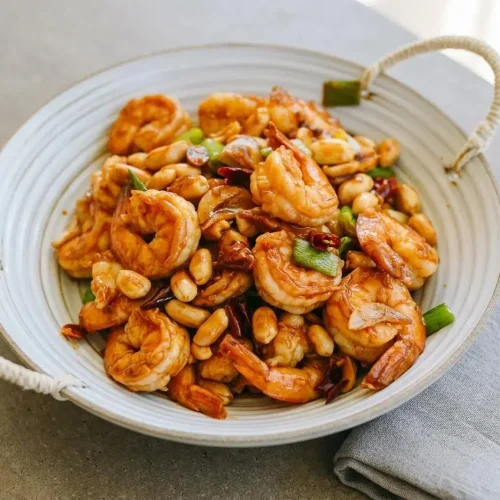
The finished dish should look glossy, smell nutty and fragrant, and keep the peanuts crunchy.
Tips for Stir-Fry Success
The biggest challenge home cooks face here is speed. Stir-frying is fast, so success comes down to prep and heat control more than anything else.
Have everything chopped, measured, and within reach before the wok gets hot. That includes stirring the sauce once more right before it goes in, because the cornstarch settles fast.
Use the hottest burner you have, and let the wok or skillet get properly hot before adding oil. You want a strong sizzle the second the shrimp hit the pan. That sound tells you the shrimp are searing instead of steaming.
Do not crowd the pan. If your skillet is smaller or your burner runs gentle, cook the shrimp in batches. A crowded pan traps moisture, and suddenly your stir-fry feels more like a poach. Nobody invited that.
Adjusting the Spice Level
Yes, Kung Pao is usually spicy, but you are fully in charge of the heat at home. For mild heat, use fewer chilies or keep them in larger pieces so less spice releases into the oil. For medium heat, use the full amount called for. For a bolder málà kick, use more of the dried chilies and keep the Sichuan peppercorns in place.
If you want a non-spicy version, skip the chilies and optionally add diced red bell pepper for color and sweetness. If the tingle itself is the issue, reduce the Sichuan peppercorn powder too.
Variations and Add-Ins
The classic version is terrific as written, but this stir-fry adapts well if you want to change the protein or add more vegetables.
Protein Swaps: Chicken and Tofu
Diced chicken thighs work especially well here. Velvet them the same way, then stir-fry until cooked through before finishing with the sauce. If you want a beef version built around the same bold, savory style, Kung Pao Beef is a natural next stop.
For tofu, use firm or extra-firm tofu, press it well, and pan-fry it first so it holds its shape in the sauce. The flavor stays great, but the texture is best when the tofu already has some crisp edges before it meets the wok.
The Best Vegetables to Add
Good choices are diced bell peppers, celery, and zucchini because they stay crisp enough for a high-heat stir-fry. Add them with the aromatics if you want them a little softer, or shortly after if you want more bite.
Bell peppers bring sweetness, celery adds classic crunch, and zucchini makes the dish a little juicier. Just keep the pieces fairly even so they cook at the same pace.
Making It Gluten-Free, Paleo, or Keto
| Variation | What to swap | Result |
|---|---|---|
| Gluten-free | Use tamari in place of soy sauce | Very close flavor with a clean salty finish |
| Paleo | Use coconut aminos, arrowroot starch, and a paleo-friendly sweetener | Softer savory profile and a less sharp sauce |
| Keto | Use coconut aminos or a keto-friendly soy substitute and a sugar substitute such as monk fruit | Lower in carbs with a slightly different sweet-savory balance |
What to Serve with Kung Pao Shrimp
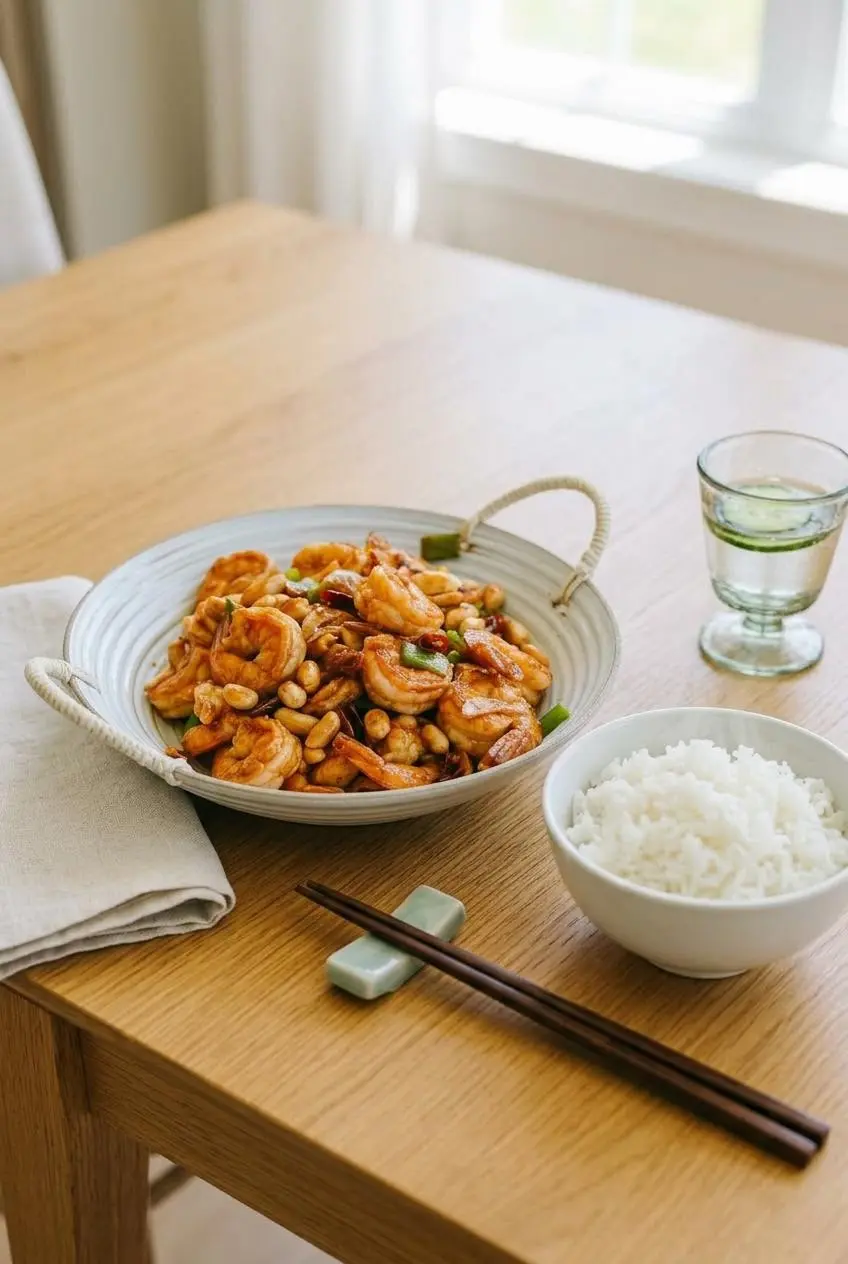
Jasmine rice is the classic choice because it catches every bit of that glossy sauce. If you want a fuller takeout-style dinner, pair it with classic fried rice.
For something lighter, serve it with cauliflower rice or steamed broccoli. Both keep the focus on the shrimp while giving you something mild to balance the heat and tang.
Storage, Freezing, and Reheating
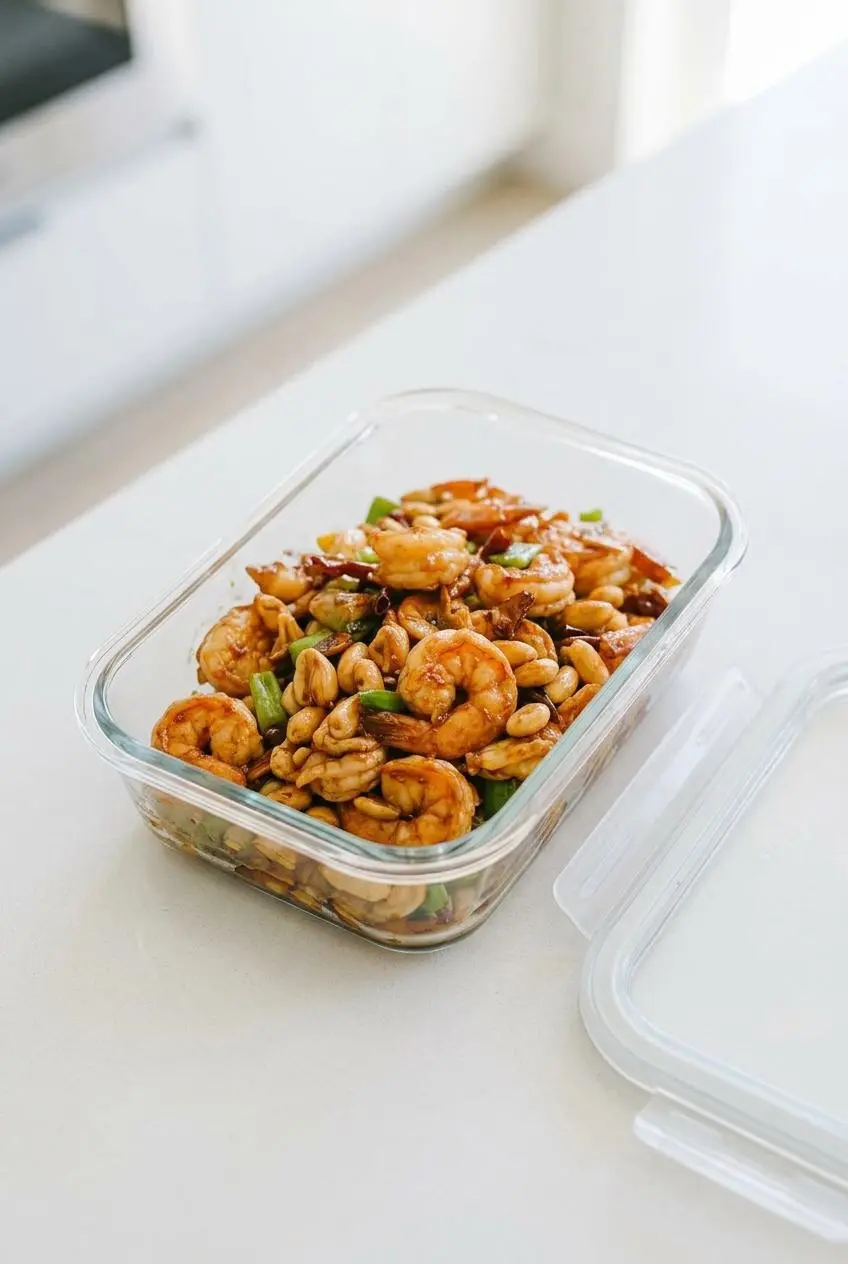
Let leftovers cool, then refrigerate them in an airtight container for up to 3 days for best quality and handling, with extra seafood safety guidance available through university extension guidance.
Freezing is not my first choice here. The shrimp can lose their snappy texture, and the peanuts soften in a way that takes away part of what makes the dish so good.
For reheating, use a skillet over low to medium heat with a small splash of water if the sauce has tightened too much in the fridge. Warm it just until the shrimp are heated through. A microwave works in a pinch, but it tends to overcook the shrimp fast.
Troubleshooting Your Stir-Fry
A lot of home cooks ask the same questions after their first stir-fry attempt. Usually the fix is small, and once you know it, the dish gets much easier.
| Problem | Likely Cause | Solution |
|---|---|---|
| Shrimp turned tough | They cooked too long or stayed in the wok while the sauce reduced | Sear only until light pink, remove early, and return briefly at the end |
| Sauce looks watery | The sauce was not stirred before adding, or it did not cook long enough | Restir the sauce so the cornstarch is fully mixed and let it bubble briefly until glossy |
| Vegetables went soggy | The pan was crowded or not hot enough | Use higher heat, cook in batches if needed, and keep vegetables moving |
| Garlic burned | The aromatics cooked over heat that was too high | Drop the heat for the aromatic stage, then raise it again when the shrimp go back in |
| Flavor tastes flat | Not enough chili fragrance, peppercorn aroma, or vinegar balance | Toast your peppercorns, bloom the chilies gently in oil, and make sure the sauce is fully mixed |
Conclusion
This dish wins because it delivers big flavor fast: tender shrimp, crunchy peanuts, bright aromatics, and a sauce that tastes balanced instead of heavy. Once you understand the role of the peppercorns and the quick velveting step, the whole recipe feels very doable.
Make it once, and the timing starts to click. Then it becomes the kind of weeknight dinner you can pull off with real confidence.
Frequently Asked Questions
What Is the Difference Between Kung Pao Shrimp and Szechuan Shrimp?
Kung Pao shrimp is a specific dish with peanuts and a balanced savory, tangy, lightly sweet, málà-style sauce. Szechuan shrimp is a broader label for spicy shrimp dishes from the region, and it often leans more directly spicy, sometimes with chili bean paste and a deeper, bolder heat.
What’s the Secret to Getting Tender, Juicy Shrimp Like in Restaurants?
The secret is velveting. Coating the shrimp with cornstarch right before cooking helps protect the surface, hold in moisture, and keep the texture tender during the quick sear.
Do I Have to Use Sichuan Peppercorns?
If you want the authentic málà tingle, yes. If you leave them out, the dish will still be tasty, but it will taste more like a straightforward spicy shrimp stir-fry than true Kung Pao.
How Do I Make Kung Pao Shrimp Not Spicy?
Skip the dried chilies, or leave them whole instead of chopping them so they perfume the oil without adding much heat. You can also swap in diced red bell pepper for color, and reduce or omit the Sichuan peppercorns if you want to avoid the tingle too.
Can I Make This in a Regular Skillet Instead of a Wok?
Yes. A large heavy skillet, especially cast iron or stainless steel, works well. Heat it thoroughly first, and if needed, cook the shrimp in batches so they sear instead of steam.
What Is the Best Way to Reheat Leftovers?
Reheat them gently in a skillet over low to medium heat with a small splash of water if the sauce needs loosening. Stop as soon as the shrimp are warmed through so they stay as tender as possible.
Kung Pao Shrimp

Equipment
- wok
Ingredients
For roasting the peanuts
- 1 teaspoon neutral oil
- 1 cup raw peanuts (shelled, with or without the skin)
For the shrimp
- 1 pound peeled and deveined large shrimp
- 1 teaspoon neutral oil
- 1 teaspoon Shaoxing wine
- 1/4 teaspoon salt
- 1/8 teaspoon white pepper powder
- 1/2 teaspoon cornstarch
For the sauce
- 3 tablespoons water
- 1 tablespoon rice wine vinegar
- 1 tablespoon light soy sauce
- 1 teaspoon sugar
- 1 teaspoon cornstarch
- 1/2 teaspoon Sichuan peppercorn powder
- 1/2 teaspoon dark soy sauce
For the rest of the dish
- 3 tablespoons neutral oil
- 3 cloves garlic (smashed and sliced)
- 1 tablespoon ginger (minced)
- 2-4 dried red chilies (de-seeded and chopped; these can be quite spicy, so adjust to your own taste)
- 6 scallions (white parts only, cut into 1/2-inch/1cm pieces)
Instructions
Roast the peanuts
- Warm 1 teaspoon of oil in a wok over medium heat, then add the peanuts and stir without stopping for 4-5 minutes. The peanuts should deepen in color gradually and smell toasty before they burn.
- Turn off the heat and keep stirring the peanuts for 1 more minute with the leftover heat in the wok, then set them aside to cool. They will crisp up a bit more as they cool.
Prepare the shrimp
- Cut a shallow slit along the back of each shrimp to butterfly it, then place the shrimp in a bowl with the oil, Shaoxing wine, salt, and white pepper powder. Let the shrimp stand for 15 minutes so they can absorb the seasoning and relax slightly.
- Stir in the cornstarch just before the shrimp go into the wok. The shrimp should look lightly coated rather than pasty.
Prepare the sauce
- Whisk together the water, rice wine vinegar, light soy sauce, sugar, cornstarch, Sichuan peppercorn powder, and dark soy sauce in a medium bowl. The mixture will look thin now, but it will turn glossy and lightly thickened in the wok.
Assemble the dish
- Heat the wok over high heat until it is just beginning to smoke, then add 2 tablespoons of oil and spread in the shrimp. Sear briefly on both sides until the shrimp turn light pink and are only just opaque, then remove them to a bowl.
- Lower the heat and add the remaining tablespoon of oil, followed by the garlic, ginger, chilies, and scallions. Cook for 1-2 minutes until the aromatics smell fragrant and lively without letting the garlic darken too much.
- Raise the heat back to high, return the shrimp to the wok, and stir-fry for 30 seconds. You should hear a steady sizzle, not a quiet simmer.
- Stir the sauce again to loosen the settled cornstarch, then pour it into the wok and stir-fry for another minute before adding the peanuts and turning off the heat. The sauce will tighten quickly into a shiny coating that clings to the shrimp.
- Toss everything together and serve right away. The finished dish should look glossy, smell nutty and fragrant, and keep the peanuts crunchy.