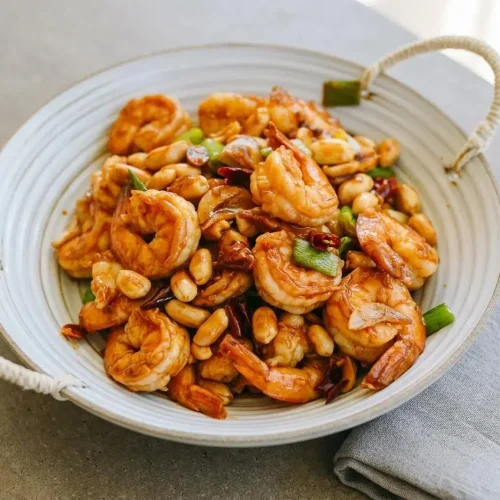
Kung Pao Shrimp

This Kung Pao shrimp recipe delivers a fast Sichuan-style stir-fry with tender shrimp, crunchy peanuts, and a savory, tangy, spicy sauce. It tastes lively and balanced, better than takeout, with a glossy sauce and perfectly juicy shrimp.
Equipment
- wok
Ingredients
For roasting the peanuts
- 1 teaspoon neutral oil
- 1 cup raw peanuts (shelled, with or without the skin)
For the shrimp
- 1 pound peeled and deveined large shrimp
- 1 teaspoon neutral oil
- 1 teaspoon Shaoxing wine
- 1/4 teaspoon salt
- 1/8 teaspoon white pepper powder
- 1/2 teaspoon cornstarch
For the sauce
- 3 tablespoons water
- 1 tablespoon rice wine vinegar
- 1 tablespoon light soy sauce
- 1 teaspoon sugar
- 1 teaspoon cornstarch
- 1/2 teaspoon Sichuan peppercorn powder
- 1/2 teaspoon dark soy sauce
For the rest of the dish
- 3 tablespoons neutral oil
- 3 cloves garlic (smashed and sliced)
- 1 tablespoon ginger (minced)
- 2-4 dried red chilies (de-seeded and chopped; these can be quite spicy, so adjust to your own taste)
- 6 scallions (white parts only, cut into 1/2-inch/1cm pieces)
Instructions
Roast the peanuts
- Warm 1 teaspoon of oil in a wok over medium heat, then add the peanuts and stir without stopping for 4-5 minutes. The peanuts should deepen in color gradually and smell toasty before they burn.
- Turn off the heat and keep stirring the peanuts for 1 more minute with the leftover heat in the wok, then set them aside to cool. They will crisp up a bit more as they cool.
Prepare the shrimp
- Cut a shallow slit along the back of each shrimp to butterfly it, then place the shrimp in a bowl with the oil, Shaoxing wine, salt, and white pepper powder. Let the shrimp stand for 15 minutes so they can absorb the seasoning and relax slightly.
- Stir in the cornstarch just before the shrimp go into the wok. The shrimp should look lightly coated rather than pasty.
Prepare the sauce
- Whisk together the water, rice wine vinegar, light soy sauce, sugar, cornstarch, Sichuan peppercorn powder, and dark soy sauce in a medium bowl. The mixture will look thin now, but it will turn glossy and lightly thickened in the wok.
Assemble the dish
- Heat the wok over high heat until it is just beginning to smoke, then add 2 tablespoons of oil and spread in the shrimp. Sear briefly on both sides until the shrimp turn light pink and are only just opaque, then remove them to a bowl.
- Lower the heat and add the remaining tablespoon of oil, followed by the garlic, ginger, chilies, and scallions. Cook for 1-2 minutes until the aromatics smell fragrant and lively without letting the garlic darken too much.
- Raise the heat back to high, return the shrimp to the wok, and stir-fry for 30 seconds. You should hear a steady sizzle, not a quiet simmer.
- Stir the sauce again to loosen the settled cornstarch, then pour it into the wok and stir-fry for another minute before adding the peanuts and turning off the heat. The sauce will tighten quickly into a shiny coating that clings to the shrimp.
- Toss everything together and serve right away. The finished dish should look glossy, smell nutty and fragrant, and keep the peanuts crunchy.
Notes
Stir-Fry Success: Have all ingredients chopped, measured, and within reach before the wok gets hot. The cooking process is very fast, so preparation is key.
High Heat is Key: Use your hottest burner and let the wok get properly hot before adding oil. This ensures the shrimp sear rather than steam. Cook in batches if needed to avoid crowding the pan.
Adjusting the Spice: You are in control of the heat. For a milder dish, use fewer dried chilies. For a non-spicy version, omit the chilies entirely and consider adding diced red bell pepper for color.
Storage and Reheating: Store leftovers in an airtight container in the refrigerator for up to 3 days. Reheat gently in a skillet over low-medium heat, adding a splash of water if needed, to avoid overcooking the shrimp.
Nutrition information is an estimate based on common ingredients and serving sizes. Values may vary depending on brands, portions, and substitutions.