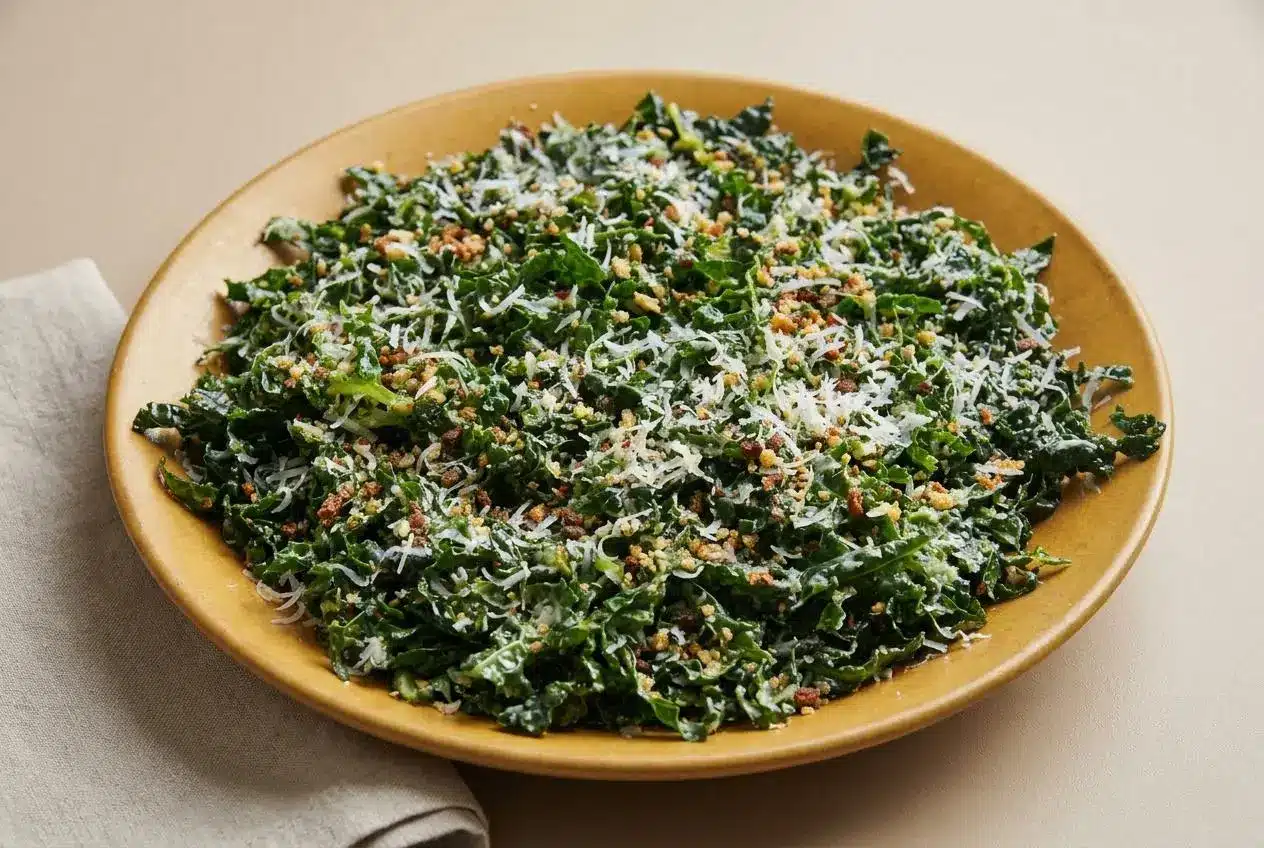
This kale salad recipe turns raw Tuscan kale into a restaurant-style salad with lemon, garlic, Pecorino, olive oil, and crisp breadcrumbs. Slice the leaves thin, dry them well, massage lightly, and let the salad rest for a few minutes for the best texture.
If raw kale has ever tasted too tough or too bitter, this version fixes both problems. The dressing is bright, savory, and punchy enough to soften the greens without burying them.
You get real crunch from breadcrumbs, a deep green silky texture from the kale, and a sharp cheesy finish from Pecorino. The small handling details make all the difference.
Use a salad spinner if you have one. Dry kale grabs the dressing, while damp kale turns the whole bowl watery.
Why This Master Kale Salad Recipe Works
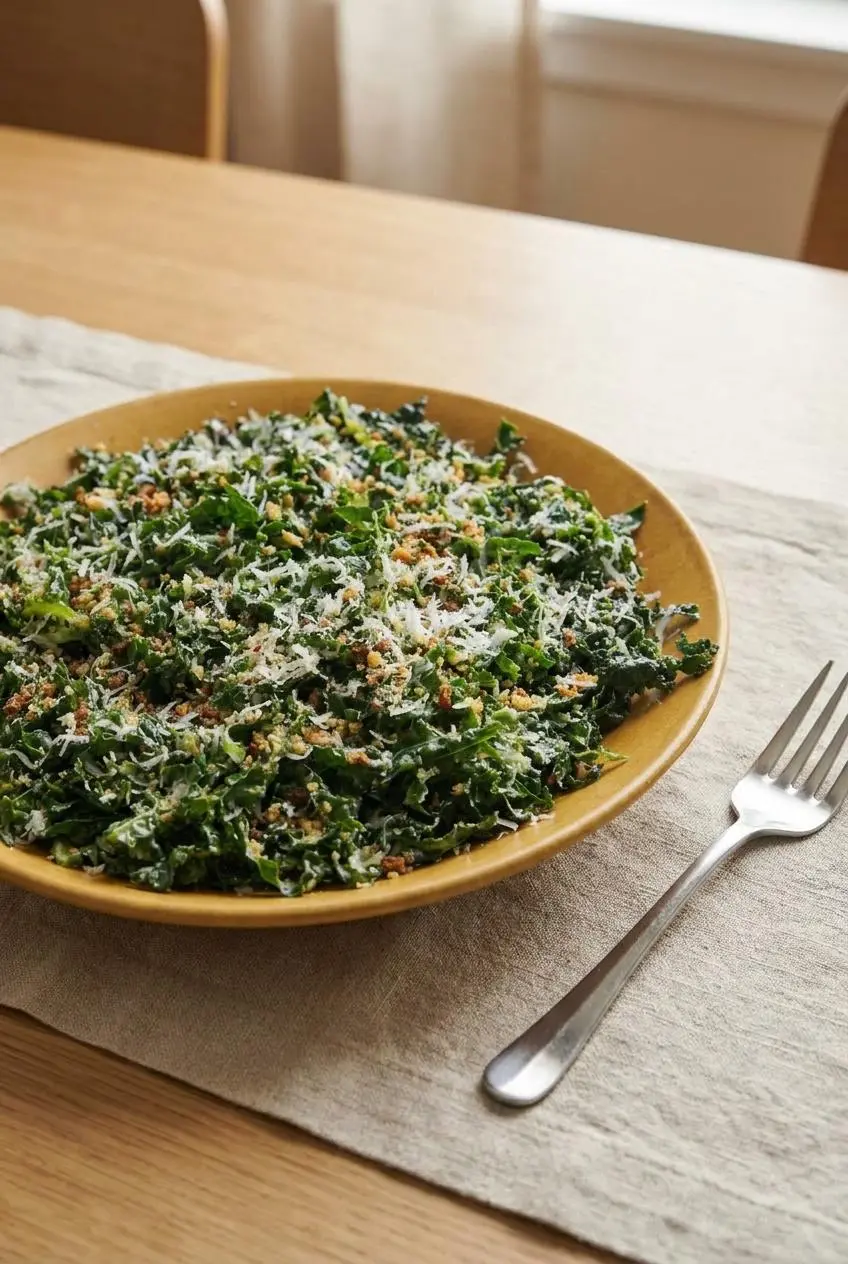
This salad works because every part pulls in the same direction: less bitterness, more tenderness, and better contrast. It has the sharp, savory appeal that makes a classic Caesar salad so satisfying, but with kale’s earthier bite and a brighter lemon edge.
Lacinato kale, also called Tuscan kale, is the best fit here for raw salad. The leaves are flatter, a little sweeter, and usually more tender than curly kale, so they’re easier to slice into a fine chiffonade and more pleasant to chew once dressed.
Fresh lemon juice does more than add sparkle. Its acidity starts loosening the kale’s tough structure, especially once the leaves are tossed and lightly worked by hand. That’s why the greens go from stiff and matte to softer, darker, and more supple after a short rest.
The garlic matters too, especially when chopped down into a paste. At first it smells sharp and hot. Once it’s crushed and whisked with oil, lemon, and cheese, the aroma becomes rounder and more mellow, so the dressing tastes assertive instead of harsh.
Homemade coarse crumbs beat fine packaged crumbs every time in this salad. Bigger, rustic crumbs stay crisp longer and bring a toasty crackle. Powdery crumbs tend to disappear into the dressing and can leave the salad with a damp, gritty feel.
The Master Raw Lacinato Kale Salad Recipe Ingredients
Each ingredient has a job here, from tenderizing and seasoning the kale to adding aroma, sharpness, richness, and that last crunchy finish.
- 1 bunch lacinato kale (aka Tuscan kale or cavolo nero), thick ribs cut out
- 1 garlic clove, finely chopped
- 1/4 cup finely grated Pecorino Romano cheese, plus more to finish
- Extra-virgin olive oil
- Juice of 1 lemon
- 1/8 tsp dried chile flakes
- Kosher salt and freshly ground black pepper
- 1/4 cup dried bread crumbs
Ingredients Explained
Lacinato kale is the backbone of the salad. It has enough structure to stand up to the dressing, but when sliced thin and handled properly, it becomes pleasantly tender instead of fibrous.
Garlic gives the dressing its edge. Taking it all the way to a paste spreads that flavor evenly, so you get savory depth in every bite rather than random sharp bits.
Pecorino Romano brings salt, nuttiness, and a firm cheesy bite that works beautifully against bitter greens. Lemon juice lifts the whole bowl and helps soften the leaves. Extra-virgin olive oil rounds out the dressing so the acid does not hit too hard.
Chile flakes add a quiet back-of-the-throat warmth rather than obvious heat. Black pepper keeps the dressing lively. The bread crumbs are the texture hero, as long as they stay coarse and crisp.
I look for kale with dark, firm leaves and no limp yellowing edges, because sturdier bunches hold their texture better after slicing and tossing.
How to Make the Master Raw Lacinato Kale Salad
Step-by-Step Assembly Directions
Dried Bread Crumbs
- Cut bread with the crust on into 1/2-inch-thick slices, then into cubes, and spread the cubes in one even layer on a baking sheet.
Keeping the pieces similar in size helps them dry at the same pace instead of leaving some chewy and some brittle. - Set the oven to its lowest setting, usually about 250 °F, and dry the bread until it is completely crisp without taking on color.
This can take an hour or more, and the cubes should feel dry all the way through rather than toasted on the edges. - Let the cubes cool completely, then pulse them in a food processor until you have mostly small coarse crumbs with a few larger bits left behind.
Stop before the mixture turns dusty, because powdery crumbs lose their crunch fast and can feel gritty in the salad. - Transfer the crumbs to an airtight container once fully dry.
They should feel light and crisp, with no soft center or lingering warmth trapped inside.
Kale Salad Preparation
- Roll a few kale leaves into a tight bundle and slice them crosswise into very thin ribbons, about 1/16 inch thick, then rinse the ribbons in cool water and spin them completely dry before moving them to a bowl.
The strands should look fine and fluffy, not chunky, and the leaves should feel dry enough that they do not slick the bowl with water. - Keep chopping the garlic on the board until it forms a paste, then whisk it in a small bowl with 1/4 cup Pecorino, a healthy glug of olive oil, the lemon juice, chile flakes, 1/4 teaspoon salt, and plenty of black pepper.
The dressing should smell bright and garlicky, and the paste should disappear into the mixture instead of sitting in obvious bits. - Add the dressing to the kale and toss it thoroughly with clean hands, then taste and adjust with more lemon, salt, chile flakes, or black pepper as needed and let it sit for about 5 minutes.
The leaves should start to relax, darken slightly, and lose their raw stiffness as the dressing sinks in. - Finish the salad with the bread crumbs, more cheese, and another drizzle of olive oil.
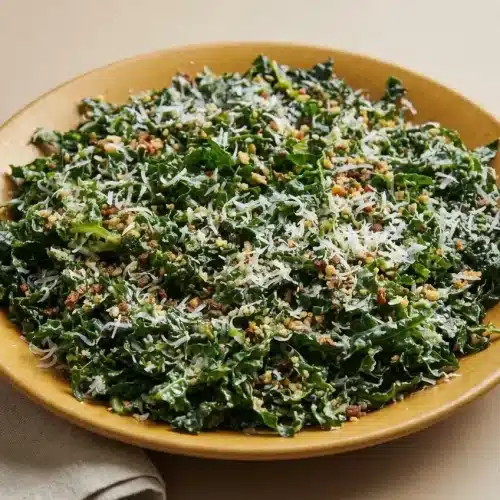
The top should look craggy and glossy, with a mix of tender greens and crisp bits in every forkful.
The Art of Massaging Kale (And Why It Matters)
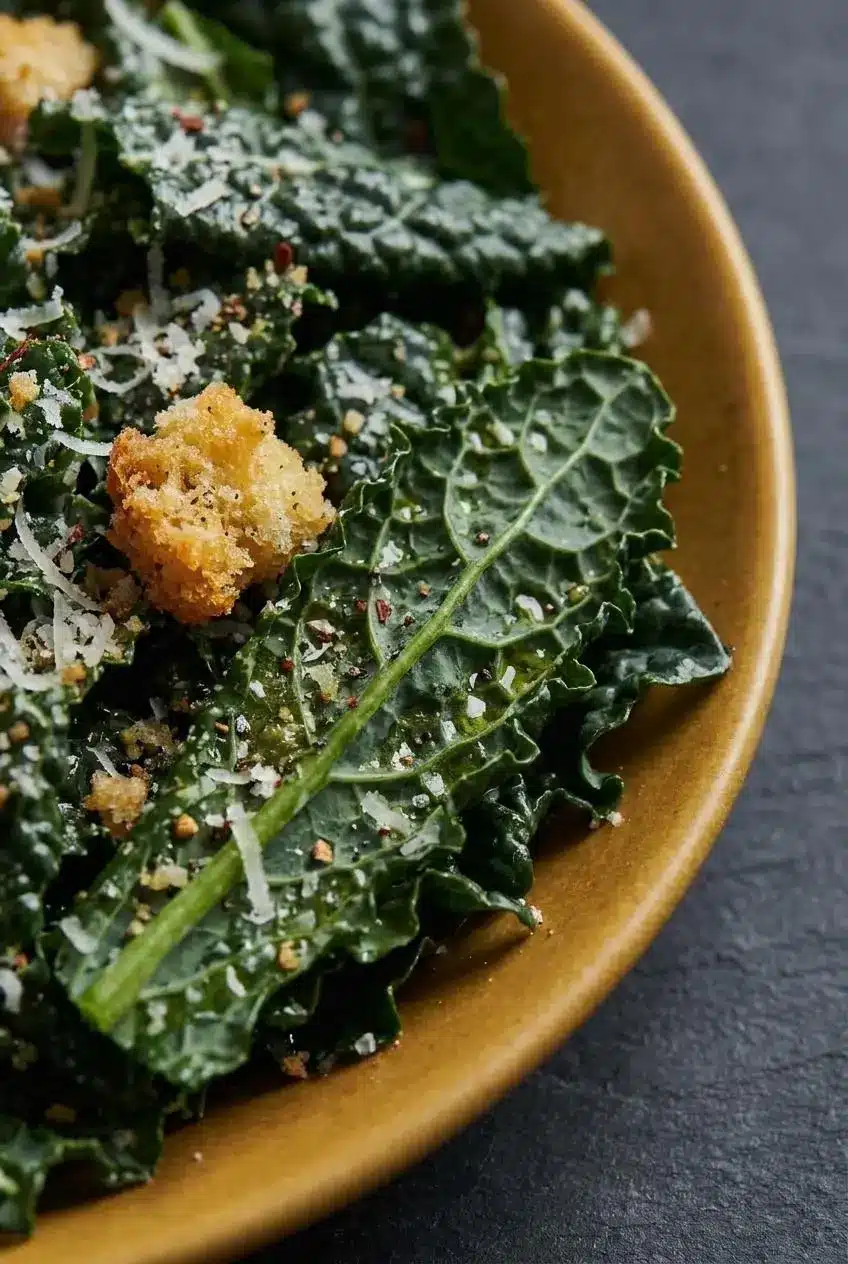
Massaging kale is the move that changes minds about raw kale. You are not bruising it for fun. You are physically softening the leaves so they eat more like a salad and less like landscaping.
Start with the tough middle ribs removed and the leaves sliced thin. Add a little olive oil and a pinch of salt, then work the leaves firmly with clean hands. Rub, squeeze, and toss them for a minute or two until the texture changes.
Here is what to watch for. The kale shrinks noticeably, often close to half its original bulk. The color deepens from a stiff lighter green to a darker, almost translucent green. The leaves feel softer and more velvety instead of dry and springy.
Salt helps pull out a bit of moisture from the leaf surface, and that makes the greens more flexible. The oil coats the ribbons so they bend and soften more evenly. Lemon in the dressing keeps that process moving once the salad rests.
The flavor shifts too. Raw kale can start out sharp and bitter, especially if the leaves are thick or the cut is too wide. After massaging, that bitterness eases and the greens taste milder, rounder, and slightly sweeter.
You do not need to mash the kale into oblivion. Stop once it feels tender enough to chew easily and still has some body. Overworking it can make the leaves limp.
Creative Variations to Shake Up Your Salad Game
The base salad stands on its own, but it also welcomes smart add-ons. If you want more brightness and crunch, toasted pine nuts and a little fresh lemon zest are excellent optional extras that make the lemon-garlic dressing pop.
Classic Lemon Parmesan Kale Salad
For a gentler, nuttier finish, swap the Pecorino Romano for shaved Parmesan. The overall flavor stays savory and lemony, but the edge softens a bit, which is great if you want the cheese to feel less salty and assertive.
This version is especially good when you want the salad to lean elegant and simple. A little lemon zest on top makes it smell even fresher.
High-Protein Quinoa and Chickpea Salad
To turn this into more of a meal, fold in cooked quinoa and roasted crispy chickpeas after the kale has been dressed and rested. The quinoa catches the lemony dressing, while the chickpeas add heft and extra crunch.
Pack the crunchy pieces separately if you’re making lunch ahead so they stay crisp. This variation is sturdy enough for meal prep without feeling heavy.
Mediterranean Cucumber and Feta Kale Salad
Add chopped cucumber, crumbled feta, and Kalamata olives for a brighter Mediterranean direction. The cucumber cools the peppery bite of the greens, and the feta brings creamy tang that plays well with lemon and garlic.
If those salty, fresh flavors are your lane, a traditional Greek salad makes a nice point of comparison for the overall profile.
Common Kale Salad Pitfalls to Avoid
Most bad kale salads come down to a few fixable mistakes. Once you know them, the salad gets a lot more reliable.
- Leaving the woody ribs in makes the salad hard to chew. Strip or cut out the thick center rib before slicing so every bite stays tender.
- Washing without drying thoroughly weakens the dressing. Excess water keeps the lemon, oil, garlic, and cheese from clinging to the leaves, so the salad tastes watered down instead of punchy.
- Using fine packaged bread crumbs is a texture trap. They absorb dressing too quickly and turn soft, while coarse crumbs stay rustic and crunchy.
- Slicing the kale too wide keeps it chewy even after dressing. Thin ribbons make a huge difference in how the salad eats.
- Skipping the short rest after tossing leaves the greens tasting rawer and stiffer. Even 5 minutes helps the dressing settle in.
Storage and Make-Ahead Instructions
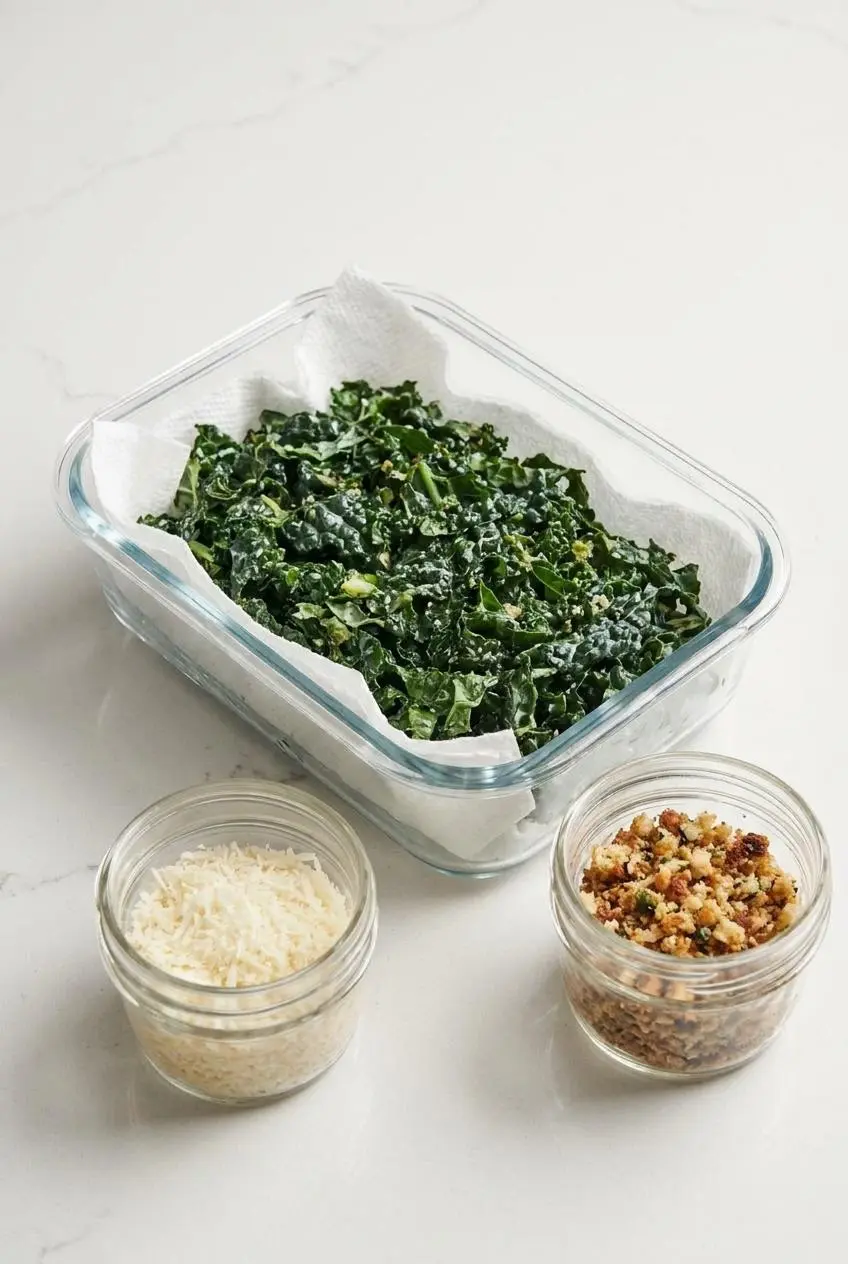
Kale is sturdier than delicate lettuces, so this salad handles advance prep better than most. If you want to prep components ahead, keep the bread crumbs separate and add them only at serving time so they stay crisp.
For packed lunches, store the salad in an airtight container with a paper towel tucked over the top before sealing. That little barrier helps catch condensation instead of letting moisture collect on the greens.
Dressed kale salad can be refrigerated in an airtight container for 2 to 3 days. It stays pleasantly sturdy rather than collapsing the way tender lettuce does, which is one reason hearty salads like this and mason jar salads work well for meal prep.
If you are storing undressed kale, keep it dry and chilled until you are ready to toss. Lacinato kale usually softens more gracefully after dressing than curly kale, while curly kale tends to need a little more massaging and can stay chewier in the fridge.
Freezing is not a good fit here. The texture is all about fresh, tender leaves and crisp crumbs.
Conclusion
This raw kale salad delivers exactly what a good one should: bright lemon, mellow garlic, salty cheese, and a crunchy finish over tender greens that still have some chew.
If you remember just two things, dry the kale well and massage it until it turns dark and velvety. That small bit of handling is what makes the whole bowl taste right.
FAQ
What Is the Best Way to Tenderize Raw Kale?
Remove the tough stems and thick ribs first. Slice the leaves into very thin ribbons so they soften evenly. Massage the kale with a little olive oil and a pinch of salt until it turns darker, softer, and more flexible. Let the dressed kale rest briefly so the lemon and salt can keep working on the texture.
Do I Have to Wash and Dry Kale Before Making the Salad?
Yes, wash it well in cool water because raw kale can trap grit in the crinkled leaves. Dry it completely before dressing, ideally in a salad spinner. If water clings to the leaves, the dressing will slide off instead of coating them. For U.S. home cooks, careful produce washing and handling is part of safe washing and handling practices for fresh produce.
How Long Does Dressed Kale Salad Last in the Fridge?
Dressed kale salad keeps well for 2 to 3 days in an airtight container. It holds texture better than lettuce-based salads, which is why it works nicely for meal prep. Keep the bread crumbs separate until serving so the top stays crunchy. If you use curly kale, expect a slightly chewier texture after storage than with Lacinato.
Can I Use Curly Kale Instead of Lacinato Kale?
Yes, curly kale works if that is what you have. It is usually tougher and a bit more bitter than Lacinato kale. Slice it thinner than usual and massage it longer with oil and salt. The flavor will still be good, but the texture will be less silky than Tuscan kale.
Kale Salad Recipe

Equipment
- Salad spinner
- Food processor
- Baking Sheet
- Sharp knife
- Cutting board
- Whisk
Ingredients
- 1 bunch lacinato kale (aka Tuscan kale or cavolo nero), thick ribs cut out
- 1 clove garlic, finely chopped
- 1/4 cup finely grated Pecorino Romano cheese, plus more to finish
- Extra-virgin olive oil
- 1 Juice of lemon
- 1/8 tsp dried chile flakes
- Kosher salt and freshly ground black pepper
- 1/4 cup dried bread crumbs
Instructions
Dried Bread Crumbs
- Cut bread with the crust on into 1/2-inch-thick slices, then into cubes, and spread the cubes in one even layer on a baking sheet. Keeping the pieces similar in size helps them dry at the same pace instead of leaving some chewy and some brittle.
- Set the oven to its lowest setting, usually about 250 °F, and dry the bread until it is completely crisp without taking on color. This can take an hour or more, and the cubes should feel dry all the way through rather than toasted on the edges.
- Let the cubes cool completely, then pulse them in a food processor until you have mostly small coarse crumbs with a few larger bits left behind. Stop before the mixture turns dusty, because powdery crumbs lose their crunch fast and can feel gritty in the salad.
- Transfer the crumbs to an airtight container once fully dry. They should feel light and crisp, with no soft center or lingering warmth trapped inside.
Kale Salad Preparation
- Roll a few kale leaves into a tight bundle and slice them crosswise into very thin ribbons, about 1/16 inch thick, then rinse the ribbons in cool water and spin them completely dry before moving them to a bowl. The strands should look fine and fluffy, not chunky, and the leaves should feel dry enough that they do not slick the bowl with water.
- Keep chopping the garlic on the board until it forms a paste, then whisk it in a small bowl with 1/4 cup Pecorino, a healthy glug of olive oil, the lemon juice, chile flakes, 1/4 teaspoon salt, and plenty of black pepper. The dressing should smell bright and garlicky, and the paste should disappear into the mixture instead of sitting in obvious bits.
- Add the dressing to the kale and toss it thoroughly with clean hands, then taste and adjust with more lemon, salt, chile flakes, or black pepper as needed and let it sit for about 5 minutes. The leaves should start to relax, darken slightly, and lose their raw stiffness as the dressing sinks in.
- Finish the salad with the bread crumbs, more cheese, and another drizzle of olive oil. The top should look craggy and glossy, with a mix of tender greens and crisp bits in every forkful.