Some dinners earn a permanent spot in the weeknight rotation, and this one did that in my kitchen after the very first skillet. High Protein Honey Garlic Shrimp has all the things I want on a busy evening, big flavor, fast cooking, and enough protein to feel like a real meal.
What makes this version special is the technique. Instead of letting the shrimp simmer away in sauce, I give them a quick sear, then finish them in a sticky honey garlic glaze that tastes like takeout’s smarter, better cousin.
Why You’ll Love This Recipe
Sticky glaze that actually sticks: I learned the hard way that tossing everything into one pan can leave you with a thin, watery sauce. Reducing the sauce separately gives this honey garlic shrimp a glossy, syrupy finish that clings to every bite.
Juicy, not rubbery: Shrimp cooks fast, and that is exactly why this method works so well. In my kitchen, pulling the shrimp out after a quick sear keeps them tender while the glaze thickens on its own.
Deeper flavor from the pan: A less-wet skillet shrimp method means better browning and more caramelized flavor. That simple sear kicks off the Maillard reaction, which gives the shrimp marinade a richer, more savory edge.
Weeknight easy: Even with the restaurant-style finish, this is still a true 20-minute meal. It feels a little special, but it cooks fast enough for the busiest Tuesday.
A real high-protein win: This high protein shrimp recipe is one of my favorite ways to hit protein goals without a heavy dinner. It is light, quick, and satisfying in the best way.
Ingredients and Substitutions
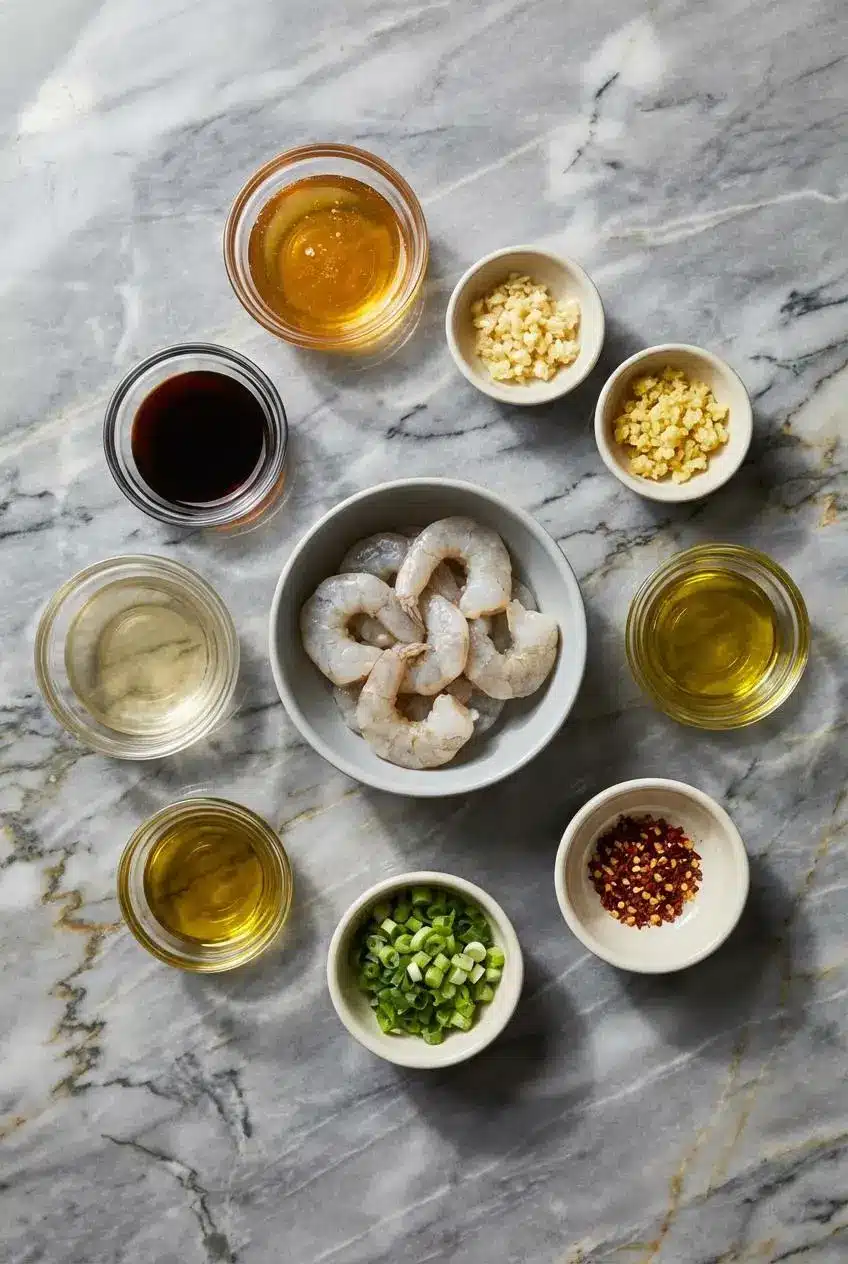
A short ingredient list is part of this recipe’s charm. Each piece pulls its weight, building a glaze that is sweet, savory, garlicky, and bright.
Ingredients
- 1/3 cup raw & unfiltered honey
- 3 tablespoons low sodium soy sauce
- 1 tablespoon rice vinegar
- 1 tablespoon minced garlic
- 1 teaspoon minced fresh ginger
- 1 lb medium uncooked shrimp, peeled & deveined
- 2 teaspoons olive oil
- chopped green onion, for garnish
- red pepper flakes, for garnish
Ingredient Notes & Substitutions
Shrimp: Raw shrimp is the right choice here because it can soak up the shrimp marinade and still stay tender in the skillet. If you can find large or jumbo shrimp, they give you an even meatier bite, while pre-cooked shrimp usually turn tough once reheated.
Soy sauce: Low sodium soy sauce keeps the glaze balanced instead of overly salty. If you need a gluten-free option, Tamari works beautifully as a 1:1 swap and tastes a little less sharp, while coconut aminos are also an easy substitute with a slightly sweeter finish.
Honey: Any pourable honey will do the job, but raw and unfiltered honey brings a fuller, more floral flavor. For a lower-carb version, a sugar-free honey alternative can stand in nicely as long as it is designed for cooking.
Garlic & ginger: Fresh is worth it here. Fresh minced garlic and ginger give the sauce a bright, lively flavor that dried powders just cannot match in a quick shrimp dinner like this.
Butter: My favorite finishing touch is a spoonful of cold unsalted butter swirled into the reduced sauce. It is optional, but it gives the glaze that smooth, shiny restaurant finish that makes the sauce cling beautifully to the shrimp.
How to Make High Protein Honey Garlic Shrimp
Mix the Sauce and Marinate
- In a medium bowl, whisk together the honey, soy sauce, rice vinegar, minced garlic, and fresh ginger until the mixture looks smooth and well blended, with the honey fully loosened into the sauce.
- Place the shrimp in a bowl, lidded container, or zip-top bag, then pour in only half of that sauce. Toss gently so each shrimp is coated, and refrigerate for at least 15 minutes. If you want to prep ahead, you can let it sit longer, but I find the best texture comes when you keep the marinating time on the shorter side.
Prep for a Proper Sear
- Lift the shrimp out of the marinade and let the excess drip away. Pat them very dry with paper towels, because a dry surface is what helps them sizzle and brown instead of steam.
- Set the remaining unused sauce aside. That reserved portion is what will become your final glaze, and it is the reason this recipe tastes concentrated and polished rather than diluted.
Sear the Shrimp
Warm the olive oil in a large skillet over medium-high heat until it shimmers. Lay the shrimp in a single layer and cook them briefly, about 45 seconds on the first side, then flip and cook about 1 minute more, just until they turn pink and opaque with a little golden color at the edges. Transfer them to a plate right away so they stay juicy.
Reduce the Glaze and Finish
- Lower the heat to medium and pour the reserved sauce into the same skillet. Let it bubble gently while you scrape up the browned bits from the bottom, because that is where a lot of the savory flavor lives.
- Simmer the sauce for 2 to 3 minutes, stirring now and then, until it thickens into a sticky glaze that coats the back of a spoon. If you are using the cold butter trick, turn off the heat and swirl it in until the sauce looks glossy and smooth.
- Return the shrimp to the pan and toss just until they are well coated. Finish with chopped green onion and red pepper flakes, then serve while the glaze is hot and shiny.
The Secret to a Perfect Sticky Glaze
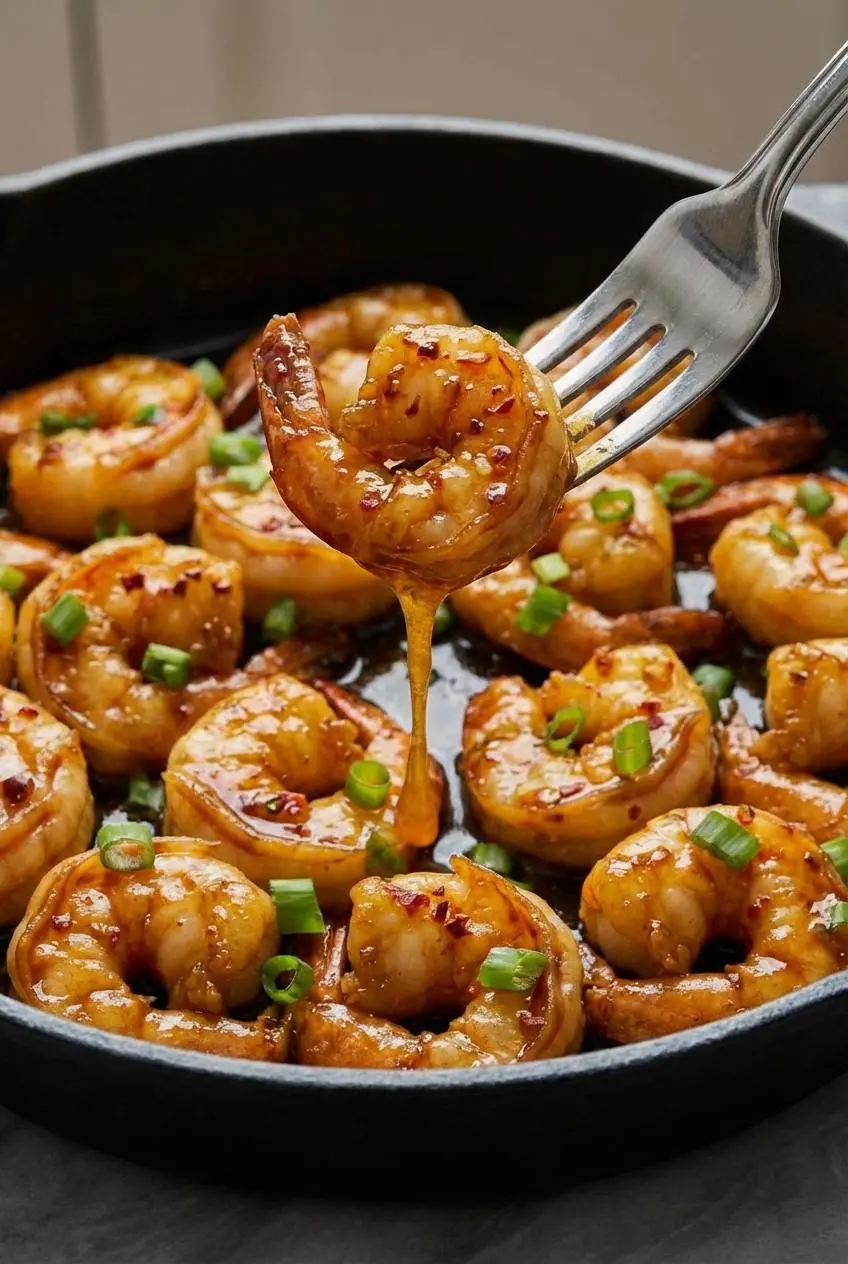
Secret #1, the two-part sauce: Splitting the sauce changes everything. One portion seasons the shrimp, while the clean reserved portion gets reduced into a glaze, so you never have to boil the shrimp in excess liquid.
Secret #2, dry shrimp sears better: Moisture is the enemy of browning. When you pat the shrimp dry, the surface can make direct contact with the hot pan, which creates better color and deeper flavor through the Maillard reaction.
Secret #3, the cold butter finish: This classic move is called monter au beurre, and it is one of those little chef tricks that makes a big difference. Cold butter emulsifies the reduced sauce, turning it velvety, glossy, and just thick enough to coat the shrimp instead of sliding off.
Why This Shrimp is a High-Protein Powerhouse
Shrimp is one of my favorite lean protein choices when I want something light but satisfying. It is naturally high in protein and relatively low in fat, and it also brings useful nutrients like iodine, selenium, and vitamin B12 to the plate.
For this recipe, a practical estimate is about 2 servings from 1 pound of shrimp. Each serving provides roughly 26 to 28 grams of protein, depending on the exact size of your shrimp, along with about 260 to 300 calories, moderate carbohydrates from the honey, and a modest amount of fat from the oil and optional butter.
To turn it into a balanced healthy dinner, I like serving it with quinoa, brown rice, or a big tray of roasted broccoli or asparagus. If high-protein meals are your comfort zone, a Greek chicken bowl has that same satisfying mix of protein, grains, and vegetables, while high-protein beef chili is another smart option for nights when you want something heartier.
A Complete Guide to Buying and Prepping Shrimp
Fresh vs. frozen: The fish counter can be misleading, because a lot of “fresh” shrimp was previously frozen anyway. High-quality frozen shrimp, especially flash-frozen shrimp, is often the best bet for freshness, flavor, and convenience.
Understanding sizes: Shrimp sizes are usually marked by how many fit in a pound. A label like 21/25 means you get 21 to 25 shrimp per pound, and for this recipe I love large 21/25 or jumbo 16/20 when I want a meatier bite.
How to thaw shrimp properly: The best slow method is to thaw it overnight in the refrigerator. If dinner needs to happen fast, place the shrimp in a colander and run cold water over them for a few minutes until fully thawed, then dry them very well.
How to peel and devein shrimp: Start by removing the shell, beginning at the legs and pulling it away from the body, then slip off the tail if you want a cleaner bite. To handle deveining shrimp, make a shallow cut along the back with a small knife and lift out the dark vein, then rinse and pat dry before cooking.
Pro Tips & Troubleshooting
Pro Tips
- A cast iron skillet gives you excellent heat retention, which helps the shrimp brown quickly and evenly.
- Do not crowd the pan. If the shrimp are packed too tightly, they steam instead of sear, and you lose that caramelized edge.
- Shrimp cooks incredibly fast, so keep your eyes on it. The moment it turns pink and opaque, it is ready to come out.
- A squeeze of lime at the end brightens the whole pan and balances the sweetness of the honey beautifully.
Common Mistakes to Avoid
- My sauce is too thin: Let the sauce simmer a little longer by itself until it reduces. If you are in a hurry, whisk 1 teaspoon cornstarch with 2 teaspoons cold water and stir it into the sauce.
- My shrimp is tough: That almost always means it was overcooked. Stick to the brief cooking time, and always start with raw shrimp instead of pre-cooked.
- My garlic burned: The pan was likely too hot once the sauce went in. Lower the heat to medium before reducing the glaze so the honey and garlic do not scorch.
Serving & Storage Suggestions
Serving Ideas
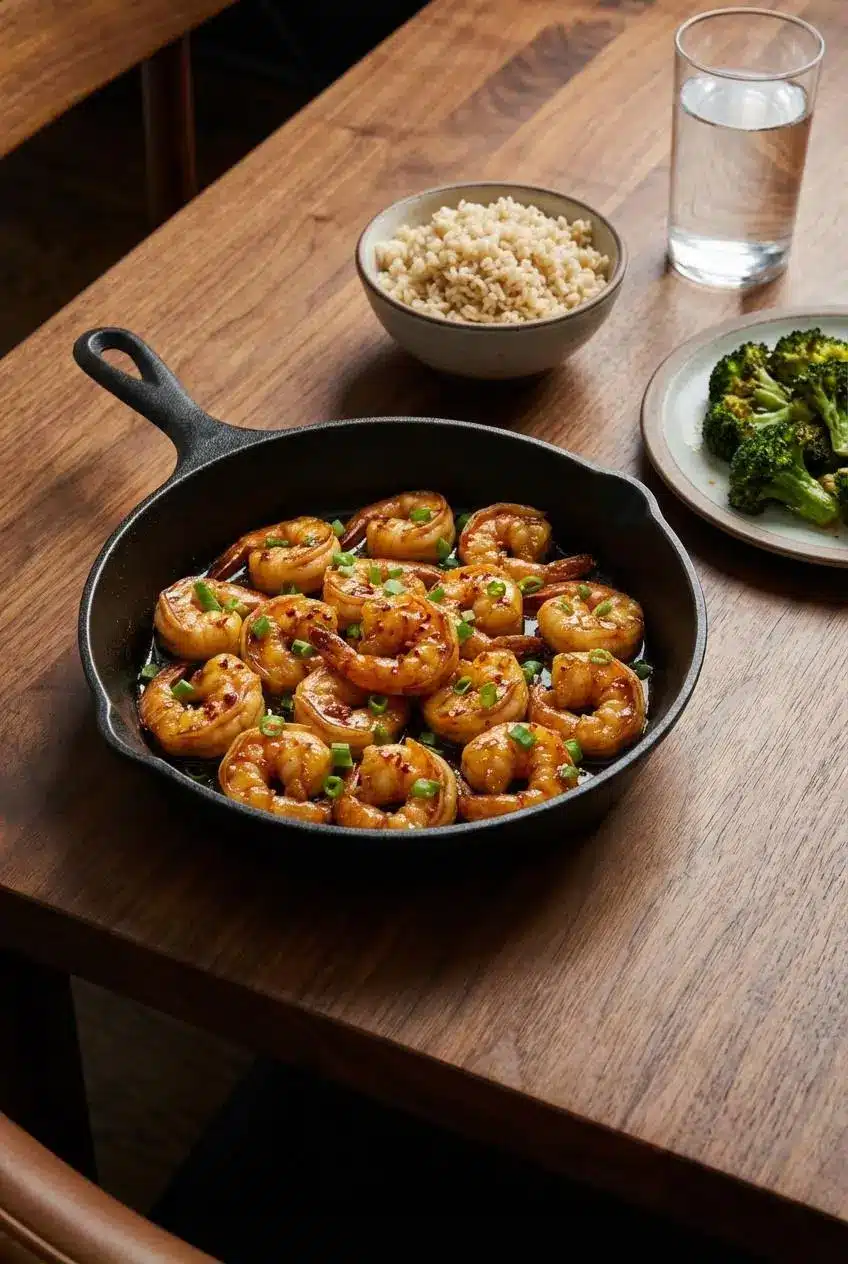
This skillet shrimp is lovely over fluffy white rice or brown rice, where every extra spoonful of glaze gets soaked up instead of wasted. For a lighter plate, cauliflower rice, zucchini noodles, or roasted vegetables like broccoli, bok choy, snap peas, and asparagus all work beautifully.
If spaghetti squash is your favorite low-carb base, it fits this glaze surprisingly well, especially if you already enjoy cozy vegetable-forward dinners like spaghetti squash carbonara. And if easy seafood suppers are part of your regular rotation, dishes in the same sweet-savory lane, such as ginger soy cod, make weeknight planning feel a whole lot easier.
For garnish, green onion is the classic finish, but fresh cilantro is also excellent if you want a more herbal note. A few red pepper flakes or a little sriracha can push the sauce in a spicier direction without changing the soul of the dish.
Storage and Meal Prep
Leftovers keep well in an airtight container in the refrigerator for up to 2 days. This is one of those meal prep recipes that still feels fresh the next day, especially when portioned with rice or quinoa and a side of roasted vegetables.
For reheating, gentle heat is your best friend. Warm the shrimp in a skillet over low heat for just a minute or two, until heated through, because the microwave tends to turn shrimp rubbery in a hurry.
The sauce may look thicker after chilling, and that is completely normal. Once it hits the pan again, it loosens into a glossy glaze and brings the whole dish back to life.
High Protein Honey Garlic Shrimp

Equipment
- Medium bowl
- Whisk
- Large Skillet
- Plate
Ingredients
- 1/3 cup raw & unfiltered honey
- 3 tablespoons low sodium soy sauce
- 1 tablespoon rice vinegar
- 1 tablespoon minced garlic
- 1 teaspoon minced fresh ginger
- 1 lb medium uncooked shrimp, peeled & deveined
- 2 teaspoons olive oil
- chopped green onion, for garnish
- red pepper flakes, for garnish
Instructions
Mix the Sauce and Marinate
- In a medium bowl, whisk together the honey, soy sauce, rice vinegar, minced garlic, and fresh ginger until smooth and well-blended.
- Place the shrimp in a separate bowl or zip-top bag. Pour half of the sauce over the shrimp and toss to coat. Refrigerate for at least 15 minutes.
Prep for a Proper Sear
- Remove the shrimp from the marinade, allowing any excess to drip off. Pat the shrimp completely dry with paper towels. Reserve the remaining clean sauce for the glaze.
Sear the Shrimp
- Heat the olive oil in a large skillet over medium-high heat until it shimmers. Add the shrimp in a single layer, ensuring not to crowd the pan. Cook for about 45 seconds on the first side, then flip and cook for about 1 minute more, until pink and opaque. Immediately transfer the shrimp to a clean plate.
Reduce the Glaze and Finish
- Lower the heat to medium and pour the reserved sauce into the hot skillet. Let it bubble gently, scraping up any browned bits from the bottom of the pan.
- Simmer the sauce for 2-3 minutes, stirring occasionally, until it thickens into a sticky glaze that coats the back of a spoon. For an extra glossy finish, turn off the heat and swirl in a tablespoon of cold butter until melted.
- Return the cooked shrimp to the skillet and toss gently to coat in the glaze. Garnish with chopped green onion and red pepper flakes before serving.
Notes
Nutrition
Conclusion
This recipe proves that a quick shrimp dinner can still taste polished and special. The sear-and-glaze method gives you better browning, juicier shrimp, and a sticky honey garlic finish that feels straight out of a restaurant skillet.
It is fast, deeply flavorful, and packed with protein, which is a hard combination to beat on a busy night. Have fun with the garnishes, add a squeeze of lime if you like, and enjoy your new favorite shrimp recipe.
Frequently Asked Questions
How much protein is in honey garlic shrimp?
What’s the secret to not overcooking shrimp?
Can I use frozen shrimp for this recipe?
How do I get the honey garlic sauce to thicken?
What should I serve with honey garlic shrimp?
Is this recipe good for meal prep?