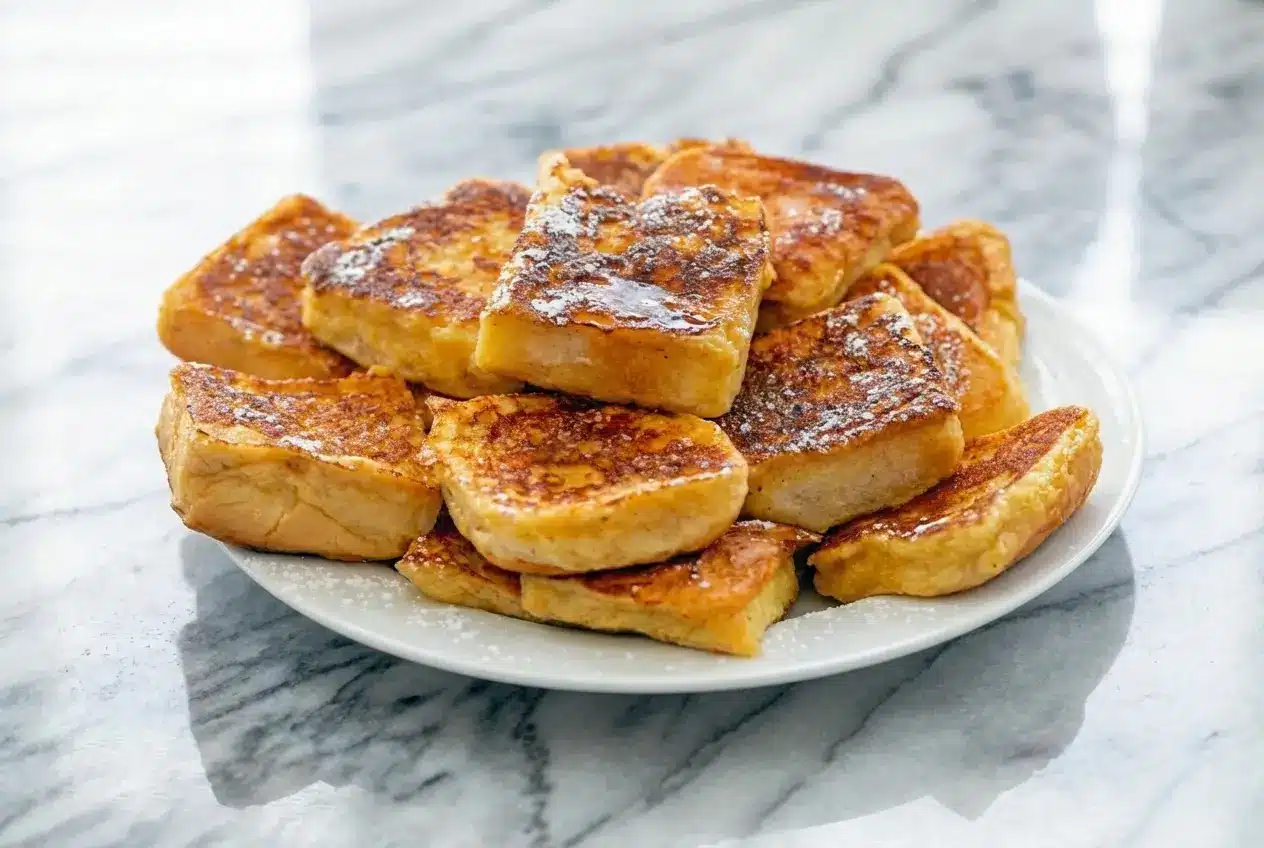
There is something about a platter of Hawaiian roll french toast that feels like brunch in a beach house, even if you are standing barefoot in a regular home kitchen. The sweet, buttery rolls puff up beautifully, and with the right method, they stay fluffy in the middle instead of turning soggy.
My favorite touch is a macadamia-coconut crust that gives each bite a crisp, toasty shell worthy of a sunny island café. If you have ever struggled with limp centers or burnt edges, this foolproof approach fixes both and brings real restaurant-style texture to the table.
Why You’ll Love This Recipe
That perfect contrast: In my kitchen, the magic of this recipe is the way the soft Hawaiian rolls meet a shatteringly crisp crust. You get a tender, custardy center and a golden exterior that actually crackles when your fork hits it.
The secret twist: The macadamia-coconut crunch crust adds more than flavor. The natural fats in the nuts help protect the sugary bread as it cooks, so you get deep caramelization and a better Maillard reaction without scorching too fast.
Tropical flavor that makes sense: Vanilla extract, cinnamon, and nutmeg round out the egg custard, while the macadamia and coconut keep the sweetness from feeling one-note. It tastes rich and sunny, but still balanced enough for a real brunch plate.
Ingredients and Substitutions
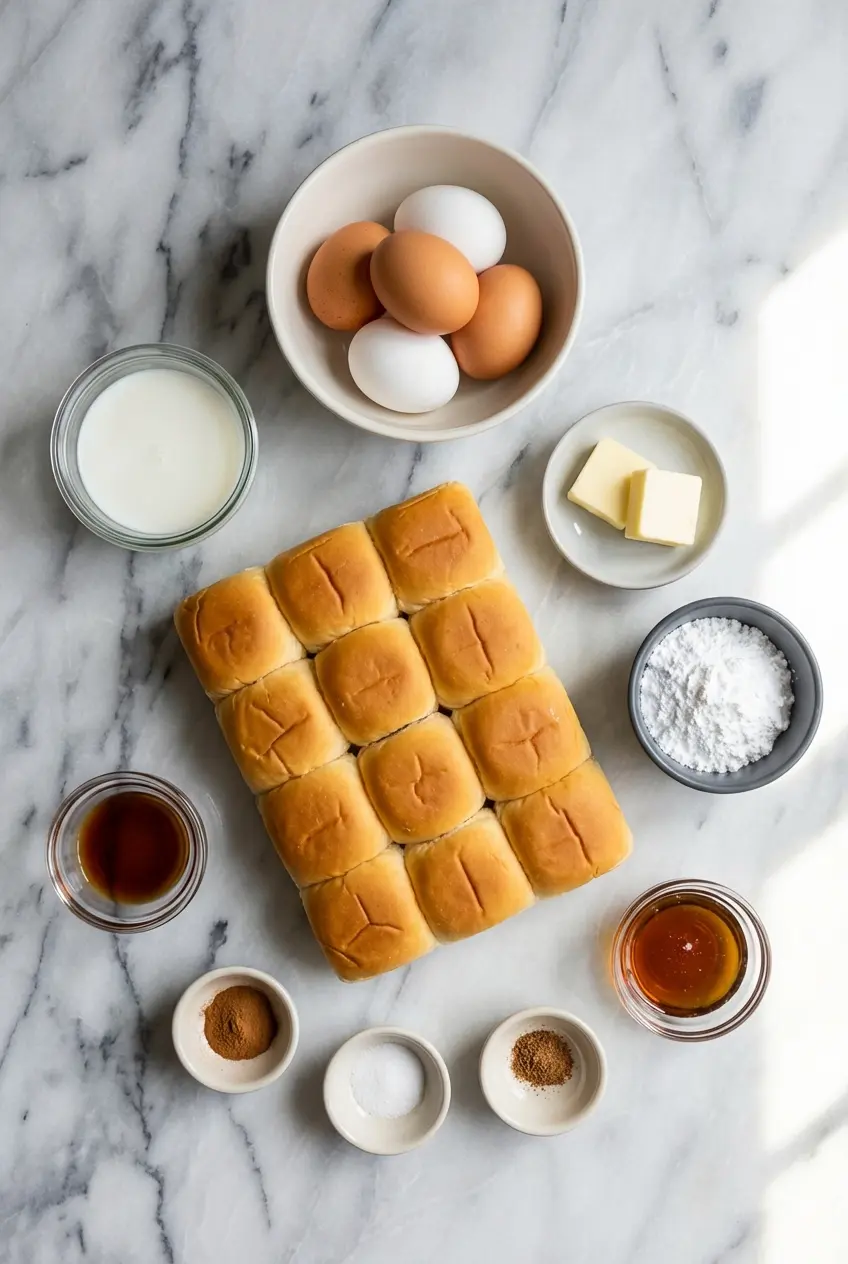
This short ingredient list leans on pantry staples, while the sweet rolls and warm spices build that signature brunch flavor with very little fuss.
Ingredients
- 4 large eggs
- 1/2 cup milk
- 1 tablespoon vanilla extract
- 1/2 teaspoon ground cinnamon
- 1/4 teaspoon salt
- 1/8 teaspoon nutmeg
- 2 tablespoon unsalted butter
- 12 Hawaiian Rolls, sliced horizontally
- Confectioners’ sugar, optional for serving
- Maple syrup, optional for serving
Ingredient Notes & Substitutions
Milk: Whole milk works beautifully, but I often reach for half and half when I want a richer, more dessert-like custard. If you need a dairy-free option, unsweetened coconut milk or a plain barista-style oat milk gives the egg custard enough body without making it thin.
Hawaiian Rolls: King’s Hawaiian rolls are the classic choice because their fat and sugar content create that signature soft crumb and glossy golden finish. If you cannot find them, brioche slider buns are the closest substitute, since brioche behaves similarly on the griddle and absorbs custard more predictably than lean sandwich bread.
Vanilla, cinnamon, and nutmeg: These three are doing quiet but important work. Vanilla extract softens the eggy notes, cinnamon brings warmth, and nutmeg adds that old-school French toast aroma that makes the whole kitchen smell like brunch is officially underway.
Butter: Unsalted butter gives you better control over seasoning and helps build an even golden crust. If your pan starts looking dry between batches, add a little more in small amounts rather than a big pat, so the rolls sear instead of frying unevenly.
Coconut and macadamia add-in: For the crunch coating described in this version, use unsweetened shredded coconut so the crust stays toasty instead of cloying. Roasted macadamia nuts are ideal because their buttery flavor deepens quickly in the pan and pairs naturally with the sweet bread.
How to Make hawaiian roll french toast
Mix the Custard
- In a wide, deep bowl, whisk the eggs with the milk, vanilla extract, cinnamon, salt, and nutmeg until the mixture looks completely smooth and lightly frothy. You want the spices evenly dispersed so every roll picks up the same warm, fragrant flavor.
- Set a griddle or large skillet over medium heat and brush it with 1 tablespoon of the butter. Give the pan a moment to heat through so the butter melts into a thin, glossy film rather than pooling in one spot.
Dip and Toast the Rolls
- Working in batches, dip the sliced Hawaiian roll halves into the egg custard and turn them just until saturated, then lift them out and gently shake off the excess. The rolls should feel moistened but not heavy, which keeps the centers fluffy instead of wet.
- Lay the dipped rolls on the heated griddle and cook for 2 to 3 minutes, until the bottoms are golden brown and smell buttery and sweet. Flip and cook the second side for another 2 to 3 minutes, until both sides are evenly toasted and the centers feel set.
Finish and Serve
- Transfer the cooked rolls to a plate and keep them warm while you repeat with the remaining batches, adding more butter to the griddle as needed. This keeps the crust evenly colored from batch to batch and prevents sticking.
- When everything is ready, shower the tops with confectioners’ sugar and drizzle with maple syrup if you like. Serve right away while the edges are still crisp and the middle is warm and soft.
The Secret to a Perfectly Golden Crust
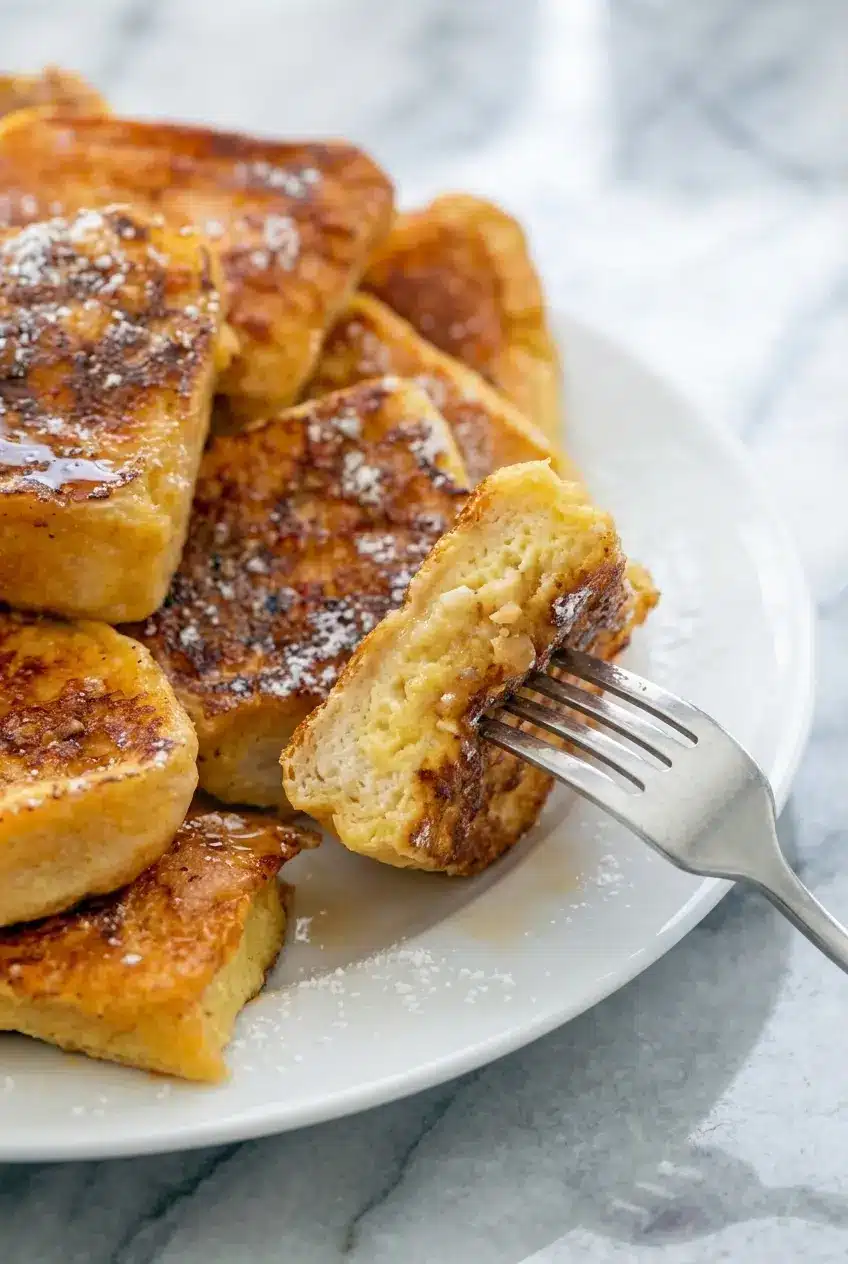
Hawaiian rolls cook differently from plain white bread because they contain more sugar and fat. That means caramelization starts fast, and the Maillard reaction moves quickly too, so medium-low to medium heat is the sweet spot if you want color without a bitter, overbrowned exterior.
The 30-second soak rule is the guardrail that keeps this recipe from going off course. These rolls have a tight, plush crumb, so they do not need a long bath in the egg custard, just a quick dip and a good shake to prevent the middle from turning mushy before the outside browns.
One trick I use often is the toothpick method, especially with very fresh rolls. A few tiny holes in the denser bottom help the custard distribute more evenly, so you get moisture in the center without having to over-soak the bread.
The Science of Internal Temperature for Safe Custards
For egg-based French toast, 160°F is the number that matters. At that point, the custard is safely cooked and properly set, which means the center tastes creamy and tender instead of loose or raw, a particularly important detail when you are working with dense, sweet rolls.
Because Hawaiian rolls are smaller but tighter in crumb than thick slices of brioche, the outside can look done before the center has fully finished. The same gentle custard-setting principle shows up in desserts like lemon custard cake, where texture depends on eggs reaching the right point without curdling or drying out.
If you want a clear food-safety benchmark, the official egg safety guidelines also point to 160°F as the safe temperature for egg dishes. In practical kitchen terms, that is what gets rid of any raw-egg taste and gives your Hawaiian roll french toast a properly set middle instead of a damp one.
Understanding Bread Density and Custard Absorption
Not all bread drinks up custard the same way. Texas toast and challah have a more open crumb, so they can handle a longer soak, while Hawaiian rolls behave more like a compact, enriched brioche, meaning they need less time and more precision.
That is why a brief dip works better than the old-fashioned long soak used for thicker slices. The egg custard should cling to the surface and slip into the crumb just enough to flavor it, not flood it, or the rolls lose their delicate structure before they ever reach the griddle.
Freshness matters here too. Stale bread can be useful for standard French toast, but Hawaiian rolls already have enough body and sweetness to perform well fresh, as long as you keep the soak short and the heat controlled.
Pro Tips & Troubleshooting
Pro Tips
- Poke a few small holes in the bottom of each roll with a toothpick or skewer if you want more even custard absorption without extending the soak.
- Use room temperature eggs for a smoother custard that whisks together quickly and coats the bread more evenly.
- Shake off extra custard before the rolls hit the pan so you do not get those lacy scrambled bits, sometimes called egg curtains, around the edges.
- Cook in batches and give each roll some breathing room on the griddle, so the surface sears properly instead of steaming.
Common Mistakes to Avoid
- Using high heat is the fastest way to burn the sugars on the outside before the center has time to set. A gentler pan gives you much better color and control.
- Over-soaking the rolls leads to heavy, mushy centers that never quite recover, even if the exterior turns golden.
- Crowding the skillet drops the pan temperature and traps moisture, which softens the crust and keeps it from browning evenly.
- Skipping the excess shake-off leaves too much loose custard on the outside, and that tends to cook into patchy eggy bits rather than a clean toast-like finish.
Serving and Storage
Serving Ideas
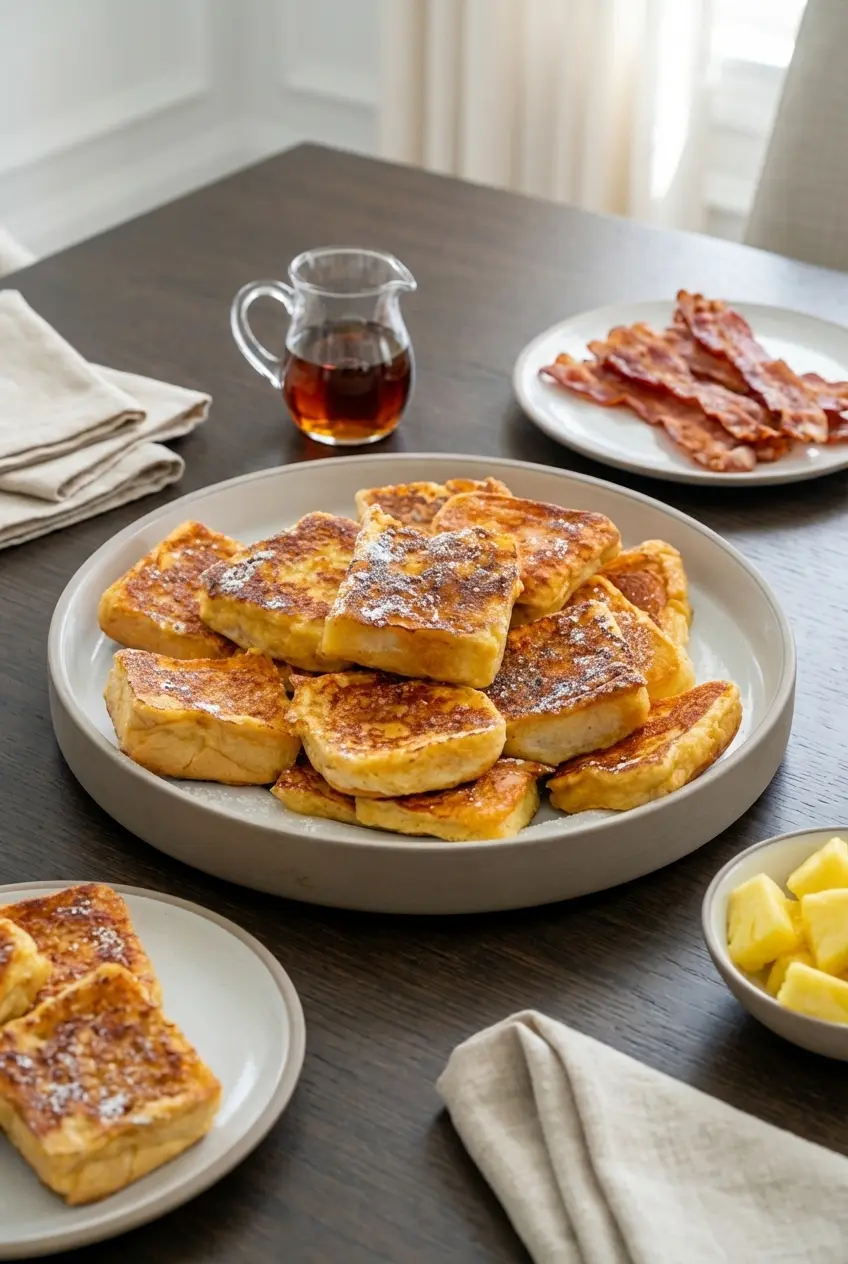
I love serving these with salty sides to balance the sweet bread, especially thick-cut bacon or fried SPAM. That sweet-savory contrast is part of what makes island-inspired breakfasts so memorable, and the broader history of Hawaiian breakfast staples helps explain why that pairing feels so natural on the plate.
For toppings, maple syrup is classic, but coconut syrup, liliko’i butter, or a spoonful of Greek yogurt all bring something useful. The yogurt adds brightness, while passion fruit or fresh pineapple cuts through the richness in a way I really love for brunch.
If you are building out a full tropical spread, something bright and fruity like pineapple bliss bars fits right in without repeating the same flavors too heavily. A warm drink helps too, and a spiced cookie butter latte plays especially well with the cinnamon and nutmeg in the custard.
Storage and Reheating
Leftovers keep well in the refrigerator for up to 3 days once fully cooled. Store them in a single layer or with parchment between layers so the surfaces do not stick and soften each other.
For longer storage, freeze the cooked rolls on a tray until firm, then transfer them to a freezer-safe bag or container. That little extra step keeps them from freezing into one solid block and makes weekday breakfasts much easier.
The best way to bring back the original crunch is the air fryer at 350°F for 3 minutes. I do not recommend the microwave here, because it turns the bread rubbery and wipes out the crisp edge that makes this version special.
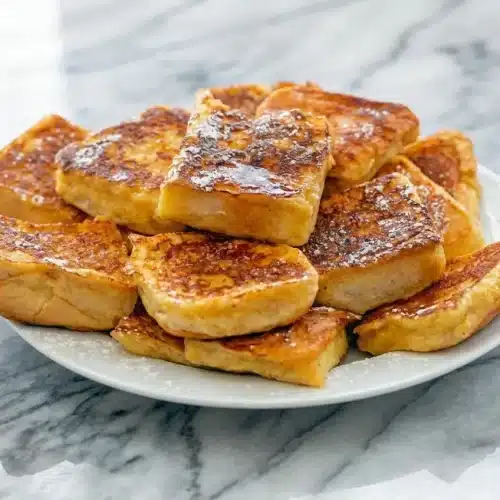
Crispy Hawaiian Roll French Toast

Equipment
- Whisk
- Wide bowl
- Griddle or large skillet
Ingredients
- 4 large eggs
- 1/2 cup milk
- 1 tablespoon vanilla extract
- 1/2 teaspoon ground cinnamon
- 1/4 teaspoon salt
- 1/8 teaspoon nutmeg
- 2 tablespoon unsalted butter
- 12 Hawaiian Rolls, sliced horizontally
- Confectioners’ sugar, optional for serving
- Maple syrup, optional for serving
Instructions
Mix the Custard
- In a wide, deep bowl, whisk the eggs with the milk, vanilla extract, cinnamon, salt, and nutmeg until the mixture is completely smooth and lightly frothy.
- Set a griddle or large skillet over medium heat and brush it with 1 tablespoon of the butter. Let the pan heat through so the butter melts into a thin, even film.
Dip and Toast the Rolls
- Working in batches, dip the sliced Hawaiian roll halves into the egg custard. Turn them just until saturated, then lift them out and gently shake off the excess to keep them fluffy.
- Lay the dipped rolls on the heated griddle and cook for 2 to 3 minutes until the bottoms are golden brown. Flip and cook the second side for another 2 to 3 minutes until evenly toasted and the centers feel set.
Finish and Serve
- Transfer the cooked rolls to a plate and keep them warm while you repeat the process with the remaining batches, adding more butter as needed.
- Serve immediately with a dusting of confectioners’ sugar and a drizzle of maple syrup while the edges are still crisp.
Notes
Conclusion
This version of Hawaiian roll french toast earns its place at the brunch table with two simple advantages, a quick soak that keeps the centers light and a crisp macadamia-coconut finish that makes every bite more exciting. It is an easy upgrade, but it tastes like the kind of breakfast you would order on vacation.
Once you make it once, the method becomes second nature. Bring it to your next weekend brunch, play with the toppings, and let that sweet, buttery, golden crunch do the rest.
Frequently Asked Questions
How do I keep the rolls from burning?
Do I have to slice the rolls or can I cook them whole?
Can I use the savory butter or jalapeño Hawaiian rolls for this?
How long should I soak the rolls in the egg mixture?
What is the best way to reheat leftovers?