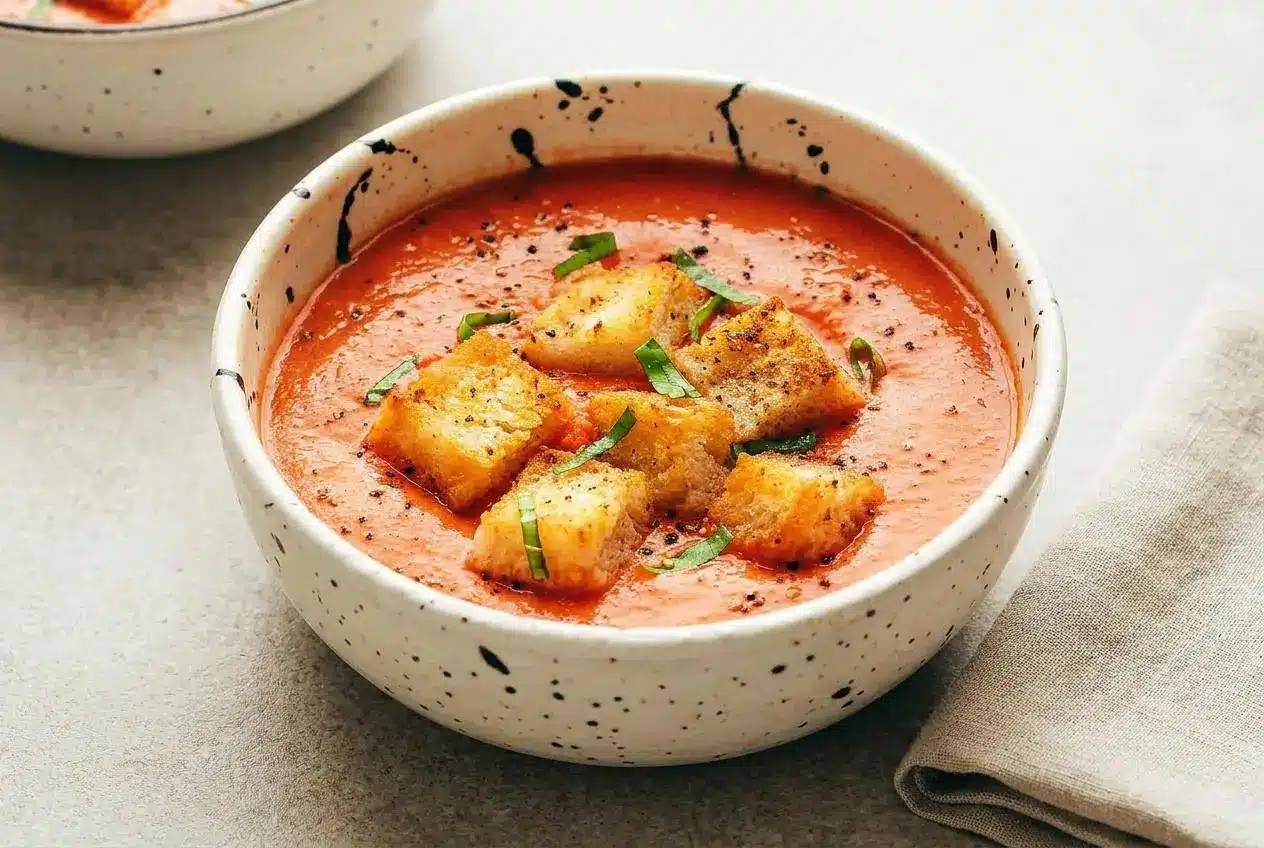
Gazpacho is a chilled Spanish soup made with raw vegetables, olive oil, and vinegar. This Gazpacho Recipe keeps it classic with ripe tomatoes, cucumber, pepper, garlic, onion, and bread for a cool, savory bowl that tastes best served very cold.
On a hot day, a bowl of gazpacho feels like instant relief. It is bright, tangy, deeply tomatoey, and wonderfully refreshing without turning on the stove.
This version stays true to Andalusian style while keeping the method easy enough for a regular weekday lunch. The best part is how the flavor changes after a good chill.
Wash and dry the vegetables well before chopping so excess water does not dilute the soup.
What Is Gazpacho?
Gazpacho is a cold Spanish soup from Andalusia, traditionally made by blending raw vegetables with olive oil, vinegar, and often bread for body. It is vibrant, savory, and especially welcome in summer when ripe tomatoes are at their peak.
Unlike cooked tomato soup, gazpacho keeps a fresher, greener edge from cucumber, pepper, onion, and garlic. It is a true no-cook recipe, so the flavor of each ingredient matters more than ever.
Key Ingredients for Authentic Gazpacho
Each ingredient pulls its weight here, building sweetness, acidity, body, aroma, and that smooth, cooling finish that makes gazpacho so satisfying.
- 2 pounds ripe Roma tomatoes, halved and cored
- 1 small (1/2 lb) cucumber, peeled and seeded
- 1 medium green bell pepper, cored
- 1/2 small red onion, peeled
- 2 small garlic cloves (or 1 large clove), peeled
- 3 tablespoons olive oil
- 2 tablespoons sherry vinegar
- 1 teaspoon fine sea salt
- 1/2 teaspoon freshly-cracked black pepper
- 1/2 teaspoon ground cumin
- 1 thick slice of white bread, soaked, crusts removed
- optional garnishes: homemade croutons
Ripe tomatoes are the backbone of authentic gazpacho, so choose the most flavorful ones you can find. Roma tomatoes work especially well because they are meaty and not overly watery, but truly ripe heirloom or vine-ripened tomatoes can also make an excellent batch. The soaked bread is traditional and gives the soup a fuller body, helping it feel creamy instead of thin. Sherry vinegar brings the classic tang that makes the vegetables pop, and good olive oil adds richness while helping the soup emulsify into a smoother texture.
I always take the extra minute to peel and seed the cucumber because it keeps the flavor cleaner and helps avoid bitterness.
How to Make Gazpacho
This comes together quickly, but a few details make a big difference. Blend thoroughly, chill completely, and taste again when cold since the seasoning softens in the fridge.
- Add the tomatoes, cucumber, green bell pepper, red onion, garlic, olive oil, sherry vinegar, salt, black pepper, cumin, and soaked bread to a blender or food processor, then blend for about 1 minute.
The mixture should go from a looser red puree to a smoother, creamier orange-pink as the oil disperses and the bread blends in. - Taste the soup and adjust with a little more salt, pepper, or cumin if needed.
The flavor should taste bright and savory, with enough vinegar to lift the tomatoes without making the soup sharp. - Transfer the gazpacho to a sealed container and refrigerate it for 3 to 4 hours, or until fully chilled.
This step matters because the flavors settle, deepen, and taste much more balanced once the soup is thoroughly cold. - Stir the soup, taste once more, and serve it cold with homemade croutons if you like.
The finished texture should feel smooth and refreshing, with a clean tomato flavor and a cool, tangy finish.
If you do not have a blender, a food processor works well too. It usually gives you a slightly coarser texture, which some people actually prefer.
Tips for the Best Texture and Flavor
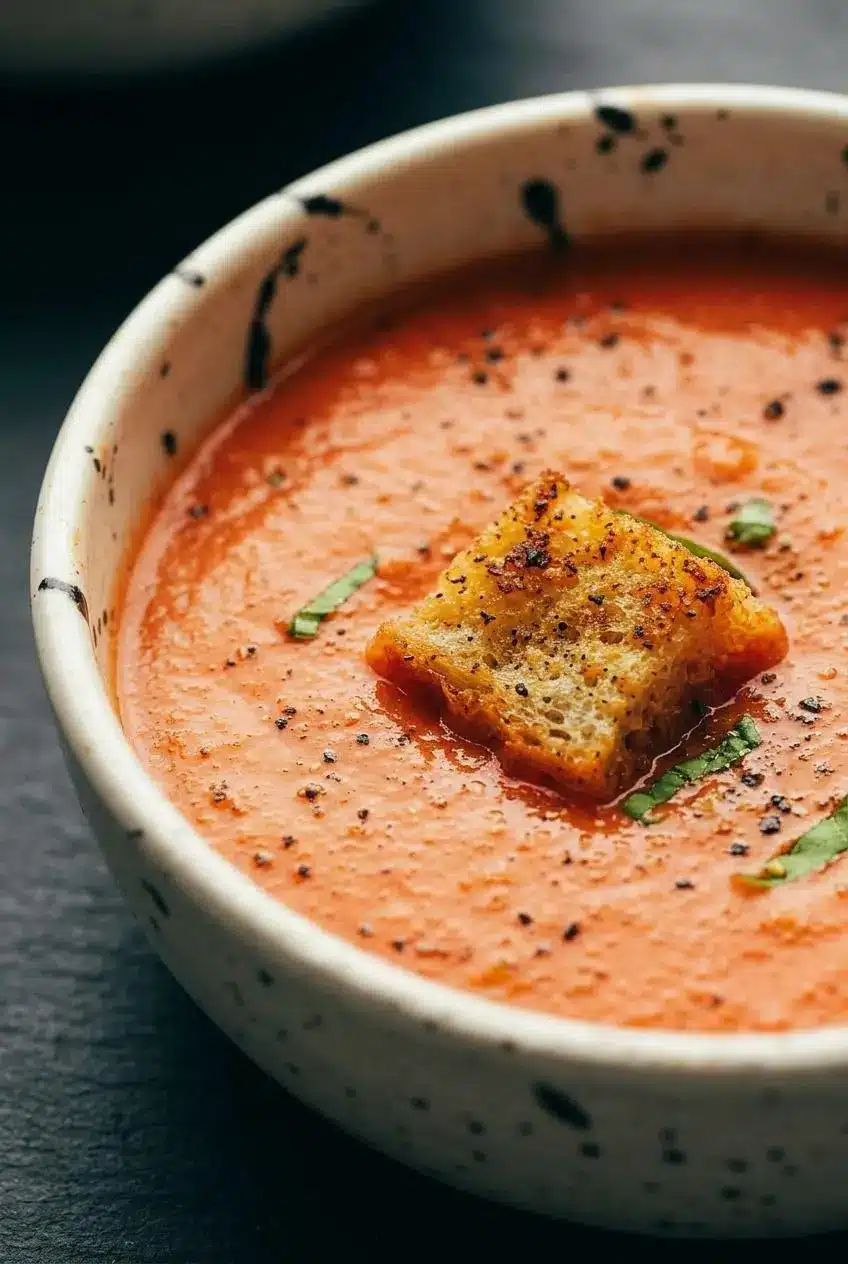
Gazpacho is very straightforward, but a few small choices decide whether it turns out good or seriously memorable. These tips help you steer the texture, balance the flavor, and avoid the common watery or harsh-tasting bowl.
Chunky vs. Smooth: A Matter of Preference
Traditional Andalusian gazpacho is usually silky and fully blended. If that is your goal, blend until the vegetables are completely broken down and the soup looks uniform.
A chunkier style is perfectly valid too, especially if you like more bite. For that version, reserve part of the vegetables, dice them finely, and stir them into the blended soup at the end. That gives you the cooling flavor of gazpacho with a heartier spoonful.
| Style | How to Make It | Final Texture |
|---|---|---|
| Smooth | Blend everything thoroughly | Silky, classic, spoonable |
| Chunky | Blend the base, then stir in finely diced vegetables | Rustic, fresher bite, more chew |
The Secret to a Creamy Emulsion
Gazpacho does not need cream to feel creamy. That texture comes from the olive oil blending with the natural water in the vegetables, while the bread helps hold everything together.
If you make a no-bread version, the oil matters even more. Add it gradually while blending so the soup thickens into a smoother, more cohesive texture instead of separating into a watery base with oil floating on top.
To Strain or Not to Strain?
Straining blended gazpacho through a fine-mesh sieve gives it a very polished, ultra-smooth finish. It removes bits of tomato skin, pepper skin, and any stubborn fibers that a regular blender might leave behind.
Skipping the strainer keeps more body in the soup and is less fussy. Both approaches work. If your tomatoes are thin-skinned and your blender is strong, unstrained gazpacho can still be wonderfully smooth.
A Simple Trick for More Flavorful Bread
If you want a little extra depth, lightly toast the bread before soaking it. That small step adds a subtle nutty note and gives the finished soup a rounder, toastier background flavor.
Another helpful trick is to rinse the cut red onion briefly if it smells especially sharp. You still get onion flavor, just with less raw bite.
Creative Toppings and Serving Ideas
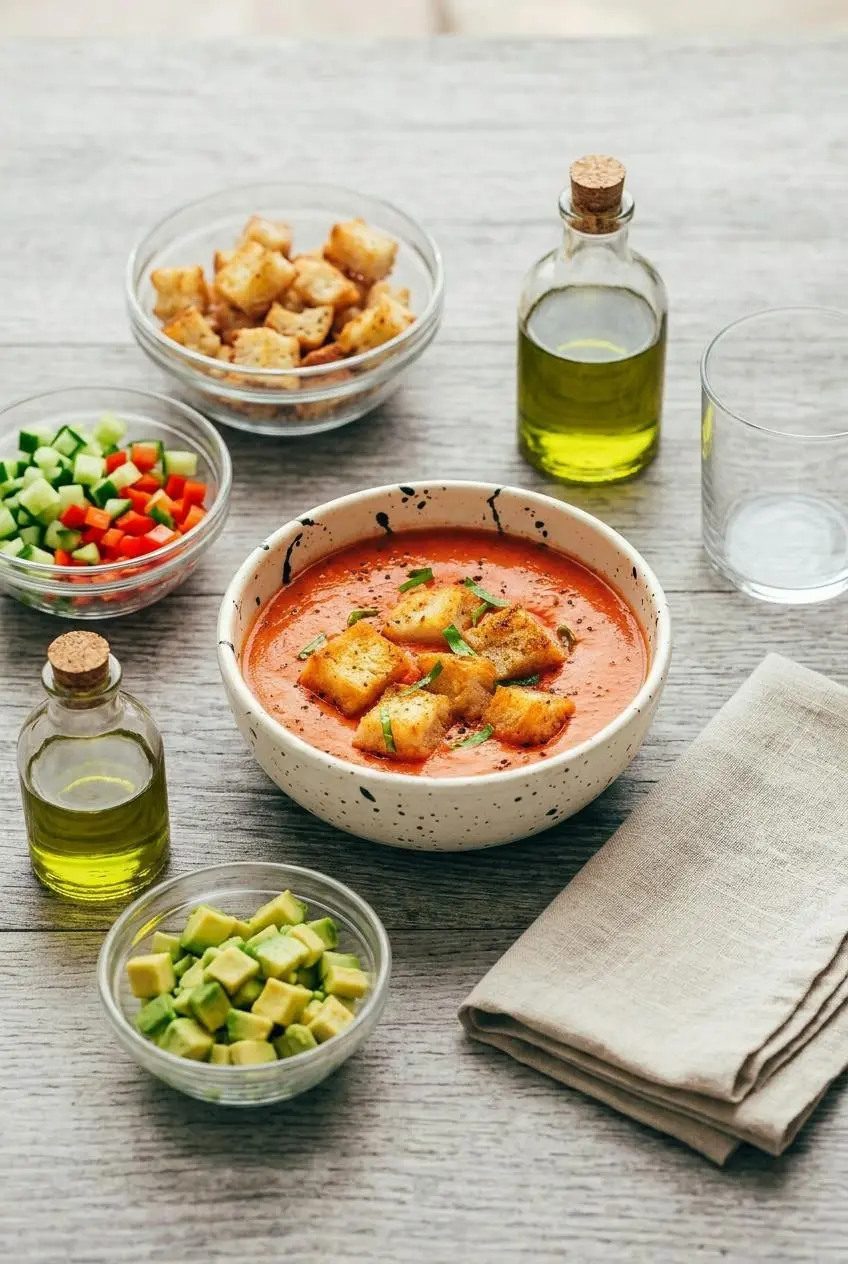
This is where gazpacho gets especially fun. Toppings add crunch, richness, and contrast, and they let you serve the same bowl in a more classic or more filling way.
For a simple lunch, serve gazpacho in chilled bowls with a drizzle of olive oil and a spoonful of finely diced cucumber, bell pepper, and red onion. For a party, pour it into small glasses and pass it as a cool tapa-style starter.
Build Your Own Gazpacho Bar
Set out a few topping bowls and let everyone finish their own serving.
| Crunchy | Savory | Creamy |
|---|---|---|
| Homemade croutons | Finely diced cucumber | Diced avocado |
| Diced bell pepper | Finely diced red onion | Sour cream |
| Fresh herbs | Chopped hard-boiled egg | Crème fraîche |
| Jamón serrano | Olive oil drizzle | |
| Grilled shrimp |
If you want to turn it into a fuller summer meal, pair it with a refreshing Greek salad. For a tapas-style spread, small glasses of gazpacho work nicely next to savory salmon bites.
How to Store Gazpacho
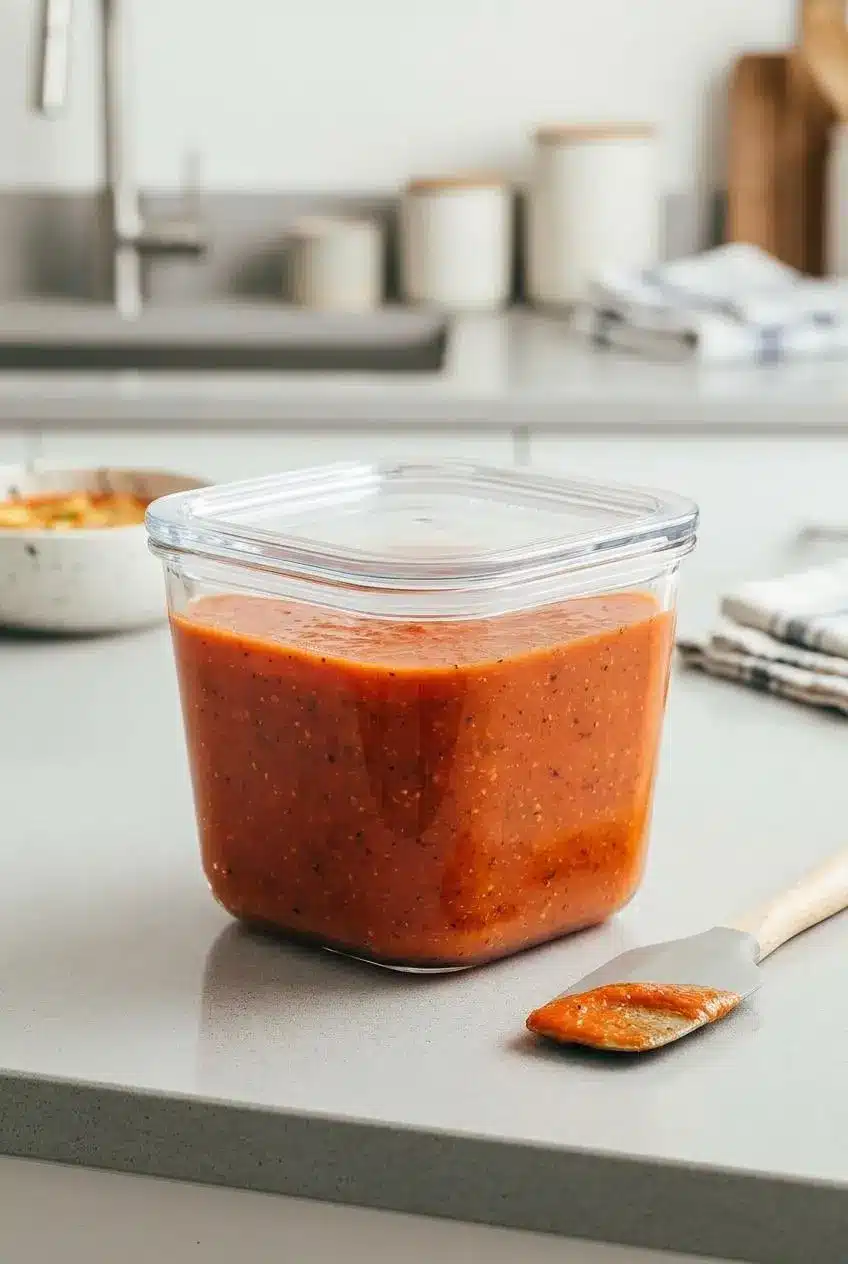
Keep leftover gazpacho in an airtight container in the refrigerator and serve it well chilled. Stir before serving because the soup can naturally separate a bit as it sits.
Since this is a raw vegetable soup, it is best handled with care. Wash produce thoroughly before prepping, and keep the finished soup cold to preserve freshness. The FDA covers safe washing and handling of fresh fruits and vegetables in its guidance on fresh produce washing and handling practices.
Storing in the Refrigerator
Refrigerated gazpacho often tastes even more blended and balanced after it rests. If the flavor seems muted straight from the fridge, add a little salt or a small splash of vinegar just before serving.
Use a sealed container so the soup stays fresh and does not pick up other refrigerator odors.
Keeping the Texture at Its Best
Do not add croutons or other crunchy toppings until serving time. If the soup thickens more than you want after chilling, stir it well and loosen it with a small splash of cold water only if needed.
Gazpacho Variations
The classic red version is hard to beat, but gazpacho is also a good base for a few easy twists. Keep them optional so the original character of the soup stays front and center.
Spicy Gazpacho
For a little heat, blend in part of a jalapeño or a Fresno chile with the vegetables. Start modestly, especially if the soup will chill for a while, because the heat can come through more clearly once the flavors settle.
No-Bread (Gluten-Free) Gazpacho
You can leave out the bread if you want a lighter, gluten-free bowl. The soup will be thinner and a bit less creamy, so blend thoroughly and consider adding the olive oil slowly to help the mixture stay nicely emulsified.
This version is delicious, but it is different from the more traditional bread-thickened style. Think of it as a variation, not the default.
White Gazpacho (Ajo Blanco)
Ajo blanco is another classic chilled Spanish soup, but it goes in a different direction. It is made with bread, blanched almonds, garlic, and often green grapes, giving it a pale color and a richer, nuttier profile.
Conclusion
This gazpacho is one of the most rewarding warm-weather recipes because the method is easy and the result feels genuinely refreshing. Blend, chill, taste again, and let the tomatoes do most of the work.
If you start with ripe, flavorful tomatoes, you are already most of the way there. Serve it ice-cold and keep the toppings handy.
Frequently Asked Questions (FAQ)
What are the best tomatoes for gazpacho?
Ripe, in-season tomatoes make the biggest difference. Roma tomatoes are a great choice because they are meaty and not too watery, but flavorful heirloom or vine-ripened tomatoes also work beautifully. Skip pale, mealy, out-of-season tomatoes if you can, because gazpacho has nowhere to hide bland produce.
How long does homemade gazpacho last?
Keep it in an airtight container in the refrigerator and enjoy it while it still tastes bright and fresh. Since exact storage timing is not established here, it is better to make only what you plan to use soon and discard it if the smell, texture, or flavor changes noticeably.
Can I freeze gazpacho?
Freezing can change the texture of gazpacho, so it is usually best when fresh from the refrigerator. If you do try freezing it, expect some separation after thawing and whisk or blend it again before serving.
Why is my gazpacho bitter?
Bitterness usually comes from cucumber skin or seeds, an unripe green pepper, too much raw garlic, or harsh olive oil. Peeling and seeding the cucumber helps a lot, and using ripe produce keeps the flavor cleaner. If a batch already tastes bitter, an extra splash of sherry vinegar and a little more salt can sometimes rebalance it.
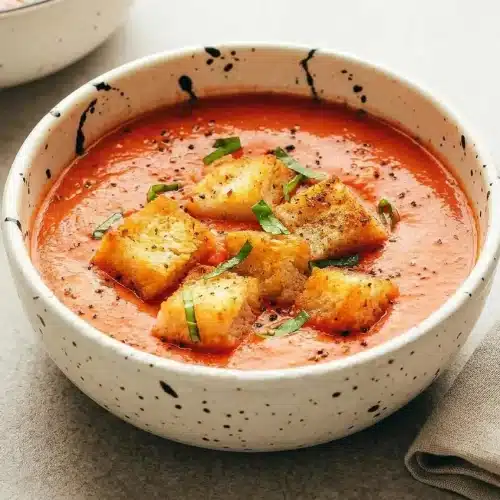
Gazpacho Recipe

Equipment
- Blender or Food Processor
Ingredients
- 2 pounds ripe Roma tomatoes, halved and cored
- 1 small cucumber, peeled and seeded (about 1/2 lb)
- 1 medium green bell pepper, cored
- 1/2 small red onion, peeled
- 2 small garlic cloves (or 1 large clove), peeled
- 3 tablespoons olive oil
- 2 tablespoons sherry vinegar
- 1 teaspoon fine sea salt
- 1/2 teaspoon freshly-cracked black pepper
- 1/2 teaspoon ground cumin
- 1 thick slice of white bread, soaked, crusts removed
- homemade croutons for garnish, optional
Instructions
- Add the tomatoes, cucumber, green bell pepper, red onion, garlic, olive oil, sherry vinegar, salt, black pepper, cumin, and soaked bread to a blender or food processor, then blend for about 1 minute. The mixture should go from a looser red puree to a smoother, creamier orange-pink as the oil disperses and the bread blends in.
- Taste the soup and adjust with a little more salt, pepper, or cumin if needed. The flavor should taste bright and savory, with enough vinegar to lift the tomatoes without making the soup sharp.
- Transfer the gazpacho to a sealed container and refrigerate it for 3 to 4 hours, or until fully chilled. This step matters because the flavors settle, deepen, and taste much more balanced once the soup is thoroughly cold.
- Stir the soup, taste once more, and serve it cold with homemade croutons if you like. The finished texture should feel smooth and refreshing, with a clean tomato flavor and a cool, tangy finish.