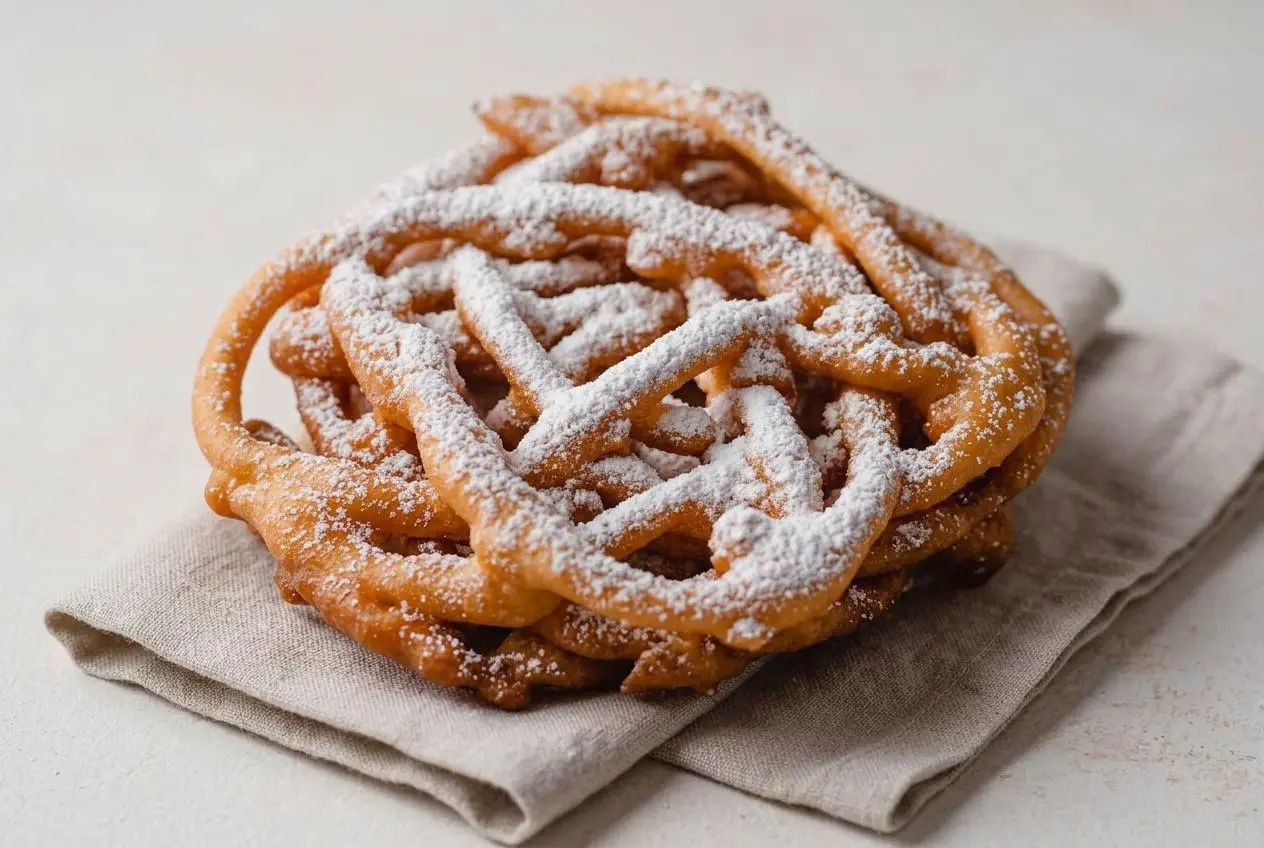
Whisk eggs, milk, sugar, flour, salt, and baking powder into a smooth batter, then stream it into 375°F oil in overlapping circles until golden and crisp.
This funnel cake recipe brings the fairground favorite home with a crisp, golden lattice and a soft center. The key is a batter that pours in a steady ribbon and oil hot enough to set the strands quickly.
Hot fried dough and a snowy powdered sugar finish make the kitchen smell instantly festive. The swirl is the fun part.
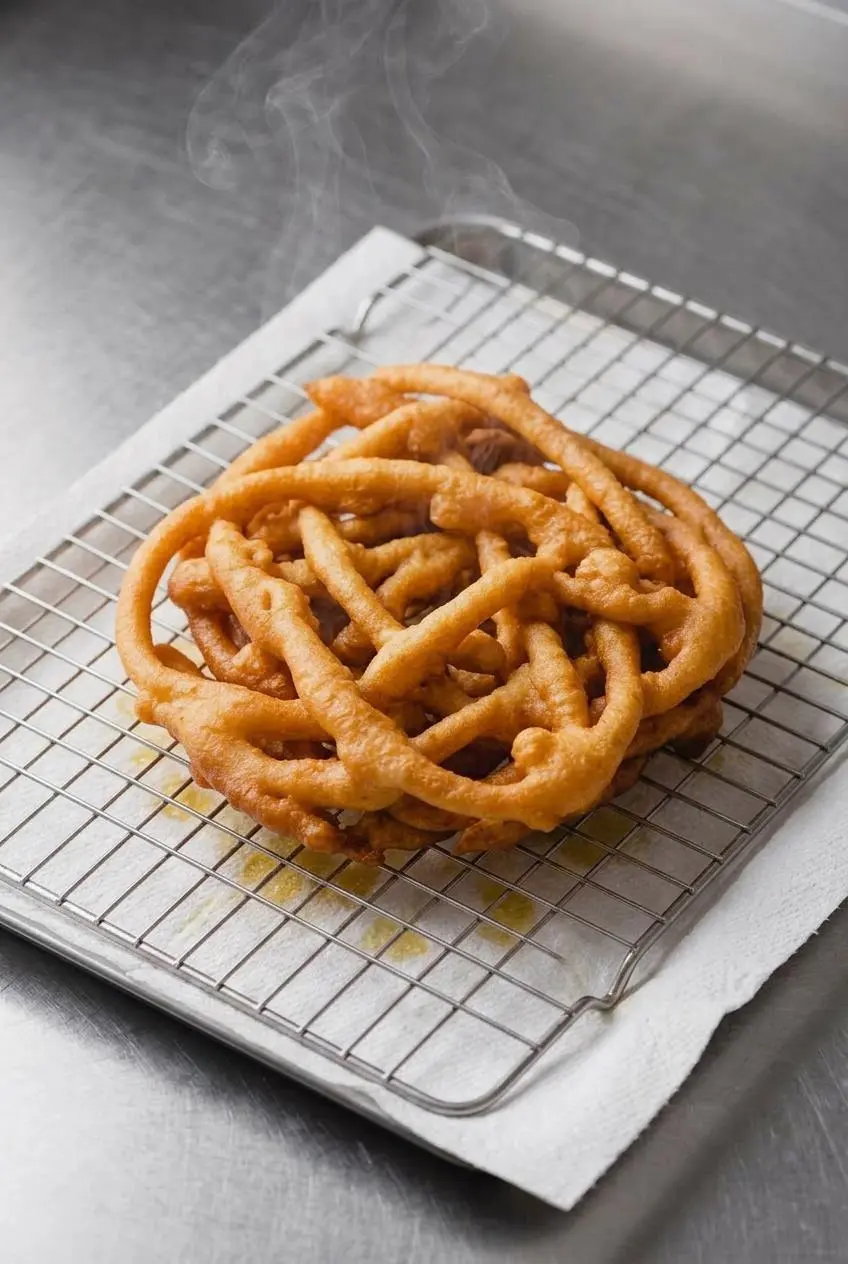
Set a wire rack over paper towels before you start frying so each cake can drain without trapping steam underneath.
Key Ingredients for Crispy Funnel Cake
Each ingredient supports the finished cake, from the batter’s smooth flow and airy structure to the gentle sweetness and crisp, golden crust.
- 2 large eggs (room temperature)
- 1 1/3 cup milk (room temperature)
- 1/4 cup granulated sugar
- 2 2/3 cups all-purpose flour
- 1/2 teaspoon sea salt
- 1 tablespoon baking powder
- powdered sugar
Room-temperature eggs and milk blend together more smoothly than cold ingredients, helping the batter stay even rather than lumpy. Whisk the eggs and milk until lightly frothy before adding the dry mixture.
All-purpose flour gives the batter enough structure to hold its looping shape in the oil. Unbleached all-purpose flour works especially well because it forms a sturdy but tender lattice instead of a fragile web that breaks apart.
Baking powder creates tiny airy pockets as the batter hits the hot oil, while sugar adds mild sweetness and encourages the honey-golden color. Sea salt keeps the flavor from tasting flat, and powdered sugar supplies the classic fair-style finish.
I let refrigerated eggs and milk sit on the counter while I gather the bowls and frying equipment, because batter made from chilled dairy can take more whisking to become silky.
Essential Equipment for Controlled Pouring
The right setup keeps the batter stream steady and gives each cake room to float without crowding the pan.
Squeeze Bottle vs Traditional Funnel
A squeeze bottle with a wide opening offers the most control for drawing circles, crossing strands, and stopping the flow quickly. Choose one with an opening wide enough for smooth batter to pass without forcing it through a narrow tip.
A spouted measuring cup works well when you want a freer, slightly thicker stream. Pour slowly and keep the cup close to the oil so the batter lands in loops instead of splashing.
A standard funnel produces the classic look, but it takes a little coordination. Cover the bottom opening firmly with a finger while filling and positioning the funnel over the pan, then release your finger only when you are ready to begin the swirl. Keep the funnel low and move your hand steadily.
Whichever dispenser you use, the batter should fall like warm honey in one continuous ribbon. If it dribbles unevenly, pause and clear the opening before frying the next cake.
Thermometer Setup and Pan Selection
A wide cast-iron skillet or deep fryer gives the batter room to spread while maintaining a more stable oil temperature. Use at least 2 inches of oil, leaving generous space at the top of the pan because the batter expands and bubbles as it fries.
Clip a candy thermometer to the side of the pan with its sensing end suspended in the oil, away from the metal base. A probe touching the bottom can read hotter than the oil surrounding the cake.
Choose a neutral frying oil that tastes clean with sweet batter. Canola, peanut, and vegetable oil are familiar options, but use an oil you are comfortable heating for deep frying and keep the area well ventilated.
How to Make Funnel Cake
Work in small batches so the oil can return to temperature between cakes. A lively sizzle when the batter lands is a good sign that the crust is beginning to set.
- Pour at least 2 inches of oil into a deep fryer or cast-iron skillet and heat it to 375°F.
Watch the thermometer before adding batter so the oil is fully heated and ready to crisp the first strands. - Whisk the room-temperature eggs and milk in a bowl until the mixture looks light and lightly foamy, then combine the flour, sugar, sea salt, and baking powder in a separate bowl.
The dry mixture should look evenly blended, with no concentrated pockets of baking powder. - Add the dry mixture to the egg mixture and whisk until the batter is completely smooth.
Stop once the batter flows in a thick, steady ribbon, since excessive mixing can make the fried texture tough. - Transfer the batter to a pastry bag, funnel, or spouted measuring cup, blocking the funnel opening with a finger until you are over the oil.
Hold the dispenser close to the surface so the batter can settle into neat loops instead of scattering. - Release the batter in an outer circle first, then fill the center with overlapping loops and crosswise strands; flip once the cake floats and turns honey golden.
Fry the second side for about 45 to 60 seconds, until the lattice is golden on both sides and the sizzling has steadied. - Move the finished cake to the prepared wire rack and dust it with powdered sugar while hot.
The elevated rack lets excess oil drain while keeping steam from softening the crisp edges.
Troubleshooting Common Funnel Cake Mistakes
Most funnel cake problems come down to batter flow or oil heat. Keep the thermometer where you can check it between every batch.
- Greasy, heavy cakes: The oil likely dropped below 350°F, so the batter absorbed oil before the crust could form. Fry fewer cakes at once and wait for the oil to climb back to 375°F before piping more batter.
- Broken or scattered lattices: The batter stream may be too thin, too high above the oil, or too loosely layered. Start with a perimeter ring, then overlap the inner ribbons so the strands connect as they set.
- Dark outside with a soft center: Oil that gets too hot can brown the surface before the interior has time to cook. Let the heat settle back toward 375°F and use a lighter, continuous swirl rather than a thick mound of batter.
- Tough texture: Overmixed batter develops more gluten. Whisk only until smooth, then transfer it to the dispenser promptly.
- Soggy crust after frying: A flat paper towel surface traps steam under the cake. Drain it on a wire rack so air can circulate underneath.
If a batch causes a noticeable temperature drop, resist the urge to add more batter right away. Giving the oil a moment to recover makes a far bigger difference than trying to rush the next cake.
Keeping Funnel Cakes Crisp After Frying
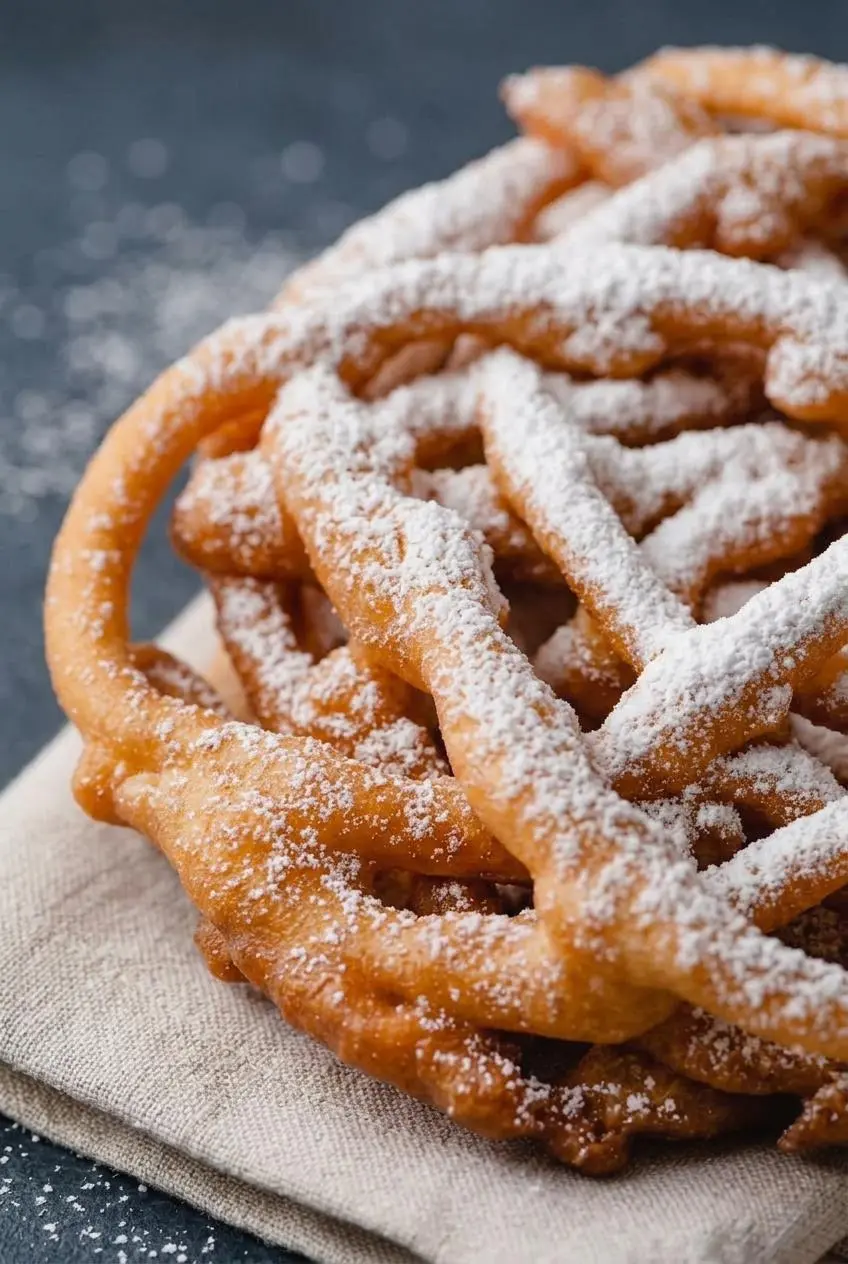
Funnel cakes have their best crunch soon after frying, so dust them with powdered sugar right before serving. Sugar added too early can dissolve into the warm crust and lose its snowy finish.
For the most dependable texture, fry the batter soon after mixing. If you need to pause, keep the batter covered and chilled, then whisk it briefly if it has separated before pouring. Avoid leaving egg-based batter sitting out while you prepare other food.
Let leftover cakes cool completely before placing them in a covered container, with parchment between layers if needed to protect the crust. To bring back some crispness, warm them in an air fryer or oven until hot and firm at the edges. Skip the microwave if crunch matters, since trapped moisture can make the lattice soft.
Creative Toppings and Easy Variations
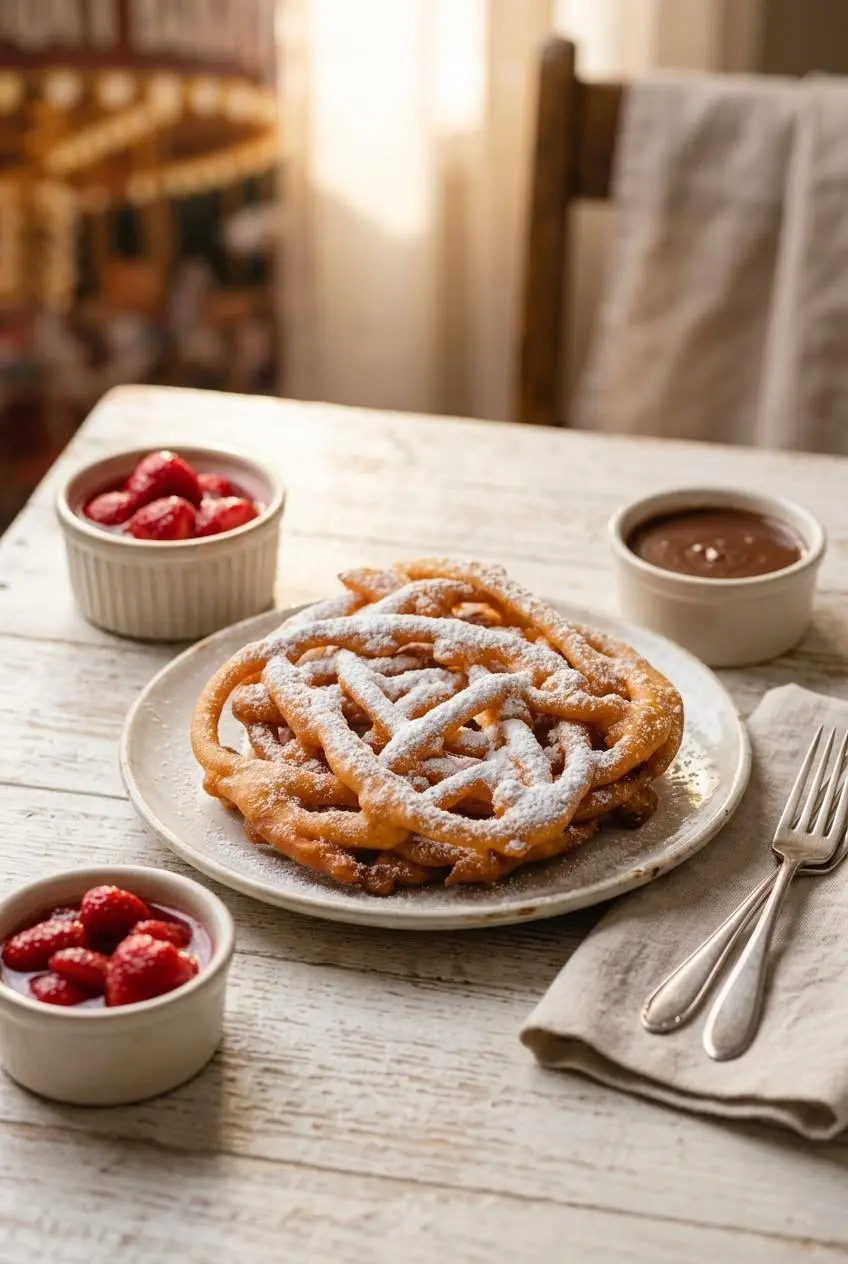
Keep the scratch batter exactly as written, then change the finish or shape for a different fair-style treat.
- Classic powdered sugar: Dust generously while the cake is warm for the familiar sweet finish.
- Churro-style cinnamon sugar: Toss or sprinkle the warm cake with cinnamon sugar for a spiced crust with a churro-like flavor.
- Fruit and cream: Spoon macerated strawberries over the top, or add vanilla ice cream and warm chocolate fudge for a full dessert plate.
- Bright aromatic twist: Whisk ground cardamom and fresh lemon zest into the flour mixture for a floral, citrusy variation. Keep both additions optional so the classic version stays unchanged.
Pancake Mix Funnel Cake Shortcut
For a faster option, whisk dry pancake mix with milk and vanilla extract until it reaches a pourable consistency. This shortcut produces a softer, more pancake-like interior than the scratch batter, but it still gives you crisp fried ribbons when the oil is properly heated.
Because pancake mixes vary, add the milk gradually and stop when the batter streams smoothly from your dispenser. Keep the same swirling technique and fry one small test cake first to check the flow.
Crispy Funnel Cake Fries
For a party-friendly shape, pipe the batter into straight strips about 4 inches long instead of one large circular cake. Fry them until golden, drain them on the rack, and serve them for dipping.
Chocolate fudge, warm caramel, and macerated strawberries all work well alongside the crisp sticks. Pipe the strips with space between them so they do not fuse into one large piece.
Conclusion
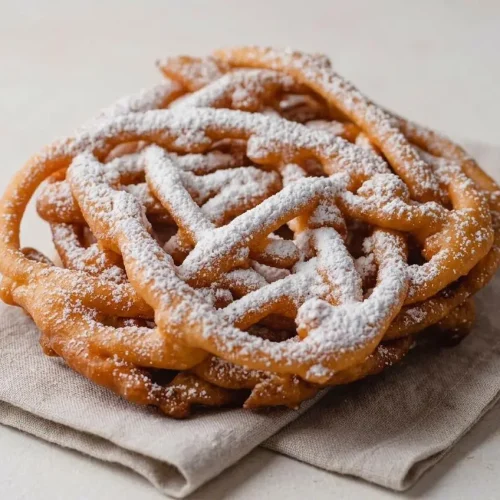
Fresh funnel cakes are all about contrast: a delicate, crisp lattice around a tender center, finished with a generous powdered sugar dusting. Keep the oil near 375°F, and give each batch space to fry properly.
Once you have the steady batter ribbon and overlapping swirl down, this fair-style dessert becomes wonderfully approachable at home. Serve it hot while the edges still crackle.
Frequently Asked Questions
Why Did My Funnel Cake Turn Out Greasy?
Greasy funnel cakes usually mean the oil was too cool. Keep the oil at 375°F before adding batter. If it falls below 350°F, wait for it to recover before frying another cake. Do not crowd the pan, since several cakes lower the oil temperature quickly.
Can I Make Funnel Cake Batter Ahead of Time?
Fry the batter soon after mixing for the lightest result. Keep it covered and chilled if you need to pause before frying. Whisk gently if the batter separates before transferring it to the dispenser. Avoid holding egg-based batter at room temperature while waiting to fry.
What Is the Best Oil for Frying Funnel Cakes?
Use a neutral frying oil with a clean flavor. Canola, peanut, and vegetable oil are common choices. Heat the oil to 375°F and monitor it with a candy thermometer. Choose an oil that suits your household’s dietary needs.
How Do You Make Funnel Cake Without a Funnel?
A funnel is helpful but not required. Use a squeeze bottle with a wide opening for the most control. A spouted measuring cup creates a broader stream and works well for loose swirls. A zip-top bag with a small corner snipped off can work in a pinch, but avoid cutting too large an opening.
Funnel Cake Recipe

Equipment
- deep fryer or cast iron skillet
- Candy thermometer
- pastry bag, squeeze bottle, or funnel
- wire rack lined with paper towels
Ingredients
- 2 large eggs room temperature
- 1 1/3 cup milk room temperature
- 1/4 cup granulated sugar
- 2 2/3 cups all-purpose flour
- 1/2 teaspoon sea salt
- 1 tablespoon baking powder
- powdered sugar
Instructions
- Pour at least 2 inches of oil into a deep fryer or cast-iron skillet and heat it to 375°F. Watch the thermometer before adding batter so the oil is fully heated and ready to crisp the first strands.
- Whisk the room-temperature eggs and milk in a bowl until the mixture looks light and lightly foamy, then combine the flour, sugar, sea salt, and baking powder in a separate bowl. The dry mixture should look evenly blended, with no concentrated pockets of baking powder.
- Add the dry mixture to the egg mixture and whisk until the batter is completely smooth. Stop once the batter flows in a thick, steady ribbon, since excessive mixing can make the fried texture tough.
- Transfer the batter to a pastry bag, funnel, or spouted measuring cup, blocking the funnel opening with a finger until you are over the oil. Hold the dispenser close to the surface so the batter can settle into neat loops instead of scattering.
- Release the batter in an outer circle first, then fill the center with overlapping loops and crosswise strands; flip once the cake floats and turns honey golden. Fry the second side for about 45 to 60 seconds, until the lattice is golden on both sides and the sizzling has steadied.
- Move the finished cake to the prepared wire rack and dust it with powdered sugar while hot. The elevated rack lets excess oil drain while keeping steam from softening the crisp edges.