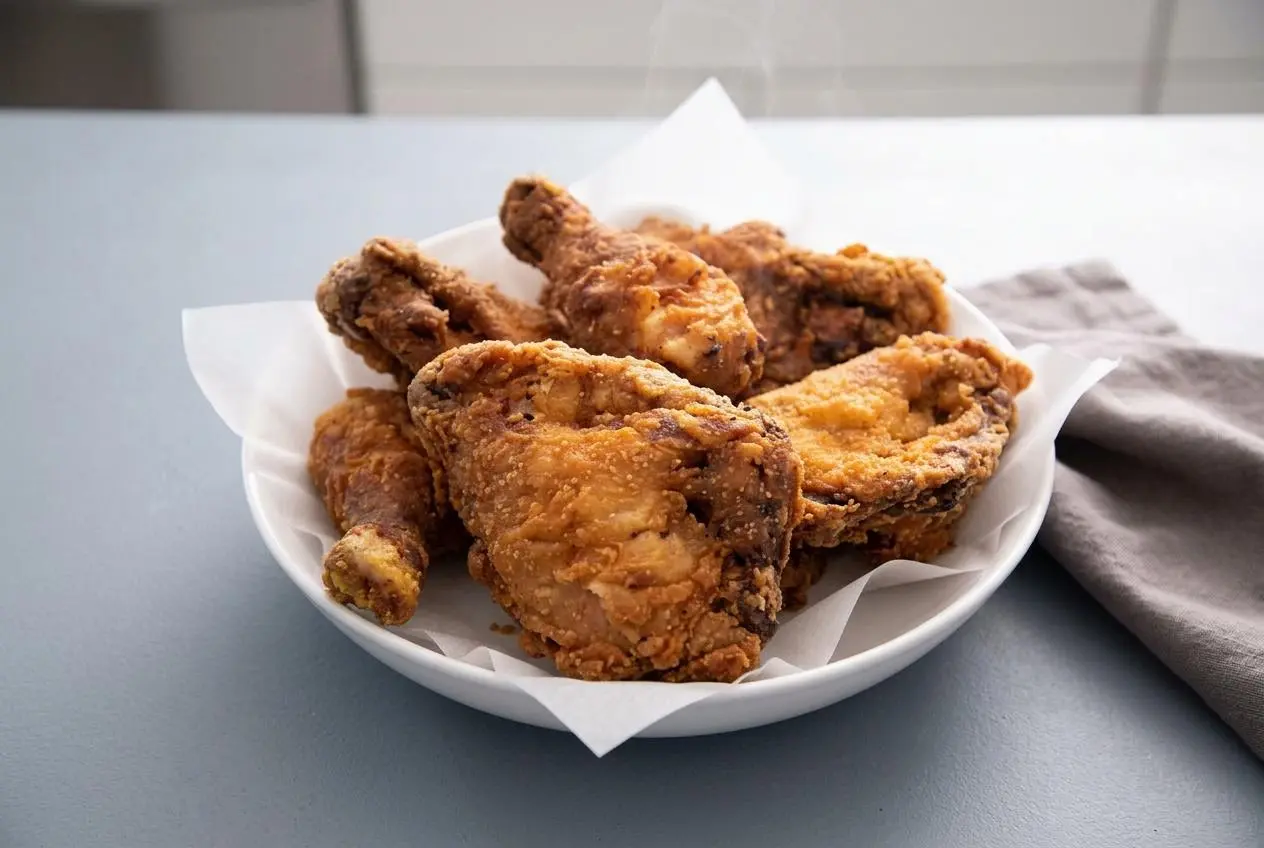
For juicy chicken with a crackly crust, soak the pieces in seasoned buttermilk, coat them in flour and cornstarch, rest the coating, then fry at 340°F until cooked through.
This fried chicken recipe delivers savory, well-seasoned meat under a deep golden shell that crunches loudly with every bite.
Buttermilk keeps the chicken tender while cornstarch gives the coating its light, craggy texture. That first bite is all about the crackle.
Set up your wire rack and rimmed baking sheet before heating the oil so hot chicken has somewhere crisp to land.
Key Ingredients for Ultra-Crispy Fried Chicken
Every ingredient earns its place: buttermilk brings tang and moisture, salt seasons the chicken, flour creates structure, cornstarch adds crunch, and the spices build a savory crust.
For the Brine
- 1 whole chicken (4- to 5-pound, cut into pieces (or 8 of your favorite bone-in chicken pieces))
- 1 quart whole buttermilk ((960mL))
- 3 tablespoons hot sauce (optional)
- 1 tablespoon salt
For Dredge and Frying
- Peanut or vegetable oil (for frying)
- 3 cups all-purpose flour ((360g))
- ½ cup cornstarch ((80g))
- 1 tablespoon onion powder
- 1 tablespoon salt
- 2 teaspoons ground black pepper
- 1 teaspoon cayenne pepper (optional)
Whole buttermilk brings gentle acidity and richness to the brine, helping the chicken stay tender without masking its flavor. Salt seasons beyond the surface, while optional hot sauce adds a subtle tangy heat rather than making the chicken aggressively spicy.
The flour gives the coating body, and cornstarch keeps it lighter and crisper. Peanut oil and vegetable oil both work well for frying because they handle the required heat without quickly scorching the breading.
I like to leave the dredged pieces on a sheet pan until the coating feels slightly tacky rather than dusty, because that hydrated layer clings firmly to the skin.
The Science of Buttermilk Brining
A 30-minute soak gives the buttermilk and salt time to flavor the outside of the chicken and start tenderizing it. For deeper seasoning and extra juiciness, refrigerate the chicken for several hours or overnight.
Buttermilk is mildly acidic, so it softens the surface proteins gradually while its fat and thickness help the coating adhere later. Avoid leaving chicken in an acidic marinade for more than 24 hours, since the exterior can become overly soft and lose its pleasing bite.
Flour and Cornstarch Dredge Balance
This coating uses 3 cups flour to ½ cup cornstarch. Flour forms the sturdy, craggy shell, while cornstarch reduces the dense, bready quality that can happen when flour absorbs too much moisture.
As the chicken fries, the cornstarch helps the crust set into thin, brittle layers. The result is a lighter coating with plenty of rough edges for serious crunch.
How to Make Perfect Fried Chicken Step by Step
Keep the oil temperature steady and fry similar-sized pieces together. Wings cook much faster than breasts, so mixed batches need close attention.
Brined Chicken
- Place the chicken, buttermilk, optional hot sauce, and salt in a large bowl or ziptop bag, then turn the pieces until coated and seal or cover.
Leave the chicken at room temperature for 30 minutes, or refrigerate it for several hours or overnight for a juicier result.
Dredge and Frying
- Pour 3 inches of peanut oil into a Dutch oven, clip in a candy or deep-fry thermometer, and heat over medium until the oil reaches 340°F.
Set a wire rack inside a rimmed baking sheet while the oil warms so steam can escape after frying. - Stir the flour, cornstarch, onion powder, salt, black pepper, and optional cayenne together in a shallow dish.
The mixture should look evenly speckled, with no visible pockets of cornstarch or seasoning. - Lift each chicken piece from the brine, shake away the excess, and press it firmly into the seasoned flour mixture before placing it on a plate or baking sheet.
Rest the coated pieces until the oil is ready, then give them a light second coating if you want a thicker, extra-crunchy crust. - Lower the chicken into the hot oil in batches and fry until deep golden, cooking wings for about 7 minutes, drumsticks and thighs for about 12 minutes, and breast pieces for about 15 minutes.
Move finished chicken to the wire rack when a thermometer in the thickest part reaches 165°F and the bubbling around the piece has noticeably slowed.
Do not crowd the Dutch oven. Adding too many cold pieces at once drops the oil temperature fast, leaving the crust pale before the chicken has time to cook properly. If you are using very large bone-in breasts, cutting them crosswise before brining helps the meat and coating finish more evenly.
Essential Tips for Shatteringly Crispy Chicken
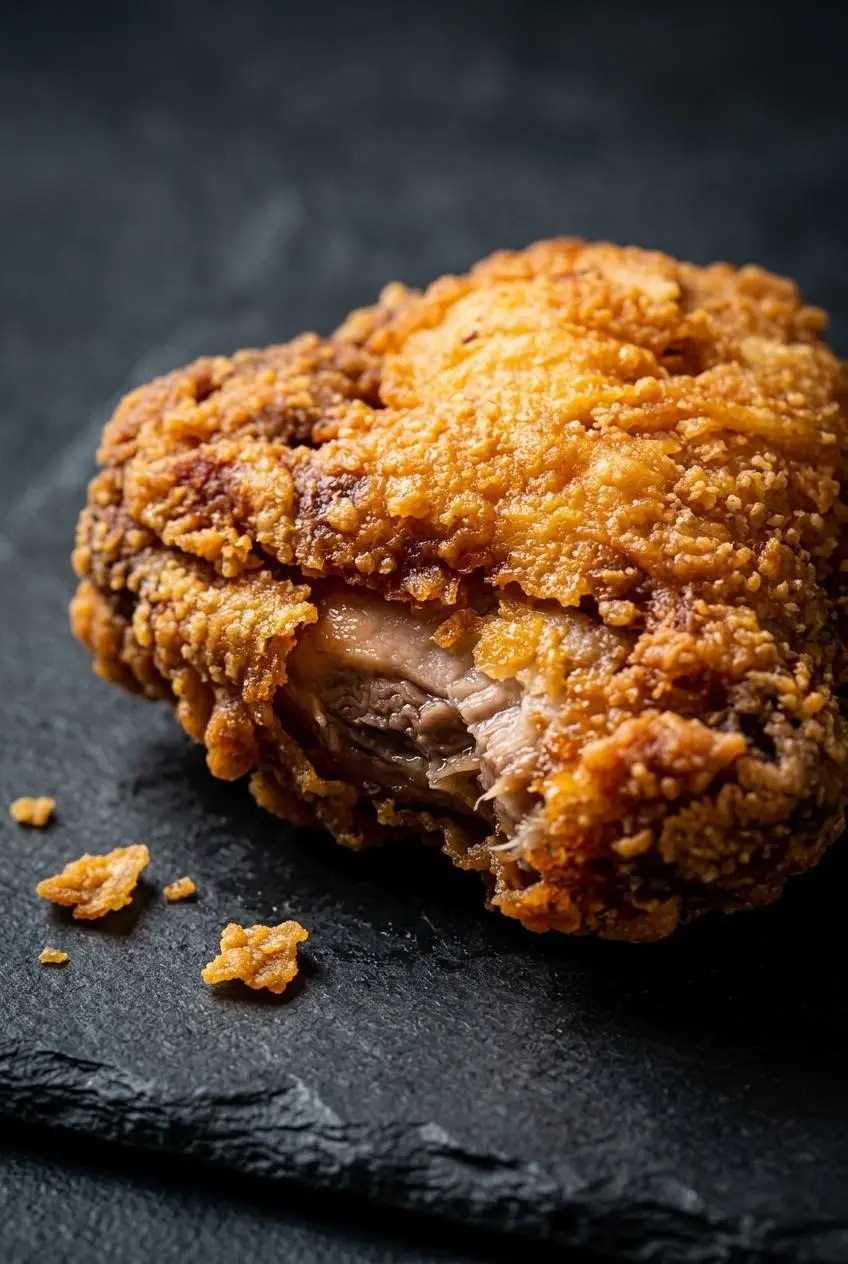
The best crust comes from controlling moisture, heat, and airflow from the moment the chicken leaves the brine.
- Oil temperature plunges after adding chicken: Fry a smaller batch and let the oil recover between batches. Start at 340°F, then keep it between 320°F and 340°F while the chicken cooks.
- The crust falls away from the chicken: Shake off thick drips of buttermilk, press the flour onto every surface, and rest the coated pieces for 10 minutes before frying. The coating should feel tacky, not loose and powdery.
- The chicken turns greasy: The oil was likely too cool or the pan was too crowded. Wait for the thermometer to climb back into range before adding another batch.
- The bottom crust becomes soft: Drain on an elevated wire rack instead of paper towels. Paper towels trap steam underneath the chicken, while the rack keeps air moving around the crust.
- White meat dries out: Pull breast pieces when they reach 165°F. Dark meat can stay in the oil a little longer and is often most tender around 175°F, when its connective tissue has more time to soften.
Use a thermometer rather than relying on color alone. Cook poultry to a minimum internal temperature of 165°F, checking the thickest part without touching bone.
Smaller pieces need less time in the oil than larger bone-in cuts. For more cut-specific timing ideas, try these fried chicken wings when you want a faster batch with the same crisp-crust approach.
Popular Flavor Variations and Substitutions
Keep the main method intact, then change the flavor around the brine or coating only when you want a different style of chicken.
- Gluten-free flour: Swap the all-purpose flour for a 1-to-1 gluten-free all-purpose flour blend. Keep the cornstarch for the lightest possible crust.
- More pepper: Increase the black pepper flavor with an extra sprinkle in the dredge if you enjoy a sharper savory finish.
- Extra cayenne: Add more cayenne to the dredge for stronger heat, keeping in mind that the flavor grows bolder as the chicken rests.
- Boneless bites: For a snackable alternative with a similarly crunchy coating, make crispy popcorn chicken.
Easy Buttermilk-Free Egg Wash Method
If you do not have buttermilk, use an egg wash as an optional alternative rather than changing the main recipe. Whisk whole eggs with a splash of milk, Worcestershire sauce, and hot sauce, then coat the chicken in the wash before pressing it into seasoned flour.
The egg wash creates a sticky layer that grips the dredge well and gives the crust a slightly sturdier crunch. For a tangier substitute, whole milk mixed with lemon juice or vinegar also provides acidity, though the flavor will be less rich than buttermilk.
Spicy Hot Sauce and Cayenne Twist
For a smoky, hotter version, add smoked paprika and dill pickle brine to the buttermilk marinade as optional flavor boosters. Finish the fried chicken with a warm cayenne and hot honey drizzle after it comes off the rack, so the crust stays crisp underneath.
If you prefer a creamy sweet-heat finish, spicy bang bang chicken offers another bold direction for crispy chicken.
Classic Southern Serving Suggestions
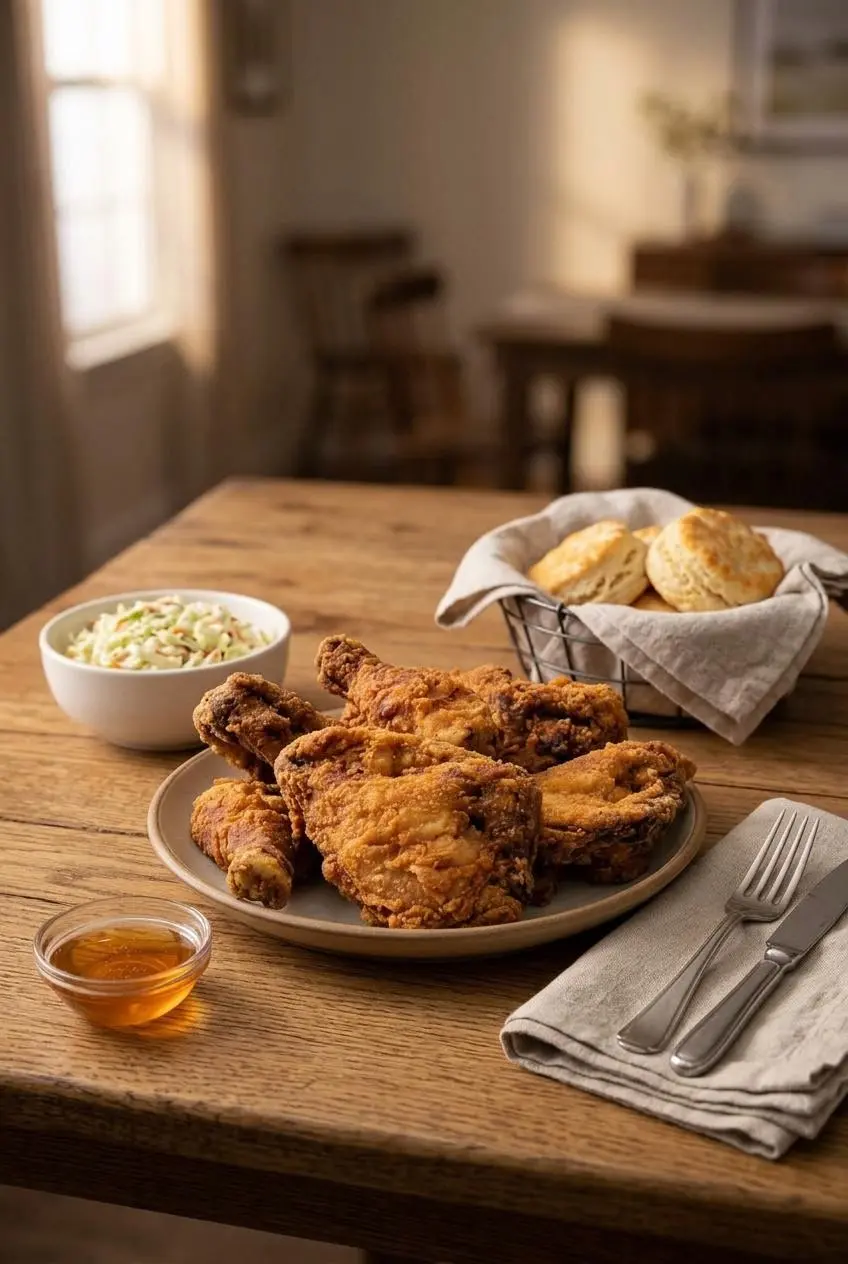
Fried chicken shines with cool, creamy, or buttery sides that balance its salty crunch.
- Serve warm buttermilk biscuits with honey butter for a soft, sweet contrast to the crisp coating.
- Add creamy vinegar coleslaw for crunch and acidity that cuts through the richness.
- Pair it with braised collard greens and buttery mashed potatoes for a comforting dinner plate.
- Set out hot honey for drizzling and pour sweet iced tea alongside the meal.
For a casual gathering, arrange the chicken on a platter with the hot honey on the side. That lets everyone choose their preferred level of sweet heat without softening every piece of crust.
Storage and Reheating Guide
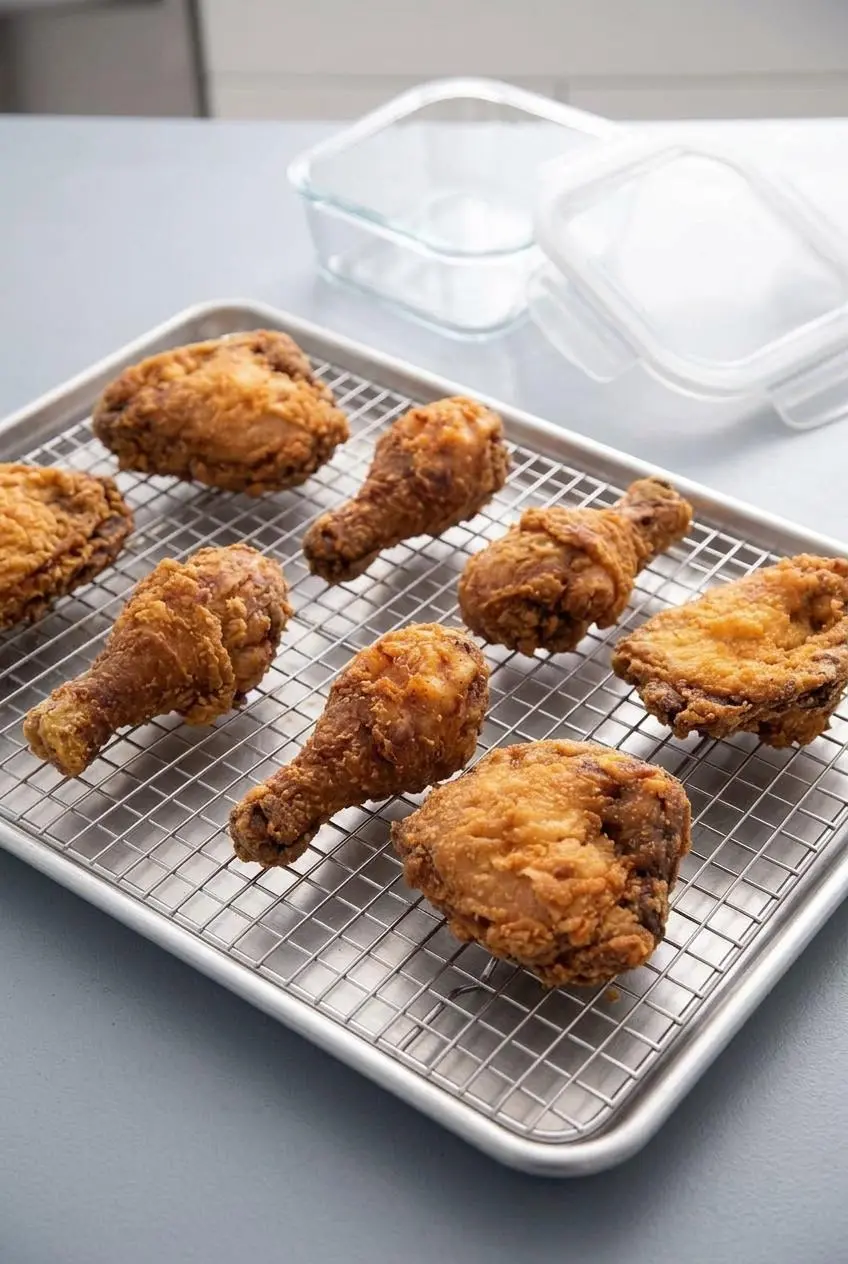
Cool leftover chicken, then keep it in an airtight container in the refrigerator. Reheat only the portion you plan to eat, since repeated warming can dry the meat and dull the crust.
For the best texture, warm chicken on a wire rack set over a baking sheet in a 375°F oven until hot and crisp. An air fryer at 375°F also revives the coating quickly. Microwave reheating warms the chicken but usually makes the breading soft.
Let used frying oil cool completely before pouring it through a fine-mesh strainer or cheesecloth to remove crumbs. Store the strained oil in a covered container in a cool pantry, and discard it if it smells rancid, looks unusually dark, or becomes heavily smoky during later use.
Conclusion
Great fried chicken comes down to a well-seasoned buttermilk soak, a cornstarch-supported crust, and patient frying at steady heat. The deep golden shell should be crisp enough to crack before the juicy chicken underneath takes over.
Rest the dredged pieces, fry in manageable batches, and let the finished chicken drain on a rack. Those small habits make every piece more satisfying.
Frequently Asked Questions
Why Is My Fried Chicken Crust Falling Off?
Freshly dredged chicken often sheds coating because the flour has not absorbed enough moisture. Rest the coated chicken for 10 minutes before frying so the flour turns into a tacky layer that adheres to the skin. Shake off excess buttermilk before dredging and press the flour firmly onto the chicken.
What Is the Best Oil Temperature for Frying Chicken?
Start with oil at 340°F, then maintain it between 320°F and 340°F as the chicken fries. Use a deep-fry thermometer and fry in small batches to prevent a sharp temperature drop. If the oil cools too much, wait for it to recover before adding more chicken.
How Do I Make Fried Chicken Without Buttermilk?
Mix whole milk with lemon juice or vinegar for a tangy buttermilk-style substitute. Or use a seasoned egg wash with Worcestershire sauce and hot sauce before dredging in flour. The egg wash creates a strong bond for the coating and produces a sturdy, crisp crust.
How Do I Reheat Fried Chicken to Keep It Crispy?
Reheat chicken on a wire rack in a 375°F oven so hot air can crisp the coating from all sides. An air fryer at 375°F is another effective option for restoring crunch. Avoid the microwave when crisp breading matters, since trapped steam softens the crust.
Fried Chicken Recipe

Equipment
- Large Pot
- Candy thermometer
Ingredients
For the Brine
- 1 whole chicken (4- to 5-pound, cut into pieces (or 8 of your favorite bone-in chicken pieces))
- 1 quart whole buttermilk ((960mL))
- 3 tablespoons hot sauce (optional)
- 1 tablespoon salt
For Dredge and Frying
- Peanut or vegetable oil (for frying)
- 3 cups all-purpose flour ((360g))
- ½ cup cornstarch ((80g))
- 1 tablespoon onion powder
- 1 tablespoon salt
- 2 teaspoons ground black pepper
- 1 teaspoon cayenne pepper (optional)
Instructions
Brined Chicken
- Place the chicken, buttermilk, optional hot sauce, and salt in a large bowl or ziptop bag, then turn the pieces until coated and seal or cover. Leave the chicken at room temperature for 30 minutes, or refrigerate it for several hours or overnight for a juicier result.
Dredge and Frying
- Pour 3 inches of peanut oil into a Dutch oven, clip in a candy or deep-fry thermometer, and heat over medium until the oil reaches 340°F. Set a wire rack inside a rimmed baking sheet while the oil warms so steam can escape after frying.
- Stir the flour, cornstarch, onion powder, salt, black pepper, and optional cayenne together in a shallow dish. The mixture should look evenly speckled, with no visible pockets of cornstarch or seasoning.
- Lift each chicken piece from the brine, shake away the excess, and press it firmly into the seasoned flour mixture before placing it on a plate or baking sheet. Rest the coated pieces until the oil is ready, then give them a light second coating if you want a thicker, extra-crunchy crust.
- Lower the chicken into the hot oil in batches and fry until deep golden, cooking wings for about 7 minutes, drumsticks and thighs for about 12 minutes, and breast pieces for about 15 minutes. Move finished chicken to the wire rack when a thermometer in the thickest part reaches 165°F and the bubbling around the piece has noticeably slowed.