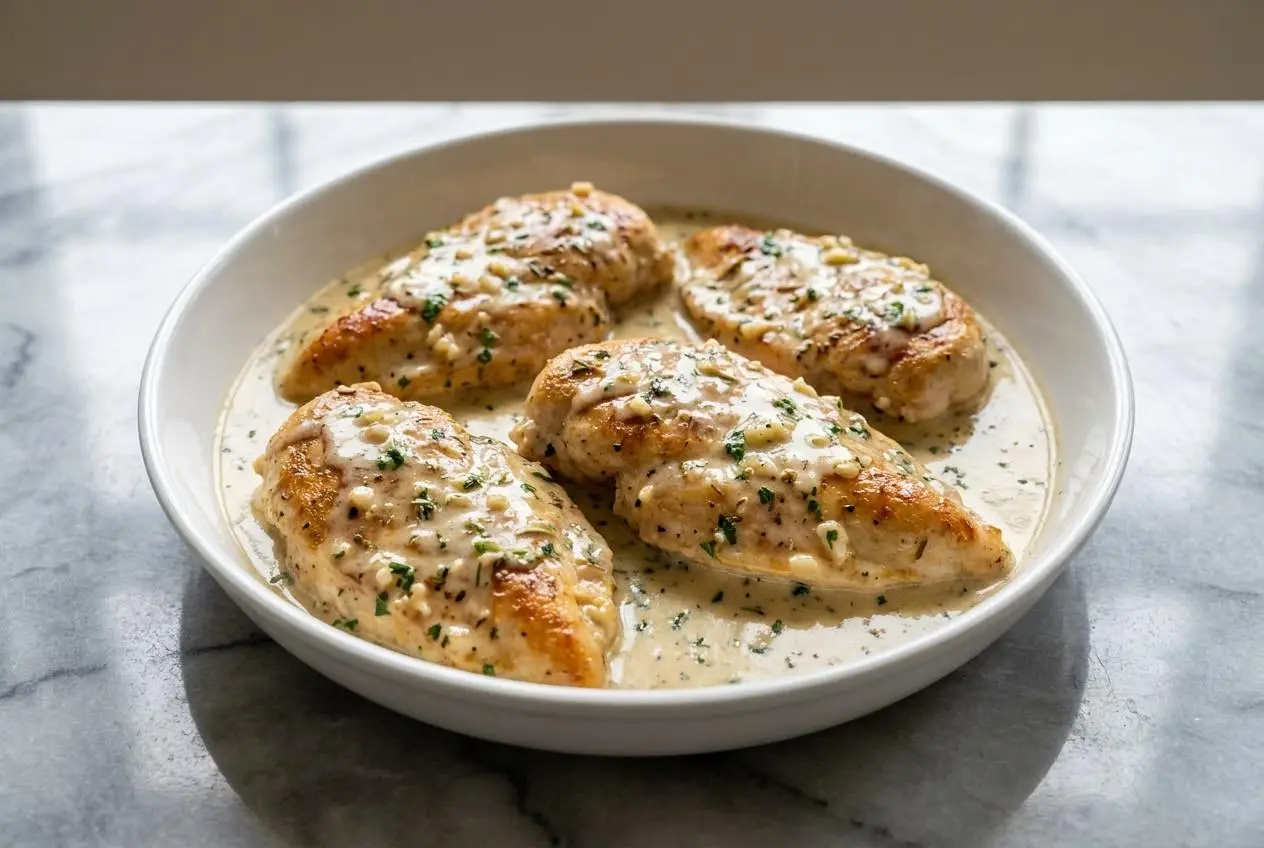
Some nights call for a dinner that tastes like you fussed for an hour, even when you only had half that time. This is the kind of creamy herb chicken I lean on when I want something cozy, deeply savory, and just polished enough to feel a little special.
What makes it memorable is the brown butter start. That extra minute at the skillet gives the chicken and cream sauce a nutty, toasty depth that turns a simple weeknight meal into real comfort food, without making the process any harder.
Why You’ll Love This Creamy Herb Chicken
Weeknight-friendly: This is a true one-pan meal, and in my kitchen that always means less cleanup and a calmer evening. From skillet to table, it comes together fast enough for a 30-minute dinner.
The secret twist: Browning butter before the chicken goes in changes the whole mood of the dish. You get those toasted, hazelnut-like notes that make the cream sauce taste silky, rich, and far more layered than a standard skillet recipe.
Juicy chicken, reliable sauce: Pounding the chicken breast thin helps it cook evenly, so you are not juggling dry edges and underdone centers. I also love this method because the sauce stays smooth and creamy instead of splitting.
Restaurant flavor at home: The browned bits left in the pan, the herbs, the garlic, and the cream all build on each other beautifully. It is the kind of pan-seared chicken dinner that smells incredible before it even hits the plate.
Ingredients and Substitutions
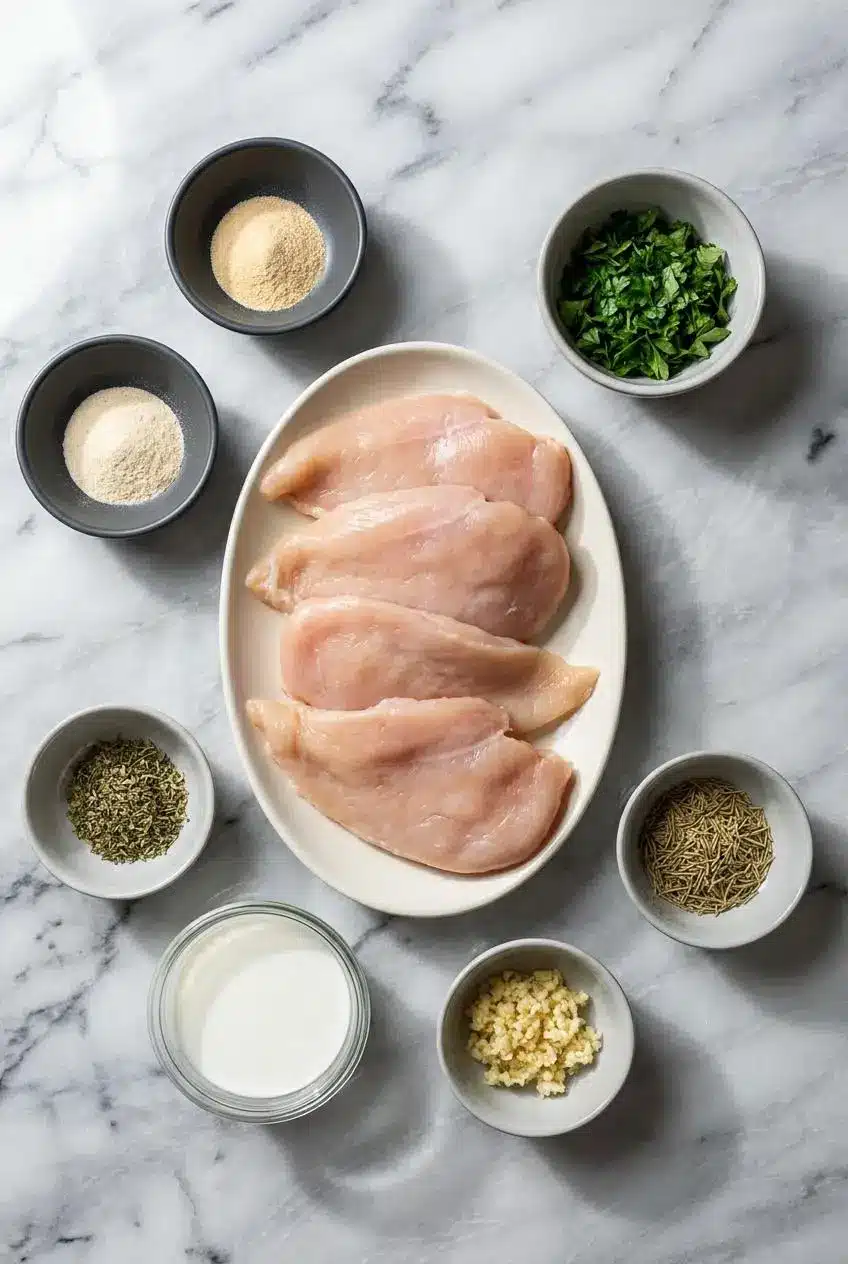
A short list of pantry herbs, garlic, and dairy turns plain chicken into a fragrant skillet supper with plenty of sauce for spooning over your favorite sides.
Ingredients
For The Chicken:
- 4 chicken breasts pounded 1/2-inch thin
- 2 teaspoons garlic powder
- 2 teaspoons onion powder
- 1 teaspoon parsley fresh, chopped
- 1/2 teaspoon dried thyme
- 1/2 teaspoon dried rosemary
- 1/4 teaspoon salt to season
- 1/4 teaspoon pepper to season
For The Sauce:
- 4 cloves garlic minced, or 1 tablespoon minced garlic
- 1 teaspoon parsley fresh, chopped
- 1/2 teaspoon dried thyme
- 1/2 teaspoon dried rosemary
- 1 cup milk or half and half
- 1/4 teaspoon salt to taste
- 1 teaspoon cornstarch mixed with 1 tablespoon water until smooth
- 1/4 teaspoon pepper to taste
Ingredient Notes & Substitutions
Chicken: Chicken breast gives you that classic tender, pan-seared cutlet feel, especially when pounded to an even 1/2-inch thickness. Boneless, skinless chicken thigh is also a great option if you want a more flavorful, budget-friendly swap, though it may need a slight adjustment in cooking time.
Cream and dairy: Even though the core recipe uses milk or half and half, I get the best and most stable result with heavy cream when I want a richer finish. Half and half works well for a lighter sauce, but plain milk is more likely to separate if the pan gets too hot.
Butter: The brown butter twist is what gives this creamy herb chicken its signature depth. I use unsalted butter for browning the chicken, then build the sauce in that same skillet so every toasted milk solid and savory drip stays in play.
Herbs: Parsley, thyme, and rosemary make a classic blend for chicken, with brightness from the parsley and a woodsy backbone from the dried herbs. If you like to change the personality of the dish, sage, chives, or even dill can work beautifully, and the herb guide below explains how to swap fresh and dried herbs confidently.
Wine: A splash of dry white wine is wonderful for deglazing if you want a slightly sharper, more layered sauce. Pinot Grigio, Sauvignon Blanc, or an unoaked Chardonnay all fit naturally here, and chicken broth is the easy alcohol-free stand-in.
Extra flavor boosters: A spoonful of Dijon mustard or a little Parmesan cheese stirred in at the end can deepen the sauce without changing the soul of the recipe. If you add Parmesan, do it off the heat so the sauce stays smooth and glossy.
How to Make Creamy Herb Chicken
Season the Chicken
- Pat the chicken breasts dry so the seasoning clings well and the surface can brown instead of steam. In a small bowl, combine the garlic powder, onion powder, chopped parsley, dried thyme, and dried rosemary, then season both sides of the chicken well with that mixture, plus the salt and pepper.
Brown the Butter and Cook the Chicken
- Set a large skillet over medium heat and add unsalted butter. Let it melt and foam, then keep swirling the pan until the foam settles and you see little amber-brown specks on the bottom, with a nutty, toasted aroma rising from the pan.
- Lay the seasoned chicken into the hot brown butter and cook for 5 minutes per side, depending on thickness, until the outside is golden and the center is no longer pink. If you are using an instant-read thermometer, look for 165°F, and work in batches if the skillet feels crowded so the chicken sears instead of steaming.
- Transfer the cooked chicken to a plate and keep all those flavorful browned bits in the pan. That is where the next layer of the sauce begins.
Build the Herb Sauce
- In the same skillet, add the minced garlic along with the parsley, thyme, and rosemary. Stir constantly for about 1 minute, just until everything smells fragrant and lively, making sure the garlic does not darken too much.
- If you like, pour in a small splash of white wine or chicken broth and scrape the bottom of the skillet with a wooden spoon. Those browned bits, known as fond, melt into the liquid and give the sauce its deep savory backbone.
- Pour in the milk, cream, or half and half, then season with salt and pepper to taste. Bring it up to a boil, then add the cornstarch mixture right into the center of the pan, stirring quickly so it blends in smoothly and thickens the sauce without lumps.
- Lower the heat and let the sauce simmer gently for 1 more minute. It should look lightly thickened and silky enough to coat the back of a spoon.
Finish and Serve
Return the chicken to the skillet and spoon some of the creamy herb sauce over the top. Let it warm through briefly, then finish with extra herbs if you like and serve right away while the sauce is glossy and the chicken is still juicy.
3 Secrets for Restaurant-Quality Results
Secret #1, trust the fond: The brown bits left behind after searing are not burnt residue, they are concentrated flavor. Once wine or chicken broth loosens that fond from the pan, it becomes the backbone of a cream sauce that tastes deeper and more savory than anything made in a clean skillet.
Secret #2, watch the skillet, not just the clock: Brown butter moves through clear stages, melting, foaming, then turning speckled and aromatic over medium heat. When the fat looks shimmering but not smoky, the pan is ready for chicken, and that is the sweet spot for a golden crust without bitter scorching.
Secret #3, pound the chicken evenly: This step is the quiet hero of the whole recipe. A uniform 1/2-inch thickness means the chicken breast cooks quickly and evenly, so every piece stays tender instead of turning dry in the thinner spots while the thicker center catches up.
The Science of a Perfect Cream Sauce
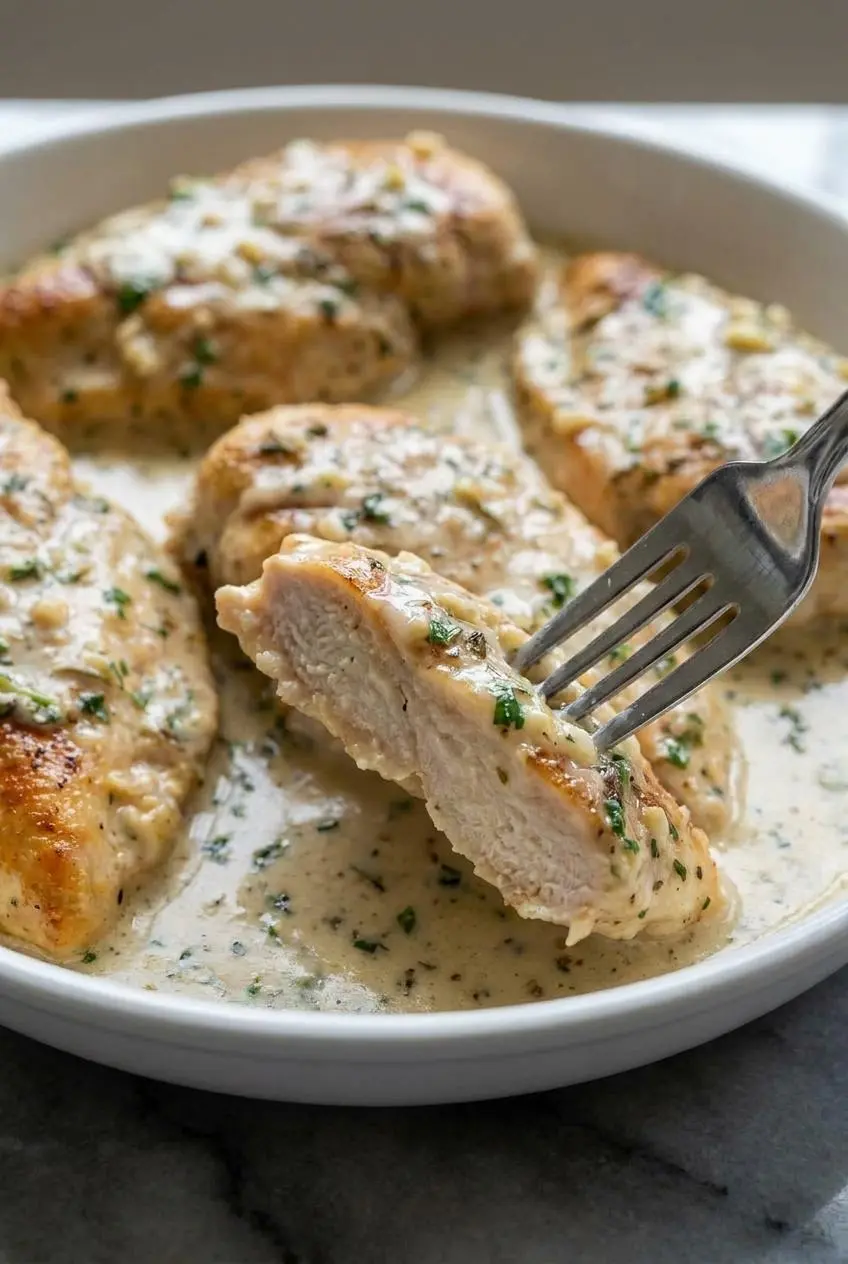
Good cream sauce is really about stability. Heavy cream has enough fat to form a more forgiving emulsion, so it stands up to heat better than low-fat dairy, while milk contains more water and proteins that are far more likely to tighten and separate when the pan boils hard.
That is why I always keep the sauce at a gentle simmer once the dairy goes in. If you want the glossiest finish, treat it kindly, because a bubbling, aggressive boil is one of the fastest ways to break a cream sauce.
A cornstarch slurry is the fastest thickener for this recipe, and it also keeps the dish gluten-free as written if every packaged ingredient you use is certified that way. The starch needs to be mixed with cold water first, because cornstarch thrown straight into hot liquid clumps on contact, while this quick, gluten-free thickening method works by swelling the starch evenly as it heats.
Flour-based roux has its place, but here I prefer the slurry because it is faster and gives the sauce a clean, glossy finish. If you want an extra savory edge, stir in Parmesan cheese off the heat, or add a small squeeze of lemon at the end for brightness without throwing off the texture.
A Chef’s Guide to Using Herbs
Fresh and dried herbs do not behave the same way in a skillet. Dried herbs are more concentrated because their moisture is gone, so a little goes a long way, while fresh herbs bring a brighter, greener finish.
In practical terms, the general rule of thumb is a 3:1 ratio, meaning 1 tablespoon of fresh herbs equals 1 teaspoon of dried herbs. That simple conversion keeps the herb flavor balanced instead of flat or overpowering.
| Herb | Fresh | Dried |
|---|---|---|
| Parsley | 1 tablespoon | 1 teaspoon |
| Rosemary | 1 tablespoon, finely chopped | 1 teaspoon |
| Thyme | 1 tablespoon leaves | 1 teaspoon |
Dried thyme and rosemary are best added early, because they need a little time in the pan to wake up and release their oils. Fresh parsley is much happier near the end, where it keeps its color and gives the finished creamy herb chicken a fresher, lighter top note.
Pro Tips & Troubleshooting
Pro Tips for Success
- For a stronger crust, lightly dredge the seasoned chicken in all-purpose flour before it hits the skillet. It is a small step, but it creates a deeper golden exterior and helps the sauce cling to the chicken beautifully.
- An instant-read thermometer is the easiest way to guarantee juicy results. Pull the chicken once the thickest part reaches 165°F, and you will avoid that dry, stringy texture that comes from guessing.
- For an even richer cream sauce, stir in 1/4 cup grated Parmesan cheese off the heat at the very end. It adds saltiness, body, and that extra restaurant-style finish.
- Mushrooms are excellent added with the garlic, and fresh spinach can be folded into the sauce at the end until wilted. That same creamy chicken-and-greens idea works beautifully in dishes like this creamy pesto pasta, where the sauce has enough body to carry both protein and vegetables.
Common Mistakes to Avoid
- Sauce too thin: Let it simmer a little longer so it reduces naturally. If it still looks loose, make a second small cornstarch slurry and whisk it in gradually.
- Sauce too thick: Loosen it with a tablespoon or two of cream, chicken broth, or milk until it returns to a spoonable, silky consistency.
- Chicken tough or dry: This almost always comes down to overcooking or uneven thickness. Pounding the chicken first and checking for 165°F solves most of the problem.
- Sauce curdled or separated: Usually the pan was too hot, or the dairy was too lean. A gentle simmer and a richer dairy choice, especially heavy cream, make a much more stable cream sauce.
- Lumpy sauce: Cornstarch must always be mixed with cold water before it touches the skillet. Skipping that slurry step is the quickest path to stubborn little starch lumps.
Serving and Storage
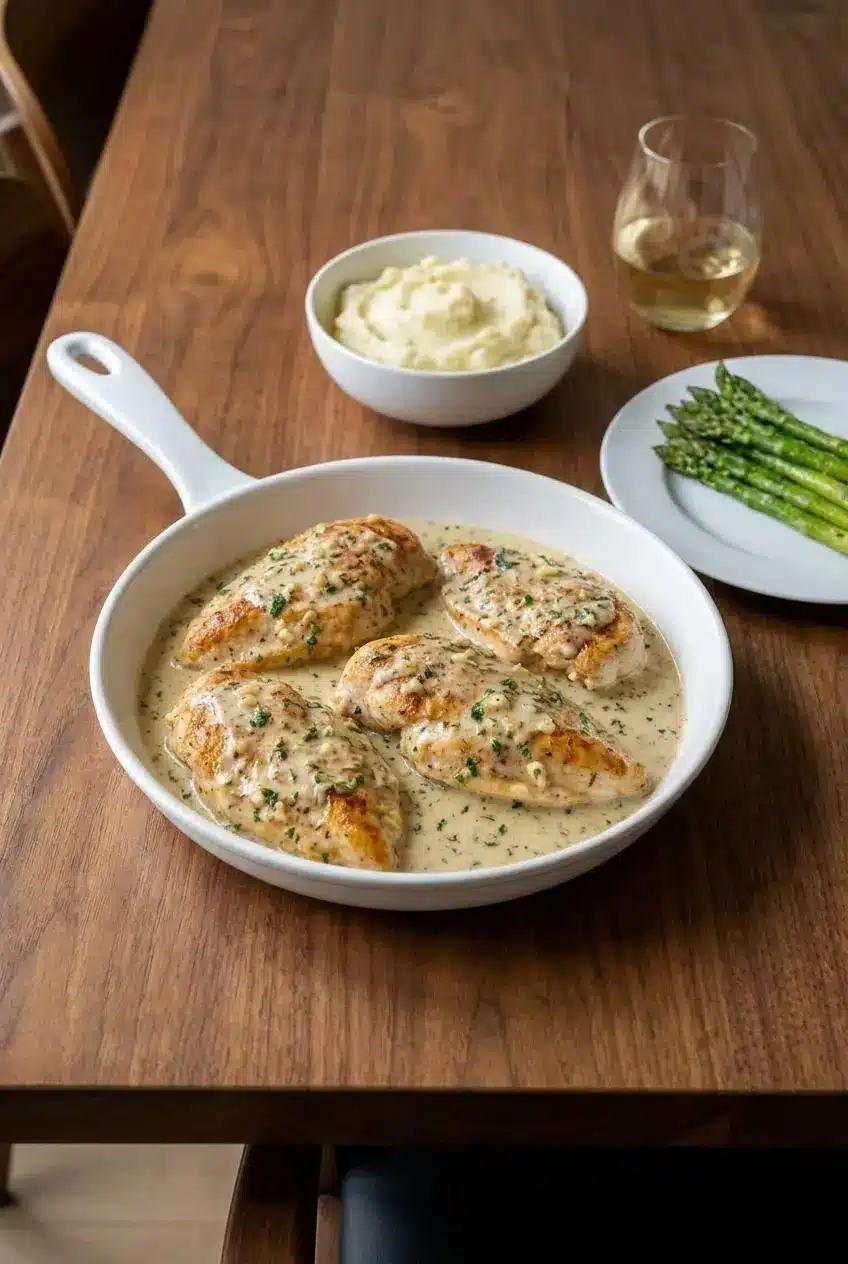
Serving Ideas
This creamy herb chicken begs for something that can catch every last spoonful of sauce. Mashed potatoes, buttered egg noodles, spaghetti, and white rice all do the job well, especially when you want a dinner that feels hearty and familiar.
For vegetables, I usually go with steamed asparagus, roasted broccoli, or simple green beans because they balance the richness without competing with the sauce. A final sprinkle of parsley or chives wakes up the whole plate and makes it look finished.
If pasta dinners are already in your weekly rotation, a skillet meal like lemon chicken orzo has that same cozy, one-pan appeal with a brighter citrus edge. On the other hand, when I want something lighter for lunch prep, a Greek chicken bowl gives me the same chicken comfort in a fresher, less creamy direction.
Storage and Reheating
Leftovers keep well in an airtight container in the refrigerator for 3 to 4 days. The sauce will thicken as it chills, which is perfectly normal for a dairy-based skillet sauce.
I do not recommend freezing this one if you can avoid it. Cream sauces tend to separate and turn a little grainy after thawing, so the texture is never quite as silky as it was fresh.
For reheating, use a skillet over low heat and add a small splash of milk or cream to loosen the sauce gently. The microwave can work in a pinch, but it tends to overcook the chicken and can push the sauce toward separating, so slower heat is the better path.
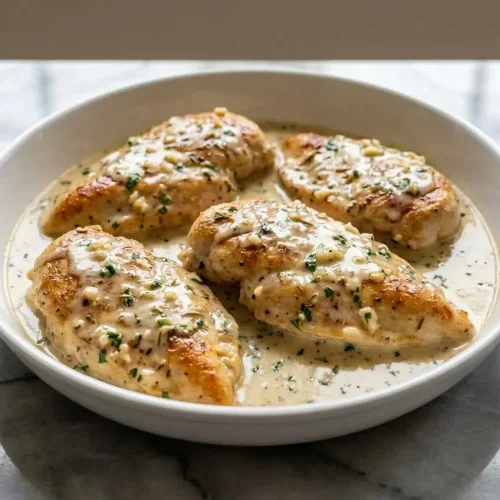
Brown Butter Creamy Herb Chicken

Equipment
- Large Skillet
- Small bowl
Ingredients
For The Chicken:
- 4 chicken breasts pounded 1/2-inch thin
- 2 teaspoons garlic powder
- 2 teaspoons onion powder
- 1 teaspoon parsley fresh, chopped
- 1/2 teaspoon dried thyme
- 1/2 teaspoon dried rosemary
- 1/4 teaspoon salt to season
- 1/4 teaspoon pepper to season
For The Sauce:
- 4 cloves garlic minced, or 1 tablespoon minced garlic
- 1 teaspoon parsley fresh, chopped
- 1/2 teaspoon dried thyme
- 1 cup milk or half and half
- 1/4 teaspoon salt to taste
- 1 teaspoon cornstarch mixed with 1 tablespoon water until smooth
- 1/2 teaspoon dried rosemary
- 1/4 teaspoon pepper to taste
Instructions
Season the Chicken
- Pat the chicken breasts dry. In a small bowl, combine the garlic powder, onion powder, chopped parsley, dried thyme, and dried rosemary. Season both sides of the chicken with the herb mixture, salt, and pepper.
Brown the Butter and Cook the Chicken
- Set a large skillet over medium heat and add unsalted butter. Swirl the pan as the butter melts and foams. Continue until the foam subsides and you see brown specks with a nutty aroma.
- Carefully place the seasoned chicken in the hot brown butter. Cook for about 5 minutes per side, or until golden brown and cooked through (165°F internal temperature). Work in batches if needed to avoid overcrowding. Transfer the cooked chicken to a plate, leaving the browned bits in the skillet.
Build the Herb Sauce
- In the same skillet, add the minced garlic, parsley, thyme, and rosemary. Stir constantly for about 1 minute until fragrant, being careful not to burn the garlic.
- Optional: Deglaze the pan with a splash of white wine or chicken broth, scraping up the browned bits (fond) from the bottom.
- Pour in the milk or half and half, and season with salt and pepper. Bring to a boil, then add the cornstarch slurry, stirring quickly to prevent lumps.
- Lower the heat and let the sauce simmer for 1 more minute, until it has lightly thickened and coats the back of a spoon.
Finish and Serve
- Return the chicken to the skillet, spooning some of the sauce over the top to warm it through. Garnish with additional fresh herbs if desired and serve immediately.
Notes
Nutrition
Conclusion
This dish proves that a simple skillet supper can still taste polished and deeply comforting. The brown butter gives creamy herb chicken a nutty, savory depth that makes the whole pan feel a little more special.
I hope you give it a place in your weeknight rotation and play with the little extras that suit your table, whether that means mushrooms, spinach, Parmesan, or your own favorite herb blend.
Frequently Asked Questions
What is the best chicken to use for creamy herb chicken, breast or thigh?
How can I make a rich, creamy sauce that won’t curdle?
What are the best side dishes to serve with this meal?
Can I use different herbs in this recipe?
What is the best way to store and reheat leftovers?
How can I adapt this recipe to be dairy-free or gluten-free?