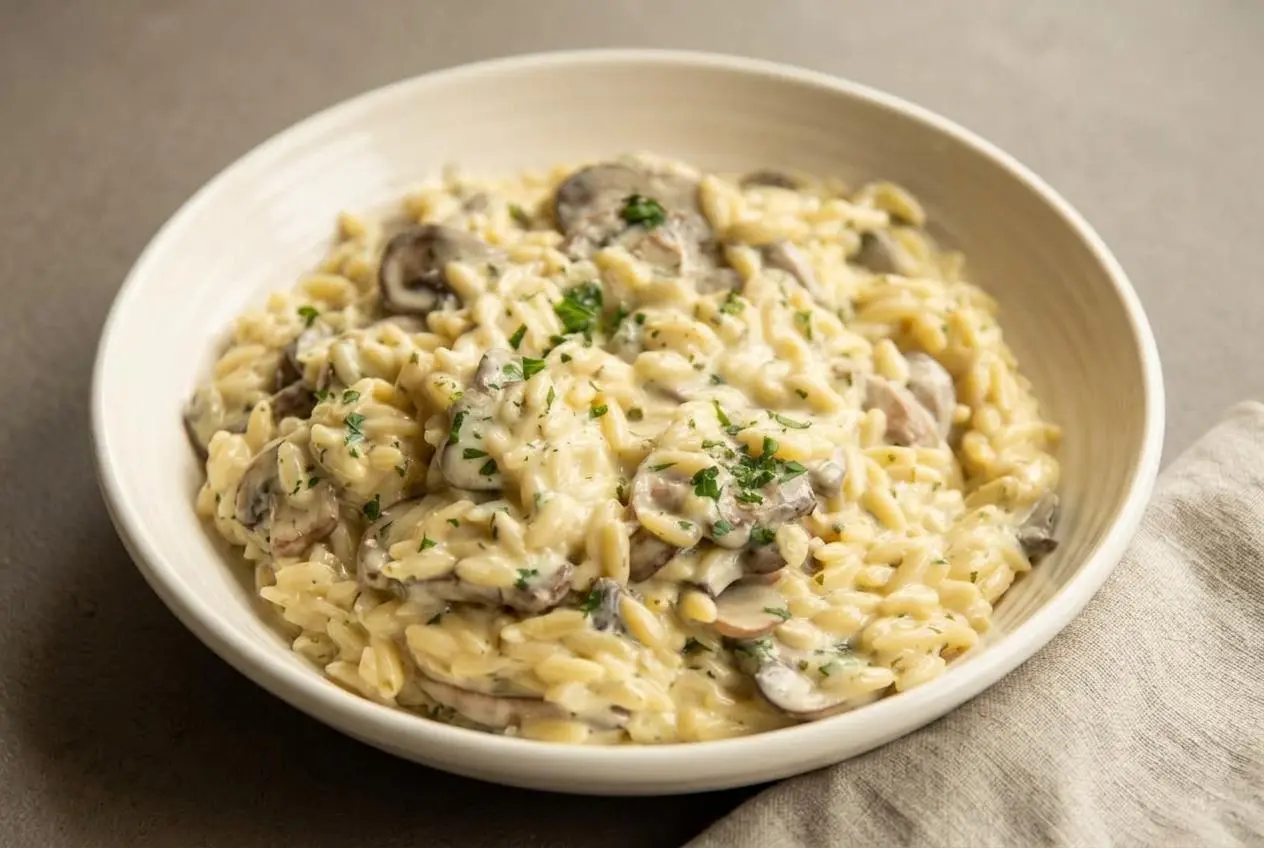
When the evening gets busy and nobody wants a sink full of dishes, Creamy Lemon Chicken Orzo is the kind of skillet meal that saves dinner. It gives you tender chicken, silky orzo pasta, and a sauce that tastes restaurant-worthy without the usual headaches of curdled cream or mushy pasta.
In my kitchen, this is the one-pan dinner I reach for when I want something rich, bright, velvety, and deeply comforting. It is especially good for weeknights, because the method is simple, the cleanup is light, and the finish feels far more polished than the effort suggests.
Why You’ll Love This Recipe
Weeknight friendly: This is the sort of weeknight recipe that works hard for you. Everything comes together in one pan, so you get a full, cozy dinner without juggling multiple pots and timers.
The secret twist: I love the Parmesan rind and off-heat emulsion technique because it builds deep savory flavor without making the broth heavy. The rind quietly seasons the chicken broth with umami, much like it does in a hearty parmesan sausage soup, where a simple broth turns wonderfully layered and rich.
Foolproof creamy texture: Stirring in the heavy cream and fresh lemon juice after the pan comes off the heat keeps the sauce smooth and glossy. You get all that lemony lift and creamy comfort without the risk of splitting.
Better flavor in every bite: Between the golden sear on the chicken thighs and the toasted orzo, every spoonful has depth. It is a skillet meal that tastes like you spent far longer on it than you actually did.
Ingredients and Substitutions

A short ingredient list does all the heavy lifting here, with chicken, broth, lemon, cream, and orzo working together for a cozy pan sauce that tastes layered and lively.
Ingredients
- 1 1/2 lbs boneless skinless chicken thighs
- 1 teaspoon paprika
- 1 teaspoon kosher salt, plus more to taste
- 1/2 teaspoon black pepper, plus more to taste
- 1 tablespoon olive oil
- 2 tablespoons butter (or use more olive oil)
- 1 shallot, sliced
- 3 cloves garlic, minced
- 1 1/2 cups uncooked orzo
- 2 cups chicken broth
- 1 lemon Juice from
- 1/3 cup heavy cream or full fat coconut milk
- 1/2 teaspoon each kosher salt and pepper
- Parsley and lemon wedges to serve
Ingredient Notes & Substitutions
Chicken Thighs vs. Chicken Breasts: Chicken thighs stay juicy and forgiving, which is why I prefer them for this recipe. If you want to use chicken breasts, pound them to an even 1/2-inch thickness and dredge them lightly in flour so they develop a delicate crust and stay more tender.
Dairy-Free Swap: This dish adapts beautifully if you avoid dairy. Replace the butter with extra olive oil, then use full-fat canned coconut milk or a smooth cashew cream in place of the heavy cream for a luscious finish.
Orzo Pasta: Orzo is pasta, not rice, even though it looks similar at first glance. It cooks right in the broth, which means it absorbs the lemony chicken flavor as it turns tender and creamy.
Chicken Broth: A good broth matters here because the orzo drinks it up completely. If you have a richer homemade broth, use it, but a solid low-sodium store-bought option also gives you plenty of flavor control.
Lemon: Fresh lemon juice is the key to that bright finish, and a little lemon zest at the table is lovely too. Bottled juice will work in a pinch, but fresh citrus gives the cleanest aroma and the liveliest flavor.
How to Make Creamy Lemon Chicken Orzo
Prep the Chicken and Pan
- Set your oven to 400 degrees Fahrenheit so it is fully heated when the skillet is ready. This quick preheat keeps the cooking flow smooth once the chicken and orzo are assembled.
- Blot the chicken thighs dry with a paper towel, then season them evenly with the paprika, kosher salt, and black pepper. A dry surface helps them sear properly, and you want every piece lightly coated so the flavor reaches all the way through.
- Warm the olive oil in a large deep skillet or Dutch oven over medium-high heat. Add the chicken and sear for about 3 minutes per side, until the outside is deeply golden and lightly crisp around the edges, then transfer it to a plate, knowing it does not need to be cooked through yet.
Build the Orzo Base
- Lower the heat to medium, then add the butter, shallot, and garlic to the same pan. Stir for 1 to 2 minutes, just until the shallot softens and the garlic smells fragrant but not browned.
- Add the uncooked orzo and stir continuously for about 1 minute. This little toasting step gives the pasta a subtle nutty flavor and helps it hold onto an al dente bite instead of turning soft too quickly.
- Pour in the chicken broth and scrape along the bottom of the pan to lift all the browned fond left from the chicken. Drop in a Parmesan rind here if you have one, then bring everything to a boil so the broth starts absorbing into the orzo with plenty of savory depth.
Finish in the Oven
Nestle the chicken thighs back over the orzo, cover the pan, and bake for about 12 minutes. When it is ready, the orzo should be tender and most of the liquid should be absorbed, though a little moisture around the edges is perfectly fine and will settle back in as it rests.
Create the Velvety Finish
- Take the pan out of the oven and remove the Parmesan rind if you used one. Let the bubbling calm for a moment so the residual heat is gentle instead of aggressive.
- Stir in the heavy cream, lemon juice, and an extra pinch of salt and pepper off the heat. This is the moment that creates the glossy emulsion, giving you a smooth, lemony sauce instead of one that turns grainy or split.
- Scatter parsley over the top, add a fresh squeeze of lemon if you like, and serve while the sauce is still silky and the chicken is hot.
Chef’s Secrets for Perfect Orzo

A 12-inch cast iron skillet or a deep Dutch oven is the sweet spot for this recipe. Anything too shallow can bubble over in the oven, while a roomy, heavy pan gives the broth space to simmer gently and helps the chicken cook evenly.
The browned bits left behind after searing, the fond, are not something to leave stuck to the pan. Once the broth goes in, scrape well and let those savory bits melt back into the liquid, because that is the backbone of the sauce.
Toasting the dry orzo in the butter and shallot mixture is one of those small moves that changes the whole dish. It coaxes out a nutty aroma and helps the pasta keep a more pleasant, al dente texture instead of swelling too fast.
The Science of Preventing Curdled Sauces
Cream and lemon are delicious together, but they are temperamental if you add them into a hard boil. High heat tightens dairy proteins quickly, and the acid in the lemon juice pushes them even further, which is why a smooth sauce can suddenly look broken.
That is why I always use an off-heat emulsion here. Once the pan is no longer boiling, the heavy cream and lemon juice can blend into the starchy orzo cooking liquid more gently, creating a stable, silky finish, the same basic kitchen logic that keeps a comforting chicken noodle soup creamy instead of grainy.
If you ever grate extra Parmesan over the top, skip the pre-grated kind if possible. Many packaged cheeses contain anti-caking agents, which help keep shreds separate in the bag but can make a delicate sauce feel a little dusty or grainy once melted in.
Adapting This Meal for Stovetop Cooking
If you do not have an oven-safe skillet, this recipe still works beautifully on the stove. After you return the seared chicken to the pan, lower the heat to a gentle simmer, cover tightly, and cook for about 12 to 15 minutes, stirring occasionally so the orzo does not stick to the bottom.
You want the liquid to stay at a calm simmer, not a harsh boil, because that is what lets the orzo cook evenly while the chicken finishes without drying out. In homes where the oven stays off during warmer months, this stovetop path is every bit as practical as a good creamy chicken penne, with the same easy comfort and weeknight appeal.
Pro Tips & Troubleshooting
Pro Tips
- Use a meat thermometer if you want total peace of mind. The chicken thighs should reach 165°F before serving.
- A 12-inch cast iron skillet or deep Dutch oven works best because it gives the broth and orzo enough room to simmer without spilling over.
- Toast the orzo well after adding it to the pan. That brief minute of stirring brings out a nuttier flavor and helps the pasta stay pleasantly tender instead of overly soft.
- For a Florentine-style version, stir in 2 to 3 cups of fresh baby spinach during the last 2 minutes of cooking until just wilted.
Common Mistakes to Avoid
- Do not stop stirring right after the orzo goes into the pan. Those first moments matter, and skipping them can lead to clumping and sticking.
- Do not boil the cream and lemon juice together. Add them off the heat so the sauce stays smooth and velvety.
- If you want extra cheese at the end, avoid pre-grated Parmesan. It often melts less cleanly and can leave the sauce grainy.
- Do not forget to scrape up the fond when the broth goes in. Leaving that flavor behind means missing the best part of the pan sauce.
Serving & Storage

Serving Ideas
I love serving this with warm, crusty sourdough so nothing of that lemon-garlic sauce goes to waste. A shower of freshly grated Parmigiano-Reggiano and a little lemon zest at the table makes the whole dish taste brighter and more finished.
If you want something fresh alongside it, a peppery arugula salad with olive oil and extra lemon juice is exactly right. The sharp greens cut through the richness and keep the plate feeling balanced.
Storage & Make-Ahead
Store leftovers in an airtight container in the refrigerator for up to 3 to 4 days. Orzo keeps absorbing liquid as it sits, so the texture will naturally tighten overnight.
For reheating, add a splash of chicken broth before microwaving or warming it gently on the stove. That little bit of extra moisture brings the sauce back to life and keeps the leftovers from turning into a dry, dense brick.
Freezing is not my favorite move for this one. Creamy sauces tend to separate after thawing, and the orzo usually loses its tender, velvety texture.

Creamy Lemon Chicken Orzo

Equipment
- 12-inch cast iron skillet or Dutch oven
Ingredients
- 1 1/2 lbs boneless skinless chicken thighs
- 1 teaspoon paprika
- 1 teaspoon kosher salt, plus more to taste
- 1/2 teaspoon black pepper, plus more to taste
- 1 tablespoon olive oil
- 2 tablespoons butter (or use more olive oil)
- 1 shallot, sliced
- 3 cloves garlic, minced
- 1 1/2 cups uncooked orzo
- 2 cups chicken broth
- 1 lemon Juice from
- 1/3 cup heavy cream or full fat coconut milk
- 1/2 teaspoon each kosher salt and pepper
- Parsley and lemon wedges to serve
Instructions
Prep the Chicken and Pan
- Set your oven to 400 degrees Fahrenheit so it is fully heated when the skillet is ready. This quick preheat keeps the cooking flow smooth once the chicken and orzo are assembled.
- Blot the chicken thighs dry with a paper towel, then season them evenly with the paprika, kosher salt, and black pepper. A dry surface helps them sear properly.
- Warm the olive oil in a large deep skillet or Dutch oven over medium-high heat. Add the chicken and sear for about 3 minutes per side, until the outside is deeply golden and lightly crisp around the edges, then transfer it to a plate.
Build the Orzo Base
- Lower the heat to medium, then add the butter, shallot, and garlic to the same pan. Stir for 1 to 2 minutes, just until the shallot softens and the garlic smells fragrant but not browned.
- Add the uncooked orzo and stir continuously for about 1 minute. This little toasting step gives the pasta a subtle nutty flavor and helps it hold onto an al dente bite.
- Pour in the chicken broth and scrape along the bottom of the pan to lift all the browned fond left from the chicken. Drop in a Parmesan rind here if you have one, then bring everything to a boil.
Finish in the Oven
- Nestle the chicken thighs back over the orzo, cover the pan, and bake for about 12 minutes. When it is ready, the orzo should be tender and most of the liquid should be absorbed.
Create the Velvety Finish
- Take the pan out of the oven and remove the Parmesan rind if you used one. Let the bubbling calm for a moment so the residual heat is gentle.
- Stir in the heavy cream, lemon juice, and an extra pinch of salt and pepper off the heat. This creates the glossy emulsion, giving you a smooth, lemony sauce instead of one that turns grainy or split.
- Scatter parsley over the top, add a fresh squeeze of lemon if you like, and serve while the sauce is still silky and the chicken is hot.
Notes
Nutrition
Conclusion
This dish is everything I want from a one-pan dinner, comforting, reliable, and polished enough to feel special on an ordinary night. The Parmesan rind and off-heat emulsion trick give it a depth and silkiness that standard creamy orzo recipes often miss.
If you make it, I hope you put your own spin on it and share how it turned out. And if this style of cozy dinner is already your language, a bowl of creamy parmesan pasta fits the same weeknight mood beautifully.