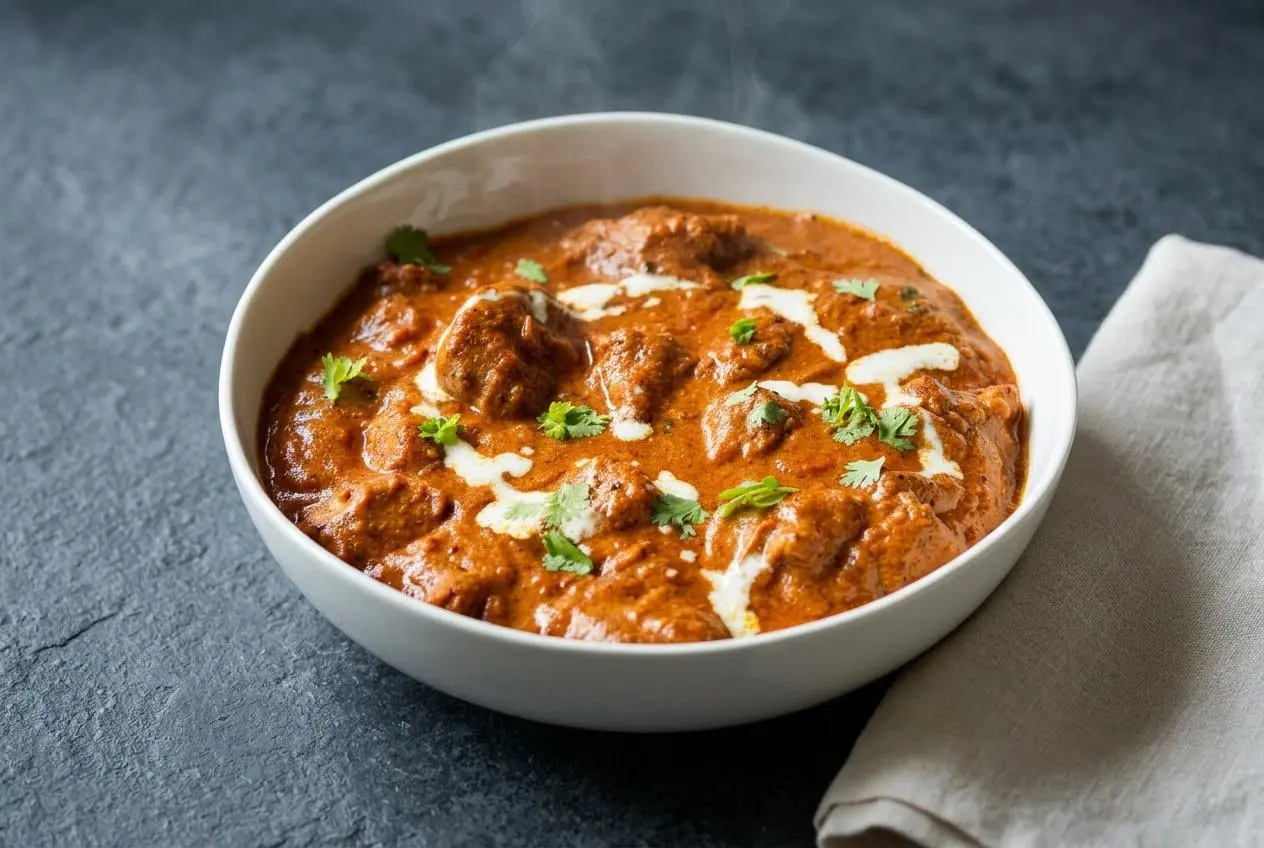
Chicken tikka masala is marinated, charred chicken simmered in a creamy, spiced tomato-onion gravy with garam masala and dried fenugreek. It delivers smoky edges, tender chicken, and a rich curry sauce at home.
This chicken tikka masala starts with aromatic spices, tangy yogurt, and chicken cooked until the edges pick up a little char. The sauce develops slowly enough to taste rounded and savory, without making dinner feel complicated.
The final pinch of crushed kasuri methi gives the whole pan its unmistakable warm, nutty perfume. That aroma is worth the wait.
Pat the chicken very dry before marinating so the yogurt coating clings well instead of sliding off in the pan.
Chicken Tikka Masala vs Butter Chicken
These curries share creamy tomato sauces, but their flavor and texture are distinct. Chicken tikka masala is built around smoky, charred chicken pieces and a fuller onion-tomato gravy with noticeable spice.
Butter chicken, or murgh makhani, is generally milder, sweeter, and more butter-forward. Its sauce is smoother and silkier, while tikka masala has more onion depth, a stronger spice profile, and a slightly more robust tomato flavor.
If you want charred edges and a fragrant, savory gravy, choose tikka masala. If you prefer a gentler, richer sauce with subtle sweetness, butter chicken may be the better fit.
Essential Ingredients for Chicken Tikka Masala
Each ingredient earns its place: yogurt supports tenderness, spices build aroma and color, onions add depth, tomatoes bring body, and cream rounds out the finished gravy.
For the chicken marinade:
- 1½ lbs. (700 grams) chicken boneless (Preferably thighs, or breasts)
- ½ cup (120 ml) Greek yogurt (hung curd)
- ½ to 1 teaspoon Kashmiri red chili powder
- 1 teaspoon garam masala
- ¼ teaspoon turmeric
- 1 teaspoon coriander powder
- ½ teaspoon cumin powder
- ½ teaspoon salt
- 1 tablespoon lemon juice
- 1 tablespoon kasuri methi
- 1 tablespoon ginger garlic paste
- 1 tablespoon oil
For the tikka masala:
- 3 tablespoons oil (or ghee)
- 1½ cups (180 grams) onions (fine chopped, 1 large or 2 medium)
- 1 green chilli (optional)
- 1 teaspoon salt
- 1 tablespoon ginger garlic paste
- ½ to 1 teaspoon Kashmiri red chili powder
- 2 teaspoons garam masala
- 1 tablespoon coriander powder
- 1 to 1½ teaspoon cumin powder
- 1 to 2 teaspoons sugar
- 1 lb. (450 grams) tomatoes (pureed or chopped)
- 1 cup hot water
- 1 tablespoon kasuri methi (dried fenugreek leaves)
- ½ cup heavy cream/whipping cream
For Garnish:
- 3 tablespoons heavy cream
- 3 tablespoons coriander leaves (fine chopped)
Use thick Greek yogurt or hung curd so the marinade coats the chicken instead of turning watery. Lemon adds brightness, while the yogurt helps the spices adhere during high-heat cooking. Chicken thighs stay especially forgiving and juicy, although breasts work with careful, brief charring.
Kashmiri red chili powder gives the curry its inviting red-orange color with mild warmth. Garam masala brings layered aromatic heat, coriander adds citrusy earthiness, and cumin gives the sauce a toasted backbone. Kasuri methi, also called dried fenugreek leaves, supplies the distinctive herbal finish that makes the gravy smell complete.
I rub dried fenugreek leaves between warm palms just before adding them, because the crushed leaves release a much fuller, nutty aroma into the hot gravy.
Dairy-Free and Nut Cream Alternatives
For an optional dairy-free version, use thick unsweetened coconut or almond yogurt in the marinade. Choose a cultured yogurt with no sweetener so the chicken still gets tang and a coating that can brown.
Replace the cream with smoothly blended soaked cashew cream for a rich, mellow finish, or use full-fat coconut milk for a lighter coconut note. These swaps change the flavor slightly, but both keep the sauce velvety. Keep them separate from the main ingredient list so the classic version stays intact.
How to Make Chicken Tikka Masala
The method has three important moments: give the marinade time to season the chicken, cook the onions until deeply golden, then let the tomato masala reduce until it loses its raw sharpness.
Chicken Marinade
- Cut the chicken into 1 to 1½ inch pieces, pat it dry, then combine it with the red chilli powder, garam masala, cumin powder, coriander powder, turmeric, salt, lemon juice, oil, ginger garlic paste, yogurt, and kasuri methi.
Cover and refrigerate for 8 to 48 hours, or at least 3 hours, until the marinade looks thick and well attached to the chicken.
Make Tikka Sauce
- Warm the oil or ghee in a heavy pot, add the onions and salt, and cook over medium heat for 10 to 12 minutes before adding the ginger garlic paste and optional green chilli for 40 to 60 seconds.
The onions should turn deep golden and smell sweet rather than raw before you continue. - Lower the heat, add the red chilli powder, coriander powder, garam masala, and cumin powder, and stir them through the onion mixture briefly.
The spices should smell fragrant almost immediately, with no dark spots or burnt bitterness. - Add the pureed or chopped tomatoes and cook over medium-high heat until the masala becomes thick.
Look for a light sheen of oil separating around the edges, which shows the tomato-onion mixture has cooked down properly. - Pour in the hot water, bring the sauce to a rolling boil, then cover and simmer over low heat for 12 to 14 minutes.
The gravy should become thick, fragrant, and less sharp; blend it smooth now if you want a silkier texture and gentler canned-tomato flavor.
Grill Chicken and Assemble
- Cook the marinated chicken using one method: grill on skewers in a 460 °F (240 °C) oven for 18 to 20 minutes, turning halfway and broiling for 2 minutes; sear in batches in a hot oiled skillet for 3 minutes per side; or air fry at 400 °F (200 °C) for 12 minutes.
Stop when the chicken has browned, blistered dark spots, and is nearly cooked through, since it finishes gently in the sauce. - Stir the cream and sugar into the simmering masala and cook for 2 to 3 minutes.
The sauce should look glossy, creamy, and unified rather than oily or grainy. - Fold in the charred chicken and crushed kasuri methi, then simmer gently for 2 to 3 minutes before finishing with cream and coriander leaves.
The chicken should be tender, and the gravy should cling softly to each piece without becoming thick like paste.
Use a thermometer if you have one: chicken is ready when it reaches 165 °F at the thickest point. Check after the final simmer rather than overcooking it during the initial char.
Stovetop Skillet and Air Fryer Charring Options
- Oven and broiler: Skewers cooked at 460 °F (240 °C) brown evenly, while the final 2-minute broil creates the dark blistered spots associated with tandoori-style chicken.
- Cast-iron skillet: A very hot, lightly oiled skillet delivers the strongest crust in 3 minutes per side. Work in batches so moisture does not crowd the pan and steam the chicken.
- Air fryer: At 400 °F (200 °C), the chicken browns quickly in 12 minutes with less hands-on work. Leave space between pieces so hot air can circulate.
Whichever method you choose, aim for color rather than fully cooking the chicken before it enters the sauce. The short final simmer lets the tikka absorb flavor while staying tender.
Recipe Tips and Troubleshooting Common Issues
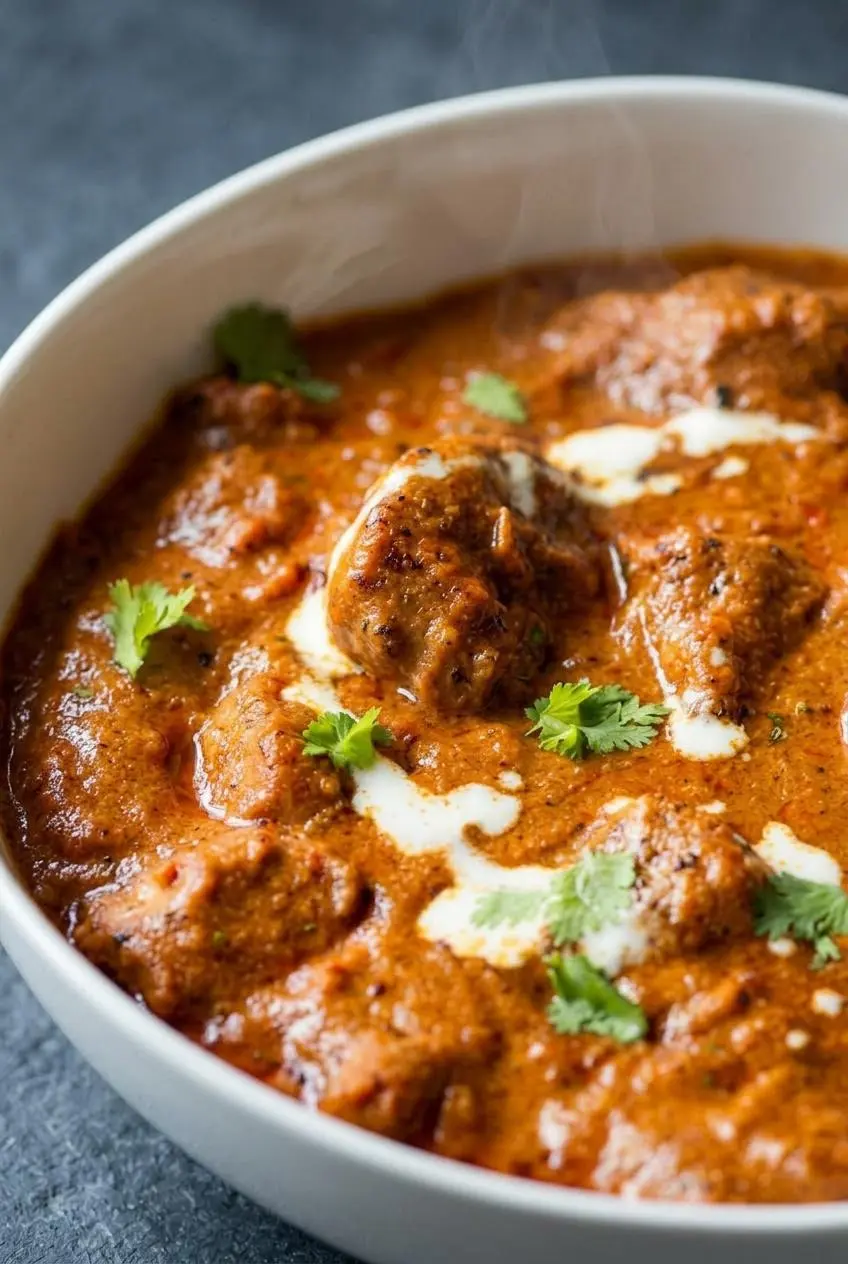
Small adjustments make a noticeable difference in a creamy tomato curry. Focus on the marinade texture, the depth of the onions, and gentle heat once the cream goes in.
- Watery marinade: Thin yogurt releases liquid under heat, so use thick Greek yogurt or hung curd and pat the chicken dry before mixing. The chicken should look coated, not submerged.
- Pale, flat sauce: The onions likely need more time. Cook them until deep golden before adding aromatics, because that browning creates the gravy’s sweetness and savory backbone.
- Burnt spice flavor: Ground spices scorch quickly in hot fat. Lower the heat before adding them and stir only until fragrant.
- Split cream: Turn the heat down before stirring in cream, then keep the sauce at a gentle simmer. Hard boiling can make the dairy look grainy.
- Extra smoky aroma: Optionally bloom a tiny pinch of smoked paprika or lightly crushed green cardamom in warm ghee before adding the chicken. Use a restrained hand so the masala remains balanced.
If you prefer a hands-off curry for another night, this slow cooker chicken tikka masala offers a gentler simmering approach.
How to Balance Sauce Acidity and Thickness
A sharp sauce usually means the tomatoes need more cooking or need a little balancing richness. First, simmer uncovered until the gravy looks more concentrated and the raw tomato edge softens. Stir regularly so the base does not catch.
If the sauce still tastes too tart, add a little more sugar from the amount already listed, then taste again. A splash of the listed cream also rounds out acidity. For a restaurant-style finish, blend the onion-tomato base with an immersion blender before adding the chicken, which makes the sauce smoother and helps it feel fuller on the palate.
If your gravy seems thin, avoid adding more cream right away. Let moisture evaporate first, because reduction strengthens both texture and flavor. If it becomes too thick, loosen it gradually with hot water until it coats a spoon.
Vegetarian Paneer Tikka Masala Swap
For an optional meatless version, use firm paneer cubes or roasted cauliflower florets in place of chicken. Coat them in the same spiced yogurt mixture, brown them briefly until golden, and fold them into the finished sauce for the final 2 minutes.
Paneer benefits from a gentle hand because it can break if stirred aggressively. Roasted cauliflower gives a softer, more vegetable-forward version and absorbs the masala especially well.
Make-Ahead, Freezing, and Reheating Guide
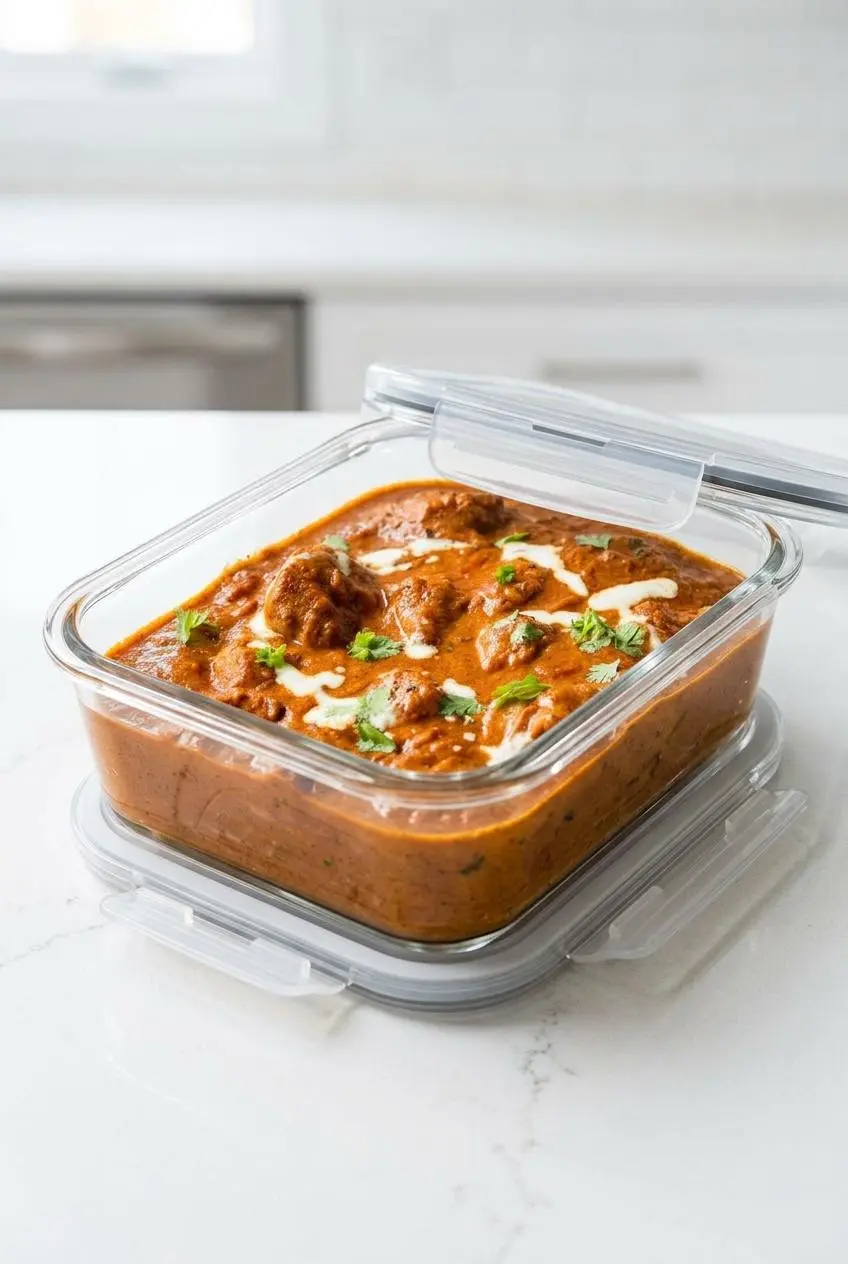
The cooked curry can be chilled in an airtight container, and its spices often taste more blended after resting in the refrigerator. For cooked poultry leftovers, keep the curry refrigerated for up to 4 days and follow safe chilling and storage practices for poultry.
If you choose to freeze portions, let the curry cool before transferring it to freezer-safe containers, leaving a little room at the top. Thaw it in the refrigerator, then warm it slowly on the stovetop with a splash of water if the gravy has tightened.
Reheat over low heat and stir often to bring the cream sauce back together. Avoid blasting it at high heat, which can make the sauce separate. Add the coriander garnish after reheating so it stays fresh and bright.
Serving Suggestions and Delicious Pairings
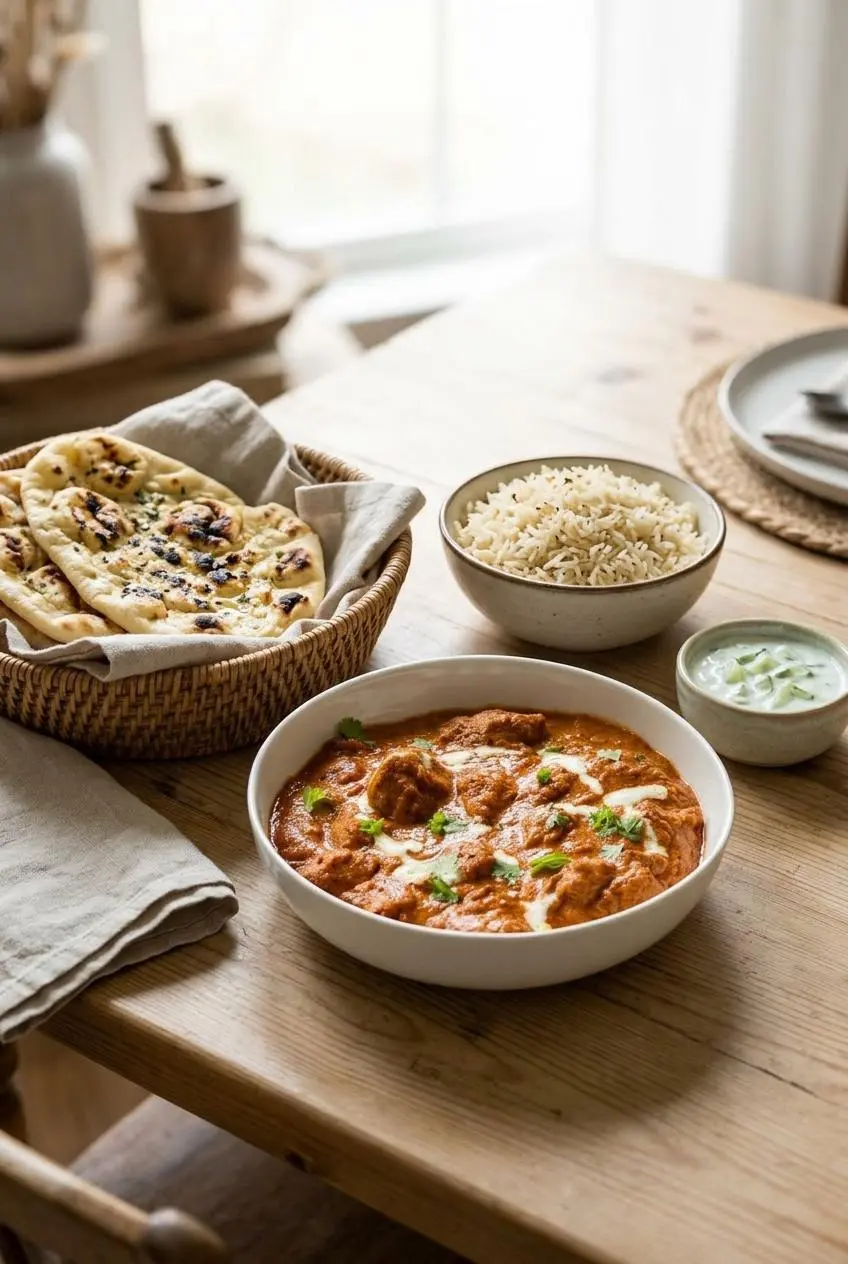
Serve the curry hot with something ready to scoop up every bit of its creamy masala.
- Garlic butter naan or roti: Warm flatbread catches the sauce and adds a soft, chewy contrast to the charred chicken.
- Basmati rice or cumin jeera rice: Fluffy rice keeps the meal satisfying while letting the aromatic gravy shine.
- Cucumber raita: Cool, tangy yogurt helps soften the curry’s warm spices.
- Kachumber salad: Crisp cucumber, tomato, and onion add refreshing crunch beside the rich sauce.
- Mango lassi: Its sweet, creamy flavor offers a gentle counterpoint to the savory masala.
Conclusion
Deeply golden onions, a well-reduced tomato masala, and chicken with smoky charred edges turn this curry into something genuinely special. The creamy gravy stays balanced rather than heavy, with kasuri methi tying the flavors together.
Bring it to the table while the sauce is hot, then serve with warm flatbread or fluffy basmati rice. A little extra coriander on top makes a lovely finishing touch.
Frequently Asked Questions
What Is the Difference Between Chicken Tikka Masala and Butter Chicken?
Chicken tikka masala uses charred chicken in a spicier onion-tomato gravy with a bolder savory flavor. Butter chicken is usually milder, sweeter, smoother, and more butter-forward. Tikka masala tends to have more visible onion depth and smoky chicken edges. Butter chicken is often silkier and gentler in overall spice.
Can I Use Chicken Breasts Instead of Chicken Thighs?
Yes. Boneless chicken breasts work well, but thighs stay juicier under high heat. Marinate breasts for at least 4 hours, then char them briefly so they do not dry out before the final simmer. Cut breast pieces evenly and remove them from the skillet or broiler once they have good color. They finish cooking in the sauce.
How Do I Fix a Tikka Masala Sauce That Is Too Sour or Acidic?
Simmer the sauce uncovered until the tomato flavor tastes cooked and concentrated. Then balance it with a little more sugar from the listed amount or a splash of cream. Blending the onion-tomato base can also soften a harsh, canned-tomato texture. If using the dairy-free variation, smooth cashew cream provides similar richness.
Can Chicken Tikka Masala Be Frozen and Reheated?
Yes, portion the cooled curry into freezer-safe airtight containers before freezing. Thaw it in the refrigerator and warm it slowly on the stovetop, stirring in a splash of water if needed. Keep the heat low once the sauce is hot so the creamy gravy stays smooth. Add fresh coriander after reheating for the best finish.
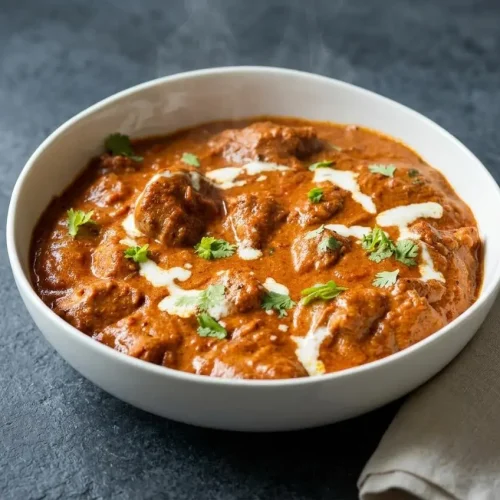
Chicken Tikka Masala

Equipment
- Skewers
- Baking tray or cast iron skillet
- Heavy bottom pot
- Blender (optional)
Ingredients
For the chicken marinade:
- 1½ lbs. chicken boneless (Preferably thighs, or breasts) 700 grams
- ½ cup Greek yogurt (hung curd) 120 ml
- ½ to 1 teaspoon Kashmiri red chili powder
- 1 teaspoon garam masala
- ¼ teaspoon turmeric
- 1 teaspoon coriander powder
- ½ teaspoon cumin powder
- ½ teaspoon salt
- 1 tablespoon lemon juice
- 1 tablespoon kasuri methi
- 1 tablespoon ginger garlic paste
- 1 tablespoon oil
For the tikka masala:
- 3 tablespoons oil (or ghee)
- 1½ cups onions (fine chopped, 1 large or 2 medium) 180 grams
- 1 green chilli (optional)
- 1 teaspoon salt
- 1 tablespoon ginger garlic paste
- ½ to 1 teaspoon Kashmiri red chili powder
- 2 teaspoons garam masala
- 1 tablespoon coriander powder
- 1 to 1½ teaspoon cumin powder
- 1 to 2 teaspoons sugar
- 1 lb. tomatoes (pureed or chopped) 450 grams
- 1 cup hot water
- 1 tablespoon kasuri methi (dried fenugreek leaves)
- ½ cup heavy cream/whipping cream
For Garnish:
- 3 tablespoons heavy cream
- 3 tablespoons coriander leaves (fine chopped)
Instructions
Chicken Marinade
- Cut the chicken into 1 to 1½ inch pieces, pat it dry, then combine it with the red chilli powder, garam masala, cumin powder, coriander powder, turmeric, salt, lemon juice, oil, ginger garlic paste, yogurt, and kasuri methi. Cover and refrigerate for 8 to 48 hours, or at least 3 hours, until the marinade looks thick and well attached to the chicken.
Make Tikka Sauce
- Warm the oil or ghee in a heavy pot, add the onions and salt, and cook over medium heat for 10 to 12 minutes before adding the ginger garlic paste and optional green chilli for 40 to 60 seconds. The onions should turn deep golden and smell sweet rather than raw before you continue.
- Lower the heat, add the red chilli powder, coriander powder, garam masala, and cumin powder, and stir them through the onion mixture briefly. The spices should smell fragrant almost immediately, with no dark spots or burnt bitterness.
- Add the pureed or chopped tomatoes and cook over medium-high heat until the masala becomes thick. Look for a light sheen of oil separating around the edges, which shows the tomato-onion mixture has cooked down properly.
- Pour in the hot water, bring the sauce to a rolling boil, then cover and simmer over low heat for 12 to 14 minutes. The gravy should become thick, fragrant, and less sharp; blend it smooth now if you want a silkier texture and gentler canned-tomato flavor.
Grill Chicken and Assemble
- Cook the marinated chicken using one method: grill on skewers in a 460 °F (240 °C) oven for 18 to 20 minutes, turning halfway and broiling for 2 minutes; sear in batches in a hot oiled skillet for 3 minutes per side; or air fry at 400 °F (200 °C) for 12 minutes. Stop when the chicken has browned, blistered dark spots, and is nearly cooked through, since it finishes gently in the sauce.
- Stir the cream and sugar into the simmering masala and cook for 2 to 3 minutes. The sauce should look glossy, creamy, and unified rather than oily or grainy.
- Fold in the charred chicken and crushed kasuri methi, then simmer gently for 2 to 3 minutes before finishing with cream and coriander leaves. The chicken should be tender, and the gravy should cling softly to each piece without becoming thick like paste.