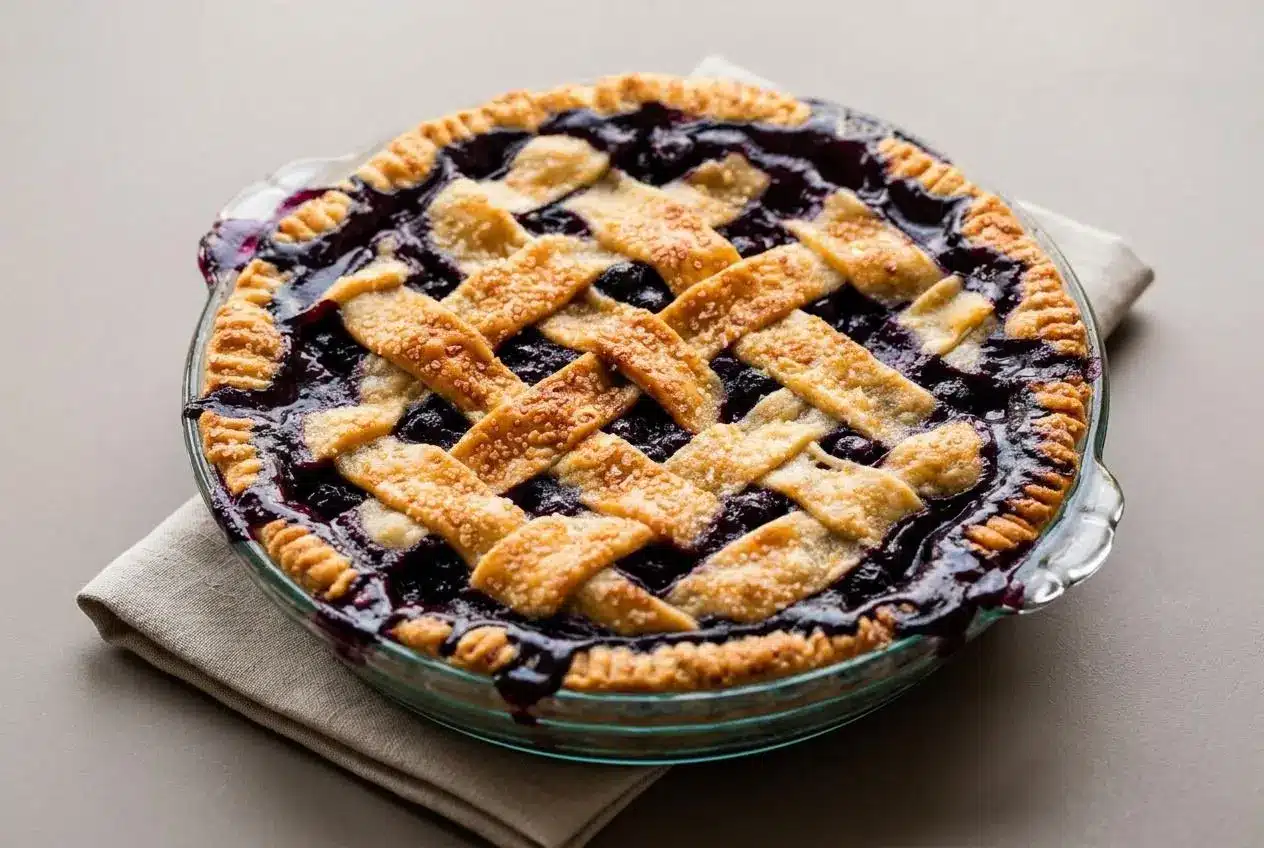
For a sliceable blueberry pie, use flour and cornstarch to thicken the berries, bake at 425°F before lowering to 375°F, and cool the pie for 4 hours so the filling can set.
This blueberry pie recipe pairs sweet-tart berries with lemon, cinnamon, and cold butter under a crisp golden lattice. The filling turns glossy and jammy as it bakes, while the pastry stays flaky around the edges.
Fragrant berry juices should bubble hard through the lattice before the pie leaves the oven. That bubbling center makes all the difference.
Keep the second dough disc chilled until you are ready to roll it; cold dough is much less likely to stretch, shrink, or lose its flaky layers.
Key Ingredients for Blueberry Pie
Each ingredient contributes to the pie’s balance, from bright fruit flavor and citrus aroma to a filling that holds its shape and a crust with rich, golden color.
- Homemade Pie Crust or All Butter Pie Crust (both recipes make 2 crusts, 1 for bottom and 1 for top)
- 6 cups (3 pints; about 860g) fresh blueberries
- 2/3 cup (135g) granulated sugar
- 1/4 cup (31g) all-purpose flour
- 2 Tablespoons (14g) cornstarch
- 1/4 teaspoon ground cinnamon
- 2 Tablespoons (30ml) lemon juice
- 1 teaspoon lemon zest
- 1 Tablespoon (14g) cold unsalted butter, cut into small cubes
- egg wash: 1 large egg beaten with 1 Tablespoon (15ml) milk
- optional: coarse sugar for sprinkling on crust
Fresh blueberries bring the cleanest burst of flavor, while sugar draws out their juices. Lemon juice and zest sharpen the sweetness and support the berries’ natural pectin. Cinnamon adds gentle warmth without taking over. Cold butter melts into the filling for richness and helps calm the foamy juice that can rise beneath the crust.
I toss the berries with a light hand and only burst a few if the dry mixture needs moisture, so most berries stay whole and give the finished pie distinct juicy pockets.
Fresh vs. Frozen Blueberries: Best Practices
Fresh berries make a beautifully textured filling when they are plump, dry, and free of soft or split spots. Rinse them under running water, then dry them thoroughly before mixing so extra surface moisture does not dilute the filling. Careful washing and handling of fresh produce can help reduce microbial hazards.
Frozen blueberries also work well. Add them directly from the freezer to the sugar and thickener mixture without thawing first. Thawing releases purple juice early, which can make the bottom crust wetter before the pie reaches the oven. Expect frozen berries to need about 5 to 10 additional minutes of baking, and judge doneness by active bubbling in the center rather than the clock alone.
If you enjoy working with cold butter dough and berries in other bakes, these flaky blueberry scones use the same useful habit of keeping moisture away from tender pastry.
The Perfect Dual-Thickener Ratio
Flour and cornstarch work better together here than either one alone. Flour gives the juices a steady, slightly opaque body that helps prevent a thin, weepy filling. Cornstarch adds the clearer gloss and firmer structure that makes clean wedges possible.
As the filling heats, the cloudy purple liquid changes into a shiny, jam-like mixture. Tapioca can thicken fruit pie filling too, but it can leave small translucent beads and changes the texture. The flour and cornstarch combination keeps the blueberry flavor front and center.
How to Make Blueberry Pie
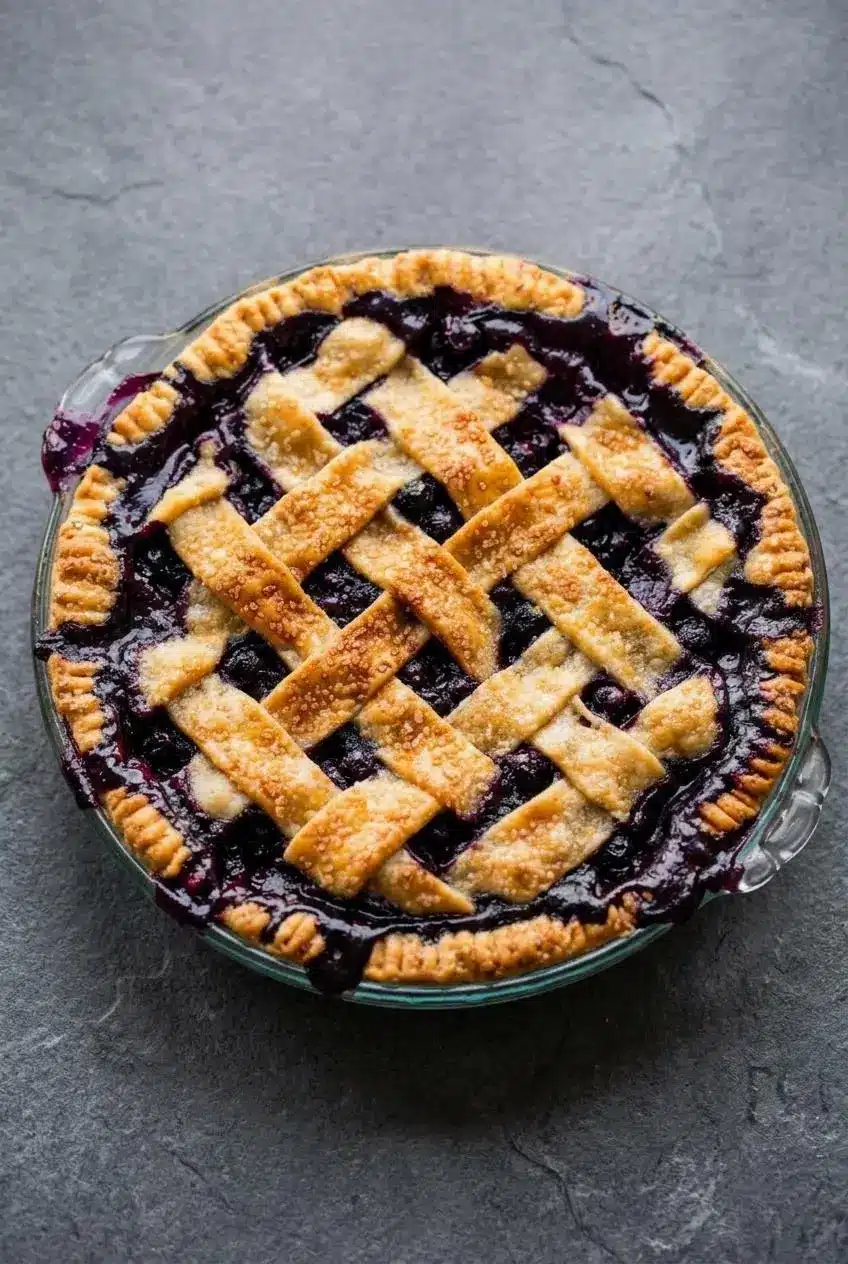
Build the pie with chilled pastry and give the filling enough oven time to bubble through the middle. The high initial heat starts crisping the bottom crust before the berries release their full amount of juice.
- Prepare either pie crust recipe through step 5.
Keep both dough discs chilled so they roll smoothly without becoming soft or greasy. - Combine the blueberries, sugar, flour, cornstarch, cinnamon, lemon juice, and lemon zest in a large bowl.
Stir until no dry coating remains, crushing a few berries only if needed to moisten the mixture; cover and refrigerate the filling for up to 24 hours if needed. - Set an oven rack in the lower third of the oven and heat the oven to 425°F (218°C).
Place a baking sheet on the bottom rack to catch any bubbling berry juices. - Roll one chilled dough disc on a floured surface into a 12-inch circle, rotating it a quarter turn after every few rolls, then fit it into a 9 x 1.5 or 2-inch round pie dish.
Press the dough gently into the bottom and sides without stretching it, then add the filling evenly and scatter the butter cubes over the berries. - Roll the remaining chilled dough into another 12-inch circle and cut it into strips with a pastry wheel, sharp knife, or pizza cutter.
Weave the strips over and under the filling, seal them to the bottom crust, trim the excess, and crimp or flute the edge until it feels firmly joined. - Brush the lattice and rim lightly with the egg wash. Sprinkle with coarse sugar, if using.
The egg wash should leave a thin, even sheen rather than puddles between the pastry strips. - Bake for 25 minutes at 425°F, then reduce the oven temperature to 375°F (190°C) without removing the pie and shield the edges with a pie crust shield or aluminum foil.
Continue baking for 40–50 minutes, until the crust is deep golden and juices boil vigorously across the center; the filling should reach around 200°F (93°C) on an instant-read thermometer. - Transfer the pie to a cooling rack and leave it undisturbed for at least 4 hours before cutting.
The filling thickens from loose bubbling juice into a settled, glossy jam as it cools. - Cover leftover pie tightly and store it in the refrigerator for up to 5 days.
Keep the crust protected from moisture so the lattice stays as crisp as possible.
Rolling Pastry and Weaving an Easy Lattice
Roll from the center outward instead of pressing repeatedly along the edge. Turn the dough often, add only enough flour to prevent sticking, and stop when the circle reaches 12 inches. If the dough starts cracking, let it sit briefly until it feels supple enough to bend without splitting.
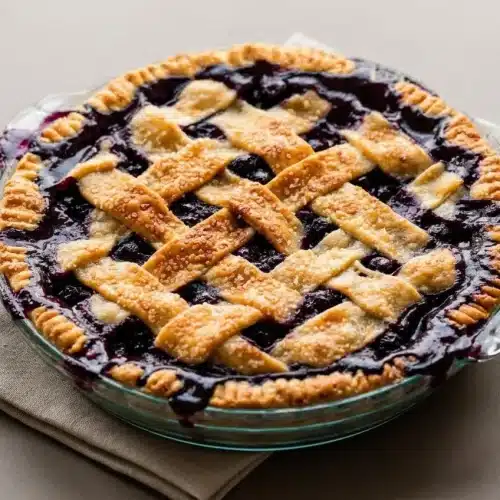
For an easy lattice, cut about 10 strips that are 1 inch wide. Lay half across the pie in one direction. Fold back alternating strips, place one strip across them, then unfold the strips over it. Repeat until the top is woven. The gaps release steam while the lattice holds the bubbling fruit neatly in place.
Two-Stage Baking Temperature Method
Starting at 425°F gives the lower crust a strong burst of heat, which helps it set before the berry juices pool. Keeping the pie on the lower-third rack also directs more heat toward the bottom pastry.
Lowering the oven to 375°F after 25 minutes gives the filling time to simmer steadily without over-darkening the lattice. The pie is ready when rapid bubbles rise through multiple center openings, not merely around the outer edge. A gently pressed crust should feel dry and firm, with a crisp resistance rather than a soft, doughy give.
Critical Success Tips and Troubleshooting Runny Filling
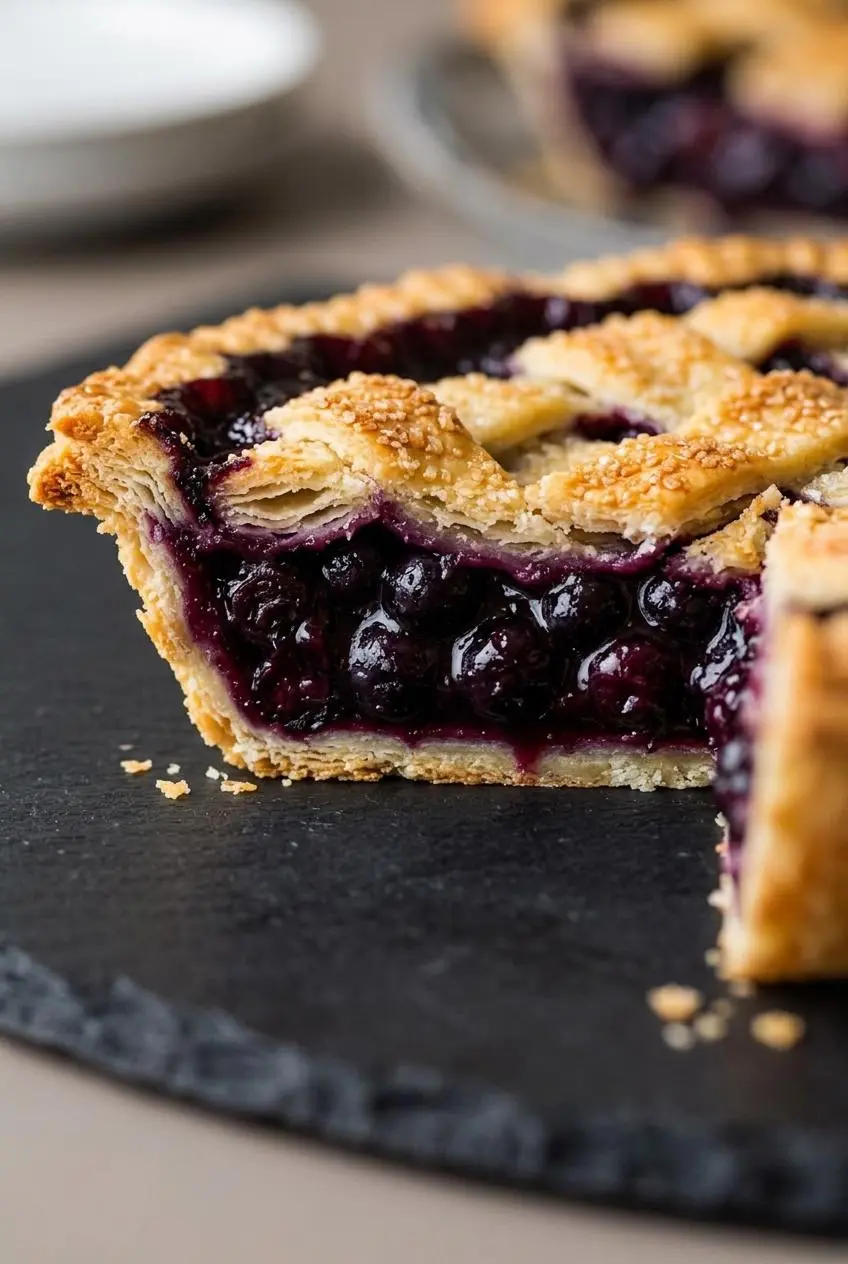
A blueberry pie can look finished before the filling has done its work. Use these cues to avoid the most common texture and crust problems.
- Runny slices: The pie was cut before it fully cooled. Leave it at room temperature for the full 4 hours so the thickened juices can settle into clean-cut wedges.
- Loose or chalky filling: The berries did not boil long enough in the center. Continue baking until the center bubbles actively, and use the 200°F filling temperature as an added check.
- Burned crust rim: The edge browned before the filling finished. Add an aluminum foil edge shield after the initial high-heat bake, then remove it near the end only if the rim needs more color.
- Pale, soft bottom crust: The pie did not receive enough bottom heat. Use the lower-third rack and keep the baking sheet on the bottom rack rather than directly under the pie.
- Foamy overflow: The berries were especially juicy or the pie dish was very full. Keep the drip tray in place and dot the filling with cold butter before adding the lattice.
Do not shorten the bake to protect a pale-looking crust. Shield the edge instead. The filling needs a real simmer to lose its raw flour taste and become thick enough to slice.
Make-Ahead and Storage Guidance
You can mix the blueberry filling, cover it, and refrigerate it for up to 24 hours before assembling the pie. Stir it once before adding it to the crust, since the sugar will draw out juice as it rests.
After baking, let the pie cool completely before covering it. Refrigerate leftovers tightly covered for up to 5 days. For a crisper crust, warm individual slices gently in the oven until the pastry feels dry and lightly crisp again, rather than heating them aggressively.
Avoid leaving fresh berries sitting in standing water during prep. Washing them under continuous running water and drying them well supports careful produce handling and keeps excess moisture out of the filling.
Delicious Variations and Serving Ideas
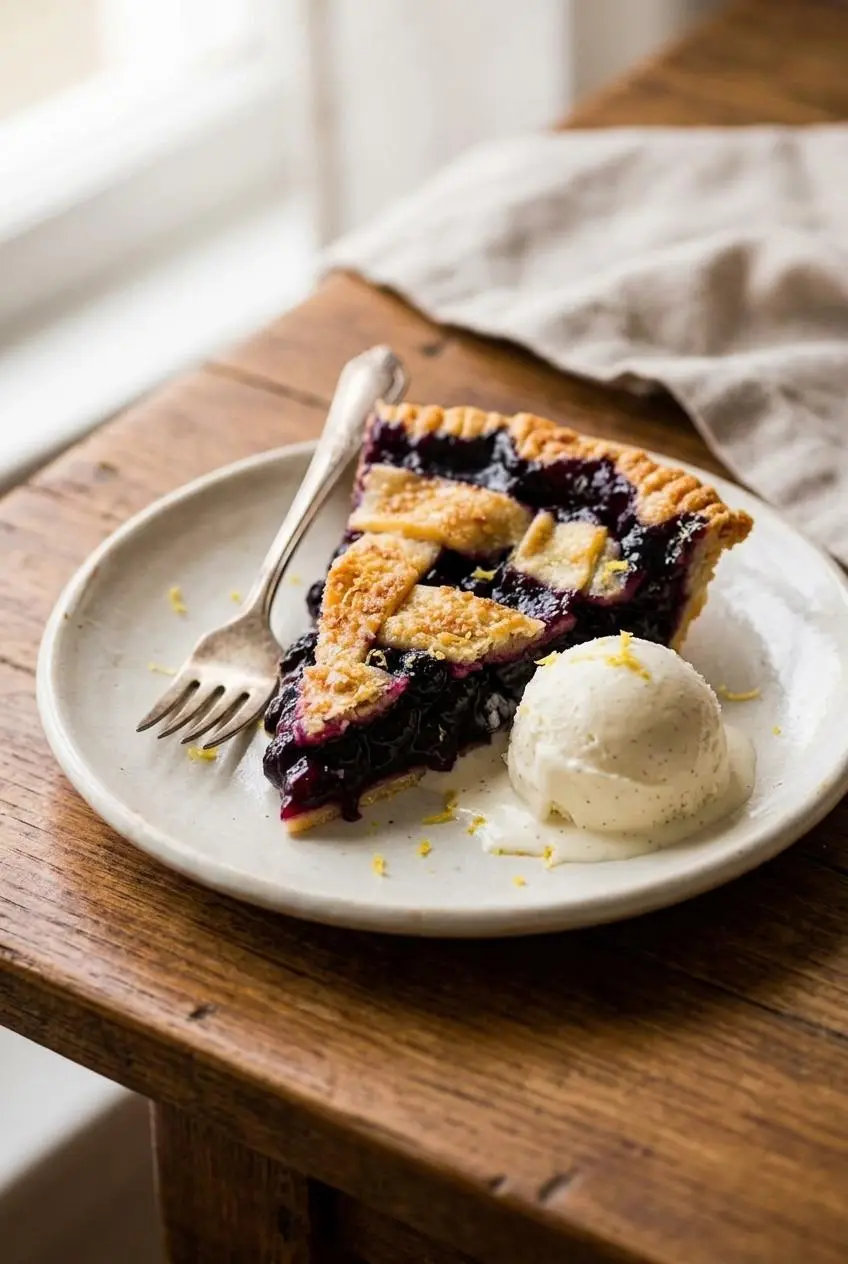
This pie shines with classic toppings, but small optional changes can steer it toward a more rustic or fresh-fruit style without changing the main method.
- Serve a warm or room-temperature slice with vanilla bean ice cream for a creamy contrast to the bright berries.
- Add lightly sweetened whipped cream and a little lemon zest for a softer, citrus-forward finish.
- Stir a tiny pinch of ground cardamom into the filling with the lemon zest for a floral note that works especially well with ripe summer blueberries.
- For another lemon-and-berry dessert, try these lemon blueberry cheesecake bars.
Fresh Glazed Open-Faced Blueberry Pie
For a lighter summer presentation, use a blind-baked single crust instead of the double crust. Cook part of the berries on the stovetop until they release juice and form a warm glaze, then gently fold in fresh berries before spooning the mixture into the cooled shell.
This version keeps more berries intact and gives the filling a fresher, less baked fruit character. Because the crust is exposed, let it cool completely after blind baking before adding the glaze so it stays crisp.
Blueberry Crumble Streusel Alternative
Skip the lattice and use a buttery crumble topping made with flour, butter, and brown sugar. Scatter it over the blueberry filling before baking for a crisp, nubbly finish that is easier to assemble than woven pastry.
The crumble will brown faster than a lattice, so watch it during the later part of baking and shield the top loosely with foil if needed. Bakers who love that buttery crumb texture may also enjoy blueberry sour cream coffee cake.
Conclusion
This pie delivers a flaky golden crust around a sweet-tart blueberry filling that settles into a glossy, jammy slice. Lemon keeps the fruit lively, while flour and cornstarch give the juices dependable structure.
Wait for bubbling in the center, protect the crust edge, and give the pie its full 4-hour cool before slicing. That patience pays off with neat wedges and a filling that stays where it belongs.
Frequently Asked Questions
What Is the Secret to Keeping Blueberry Pie Filling From Being Runny?
Use both flour and cornstarch so the filling has body and a glossy finish. Bake until the juices bubble vigorously through the center of the lattice. Check for a filling temperature around 200°F if using an instant-read thermometer. Cool the pie for at least 4 hours before slicing.
Can I Bake Blueberry Pie Using Frozen Blueberries Without Thawing?
Yes. Toss frozen blueberries directly with the sugar, flour, cornstarch, cinnamon, lemon juice, and zest without thawing. Do not drain or thaw the berries first, since early-released juice can make the crust soggy. Plan on about 5 to 10 additional minutes of baking time. Look for vigorous bubbling in the center before removing the pie.
How Do You Tell When Blueberry Pie Is Completely Done Baking?
Look for a deep golden crust and thick juices bubbling across the entire pie, including the center lattice gaps. Small slow bubbles only at the rim are not enough. The center should show active boiling foam and glossy purple juices. An instant-read thermometer inserted into the filling should register around 200°F.
How Long Should Blueberry Pie Cool Before Slicing?
Cool the pie at room temperature for at least 4 hours. The filling will seem loose while hot, even when fully baked. As it cools, the berry pectin and thickeners settle into a sliceable jam. Cutting earlier lets the filling spill across the plate instead of staying in neat wedges.
Blueberry Pie Recipe

Equipment
- 9 x 1.5 or 2-inch round pie dish
- pastry wheel, sharp knife, or pizza cutter
- Instant-read thermometer
- Cooling Rack
- Baking Sheet
- Pie crust shield or aluminum foil
Ingredients
- Homemade Pie Crust or All Butter Pie Crust (both recipes make 2 crusts, 1 for bottom and 1 for top)
- 6 cups fresh blueberries (3 pints; about 860g)
- 2/3 cup granulated sugar (135g)
- 1/4 cup all-purpose flour (31g)
- 2 Tablespoons cornstarch (14g)
- 1/4 teaspoon ground cinnamon
- 2 Tablespoons lemon juice (30ml)
- 1 teaspoon lemon zest
- 1 Tablespoon cold unsalted butter, cut into small cubes (14g)
- egg wash: 1 large egg beaten with 1 Tablespoon (15ml) milk
- optional: coarse sugar for sprinkling on crust
Instructions
- Prepare either pie crust recipe through step 5. Keep both dough discs chilled so they roll smoothly without becoming soft or greasy.
- Combine the blueberries, sugar, flour, cornstarch, cinnamon, lemon juice, and lemon zest in a large bowl. Stir until no dry coating remains, crushing a few berries only if needed to moisten the mixture; cover and refrigerate the filling for up to 24 hours if needed.
- Set an oven rack in the lower third of the oven and heat the oven to 425°F (218°C). Place a baking sheet on the bottom rack to catch any bubbling berry juices.
- Roll one chilled dough disc on a floured surface into a 12-inch circle, rotating it a quarter turn after every few rolls, then fit it into a 9 x 1.5 or 2-inch round pie dish. Press the dough gently into the bottom and sides without stretching it, then add the filling evenly and scatter the butter cubes over the berries.
- Roll the remaining chilled dough into another 12-inch circle and cut it into strips with a pastry wheel, sharp knife, or pizza cutter. Weave the strips over and under the filling, seal them to the bottom crust, trim the excess, and crimp or flute the edge until it feels firmly joined.
- Brush the lattice and rim lightly with the egg wash. Sprinkle with coarse sugar, if using. The egg wash should leave a thin, even sheen rather than puddles between the pastry strips.
- Bake for 25 minutes at 425°F, then reduce the oven temperature to 375°F (190°C) without removing the pie and shield the edges with a pie crust shield or aluminum foil. Continue baking for 40–50 minutes, until the crust is deep golden and juices boil vigorously across the center; the filling should reach around 200°F (93°C) on an instant-read thermometer.
- Transfer the pie to a cooling rack and leave it undisturbed for at least 4 hours before cutting. The filling thickens from loose bubbling juice into a settled, glossy jam as it cools.
- Cover leftover pie tightly and store it in the refrigerator for up to 5 days. Keep the crust protected from moisture so the lattice stays as crisp as possible.