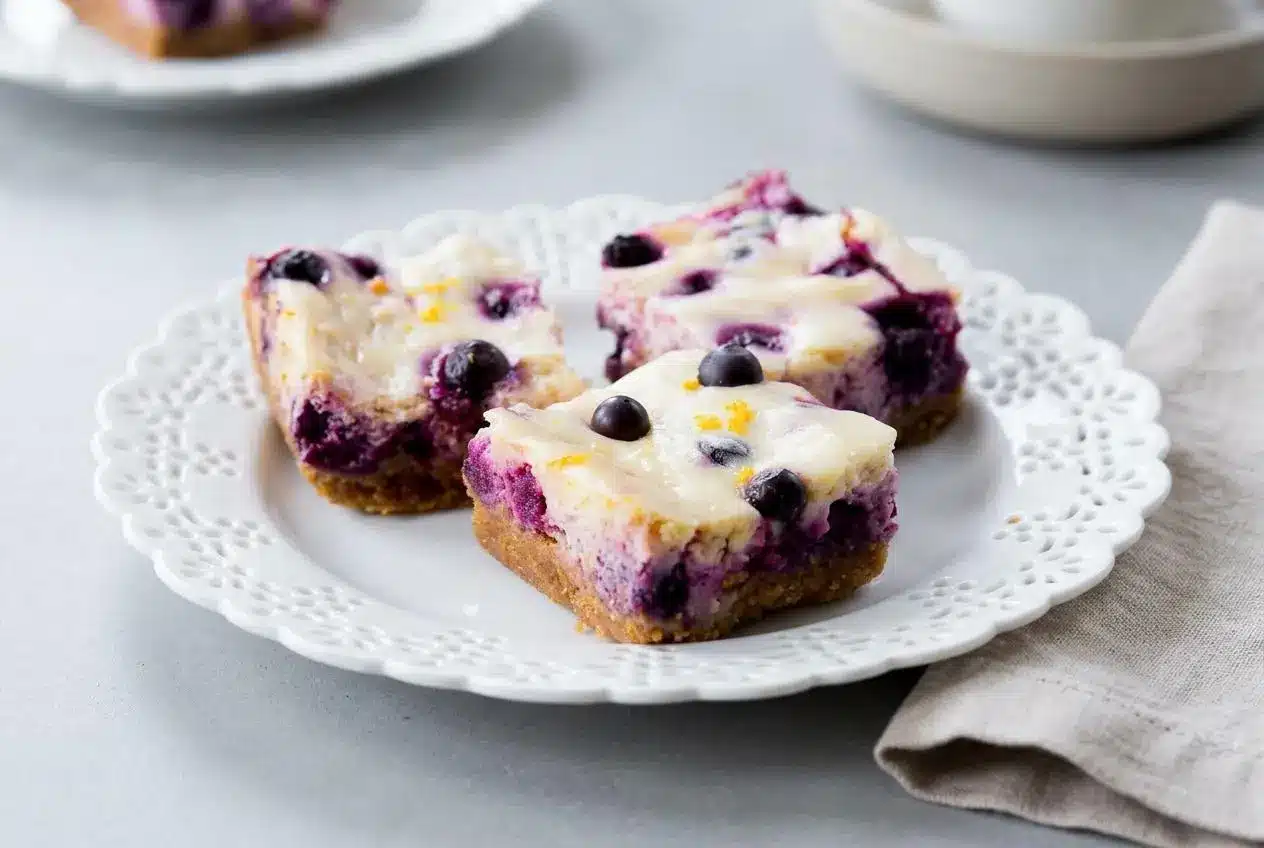
Lemon blueberry cheesecake bars combine a buttery graham cracker crust with a velvety lemon cheesecake filling and blueberries, then bake and chill into easy-to-slice squares.
Lemon Blueberry Cheesecake Bars hit that sweet spot between bright citrus and rich cream cheese, with blueberries tucked into every bite. They feel a little special, but the method is very doable.
You get a crisp base, a smooth filling, and clean slices if you handle the batter gently and give the bars enough chill time. The slicing trick is worth it.
Set the cream cheese and egg out ahead of time so the filling blends smooth instead of fighting you with lumps.
Essential Ingredients and Their Roles
Each ingredient has a clear job here, from a crust that stays crisp to a filling that bakes up creamy, bright, and sliceable.
Crust
- 12 full-sheet graham crackers (to yield 1 and 1/2 cups (180g) graham cracker crumbs)
- 6 Tablespoons (85g) unsalted butter, melted
- 1/4 cup (50g) granulated sugar
Filling
- 16 ounces (452g) full-fat brick cream cheese, softened to room temperature
- 1 large egg
- 6 Tablespoons (75g) granulated sugar
- 1 teaspoon lemon zest
- 3 Tablespoons (45ml) lemon juice
- 1 teaspoon pure vanilla extract
- 1 and 1/2 cups (210g) fresh or frozen blueberries (do not thaw)
Full-fat brick cream cheese is the backbone of the filling. It has the density and fat level that help the bars set into neat squares. Tub-style cream cheese spreads are looser and often contain extra moisture, which can leave the filling too soft for clean slicing. If you like the texture of classic cheesecake bars, this is the same kind of structure you want.
The egg acts as the binder. As the bars bake, it helps the cream cheese mixture firm up into a proper cheesecake texture instead of staying loose like frosting. One egg is enough here because these are bars, not a towering cheesecake.
Lemon zest and lemon juice do different jobs. The juice gives tartness and some moisture, while the zest brings the freshest lemon flavor because it carries the citrus oils. That is why the bars taste brighter with even a small amount of zest.
Blueberries add bursts of sweetness and a little jammy contrast against the tangy filling. Vanilla rounds out the sharp edges so the lemon tastes lively, not harsh.
The crust ingredients matter too. Graham cracker crumbs bring toasty flavor, sugar helps the crust hold together and brown lightly, and melted butter binds the crumbs into a base that presses firmly instead of scattering when sliced.
I zest lemons lightly and stop as soon as I reach the white pith, because that bitter layer can dull the clean citrus flavor fast.
Lemon Zest vs Lemon Juice in Cheesecake
This balance matters more than it seems. Lemon juice adds tang and a little extra liquid, while lemon zest adds concentrated citrus aroma without thinning the batter.
In cheesecake batter, too much liquid can make the filling looser and slower to set. That is why the measured lemon juice works best here. It sharpens the flavor and contributes to that bright cheesecake edge, but it does not swamp the dairy.
Zest is where the most vivid lemon character lives. It gives the filling that fresh, almost floral citrus note that bottled juice alone cannot match. If you used only juice, the bars would taste tart, but not as fragrant.
The best result comes from using both. Juice brings the tang. Zest brings the perfume. Together they make the filling taste distinctly lemony instead of vaguely sour.
Essential Tools for Creamy Cheesecake Bars
The right tools make these bars much easier to nail on the first try, especially when you want smooth batter and tidy edges.
An electric mixer matters here. A handheld mixer works well, and a stand mixer with the paddle attachment is even better if you have one. The goal is to smooth out the cream cheese first before the other filling ingredients go in. That first minute of mixing does a lot of heavy lifting.
A 9-inch square baking pan keeps the thickness right for the listed bake time. Line it with parchment paper and leave enough overhang on the sides so you can lift the chilled slab out in one piece later. That parchment sling is much more helpful than trying to pry bars out one by one.
Metal and glass pans behave differently. A metal pan conducts heat faster and usually gives you cleaner, more even edges. A glass baking dish holds heat longer, so the center may continue cooking after the pan leaves the oven. If you use glass, keep a closer eye on the bars near the end so the filling does not go from creamy to overbaked.
A food processor makes quick work of graham cracker crumbs, but a zip-top bag and rolling pin work perfectly well. You just want the crumbs fairly even so the crust presses into a solid layer instead of a patchy one.
A cooling rack also helps. It lets the pan cool more evenly during the first room-temperature rest, which reduces carryover heat under the crust.
How to Make Lemon Blueberry Cheesecake Bars
This method is straightforward, but the little cues matter. Watch the texture of the crust, mix the filling until smooth before folding in the berries, and chill fully before slicing.
Prep and Crust
- Heat the oven to 350°F (177°C) and line a 9-inch square baking pan with parchment paper, leaving enough overhang to lift the chilled bars out later.
The overhang should act like handles, which makes clean removal much easier once the filling is firm. - Pulse the graham crackers into fine crumbs, or crush them in a zip-top bag with a rolling pin, then stir the crumbs with the granulated sugar and melted butter in a medium bowl.
The mixture should look thick, coarse, and sandy, with no large dry chunks hiding in the bowl. - Press the crumb mixture firmly into the bottom of the lined pan.
A tightly packed crust should look even from corner to corner and feel compact rather than loose. - Bake the crust for 8 minutes, then set it aside to cool briefly while you prepare the filling.
The crust will smell lightly toasty and look set, which helps it stay crisp under the cheesecake layer.
Filling and Bake
- Beat the cream cheese on medium speed for 1 minute until completely smooth, then add the egg, sugar, lemon zest, lemon juice, and vanilla and mix on medium speed until creamy, about 3 minutes.
The batter should look thick and glossy, with no visible lumps from cold cream cheese. - Gently fold in the blueberries, then spread the filling evenly over the still-warm crust.
If you are using frozen berries, keep them frozen so the batter stays pale and does not turn muddy purple. - Bake for 30 to 35 minutes until the cheesecake is set and the edges are lightly browned.
The edges will look slightly puffed, and the center should still have a gentle wobble when the pan is nudged. - Cool the pan on a wire rack for 30 minutes, then refrigerate the bars for at least 3 hours.
The filling will sink a little as it cools, which is normal, and the long chill is what gives you clean slices. - Lift the chilled cheesecake out by the parchment and cut into squares.
The bars should feel firm and cold, not soft or warm, before the knife goes in.
How to Build a Firm Graham Cracker Crust
A good crust should stay crisp and hold together under the creamy filling. The ratio here is 1 and 1/2 cups graham cracker crumbs to 6 Tablespoons melted butter, plus 1/4 cup sugar, which gives enough moisture to bind the crumbs without turning the base greasy.
When you stir the crust together, aim for a mixture that resembles damp sand. It should clump when pressed in your hand, but it should not look shiny or wet. If the crumbs are swimming in butter, the base can bake up heavy and slick. If the mixture is too dry, it can crumble when sliced.
Pressing matters just as much as the ratio. Use the bottom of a flat glass or measuring cup to compact the crumbs firmly across the pan, especially into the corners. Loose corners are where crusts love to fall apart.
The 8-minute pre-bake is essential. It sets the crust before the filling goes on, which helps prevent a soggy bottom and gives the bars a cleaner layered look. Pouring cheesecake filling onto an unbaked crumb crust usually leaves you with a softer base than you want.
If your fresh blueberries are damp after rinsing, dry them well before folding them in. Extra surface water can drip into the filling and work against that crisp crust.
Graham Cracker vs Digestive Biscuit Crusts
If graham crackers are hard to find, digestive biscuits are the closest swap. They make a slightly less sweet, more buttery-tasting crust, which works nicely with the sharp lemon filling.
Digestive biscuits can vary a bit in richness, so the crumb mixture may need a small butter adjustment to reach that same damp-sand texture. Start with the same idea as the graham crust and judge by feel. The crumbs should press together neatly without looking oily.
The baking approach stays the same. Press firmly, especially at the edges, and give the crust that same pre-bake so it sets before the filling goes in.
Baking Temperature and Doneness Cues
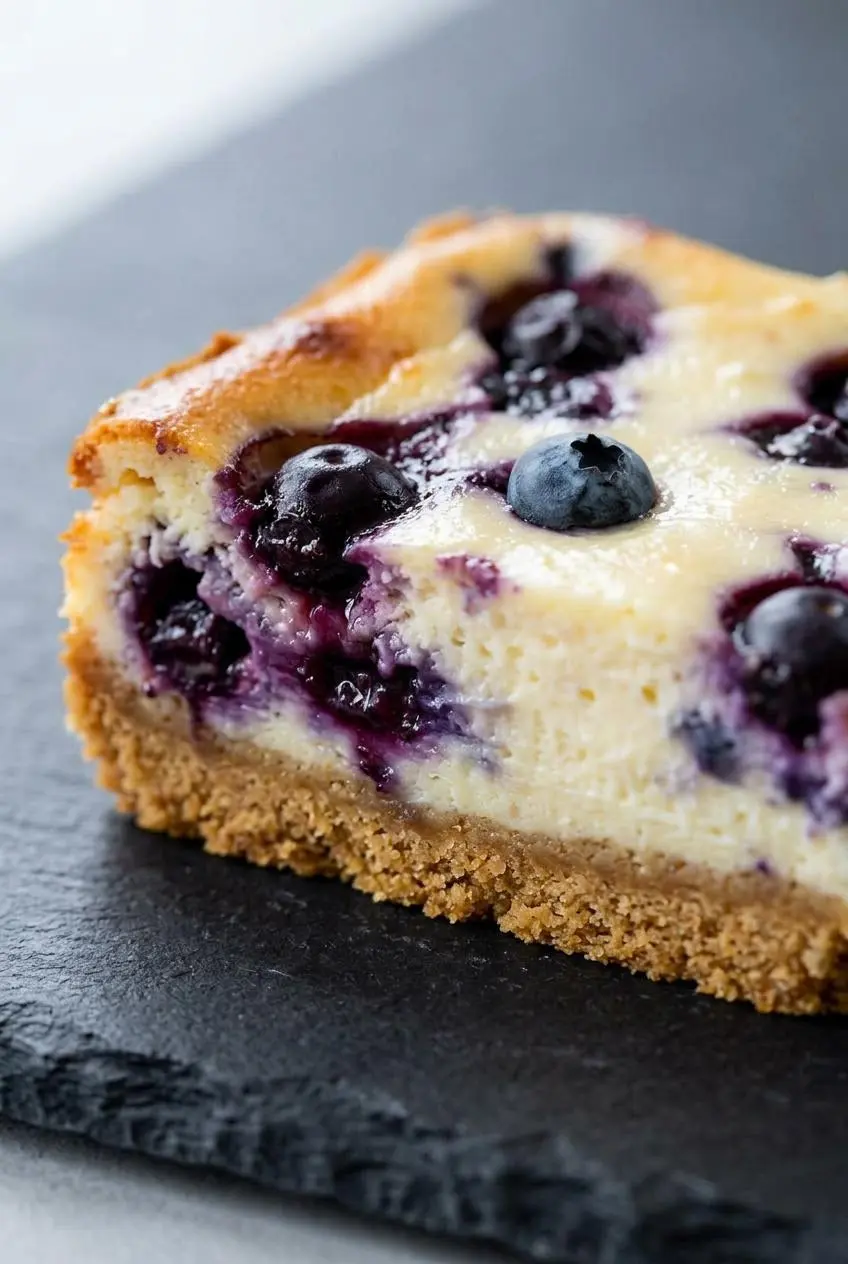
Cheesecake bars are easiest when you stop watching the clock alone and start watching the pan. At 350°F, these bars are usually ready in 30 to 35 minutes, but doneness lives in the look and movement of the filling.
The edges should be lightly golden and a little puffed. The center should not slosh, but it should still move slightly with a soft gel-like jiggle when you tap or nudge the pan. That gentle wobble is the sweet spot. A fully stiff center in the oven usually means the bars are heading toward overbaked.
Overbaking changes the texture fast. Instead of creamy and smooth, the filling can turn rubbery and develop surface cracks. Too much air in the batter can cause the same problem, which is why it helps to beat the cream cheese smooth first, then mix the rest just until creamy rather than whipping it aggressively after the egg goes in.
The bars will look quite puffy when they first come out of the oven. That is normal. As they cool, the height settles slightly and the surface levels out.
Cooling in stages keeps the texture better. Let the pan rest on a wire rack for 30 minutes at room temperature first, then chill it in the refrigerator for at least 3 hours. That second stage is what firms the fats and gives the bars their neat, rich bite.
Skip the knife or toothpick test in the center. Unlike a cake, cheesecake shows doneness through structure and movement, not a dry tester.
How to Slice Clean and Neat Squares
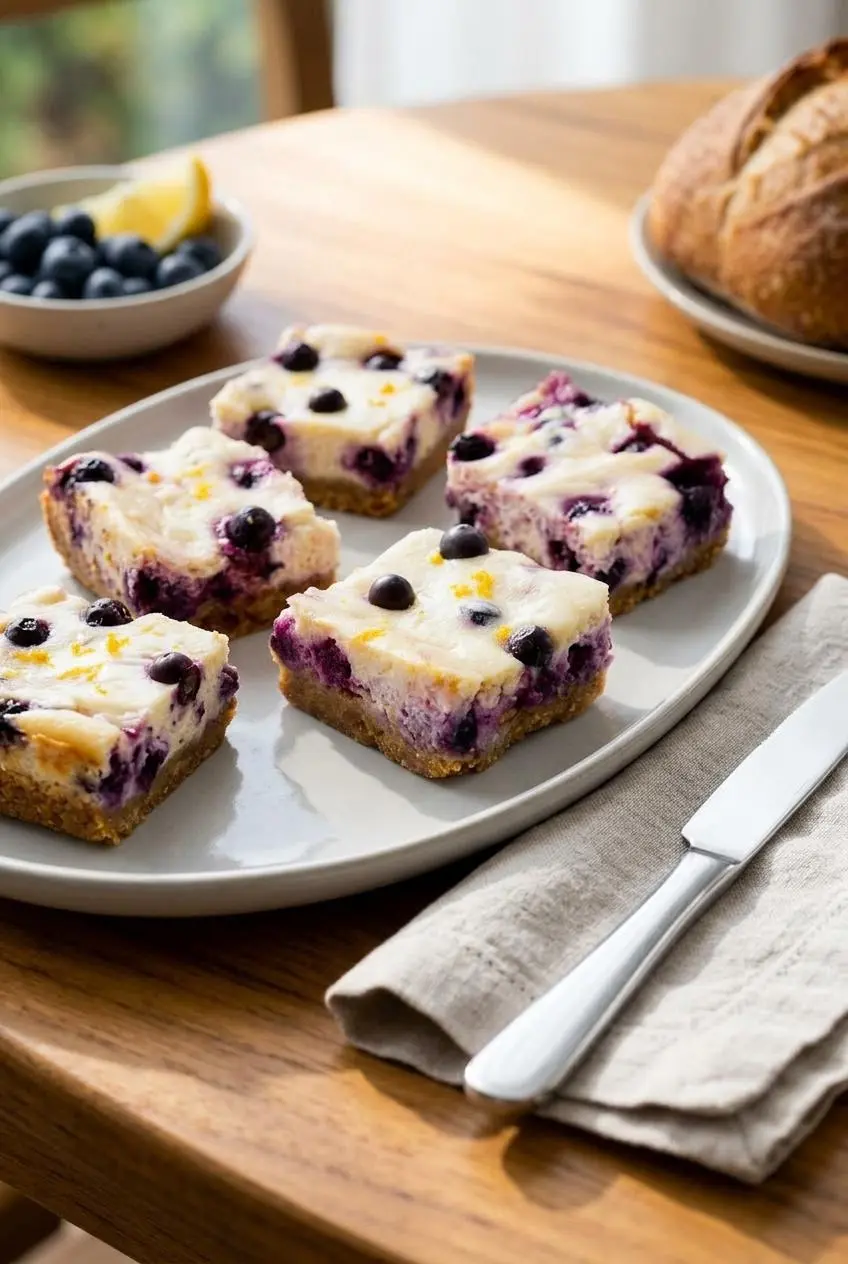
Neat slices start long before the knife comes out. The parchment overhang lets you lift the whole chilled block from the pan without bending or digging into the crust.
Do not slice these warm. Warm cheesecake is soft, and the edges can slump or smear before the filling has fully set. Once the bars are thoroughly chilled, place the slab on a cutting board so you can cut straight down with control.
For the cleanest edges, dip a sharp knife in hot water, dry it, and make one cut. Then wipe the blade clean before the next cut. Repeat every single time. It sounds fussy, but it is the difference between bakery-style squares and creamy rubble.
If the knife meets a little resistance in the middle, that is fine. Cold cheesecake should feel firm yet creamy, not stiff like fudge. A slow, straight cut works better than sawing back and forth.
Fresh vs Frozen Blueberries
Both work well here, but they behave a little differently in the batter.
Fresh blueberries keep the filling looking cleaner and usually stay more distinct in the baked bars. If you wash them, dry them thoroughly before folding them in. That little step helps protect both the texture of the filling and the crust underneath.
Frozen blueberries are a great choice when berries are out of season. Add them straight from the freezer and do not thaw them first. Thawed berries release juice quickly, which can streak the batter purple or gray and add extra moisture where you do not want it.
Bake time stays in the same 30 to 35 minute window, but bars made with frozen berries may lean toward the longer end because the fruit lowers the batter temperature slightly. Use the jiggle test and the lightly browned edges as your final guide.
If you want the prettiest pale lemon filling, fresh berries usually win. If convenience matters most, frozen berries still bake beautifully.
Variations to Try
Once you know the base method, there are a few easy ways to change the flavor or texture without changing the official recipe itself.
- A pinch of ground cardamom in the crust adds a warm, lightly floral note that pairs surprisingly well with lemon and blueberries.
- A few spoonfuls of lemon curd swirled into the filling before baking give the bars a brighter, more dramatic lemon streak.
- If you want the same citrusy feel without the berries, lemon cream cheese bars are a nice direction to take.
Shortbread Crust with Crumble Topping
If you prefer a more buttery, cookie-like base, a shortbread crust is a very natural variation. It gives the bars a firmer bite and a richer flavor than graham crackers.
You can also reserve part of the shortbread mixture and crumble it over the top before baking for a streusel-style finish. That version leans more dessert-bar than classic cheesecake square, but it is especially nice if you want extra texture on top.
The main thing to expect is contrast. Graham cracker crust tastes toastier and a little looser. Shortbread tastes richer and more tender, with a more pronounced cookie feel.
Tangy Sour Cream Filling Addition
A little sour cream or Greek yogurt folded into the filling can make the cheesecake taste tangier and feel a touch lighter on the palate. It softens the richness of the cream cheese and plays nicely with the lemon.
Because this changes the filling texture, keep it as an optional twist rather than a required change. If you like cheesecakes with a brighter tang and a softer finish, this is the variation to try first.
Egg-Free Cheesecake Bars
An egg-free version is possible, but it works best as an adaptation rather than a direct one-for-one promise. A cornstarch-based binder or a commercial egg replacer can help the filling set when you want to skip the egg.
Expect a slightly different texture. The bars may be a little less classic in their custardy finish and a bit more delicate when sliced, so chilling thoroughly becomes even more important.
If you need a bigger dessert for a celebration instead of bar form, a blueberry cheesecake cake keeps the same flavor pairing in a more dramatic format.
Storage Instructions
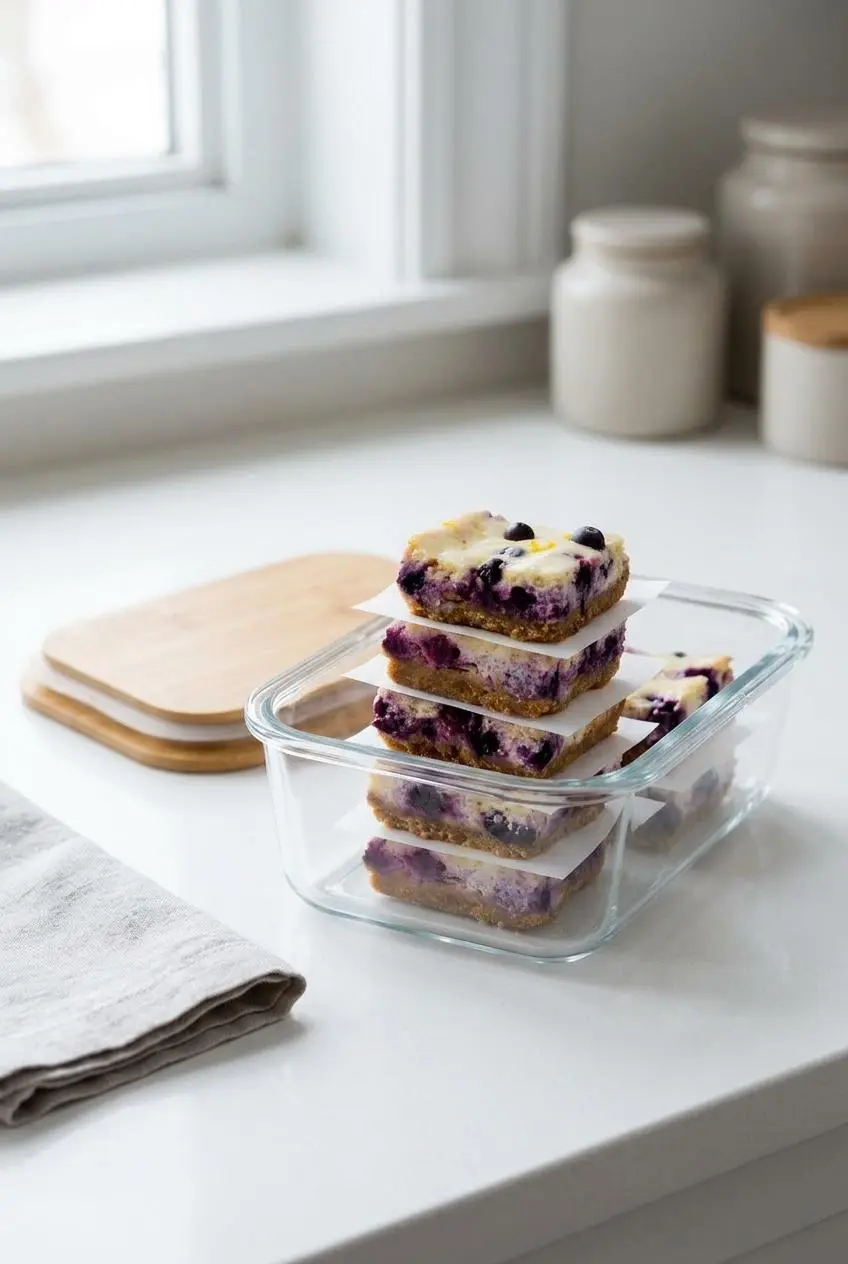
Once the bars are fully cooled and chilled, keep them in an airtight container in the refrigerator. The official recipe timing gives them up to 5 days of refrigerated freshness, and keeping cream-cheese desserts properly chilled supports safer storage practices for dairy-based sweets, especially if your fridge stays below 40°F as outlined by refrigeration guidance for perishable dairy foods.
For the best texture, avoid covering or stacking the bars while they are still warm. Trapped condensation can soften the crust and leave moisture on the surface of the cheesecake.
If you want the cleanest leftovers, store the cut bars in a single layer or place parchment between layers so the tops stay tidy and the edges do not stick together.
Conclusion
These bars work because each part supports the next: a pre-baked crust, a smooth room-temperature filling, and a full chill before slicing. The result is creamy, bright, and easy to serve.
If you give the crust a firm press and trust the gentle jiggle in the center, you will end up with squares that look polished and taste even better straight from the fridge.
Frequently Asked Questions
How do I know when the cheesecake bars are fully baked?
Look for edges that are slightly puffed and lightly golden. Gently tap or nudge the pan. The center should still have a soft, gel-like jiggle. If the middle looks completely liquid, bake a bit longer. If the whole surface is rigid in the oven, they may be overbaked.
Can I use frozen blueberries instead of fresh?
Yes, frozen blueberries work very well here. Do not thaw them before folding them into the batter. Thawed berries release extra juice, which can streak the filling and loosen the texture. Check doneness by the jiggle and edge color, since frozen fruit can push the bake toward the longer end.
Why did my cream cheese filling turn out lumpy?
Cold cream cheese is the usual cause. Cold egg can make the problem worse by tightening the mixture instead of helping it blend. Start with room-temperature cream cheese and egg, then beat the cream cheese smooth before adding everything else. Avoid low-fat or spreadable tub cream cheese if you want the smoothest filling and best structure.
What is the best way to slice clean squares?
Chill the bars for at least 3 hours before cutting. Lift the slab out with the parchment sling so you can cut on a flat board. Use a warm knife and wipe it clean after every cut. Cut straight down instead of sawing for the neatest edges.
Can you double this recipe for a crowd?
Yes, you can double the ingredients and use a 9×13-inch pan. Bake at 350°F and start checking for doneness in the 60 to 75 minute range. Use the same visual cue as the smaller batch: lightly golden edges and a center with a gentle jiggle. Metal pans usually give more even results than glass for a larger batch.
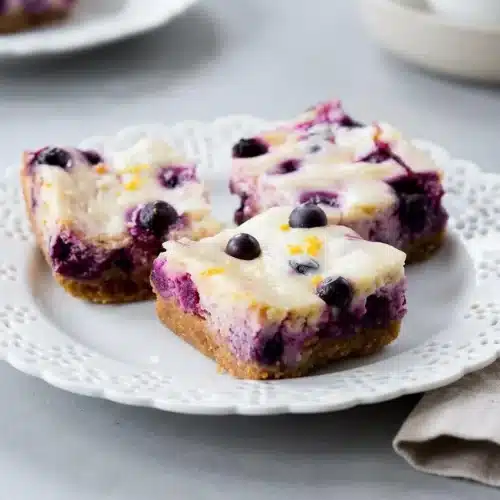
Lemon Blueberry Cheesecake Bars

Equipment
- 9 inch square baking pan
- Food processor
- Electric Mixer
- Cooling Rack
Ingredients
Crust
- 12 full-sheet graham crackers (to yield 1 and 1/2 cups (180g) graham cracker crumbs)
- 6 Tablespoons unsalted butter melted (85g)
- 1/4 cup granulated sugar (50g)
Filling
- 16 ounces full-fat brick cream cheese softened to room temperature (452g)
- 1 large egg
- 6 Tablespoons granulated sugar (75g)
- 1 teaspoon lemon zest
- 3 Tablespoons lemon juice (45ml)
- 1 teaspoon pure vanilla extract
- 1 1/2 cups fresh or frozen blueberries do not thaw (210g)
Instructions
Prep and Crust
- Heat the oven to 350°F (177°C) and line a 9-inch square baking pan with parchment paper, leaving enough overhang to lift the chilled bars out later. The overhang should act like handles, which makes clean removal much easier once the filling is firm.
- Pulse the graham crackers into fine crumbs, or crush them in a zip-top bag with a rolling pin, then stir the crumbs with the granulated sugar and melted butter in a medium bowl. The mixture should look thick, coarse, and sandy, with no large dry chunks hiding in the bowl.
- Press the crumb mixture firmly into the bottom of the lined pan. A tightly packed crust should look even from corner to corner and feel compact rather than loose.
- Bake the crust for 8 minutes, then set it aside to cool briefly while you prepare the filling. The crust will smell lightly toasty and look set, which helps it stay crisp under the cheesecake layer.
Filling and Bake
- Beat the cream cheese on medium speed for 1 minute until completely smooth, then add the egg, sugar, lemon zest, lemon juice, and vanilla and mix on medium speed until creamy, about 3 minutes. The batter should look thick and glossy, with no visible lumps from cold cream cheese.
- Gently fold in the blueberries, then spread the filling evenly over the still-warm crust. If you are using frozen berries, keep them frozen so the batter stays pale and does not turn muddy purple.
- Bake for 30 to 35 minutes until the cheesecake is set and the edges are lightly browned. The edges will look slightly puffed, and the center should still have a gentle wobble when the pan is nudged.
- Cool the pan on a wire rack for 30 minutes, then refrigerate the bars for at least 3 hours. The filling will sink a little as it cools, which is normal, and the long chill is what gives you clean slices.
- Lift the chilled cheesecake out by the parchment and cut into squares. The bars should feel firm and cold, not soft or warm, before the knife goes in.