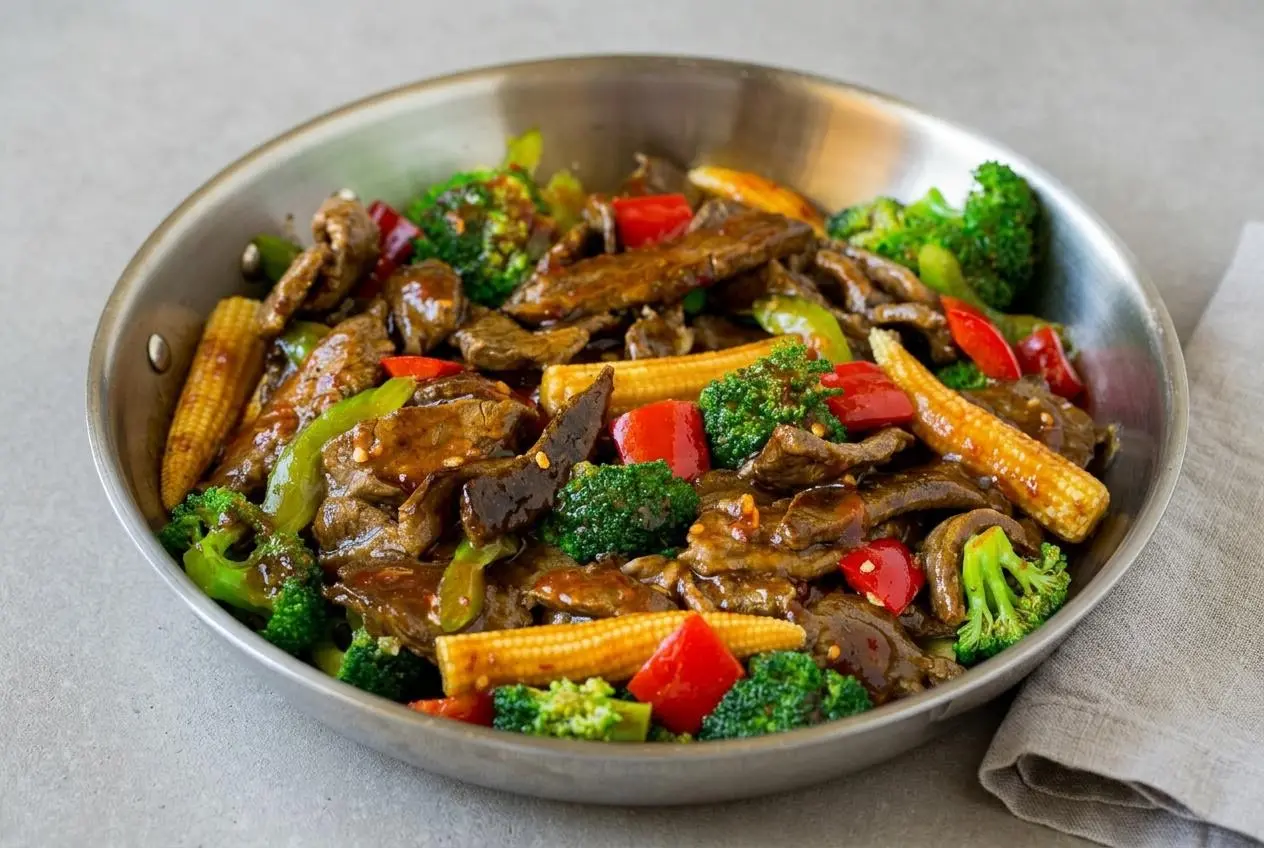
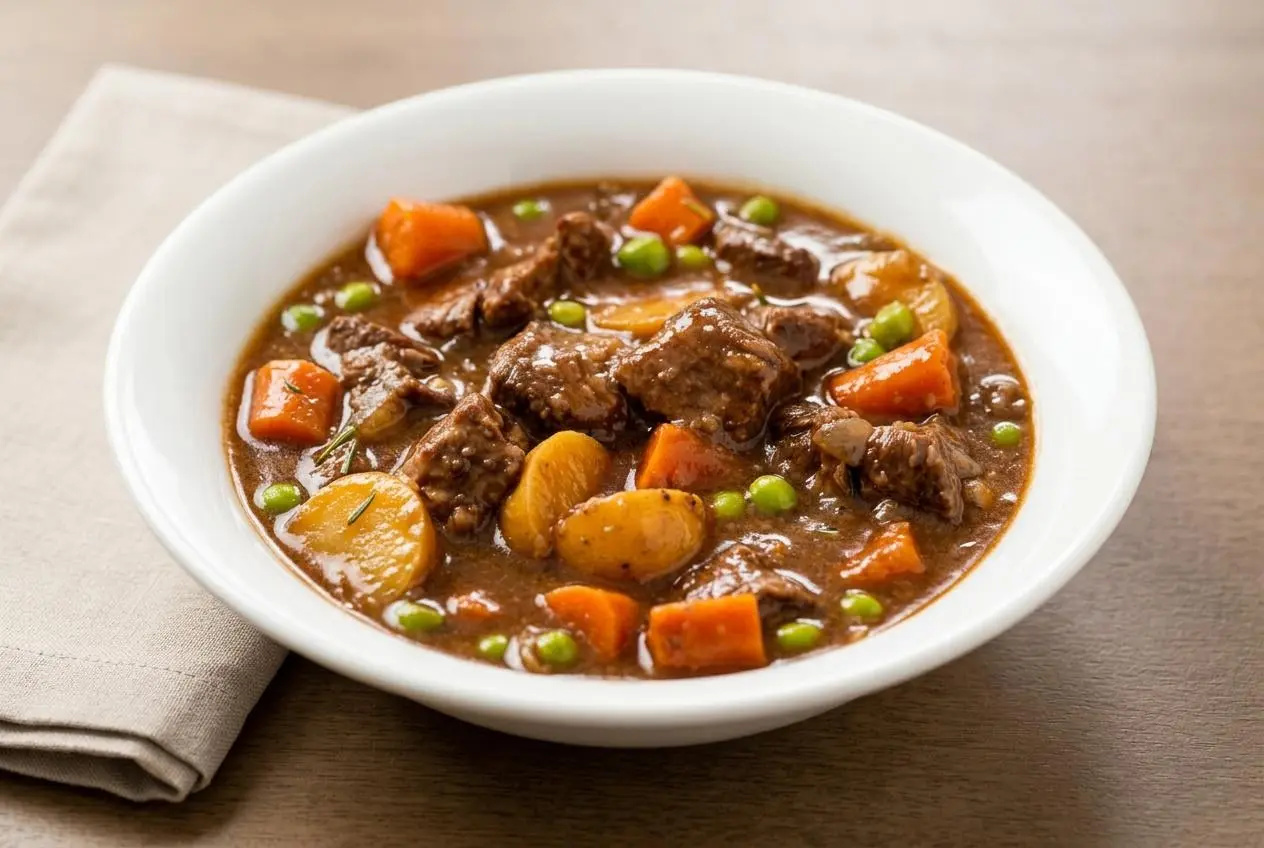
There are nights when you want dinner to taste like it’s been taking its time all day, even if you only had five minutes to get things rolling. In my kitchen, Beef Barley Soup is that bowl, hearty, steady, and deeply comforting, the kind that fogs up your windows and makes the whole house smell like home.
This version leans into a “secret twist” I swear by, a Double-Umami Mushroom and Bone Infusion that makes humble chuck feel downright luxurious. If you love a rich broth, tender beef, and barley with a nutty little bounce, you’re in the right place.
Why You’ll Love This Recipe
Double-Umami depth: Whisking porcini powder into the stock and simmering with a roasted marrow bone gives the broth that restaurant-level savor, the kind that lingers pleasantly after every spoonful.
Chuck turns silky: When I treat Beef chuck roast like a braise, low and slow, it transforms, gelatin-rich and spoon-tender, with a body that tastes closer to short ribs than “weeknight soup.”
Barley that stays proud: Pearl barley brings a cozy, nutty texture, and when you add it at the right moment, it stays tender with a little pop instead of collapsing into mush.
Ingredients and Substitutions

These are straightforward pantry and market staples, but the technique makes them shine, especially the stock, barley, and that slow-simmered beefy richness.
Ingredients
- 2 pounds boneless beef chuck roast
- Kosher salt
- Freshly ground black pepper
- 1 tablespoon canola oil
- 3 large carrots
- 1 large yellow onion
- 2 ribs celery
- 4 medium cloves garlic
- 3 quarts chicken stock
Sachet:
- 2 sprigs fresh thyme
- 1 bay leaf
- 5 whole black peppercorns
- 1 cup pearled barley
- 0.5 teaspoon Asian fish sauce
- Minced fresh parsley
Ingredient Notes & Substitutions
Chicken stock: A good chicken stock gives you cleaner flavor and better body than many boxed beef broths, and once it simmers with browned beef and a marrow bone, it tastes plenty “beefy” without that canned tang.
Sachet: I tie thyme, bay, and peppercorns in a little bundle so the soup gets the perfume, not the twigs, and nobody fishes out woody stems at the table.
Pearled barley: Pearled is my choice here because it cooks through in the soup’s final stretch, staying pleasantly chewy instead of turning heavy and dense.
Asian fish sauce: It won’t make the soup taste like fish, it just quietly boosts umami, and Worcestershire sauce is the closest swap if that’s what you keep in the fridge.
Chef’s twist additions: The 1/2 teaspoon dried porcini powder and 1 roasted marrow bone are small moves with big payoff, they deepen the broth’s savor and give it that silky, glossy finish.
How to Make Beef Barley Soup
Sear for the Maillard backbone
- Pat the 2 pounds boneless beef chuck roast dry, then season it generously with Kosher salt and Freshly ground black pepper. Think “steaks,” not little cubes yet, larger pieces brown better and stay juicier inside.
- Heat 1 tablespoon canola oil in a Dutch oven over high heat until it’s lightly smoking. Sear the beef until deeply browned on all sides, about 5 minutes per side, and move it to a platter so you don’t steam it by crowding.
Build the aromatic base, then protect the vegetables
- In the same pot, add 3 large carrots, 1 large yellow onion, 2 ribs celery, and 4 medium cloves garlic. Cook while stirring and scraping up the fond until the vegetables pick up light browning and smell sweet and toasty, about 6 minutes.
- Scrape the vegetables into a heatproof bowl and set aside, this keeps them from turning soft and tired during the long simmer.
- Pour in 3 quarts chicken stock, then scrape again to dissolve every last browned bit into the broth, that’s pure flavor.
Umami infusion and low simmer until tender
- Cut the seared beef into chunks and return it to the pot. Add the roasted marrow bone if you’re using it, and drop in the herb sachet, then bring everything up to a gentle simmer.
- Reduce the heat to maintain a low simmer, ideally 180°F to 190°F, then cook until the beef is tender, 1 to 2 hours. Skim off any gray foam that rises so the broth stays clean-tasting and clear.
Final assembly, barley timing, and a bright finish
- Discard the bones and herb sachet. Stir in 1 cup pearled barley, the reserved vegetables, and 0.5 teaspoon Asian fish sauce, then simmer until the barley and vegetables are tender, about 30 minutes, with the barley still having a little “pop.”
- Taste and adjust with Kosher salt and Freshly ground black pepper. If the soup looks too thick, loosen it with water until it’s spoonable and brothy again.
- Serve hot and finish each bowl with Minced fresh parsley, the green freshness wakes up the whole pot.
The Scientific Secrets for Perfect Savory Results

Collagen conversion is the tenderness switch, and it only happens kindly at low heat. The phrase collagen is heated in the presence of moisture explains why chuck becomes silky with time.
Keep the pot below a boil, around 180°F to 190°F, so muscle fibers don’t seize while collagen melts into gelatin. This is the same reason chuck behaves beautifully in a classic beef stew recipe, slow heat turns toughness into luxury.
Pearled versus hulled barley is about timing and texture. The term pearled and hulled barley matters here because hulled takes longer and stays firmer.
Pearled barley is polished, so it cooks through in that final 30 minutes and thickens the soup just enough. Hulled barley can be wonderful, but it usually wants more time than this schedule gives.
Umami synergy is real kitchen chemistry. Mushrooms bring guanylates, beef brings inosinates, and together they amplify “meaty” flavor far beyond what either does alone.
This is the same kind of savory layering I chase whenever I’m building mushroom soup depth, little additions that make the whole pot taste fuller.
Overly salty broth is usually a reduction problem. If your simmer ran too hot, water evaporates and salt concentrates, even if you didn’t add much.
My fix is simple: add a splash of water or unsalted stock, then re-taste once it’s hot. If it still tastes sharp, a tiny squeeze of lemon at the end can round the edges without making it “lemony.”
Pro Tips & Troubleshooting
Pro Tips
- Roast the marrow bone separately first for deeper, toastier flavor, then add it to the pot for the long simmer.
- Let the soup sit off the heat for 20 minutes before serving, the broth tastes more unified and the barley relaxes.
- A tiny squeeze of lemon juice right at the end brightens rich gelatinous broth beautifully.
- When searing, think “dark brown,” not “gray,” because Maillard reaction flavor is the foundation.
Common Mistakes to Avoid
- Adding the barley too early leads to gummy texture and a pot that thickens like porridge.
- Using lean cuts like sirloin stays dry and tough, even after a long simmer.
- Skipping the skim leaves you with cloudy broth and flatter flavor.
- If you want another collagen-rich option, beef cheek meat behaves beautifully in long, gentle simmering.
Serving & Storage

Creative Serving Ideas
I love this soup with warm sourdough for dipping, the crust catches all that beefy broth. Buttermilk biscuits are also a perfect match when you want something extra cozy.
A simple side of bitter greens with a sharp vinaigrette cuts the richness and keeps the meal feeling balanced. A shower of Minced fresh parsley at the table makes every bowl smell fresh.
Storage and Reheating Tips
Cool the soup quickly, because big pots hold heat for a long time. Food safety guidance on shallow containers helps soups chill more safely.
In the fridge, the barley keeps drinking broth overnight, so leftovers often look thicker the next day. Reheat gently and add a splash of stock or water until it’s brothy again, then taste for salt.
For freezing, portion into airtight containers and freeze up to 3 months, then thaw overnight and rewarm slowly. This same freezer-friendly rhythm works well for hearty bowls like ham and bean soup, where starch and beans also thicken over time.

Hearty Beef Barley Soup

Equipment
- Dutch oven
- Herb sachet or cheesecloth
- Heatproof bowl
Ingredients
- 2 pounds boneless beef chuck roast
- Kosher salt
- Freshly ground black pepper
- 1 tablespoon canola oil
- 3 large carrots
- 1 large yellow onion
- 2 ribs celery
- 4 medium cloves garlic
- 3 quarts chicken stock
Sachet
- 2 sprigs fresh thyme
- 1 bay leaf
- 5 whole black peppercorns
- 1 cup pearled barley
- 0.5 teaspoon Asian fish sauce
- Minced fresh parsley
Instructions
Sear for the Maillard backbone
- Pat the beef chuck roast dry and season generously with salt and pepper. Heat canola oil in a Dutch oven over high heat until lightly smoking. Sear the beef until deeply browned on all sides, about 5 minutes per side, then remove to a platter.
Build the aromatic base, then protect the vegetables
- In the same pot, sauté the carrots, onion, celery, and garlic, scraping up the browned bits, until lightly browned and aromatic, about 6 minutes.
- Remove the vegetables to a heatproof bowl and set aside to maintain their texture. Pour the chicken stock into the pot and scrape the bottom to dissolve the fond.
Umami infusion and low simmer until tender
- Cut the seared beef into chunks and return it to the pot. Add the herb sachet and bring to a gentle simmer. Reduce heat to maintain 180F to 190F and cook until beef is tender, about 84 to 90 minutes. Skim any foam from the surface.
Final assembly, barley timing, and a bright finish
- Discard the herb sachet. Stir in the pearled barley, the reserved vegetables, and the fish sauce. Simmer for another 30 minutes until the barley is tender with a slight pop.
- Taste and adjust seasoning with salt and pepper. Serve hot, garnished with minced fresh parsley.
Notes
Nutrition
Conclusion
This Beef Barley Soup earns its depth the honest way, hard sear, low simmer, and that Double-Umami Mushroom and Bone Infusion that makes the broth taste like it came from a serious kitchen. Once you feel how tender chuck can get at 180°F to 190°F, you’ll never rush it again.
On a cold evening, I hope you give it a pot and a little patience, then make it yours with parsley, a squeeze of lemon, or your favorite bread for dunking.