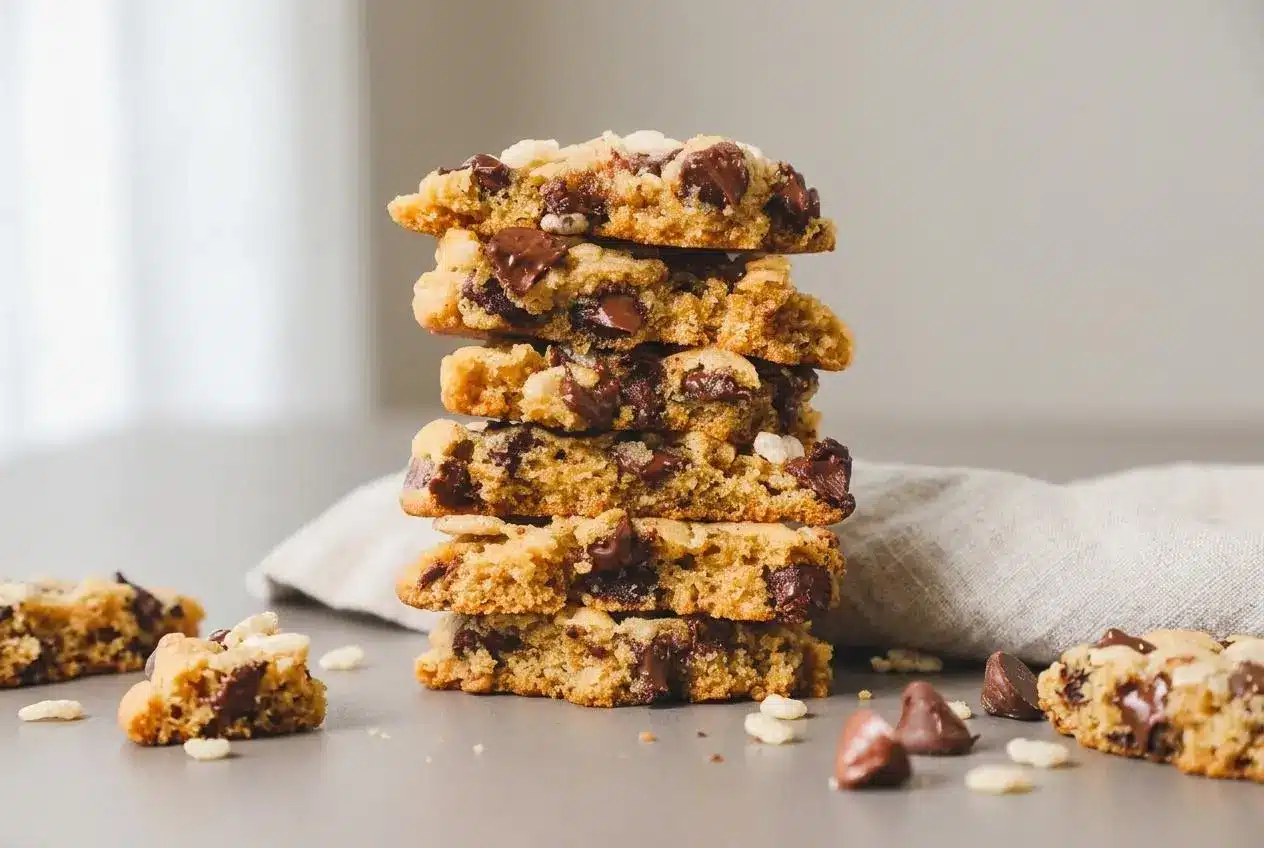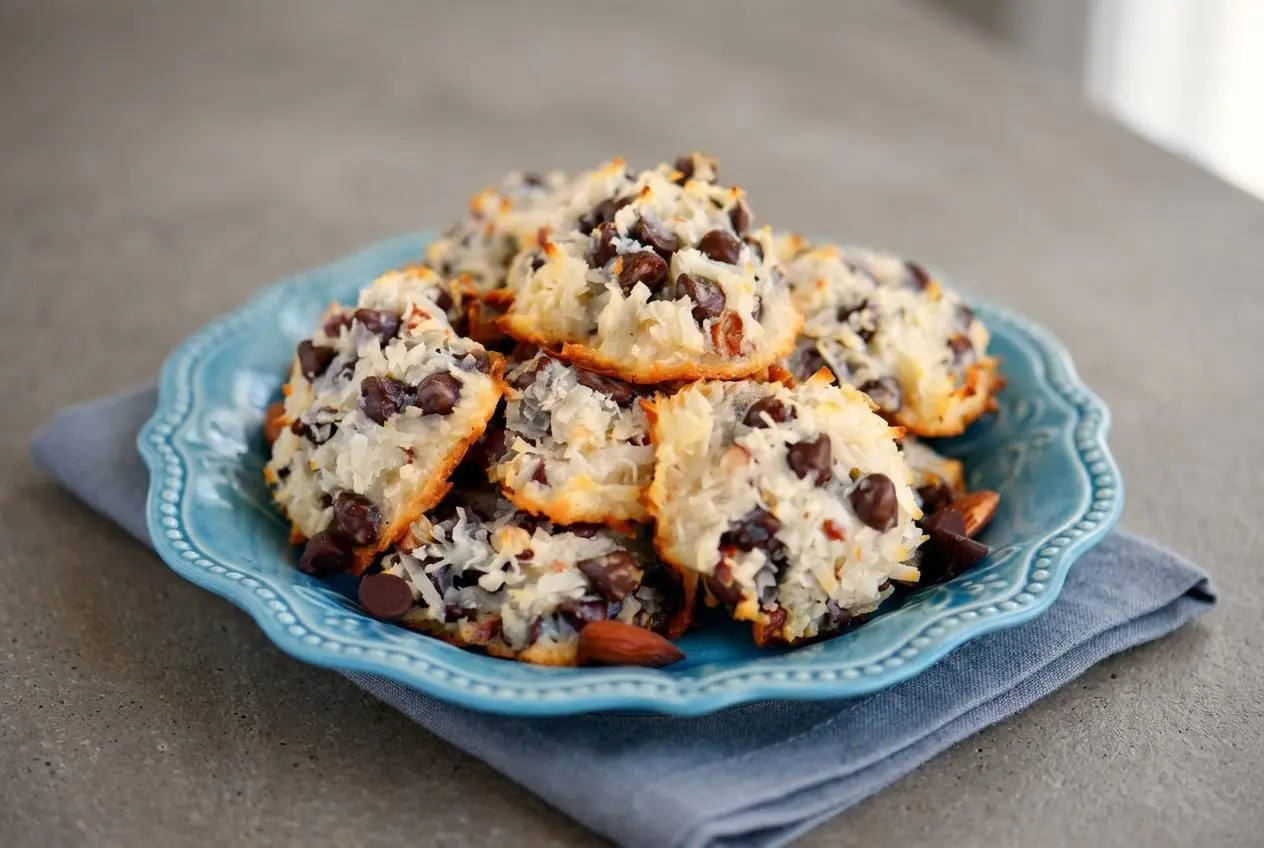
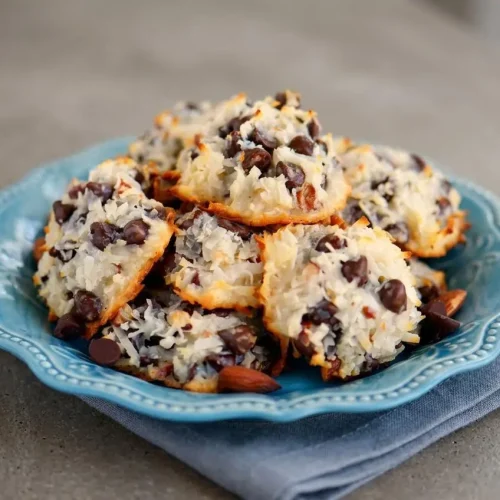
Almond Joy cookies are chewy coconut chocolate almond cookies that come together fast with a flourless 4 ingredient method, and you can also use the same flavor idea in a classic butter cookie dough.
Almond Joy Cookies taste like the candy bar in cookie form, with sweet coconut, melty chocolate, and a salty almond crunch. The flourless version is especially handy when you want something quick and chewy.
You get two useful paths here: the fast coconut based cookie and the classic flour based style, plus the fixes that keep them from sticking, spreading, or drying out. Watch for those golden coconut tips.
Use parchment paper, not wax paper, because this dough gets sticky and caramelized at the edges as it bakes.
The Key Ingredients for Homemade Cookies
Each ingredient has a real job here, from binding and chewiness to sweetness, crunch, and that candy bar style balance.
- 1 14 oz bag sweetened coconut flakes
- 2 cups semi-sweet chocolate chips
- 2/3 cup chopped lightly salted almonds
- 1 14 oz can sweetened condensed milk
Sweetened coconut flakes build the body of these cookies and give them that dense, chewy center. Semi-sweet chocolate chips keep the flavor from turning one-note sweet. The lightly salted almonds matter more than they seem to, because that little salty edge balances the coconut and condensed milk. Sweetened condensed milk is the key binder in the flourless version, holding everything together without flour or eggs while also adding richness and sweetness.
I like to toast the chopped almonds briefly before mixing if I have a few extra minutes, because the nuttier aroma makes the finished cookies taste even closer to a candy bar.
Why Sweetened Coconut Is Essential
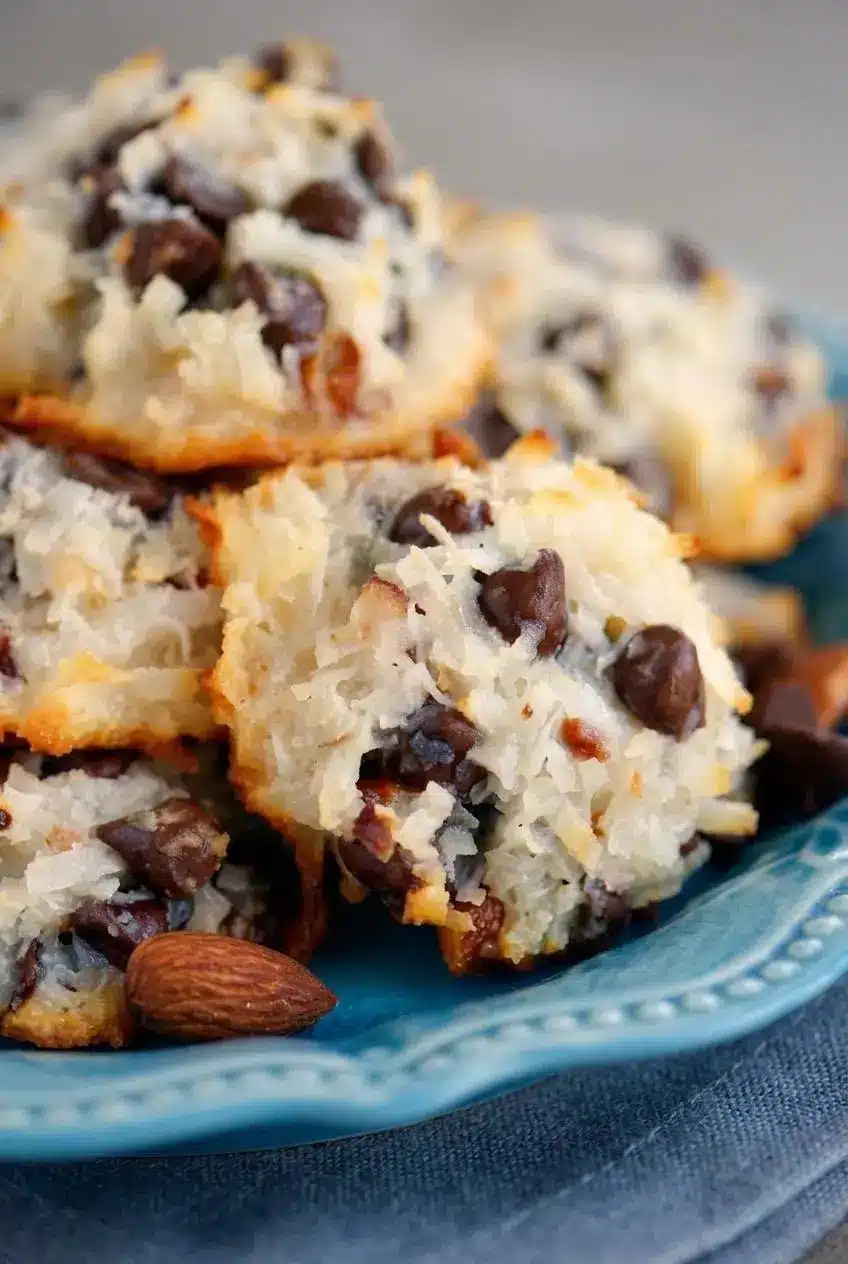
This is one of those recipes where the type of coconut changes the whole result. Sweetened coconut flakes bring moisture, tenderness, and enough stickiness to help the cookies hold together.
Unsweetened coconut tends to bake up drier and looser here. Because the flourless version relies on condensed milk and coconut to form the structure, using unsweetened flakes can leave you with crumbly centers and cookies that do not keep their shape as well.
Sweetened flakes also brown more gently at the tips, which gives you a clear doneness cue without drying out the middle. If you love the coconut and chocolate combo but want something that skips the oven, no-bake samoa cookies scratch a similar craving in a different way.
How to Bake Almond Joy Cookies
- Heat the oven to 325F and get a large baking sheet ready with parchment paper.
The parchment is essential here, because the sugary coconut mixture sticks badly and can make the bottoms tear if baked directly on the pan. - Put the coconut flakes, chocolate chips, chopped almonds, and sweetened condensed milk into a large bowl.
The mixture will look chunky at first, but every bit of coconut should start getting coated as you work it together. - Stir until the mixture is thoroughly combined and no dry pockets of coconut remain.
The dough should feel sticky and thick enough to mound, not loose or runny. - Scoop packed portions onto the lined baking sheet with a cookie scoop.
Press the scoop firmly as you portion so each mound holds together instead of baking into ragged edges. - Dampen your fingertips with water, then shape each mound into a disc and flatten the top lightly.
Wet fingers keep the sticky dough from clinging to your hands and help the cookies bake more evenly. - Bake for 12 to 14 minutes.
They are ready when the tips of the coconut turn lightly golden brown while the centers still look moist and chewy. - Leave the cookies on the baking sheet to cool completely.
They firm up as they sit, so moving them too soon can make them fall apart. - Transfer the cooled cookies to an airtight container for storage.
The texture stays best when they are fully cool before you pack them away.
The dough is supposed to feel sticky, so do not fight it. A scoop helps with neat portions, and damp fingertips make shaping much easier than adding anything extra to the bowl.
Classic Flour-Based Almond Joy Cookies
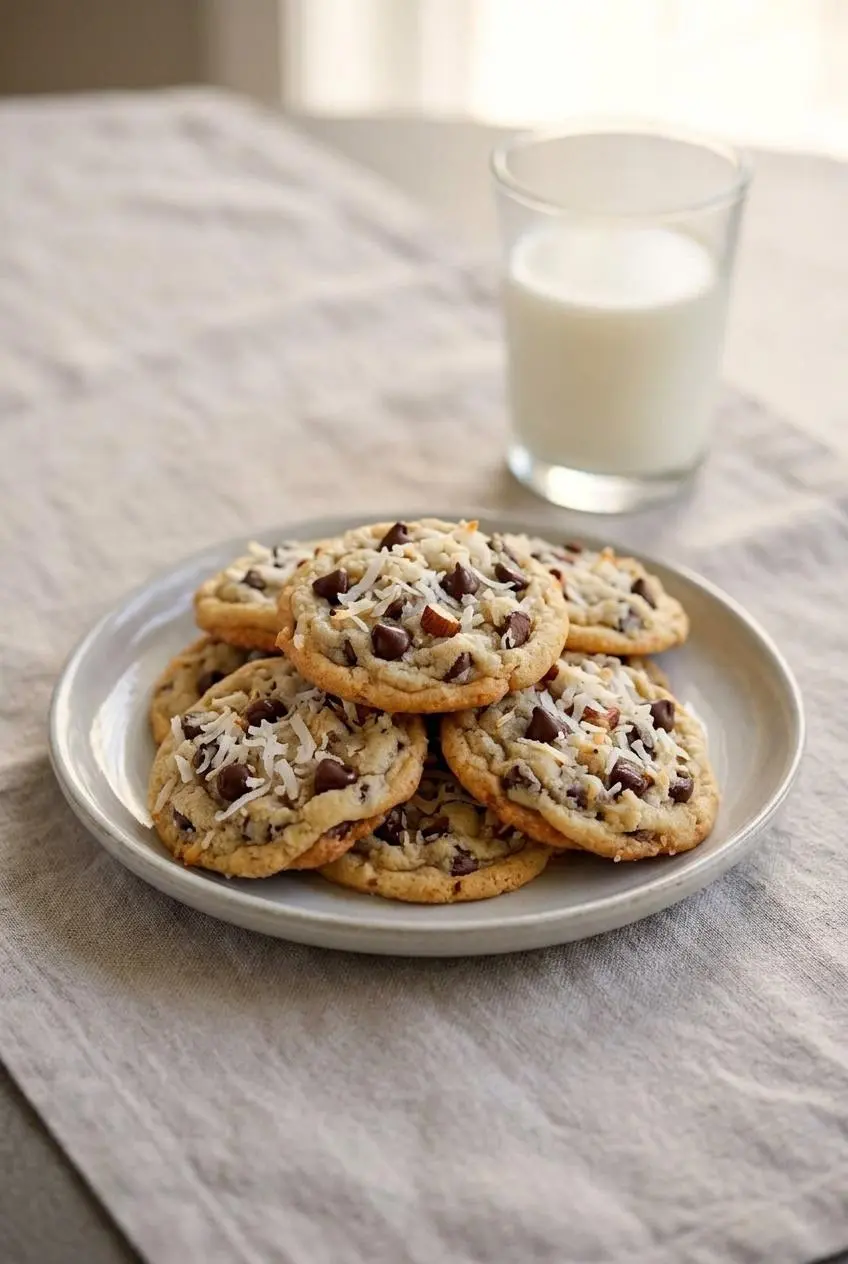
If you want a more traditional drop cookie, this version uses the same flavor trio in a butter and flour dough instead of the condensed milk coconut base. Keep the two styles separate, because the ingredient logic is completely different.
The flourless cookies are dense, chewy, and coconut forward. A classic flour based dough gives you softer edges, a more familiar cookie crumb, and more room for mix-ins to sit inside the dough rather than acting as the whole dough.
For bakers who love a rich butter cookie foundation, the method starts the same way many great drop cookies do, much like other traditional styles such as sweet butterscotch cookies.
Creaming the Butter and Sugar
In a traditional dough, creaming butter and sugars until light and fluffy builds the base structure. That step whips in air, helps the cookies bake up evenly, and gives you a softer interior instead of a heavy, compact texture.
Once that base is properly creamed, fold in coconut, chocolate chips, and sliced almonds gently so the dough stays airy. Do not dump ideas from the flourless version into this dough as if they are interchangeable. The condensed milk formula and the butter flour formula solve different problems.
Preventing Dough Spreading
Traditional Almond Joy style cookies can spread too much when the dough gets warm or the sheet pan stays hot from the previous batch. Cooling the dough before baking helps the butter stay in place longer in the oven, which gives the cookie time to set before it runs outward.
Use completely cool baking sheets between batches. A quick test cookie is also smart here, because one cookie can tell you whether the dough needs a little more chill time before you fill the whole pan.
Troubleshooting Common Baking Problems
Most problems with these cookies come down to moisture, shaping, or bake time. The good news is that the fixes are very kitchen friendly.
Why Cookies Spread Too Thin
- If the flourless dough turns into flat puddles, the mixture may have too much condensed milk for how tightly it was packed. Scoop firmly and press each mound together before shaping.
- If the dough feels unusually loose, stir longer to distribute the coconut evenly through the condensed milk. Dry pockets and wet pockets cause uneven spreading.
- If you flattened the discs too much, leave them a little thicker next time. They should look compact before they go into the oven.
- If you forgot parchment and the cookies fused to the pan, let them cool fully first, then slide a thin spatula underneath slowly. They usually release better once the sugar has set.
Preventing Dry or Burnt Coconut
- Start checking at the early end of the 12 to 14 minute range. The best cue is light golden tips, not deep brown edges.
- If the coconut gets dark before the centers stay chewy, your oven may run hot. Move the tray to the center rack and pull the cookies as soon as the tops begin to color.
- Overbaked cookies lose that soft candy bar style center. They should still look a little glossy in the middle when they come out.
- For the classic flour based style, hot pans can also speed browning. Let each baking sheet cool completely before the next round.
Gourmet Coconut Thumbprint Style
This is a fun optional twist if you want something bakery style for a holiday tray. Use a traditional dough base, press a thumbprint into each cookie before baking, then fill the center with a sweet coconut mixture and finish with a chocolate drizzle after baking.
The result feels a little dressier and more structured than the flourless version. If you enjoy rich chocolate and nut heavy cookies with a decorative finish, chewy turtle cookies are another good direction to explore.
Dietary Adjustments and Swaps
You can make a dairy-free version as an optional variation without changing the spirit of the cookie. Use coconut-based sweetened condensed milk and dairy-free semi-sweet chocolate chips in the flourless method.
That swap keeps the chewy texture and coconut flavor profile very close to the original. Check that your chocolate chips still melt pleasantly, since some dairy-free brands stay firmer after baking.
How to Store These Cookies
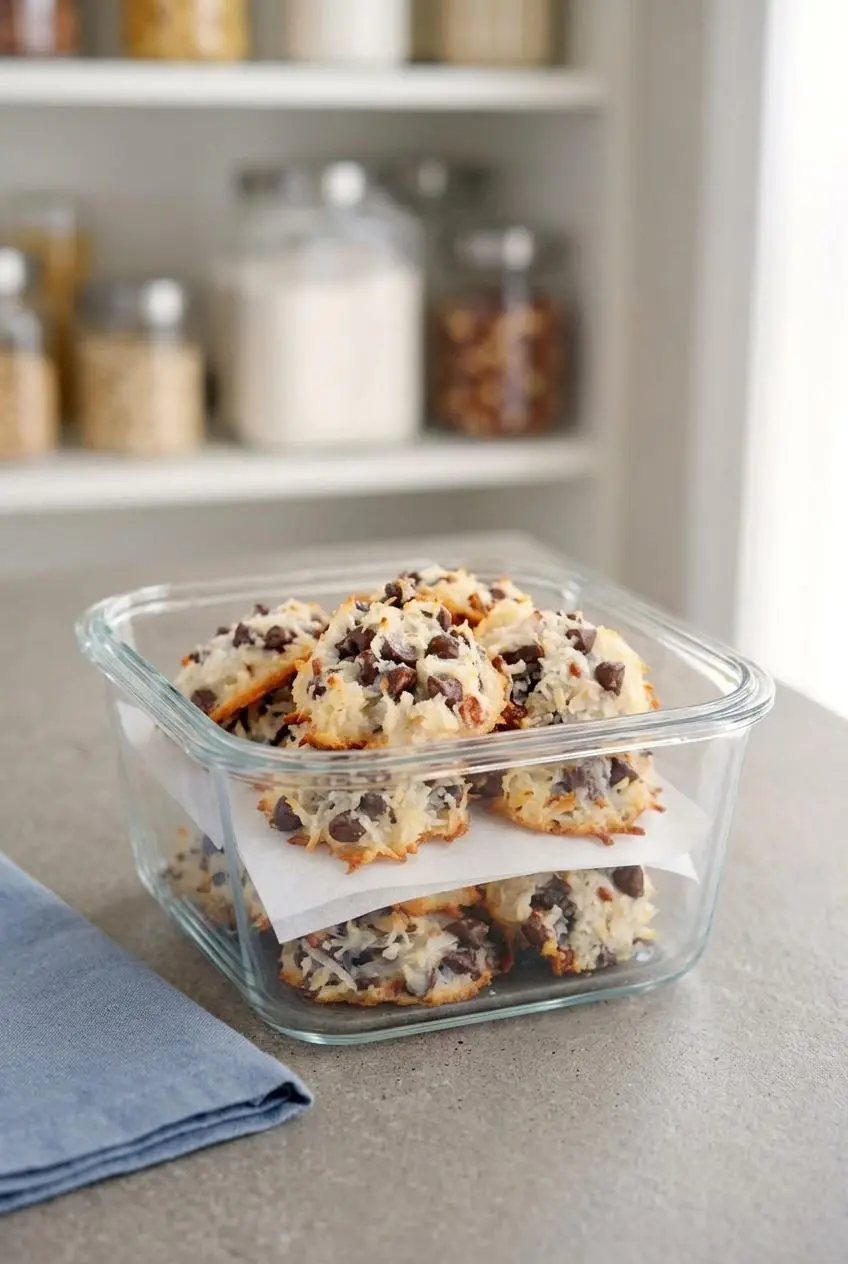
Store the cookies only after they are fully cool, or trapped steam will soften the surface too much. Keep them in an airtight container at room temperature in a cool, dry spot to maintain their chewy center.
Room Temperature Storage
A tightly sealed container helps protect the coconut from drying out and keeps the chocolate from picking up stale flavors. Avoid warm or humid areas, since that can make the cookies sticky and a little messy.
Keeping the Texture at Its Best
If you want the cookies to stay neat, layer them gently with parchment paper between rows. That helps prevent the tops from sticking to each other and keeps the surface from smearing.
Conclusion
These cookies work because every part pulls its weight: chewy sweetened coconut, rich chocolate chips, and lightly salted almonds. The flourless version is quick and satisfying, and the classic dough option gives you a more traditional cookie path.
Remember the big wins: use parchment, pack the scoops firmly, wet your fingertips, and pull the tray when the coconut tips just turn golden. That little bit of attention keeps them chewy where it counts.
Frequently Asked Questions
Can you freeze Almond Joy cookies?
Yes, many home bakers do freeze the baked cookies successfully. Layer them with parchment paper in an airtight container so they do not stick together. Thaw them still covered, so condensation does not settle heavily on the cookie surface.
Why did my cookies spread flat into a puddle?
The usual cause is a mixture that is too wet or cookie mounds that were not packed tightly. Use a cookie scoop and press the dough together firmly before flattening. If the bowl looks loose, keep stirring until the coconut is evenly coated and the mixture holds its shape better.
Do I need to use sweetened condensed milk?
For the 4 ingredient flourless version, yes. It acts as both the binder and the sweetener, which is why the cookies hold together without flour or eggs. Swapping it out changes the structure, not just the flavor.
Can I make these cookies dairy-free?
Yes, as an optional variation. Use coconut-based sweetened condensed milk and dairy-free chocolate chips, then bake the cookies the same way. The coconut flavor stays right at home in this version.
Almond Joy Cookies

Equipment
- Large baking sheet
- Parchment Paper
- Large Mixing Bowl
- Cookie Scoop
Ingredients
- 1 14 oz bag sweetened coconut flakes
- 2 cups semi-sweet chocolate chips
- 2/3 cup chopped lightly salted almonds
- 1 14 oz can sweetened condensed milk
Instructions
- Heat the oven to 325F and get a large baking sheet ready with parchment paper. The parchment is essential here, because the sugary coconut mixture sticks badly and can make the bottoms tear if baked directly on the pan.
- Put the coconut flakes, chocolate chips, chopped almonds, and sweetened condensed milk into a large bowl. The mixture will look chunky at first, but every bit of coconut should start getting coated as you work it together.
- Stir until the mixture is thoroughly combined and no dry pockets of coconut remain. The dough should feel sticky and thick enough to mound, not loose or runny.
- Scoop packed portions onto the lined baking sheet with a cookie scoop. Press the scoop firmly as you portion so each mound holds together instead of baking into ragged edges.
- Dampen your fingertips with water, then shape each mound into a disc and flatten the top lightly. Wet fingers keep the sticky dough from clinging to your hands and help the cookies bake more evenly.
- Bake for 12 to 14 minutes. They are ready when the tips of the coconut turn lightly golden brown while the centers still look moist and chewy.
- Leave the cookies on the baking sheet to cool completely. They firm up as they sit, so moving them too soon can make them fall apart.
- Transfer the cooled cookies to an airtight container for storage. The texture stays best when they are fully cool before you pack them away.