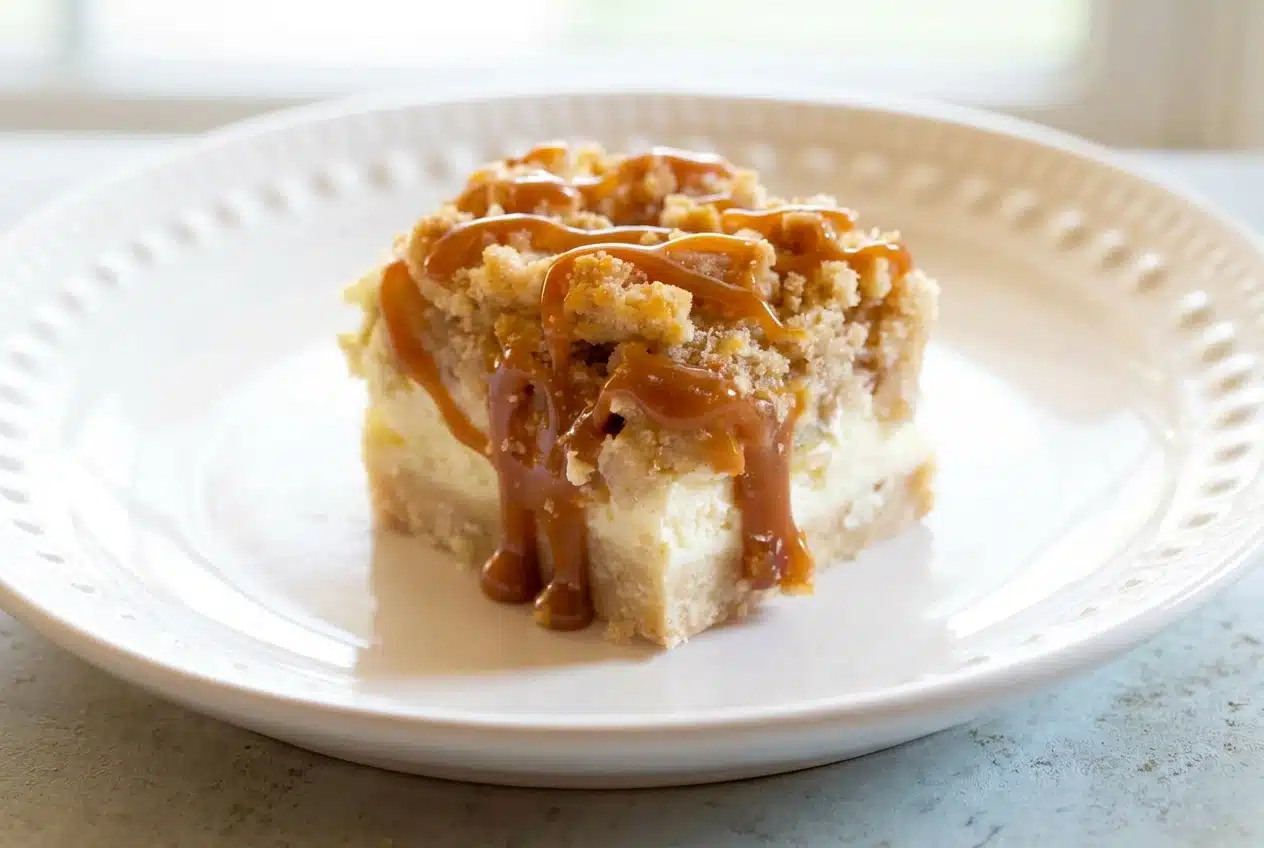
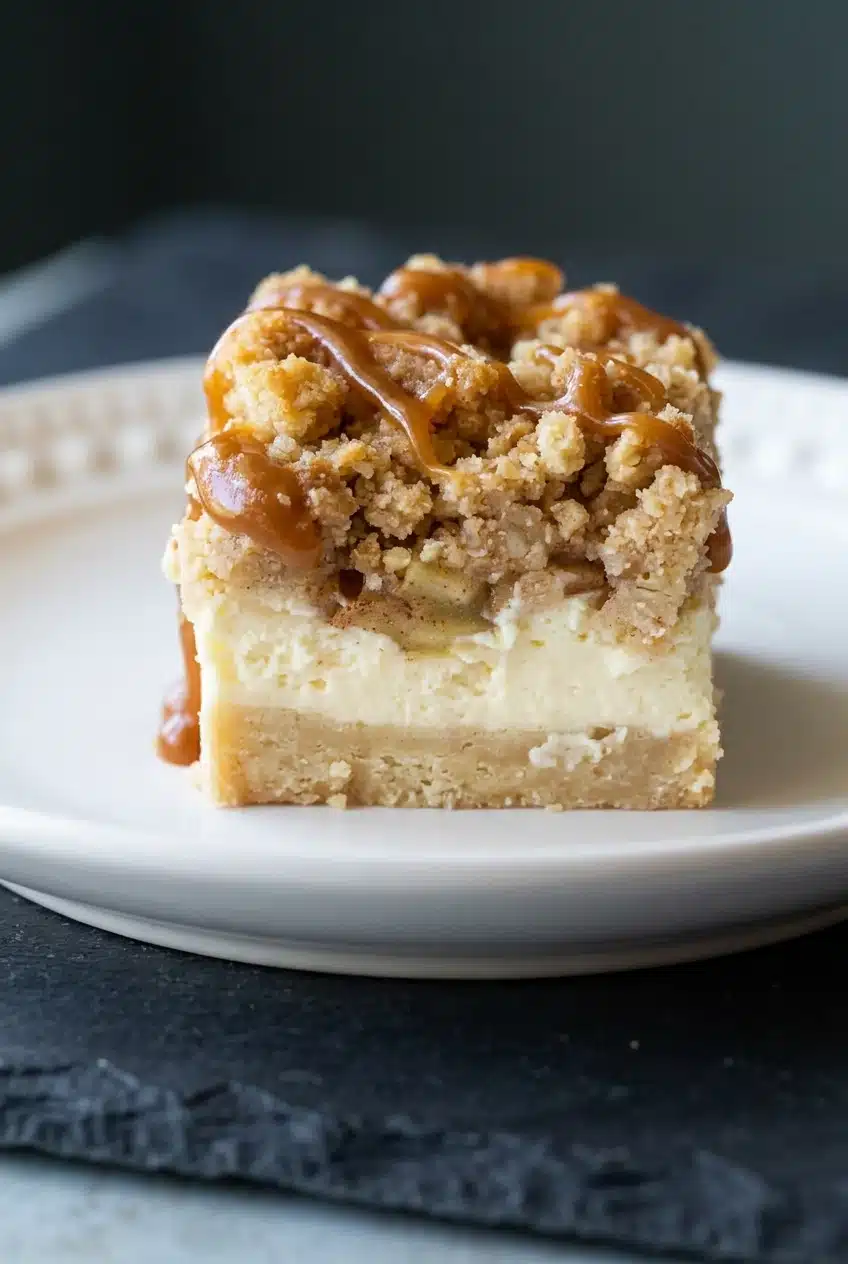
Caramel apple cheesecake bars stack buttery shortbread, creamy cheesecake, tart spiced apples, and crisp oat streusel beneath a caramel drizzle. Par-bake the crust, mix the filling gently, and chill thoroughly before cutting for distinct layers and neat squares.
These caramel apple cheesecake bars bring apple crumble and cheesecake together in one sliceable dessert. Cinnamon and nutmeg warm the finely chopped apples, while brown sugar adds a mellow sweetness to the crust and topping.
A 9×13 pan makes 24 bars for a fall gathering or Thanksgiving dessert spread. You can bake and chill them before serving, leaving the caramel for the final finish. The crunch is worth protecting.
I prefer a thick caramel topping here so it falls in ribbons instead of disappearing into the oats.
Ingredients
Each layer has a job: flour and butter build the crust, cream cheese and eggs create a creamy filling, tart apples balance the sweetness, spices add aroma, and brown sugar with oats forms the crisp topping.
- 2 cups all-purpose flour
- 1/2 cup firmly packed brown sugar
- 1 cup butter (softened)
- 3 (8 ounce) packages cream cheese, softened
- 3/4 cup sugar
- 3 large eggs
- 1 1/2 teaspoons vanilla extract
- 3 Granny Smith apples (peeled, cored and finely chopped, (about 3 cups))
- 2 tablespoons sugar
- 1/2 teaspoon ground cinnamon
- 1/4 teaspoon ground nutmeg
- 1 cup firmly packed brown sugar
- 1 cup all-purpose flour
- 1/2 cup quick cooking oats
- 1/2 cup butter (softened)
- 1/2 cup caramel topping for drizzling after baked
Shortbread and cheesecake: Brown sugar gives the buttery crust depth, while flour provides structure. Softened cream cheese blends smoothly with sugar before the eggs go in. Eggs help the filling set, and vanilla rounds out its tangy flavor.
Apples, streusel, and caramel: Granny Smith apples stay pleasantly tart against the rich filling. Honeycrisp or Pink Lady offer sweeter, crisp alternatives. Finely chopped, evenly sized pieces distribute fruit throughout each square. The oat streusel adds a coarse crunch, and thick caramel makes a distinct finishing drizzle.
How to Make Caramel Apple Cheesecake Bars
Build the layers in order, keeping the crust warm for the filling and the finished bars cold for slicing. Pay attention to texture as well as the timer.
- Set the oven to 350°F and prepare a 9×13 baking pan by greasing it or lining it with parchment paper or heavy-duty aluminum foil.
The bottom should be fully covered or greased so the shortbread releases readily. - Work the crust’s flour, brown sugar, and butter together in a medium bowl with a pastry blender, food processor, or two forks.
Stop when the mixture looks like coarse, damp sand rather than a smooth dough. - Pack the crumbs into an even layer across the pan and bake for 15 minutes, or until lightly browned.
The surface should look dry and pale golden before you add the filling. - Use an electric mixer at medium speed to blend the cream cheese and 3/4 cup sugar in a large bowl, then gently incorporate the eggs individually and stir in the vanilla.
The cream cheese should look smooth and streak-free before the eggs enter, with the finished mixture creamy rather than foamy. - Spread the cheesecake mixture across the warm shortbread crust.
A level layer gives the apples an even surface to rest on. - Toss the chopped apples with 2 tablespoons sugar, cinnamon, and nutmeg in a small bowl, then distribute them over the cheesecake.
Keep the fruit evenly scattered rather than piled in the center. - Combine the streusel’s brown sugar, flour, oats, and butter in a small bowl, working the butter through with clean hands.
The mixture should form coarse crumbs and clusters with recognizable oat pieces. - Scatter the streusel over the apples and bake for 40–45 minutes, until the filling is set.
Look for golden oat clusters and set edges, with only a subtle wobble at the center rather than a loose ripple. - Let the baked bars cool to room temperature, refrigerate until thoroughly chilled, and finish with caramel topping before serving cold.
The cheesecake should feel firm enough to hold a clean edge when sliced.
Expert Tips and Troubleshooting for Clean Layers
Most layer problems come from sticking, excess moisture, or cutting before the filling has firmed. These adjustments help protect the texture without changing the recipe.
Pan Lining, Side Greasing, and Clean Slicing
- Bars stick at the corners: Leave parchment or heavy-duty foil extending beyond opposite sides of the pan, and lightly grease any exposed pan sides.
- The slab bends during removal: Chill it thoroughly before lifting, then support it as you transfer it onto a cutting board.
- The white cheesecake layer smears: Use a long, sharp knife and wipe the blade clean between cuts so crumbs and filling don’t drag into the next square.
How to Prevent Overflow, Soggy Crusts, and Browning
- Wet apple pockets: Pat noticeably wet chopped apples dry before tossing them with sugar and spices, and spread them evenly rather than in thick mounds.
- Soft crust: Don’t skip the par-bake, which gives the shortbread a head start before it carries the moist filling.
- Greasy patches: Work the softened butter evenly through the crust crumbs rather than leaving large isolated pieces.
- Powdery streusel: Keep the food processor for the crust, not the topping, because its blade breaks down the oats instead of preserving their texture.
- Puffed or cracked filling: Mix gently once the eggs go in, and stop baking when the filling is set rather than waiting for a completely rigid center.
- Overflow or overly dark topping: Avoid overfilling a substituted pan, use a rimmed baking sheet underneath to catch possible drips, and check the filling when the streusel turns golden.
Pan Size Swaps and Crowd Scaling Cues
The 9×13 pan gives these layers their intended thickness. A smaller pan creates deeper layers that may brown before the center sets; a larger pan makes thinner bars that can finish sooner.
For a crowd, separate pans of the intended size are more predictable than one unusually deep pan. If you change pans, watch fill depth and begin checking doneness with those differences in mind. Don’t assume the listed bake time will transfer unchanged.
Easy Variations and Crust Swaps
Keep the shortbread version for the buttery, crisp contrast described above, or use these optional directions when you want a different flavor. They aren’t direct, measured replacements for the method.
Graham Cracker or Spiced Cookie Crust Swap
A graham cracker crust adds toasted sweetness and a more crumbly bite. A spiced cookie crust brings stronger cinnamon and ginger flavors. Use a crust formula designed for the pan rather than replacing the flour with an equal amount of cookie crumbs.
Fruit, Nut, and Gluten-Sensitive Adaptations
- Firm baking pears: Use them as an optional fall-fruit alternative, choosing fruit that isn’t overly ripe or juicy.
- Walnuts or pecans: Chopped nuts add a toasted crunch to the oat topping.
- Salted caramel: A light finish of flaky salt adds contrast to the sweet drizzle.
- Mini portions: A mini muffin-tin version needs its own crust proportions and baking checks, so don’t apply the slab’s timing unchanged.
For gluten-sensitive planning, both the crust and streusel need attention. Check gluten-free labeling or certification on replacement crust ingredients and oats, and review vanilla and caramel ingredients, including thickeners. Ingredient swaps alone don’t address cross-contact in preparation.
If it’s the spiced fruit and oat topping you’re after, classic apple crisp offers that combination without a cheesecake layer.
Make-Ahead, Refrigeration, and Freezing
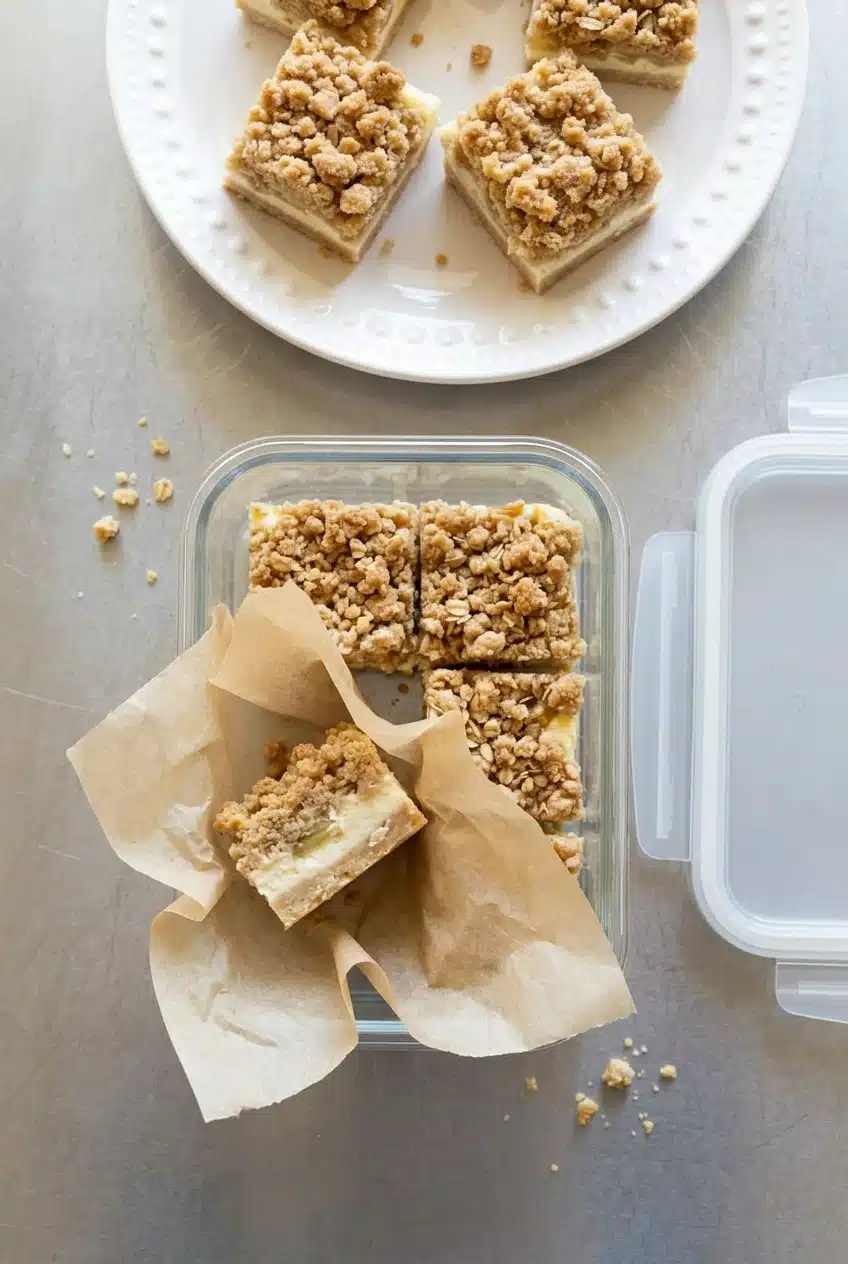
Plan around thorough chilling rather than trying to slice the bars as soon as they cool. Let the baked pan reach room temperature, then refrigerate promptly and keep the bars covered once chilled.
For freezing, wrap the chilled bars well and protect them in a closed container. Leave off the caramel drizzle and add it after thawing, just before serving, to keep the topping distinct.
Keep stored bars refrigerated and bring out what you plan to serve rather than leaving the whole batch on the counter. No fixed storage window can guarantee the condition of every batch, especially when handling and cooling differ.
Serving Suggestions and Caramel Drizzle Timing
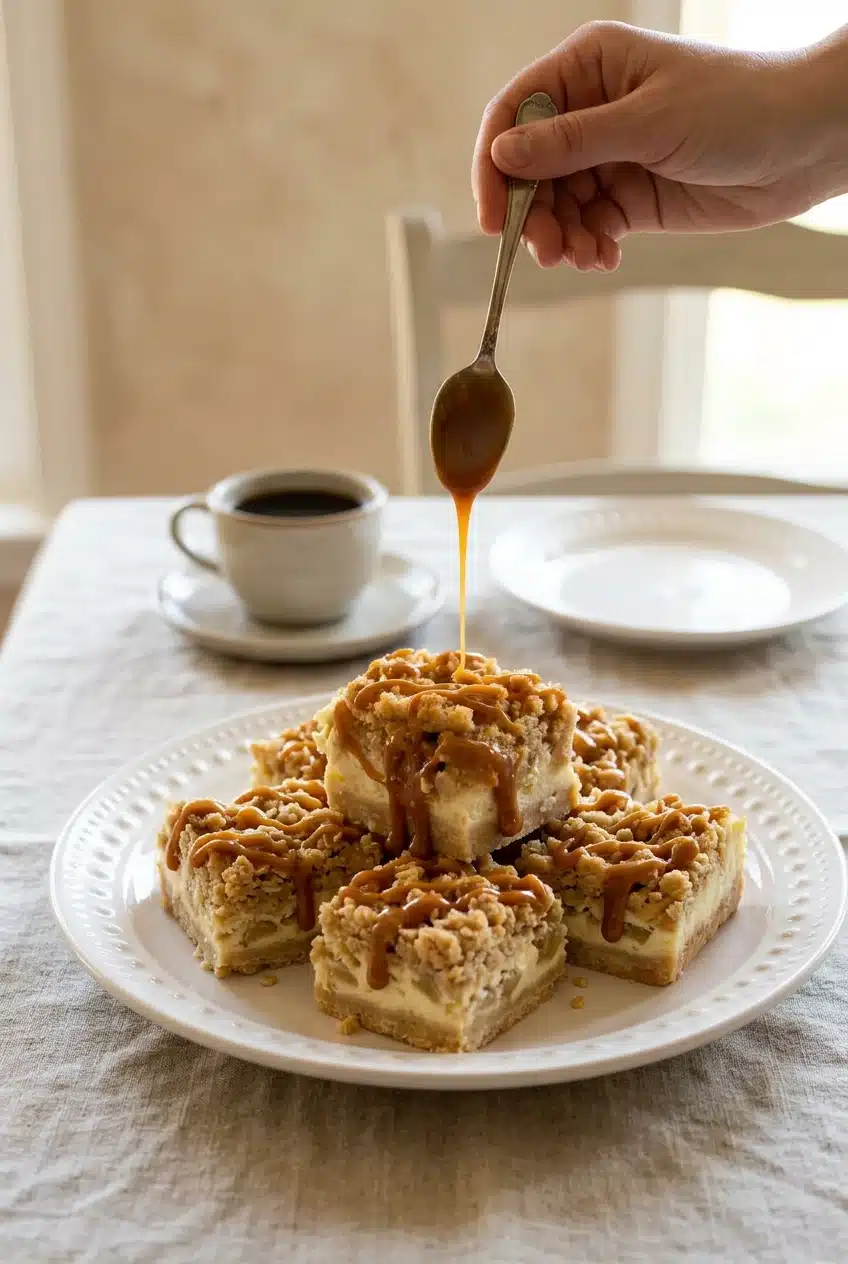
Serve the bars chilled for the firmest squares, or slightly cool for a softer bite. Cut first and drizzle afterward if you want the cleanest sides.
Add thick caramel just before serving so it stays on top instead of soaking into the streusel. Pair the bars with hot coffee, warm spiced apple cider, or milk; vanilla ice cream or whipped cream works well for a plated dessert.
For a scoopable party option with similar flavors, try caramel apple cheesecake dip instead of a sliced dessert.
Final Thoughts
Buttery shortbread, creamy cheesecake, tart spiced apples, and crisp oat streusel give these bars their contrast. The caramel ties the layers together without hiding the apple flavor.
Give the filling time to chill thoroughly, then slice and drizzle at serving time. Those finishing habits make the squares easier to serve and keep every layer distinct.
Frequently Asked Questions
What Kind of Apples Are Best for Caramel Apple Cheesecake Bars?
Granny Smith apples provide tartness and hold their shape during baking. Honeycrisp or Pink Lady are crisp alternatives with a sweeter flavor.
How Can You Tell When Caramel Apple Cheesecake Bars Are Finished Baking?
Look for golden streusel and set outer edges. The center may wobble subtly, but it shouldn’t ripple loosely; it firms further during cooling and chilling.
Should You Lift the Bars Out With Parchment Paper Before Cutting, and Do You Grease the Pan Sides?
Yes, lift the thoroughly chilled slab onto a cutting board using the parchment overhang. Lightly grease exposed pan sides to help prevent sticking.
Can Caramel Apple Cheesecake Bars Be Frozen, and When Should You Add the Caramel?
Yes, freeze the chilled bars well wrapped and without the drizzle. Add caramel after thawing, just before serving.
How Long Should Caramel Apple Cheesecake Bars Be Refrigerated for Food Safety?
Keep the cooled bars covered in the refrigerator rather than at room temperature. A precise shelf life depends on handling and storage conditions, so don’t treat a fixed number of days as a safety guarantee.
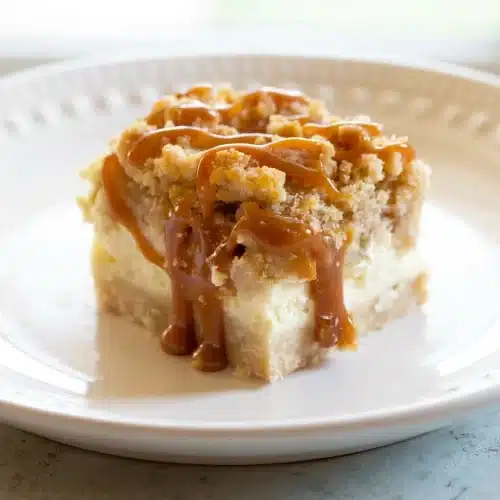
Caramel Apple Cheesecake Bars

Equipment
- 9X13 baking pan
- Parchment Paper
- Mixing Bowls
- Pastry blender
- Electric Mixer
Ingredients
- 2 cups all-purpose flour
- 1/2 cup brown sugar firmly packed
- 1 cup butter softened
- 3 (8 ounce) packages cream cheese softened
- 3/4 cup sugar
- 3 large eggs
- 1 1/2 teaspoons vanilla extract
- 3 Granny Smith apples peeled, cored and finely chopped, (about 3 cups)
- 2 tablespoons sugar
- 1/2 teaspoon ground cinnamon
- 1/4 teaspoon ground nutmeg
- 1 cup brown sugar firmly packed
- 1 cup all-purpose flour
- 1/2 cup quick cooking oats
- 1/2 cup butter softened
- 1/2 cup caramel topping for drizzling after baked
Instructions
- Set the oven to 350°F and prepare a 9×13 baking pan by greasing it or lining it with parchment paper or heavy-duty aluminum foil. The bottom should be fully covered or greased so the shortbread releases readily.
- Work the crust’s flour, brown sugar, and butter together in a medium bowl with a pastry blender, food processor, or two forks. Stop when the mixture looks like coarse, damp sand rather than a smooth dough.
- Pack the crumbs into an even layer across the pan and bake for 15 minutes, or until lightly browned. The surface should look dry and pale golden before you add the filling.
- Use an electric mixer at medium speed to blend the cream cheese and 3/4 cup sugar in a large bowl, then gently incorporate the eggs individually and stir in the vanilla. The cream cheese should look smooth and streak-free before the eggs enter, with the finished mixture creamy rather than foamy.
- Spread the cheesecake mixture across the warm shortbread crust. A level layer gives the apples an even surface to rest on.
- Toss the chopped apples with 2 tablespoons sugar, cinnamon, and nutmeg in a small bowl, then distribute them over the cheesecake. Keep the fruit evenly scattered rather than piled in the center.
- Combine the streusel’s brown sugar, flour, oats, and butter in a small bowl, working the butter through with clean hands. The mixture should form coarse crumbs and clusters with recognizable oat pieces.
- Scatter the streusel over the apples and bake for 40–45 minutes, until the filling is set. Look for golden oat clusters and set edges, with only a subtle wobble at the center rather than a loose ripple.
- Let the baked bars cool to room temperature, refrigerate until thoroughly chilled, and finish with caramel topping before serving cold. The cheesecake should feel firm enough to hold a clean edge when sliced.