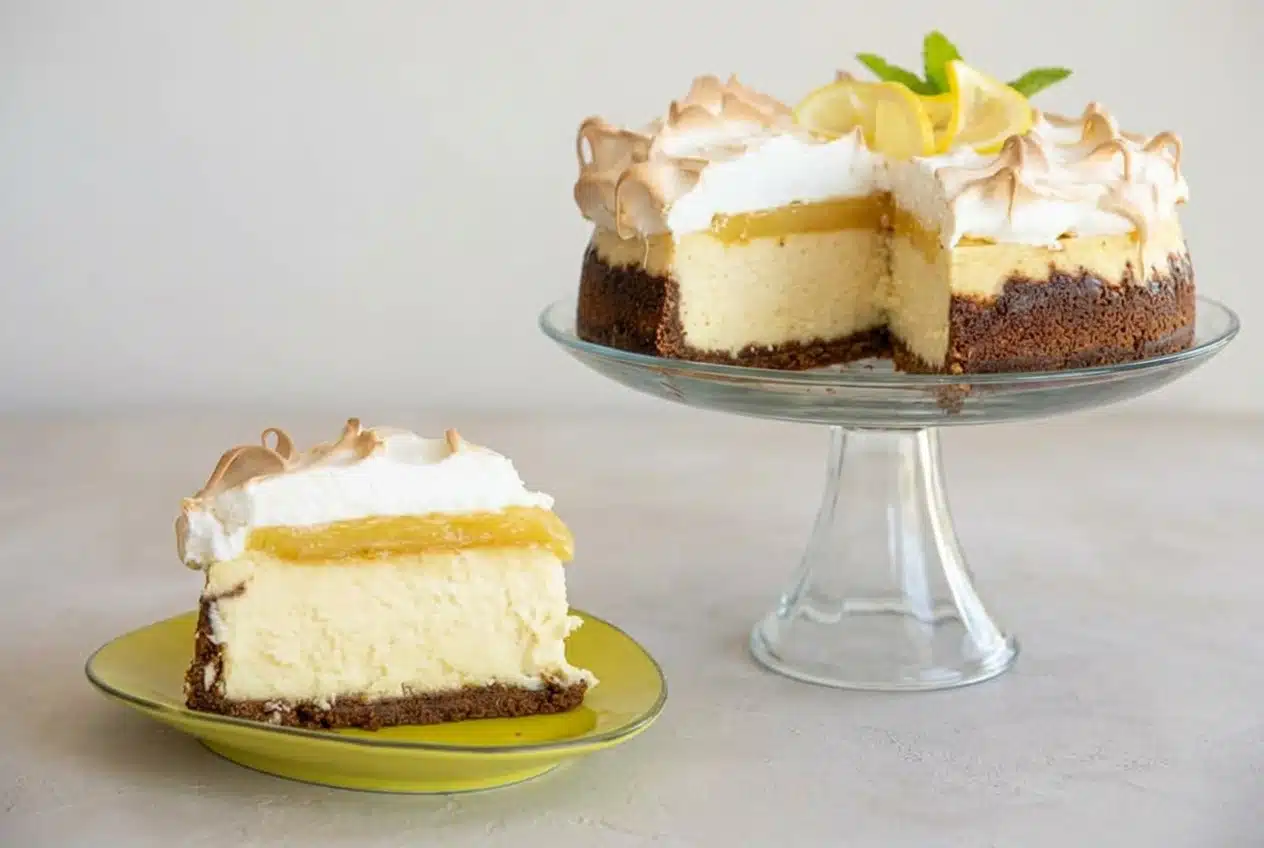
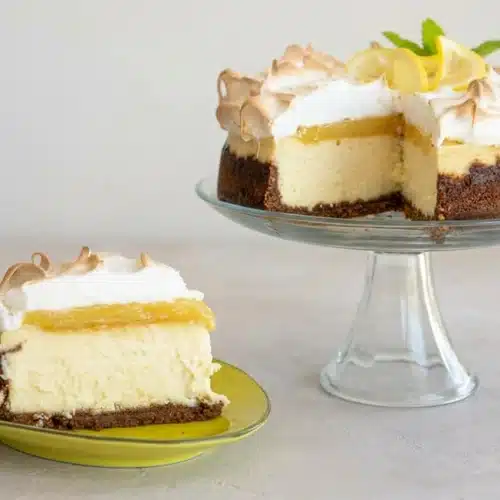
Lemon meringue cheesecake combines a spiced cookie crust, creamy baked filling, tart lemon curd, and airy toasted meringue. A water bath, gradual cooling, and a bare cheesecake rim for anchoring the topping help create distinct layers that hold together when sliced.
This baked lemon meringue cheesecake balances rich cream cheese with fresh citrus and warm ginger. The homemade curd brings a concentrated lemon flavor, while the meringue adds a light, sweet finish.
It’s a dessert worth planning around rather than rushing through. Most of that planning involves cooling and chilling, not constant hands-on work. The topping’s grip starts at the rim.
I keep the egg-white bowl well away from the buttery crust mixture; clean, grease-free equipment gives the meringue a better start.
Key Ingredients and Component Roles
Gingersnaps and butter build a crisp foundation, cream cheese and eggs give the filling structure, and fresh lemon supplies brightness. Sugar balances the tartness, cornstarch thickens, and cream of tartar supports the airy topping.
- 397g (14 oz / ~46 cookies) gingersnap cookies, finely crushed
- 113g (1/2 cup / 1 stick) unsalted butter, melted
- 904g (4 packages / 32 oz) brick cream cheese, room temperature
- 220g (1 cup) granulated sugar
- 2 large lemons, zested and juiced
- 1g (1 tsp) ground ginger
- 1/4 tsp kosher salt
- 4 large eggs, room temperature
- 60ml (1/4 cup) heavy cream
- 40g (1/3 cup) cornstarch
- 3 medium lemons, zested (2 tbsp) and juiced (120ml / 1/2 cup)
- 300g (1 1/3 cups) granulated sugar, divided (1 cup for curd, 1/3 cup for meringue)
- 3 large eggs, whites and yolks separated
- 45ml (3 tbsp) cold water
- 28g (2 tbsp) unsalted butter, sliced
- 1g (1/4 tsp) cream of tartar
- Fresh lemon slices and fresh mint sprigs
Before you begin: The filling uses the listed 40g of cornstarch, but the curd also calls for cornstarch without a separate quantity. That curd amount needs clarification before cooking; don’t guess an additional amount or assume the filling’s portion should be divided.
For the crust: Finely crushed gingersnaps provide crunch and warm spice. Melted butter binds the crumbs so they press into a cohesive shell. The mixture should resemble damp sand rather than loose cookie dust.
For the filling: Choose full-fat brick cream cheese rather than a tub-style spread. Room-temperature cream cheese and eggs combine more smoothly, reducing the temptation to beat a lumpy batter aggressively. Heavy cream adds richness, cornstarch supports the filling’s structure, and salt keeps the sweetness balanced.
For the lemon layers: Zest contributes fragrant citrus oils, while juice provides acidity. Fresh lemons supply both, so bottled juice alone won’t replace their full flavor. Keep the filling’s lemons separate from the measured juice and zest intended for the curd.
For the curd and crown: Yolks enrich the curd, and butter gives it a rounded finish. The separated whites become the meringue. Cream of tartar helps stabilize that foam, while gradually added sugar supports a glossy texture.
Step-by-Step Lemon Meringue Cheesecake Method

Work through the components in order: crust, filling, cooling, curd, then meringue. Unlike a chilled-only cheesecake, this filling depends on baking and gradual cooling before its final refrigerator rest.
- Set the oven to 350°F (180°C) and boil 4 cups of water for the water bath.
The water should be boiling when it goes into the roasting pan. - Work the melted butter through the gingersnap crumbs, pack the mixture firmly into an 8 or 9-inch springform pan, and bake at 350°F for 10 minutes; after the crust cools completely, enclose the pan’s exterior in two layers of heavy-duty foil.
The buttered crumbs should hold together when pressed, and the foil should cover the bottom and sides of the pan. - Start the cream cheese, 1 cup sugar, lemon zest, ginger, and salt on low speed, increase to medium for 3 minutes, then mix the eggs in on low for 2 minutes; add the lemon juice and heavy cream for 30 seconds before incorporating the cornstarch just until combined.
A smooth, evenly blended batter is the goal, with no dry streaks of cornstarch remaining. - Transfer the batter to the prepared crust, place the wrapped springform pan inside a roasting pan, pour boiling water around it to halfway up its sides, and bake at 350°F for 1 hour 15 minutes.
The outer filling should look firmer than the center, which may retain a gentle, gelatin-like wobble. - Switch off the oven, hold its door 2 inches open with a wooden spoon, and leave the cheesecake inside for 1 hour before removing it to cool to room temperature, covering it, and refrigerating it for 6+ hours or overnight.
The chilled filling should feel firm enough to support a separate curd layer. - Warm 1/2 cup lemon juice with 1 cup sugar until steaming, whisk the yolks with the curd’s cornstarch and cold water separately, gradually whisk the hot juice into the yolks, then return everything to the pan over medium-low heat for 1–2 minutes; off the heat, incorporate 2 tbsp butter and 2 tbsp zest, then allow 1 hour for cooling.
The cooked curd should become thick and glossy, with a pudding-like consistency that coats the whisk. - Release the chilled cheesecake from its springform pan and cover the top with cooled curd, stopping 1/2 inch short of the edge.
A clearly exposed ring of cheesecake should surround the curd. - Beat the egg whites with cream of tartar at medium speed for 1 minute, gradually feed in 1/3 cup sugar, then continue at medium-high speed for 5–6 minutes.
The finished meringue should look glossy and form stiff peaks that stand upright when the beaters lift. - Heat the oven to 375°F (190°C), secure the meringue to the exposed cheesecake rim before covering the center, shape peaks, and bake for 9–10 minutes; allow 20 minutes of cooling before cutting.
The peaks should have golden-brown tips rather than a pale, uniformly white surface.
The exposed perimeter is a structural detail, not a decorating preference. Curd creates a slippery surface; direct contact between meringue and cheesecake gives the topping somewhere firmer to grip.
Common Mistakes and Troubleshooting Tips
Most layer problems begin before assembly. Smooth batter, an intact water-bath barrier, properly tempered curd, and well-whipped whites each prevent a different kind of disappointment.
Preventing Cheesecake Cracks and Water-Bath Leaks
- Lumpy batter: Cold cream cheese resists blending. Start with the listed room-temperature brick cream cheese instead of trying to beat cold lumps into submission after adding the eggs.
- Cracked surface: Excessive mixing after the eggs can incorporate unwanted air. Follow the low-speed stage and stop once the cornstarch disappears into the batter.
- Cracks during cooling: An abrupt change from a hot oven to a cool room stresses the filling. Keep the gradual, door-ajar cooling stage rather than removing the cake immediately.
- Water entering the pan: Gaps or tears in the foil can let bath water reach the crust. Check both heavy-duty layers before filling the roasting pan.
A larger silicone pan can serve as an optional additional water barrier, but it isn’t part of the foil-wrapped setup above. Whatever barrier you choose, don’t treat a springform pan’s latch as a watertight seal.
Stopping Meringue Weeping and Topping Slippage
- Whites won’t build volume: Grease or traces of yolk can interfere with whipping. Begin with clean beaters and a grease-free bowl, and separate the eggs carefully.
- Grainy or weeping topping: Sugar that hasn’t dissolved can contribute to moisture beads. Add it gradually rather than dumping it in, and retain the cream of tartar.
- Meringue slides when sliced: A curd-covered edge leaves the topping resting entirely on a slick layer. Preserve the bare cheesecake border and anchor the meringue there first.
- Curd contains cooked egg flecks: Adding heat too abruptly can curdle the yolks. Temper them gradually with the steaming juice mixture and keep whisking over the specified gentle heat.
The same attention to sugar dissolution and a secure topping edge matters in classic lemon meringue pie, though this cheesecake has its own chilled filling and assembly sequence.
Flavor and Crust Variations
These optional directions change the flavor or finish, not the ingredient quantities or baking instructions above. Cookie composition and citrus tartness vary, so treat swaps as adaptations rather than identical replacements.
Graham Cracker, Digestive Biscuit, or Shortbread Crust Swap
- Graham crackers: A mellow, toasty crust lets the lemon take center stage without ginger’s warmth.
- Digestive biscuits: Their wheat-forward flavor gives the dessert a less overtly spiced foundation.
- Shortbread: A buttery cookie crust emphasizes richness alongside the tart curd.
- Certified gluten-free cookies: These offer a possible crust direction, but changing the cookies alone doesn’t establish suitability for someone with an allergy.
Meyer Lemon or Key Lime Citrus Swap
Meyer lemon suggests a softer, more floral citrus profile. Key lime moves the dessert toward a sharper lime character. Neither direction comes with an established substitution ratio here, so don’t assume equal fruit counts will provide equivalent juice or acidity.
Kitchen-Torch Meringue Finishing Instead of Oven Browning
A kitchen-torch finish is an optional alternative for localized caramelized color. The oven finish above provides the specified baking method and a broader golden finish across the peaks. Browning alone doesn’t establish egg doneness, so don’t treat the two finishes as interchangeable cooking steps.
Berry Coulis Swirl or Fresh Berry Topping
- Raspberry coulis: A tart berry accent adds contrast to the yellow curd and sweet meringue.
- Blackberry coulis: Dark berry flavor gives the citrus a deeper, fruitier counterpoint.
- Fresh berries: Raspberries or blueberries add a juicy contrast without changing the cheesecake filling.
For another lemon-and-berry dessert format, try lemon blueberry cheesecake bars.
Make-Ahead and Storage
Plan backward from serving, allowing the baked cheesecake to finish its cooling and chilling stages before you begin the final topping.
Smart Make-Ahead Staging
The cheesecake’s stated refrigerator rest makes it the natural component to prepare first. Complete that rest rather than trying to compensate for a warm filling with a thicker curd layer.
Next, allow the cooked curd its full cooling stage before spreading it. Keep the whipping and toasting stages close to serving instead of assembling the meringue during the cheesecake’s long chill.
If you prefer an oven-free dessert with individual portions, no-bake lemon cheesecake cups offer a different preparation style. They aren’t a substitute method for this baked filling.
Refrigeration and Texture Protection
Keep the finished cheesecake covered and chilled, using a container tall enough to avoid pressing against the peaks. Return remaining portions to the refrigerator after serving rather than leaving the cake on the dessert table.
The chilling time in the method establishes the filling’s texture; it isn’t a shelf-life limit for the assembled dessert. No verified refrigerator duration is established here, so avoid assigning one or relying on the topping’s appearance to judge storage suitability.
How to Slice and Serve Cleanly
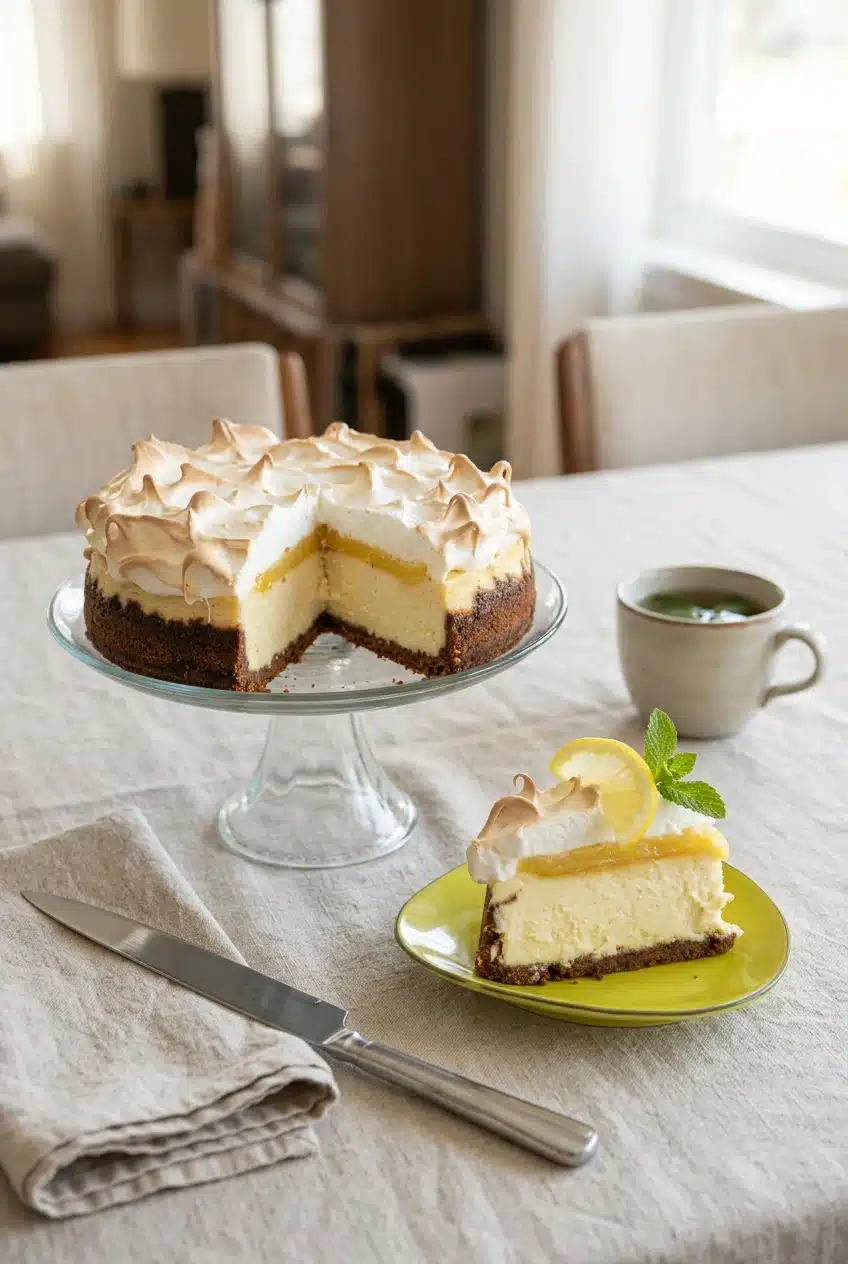
A clean blade makes a noticeable difference when it must pass through airy meringue, soft curd, dense cheesecake, and a cookie crust.
Run a long, sharp knife under hot water, wipe it dry, and make a deliberate cut. Clean, warm, and dry the blade again between every cut so curd and cream cheese don’t drag across the next slice.
Finish with the listed fresh lemon slices and mint sprigs. Optional tart berries provide a juicy contrast to the rich filling. Hot mint tea or iced Earl Grey makes a refreshing pairing without competing with the lemon.
Bringing Together This Citrus Showstopper
The appeal lies in the contrast: spiced crisp crust, creamy lemon filling, bright curd, and airy meringue with golden tips. Each layer has its own texture and its own job.
Give the cooling stages their space, follow the texture cues, and leave that clean rim for the topping. A little care at the edge pays off when you cut the first slice.
Frequently Asked Questions
Why Did My Meringue Weep or Slide Off the Cheesecake?
Undissolved sugar and omitted cream of tartar can contribute to weeping; add the sugar gradually and keep the stabilizer. Sliding usually points to meringue resting entirely on curd; anchor it directly to the exposed cheesecake rim.
How Do I Keep My Cheesecake From Cracking in the Oven?
Use room-temperature ingredients and gentle mixing once the eggs enter the batter. Retain the water bath and gradual oven cooling rather than rushing either stage.
Can I Swap the Gingersnap Crust for Graham Crackers or Shortbread?
Yes, both are optional flavor directions for a milder crust; digestive biscuits are another choice. Their butter content and texture differ, so an identical result with unchanged proportions isn’t established here.
Is It Better to Toast the Meringue in the Oven or With a Kitchen Torch?
Use the oven for the specified finish and a broadly golden topping. A torch offers localized browning, but surface color alone doesn’t establish egg doneness or replace the specified baking stage.
How Far in Advance Can I Make Lemon Meringue Cheesecake, and How Long Does It Keep Safely?
Prepare the baked cheesecake first and complete its stated cooling and chilling stages before assembly. Add the meringue close to serving, and keep the finished dessert covered and chilled; no verified storage-life limit is established here.
Can I Adapt Lemon Meringue Cheesecake for Egg or Gluten Allergies?
This version isn’t egg-free: eggs contribute to the filling, curd, and meringue, and no egg-free adaptation is established here. Certified gluten-free cookies are a possible crust choice, but assess every ingredient and preparation surface for the individual’s needs rather than assuming a cookie swap makes the dessert suitable.
Lemon Meringue Cheesecake

Equipment
- 8 or 9-inch springform pan
- Roasting pan
- Heavy-duty aluminum foil
- Mixing Bowls
- Electric Mixer
- Saucepan
- Whisk
Ingredients
- 397 g gingersnap cookies (14 oz / ~46 cookies), finely crushed
- 113 g unsalted butter (1/2 cup / 1 stick), melted
- 904 g brick cream cheese (4 packages / 32 oz), room temperature
- 220 g granulated sugar (1 cup)
- 2 large lemons zested and juiced
- 1 g ground ginger (1 tsp)
- 1/4 tsp kosher salt
- 4 large eggs room temperature
- 60 ml heavy cream (1/4 cup)
- 40 g cornstarch (1/3 cup)
- 3 medium lemons zested (2 tbsp) and juiced (120ml / 1/2 cup)
- 300 g granulated sugar (1 1/3 cups), divided (1 cup for curd, 1/3 cup for meringue)
- 3 large eggs whites and yolks separated
- 45 ml cold water (3 tbsp)
- 28 g unsalted butter (2 tbsp), sliced
- 1 g cream of tartar (1/4 tsp)
- Fresh lemon slices and fresh mint sprigs
Instructions
- Set the oven to 350°F (180°C) and boil 4 cups of water for the water bath. The water should be boiling when it goes into the roasting pan.
- Work the melted butter through the gingersnap crumbs, pack the mixture firmly into an 8 or 9-inch springform pan, and bake at 350°F for 10 minutes; after the crust cools completely, enclose the pan’s exterior in two layers of heavy-duty foil. The buttered crumbs should hold together when pressed, and the foil should cover the bottom and sides of the pan.
- Start the cream cheese, 1 cup sugar, lemon zest, ginger, and salt on low speed, increase to medium for 3 minutes, then mix the eggs in on low for 2 minutes; add the lemon juice and heavy cream for 30 seconds before incorporating the cornstarch just until combined. A smooth, evenly blended batter is the goal, with no dry streaks of cornstarch remaining.
- Transfer the batter to the prepared crust, place the wrapped springform pan inside a roasting pan, pour boiling water around it to halfway up its sides, and bake at 350°F for 1 hour 15 minutes. The outer filling should look firmer than the center, which may retain a gentle, gelatin-like wobble.
- Switch off the oven, hold its door 2 inches open with a wooden spoon, and leave the cheesecake inside for 1 hour before removing it to cool to room temperature, covering it, and refrigerating it for 6+ hours or overnight. The chilled filling should feel firm enough to support a separate curd layer.
- Warm 1/2 cup lemon juice with 1 cup sugar until steaming, whisk the yolks with the curd’s cornstarch and cold water separately, gradually whisk the hot juice into the yolks, then return everything to the pan over medium-low heat for 1–2 minutes; off the heat, incorporate 2 tbsp butter and 2 tbsp zest, then allow 1 hour for cooling. The cooked curd should become thick and glossy, with a pudding-like consistency that coats the whisk.
- Release the chilled cheesecake from its springform pan and cover the top with cooled curd, stopping 1/2 inch short of the edge. A clearly exposed ring of cheesecake should surround the curd.
- Beat the egg whites with cream of tartar at medium speed for 1 minute, gradually feed in 1/3 cup sugar, then continue at medium-high speed for 5–6 minutes. The finished meringue should look glossy and form stiff peaks that stand upright when the beaters lift.
- Heat the oven to 375°F (190°C), secure the meringue to the exposed cheesecake rim before covering the center, shape peaks, and bake for 9–10 minutes; allow 20 minutes of cooling before cutting. The peaks should have golden-brown tips rather than a pale, uniformly white surface.