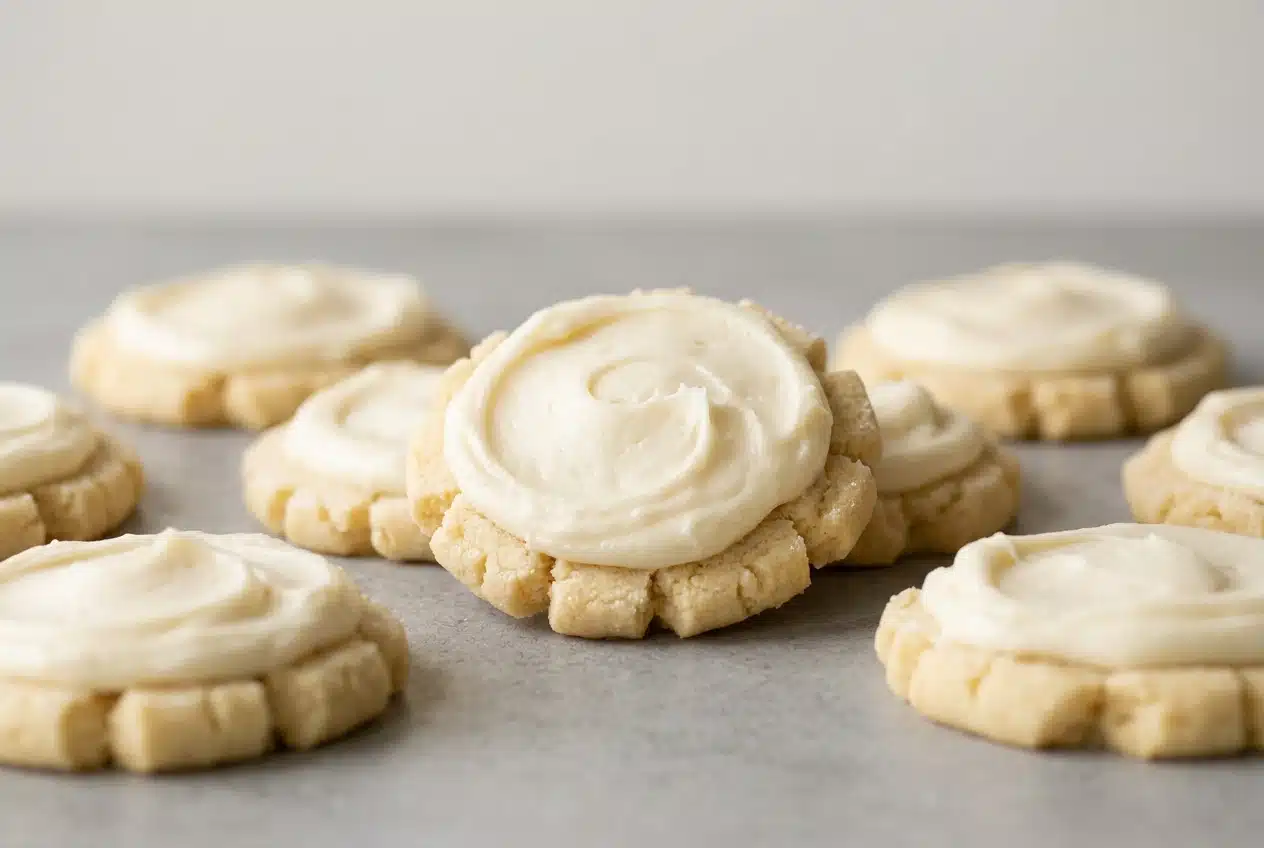
Make swig sugar cookies by pressing rich dough balls with a sugar-coated glass, baking until the bottoms barely color, then cooling, chilling, and frosting. These Utah soda-shop favorites have jagged edges, a buttery, shortbread-style crumb, and creamy pink sour cream frosting.
This homemade copycat skips the rolling pin and cookie cutters. You shape each cookie directly on the baking sheet, letting the dough crack naturally around the glass.
The frosting brings a gentle tang and almond aroma to the sweet, tender cookie. Pale tops are the trick.
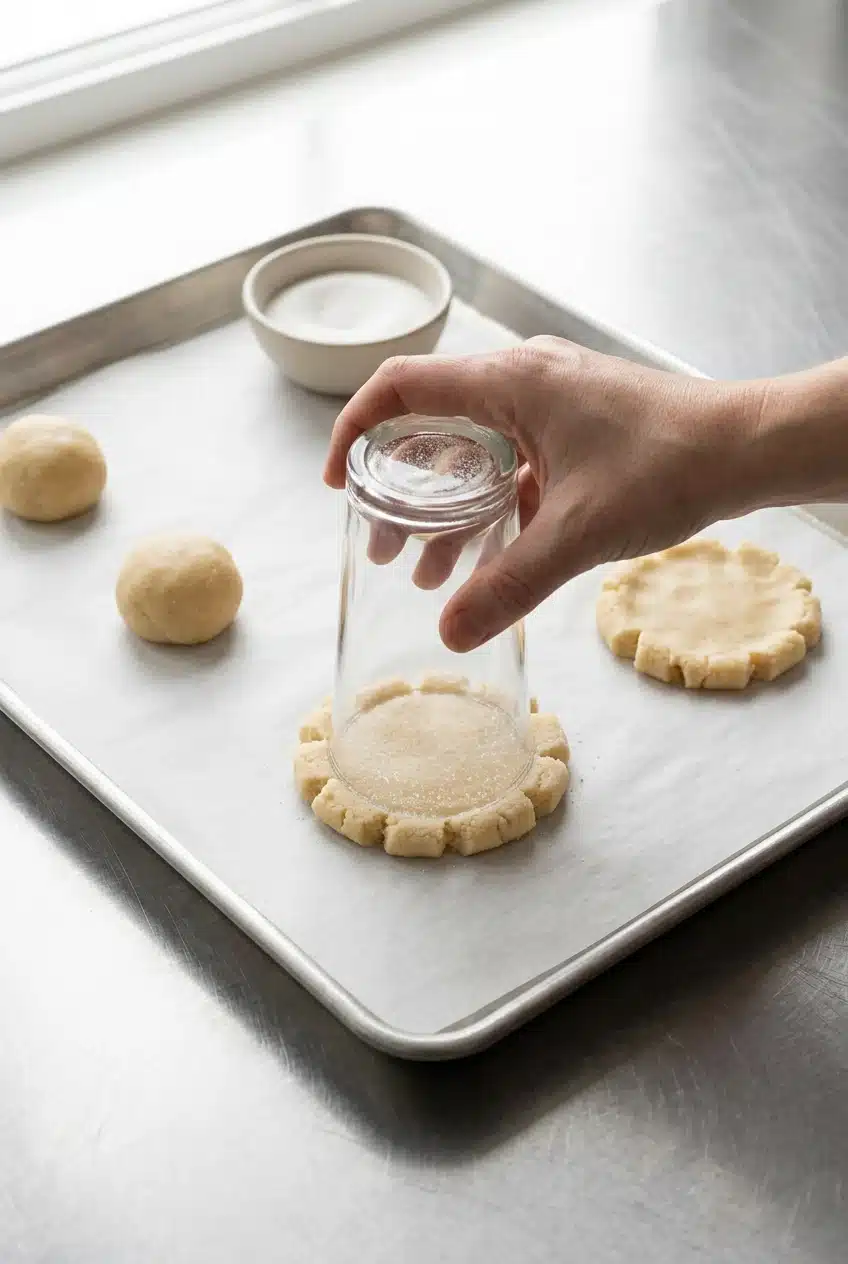
Choose a drinking glass with a flat bottom so it presses the dough evenly.
Key Ingredients for Authentic Sugar Cookies
Butter supplies richness, oil softens the crumb, and the sugars shape the texture. Eggs and flour provide structure, sour cream adds moisture and tang, and the extracts give the dough and frosting their distinct aromas.
- 1 cup salted butter, softened
- 3/4 cup vegetable oil
- 1 1/4 cups sugar
- 3/4 cup powdered sugar
- 2 eggs
- 2 tablespoon sour cream
- 1 teaspoon vanilla extract
- 5 1/2 cups all-purpose flour
- 1/2 teaspoon baking soda
- 1/2 teaspoon cream of tarter
- 1/2 teaspoon salt
- 1/2 cup unsalted butter, softened
- 1/4 cup sour cream
- 4 cups powdered sugar
- 1/2 teaspoon almond extract
- milk for thinning
For the dough: Use the salted butter and the first portions of sour cream and sugars. Butter brings flavor, while liquid oil helps keep the chilled crumb tender. Granulated sugar adds texture; powdered sugar contributes a delicate center. Sour cream supplies moisture and acidity, while cream of tartar works alongside baking soda in the leavening system.
For the frosting: The unsalted butter and remaining sour cream form a creamy, tangy topping. Powdered sugar gives it body, almond extract adds fragrance, and milk adjusts its spreading consistency. The exact quantities appear above, with baking timing below.
The shaping and frosting steps also use granulated sugar for dipping, cooking spray for the glass, and red food coloring, as detailed in the method.
I look for softened butter that yields to gentle pressure but still holds its shape, rather than butter with a shiny, melted surface.
How to Make Swig Sugar Cookies Step by Step
The dough should feel thick and soft, noticeably denser than a loose drop-cookie batter. This recipe yields 24 cookies, with about 15 minutes of prep plus baking, cooling, and chilling.
- Set the oven to 350°F and cover two baking sheets with parchment paper.
The lined sheets provide a ready surface for shaping the dough. - Beat the salted butter, vegetable oil, both dough sugars, eggs, sour cream, and vanilla together in a large bowl.
The mixture should look evenly combined and creamy before the dry ingredients go in. - Incorporate the flour, baking soda, cream of tartar, and salt into the wet mixture.
The finished dough should be thick enough to hold a rounded shape. - Shape golf-ball-sized portions of dough into balls and arrange them on the prepared sheets.
Each portion should hold together rather than spread into a puddle. - Measure 1/4 cup granulated sugar into a bowl, coat the glass bottom with cooking spray, and dip it into the sugar before pressing each dough ball to about 1/2 inch thick.
Look for dough spreading beyond the glass to form a raised, irregular rim with natural cracks. - Bake each sheet for 7–8 minutes, checking the undersides before removing it from the oven.
The bottoms should show only the faintest browning while the tops remain pale and matte. - Transfer the cookies to a cooling rack, let them cool, and then refrigerate them.
The cookies should no longer feel warm when they go into the refrigerator. - Beat the unsalted butter, sour cream, and almond extract together, gradually incorporate the powdered sugar, adjust with milk, and add 1 drop of red food coloring before whipping on high for 1 minute.
The frosting should look fluffy and pastel pink, with a consistency that spreads without running. - Spread the pink frosting over the cooled cookies.
The topping should stay in place rather than melt against the cookie surface.
Pro Tips and Common Mistakes to Avoid
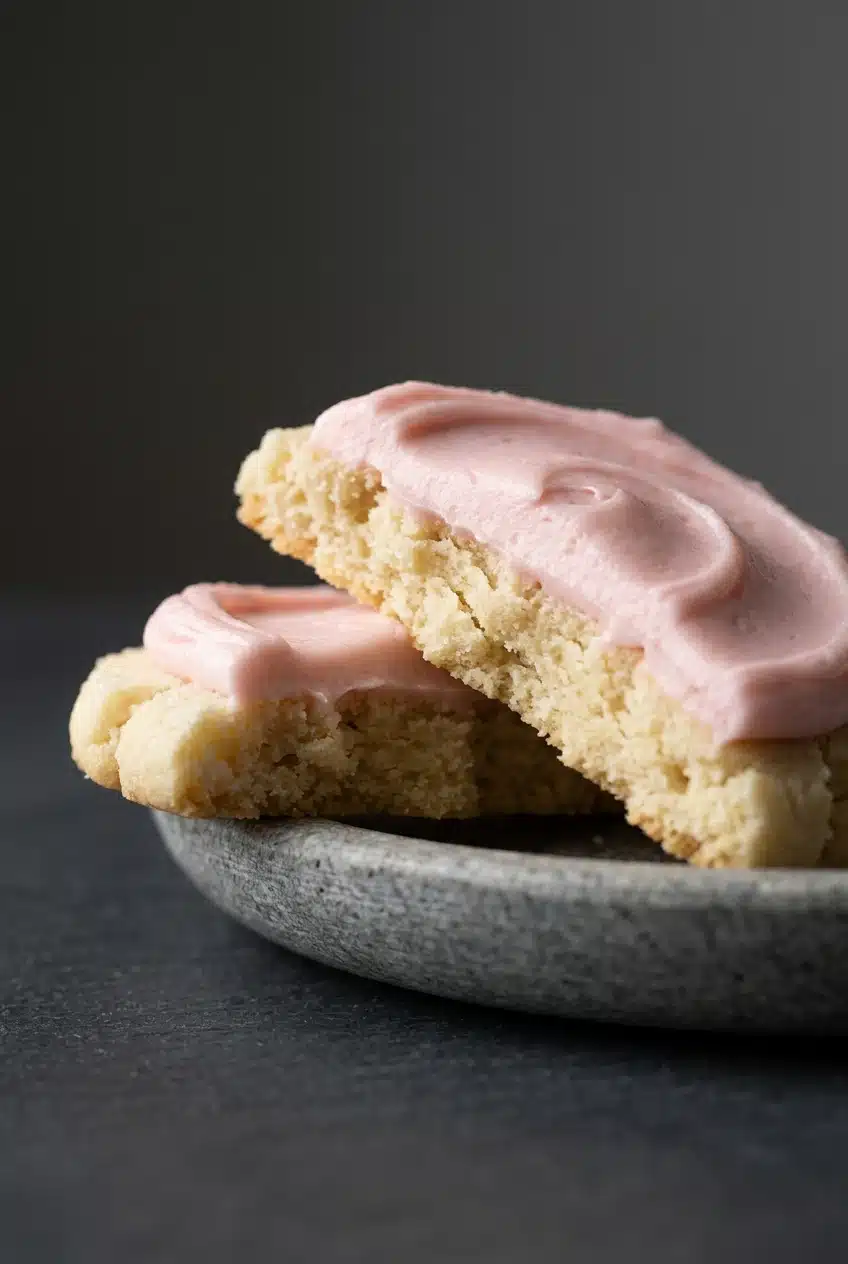
Watch the glass release and the cookie undersides closely. Those two checks prevent the most frustrating texture problems.
- The glass sticks: An uncoated surface grabs the dough and tears it upward. Use the cooking spray and sugar coating, then dip the glass in sugar again between cookies.
- The edges look smooth: The dough hasn’t spread far enough beyond the glass. Press to the specified thickness and allow the rim to split naturally instead of tidying it.
- The cookies turn dry: Waiting for golden tops takes the bake too far. Check for barely colored bottoms within the stated baking window.
- The frosting slides: Warm cookies soften the topping. Complete the cooling and chilling sequence before frosting.
- The frosting runs: Too much milk makes it loose. Add milk gradually and stop when the frosting spreads easily but holds a soft ridge.
The buttery crumb may remind you of classic shortbread cookies, but these should retain a soft center rather than bake to a crisp finish.
Delicious Variations to Try
Keep these optional flavor directions separate from the pink sour cream version above.
Cream Cheese Pink Frosting Variation
Cream cheese frosting offers a richer, fuller tang than sour cream frosting. It’s an alternative for anyone who prefers a more pronounced creamy-cheese flavor.
Chocolate Swig Sugar Cookies
A cocoa-based version brings a chocolate-cookie flavor, but cocoa changes the dough balance, so it isn’t a direct addition to this formula. For a separate chocolate option, try fudgy brownie cookies.
Vanilla or Citrus-Kissed Frosting (No Almond Extract)
Vanilla offers a mellow alternative to almond extract, while citrus zest adds a bright, fragrant direction. These are optional flavor choices, not changes to the frosting instructions above.
Chilling, Storage, and Make-Ahead Tips
Build cooling and chilling into your baking plan rather than treating them as optional finishing touches. Cool the baked cookies on a rack before refrigerating, then frost them once cold.
For texture protection, use a covered container and avoid stacking while the frosting is soft. If the topping has firmed enough to layer, parchment between layers helps limit smearing; a single layer protects the finish best.
For staged assembly, keep the chilled cookies unfrosted until you’re ready to finish them. This leaves the soft topping free from container lids and stacked cookies.
For party trays or favor bags, take a cautious approach with the sour cream frosting: keep the cookies chilled when they aren’t being served, and don’t treat sealed bags as shelf-stable packaging. No verified room-temperature holding limit or storage duration is available for this frosting.
Serving Ideas and Dirty Soda Pairings
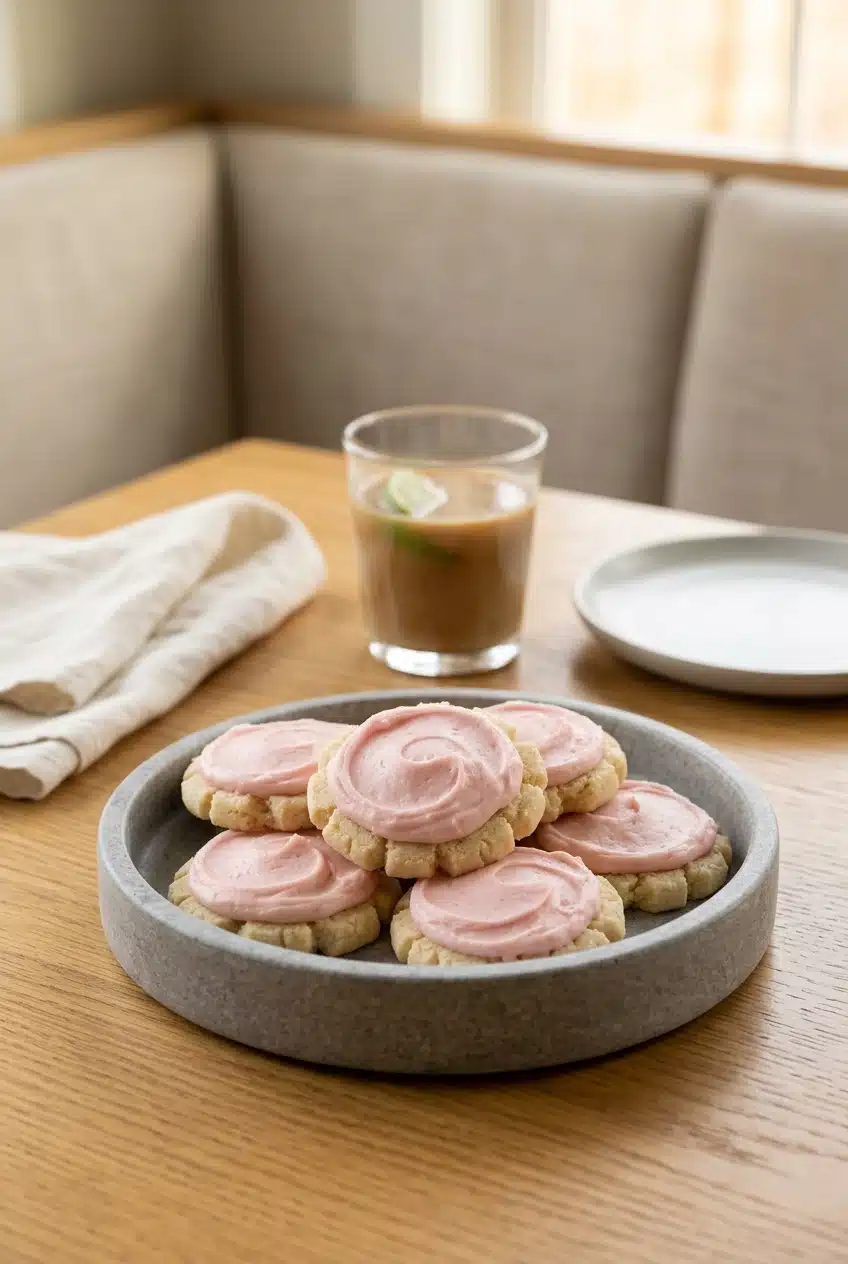
Serve the cookies chilled for the familiar soda-shop texture. As an optional presentation, pair a chilled cookie with soft, room-temperature frosting just before serving rather than tempering the entire batch.
Cola or Dr Pepper with coconut or vanilla syrup, cream, and lime makes a fitting dirty soda pairing. The citrus brings a bright contrast to the buttery cookie and sweet frosting.
Pastel pink fits showers and dessert spreads alongside Valentine’s Day cookies. Other frosting colors can suit holidays or game nights without changing the cookie flavor.
Final Thoughts on Homemade Cookies
A sugar-coated glass gives these cookies their rustic edges without rolling out dough or using cutters. Keep the bottoms barely browned for the soft crumb that makes the pink frosting feel right at home.
Choose a frosting tint for your next gathering and enjoy the chilled, buttery result. Let those imperfect edges stay imperfect.
Frequently Asked Questions
What Makes Swig Sugar Cookies Different From Grocery Store Lofthouse Cookies?
Swig-style cookies have a denser, buttery, shortbread-like crumb rather than the airy, cakey texture associated with Lofthouse cookies. The sugar-pressed jagged rim and tangy sour cream frosting distinguish this version.
Why Does This Recipe Use Both Butter and Vegetable Oil, Plus Two Kinds of Sugar?
Butter contributes flavor, while oil helps maintain a tender texture when chilled. Granulated sugar adds texture, and powdered sugar contributes a delicate, melt-in-your-mouth crumb.
How Do I Keep the Glass From Sticking When Pressing the Cookie Dough?
Coat the glass bottom with cooking spray before dipping it in granulated sugar. Dip it into sugar again between cookies to maintain the release layer.
Can Swig Sugar Cookies Sit Out on a Party Tray or Be Packed in Favor Bags?
Don’t assume this sour cream frosting is suitable for extended unrefrigerated display or gifting. Use the chilled handling approach above, and remember that a sealed favor bag doesn’t establish shelf stability.
Should Swig Sugar Cookies Be Eaten Cold or at Room Temperature?
Chilled is the characteristic serving style, and the method includes refrigeration after cooling. For an optional contrast, finish a chilled cookie with soft frosting just before serving.
How Many Calories Are in a Homemade Swig Sugar Cookie?
A verified calorie count isn’t available for this batch. A useful estimate would require the specific ingredient labels, actual cookie yield, and amount of frosting used on each cookie.
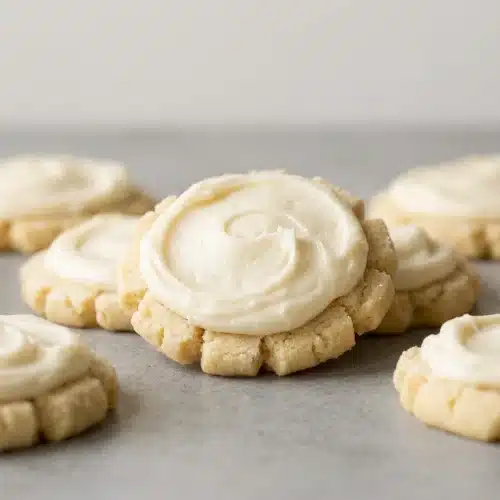
Swig Sugar Cookies

Equipment
- Baking Sheets
- Parchment Paper
- Mixing Bowls
- Flat-bottomed drinking glass
- Cooling Rack
Ingredients
- 1 cup salted butter softened
- 3/4 cup vegetable oil
- 1 1/4 cups sugar
- 3/4 cup powdered sugar
- 2 eggs
- 2 tablespoon sour cream
- 1 teaspoon vanilla extract
- 5 1/2 cups all-purpose flour
- 1/2 teaspoon baking soda
- 1/2 teaspoon cream of tarter
- 1/2 teaspoon salt
- 1/2 cup unsalted butter softened
- 1/4 cup sour cream
- 4 cups powdered sugar
- 1/2 teaspoon almond extract
- milk for thinning
Instructions
- Set the oven to 350°F and cover two baking sheets with parchment paper. The lined sheets provide a ready surface for shaping the dough.
- Beat the salted butter, vegetable oil, both dough sugars, eggs, sour cream, and vanilla together in a large bowl. The mixture should look evenly combined and creamy before the dry ingredients go in.
- Incorporate the flour, baking soda, cream of tartar, and salt into the wet mixture. The finished dough should be thick enough to hold a rounded shape.
- Shape golf-ball-sized portions of dough into balls and arrange them on the prepared sheets. Each portion should hold together rather than spread into a puddle.
- Measure 1/4 cup granulated sugar into a bowl, coat the glass bottom with cooking spray, and dip it into the sugar before pressing each dough ball to about 1/2 inch thick. Look for dough spreading beyond the glass to form a raised, irregular rim with natural cracks.
- Bake each sheet for 7–8 minutes, checking the undersides before removing it from the oven. The bottoms should show only the faintest browning while the tops remain pale and matte.
- Transfer the cookies to a cooling rack, let them cool, and then refrigerate them. The cookies should no longer feel warm when they go into the refrigerator.
- Beat the unsalted butter, sour cream, and almond extract together, gradually incorporate the powdered sugar, adjust with milk, and add 1 drop of red food coloring before whipping on high for 1 minute. The frosting should look fluffy and pastel pink, with a consistency that spreads without running.
- Spread the pink frosting over the cooled cookies. The topping should stay in place rather than melt against the cookie surface.