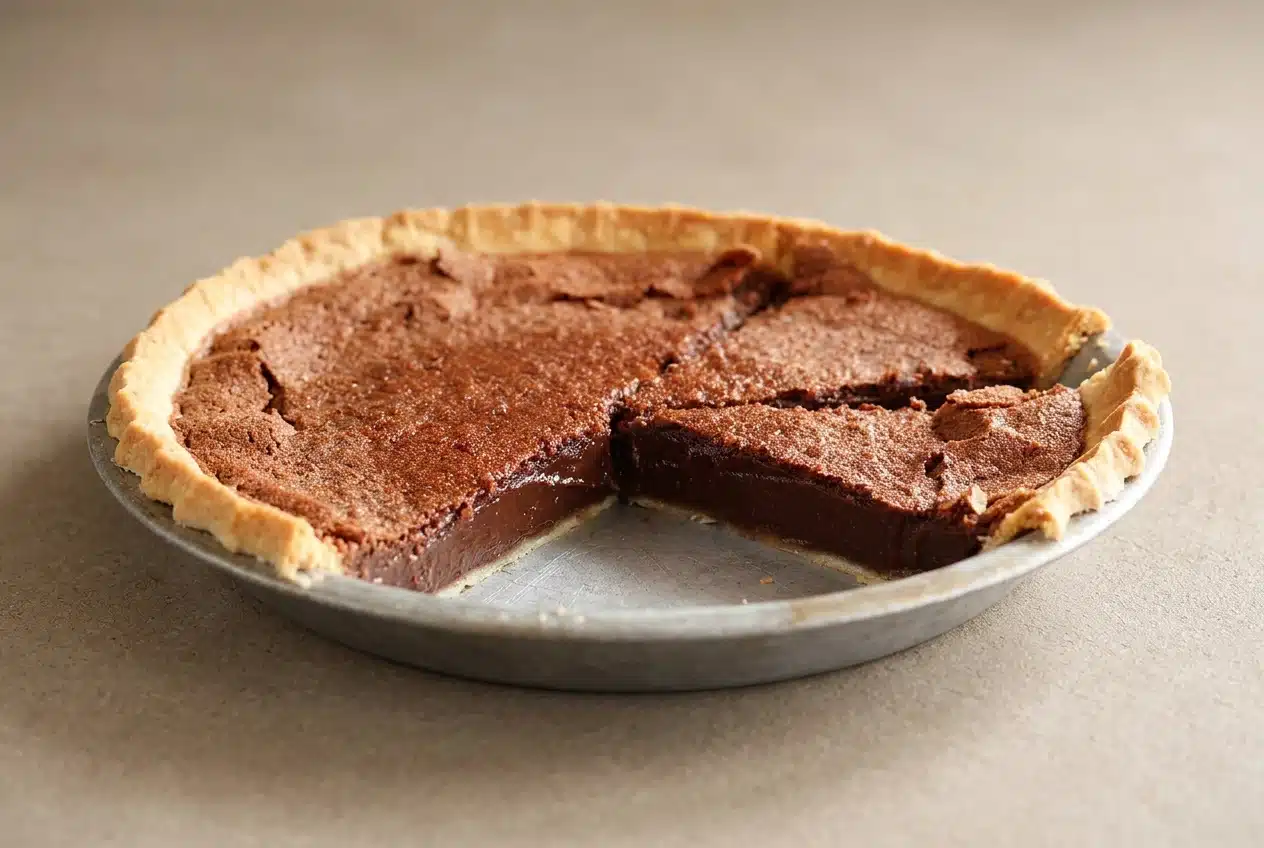
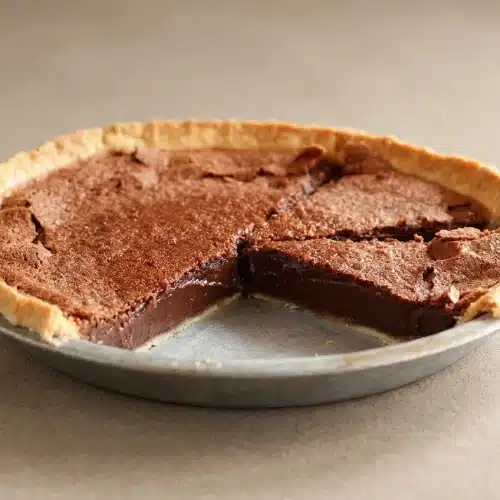
Chocolate chess pie is a Southern dessert with flaky pastry, a delicate crackled top, and a rich, fudgy chocolate center. Whisk the filling, bake it in an unbaked shell, and let it cool completely so each slice holds its shape.
This cocoa-based pie lands somewhere between a brownie and a baked custard. Evaporated milk gives the filling richness, while eggs and cornstarch help it set without losing that soft chocolate center.
The filling comes together in one bowl, with no separate chocolate-melting stage. The real trick is knowing when to stop baking. Watch for the gentle jiggle.
Whisk away visible cocoa and starch lumps before adding the wet ingredients.
Ingredients
Cocoa provides chocolate depth, sugar supports sweetness and the delicate top, and eggs and cornstarch give the filling structure. Butter and evaporated milk add richness, vanilla rounds out the aroma, and pastry brings a flaky contrast.
- 4 tablespoons cocoa powder
- 1 1/2 cups sugar
- 3 tablespoons corn starch
- 2 large eggs (beaten)
- 4 tablespoons unsalted butter (melted)
- 1 (5-ounce) can evaporated milk
- 1 teaspoon vanilla extract
- 1 (9-inch) unbaked pie crust (homemade or store-bought is fine)
- whipped cream (if desired)
Evaporated milk supplies concentrated dairy flavor without the added sweetness of sweetened condensed milk. They aren’t interchangeable here. Butter contributes a fuller mouthfeel, and optional whipped cream gives the dense filling a lighter contrast.
Cornstarch helps create a smooth filling. Other chess pies may use cornmeal for a slightly grainier bite or flour for thickening, but those ingredients aren’t direct replacements in this formula.
Choosing the Best Pie Crust (Store-Bought vs. Homemade)
Refrigerated rolled dough lets you use your own pie plate and shape the edge. Homemade pastry offers control over flavor and texture. A frozen shell in a foil pan offers convenience, but its flexible pan needs careful handling. Keep the shell unbaked for this recipe.
I favor a sturdy baking sheet under a flimsy foil pan so the crust edge doesn’t have to carry the weight during an oven transfer.
Natural vs. Dutch-Processed Cocoa Powder
Natural unsweetened cocoa generally has a brighter chocolate flavor. Dutch-processed cocoa tends toward a darker color and mellower flavor. Since this filling doesn’t depend on baking soda or baking powder, either is a reasonable choice, though flavor and appearance can differ.
How to Make Chocolate Chess Pie Step by Step
Mix the dry ingredients thoroughly before adding liquid, then judge the baked filling by both its top crust and its movement.
Prep: 15 minutes. Cook: 45 minutes. Total: 60 minutes. Servings: 8. The baking window below runs from 45 to 55 minutes; allow additional time for complete cooling.
- Set the oven to 350°F and whisk the cocoa powder, sugar, and corn starch in a large bowl.
The dry mixture should look evenly brown and sandy, without pockets of cocoa or starch. - Stir the beaten eggs, melted butter, evaporated milk, and vanilla into the dry mixture until thoroughly combined.
The filling should look glossy and uniform, with no dry streaks remaining. - Transfer the filling to the unbaked pie shell, taking care to keep it below the rim.
Leave room for the filling to rise rather than filling the pastry to overflowing. - Bake for 45 to 55 minutes, looking for a continuous crust over the surface and a mostly set filling.
A gentle wobble should remain beneath the top rather than a loose, liquid-looking slosh. - Let the pie cool completely before cutting and serving.
The center continues to firm during cooling, giving the slices their fudgy structure.
Add a dollop of whipped cream when serving, if desired.
What Makes This Southern Pie Special
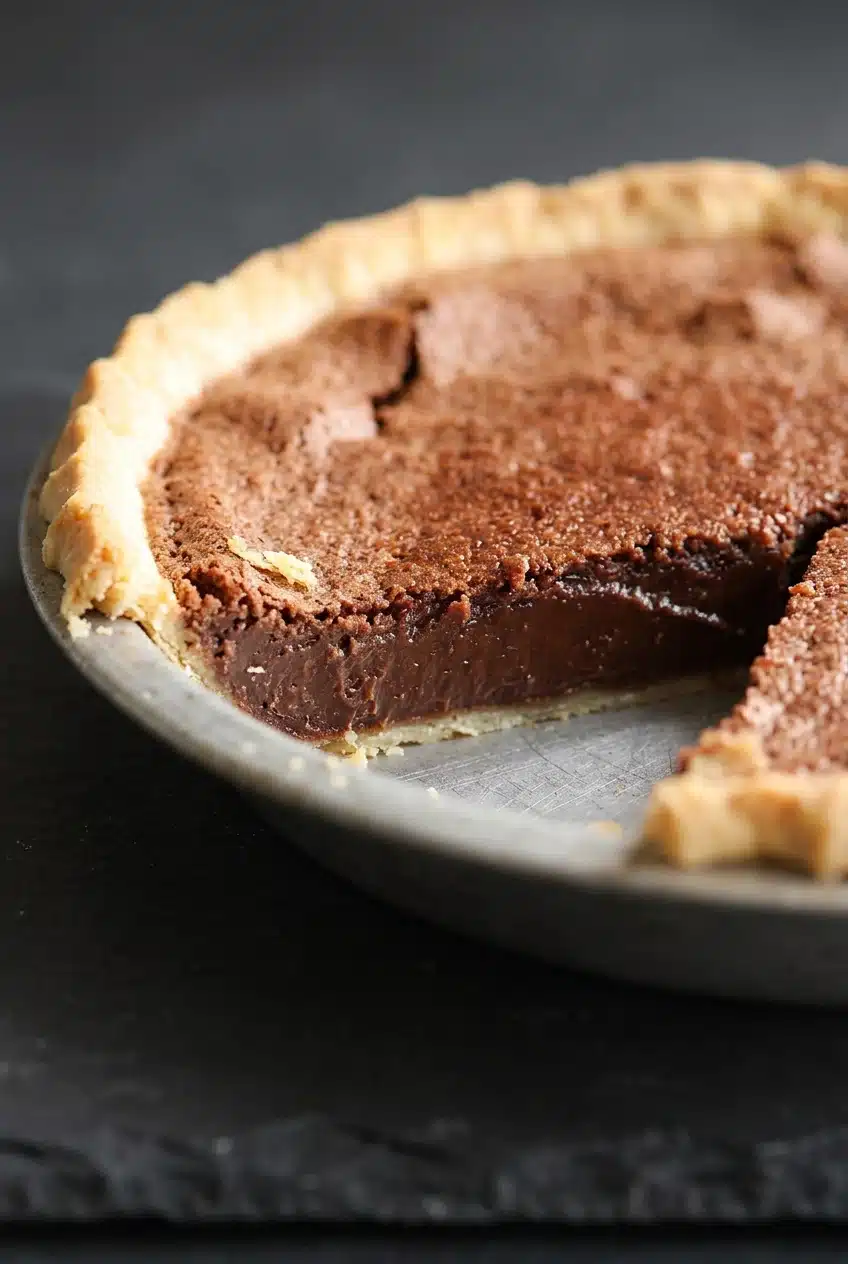
The appeal is the contrast: flaky pastry underneath, a thin, crisp chocolate top, and a dense center that stays soft. Unlike tangy, custard-smooth buttermilk pie, this version puts cocoa and fudgy richness first.
The name “chess pie” has several popular explanations. Stories connect it to “just pie,” cheese pie, or pies stored in a pie chest. These are naming theories, not a settled history.
If you enjoy the contrast between a baked chocolate top and a soft interior, Southern chocolate cobbler offers another comforting Southern dessert in that spirit.
Expert Tips and Common Mistakes to Avoid
Most texture problems begin with uneven mixing, too much filling, or cutting before the pie has finished setting.
- Cocoa specks or starch lumps: Dry pockets are harder to disperse once wet. Break them up thoroughly during the dry-whisking stage.
- Overflowing filling: The center can puff during baking. Stop pouring before the filling reaches the shell’s rim.
- Messy wedges: Warm filling hasn’t finished setting. Wait for complete cooling before slicing.
- A dry center: Baking until the whole pie is rigid can sacrifice its fudgy texture. Look for a mostly set filling with gentle movement.
How to Tell When Chocolate Chess Pie Is Done
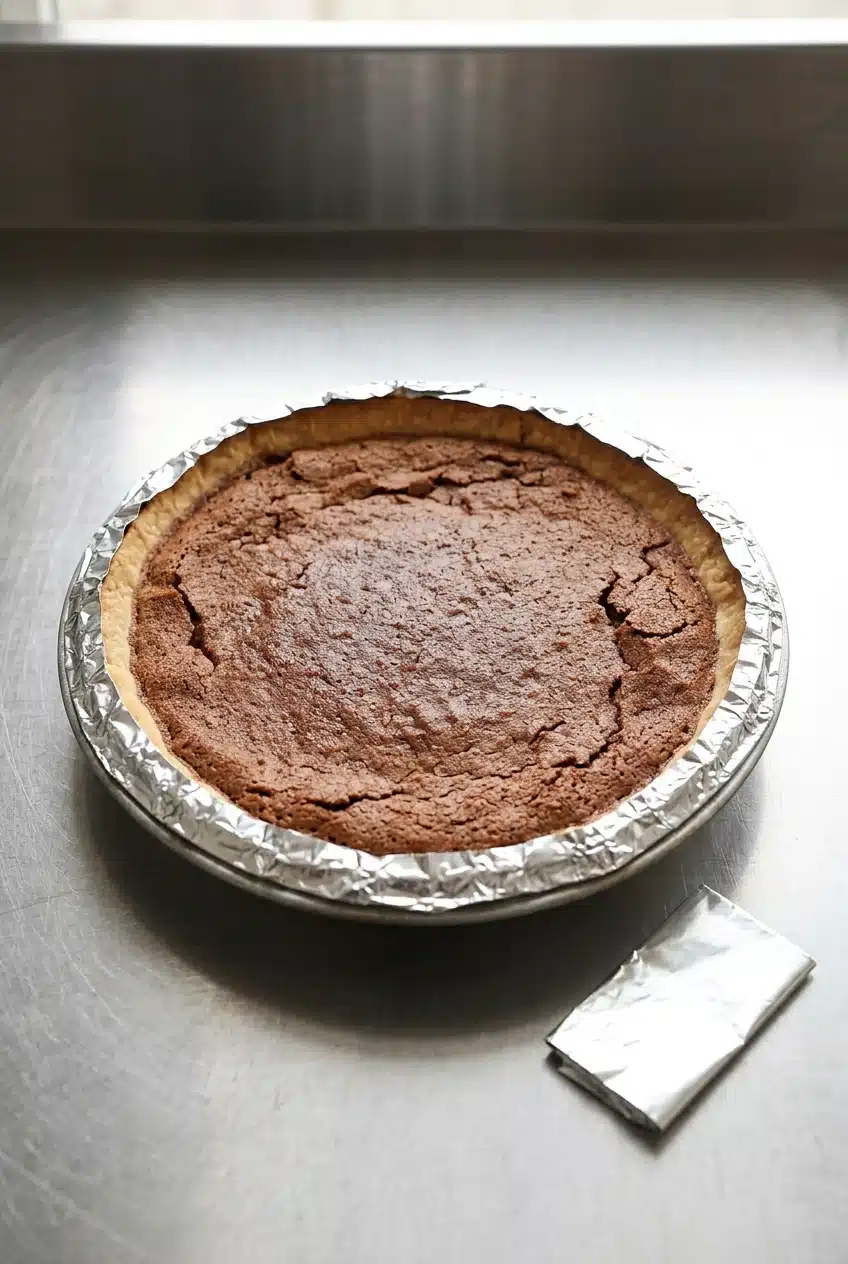
Look for a matte, papery crust across the entire top. Beneath it, the center should move gently as a cohesive filling, not ripple like loose batter. After cooling, expect a denser bite than the pudding-style filling of chocolate cream pie.
Appearance alone doesn’t establish food safety. Egg mixtures have a recommended minimum center temperature of 160°F, but chess pie may still be liquid at that point and need further baking to achieve its set. Treat that threshold separately from the recipe’s texture cues.
Some puffing followed by settling is normal. Steam and expanding air lift the filling in the oven; cooling lets it condense. Small surface cracks don’t automatically mean you’ve overbaked it.
Protecting the Crust Edges From Over-Browning
If the pastry edge browns faster than the filling sets, loosely shield the edge with foil. Keep the foil clear of the rising filling so it doesn’t stick to or pull away the delicate top.
Delicious Variations and Flavor Options
These optional directions offer different flavors or serving formats, rather than direct substitutions for the filling above. For a gathering, two whole pies are another planning option; keep each pie’s doneness in view.
Espresso Chocolate Chess Pie
Espresso powder or cooled espresso offers a coffee-accented direction with deeper roasted cocoa notes. Its bitterness can make the sweetness feel less one-dimensional, without making coffee the dominant flavor.
Dark or Double Chocolate Chess Pie
Dark or bittersweet chocolate points toward a denser, more chocolate-forward pie. That calls for a formula designed for bar chocolate rather than an unmeasured addition here; knowing how to melt chocolate smoothly is useful for that style.
Mini Chocolate Chess Tarts
Individual pastry portions offer the same crisp-top, fudgy-center appeal in an entertaining format. They need a recipe designed for smaller shells rather than the whole pie’s baking schedule.
Vanilla-Forward Chocolate Chess Pie
Vanilla brings a warm aromatic contrast to cocoa. For a softer flavor emphasis, choose a vanilla extract whose aroma you enjoy while retaining the stated amount.
Best Ways to Serve This Pie
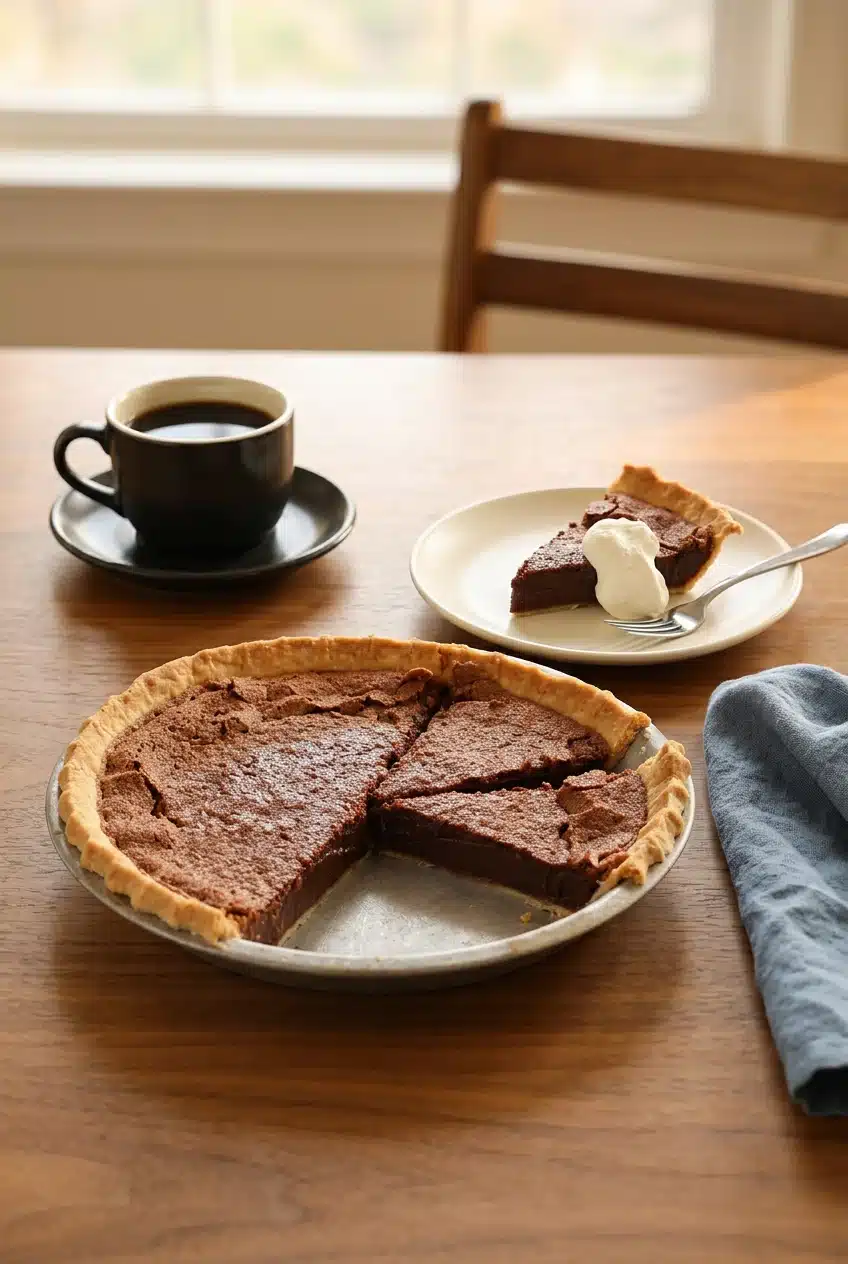
Let the chocolate filling remain the focus, with a topping or drink that contrasts its richness.
- Lightly sweetened whipped cream: Its airy texture balances the dense filling.
- Vanilla ice cream: A creamy accompaniment makes cooled slices feel especially indulgent.
- Whipped cream swirls: Use them to dress up small cooling cracks.
- Hot coffee or espresso: Roasted bitterness complements the pie’s sweetness.
Planning Ahead and Storing Leftovers
Build complete cooling into your serving plan. The listed preparation and cooking times don’t include that final setting stage, so don’t schedule slicing for the moment the pie leaves the oven.
For leftovers, favor covered, chilled storage rather than extended countertop holding. Protect the delicate top from contact with the covering, and keep whipped toppings separate until serving.
Final Thoughts
A whisked cocoa filling gives this Southern pie its satisfying contrast of crackled top and fudgy interior. Careful mixing and a gentle remaining jiggle help preserve that character.
Give it time to cool completely, then add whipped cream if you like. Share how your slices turned out, especially that first glimpse beneath the crisp top.
Frequently Asked Questions
How Should I Plan for Cooling Before Serving?
Allow the baked pie to cool completely before slicing. Keep cooling time separate from the listed preparation and cooking times; the filling needs that final setting stage.
Can I Use Dutch-Processed Cocoa Powder?
Yes, Dutch-processed cocoa is a reasonable option because this filling doesn’t use chemical leavening. Expect a potentially darker color and mellower chocolate flavor rather than an identical result.
What Texture Should Chocolate Chess Pie Have When Cooled?
Expect a dense, fudgy center beneath a thin, crackled top. The filling should hold a slice while staying soft, rather than flowing like pudding.
Do I Need to Blind Bake the Pie Crust First?
No. This recipe uses an unbaked pastry shell. The shell and filling bake together; no separate blind-baking stage is needed.
Why Did My Chocolate Chess Pie Puff Up and Then Sink or Crack?
Steam and expanding air can lift the filling during baking, followed by settling as it cools. Small cracks can occur naturally and don’t necessarily signal a problem.
How Should Leftover Chocolate Chess Pie Be Stored?
Favor covered, chilled storage for leftovers. Keep the covering off the fragile top and add whipped cream when serving.
Chocolate Chess Pie

Equipment
- large bowl
- Whisk
Ingredients
- 4 tablespoons cocoa powder
- 1 1/2 cups sugar
- 3 tablespoons corn starch
- 2 large eggs (beaten)
- 4 tablespoons unsalted butter (melted)
- 1 (5-ounce) can evaporated milk
- 1 teaspoon vanilla extract
- 1 (9-inch) unbaked pie crust* (homemade or store-bought is fine)
- whipped cream (if desired)
Instructions
- Set the oven to 350°F and whisk the cocoa powder, sugar, and corn starch in a large bowl. The dry mixture should look evenly brown and sandy, without pockets of cocoa or starch.
- Stir the beaten eggs, melted butter, evaporated milk, and vanilla into the dry mixture until thoroughly combined. The filling should look glossy and uniform, with no dry streaks remaining.
- Transfer the filling to the unbaked pie shell, taking care to keep it below the rim. Leave room for the filling to rise rather than filling the pastry to overflowing.
- Bake for 45 to 55 minutes, looking for a continuous crust over the surface and a mostly set filling. A gentle wobble should remain beneath the top rather than a loose, liquid-looking slosh.
- Let the pie cool completely before cutting and serving. The center continues to firm during cooling, giving the slices their fudgy structure.