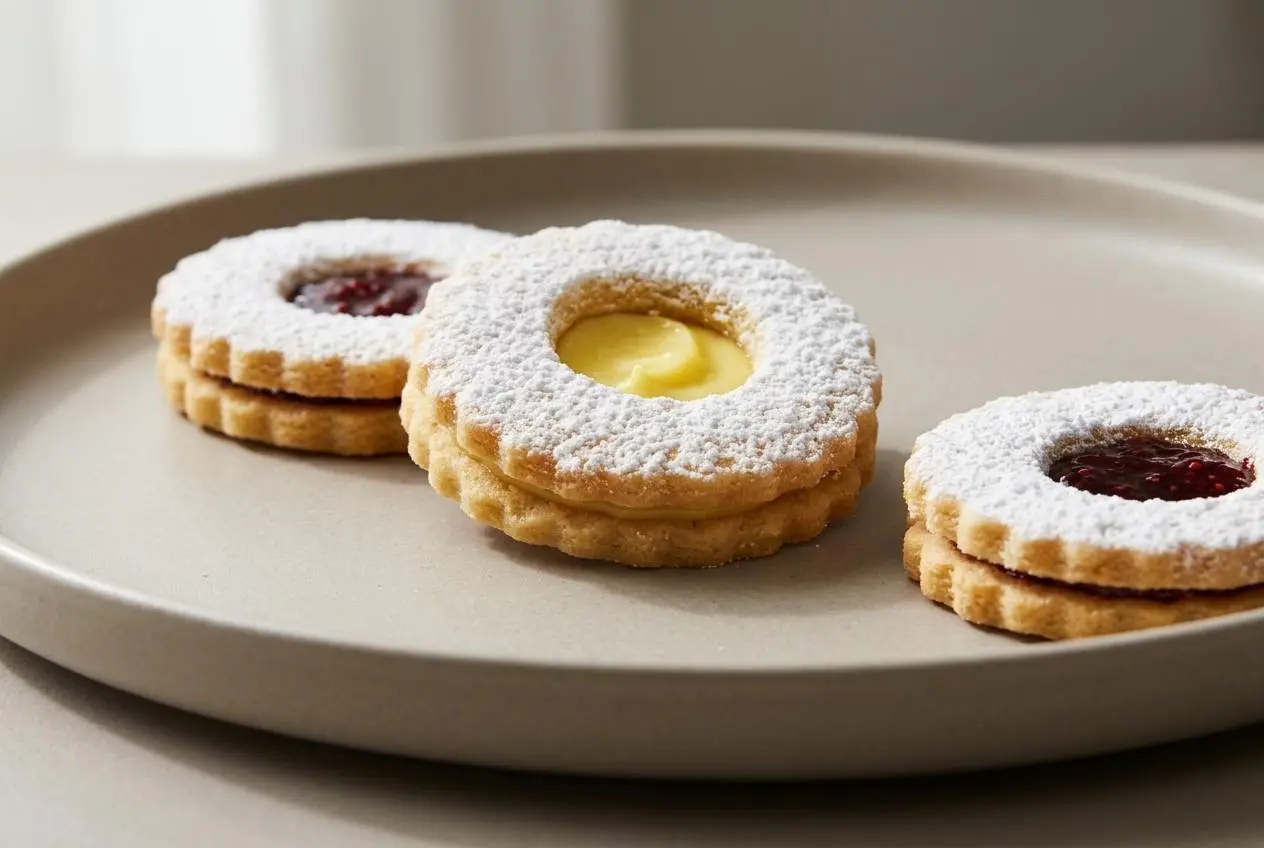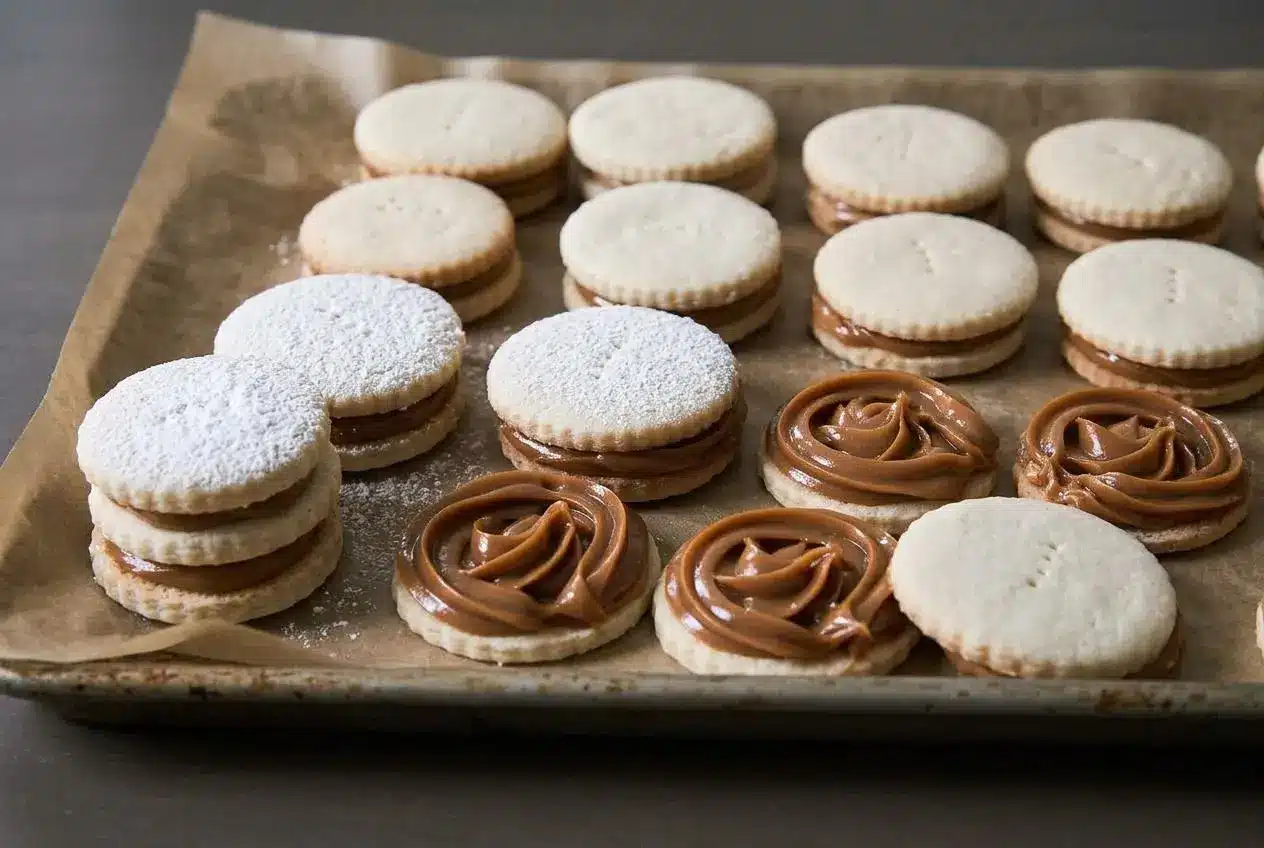
This alfajores recipe makes tender, buttery flour-and-cornstarch sandwich cookies filled with creamy manjar blanco. Powdered-sugar edges finish the Peruvian-style cookies, while careful chilling and pale baking give them their delicate, melt-in-your-mouth crumb.
Alfajores pair crumbly shortbread with a smooth milk-caramel center. This version includes homemade oven-cooked manjar blanco, plus guidance for using ready-made dulce de leche when you want to skip cooking the filling.
The dough needs gentle handling, but the cues are straightforward: smooth butter, chilled cutouts, and cookies that leave the oven before their edges brown. The payoff is that soft caramel bite.
Clear space in the refrigerator for a baking sheet before you start cutting the dough.
Key Ingredients and Their Roles
Flour gives the cookies structure, cornstarch softens their crumb, and butter supplies richness. Powdered sugar contributes sweetness and a fine texture, while condensed milk becomes the creamy filling; salt balances the sweetness, and optional vanilla, yolk, and cinnamon add aroma or richness.
Manjar Blanco
- 1 (14-ounce) can sweetened condensed milk
- 1 cinnamon stick, (optional)
- Pinch kosher salt
Vanilla Shortbread Cookie
- 1 3/4 cups all-purpose flour
- 1/2 cup corn starch, sifted
- 1/2 cup powdered sugar, sifted
- 1/4 teaspoon kosher salt
- 1 cup unsalted butter, at room temperature
- 2 teaspons vanilla extract or vanilla paste, (optional)
- 1 large egg yolk, (optional)
Assembly
- 1/3 cup powdered sugar, sifted
For the Shortbread Cookies
Cornstarch replaces part of the wheat flour, reducing the proportion of gluten-forming flour in the dough. That balance gives these cookies their tender, fragile texture while leaving enough structure to hold the filling. They still contain wheat flour and aren’t gluten-free.
Powdered sugar blends finely into the butter rather than leaving the graininess of larger sugar crystals. Sift both it and the cornstarch before measuring them into the mixing bowl as directed, so dry lumps don’t remain in the dough.
Room-temperature butter should yield to gentle finger pressure without looking oily or melted. It mixes smoothly with the optional vanilla, which adds aroma. The optional egg yolk contributes richness; keep both optional rather than treating them as requirements.
I look for butter that bends under a spatula but still holds its shape; greasy butter makes this delicate dough harder to handle.
Homemade Manjar Blanco vs Canned Dulce de Leche Shortcut
Sweetened condensed milk needs cooking to become the thick caramel filling. Ready-made dulce de leche is already cooked, so it offers an optional shortcut without changing the cookie dough.
The homemade filling cooks in a covered dish surrounded by water. Cinnamon is an optional aromatic for manjar blanco, not a requirement for the cookies. For a shortcut, choose a thick canned dulce de leche, such as La Lechera, and whisk it until smooth before filling.
Look for filling that holds a rounded mound but yields easily to a spoon. Runny caramel can escape the edges; stiff caramel requires pressure that may crack the cookies. If desired, ground cinnamon or cloves can flavor the shortcut filling, but keep those additions outside the ingredient groups above.
How to Make Alfajores Step by Step
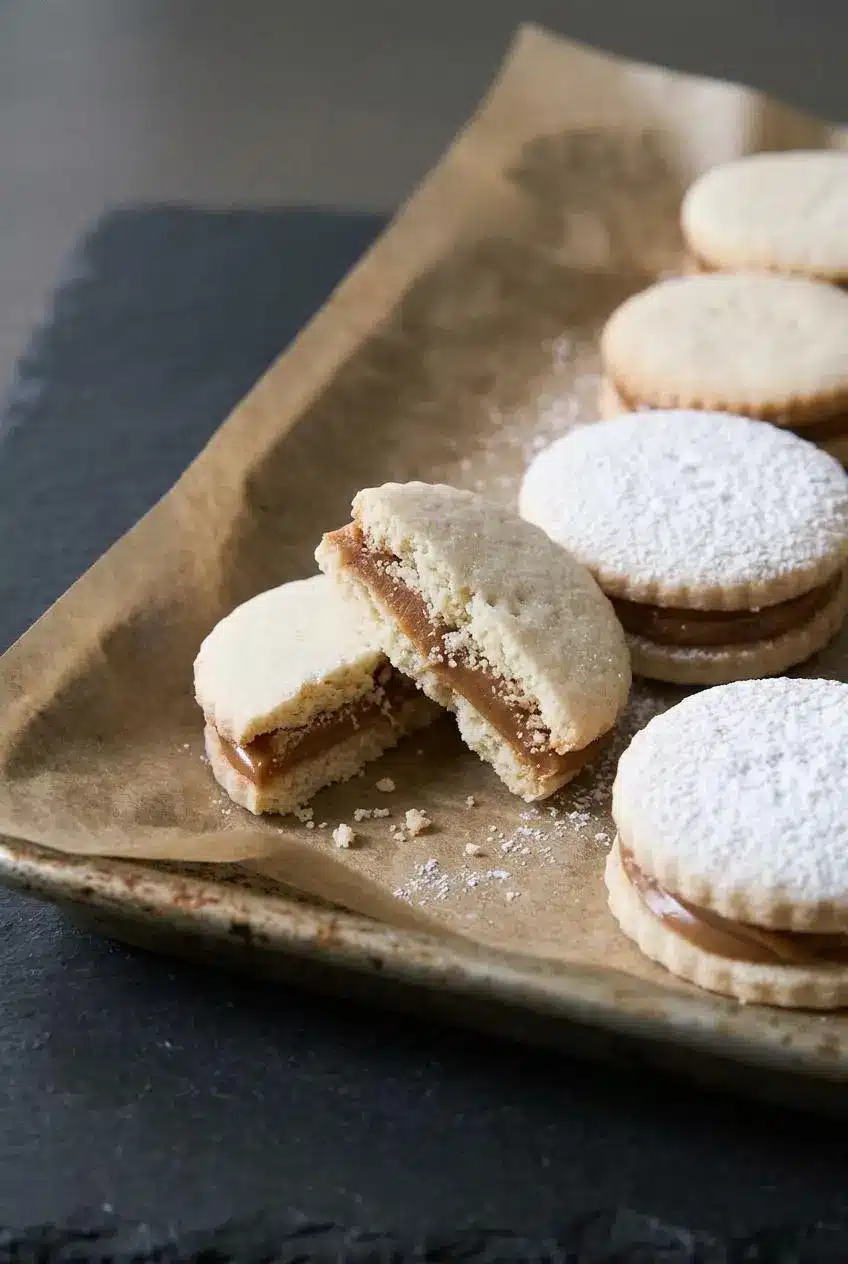
Plan for separate caramel cooking, dough chilling, cutout chilling, and cooling stages. The caramel uses a hotter oven than the cookies, so reset the temperature before baking the shortbread.
To Make the Manjar Blanco
- Set the oven to 400°F and prepare foil, a small baking dish, and a larger dish that can hold it.
The smaller dish needs room around its sides for the water bath. - Empty the condensed milk into the small dish, cover with foil, and nest it inside the larger dish with water reaching halfway up its sides.
Bake for 1 hour to 1 hour and 15 minutes, checking the water at 45 minutes and replenishing it if evaporation has lowered the level. - Take the baking dishes out of the oven and leave them undisturbed for about 15 minutes.
This pause lets the hot dishes and filling cool enough for easier handling. - Uncover the inner dish, lift it from the water, remove the cinnamon stick if present, and transfer the filling to a glass or stainless steel bowl.
Whisk until the caramel looks uniform and smooth. - Keep prepared manjar blanco refrigerated in a tightly covered container if assembling later.
To soften chilled filling, stand the closed container in warm water until the caramel becomes spreadable.
The water bath moderates the heat surrounding the condensed milk. Move the pan carefully with oven mitts, keeping the hot water level as you carry it. Open the foil away from your face to avoid the escaping steam.
Whisking brings the cooked filling together into a smoother consistency. Don’t judge its readiness for assembly straight from the refrigerator, since chilled caramel can feel much stiffer.
To Make the Cookies
- Combine the flour, sifted cornstarch, sifted powdered sugar, and salt in a medium bowl with a whisk.
The dry mixture should look evenly blended, without pockets of starch or sugar. - Beat the butter with the vanilla, if using, in a stand mixer or with an electric hand mixer, then briefly mix in the optional yolk.
Stop when the butter mixture looks smooth and the yolk, if included, has disappeared into it. - Add the dry mixture and run the mixer slowly for about 1 minute, stopping as soon as the dough comes together.
Low speed keeps the powders in the bowl and avoids unnecessary mixing. - Gather the dough into a ball, press it into an approximately 2-inch round on plastic wrap, and wrap tightly before refrigerating for about 1 hour.
The chilled dough should feel firmer and less sticky than it did immediately after mixing. - Set the oven to 350°F before rolling the rested dough.
This lower temperature is for the cookies, not the caramel. - Roll the dough slowly between two sheets of parchment to an even thickness within the 1/2- to 1/4-inch range.
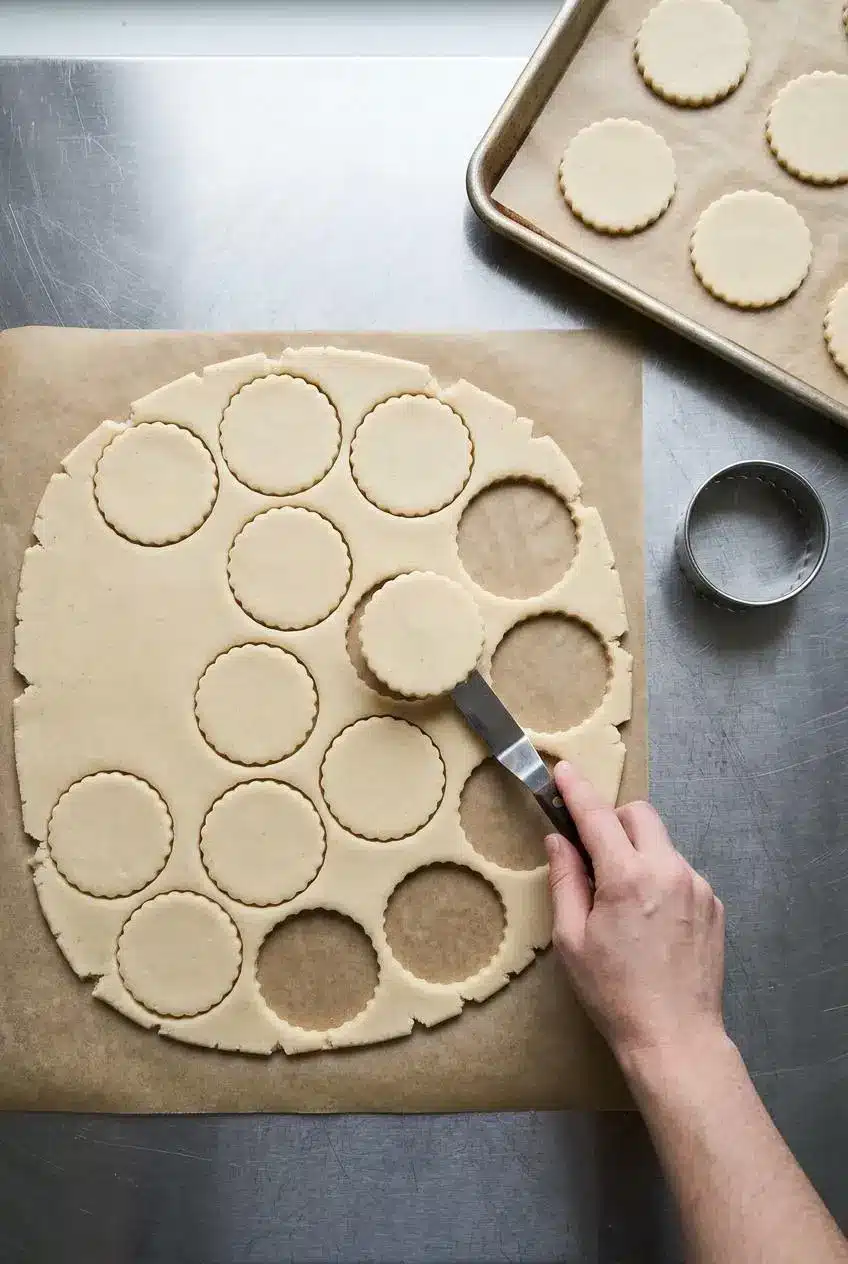
If it resists rolling or cracks from the cold, allow about 10 minutes at room temperature before continuing. - Cut closely spaced rounds with a 3-inch cutter and lift them with an offset spatula onto a parchment-lined baking sheet, leaving about 2 inches between cookies.
Chill each sheet of cutouts for about 10 minutes, then continue with the remaining dough and reroll the scraps about twice as needed. - Lightly mark the tops with fork tines, then bake for about 11 to 13 minutes and leave the cookies on their sheets until they reach room temperature.
Remove them when the tops feel lightly firm and set while the edges remain completely unbrowned.
Choose a uniform 1/4-inch thickness within the stated range for a balanced cookie-to-filling bite. Even thickness matters more than rolling quickly; thicker and thinner rounds won’t necessarily finish together.
Parchment prevents sticking without adding flour that could make the crumb drier. Slide the offset spatula beneath each round rather than lifting an edge with your fingers.
Fork scoring helps release trapped steam and discourages raised air pockets, giving you flatter sandwich halves. Use gentle surface pressure without pushing through to the parchment. At the oven, look for matte, pale tops and no browning along the rim. Golden edges are past the target here.
To Assemble the Alfajores
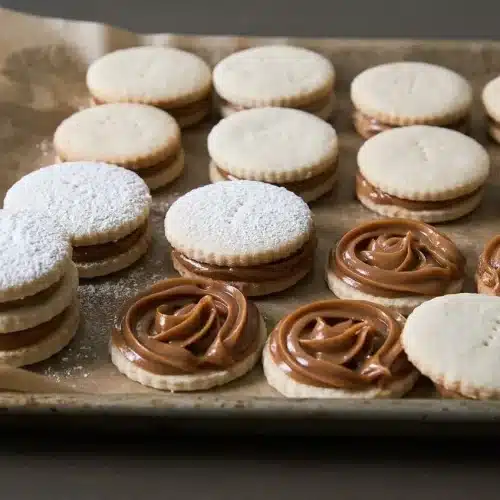
- Arrange half the fully cooled cookies bottom-side up and, if using a piping bag with a tip, pipe a round of manjar blanco onto each one.
The filling should flow smoothly without requiring pressure against the cookie. - Use a spoon instead of piping if preferred, gently leveling the filling with a butter knife.
Support the cookie and keep the knife pressure light to protect the delicate disk. - Place a second cookie over each filled half, press very lightly, and roll the exposed sides in sifted powdered sugar.
Stop pressing once the halves hold together rather than forcing the caramel outward. - Transfer the finished sandwiches to an airtight container or sealable bag.
A closed container protects their delicate crumb from drying out.
Cooling on the baking sheets protects the fragile cookies from breaking during transfer. For assembly, piping gives you the most control with the least contact, but spooning works when the caramel is smooth and your touch stays light.
Expert Tips and Troubleshooting for Alfajores
Most handling problems come from dough or filling that’s too warm or too cold. Adjust the texture before adding pressure.
- Sticky dough that won’t lift: Warm butter makes the rounds floppy; return the parchment-supported dough to the refrigerator until it firms up rather than working in extra flour.
- Cracks during rolling: Dough straight from the refrigerator may resist the rolling pin; use the approximately 10-minute warming allowance and roll gradually.
- Rounds that spread: Warm cutouts lose their shape more readily; keep the separate cutout chill even though the dough already rested.
- Dry or crunchy cookies: Browning takes these beyond their intended texture; check for set tops and pale edges rather than waiting for a golden finish.
- Cookies breaking during filling: Stiff caramel or firm pressing can snap them; soften the sealed filling container in warm water, whisk, and pipe or spoon gently.
- Uneven sandwich halves: Inconsistent rolling produces mismatched cookies; keep the dough level and pair similar-sized rounds before filling.
Overbaked cookies won’t return to their original delicate texture. For the next sheet, use the pale doneness cue instead of treating browning as a sign of readiness.
Peruvian vs Argentinian and Regional Variations
This version makes Peruvian-style flour-and-cornstarch shortbread sandwiches with manjar blanco and powdered-sugar edges. Regional styles vary, so think of these as useful distinctions rather than fixed rules for every alfajor.
Argentinian Style With Shredded Coconut
Argentinian alfajores de maicena commonly feature a higher proportion of cornstarch and finely shredded coconut around the exposed caramel edges. The coconut adds a lightly chewy contrast to the tender cookie.
For an optional coconut finish, roll the filling-coated edges in finely shredded coconut instead of powdered sugar. That changes the finish, not the dough formula; it doesn’t turn this flour balance into a separately developed Argentinian recipe.
Chilean and Chocolate-Dipped Havanna Styles
- Chilean versions: Manjar-filled alfajores appear in several forms, including versions with thinner pastry-like layers rather than this buttery shortbread; don’t assume one dough represents every Chilean style.
- Chocolate-coated Havanna-style finish: Dark or semisweet chocolate offers an optional contrast to the sweet caramel and buttery cookies, with a different coating texture from powdered sugar.
- Mini cutouts: Smaller rounds suit gift boxes, showers, and holiday platters, but a different cutter changes the yield and may change baking time; the stated schedule belongs to the 3-inch cookies.
If the chocolate-and-caramel combination appeals to you, Twix cake offers another dessert built around those flavors.
Bright Lemon Zest Flavor
For an optional citrus variation, rub fresh lemon zest into the powdered sugar before mixing the dough. The fragrant oils bring brightness against the rich filling without adding lemon juice or extra liquid.
Make-Ahead, Storage, and Serving Suggestions
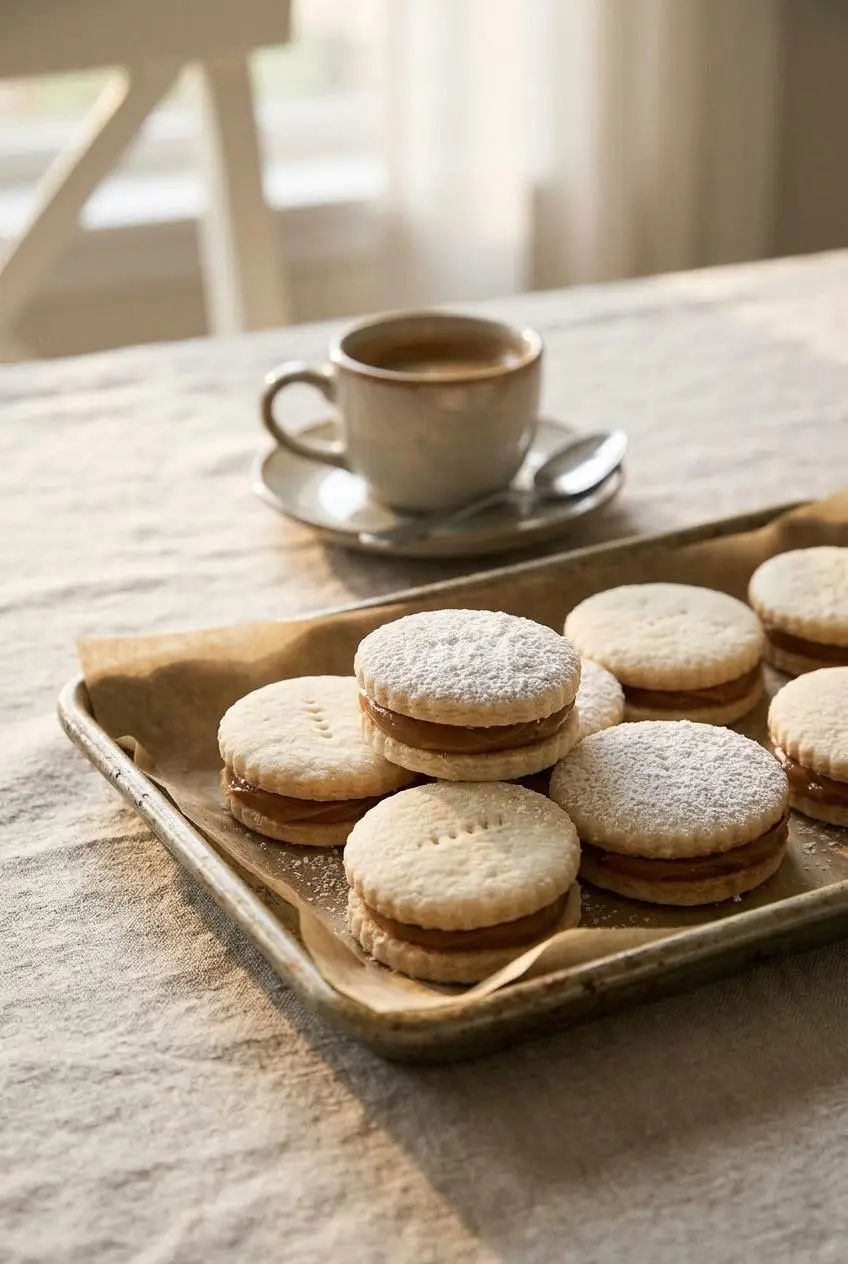
Preparing the filling separately makes assembly easier, especially when you give chilled caramel time to become spreadable again.
Planning the Dough and Manjar Blanco Ahead
Keep prepared dough tightly wrapped and refrigerated until you’re ready to roll it. Let its texture guide the next step: it should bend under the rolling pin rather than split, but shouldn’t feel greasy or sticky.
Refrigerate prepared manjar blanco in a covered container. Before filling, stand the closed container in warm water, then whisk the caramel and check that it spreads without pulling against the cookie.
For ready-made dulce de leche, follow the package’s storage directions after opening. Different fillings and storage conditions don’t share one universal shelf life.
Keeping Filled Alfajores Tender Without Sogginess
Moisture from the filling gradually softens the crumb after assembly. That tenderness is desirable; wet patches or filling that leaks beyond the edges aren’t the goal.
Start with fully cooled cookies and thick, spreadable caramel, then store the sandwiches in an airtight container. As a precaution with the homemade dairy filling, keep them chilled for storage rather than assuming an extended room-temperature shelf life. Avoid leaving them uncovered in the refrigerator, where the exposed cookies can dry out.
Coffee, Hot Chocolate, and Cookie-Platter Pairings
Espresso or yerba mate contrasts with the sweet filling. Hot chocolate makes a richer pairing, while a frothy matcha latte offers another warm-drink option.
For showers or holiday dessert platters, pair smaller alfajores with bite-sized cake pops for a mix of textures. Handle the powdered-sugar edges gently when arranging cookies in gift boxes.
Conclusion
Tender shortbread and creamy manjar blanco make alfajores a lovely balance of delicate crumb and rich filling. Gentle handling keeps those two textures working together.
Give the dough its chilling time, stop baking before the edges brown, and use a light touch when sandwiching. Let the caramel do the holding together.
Frequently Asked Questions
What Are Alfajores Made Of?
These alfajores use flour-and-cornstarch shortbread made with butter and powdered sugar. Manjar blanco or dulce de leche forms the creamy center. Powdered sugar finishes this version; coconut and chocolate are optional finishes associated with other styles.
What Is the Difference Between Peruvian and Argentinian Alfajores?
This Peruvian-style version combines wheat flour and cornstarch with powdered-sugar edges. Argentinian alfajores de maicena commonly contain a higher proportion of cornstarch and have coconut-coated edges. Recipes vary within both countries, so those features describe common tendencies rather than universal rules.
Why Do You Prick the Cookies With a Fork and Do You Press All the Way Through?
Light scoring helps release trapped steam and keeps the sandwich halves flatter. Press the fork tines gently into the surface, without piercing through to the parchment.
Can I Make Alfajores Ahead of Time?
Yes, prepare the components separately and keep the dough wrapped and refrigerated until rolling. Keep homemade manjar blanco covered and refrigerated, then soften the closed container in warm water before assembly. Store filled cookies airtight and follow the filling-specific storage guidance above.
Alfajores Recipe

Equipment
- 1 (half sheet) baking sheet
- Baking Sheets
- Parchment Paper Sheets
- Offset spatula
- Silicon Spatula
- Pyrex Storage Set
- KitchenAid Stand-Up Mixer
- Measuring Cups
- Measuring spoons
- Whisk Set
Ingredients
Manjar Blanco
- 1 (14-ounce) can sweetened condensed milk
- 1 cinnamon stick (optional)
- Pinch kosher salt
Vanilla Shortbread Cookie
- 1 3/4 cups all-purpose flour
- 1/2 cup corn starch sifted
- 1/2 cup powdered sugar sifted
- 1/4 teaspoon kosher salt
- 1 cup unsalted butter at room temperature
- 2 teaspons vanilla extract or vanilla paste (optional)
- 1 large egg yolk (optional)
Assembly
- 1/3 cup powdered sugar sifted
Instructions
To Make the Manjar Blanco
- Set the oven to 400°F and prepare foil, a small baking dish, and a larger dish that can hold it. The smaller dish needs room around its sides for the water bath.
- Empty the condensed milk into the small dish, cover with foil, and nest it inside the larger dish with water reaching halfway up its sides. Bake for 1 hour to 1 hour and 15 minutes, checking the water at 45 minutes and replenishing it if evaporation has lowered the level.
- Take the baking dishes out of the oven and leave them undisturbed for about 15 minutes. This pause lets the hot dishes and filling cool enough for easier handling.
- Uncover the inner dish, lift it from the water, remove the cinnamon stick if present, and transfer the filling to a glass or stainless steel bowl. Whisk until the caramel looks uniform and smooth.
- Keep prepared manjar blanco refrigerated in a tightly covered container if assembling later. To soften chilled filling, stand the closed container in warm water until the caramel becomes spreadable.
To Make the Cookies
- Combine the flour, sifted cornstarch, sifted powdered sugar, and salt in a medium bowl with a whisk. The dry mixture should look evenly blended, without pockets of starch or sugar.
- Beat the butter with the vanilla, if using, in a stand mixer or with an electric hand mixer, then briefly mix in the optional yolk. Stop when the butter mixture looks smooth and the yolk, if included, has disappeared into it.
- Add the dry mixture and run the mixer slowly for about 1 minute, stopping as soon as the dough comes together. Low speed keeps the powders in the bowl and avoids unnecessary mixing.
- Gather the dough into a ball, press it into an approximately 2-inch round on plastic wrap, and wrap tightly before refrigerating for about 1 hour. The chilled dough should feel firmer and less sticky than it did immediately after mixing.
- Set the oven to 350°F before rolling the rested dough. This lower temperature is for the cookies, not the caramel.
- Roll the dough slowly between two sheets of parchment to an even thickness within the 1/2- to 1/4-inch range. If it resists rolling or cracks from the cold, allow about 10 minutes at room temperature before continuing.
- Cut closely spaced rounds with a 3-inch cutter and lift them with an offset spatula onto a parchment-lined baking sheet, leaving about 2 inches between cookies. Chill each sheet of cutouts for about 10 minutes, then continue with the remaining dough and reroll the scraps about twice as needed.
- Lightly mark the tops with fork tines, then bake for about 11 to 13 minutes and leave the cookies on their sheets until they reach room temperature. Remove them when the tops feel lightly firm and set while the edges remain completely unbrowned.
To Assemble the Alfajores
- Arrange half the fully cooled cookies bottom-side up and, if using a piping bag with a tip, pipe a round of manjar blanco onto each one. The filling should flow smoothly without requiring pressure against the cookie.
- Use a spoon instead of piping if preferred, gently leveling the filling with a butter knife. Support the cookie and keep the knife pressure light to protect the delicate disk.
- Place a second cookie over each filled half, press very lightly, and roll the exposed sides in sifted powdered sugar. Stop pressing once the halves hold together rather than forcing the caramel outward.
- Transfer the finished sandwiches to an airtight container or sealable bag. A closed container protects their delicate crumb from drying out.